
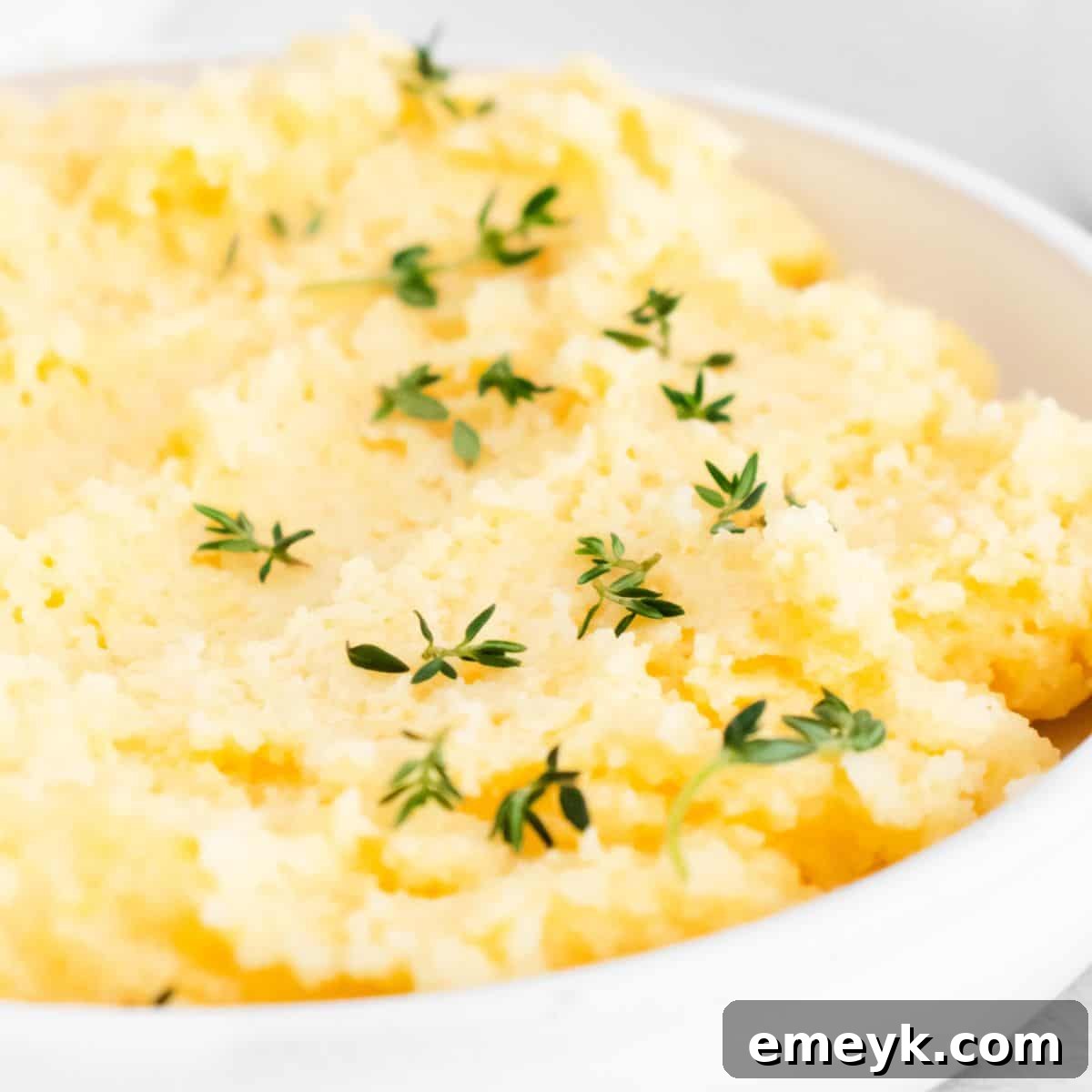
This **Creamy Polenta Recipe** is a remarkably simple yet sophisticated dish, requiring just four core ingredients to create a rich, indulgent, and undeniably cheesy experience. It’s not just easy to make; it’s incredibly versatile, serving as the perfect, comforting foundation for everything from vibrant roasted vegetables to succulent slow-cooked meats like short ribs or a hearty Italian ragù. If you’re seeking a side dish that truly elevates any meal, look no further than this delightful polenta.
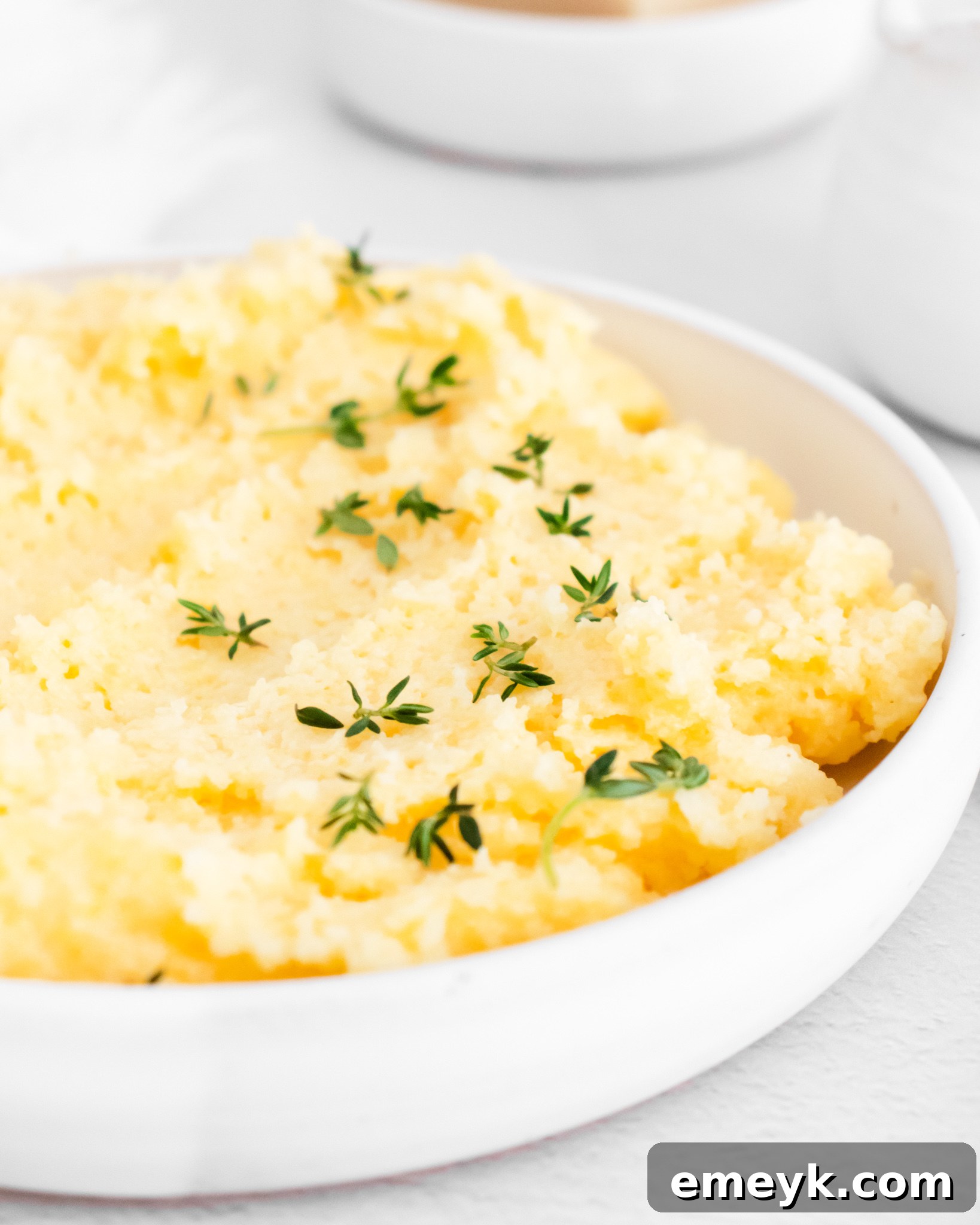
Polenta is a culinary staple I often turn to, pairing it with a diverse array of dishes – from tender short ribs to my favorite homemade Italian tomato sauce, and even tangy balsamic-glazed roasted vegetables. If you haven’t yet discovered the magic of polenta, you’re truly missing out on a culinary gem! My first introduction to this comforting dish was during a trip to Italy years ago. I was captivated by its creamy texture and deeply satisfying flavor, and it quickly became a dish I sought to recreate at home.
Creamy polenta is the ultimate comfort food; it’s hearty, warming, and incredibly filling. One of the most appealing aspects of this particular recipe is its minimalist approach, utilizing only four essential ingredients: quality polenta, rich butter, water (or broth for added depth), and savory Parmesan cheese. This simplicity belies a profound depth of flavor and a wonderfully smooth, creamy consistency that makes it adaptable to countless meal preparations.
If you appreciate comforting and flavorful side dishes, you’ll undoubtedly adore this Creamy Parmesan Polenta. It shares the same soul-satisfying qualities as other beloved sides, offering a delightful alternative or complement to dishes like our Cheesy Butternut Squash Orzo, refreshing Lemon Orzo, or the bright and zesty Lemon Pearl Couscous. Each of these recipes brings its unique charm, but this polenta stands out for its creamy richness and ease of preparation.
Why You’ll Love This Creamy Polenta Recipe
This creamy polenta isn’t just a side dish; it’s an experience. Here’s why it will become a regular in your kitchen:
- **Effortlessly Simple:** With only 4 main ingredients, this recipe proves that extraordinary flavor doesn’t require a complicated ingredient list. It’s perfect for busy weeknights or when you want something impressive without the fuss.
- **Unbelievably Creamy:** The secret lies in a combination of slow simmering, a touch of butter, and generous amounts of Parmesan cheese, resulting in a dreamy, velvety texture that melts in your mouth.
- **Rich & Cheesy Flavor:** Parmesan cheese is the star, infusing the polenta with its distinctive nutty, salty, and umami notes, creating a truly irresistible dish.
- **Incredibly Versatile:** This polenta acts as a culinary canvas. Serve it plain, or use it as a base for an endless variety of toppings, from slow-cooked meats to vibrant roasted vegetables or even a simple fried egg.
- **Comfort Food at Its Best:** There’s something inherently comforting about a warm, creamy bowl of polenta. It’s hearty, satisfying, and perfect for any season, offering warmth on a cold day or a grounding balance to lighter fare.
- **Naturally Gluten-Free (check ingredients):** Polenta, being made from cornmeal, is naturally gluten-free, making it a wonderful option for those with dietary restrictions. Always check your cornmeal packaging to ensure no cross-contamination.
Essential Ingredients for Perfect Polenta
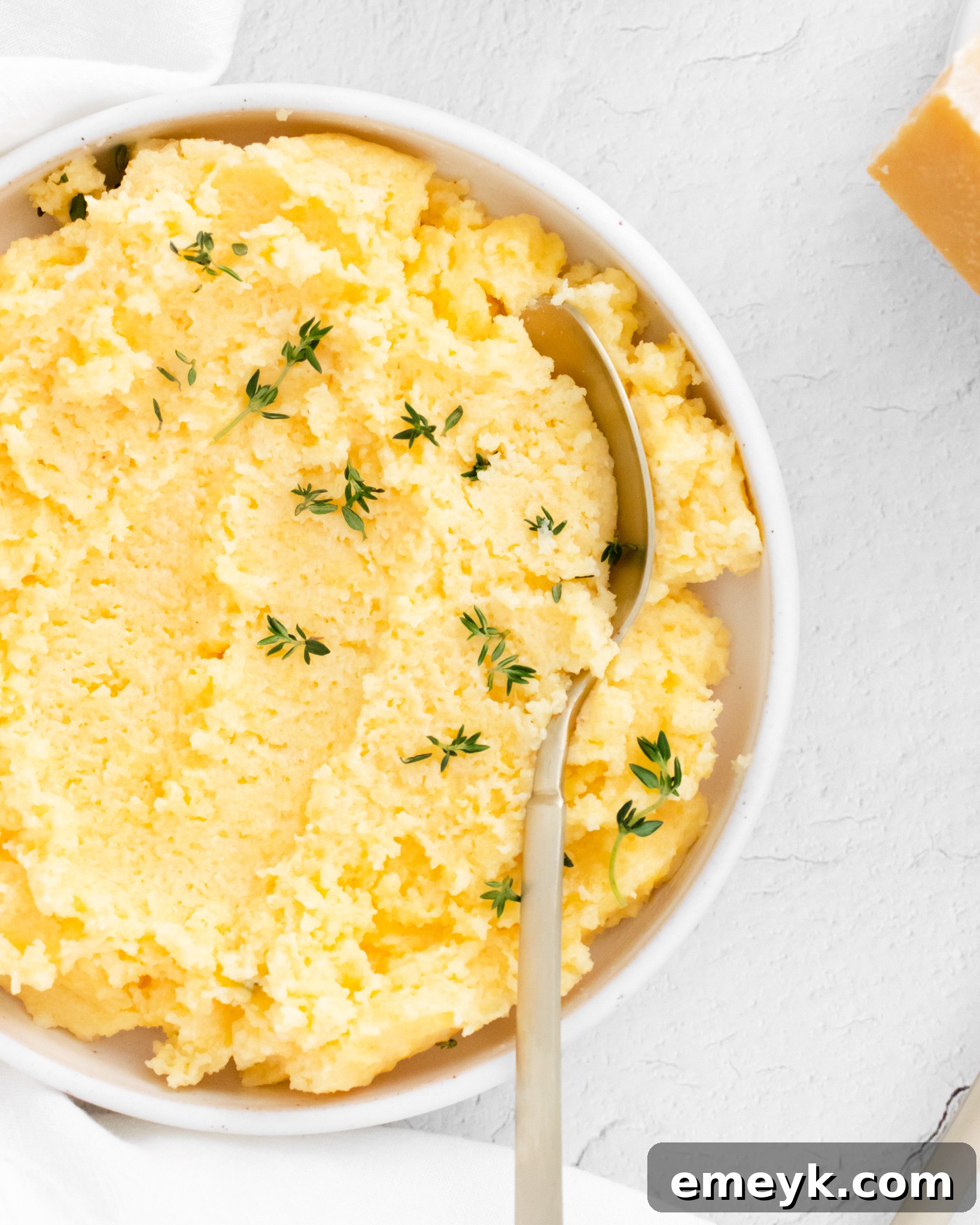
The beauty of this creamy polenta lies in its simplicity, relying on just a few high-quality ingredients to deliver maximum flavor and texture. For exact measurements, refer to the full recipe card below.
- Polenta: For this recipe, I typically use yellow polenta, which is essentially coarsely or medium-ground cornmeal. The texture of traditional slow-cooking polenta is often superior, yielding a more tender and satisfying result. While instant polenta is a quicker alternative, I find the slow-cooked version offers a richer flavor and creamier consistency.
- Cheese: Parmesan cheese is a non-negotiable addition here. Its sharp, salty, and nutty notes are crucial for creating that rich, cheesy, and creamy texture that makes this polenta so irresistible. For the best flavor, I highly recommend grating a block of high-quality Parmigiano Reggiano yourself. Beyond Parmesan, don’t hesitate to experiment! Goat cheese offers a tangy creaminess, cream cheese adds a smooth richness, while ricotta can provide a lighter, fluffy texture. Mascarpone is another excellent choice for supreme creaminess.
- Butter: Unsalted butter is my preference for this recipe, as it gives you complete control over the final salt content. If you opt for salted butter, be sure to taste the polenta before adding any extra salt at the end. Butter contributes significantly to the polenta’s luxurious mouthfeel and delicate flavor.
- Water (or Broth): While water works perfectly, substituting it with chicken or vegetable broth will infuse the polenta with an extra layer of savory flavor, making it even more delicious. This simple swap can significantly enhance the overall depth of the dish.
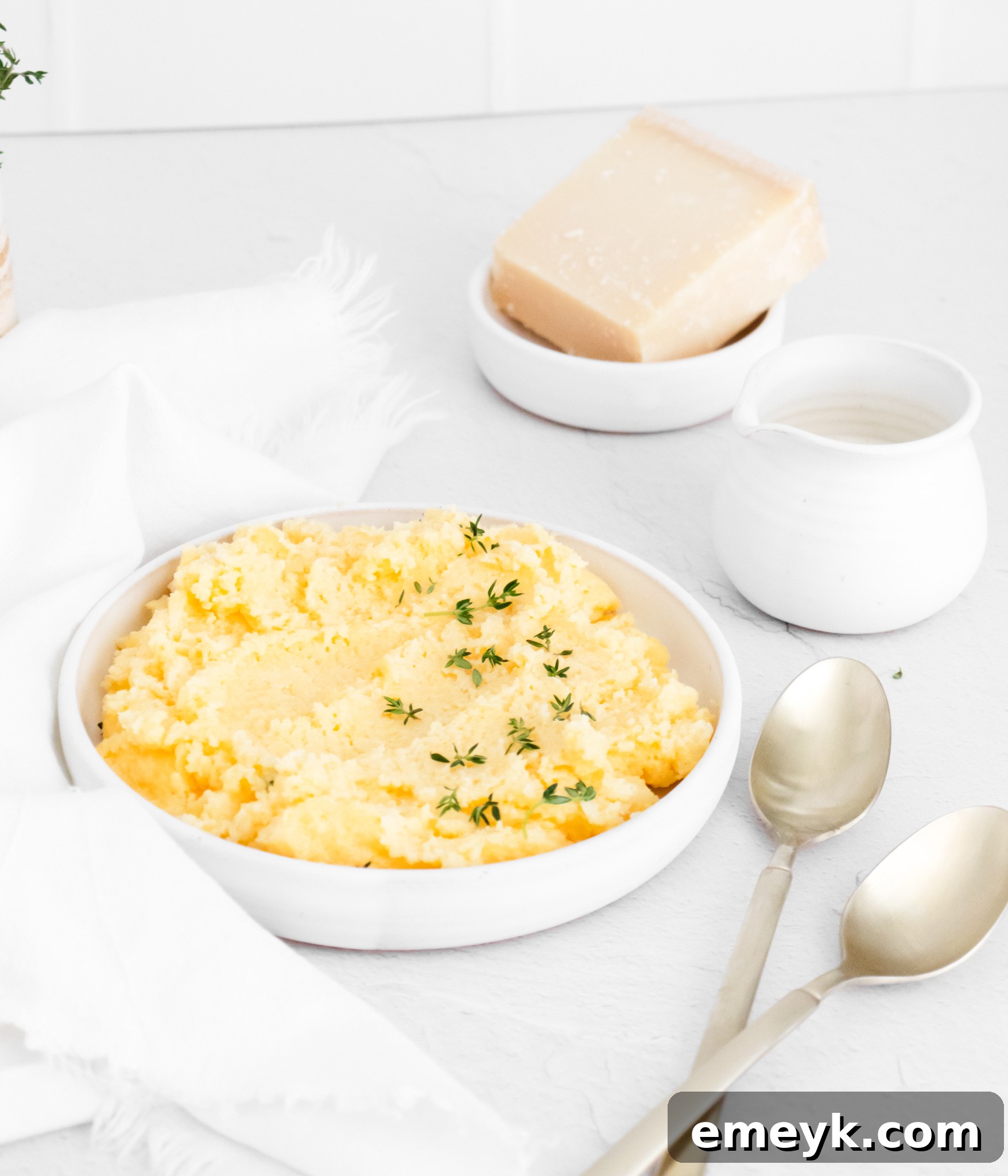
Crafting Your Creamy Polenta: A Step-by-Step Guide
Making perfect creamy polenta is simpler than you might think. Follow these easy steps for a consistently delicious result.
Step 1. Boil Liquid & Add Polenta: In a sturdy, large pot, bring your water (or broth) and salt to a rolling boil. This initial high heat is crucial. Once the liquid is vigorously boiling, gradually pour in the polenta in a slow, steady stream. As you add the polenta, continuously whisk the mixture to prevent any lumps from forming. Whisking ensures a smooth, uniform texture from the very beginning.
After all the polenta is added, reduce the heat significantly. You want to bring the polenta to a very low simmer—just a gentle bubbling, not a furious boil. This slow cooking process is key to developing its creamy texture.
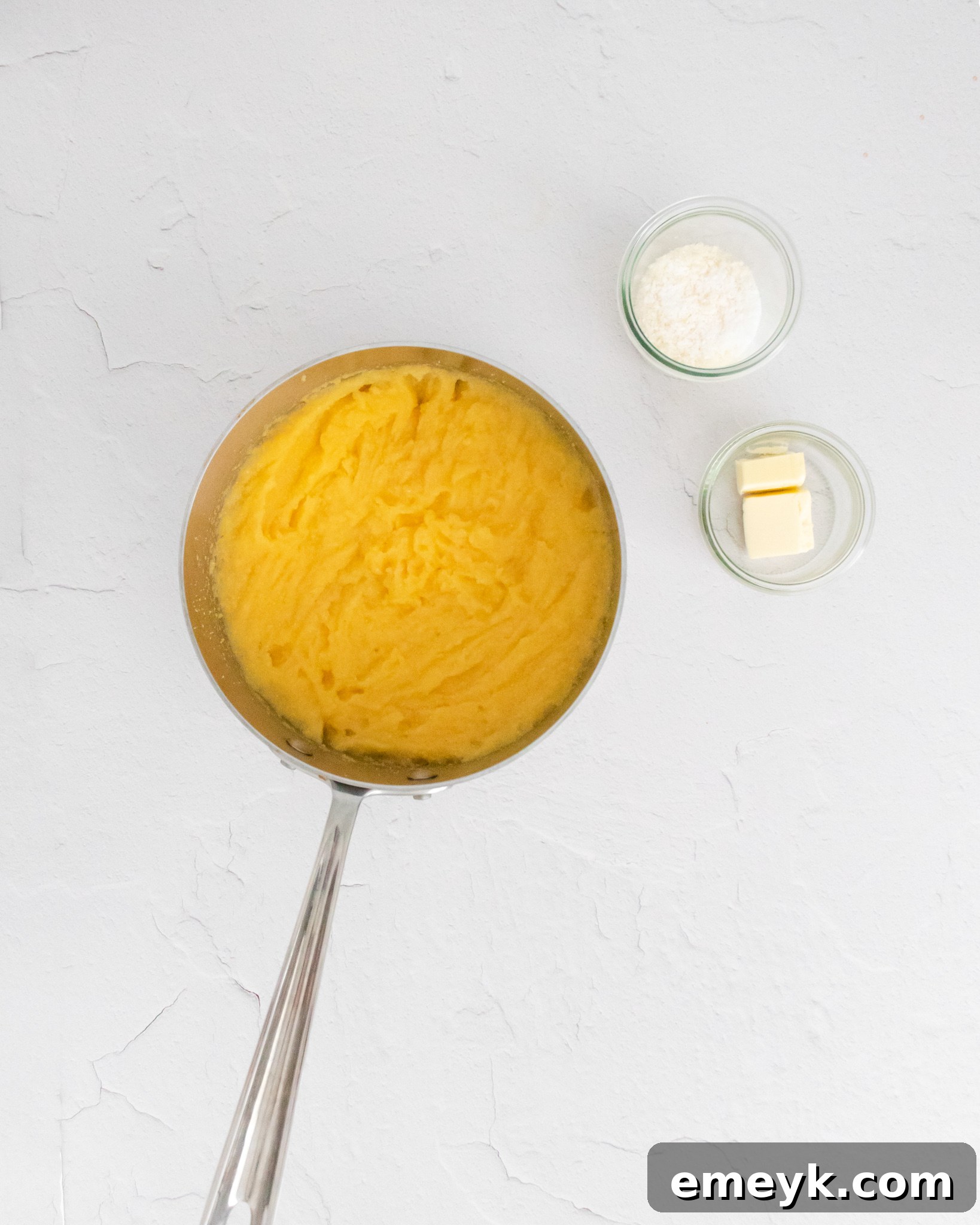
Step 2. Incorporate Butter: Add the unsalted butter to the simmering polenta. Continue to whisk gently until the butter is fully melted and incorporated. You’ll notice the polenta starting to thicken and become glossier as the butter emulsifies into the mixture.
Step 3. Cover and Simmer to Perfection: Cover the pot with a lid and allow the polenta to simmer gently for approximately 20-25 minutes. During this time, it’s essential to stir the polenta occasionally—every 5-7 minutes—to prevent it from sticking to the bottom of the pot and ensure even cooking.
The polenta is fully cooked when the individual grains are tender, soft, and the entire mixture has thickened to a creamy, pourable consistency. If it still feels grainy or too watery, continue cooking for a few more minutes, stirring as needed, until it reaches this desired texture.
Step 4. Stir in Cheese and Serve: Once the polenta has achieved its perfect creamy texture, remove it from the heat and stir in the freshly grated Parmesan cheese until it’s completely melted and smoothly integrated. Taste the polenta and adjust the seasoning with additional salt or a crack of fresh black pepper if desired. Serve this delightful creamy polenta immediately as a decadent side dish alongside your favorite Italian meal, or as a rich base for slow-roasted vegetables or tender braised meats.
Any leftover polenta can be stored in an airtight container in the refrigerator for up to 3 days, making it a fantastic make-ahead option.
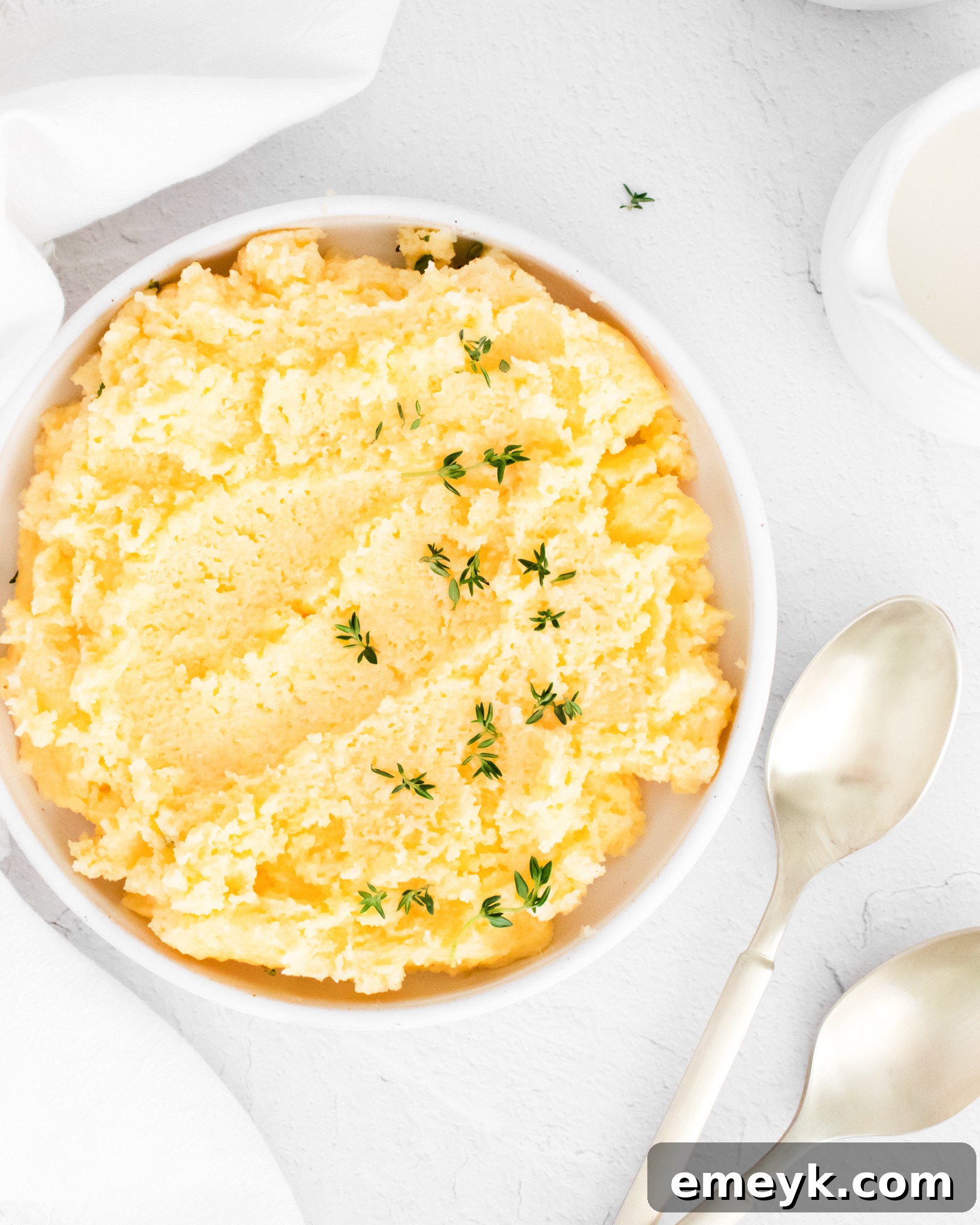
What Exactly is Polenta?
At its core, polenta is a simple yet incredibly versatile dish made from cornmeal mush. The quality and type of cornmeal you choose significantly impact the final texture and flavor of your polenta. You can use various grinds of cornmeal—coarse, medium, or fine—each yielding a slightly different character. Generally, the better the quality of cornmeal, the superior your finished polenta will taste.
In Italy, particularly in the northern regions where it originated, polenta is often referred to as “Italian grits” because it’s traditionally made with coarse, stone-ground cornmeal. Its hearty, porridge-like consistency and grainy texture indeed bear a strong resemblance to grits. Historically, polenta was a fundamental and economical food for many peasant and working-class families in Northern Italy, providing a simple, satisfying, and nourishing meal. My experiences with polenta in Italy were always memorable, highlighting its profound comforting qualities.
Beyond its traditional form, polenta is also available as “instant” or “quick-cooking” polenta, which is pre-cooked and dried, reducing the cooking time from 20-30 minutes to just 3-5 minutes. While convenient, many purists argue that instant polenta sacrifices some of the deep flavor and creamy texture achievable with traditional methods.
Exploring the Flavor of Polenta
When prepared correctly, polenta offers a delightful flavor profile reminiscent of a hearty, sweet corn porridge. The natural sweetness of the corn should shine through, without any bitter or raw undertones. As with any corn-based dish, the quality of your cornmeal directly influences the taste; higher quality cornmeal will result in a more buttery and nuanced flavor.
In this specific version, the addition of Parmesan cheese transforms the polenta into a savory, umami-rich experience. The Parmesan introduces a salty, nutty, and tangy dimension that perfectly complements the subtle sweetness of the corn, creating a balanced and incredibly addictive taste. The butter further enhances this, adding a delicate richness and roundness to the flavor. Depending on your choice of liquid (water vs. broth) and any optional additions like herbs or garlic, the flavor can be further customized and deepened.
Expert Tips for the Best Creamy Polenta
Achieving perfect creamy polenta is easy with a few insider tips:
- Understanding Cook Time: The cooking duration of your polenta is largely determined by the type of cornmeal you select. If you’re using traditional yellow polenta or coarsely ground cornmeal, anticipate a cooking time of approximately 25-30 minutes. Should you opt for instant polenta, the process is significantly faster, usually taking only about 3 to 5 minutes to become tender. Always refer to package instructions for the most accurate timing.
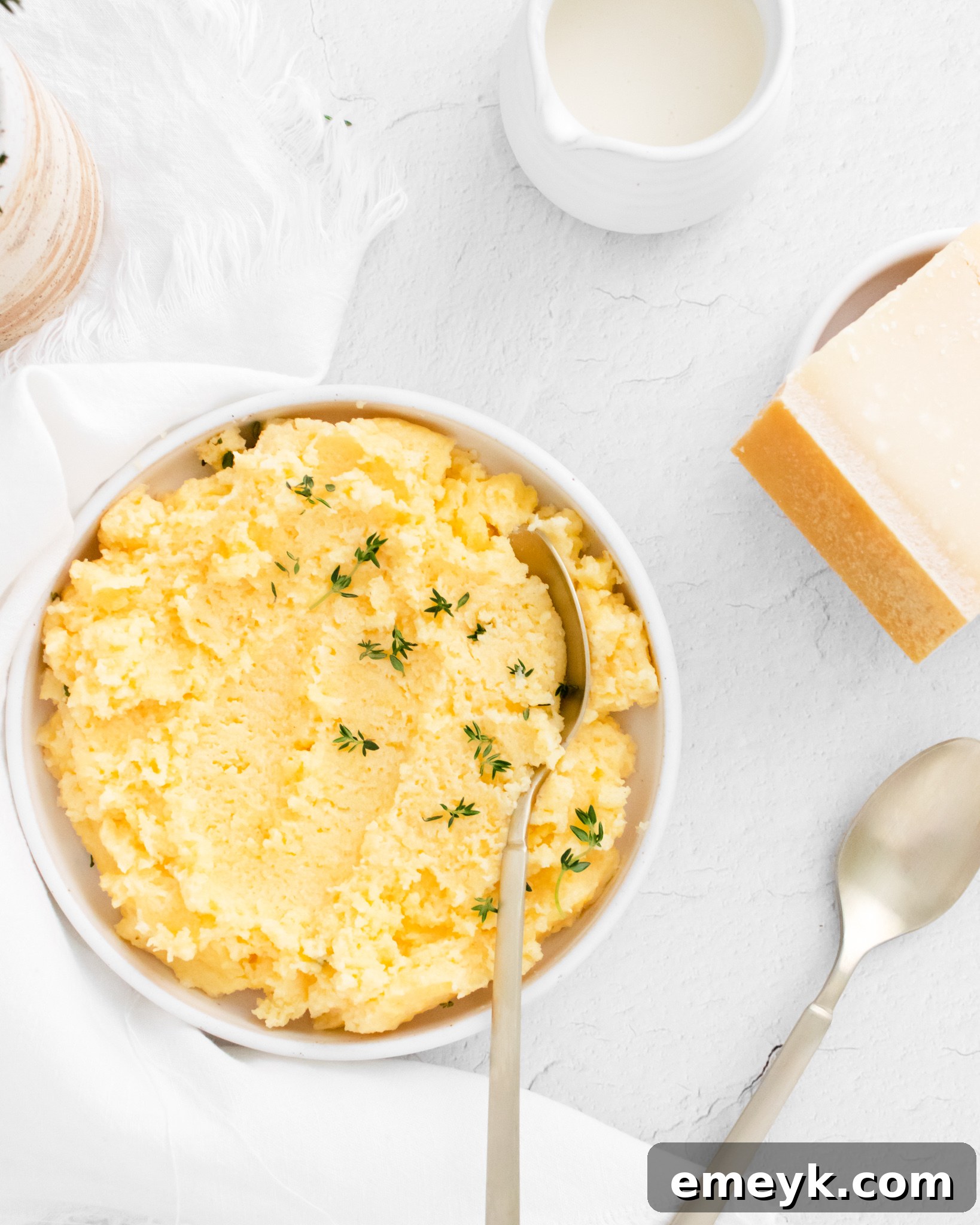
- Achieving Perfect Consistency: You’ll know your polenta is ready when the individual cornmeal grains are tender and yield easily, and the overall texture is smooth, thick, and gracefully pourable. If your polenta appears too runny or watery, it simply needs more time on the heat to cook down and thicken. Conversely, if it becomes overly thick or loses its pourable quality, simply whisk in an additional 1/4 to 1/2 cup of hot water, milk, or broth until it reaches your desired creamy consistency.
- Boosting Flavor: To elevate the taste beyond basic water, consider substituting chicken or vegetable broth. This simple swap introduces a savory depth that greatly enhances the polenta’s overall profile. For even more flavor, try simmering a few sprigs of fresh rosemary or thyme in the liquid, or adding a minced garlic clove and a pinch of onion powder.
- Enhancing Creaminess: For an exceptionally luxurious and creamy polenta, replace up to 1 1/2 cups of the water with milk (whole milk or half-and-half work wonderfully) during the cooking process. You can also stir in a tablespoon of mascarpone cheese or an extra pat of butter at the very end.
- The Right Cheese Matters: While any grated Parmesan will add flavor, for the truly best results, I always recommend buying a block of authentic Parmigiano Reggiano and grating it freshly as needed. Its robust, nutty flavor is far superior to pre-grated cheeses, which often contain anti-caking agents that can affect texture. Feel free to experiment with other cheeses like tangy goat cheese, smooth cream cheese, delicate ricotta, or even sharp pecorino Romano for varied flavor profiles.
- Constant Whisking Initially: Don’t underestimate the power of continuous whisking when you first add the polenta to the boiling liquid. This crucial step prevents lumps and ensures a smooth, creamy texture throughout.
- Seasoning to Taste: Always taste your polenta before serving and adjust the salt as necessary. A pinch of freshly ground black pepper can also add a subtle kick.
Delicious Ways to Serve Creamy Polenta
Creamy polenta is incredibly versatile and pairs beautifully with a wide range of dishes. Here are some inspiring ideas:
- **With Braised Meats:** It’s the ultimate accompaniment for rich, slow-cooked dishes like Short Ribs, Osso Buco, or a hearty Beef Bourguignon, soaking up all the delicious pan juices.
- **Under Italian Sauces:** Serve it as a comforting base for your favorite Italian meat sauce, mushroom ragù, or a simple, fresh tomato sauce.
- **Roasted Vegetables:** Top with a medley of balsamic-glazed or herb-roasted vegetables such as mushrooms, bell peppers, zucchini, or asparagus for a satisfying vegetarian meal.
- **Grilled or Pan-Seared Protein:** Pair with grilled chicken, pan-seared scallops, or a perfectly cooked steak.
- **As a Breakfast or Brunch Treat:** Top warm polenta with a fried egg, a sprinkle of fresh herbs, and a drizzle of chili oil for a unique and comforting breakfast.
- **With Sautéed Greens:** A simple topping of garlicky sautéed spinach, kale, or Swiss chard adds a healthy and flavorful counterpoint to the creamy richness.
- **Garnish with Fresh Herbs:** A sprinkle of fresh parsley, chives, or thyme adds a pop of color and fresh aroma just before serving.
Storage and Reheating Advice
Cooked polenta, like many grain-based dishes, tends to thicken significantly as it cools. However, it’s still delicious as leftovers and can be easily revived.
- **Storage:** Store any leftover creamy polenta in an airtight container in the refrigerator for up to 4 days.
- **Reheating:** When ready to reheat, transfer the desired portion of polenta to a saucepan over low to medium-low heat. Add a splash of water, milk, or broth (about 1/4 to 1/2 cup per serving) to help loosen it up. Stir continuously, breaking up any clumps, until the polenta returns to its smooth, creamy consistency and is heated through. Avoid high heat, as it can cause the polenta to stick and burn.
- **Alternative Reheating:** You can also reheat smaller portions in the microwave, adding a tablespoon or two of liquid and stirring every minute until warm and creamy.
Frequently Asked Questions About Polenta
- Is polenta gluten-free? Yes, polenta is naturally gluten-free as it’s made from cornmeal. However, always check the packaging of your cornmeal to ensure it hasn’t been processed in a facility that also handles gluten-containing grains, especially if you have a severe gluten allergy.
- What’s the difference between polenta and grits? Polenta and grits are both made from ground corn, but they typically use different varieties of corn and different grinds. Polenta usually uses yellow corn (sometimes white), often stone-ground, prevalent in Italian cuisine. Grits are traditionally made from white hominy corn, a staple in Southern American cooking. While their textures and uses can overlap, their distinct corn varieties give them slightly different flavor profiles.
- Can I make polenta ahead of time? Yes, you can make polenta ahead of time. As mentioned, it will firm up when chilled. Simply follow the reheating instructions above to bring it back to a creamy consistency. You can also pour chilled polenta into a baking dish, let it set, then cut it into squares or rounds and fry or grill it for a different texture.
- Why is my polenta lumpy? Lumps usually form if the polenta is added too quickly to the liquid without continuous whisking, or if the liquid isn’t hot enough. Always add slowly while whisking vigorously for the first few minutes to ensure a smooth start.
More Delightful Side Dish Recipes
Mediterranean
Zesty Lemon Pearl Couscous
Vegetarian
Simple 4-Ingredient Cheesy Orzo
Chicken
Bright Lemon Chicken Orzo
Salad
Refreshing Tomato Feta Orzo Salad
Tried this recipe? Leave a star rating and comment below! Subscribe to our newsletter or follow us on
Facebook,
Instagram, or
Pinterest for the latest recipes and culinary inspiration.
Creamy Polenta Recipe
Julia Jolliff
5 mins
30 mins
35 mins
6 servings
Ingredients
-
4
cups
water -
1/2
teaspoon
salt -
1
cup
yellow polenta,
or coarsely ground or medium cornmeal -
1/2
cup
parmesan cheese,
grated -
2
Tablespoons
butter,
unsalted
Instructions
-
In a large pot, bring the water and salt to a boil. Once boiling, slowly add the polenta, whisking continuously to prevent lumps.
-
Lower the heat and bring the polenta to a low simmer (you want it bubbling but not boiling).
-
Add the butter and continue to whisk until it starts to thicken.
-
Cover the pot and let the polenta simmer for about 20-25 minutes, stirring occasionally so the polenta isn’t sticking to the pot.
-
The polenta is done when it is tender and soft and thickens up. You will want to continue to cook it until it reaches this consistency.
-
Stir in the Parmesan cheese, taste and add salt as needed.
-
Serve alongside an Italian meal, or as a base for slow roasted vegetables or meat.
Notes
- Leftover polenta can be kept in an airtight container in the refrigerator for up to 2 days.
- Reheat on the stovetop over low heat with a splash of water or milk to regain creaminess.
Nutrition
Calories:
164kcal
,
Carbohydrates:
21g
,
Protein:
5g
,
Fat:
6g
,
Saturated Fat:
4g
,
Polyunsaturated Fat:
0.3g
,
Monounsaturated Fat:
2g
,
Trans Fat:
0.2g
,
Cholesterol:
16mg
,
Sodium:
365mg
,
Potassium:
45mg
,
Fiber:
0.4g
,
Sugar:
0.2g
,
Vitamin A:
238IU
,
Calcium:
105mg
,
Iron:
0.3mg
Nutrition information is automatically calculated, so should only be used as an approximation.
Tried this recipe?
Mention @acedarspoon or tag #acedarspoon!