
Slow Cooker Chicken Stock: The Ultimate Homemade Broth Guide
In a world increasingly reliant on convenience, the art of making homemade staples often feels lost. Yet, few culinary endeavors offer as much reward, both for your palate and your health, as preparing your own chicken stock. Forget the bland, often additive-laden cartons from the grocery store. Homemade chicken stock is a foundational ingredient that elevates everyday cooking, providing a depth of flavor and a wealth of nutrients that simply cannot be replicated by commercial alternatives. It’s healthier, more economical, and undeniably superior in taste. If you’ve ever felt intimidated by the idea, prepare to be amazed by the simplicity and efficiency of using a slow cooker for this essential kitchen ritual.
For years, I believed in the mantra that “homemade is always better.” This rings especially true for chicken broth, a staple in countless recipes, from comforting soups and stews to enriching pasta dishes and vibrant stir-fries. My personal journey into the world of homemade stock was profoundly influenced by insightful discussions from experts like Kimi at The Nourishing Gourmet, who beautifully articulates the myriad benefits of embracing this traditional practice. Let’s delve into why making your own stock isn’t just a culinary preference, but a smart choice for your kitchen, wallet, and well-being.
Why Homemade Chicken Stock is a Game Changer
- Optimal Resource Utilization: Embrace Sustainable Cooking
Throwing away chicken bones after enjoying a roast chicken is, in essence, discarding a treasure trove of nutrients. These bones, often overlooked, are packed with vital minerals such as calcium, magnesium, and phosphorus, all of which are crucial for our health. By transforming them into a rich, nourishing stock, you practice a form of sustainable cooking, minimizing waste and honoring the entire animal. It’s a testament to the “nose-to-tail” philosophy, ensuring that every part contributes to your family’s nourishment. This approach not only respects the food source but also provides a sense of accomplishment in maximizing your resources. - Significant Cost Savings: A Budget-Friendly Culinary Secret
The cost of quality broth can quickly add up, especially if you opt for organic or specialty brands from the store. A single carton can range from a few dollars to upwards of five or six, and if you cook with broth regularly, this becomes a substantial expense over time. Making your own stock, particularly after you’ve roasted a whole chicken, costs next to nothing. You’re simply utilizing what would otherwise be discarded, transforming “waste” into a valuable ingredient. This practice significantly reduces your grocery bill without compromising on quality or flavor, making gourmet cooking accessible on a budget. - Unmatched Nutritional Superiority: A Nutrient Powerhouse
Many commercial broths, even those labeled “natural,” are often diluted and nutritionally lacking. They frequently rely on artificial or “natural flavorings” and colorings to compensate for their poor quality. Less reputable brands can be laden with refined salts, sugars, and even MSG. Homemade stock, especially when simmered low and slow, is a mineral-rich elixir. It’s teeming with easily absorbed minerals and collagen, a protein vital for skin elasticity, joint health, and gut integrity. Unlike processed versions, you have complete control over the ingredients, ensuring a pure, wholesome base for your meals. - Superior Taste and Flavor Depth: Elevate Every Dish
This point is perhaps the most immediately noticeable. Almost anything homemade simply tastes better, and chicken stock is no exception. The rich, savory aroma and deep, complex flavor of homemade stock infuse dishes with an unparalleled richness that store-bought versions can only dream of. It’s the difference between a watered-down imitation and a full-bodied, authentic culinary foundation. Your soups will sing, your sauces will deepen, and your gravies will achieve a velvety perfection. - Enhances Your Cooking Prowess: The Foundation of Flavor
A truly good homemade chicken broth is more than just an ingredient; it’s a culinary springboard. It provides the foundation for an endless array of delicious soups, stews, sauces, and gravies. Beyond these obvious applications, it can be used to cook grains like rice, quinoa, or farro, imparting extra nutrition and a delightful flavor. Use it to braise meats, deglaze pans, or simply sip it on its own for a comforting, nourishing drink. Having a stash of homemade stock in your freezer transforms your cooking, empowering you to create restaurant-quality meals at home. - Multifaceted Health Benefits: A Traditional Wellness Tonic
Beyond its rich nutritional profile, homemade gelatin-rich broth offers a plethora of profound health benefits. As highlighted by comprehensive research, such as the excellent article “Why Broth is Beautiful” from the Weston A. Price Foundation, the gelatin in broth significantly aids in the digestibility of our entire meal. It supports liver function, bolsters the immune system, and promotes bone and teeth health through its easily absorbed minerals. The collagen and amino acids (like glycine and proline) found in bone broth are renowned for supporting gut healing (especially beneficial for conditions like leaky gut), reducing inflammation, and even improving skin, hair, and nail health.
Convinced yet? If not, I’m not sure what will sway you to experience the magic of Slow Cooker Chicken Stock!
The Slow Cooker Advantage: Effortless Excellence
Making homemade stock might sound like a laborious, all-day affair. And traditionally, it can be. But that’s where the slow cooker becomes your culinary best friend. Its “set it and forget it” nature transforms the process into an incredibly simple, hands-off endeavor. The low, consistent heat of a slow cooker is ideal for gently extracting all the goodness from bones and vegetables, ensuring a maximum release of minerals, collagen, and flavor without the need for constant monitoring. It’s safe to leave simmering overnight or while you’re out, making it the perfect tool for busy individuals who still want to prioritize healthy, homemade food.
My own journey to finally embracing slow cooker chicken stock began after years of making excuses. The idea seemed daunting, but a particular recipe from Jill at Modern Alternative Kitchen finally spurred me into action. I highly recommend Jill’s blog for its insightful guidance on gradually eliminating processed foods from your family’s diet – it’s a fantastic resource for anyone seeking a healthier lifestyle.
Slow Cooker Chicken Stock Recipe: A Step-by-Step Guide
Jill’s method is ingenious: she first cooks a whole chicken in the slow cooker, yielding tender, flavorful meat for various meals. Then, using the leftover bones, pan juices, fresh vegetables, and water, she creates an incredibly rich and nutritious stock. It’s a brilliant two-for-one approach that couldn’t be easier or more delicious!
The first time I tried this, the results were perfect. We had succulent chicken meat that lasted us a whole week, transforming into salads, sandwiches, tacos, and pasta dishes. As a busy mom, I’m always searching for clever shortcuts that don’t compromise on quality, and this method truly delivers.
Phase 1: Roasting the Chicken
- Select Your Chicken & Prepare: Begin by selecting a whole chicken. I personally prefer organic or pasture-raised chickens when possible, as they often yield a richer flavor and superior nutritional profile. Carefully remove the giblets (the neck, gizzards, heart, and liver) from the cavity. While some people reserve these for gravy or additional flavor in the stock, I typically discard them for a cleaner-tasting broth, but the choice is yours.
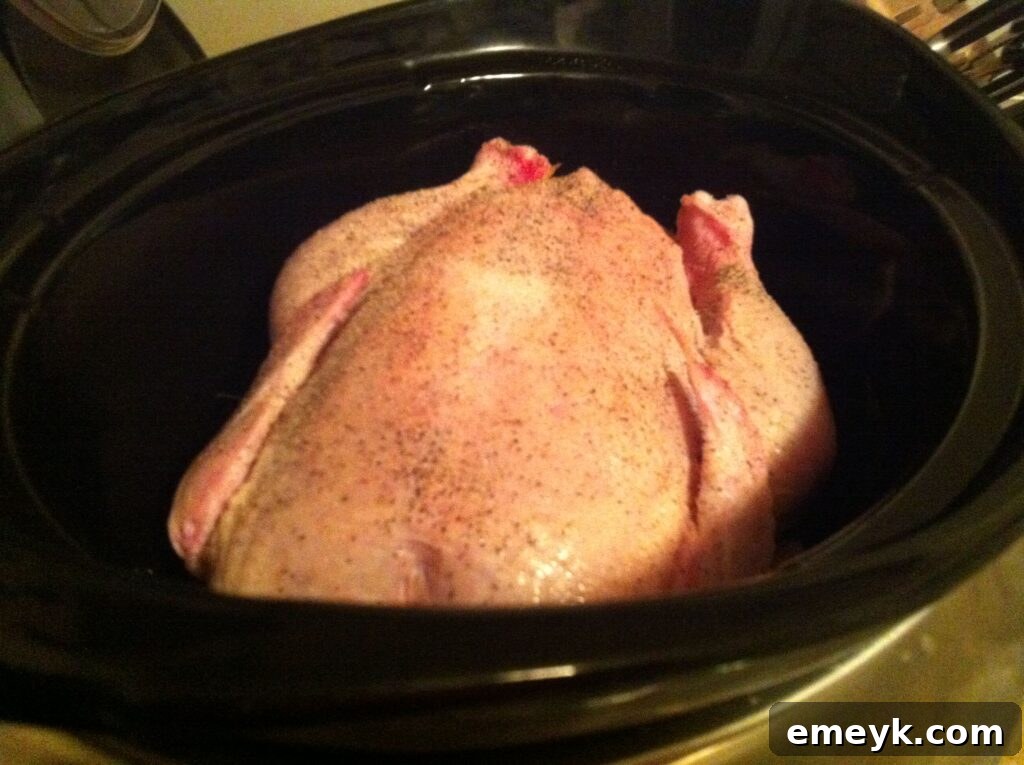
- Season & Slow Cook: Place the whole chicken in your slow cooker. Season generously with salt and freshly ground black pepper. This initial seasoning is for the chicken meat itself. If you plan to use the cooked chicken for diverse dishes, keep the seasoning simple. However, for added aromatics that will subtly infuse both the meat and the initial juices, you could add a few garlic cloves, half an onion, or a sprig of fresh rosemary or thyme. Avoid overpowering spices at this stage if you want versatile chicken meat.

- Initial Cooking Cycle: Secure the lid on your slow cooker and cook the chicken on the LOW setting for 7 hours. This long, slow cook ensures the chicken becomes incredibly tender, falling off the bone, and creates a flavorful foundation of natural pan juices, which are crucial for the subsequent stock.
Phase 2: Crafting the Nourishing Stock
- Prepare for Stock Creation: After 7 hours, carefully remove the tender chicken from the slow cooker. Allow it to cool sufficiently so you can handle it comfortably. It’s important to leave the precious chicken juices, typically about 2 inches deep, in the crock pot. Once the chicken is cool enough, meticulously remove all the meat from the bones, setting the meat aside for your meals throughout the week. Take all the bones (including any small fragments, which contribute significantly to the mineral content), skin, and any cartilage, and return them to the slow cooker, adding them to the reserved juices. The more bones, the richer and more nutritious your stock will be.
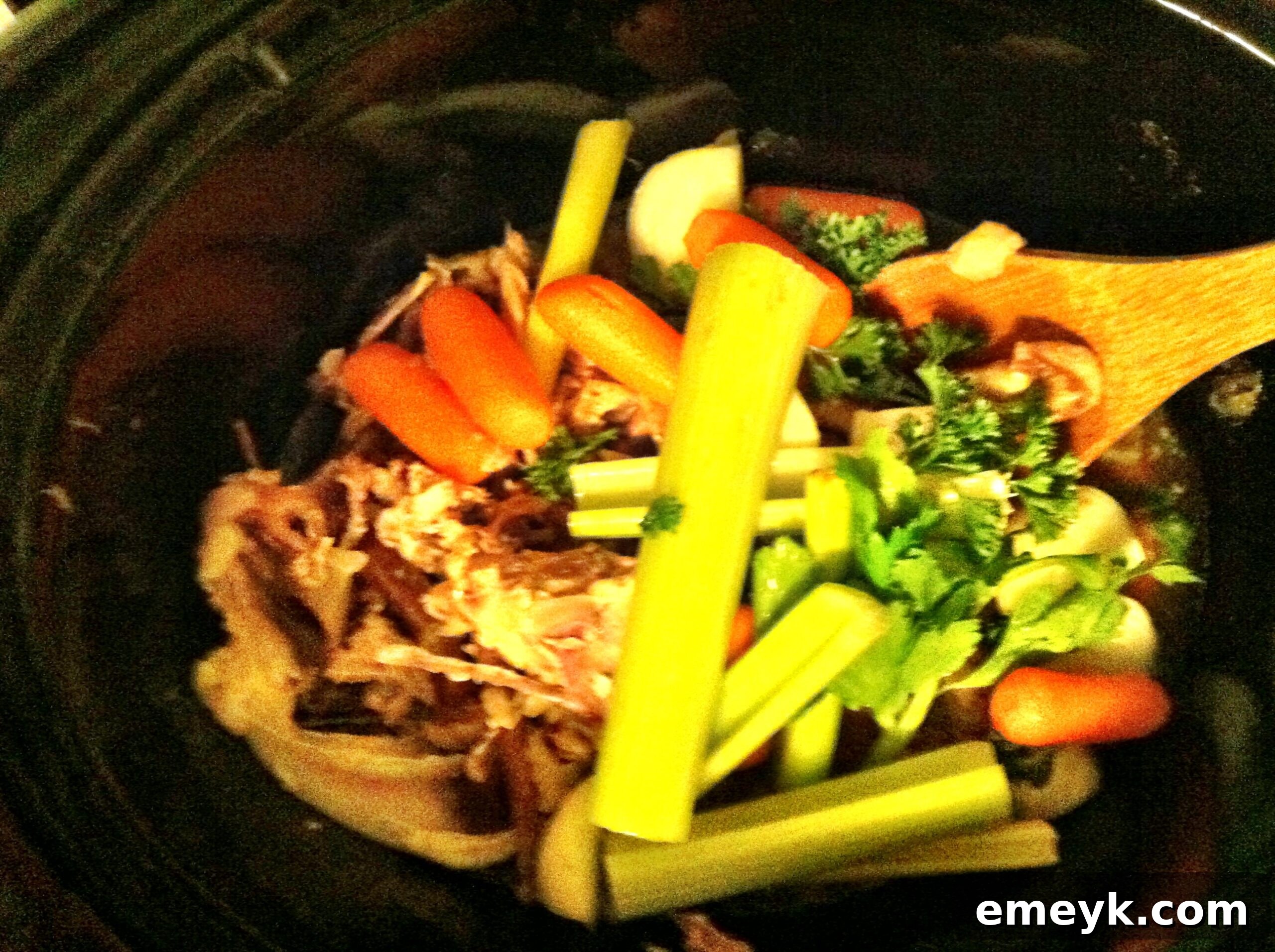
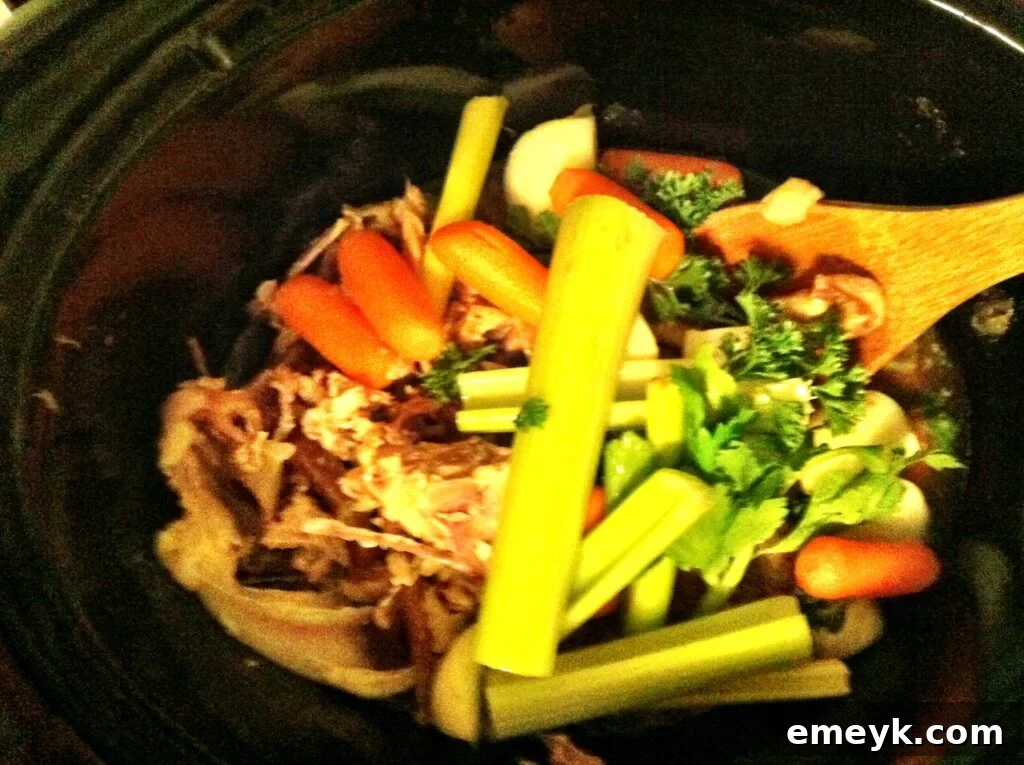
- Add Aromatics & Water: To the bones and juices in the slow cooker, add approximately 5-6 cups of fresh water, or enough to generously cover the bones without overfilling your pot. Now is the time to introduce your aromatic vegetables. A classic “mirepoix” of 2-3 carrots (roughly chopped), 2-3 celery stalks (chopped), and 1-2 onions (quartered) is highly recommended. For an even deeper flavor, you can also add a few cloves of garlic (smashed), a bay leaf, a handful of fresh parsley stems, or a teaspoon of whole peppercorns. These ingredients will infuse your stock with an incredible depth of flavor.
- Long Simmer for Extraction: Place the lid back on the slow cooker and set it to LOW. Allow it to simmer overnight for at least 9 hours. For an even richer, more gelatinous, and mineral-dense stock, you can extend this simmering time up to 12-24 hours. The prolonged, gentle heat is crucial for thoroughly extracting all the collagen, gelatin, and minerals from the bones.
Phase 3: Straining, Cooling, and Storage
- Strain the Broth: Once the simmering is complete, carefully set a large, heat-proof bowl underneath a fine-mesh strainer (or a colander lined with cheesecloth for an extra clear broth). Carefully pour the entire contents of the slow cooker through the strainer, allowing the rich liquid to collect in the bowl below. Discard the spent vegetables and bones.
- Cool & Store: Allow the broth to cool completely on the counter before transferring it to freezer-safe containers. This step is critical for food safety and to prevent thermal shock, especially if using glass containers. Once it has cooled to room temperature, you can place the containers in the refrigerator for a day. This allows any fat to rise to the top and solidify, making it easy to skim off for a leaner stock, if desired. After chilling, transfer the containers to the freezer for long-term storage.
A Note on Mason Jars for Storage:
While I initially used plastic containers, I’ve since learned the benefits and precautions of using glass mason jars for freezing stock. Here is an excellent recommendation from Jill on Modern Alternative Kitchen:
“I used mason jars and got five pints out of this batch! When filling the jars, be sure to leave 1-2 inches of ‘head room.’ This space is essential because liquids expand when frozen, and insufficient headroom can cause the jars to crack. Let them cool completely, skim and discard fat off top, put the lids on and pop them in the freezer. (This has worked for me at least 20 times in the last year. However, the last time I froze broth, not one but two of my mason jars cracked. I think I broke my own rule of letting them cool completely (possibly even let them spend a day in the fridge) before freezing. Don’t do what I did, let them cool first!!).”
To avoid cracking, ensure your broth is completely chilled before freezing in glass jars. Additionally, opt for wide-mouth jars, as their shape is less prone to cracking than regular mouth jars when contents expand. For smaller portions, ice cube trays are fantastic; once frozen, pop out the cubes and store them in a freezer bag.
Endless Culinary Possibilities
Once you have a steady supply of homemade slow cooker chicken stock, your culinary world will expand. Use the cooked chicken meat for quick weeknight meals – shred it for tacos, enchiladas, or quesadillas; dice it for chicken salad sandwiches; or incorporate it into pasta dishes, stir-fries, or comforting casseroles. The stock itself is your secret weapon for making the most flavorful soups (like a classic chicken noodle or a hearty vegetable soup), enriching risottos, braising vegetables, or adding a savory depth to gravies and pan sauces. It truly is a staple that keeps on giving.
I sincerely hope you embark on this rewarding journey and try this Slow Cooker Chicken Stock recipe. It’s a simple change that yields immense benefits, transforming your cooking and enhancing your family’s health. Happy cooking & have a fabulous weekend!