
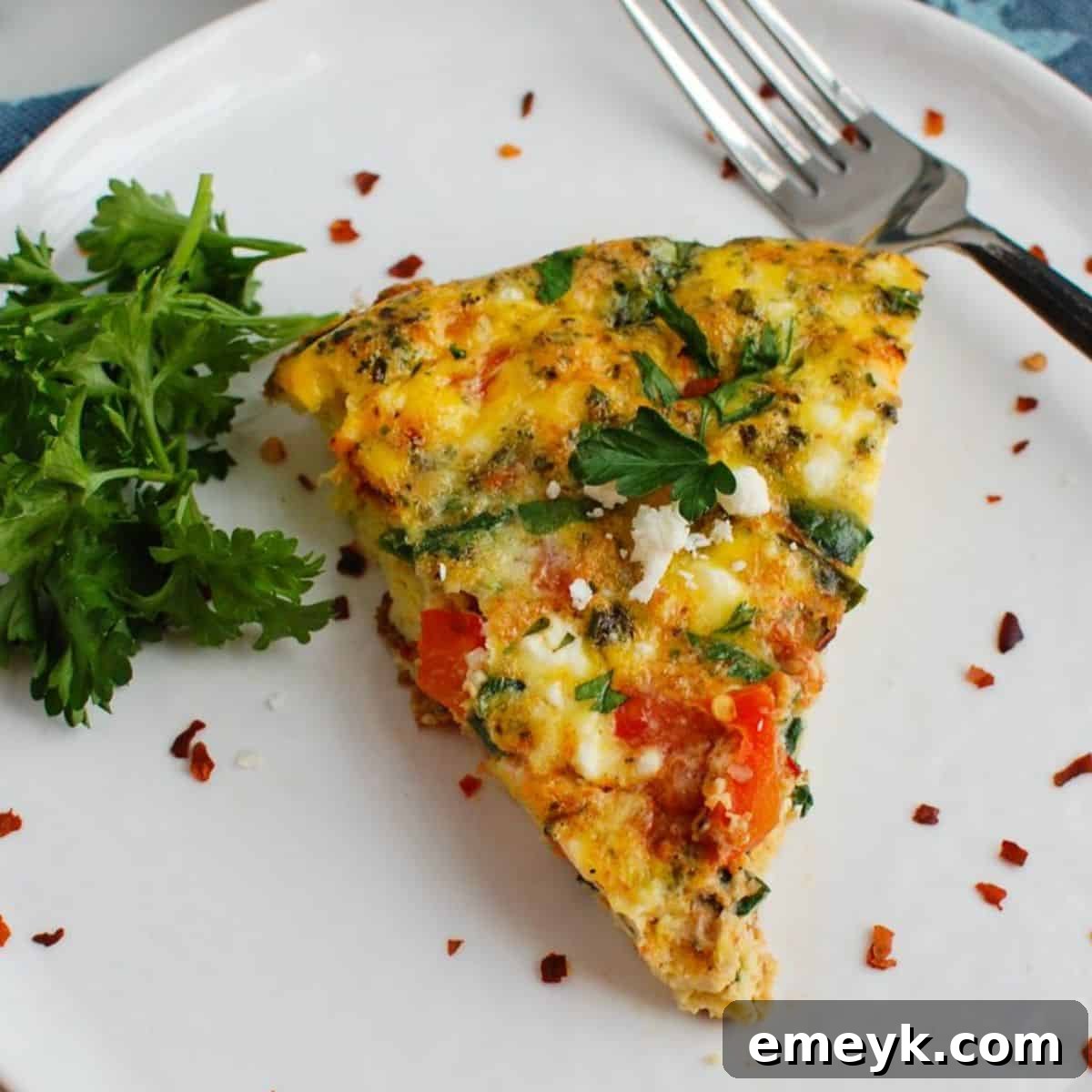
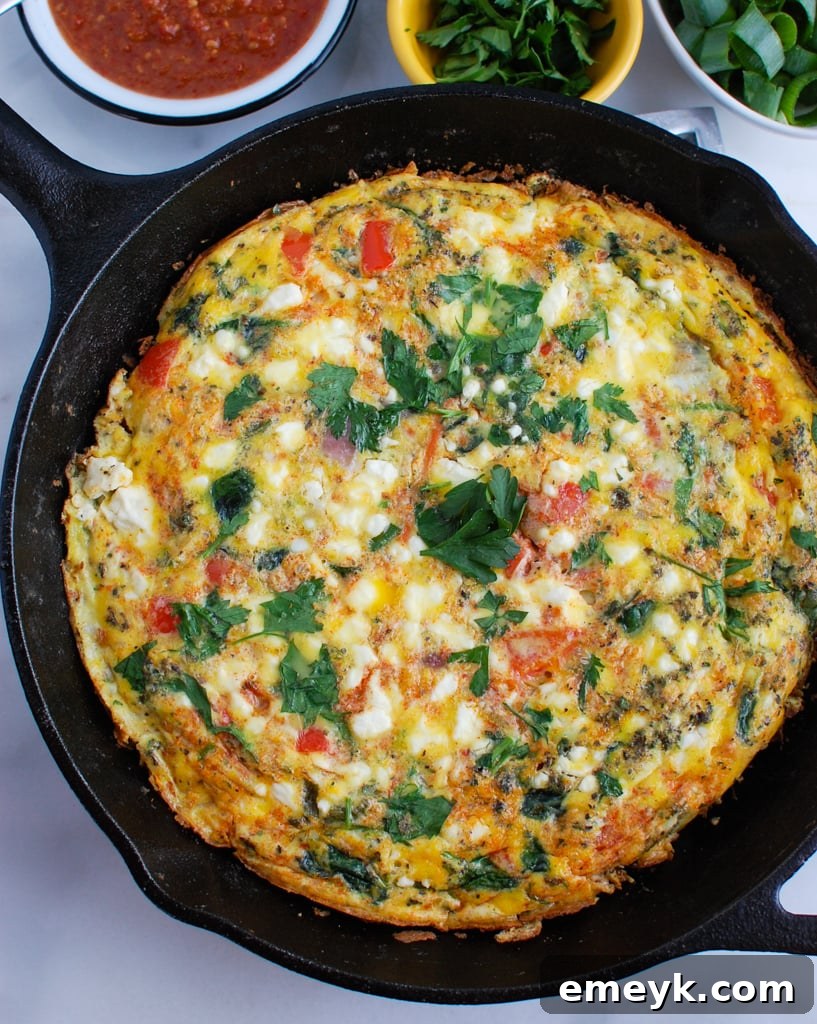
Kickstart your day with this incredibly flavorful Moroccan Frittata, a delightful dish that brings the rich, aromatic spices of Morocco right to your breakfast table. Combining fluffy baked eggs with a vibrant medley of vegetables and the distinctive kick of harissa paste, this frittata is elegantly finished with a generous topping of crumbled feta cheese, fresh parsley, and crisp green onions. Frittatas are renowned for their simplicity and versatility, making them a perfect choice for an easy yet impressive meal any day of the week, whether you’re serving it for breakfast, brunch, or even a light dinner.
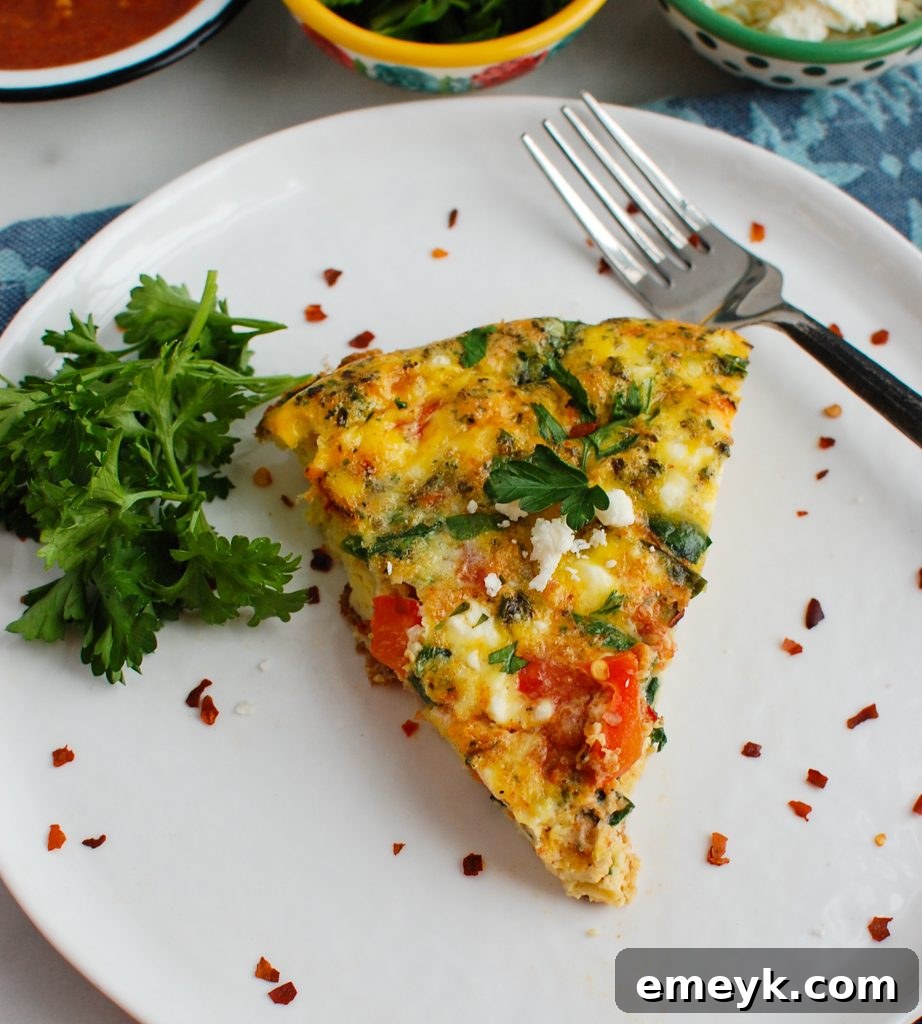
My culinary journey often leads me to the enchanting and complex flavors of Moroccan cuisine. As you might have gathered from popular recipes like these Moroccan Chicken Thighs and this comforting Moroccan Red Lentil Soup, the unique spice blends and robust flavor profiles of Morocco hold a special place in my heart. Today’s Moroccan Frittata is another testament to this deep appreciation, demonstrating how these warm and intensely satisfying notes can transform a simple egg dish into something truly extraordinary. The combination of earthy spices, a subtle hint of heat, and the creamy texture of baked eggs creates a breakfast experience that is both invigorating and deeply satisfying, offering a wonderful start to your morning.
When developing this particular recipe, I knew that harissa paste had to be a star ingredient. This fiery yet fragrant North African chili paste is a cornerstone of many Moroccan and Maghrebi dishes, celebrated for its ability to infuse incredible depth and warmth. Just a couple of tablespoons can dramatically enhance the flavor profile, adding complex notes that range from smoky and tangy to pleasantly spicy. Harissa is an indispensable pantry staple for me; I frequently keep it on hand to elevate everyday meals. It’s fantastic for adding a vibrant punch to egg dishes like this frittata, serving as a dynamic base for various side dishes, or stirring into soups and stews for an authentic Moroccan twist.
If you’re a fan of versatile and delicious egg-based meals, you’ll also love exploring other options from my culinary collection. For a taste of garden freshness, consider trying this wholesome Oven Baked Zucchini Frittata. If you’re looking for something with a more gourmet touch, the Sun-Dried Tomato and Goat Cheese Frittata offers a delightful blend of rich and tangy flavors. For those who prefer a heartier, more substantial meal, a comforting Egg Sausage Casserole is always a hit. And for a touch of classic French elegance with an Italian twist, this exquisite Caprese Quiche Lorraine Recipe is a must-try. Each of these recipes offers a unique way to enjoy eggs, proving their versatility not just for breakfast but also for brunch, lunch, or even a light and satisfying dinner.
Key Ingredients for Your Moroccan Frittata
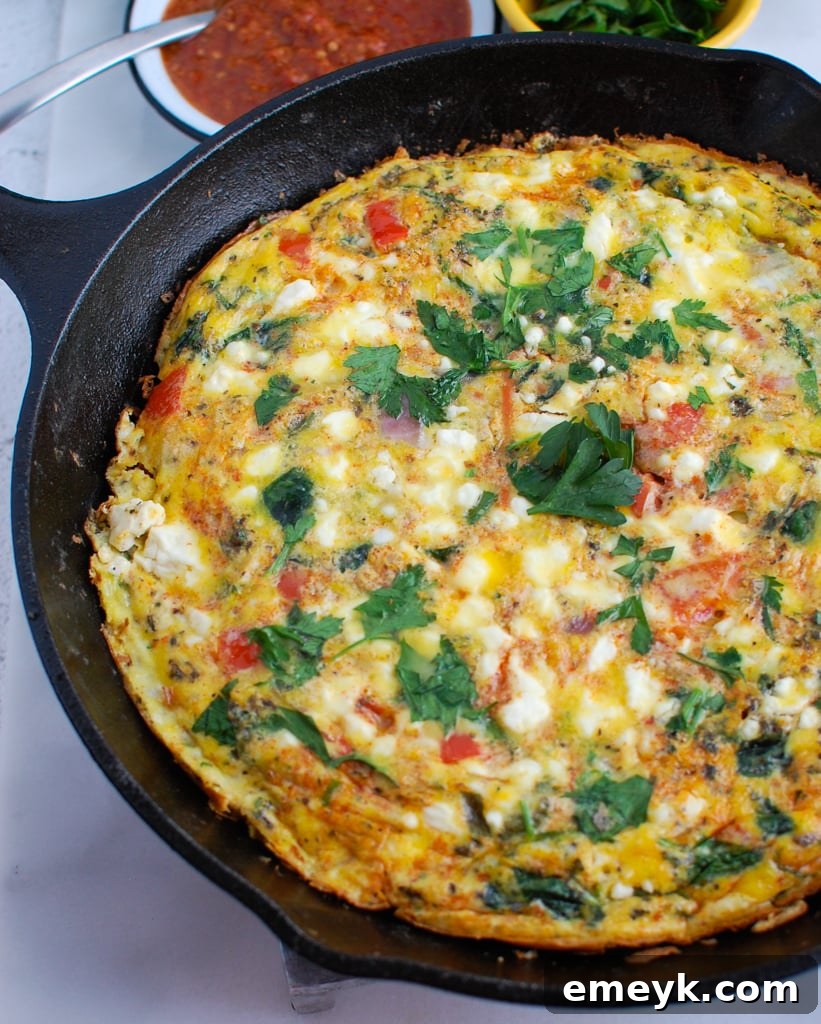
Creating a truly delicious Moroccan Frittata begins with a careful selection of fresh, high-quality ingredients that harmonize to deliver an authentic taste experience. Below, you’ll find a detailed overview of the simple yet essential components you’ll need, along with helpful tips for choosing them and potential variations. For precise measurements and step-by-step printable instructions, please refer to the comprehensive recipe card located further down the page.
- Eggs: As the undisputed foundation of any frittata, this recipe calls for 12 large eggs, lightly whisked. Using large eggs ensures a substantial and satisfying serving, providing plenty of protein to keep you feeling full. Whether you choose white or brown eggs, prioritizing their freshness is key for the best flavor, texture, and overall quality of your frittata. Whisking them just enough to combine the yolks and whites thoroughly, without incorporating too much air, will result in a perfectly fluffy yet dense frittata that isn’t overly airy or rubbery.
- Milk: A small but significant amount of milk or cream is crucial for achieving that wonderfully creamy, tender texture characteristic of a great frittata. Whole milk is highly recommended for its richness, which contributes significantly to the overall mouthfeel and helps create a custardy consistency. If you prefer an even more indulgent and luxurious result, heavy cream can be used to impart an extra layer of decadence. For those seeking dairy-free alternatives, unsweetened plant-based milks like almond or oat milk can also work, though it’s worth noting they may slightly alter the final creaminess and flavor profile.
- Harissa Paste: This is where the distinct Moroccan magic truly comes alive in this dish. Harissa paste is a celebrated North African chili paste, renowned for its complex and aromatic flavor profile rather than just its heat. It’s typically crafted from a robust blend of sun-dried red chili peppers, fresh garlic, rich olive oil, and an aromatic array of traditional spices such as caraway, coriander, and cumin. Some regional variations also include a touch of sweet tomatoes or a hint of vinegar for added tanginess and depth. While it originated in Tunisia, harissa is incredibly popular and widely used across the entire Maghreb region, including Morocco and Algeria, making it readily available in most major supermarkets or specialty food stores. You can easily adjust the quantity to your preferred level of spice and flavor intensity, from mild to extra fiery.
- Vegetables: This Moroccan Frittata recipe features a colorful and nutritious mix of finely diced red onion, vibrant bell pepper (any color works beautifully, though red adds a sweet note), finely shredded carrots (matchstick carrots are particularly convenient for this), and a generous amount of fresh spinach. This combination not only adds great texture and depth of flavor but also provides a significant boost of essential vitamins and fiber. The inherent beauty of a frittata lies in its adaptability; feel free to customize the vegetables based on what’s in season, what you have readily available in your fridge, or your personal preferences. Other excellent and popular additions include tender zucchini, earthy mushrooms, sweet cherry tomatoes, or even some pre-cooked potatoes for a heartier, more substantial meal.
- Cheese: Crumbled feta cheese is specifically chosen for this frittata because it provides a delightful salty tang and a creamy, slightly crumbly texture that beautifully complements the robust flavors of the harissa and sautéed vegetables. Its distinctive savory notes elevate the dish, making each bite more exciting and well-rounded. If feta isn’t your preference or you’re looking to try something different, this recipe is highly forgiving and versatile. You can easily experiment with other types of cheese such as sharp cheddar for a more classic, bold profile, tangy goat cheese for an extra layer of creaminess and zest, or mild mozzarella for a subtle, comforting melt that blends seamlessly into the eggs.
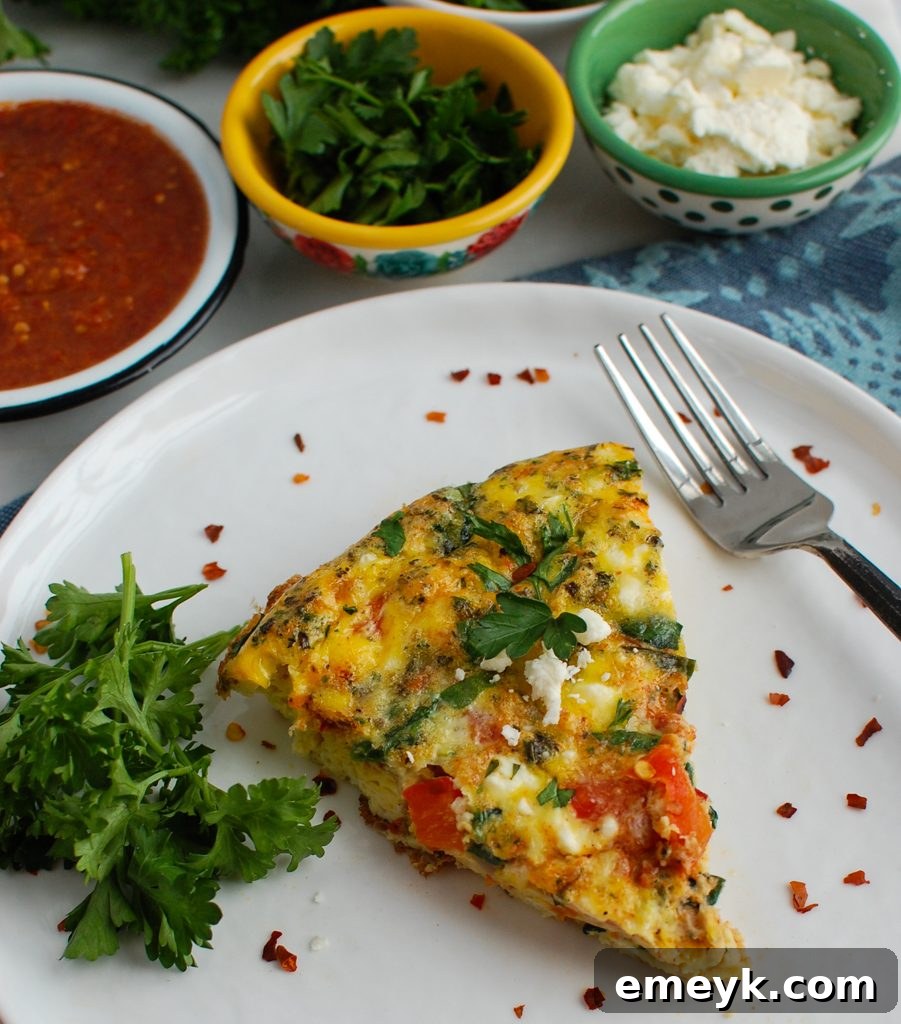
How to Prepare Your Authentic Moroccan Frittata
Crafting this Moroccan Frittata is a straightforward and enjoyable process, designed to bring sophisticated, exotic flavors to your table with minimal fuss. By following these simple, step-by-step instructions, you’ll be able to create a perfect, golden-brown frittata every time, suitable for any meal.
-
Step 1: Prepare the Egg Base and Oven
Begin by preheating your oven to 350 degrees F (175 degrees C) to ensure it’s ready when your frittata is assembled. In a large mixing bowl, crack all 12 eggs. Add the specified amount of whole milk and a pinch of salt to the eggs. Whisk the mixture gently but thoroughly until the egg yolks and whites are just blended and no distinct streaks remain. It’s important to avoid over-whisking, as this can incorporate too much air, potentially leading to a less dense or slightly rubbery frittata. Once well combined, stir in half of the crumbled feta cheese, ensuring it’s evenly distributed throughout the egg mixture. Set this bowl aside while you prepare your vegetables.
-
Step 2: Sauté the Vegetables to Perfection
Heat the olive oil in a 12-inch non-stick oven-safe skillet or a well-seasoned cast iron skillet over medium heat. A good quality skillet is essential here for even cooking and easy release. Once the oil is shimmering gently, add the finely diced red onion, bell pepper, and chopped carrots. Sauté these vegetables for about 5-7 minutes, stirring occasionally, until they become tender but still retain a slight crispness, indicating they are cooked through but not mushy. Next, add the fresh spinach, along with another dash of salt and pepper to season. Continue to cook, stirring frequently, until the spinach has completely wilted down, which usually takes only 1-2 minutes. This step is crucial for developing the foundational flavors and textures of your frittata, ensuring the vegetables are perfectly tender before baking.
-
Step 3: Combine Eggs and Vegetables
Give your egg mixture another quick whisk just before adding it to the skillet. Now, incorporate the harissa paste into the whisked eggs, blending it thoroughly until its vibrant red color is evenly distributed throughout the mixture. This ensures every single bite carries that distinctive and aromatic Moroccan spice. Carefully pour the harissa-infused egg mixture evenly over the sautéed vegetables already in the skillet. Use a spatula to gently spread the vegetables and eggs evenly across the pan, ensuring everything is submerged and distributed for consistent cooking. Finally, generously sprinkle the remaining crumbled feta cheese over the entire top of the frittata mixture, which will create a beautiful golden crust when baked.
-
Step 4: Bake to Perfection and Serve
Carefully transfer the skillet directly to your preheated oven. Bake for approximately 30 to 35 minutes, or until the frittata begins to puff up beautifully, appears completely set in the center, and the edges are beautifully golden brown. To precisely test for doneness, gently shake the pan; the center should be firm with no visible liquid jiggle. Remove the frittata from the oven and let it cool in the skillet for at least 5-10 minutes before attempting to slice it. This essential resting period allows the frittata to set fully and firm up, which helps prevent it from collapsing and makes for cleaner, more intact slices. Slice into elegant wedges or rustic triangles and serve immediately, garnished with a sprinkle of fresh parsley for a burst of vibrant color and herbaceous freshness that complements the rich flavors.
Pro Tips for the Best Frittata
- Choose the Right Skillet: Ensure your oven-safe skillet is large enough (12-inch is ideal) to accommodate all ingredients without overcrowding. This allows vegetables to sauté properly and the frittata to cook evenly without steaming.
- Evenly Distributed Vegetables: Before pouring the egg mixture, make sure your sautéed vegetables are spread in a single, even layer at the bottom of the skillet for consistent bites.
- Customizing Spice Level: Harissa paste varies in heat intensity. If you prefer a milder frittata, start with 1 tablespoon and taste the raw egg mixture (before cooking, of course!) or adjust in future batches. For a spicier kick, feel free to increase the amount to 3 tablespoons or more.
- Don’t Overcook: Overcooked eggs can become rubbery. Remove the frittata as soon as the center is set. It will continue to cook slightly from residual heat.
- Serving Suggestions: This Moroccan Frittata is wonderful on its own, but it also pairs beautifully with a simple green salad dressed with a lemon vinaigrette, crusty artisan bread, or a dollop of cooling plain Greek yogurt or sour cream to balance the spice.
Storage and Reheating Tips
This Moroccan Frittata is not only delicious fresh out of the oven but also makes for excellent leftovers, providing a convenient and healthy option for meal prepping a week of quick and flavorful breakfasts, lunches, or even light dinners. To ensure your frittata stays fresh and delicious, extending its shelf life while maintaining its wonderful texture, follow these simple storage and reheating guidelines:
- Refrigerator Storage: Once the frittata has completely cooled to room temperature, transfer it (either as a whole piece or cut into individual slices) to an airtight container. Store it securely in the refrigerator for up to 4-5 days. Proper and quick cooling, along with a tight seal, are essential to maintaining its flavor, moisture, and preventing it from drying out.
- Freezing for Longer Term: For longer storage durations, you can easily freeze individual slices of the frittata. To do this effectively, wrap each slice tightly in plastic wrap, ensuring no air is trapped, then place them in a freezer-safe bag or an airtight container. Frozen frittata can be stored for up to 2-3 months. When you’re ready to enjoy it, thaw individual portions overnight in the refrigerator before proceeding with reheating.
- Reheating Instructions: For the best results and to preserve the frittata’s texture, reheat individual slices gently. In a microwave, heat for 1-2 minutes on medium power until warmed through, checking periodically. Alternatively, for a slightly crispier exterior and more even heating, reheat in a preheated oven at 300°F (150°C) for about 10-15 minutes, or until heated to your desired temperature. A toaster oven also works wonderfully for reheating single slices, providing excellent texture without drying them out.
Moroccan Frittata FAQs
A perfectly cooked frittata will appear golden brown and slightly puffed around the edges, with the center looking firm yet slightly springy to the touch. To confirm doneness, gently shake the pan; the center should not jiggle like a liquid. It’s crucial to remove the frittata from the oven when it reaches this point, as it will continue to cook slightly from residual heat (known as carryover cooking) for a few minutes after being removed. Allow the frittata to sit and rest for at least 5 minutes before slicing; this resting period is vital as it helps the frittata set completely, preventing it from collapsing and making for cleaner, more intact slices. This simple technique ensures a beautifully cooked frittata every time!
For optimal results, a 12-inch oven-safe skillet is highly recommended for cooking a Moroccan Frittata. A well-seasoned cast iron skillet is an excellent choice as it offers superior, even heat distribution and can achieve a wonderful, slightly crispy sear on the bottom, transitioning seamlessly from stovetop to oven. Alternatively, a high-quality non-stick ovenproof skillet also performs exceptionally well, ensuring the frittata releases easily without sticking. The key attribute for your chosen skillet is its ability to withstand oven temperatures, allowing you to begin sautéing your vegetables on the stovetop before finishing the baking process in the oven for a perfectly cooked frittata.
Absolutely! Frittatas are an ideal dish for meal preparation. You can bake the Moroccan Frittata entirely, let it cool completely to room temperature, and then store it in an airtight container in the refrigerator for up to 4-5 days. It tastes fantastic served cold, making it a convenient option for quick breakfasts or lunches, or it can be gently reheated according to the reheating tips provided above for a warm meal. This makes it a perfect grab-and-go breakfast or a practical addition to packed lunches throughout the week.
The inherent beauty of a frittata lies in its incredible versatility when it comes to vegetables. While red onion, bell pepper, carrots, and spinach provide a fantastic and flavorful base, feel completely free to experiment and customize! Consider adding other seasonal vegetables such as sautéed mushrooms, tender zucchini, sweet cherry tomatoes (halved), crisp asparagus, or even some leftover roasted root vegetables like sweet potatoes or butternut squash for added heartiness. Just ensure that any added vegetables are cooked until tender and any excess moisture is evaporated before combining them with the eggs. This crucial step prevents a watery frittata and ensures the best texture and flavor.
Yes, this Moroccan Frittata recipe is inherently vegetarian-friendly, making it a wholesome and satisfying option for anyone following a vegetarian diet. It is packed with protein from the eggs and a generous amount of fresh, nutritious vegetables. For those seeking a vegan alternative, you would need to adapt the recipe by using a plant-based egg substitute (such as a chickpea flour mixture or commercial egg replacer) and a dairy-free cheese alternative, adjusting cooking times and techniques as necessary to achieve a similar result.
Discover More Egg-Inspired Recipes
Eggs are an incredibly versatile and nourishing ingredient, forming the foundation for countless delicious and satisfying meals that extend far beyond just breakfast. If you’ve enjoyed the simplicity, vibrant flavors, and ease of preparation of this Moroccan Frittata, you’ll love exploring these other creative and incredibly easy egg-centric dishes from our expansive collection. These recipes are perfect for any time of day, whether you need a quick morning meal, a light lunch, or a comforting dinner option.
Vegetarian
Breakfast Egg Muffins
These individual egg muffins are packed with a colorful array of vegetables and savory cheese, making them an ideal make-ahead meal prep solution for busy mornings. Easily customize them with your favorite fillings for endless variety!
Beef
Southwestern Taco Egg Muffins
Add a spicy and zesty kick to your morning routine with these taco-flavored egg muffins. Featuring seasoned ground beef and bold Tex-Mex spices, they offer a hearty and flavorful start to your day.
Breakfast
Vegetarian Breakfast Egg Burritos
Rolled up with fluffy scrambled eggs, hearty black beans, and vibrant salsa, these vegetarian burritos are a delicious, satisfying, and perfectly portable breakfast option for any day of the week.
Breakfast
Southwest Breakfast Egg Tacos
Spice up your breakfast routine with these incredibly easy Southwest-inspired egg tacos. They’re loaded with fresh toppings, a touch of heat, and are guaranteed to add excitement to your morning meal.
Moroccan Frittata Recipe Card
This recipe for Moroccan Frittata offers a vibrant and deeply flavorful way to enjoy eggs, featuring aromatic harissa paste, a colorful medley of fresh vegetables, and creamy feta cheese. It’s a remarkably simple yet impressive dish, perfectly suited for a satisfying breakfast, a elegant brunch, or even a light and wholesome dinner. Experience the rich culinary traditions of Morocco in every delightful bite!
Moroccan Frittata
By Julia Jolliff
Start your day with this incredibly flavorful Moroccan Frittata, rich with the exotic tastes of North Africa. Fluffy eggs are baked to perfection with sautéed vegetables and spicy harissa paste, then beautifully topped with salty crumbled feta cheese, fresh parsley, and crisp green onion. Frittatas are universally praised for being both incredibly easy to prepare and absolutely delicious!
Prep Time: 15 mins
Cook Time: 25 mins
Total Time: 40 mins
Yields: 6 servings
Print Recipe
Ingredients
- 12 large eggs, whisked just until the yolks and whites are blended
- 3 tablespoons whole milk (or cream for extra richness and a more custardy texture)
- 2 tablespoons harissa paste (adjust the amount to your preferred level of spice and flavor intensity)
- 2 tablespoons olive oil
- 1/4 cup red onion, finely diced
- 1/2 cup red bell pepper, seeds removed and diced (any color bell pepper works well)
- 1/2 cup matchstick carrots, chopped (or finely shredded carrots)
- 1 cup fresh spinach, roughly chopped (can substitute with other leafy greens)
- 1 cup (approximately 4 ounces) feta cheese, crumbled, divided (can substitute with goat cheese or sharp cheddar)
- 1/2 teaspoon salt (or to taste, depending on the saltiness of your feta)
- 1/8 teaspoon black pepper (freshly ground is recommended for best flavor)
Instructions
- Preheat Oven & Prepare Egg Mixture: Begin by preheating your oven to 350°F (175°C). In a large mixing bowl, crack all 12 eggs. Add the whole milk and 1/2 teaspoon of salt. Whisk gently but thoroughly until the egg yolks and whites are just combined and no distinct streaks remain. Stir in half of the crumbled feta cheese until it is evenly distributed throughout the egg mixture. Set this bowl aside while you prepare your vegetables.
- Sauté Vegetables: Heat the 2 tablespoons of olive oil in a 12-inch non-stick oven-safe skillet (or a well-seasoned cast iron skillet) over medium heat. Add the finely diced red onion, bell pepper, and chopped carrots. Cook, stirring occasionally, for 5-7 minutes, until the vegetables are softened and tender-crisp. Add the fresh spinach and the 1/8 teaspoon of black pepper, continuing to cook and stir until the spinach has completely wilted down, which typically takes about 1-2 minutes.
- Combine Eggs, Harissa & Vegetables: Give your egg mixture another quick whisk. Then, stir in the 2 tablespoons of harissa paste until it is thoroughly combined and its vibrant color is evenly distributed throughout the eggs. Carefully pour this harissa-infused egg mixture evenly over the sautéed vegetables in the skillet. Use a spatula to gently spread the vegetables and eggs for even distribution. Finally, generously sprinkle the remaining crumbled feta cheese over the top of the frittata mixture.
- Bake Until Set & Serve: Carefully transfer the skillet to your preheated oven. Bake for approximately 30 to 35 minutes, or until the frittata is beautifully puffed up, the center appears set (it should not be jiggly when gently shaken), and the edges are lightly browned. Remove the frittata from the oven and let it cool in the skillet for at least 5-10 minutes before attempting to slice. This resting period allows the frittata to set fully, resulting in cleaner, more intact wedges or triangles. Serve warm, garnished with fresh parsley if desired for an added burst of freshness and color.
Recipe Notes
- Vegetable Variations: You can feel completely free to swap out the vegetables for any you prefer or have on hand. Any color bell pepper works nicely, as do tender zucchini, sliced mushrooms, or even small florets of chopped cauliflower. Always ensure your chosen vegetables are cooked until tender before incorporating them into the egg mixture to avoid a watery frittata.
- Spice Customization: For an even deeper and more complex Moroccan flavor profile beyond just the harissa, consider adding a small pinch of traditional Moroccan spices like ground coriander, cumin, sweet paprika, or turmeric to the vegetables while they are sautéing. These spices will enhance the aromatic qualities of the dish.
- Cheese Alternatives: If feta cheese isn’t your preference, goat cheese makes an excellent and equally flavorful substitute, offering a similar tangy creaminess that pairs beautifully with the other ingredients. Alternatively, you can use sharp cheddar cheese for a more familiar taste, or even a blend of mozzarella and Parmesan for a milder, meltier finish.
Nutrition Information
- Serving:
- 6g
- Calories:
- 254 kcal
- Carbohydrates:
- 6g
- Protein:
- 15g
- Fat:
- 19g
- Saturated Fat:
- 7g
- Polyunsaturated Fat:
- 2g
- Monounsaturated Fat:
- 8g
- Trans Fat:
- 0.03g
- Cholesterol:
- 351mg
- Sodium:
- 686mg
- Potassium:
- 265mg
- Fiber:
- 1g
- Sugar:
- 3g
- Vitamin A:
- 3267 IU
- Vitamin C:
- 19mg
- Calcium:
- 194mg
- Iron:
- 2mg
Nutrition information is automatically calculated and should be used as an approximation. Individual results may vary based on specific ingredient brands and preparation methods.