
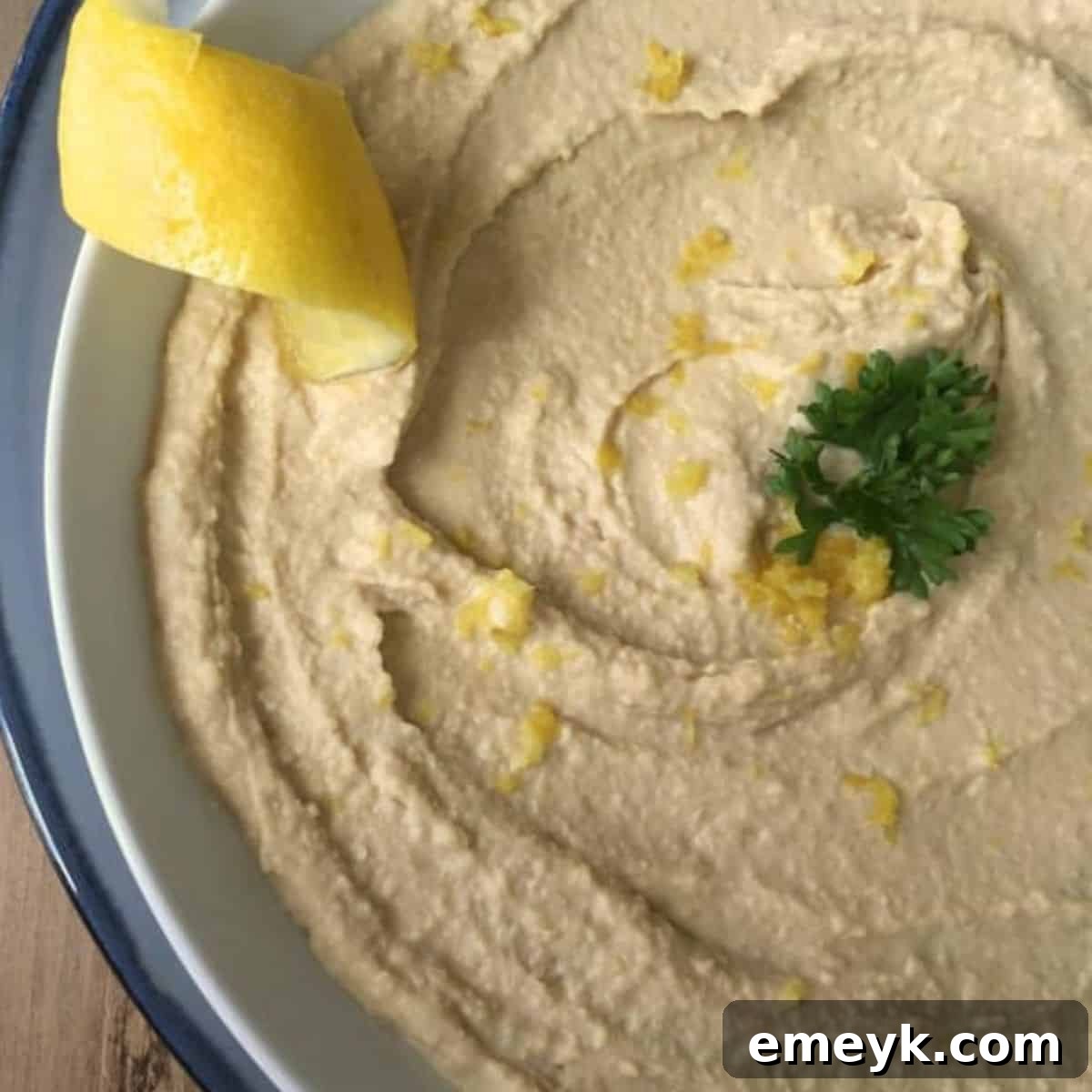
Dive into the bright and refreshing world of Lemon Hummus, a vibrant dip that will awaken your taste buds with its zesty flavor. This creamy, versatile spread is an absolute game-changer for anyone who appreciates the tang of fresh lemon combined with the rich, earthy notes of traditional hummus. It’s not just a delightful dip for your warm pita bread; it transforms sandwiches, wraps, and even salads with its incredible citrusy punch. Be warned, lemon aficionados: this recipe might just become your new obsession!
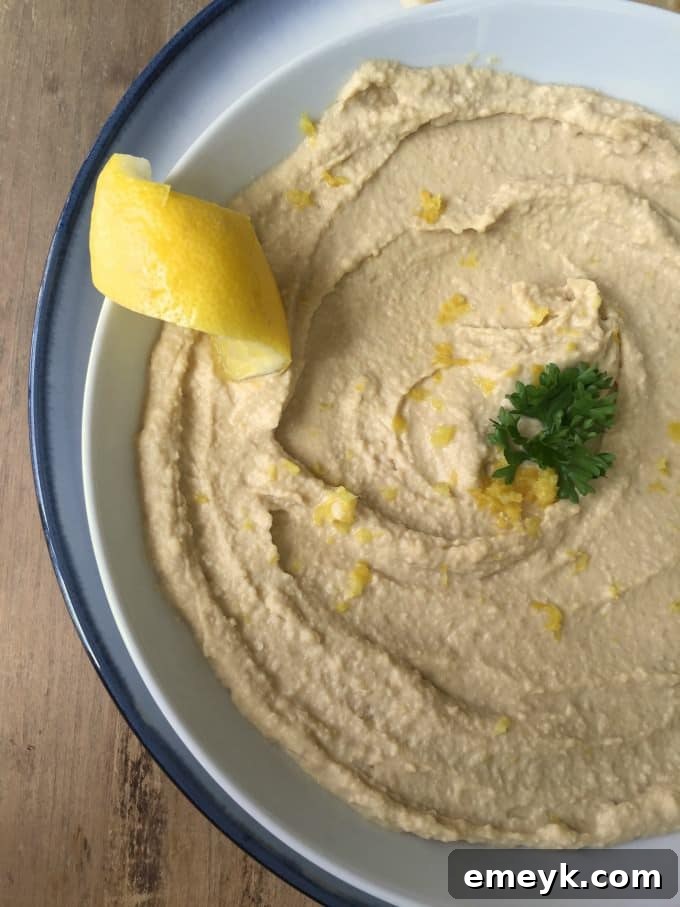
For me, hummus isn’t just a dish; it’s a cherished family tradition. Growing up, the aroma of freshly made hummus was a weekly staple in our home, often thanks to my grandma’s magical touch. Her hummus, always served alongside warm, fluffy pita, was an invitation to gather, share, and savor.
Back then, hummus was a hidden gem in many parts of America, far from the mainstream staple it is today. We proudly made ours from scratch, a practice that instilled in me a deep appreciation for its simple yet profound flavors. As I journeyed into adulthood, that passion for homemade hummus blossomed, leading me to experiment with countless variations. This Lemon Hummus recipe stands out as a personal favorite, a testament to my enduring love for all things lemon. If you, like me, find joy in bright, citrusy notes, then prepare to fall head over heels for this zesty creation.
Beyond its delightful taste, hummus offers an incredible blend of lightness, ease of preparation, and remarkable versatility. It’s the perfect healthy snack to keep on hand for those hunger pangs, effortlessly transitioning from a creamy spread for sandwiches and wraps to the star of any vibrant snack platter or mezze spread. If you’re eager to explore more delicious hummus varieties, don’t miss out on my other popular recipes like Easy Beet Hummus, Classic Lebanese Hummus, Roasted Red Pepper Hummus, and Spicy Hummus.
This article will guide you through crafting the perfect batch of lemon hummus, exploring its ingredients, step-by-step preparation, storage tips, and frequently asked questions to ensure you achieve that irresistibly smooth and flavorful dip every time. Get ready to elevate your snacking and meal prep with this exceptional recipe.
Why You’ll Love This Zesty Lemon Hummus
- Bursting with Fresh Flavor: The generous amount of fresh lemon juice and zest infuses this hummus with an unparalleled brightness, making it incredibly refreshing and distinct from traditional recipes.
- Incredibly Versatile: Whether you’re dipping vegetables, spreading it on a sandwich, or using it as a base for a grain bowl, this lemon hummus adapts beautifully to almost any culinary creation.
- Healthy and Nutritious: Packed with protein and fiber from chickpeas, healthy fats from tahini and olive oil, and vitamins from fresh lemon, it’s a snack you can feel good about.
- Simple to Make: With just a few staple ingredients and a food processor, you can whip up a batch of homemade lemon hummus in under 15 minutes. Forget store-bought; homemade is always superior!
- Customizable: Easily adjust the lemon, garlic, or salt to suit your personal taste preferences, creating a dip that’s perfectly tailored for you.
A Brief History of Hummus
Hummus bi tahini, commonly known simply as hummus, holds a rich and ancient history, tracing its origins back to the Middle East. While its exact birthplace is often debated, evidence suggests that variations of chickpea-based dishes have been enjoyed for centuries in regions like Egypt, Syria, Lebanon, and Turkey. The earliest known recipe for a dish similar to hummus appears in a 13th-century cookbook from Cairo. Traditionally, hummus was a staple food, cherished for its nutritional value, affordability, and ability to provide sustained energy.
For generations, families across the Middle East have prepared hummus as a cornerstone of their cuisine, typically serving it as part of a mezze platter, accompanied by fresh vegetables, olives, and warm pita bread. It’s more than just food; it’s a symbol of hospitality and community. The combination of chickpeas, tahini, lemon juice, and garlic not only creates a harmonious flavor profile but also a complete protein source, making it a vital component of vegetarian and vegan diets.
In recent decades, hummus has transcended its regional boundaries, experiencing a surge in global popularity. What was once considered an exotic dish is now a common sight in supermarkets and restaurants worldwide. This mainstream adoption is a testament to its universal appeal – its creamy texture, wholesome ingredients, and adaptability to various culinary applications have made it a beloved dip and spread across diverse cultures. Making hummus at home allows you to connect with this rich heritage and appreciate the authentic flavors that have delighted palates for centuries.
Key Ingredients for Bright and Creamy Lemon Hummus
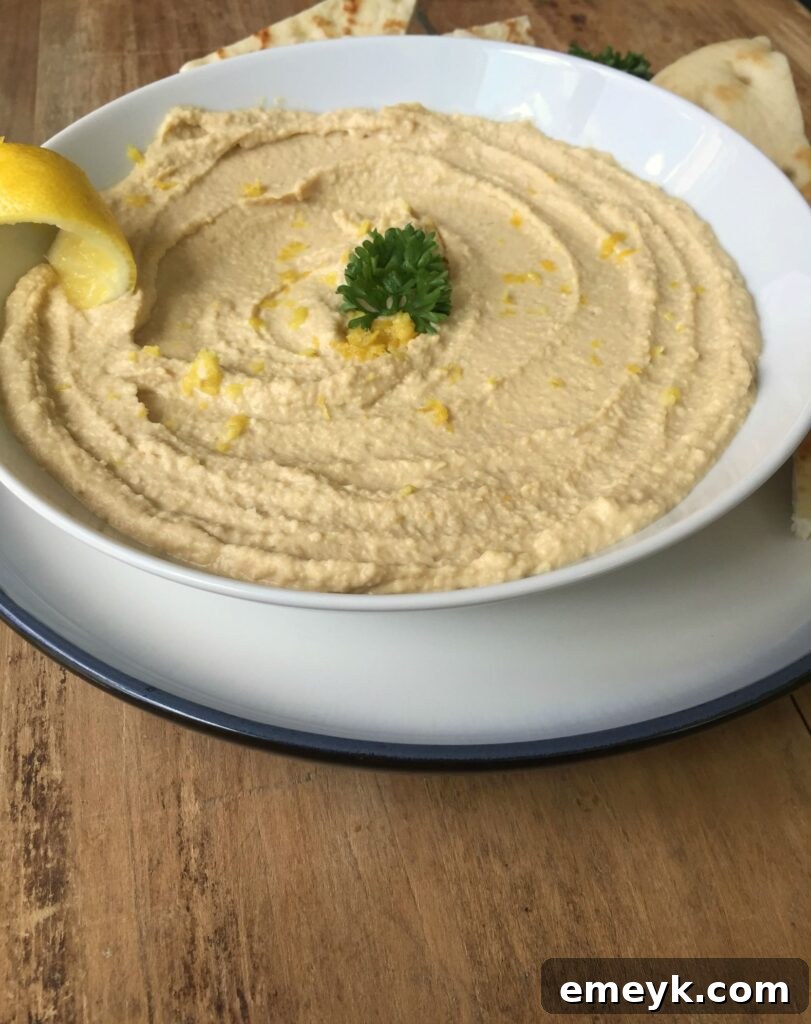
Crafting the perfect Lemon Hummus begins with selecting quality ingredients. Each component plays a vital role in achieving that signature creamy texture and invigorating flavor profile. While the recipe card below provides exact measurements, understanding the purpose of each ingredient will help you fine-tune your hummus to perfection.
- Chickpeas (Garbanzo Beans): These legumes are the heart and soul of any hummus. For convenience, canned chickpeas are excellent, but ensure they are thoroughly drained and rinsed to remove excess sodium and preserve the fresh taste of your hummus. A pro tip: reserve a small amount of the chickpea liquid (aquafaba) from the can. This starchy water can be gradually added to achieve your desired hummus consistency, helping to thin it out without diluting the flavor. For an extra creamy texture, some enthusiasts even take the time to peel the skins off the chickpeas – a small effort that yields surprisingly smooth results.
- Fresh Lemons: The star of our Lemon Hummus! You’ll need both fresh lemon juice and lemon zest. Freshly squeezed lemon juice provides that essential tartness and brightness, while the zest contains potent aromatic oils that amplify the lemony flavor without adding excessive liquid. Always opt for fresh lemons over bottled juice for the most vibrant and authentic taste.
- Tahini (Sesame Seed Paste): This creamy, nutty paste made from ground sesame seeds is non-negotiable for authentic hummus. Tahini contributes a distinctive earthy depth, a slightly bitter edge, and a crucial richness that gives hummus its characteristic smooth, buttery consistency. It’s often found in the international or Middle Eastern section of larger grocery stores. High-quality tahini, with a smooth pourable consistency, makes a significant difference in the final product.
- Garlic: Fresh garlic cloves are a fundamental flavor enhancer in hummus. While not strictly essential for every variation, a couple of fresh, chopped cloves add a pungent, aromatic kick that beautifully complements the lemon. For a milder, sweeter garlic flavor, you could even consider roasting the garlic beforehand.
- Extra Virgin Olive Oil: Beyond being a healthy fat, a good quality extra virgin olive oil binds the ingredients, adding a fruity, slightly peppery note, and contributing to the overall silkiness of the hummus. A final drizzle over the finished dip also adds visual appeal and a layer of rich flavor.
- Salt: Essential for balancing and enhancing all the flavors. Start with a small amount and adjust to taste, as the saltiness of canned chickpeas can vary.
How to Make The Best Lemon Hummus: Step-by-Step
Creating homemade lemon hummus is a remarkably straightforward process that yields incredibly rewarding results. Follow these simple steps to achieve a perfectly creamy, zesty dip every time.
Step 1: Prepare Your Ingredients
- Ensure your chickpeas are thoroughly drained and rinsed. If you choose to peel them for extra creaminess (see tips below), do so now.
- Juice your lemons and finely zest half a medium lemon. Keep the zest separate as you’ll use some for blending and some for garnish.
- Chop your garlic cloves.
Step 2: Blend for Creamy Perfection
Into the bowl of your food processor, add the drained chickpeas, freshly squeezed lemon juice, about half of the lemon zest, tahini, chopped garlic cloves, olive oil, and a pinch of salt. Process these ingredients for at least 60 seconds, or longer, until the mixture is completely smooth and creamy. It’s crucial to allow the food processor to run for a few minutes, stopping periodically to scrape down the sides of the bowl with a spatula. This ensures all ingredients are fully incorporated and helps achieve that ultra-smooth, emulsified texture that defines great hummus.
After the initial blending, taste your hummus. This is your opportunity to adjust the flavors. Need more lemon? Add a touch more juice. Craving more garlic? Add another small clove. If the hummus is too thick for your liking, turn the food processor back on and slowly drizzle in small amounts of cold water or the reserved chickpea liquid (aquafaba) until it reaches your desired silky consistency. Remember, you can always add more liquid, but you can’t take it away!
Step 3: Serve and Garnish
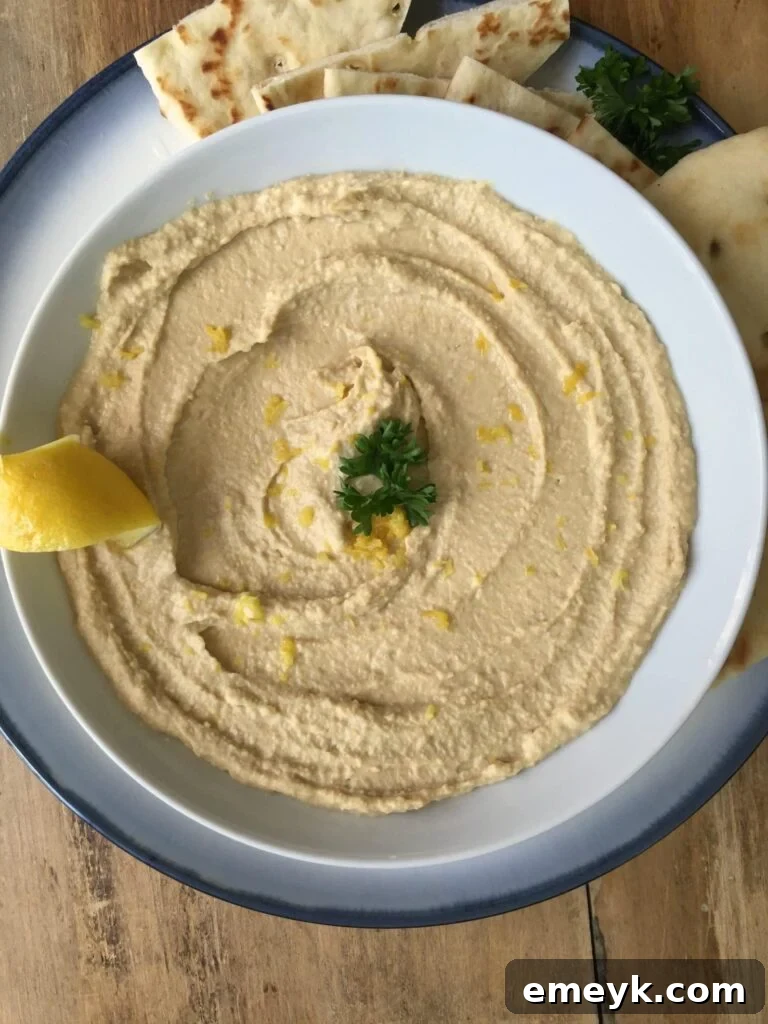
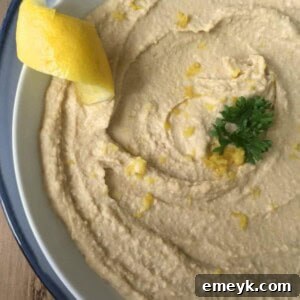
Once you’ve achieved the perfect consistency and flavor, use a spatula to transfer your creamy lemon hummus into a shallow serving bowl. Create a small swirl in the center of the hummus with the back of a spoon. Drizzle a generous amount of high-quality extra virgin olive oil over the top – this adds both flavor and a beautiful sheen. Finally, sprinkle with the remaining lemon zest and a generous amount of freshly chopped parsley for a burst of color and herbaceous freshness.
Your homemade Lemon Hummus is now ready to be enjoyed! Serve immediately with warm pita bread, fresh vegetable sticks, crackers, or as a spread on your favorite sandwiches.
Storage Tips for Fresh and Flavorful Hummus
One of the many benefits of making your own hummus is having a healthy, delicious dip readily available throughout the week. Proper storage ensures your Lemon Hummus remains fresh and enjoyable.
Refrigeration:
Once prepared, transfer your lemon hummus to an airtight container. It will stay fresh in the refrigerator for up to 5 to 7 days. To help maintain its moisture and prevent it from drying out or forming a crust, gently smooth the top of the hummus with a spoon and drizzle a thin layer of extra virgin olive oil over the surface before sealing the container. This creates a natural barrier that locks in freshness and flavor.
Freezing:
Hummus freezes surprisingly well, making it perfect for meal prep or enjoying later. To freeze, scoop the hummus into freezer-safe airtight containers or heavy-duty freezer bags. When using containers, leave about an inch of headspace to allow for expansion during freezing. For best results, freeze in individual or smaller portions so you can thaw just what you need.
Frozen hummus can be stored for up to 3 months. When you’re ready to enjoy it, simply transfer the container to the refrigerator and let it thaw overnight. Once thawed, give it a good stir, and if needed, add a tablespoon or two of cold water or lemon juice and blend briefly in the food processor to restore its creamy texture. A fresh drizzle of olive oil and a sprinkle of parsley will bring it back to life before serving.
Creative Serving Suggestions for Your Lemon Hummus
The versatility of Lemon Hummus goes far beyond a simple dip. Its bright, zesty profile makes it a fantastic addition to a myriad of dishes, transforming everyday meals into extraordinary culinary experiences. Here are some inspiring ways to enjoy your homemade creation:
- Classic Dip: Serve it generously with warm pita bread, pita chips, an assortment of fresh-cut vegetables like carrot sticks, cucumber slices, bell pepper strips, cherry tomatoes, or celery.
- Sandwich & Wrap Spread: Ditch the mayonnaise! Lemon hummus makes a healthier, more flavorful spread for sandwiches, wraps, and even flatbreads. It pairs beautifully with roasted vegetables, grilled chicken, falafel, or fresh greens.
- Mezze Platter Star: Elevate your entertaining with a vibrant mezze platter featuring lemon hummus as the centerpiece. Surround it with olives, feta cheese, dolmades, grilled halloumi, and other Mediterranean delights.
- Salad & Grain Bowl Booster: Swirl a dollop of hummus into your salad dressing, or dollop it directly onto grain bowls for an added layer of creaminess, protein, and flavor. It’s fantastic with quinoa, farro, or couscous bowls.
- Burger & Kebab Topping: Spread it on burger buns or dollop it alongside grilled kebabs for a refreshing counterpoint to rich meats.
- Breakfast Treat: For a savory start to your day, spread hummus on toast and top with sliced avocado, a fried egg, or everything bagel seasoning.
Tips for the Creamiest Hummus Ever
Achieving that silky-smooth, restaurant-quality hummus texture is a culinary quest for many. While homemade hummus is always delicious, a few expert tricks can elevate your dip to extraordinary creaminess:
- Peel the Chickpeas (Optional, but impactful): This is perhaps the most significant step for ultra-creamy hummus. The thin skins on chickpeas, while harmless, can add a slightly gritty texture. To peel them, simply rub cooked chickpeas vigorously between two kitchen towels, or gently pinch each chickpea between your fingers. It’s a bit time-consuming but yields truly superior results.
- Overcook Canned Chickpeas with Baking Soda: If peeling feels like too much effort, or even if you do peel them, simmering canned chickpeas in water with a pinch of baking soda for 10-15 minutes can make a huge difference. Baking soda helps to break down the chickpea skins and soften the legumes further, leading to a much smoother blend. Drain thoroughly before using.
- Use Good Quality Tahini: The quality and consistency of your tahini are crucial. Look for a tahini that is smooth, pourable, and made from hulled, roasted sesame seeds. A thick, pasty tahini can result in a drier, less creamy hummus. Stir your tahini well before measuring, as oil can separate.
- Add Ice Water Gradually: While blending, slowly drizzle in small amounts of ice-cold water (or the reserved aquafaba). The cold water helps to create a lighter, fluffier, and more emulsified hummus. It’s a trick used by many professional chefs to achieve that desirable airy texture.
- Blend for Longer: Don’t rush the process! Let your food processor or high-speed blender run for several minutes – often 3 to 5 minutes or even more – stopping to scrape down the sides frequently. This extended blending time fully emulsifies the ingredients, breaking down the chickpeas into an incredibly smooth paste and incorporating air for a lighter texture.
- Start with Warm Chickpeas: Some chefs suggest that blending slightly warm chickpeas (after simmering with baking soda) can also aid in achieving a creamier consistency, as the warmth helps them break down more easily.
Frequently Asked Questions About Lemon Hummus
Can I make hummus without tahini?
While you certainly can make a chickpea dip without tahini, it won’t be considered traditional hummus. Tahini is a fundamental ingredient that provides hummus with its distinctive nutty flavor, creamy texture, and essential richness. If you need a substitute, you could try Greek yogurt for tanginess and creaminess (though it won’t be vegan), or a small amount of a neutral-flavored nut butter like cashew or almond butter for richness, but the flavor profile will differ significantly.
What if my hummus is too thick?
If your hummus is thicker than you prefer, don’t worry – it’s an easy fix! While your food processor is running, slowly drizzle in additional fresh lemon juice, cold water, or the reserved chickpea liquid (aquafaba) until you achieve your desired smooth and creamy consistency. A small amount goes a long way, so add gradually.
How long does homemade lemon hummus last?
When stored properly in an airtight container in the refrigerator, homemade lemon hummus typically lasts for 5 to 7 days. For extended storage, it can be frozen for up to 3 months. Remember to thaw it in the fridge and stir well before serving, potentially adding a touch more liquid to restore its texture.
Can I use dried chickpeas instead of canned?
Absolutely! Using dried chickpeas can yield an even richer flavor and creamier texture, as you have more control over their cooking. You’ll need to soak them overnight and then boil them until very tender – often longer than the package directions suggest for basic cooking, aiming for chickpeas that practically melt when squeezed. Ensure they are well-cooked before blending for the best results.
More Delicious Hummus Recipes to Explore
If you’ve enjoyed this Lemon Hummus, you’ll be delighted to know there’s a whole world of hummus flavors waiting to be discovered. Expand your culinary repertoire with these other fantastic hummus variations:
Tried this recipe? Leave a star rating and comment below! Subscribe to my newsletter or follow me on Facebook, Instagram, or Pinterest for the latest.
Lemon Hummus Recipe
By Julia Jolliff
Lemon Hummus is a light, incredibly fresh, and zesty dip perfect for pita bread, sandwiches, or as a vibrant addition to any meal. This easy-to-make recipe brings a burst of citrus to your favorite chickpea dip.
Print Recipe
Save this recipe!
Get this sent to your inbox, plus receive new recipes from us every week!
Ingredients
- 1 (15-ounce) can chickpeas (garbanzo beans), drained and rinsed
- 1/2 medium lemon, zested (separate the lemon zest in half)
- 2 medium lemons, juiced
- 1/4 cup tahini (sesame seed paste)
- 2 garlic cloves, chopped
- 2 tablespoons extra virgin olive oil
- 1/8 teaspoon salt
- Freshly chopped parsley, for garnish
Instructions
- Blend Ingredients: Place all ingredients (chickpeas, lemon juice, half of the lemon zest, tahini, garlic, olive oil, and salt) into a food processor. Process for at least 60 seconds, stopping halfway through to scrape down the sides of the bowl. Continue blending until the hummus is completely smooth and creamy. Taste and adjust seasoning as needed. If the hummus is too thick, slowly add small amounts of cold water or reserved chickpea liquid while the food processor is running until your desired consistency is reached.
- Serve & Garnish: Scrape the creamy hummus into a shallow serving bowl. Drizzle a small amount of extra virgin olive oil over the top. Garnish with the remaining half of the lemon zest and a generous sprinkle of freshly chopped parsley.
- Store: For optimal freshness, refrigerate your Lemon Hummus in an airtight container for up to 7 days.
Notes
- Tips for an extra creamy hummus: For the silkiest hummus, consider peeling the skins off the chickpeas. Alternatively, simmer canned chickpeas with a pinch of baking soda for 10-15 minutes to soften them further before blending. Drizzle in ice water while blending to achieve a lighter, smoother texture. Ensure you let your food processor run for several minutes to fully emulsify the hummus.
- Storage: Store in an airtight container in the fridge for up to 5-7 days. A drizzle of olive oil on top helps preserve freshness.
- Freezing: Hummus freezes well for up to 3 months in an airtight container. Leave some room for expansion. Thaw in the refrigerator and stir thoroughly before serving.
Nutrition Facts
(Approximate values per serving, based on 6 servings)
- Calories: 237 kcal
- Carbohydrates: 27g
- Protein: 9g
- Fat: 12g
- Saturated Fat: 2g
- Polyunsaturated Fat: 4g
- Monounsaturated Fat: 6g
- Sodium: 58mg
- Potassium: 320mg
- Fiber: 7g
- Sugar: 5g
- Vitamin A: 35 IU
- Vitamin C: 21mg
- Calcium: 63mg
- Iron: 3mg
Nutrition information is automatically calculated and should only be used as an approximation.
We hope this comprehensive guide inspires you to create your own batch of delightful Lemon Hummus. Its bright flavor and creamy texture make it an irresistible addition to any meal or snack. Don’t forget to experiment with the tips and variations to make it truly your own.
Share Your Creation!
We’d love to see your homemade Lemon Hummus! When you try this recipe, share your photos on Instagram and tag @acedarspoon or use the hashtag #acedarspoon. Your culinary adventures inspire us all!
For more delicious recipes and kitchen tips, be sure to subscribe to our newsletter and follow us on social media.
Happy cooking!