
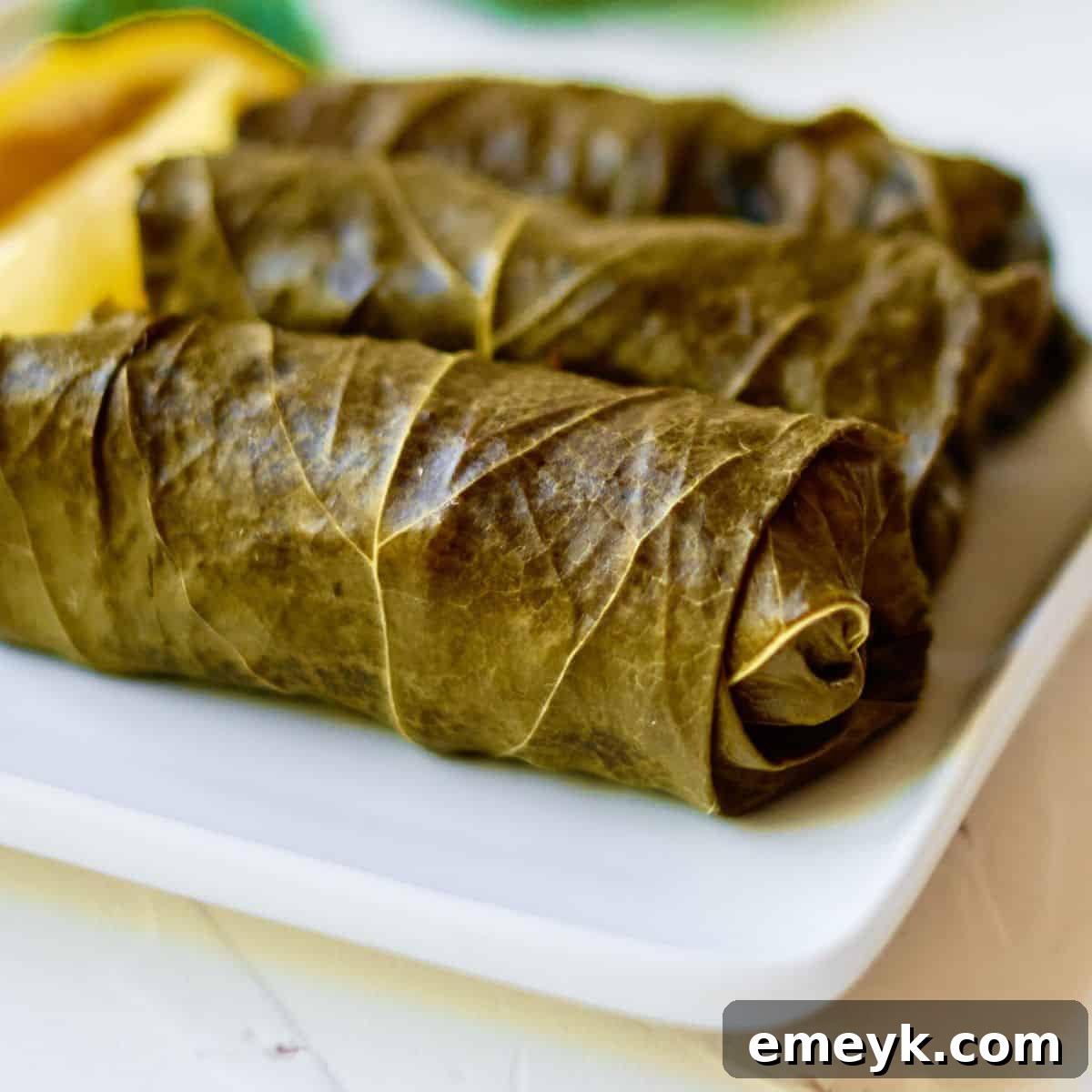
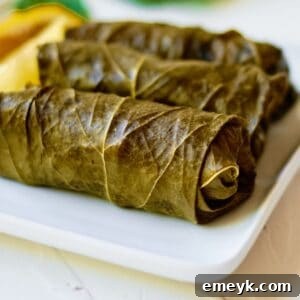
Embark on a culinary journey to the heart of the Mediterranean with these exquisite stuffed grape leaves, a dish known and loved across countless cultures. Whether you call them dolmas, dolmades, or warak enab, these delicate rolls are a testament to the region’s rich gastronomic heritage. This particular recipe offers a vegetarian twist, featuring a vibrant filling of rice, crunchy pine nuts, and a fragrant blend of fresh herbs, all simmered to perfection in a light, zesty lemon broth. Each bite promises a harmonious balance of flavors and textures, evoking memories of warm family gatherings and sun-drenched Mediterranean tables, much like those cherished moments around my own grandmother’s table.
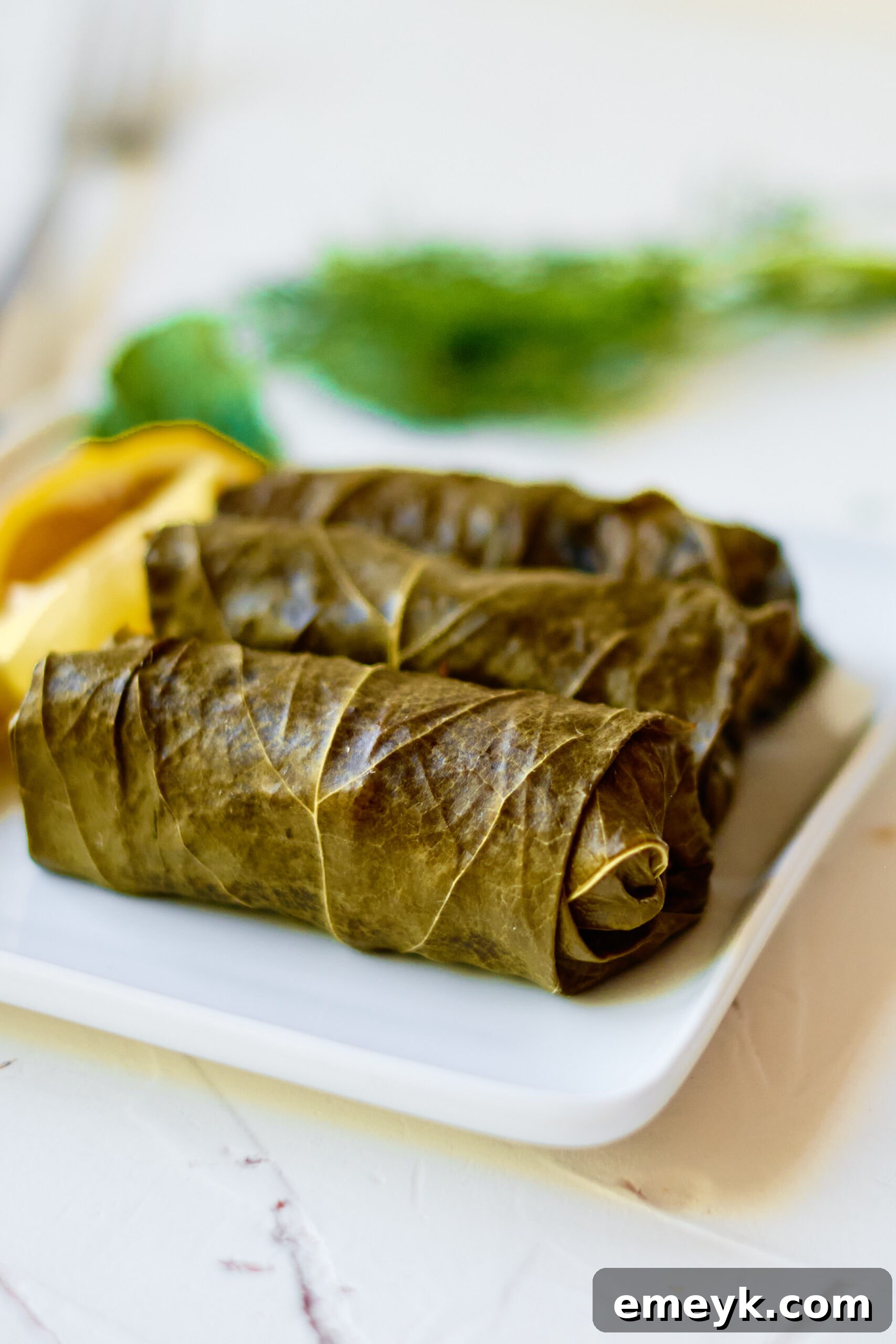
Why You’ll Adore This Stuffed Grape Leaves Recipe
In our home, stuffed grape leaves transcend a mere appetizer; they are a flavorful embrace of heritage and tradition. My childhood was filled with the aromatic scents of my grandma’s Lebanese warak enab, simmering gently in a rich tomato sauce. Those memories are deeply etched, forming a significant part of my culinary foundation. As I began to prepare them myself, I experimented with simmering the rolls in a delicate broth rather than tomato sauce. This small adjustment was a revelation, transforming the dish into a lighter, more versatile offering that my entire family now enjoys frequently, whether as a satisfying lunch, an elegant dinner component, or a delightful appetizer.
Beyond family traditions, I have fond recollections of savoring authentic dolmades during travels in Greece with my husband. Every region and household offers its unique interpretation, each telling a distinct story. This particular recipe beautifully balances my Lebanese roots with an approachability that makes it perfect for anyone venturing into the art of rolling grape leaves for the very first time. You’ll find that with a little practice, the process quickly becomes intuitive, meditative, and incredibly rewarding.
These vegetarian stuffed grape leaves are not only delicious on their own but also shine when paired with other Mediterranean delights. Consider serving them alongside our Easy Spinach Fatayer Recipe (Lebanese Spinach Pies), a refreshing plate of Lebanese Tabbouleh, or a creamy bowl of Lebanese Hummus. Together, they create an authentic and unforgettable mezze spread that will transport your taste buds straight to the Mediterranean coast.
Essential Ingredients for Perfect Vegetarian Dolmas
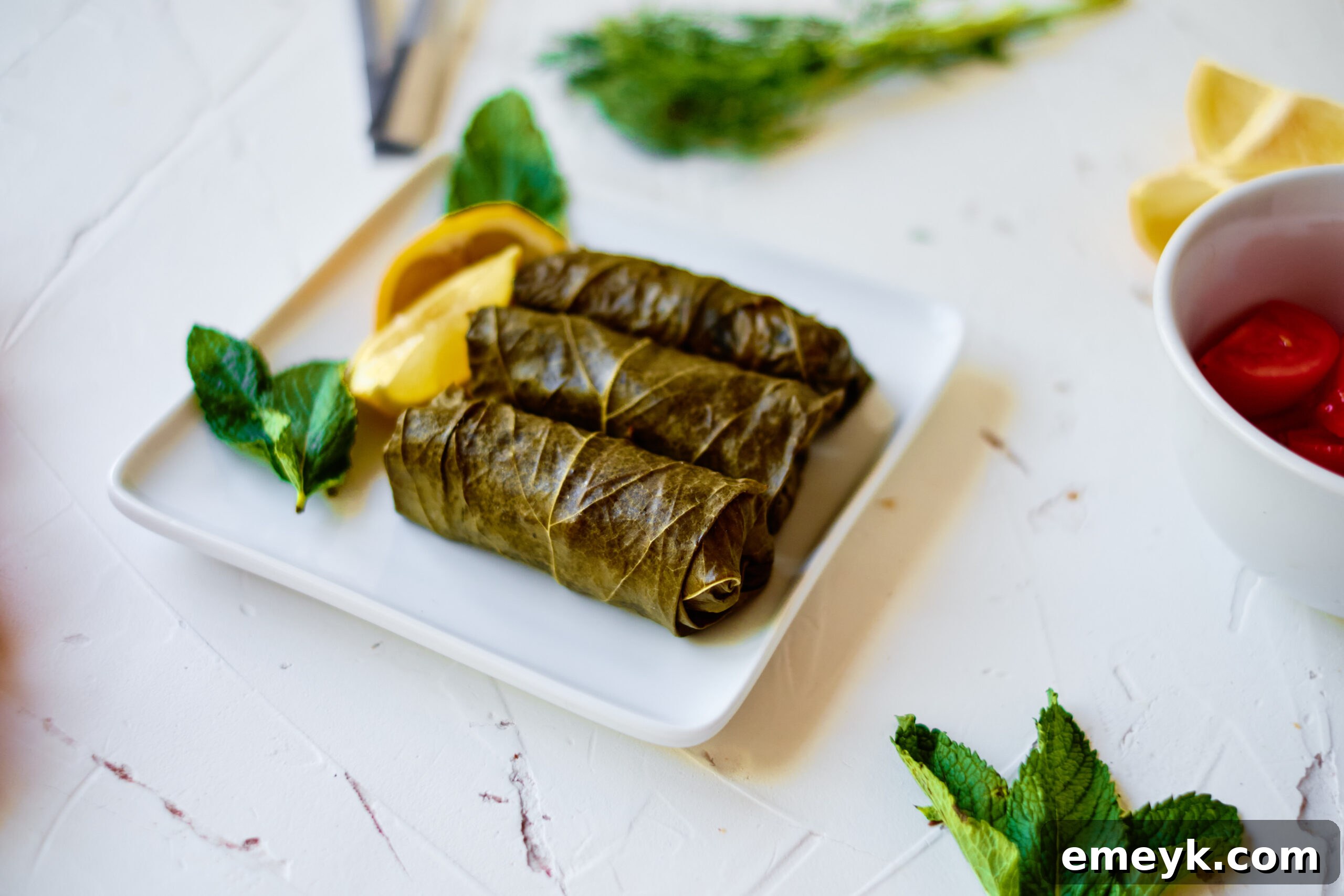
This easy recipe celebrates fresh, simple ingredients that come together to create truly remarkable flavor. Each component plays a vital role in crafting these delectable rolls.
- Grape Leaves: The foundation of our dolmas. You have the choice of using fresh or jarred leaves. Fresh leaves require a quick blanching to soften them, while jarred leaves, already preserved in brine, are ready to use after a simple rinse. Both options yield delicious results, so opt for whichever is most convenient and accessible to you.
- Rice: The hearty core of the filling. Short or medium-grain rice is ideal here, as its starch content helps the filling bind together beautifully, ensuring your rolls maintain their shape and offer a satisfying texture. Avoid long-grain rice, which can make the filling too loose.
- Pine Nuts: These small, buttery nuts are a staple in Mediterranean cuisine. They contribute a delightful nutty flavor and a delicate crunch to the filling. For an enhanced aroma, you can lightly toast them in a dry pan before adding them to the mixture.
- Mint and Dill: These fresh herbs are crucial for brightening the rice filling. Fresh mint provides a cooling, invigorating freshness, while dill adds a savory depth and aromatic complexity that is characteristic of many Mediterranean dishes. Using fresh herbs is non-negotiable for the best flavor.
- Olive Oil: More than just a lubricant, good quality extra virgin olive oil binds the filling ingredients together, ensuring moisture and richness. It also contributes to the overall Mediterranean flavor profile.
- Lemon Juice: The star of the show for our light and zesty broth. Freshly squeezed lemon juice is paramount, providing the bright, tangy essence that elevates these stuffed grape leaves from good to truly extraordinary. It balances the richness of the rice and herbs beautifully.
- Broth: The simmering liquid that infuses the grape leaves with incredible flavor and ensures the rice cooks perfectly, resulting in tender, succulent rolls. For a vegetarian dish, opt for a high-quality vegetable broth.
- Salt and Black Pepper: Basic seasonings that are vital for bringing all the flavors into harmony. Adjust to your personal preference.
Step-by-Step Guide to Crafting Vegetarian Stuffed Grape Leaves
Step 1: Prepare the Grape Leaves. If you’re using fresh grape leaves, blanch them by submerging them in boiling water for approximately 90 seconds until they become pliable. Immediately transfer them to a bowl of cold water to halt the cooking process and preserve their vibrant color. If opting for jarred grape leaves, simply rinse them thoroughly under cold running water to remove excess brine, then gently pat them dry with a clean cloth or paper towel. This ensures they are ready for rolling.
Step 2: Create the Flavorful Filling. Begin by finely chopping your fresh mint and dill. The smaller the chop, the better the herbs will distribute throughout the filling. In a spacious mixing bowl, combine the cooked rice, toasted pine nuts, finely chopped mint, chopped dill, generous olive oil, a teaspoon of salt, and a quarter teaspoon of black pepper. Mix all these ingredients thoroughly until they are well combined and the herbs and seasonings are evenly distributed throughout the rice. This is the heart of your dolmas.
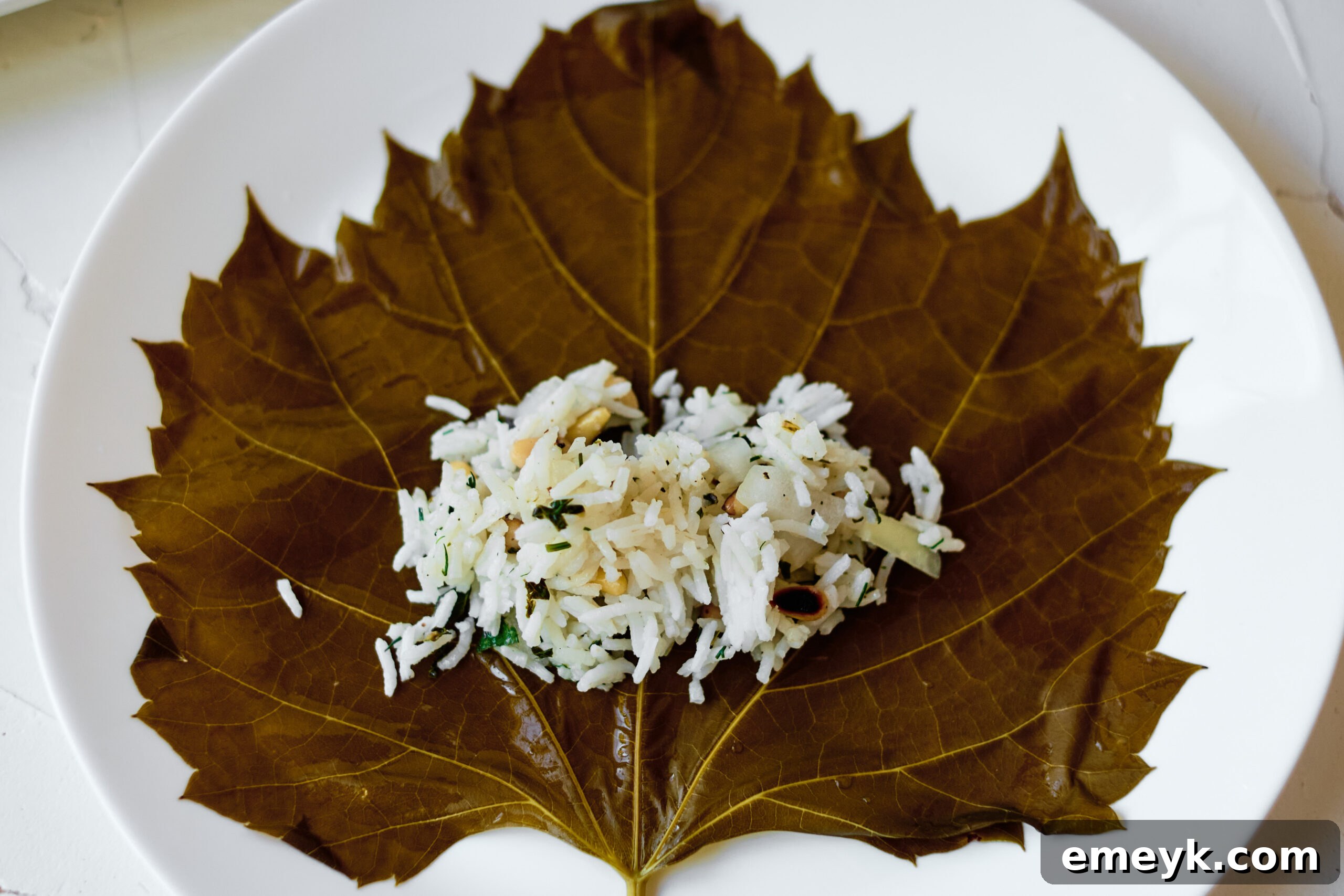
Step 3: Position the Leaf. Lay a single grape leaf flat on a clean work surface. Ensure the shiny, smoother side of the leaf faces down, and the duller, veined side faces up. This ensures a beautiful presentation once cooked. Place approximately one tablespoon of the prepared rice filling in the center of the base of the leaf, near the stem end. Avoid overfilling, as the rice will expand during cooking.
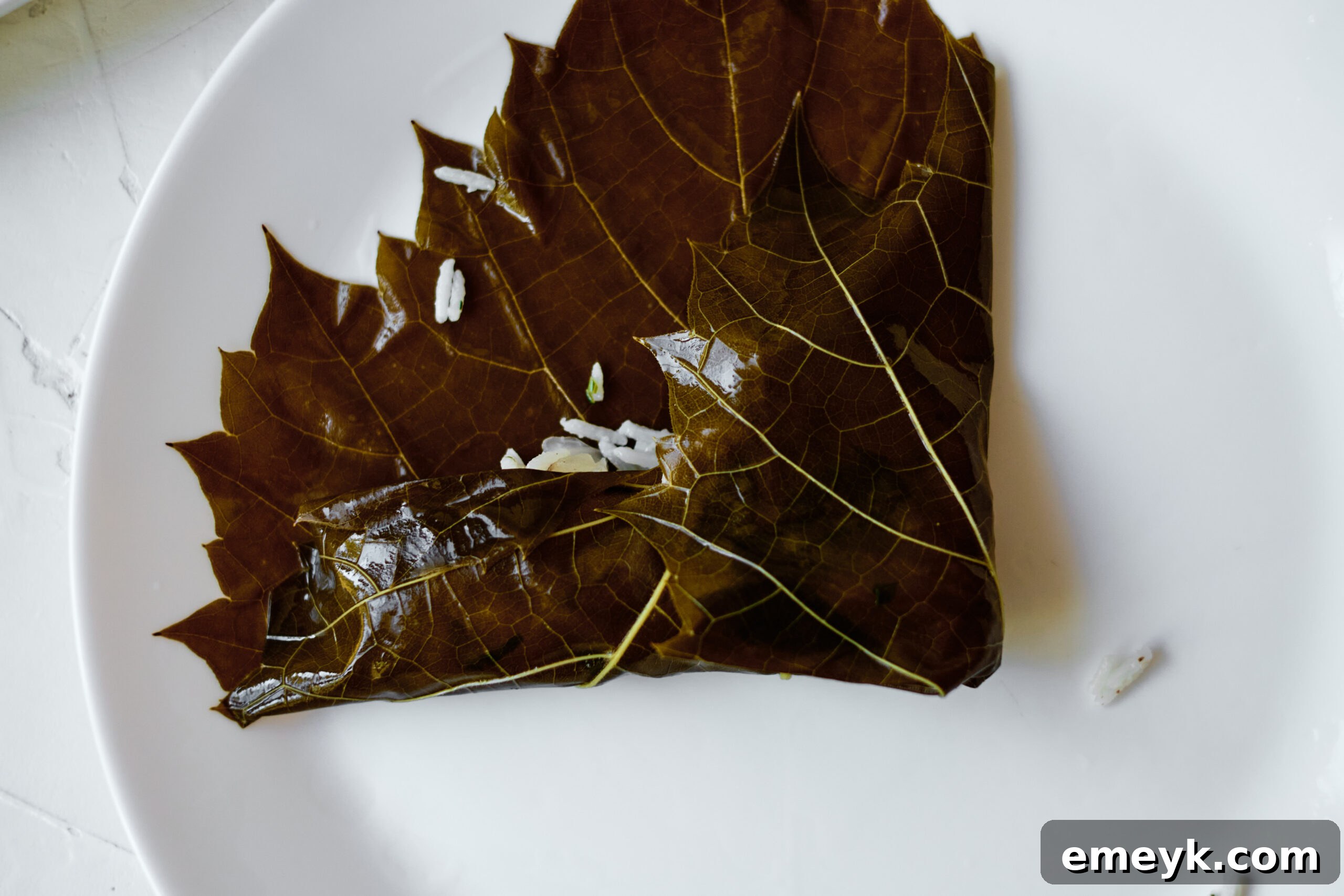
Step 4: Roll the Grape Leaf. Carefully fold in the sides of the grape leaf over the filling, creating neat edges. Next, tuck the bottom edge of the leaf snugly over the filling. From there, roll the leaf tightly upwards towards the tip, creating a compact cylinder. It’s crucial to roll them tightly enough so they hold together, but not so tightly that the rice won’t have room to expand during the cooking process. Aim for a firm yet not restrictive roll.
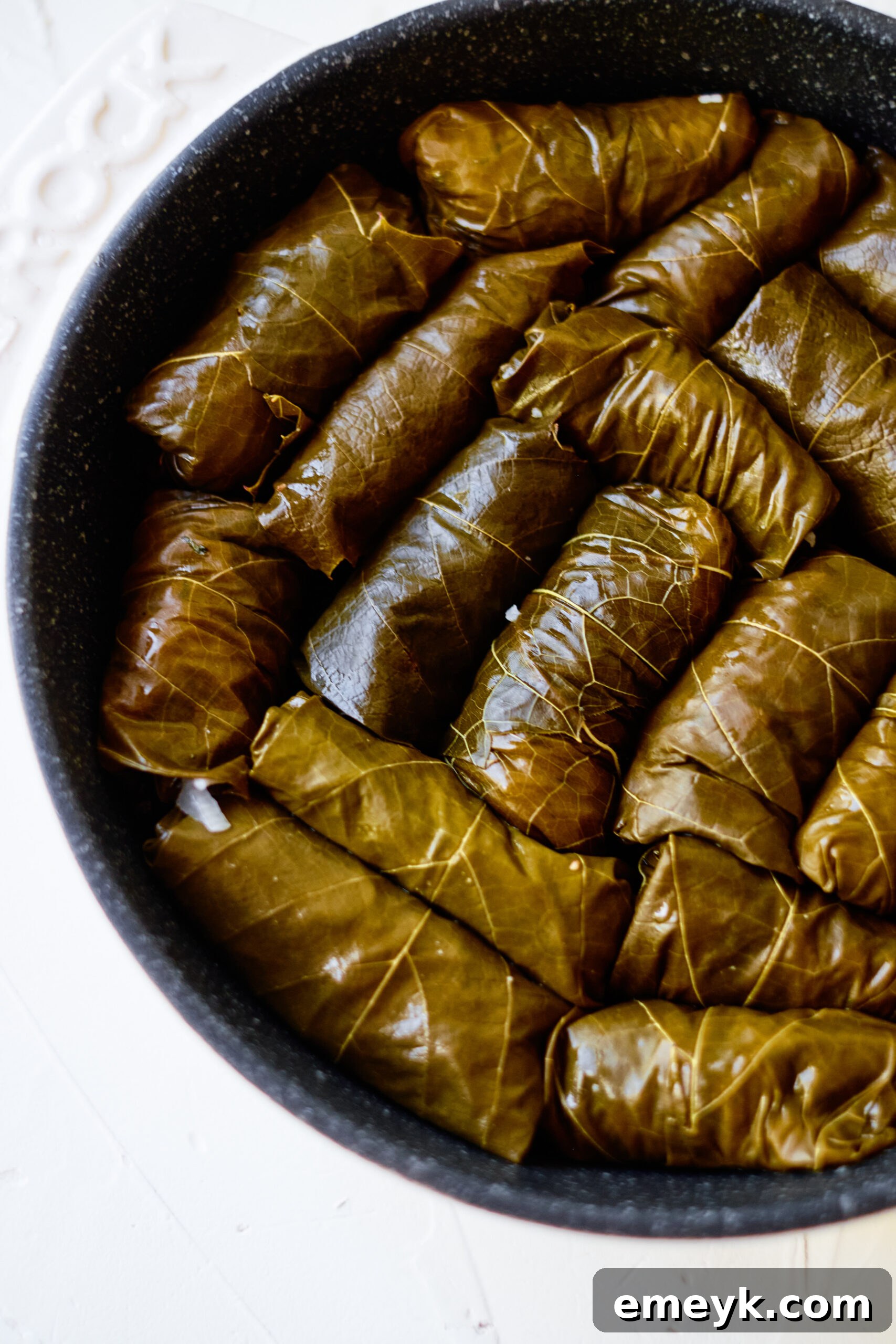
Step 5: Arrange and Simmer. Once rolled, arrange the stuffed grape leaves snugly, seam side down, in a single layer at the bottom of a large heavy-bottomed pot or a deep baking dish. Continue layering them in a circular pattern until all the filling or leaves are used, ensuring they are packed closely but not crushed. This arrangement helps them cook evenly and prevents unrolling. Next, place a small, heatproof inverted plate directly over the grape leaves. This crucial step keeps them submerged and secure during simmering. Bring your vegetable broth to a boil, then carefully pour it over the grape leaves until they are just covered. The liquid should barely reach the top layer of rolls.
Step 6: Cook to Perfection. Cover the pot tightly with its lid and bring the liquid back to a gentle simmer over medium heat. Cook for approximately 30 minutes, or until you notice that a significant amount of the broth has been absorbed by the rice, and the rolls are beginning to soften. After this initial cooking time, carefully remove the inverted plate. Pour the fresh juice of two lemons evenly over the rolls. Re-cover the pot and reduce the heat to low. Allow the grape leaves to simmer for an additional 30 to 45 minutes, or until they are completely tender and the rice is fully cooked through and fluffy. Periodically check the liquid level to ensure it doesn’t dry out completely, adding a splash more broth if needed.
Step 7: Rest and Serve. Once cooking is complete, turn off the heat but keep the pot covered. Let the stuffed grape leaves rest for at least 30 minutes. This resting period is vital as it allows the flavors to meld beautifully and the rice to fully absorb any remaining liquid, resulting in a more cohesive and tender texture. Serve them warm, at room temperature, or even chilled. For an elevated presentation and a burst of flavor, garnish generously with crumbled feta cheese and a sprinkle of fresh chopped parsley, alongside extra lemon wedges for squeezing.
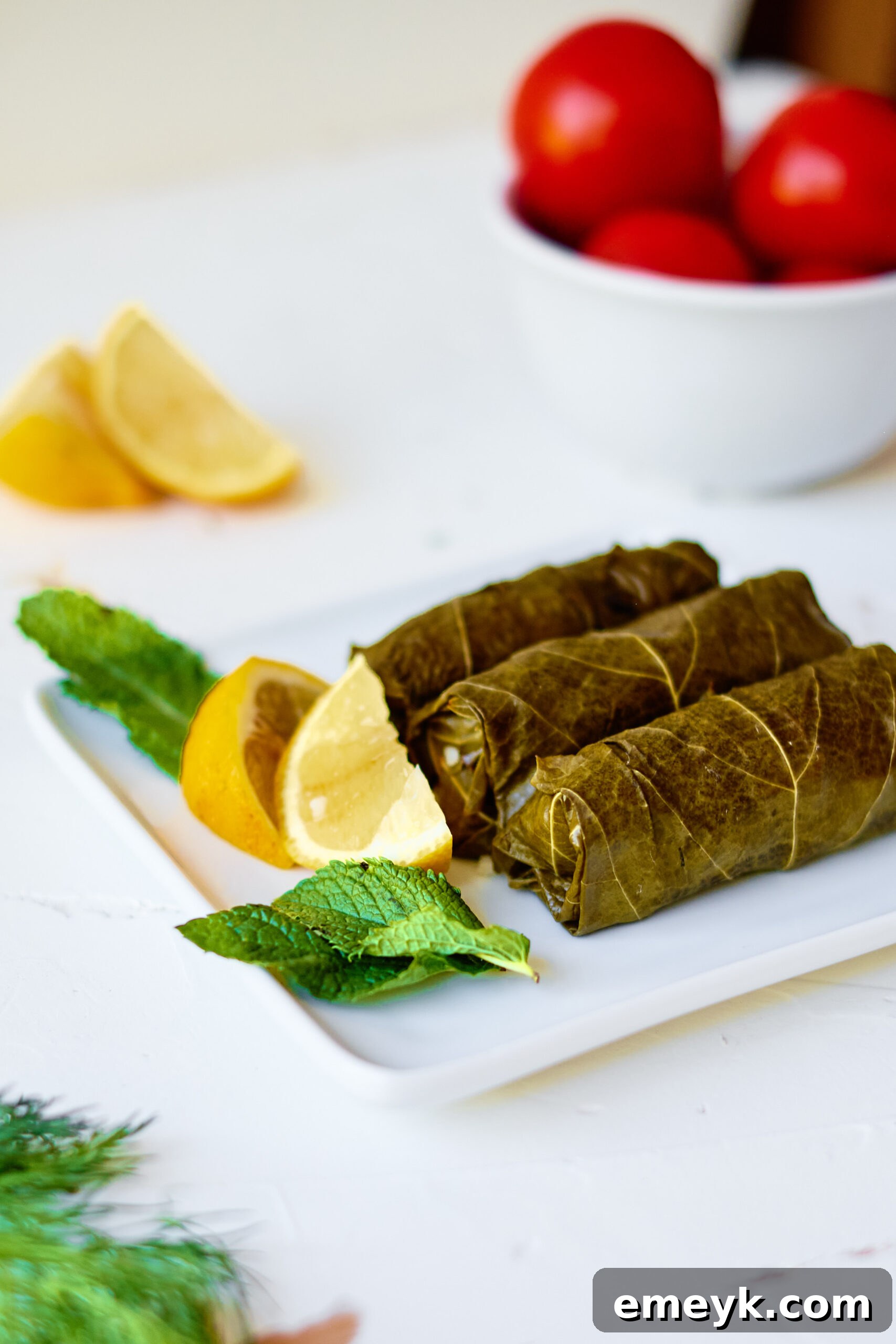
Expert Tips for Perfect Stuffed Grape Leaves
- Choosing Your Grape Leaves: Fresh grape leaves, when blanched, offer a slightly more tender and delicate texture. Jarred or brined grape leaves are incredibly convenient and equally delicious, just be sure to rinse them thoroughly to remove excess salt and soften them slightly.
- Mastering the Rolling Technique: The key to success is finding the right balance. Roll the leaves tightly enough so the filling remains encased and doesn’t unravel during cooking, but leave just enough space for the rice to expand without bursting the leaf. Practice makes perfect!
- Preventing Unraveling: Always place your expertly rolled grape leaves seam side down in the pot. This simple trick uses the pressure of the cooking liquid and adjacent rolls to keep them securely wrapped.
- The Power of Resting: Allowing the rolls to rest, covered, for at least 30 minutes after cooking is crucial. This period allows the flavors to meld and deepen, and the rice to achieve its perfect texture, fully absorbing any remaining liquid.
- Broth vs. Tomato Sauce: While my grandma favored simmering her warak enab in a rich tomato sauce, this recipe opts for a lighter, brighter lemon-infused broth. Both methods are authentic and yield delicious results; choose based on your preference for a tangy or savory profile.
- Achieving Fluffy, Not Mushy, Rice: Use medium-grain rice for the best texture, as it holds its shape well. Avoid overfilling the rolls, and be mindful not to overcook them or use excessive liquid. The goal is tender rice that retains a slight chew, not mush.
- Balancing the Lemon: Fresh lemon juice is indispensable for that signature zest. Start with the juice of two lemons as recommended, then taste the broth before the final simmer and adjust. Too much lemon can overpower the delicate flavors of the herbs and rice.
- Avoiding Tears: Handle grape leaves gently, especially fresh ones, which are more delicate before blanching. For jarred leaves, rinsing helps soften them and reduces their brittleness. If a leaf tears slightly, you can often patch it with a small piece of another leaf before rolling.
- Consistency in Size: Aim for uniformly sized rolls for even cooking and a beautiful presentation. Using a consistent amount of filling for each leaf will help achieve this.
- Make-Ahead Magic: Stuffed grape leaves are excellent for meal prep! You can roll them a day in advance and store them covered in the refrigerator before cooking. Cooked dolmas also reheat beautifully or can be enjoyed cold.
How to Serve These Delicious Dolmas
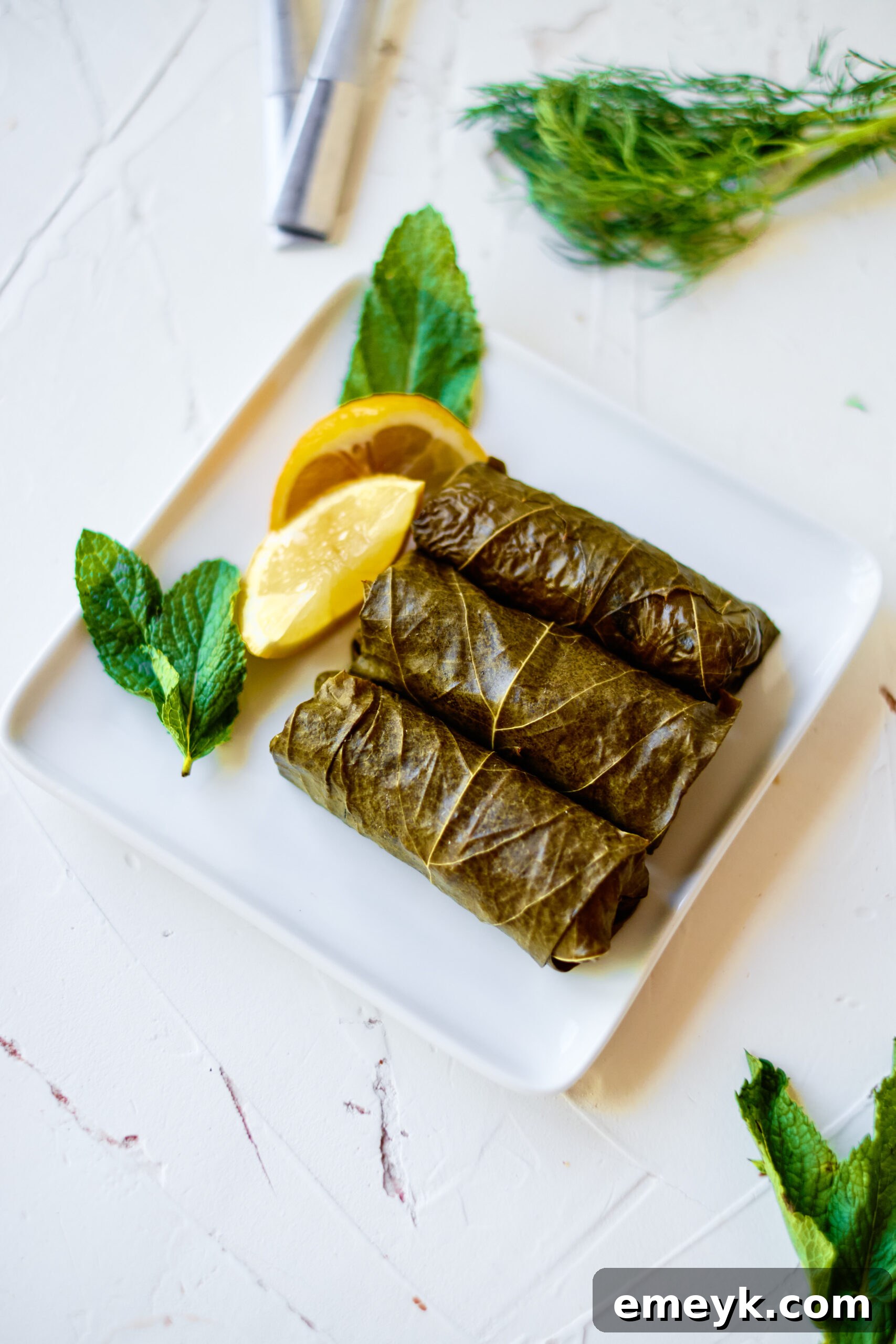
These versatile stuffed grape leaves are a magnificent addition to any meal, particularly shining as part of a traditional Mediterranean mezze platter. They are exquisite on their own, or you can pair them with creamy dips like Baba Ghanoush or a cool, tangy yogurt sauce. For an authentic touch, always garnish them with a generous sprinkle of fresh parsley, crumbled feta cheese (if not strictly vegan), and plenty of lemon wedges for an extra burst of citrus. Serving them with Spicy Lebanese Potatoes or a crisp Fattoush salad creates a wonderfully complete and satisfying spread. These delectable rolls are celebrated across the Mediterranean, from the light and lemony Greek dolmades to the herb-rich Lebanese warak enab, each region adding its unique flair. Their adaptability means they are equally delightful served warm as a main dish or chilled as a refreshing appetizer on a hot day.
Common Questions About Stuffed Grape Leaves
Absolutely! After cooking, allow your stuffed grape leaves to cool completely to room temperature. Drizzle them lightly with olive oil to help maintain moisture, then transfer them to an airtight freezer bag or container. They can be frozen for up to 3 months. Thaw in the refrigerator overnight and reheat gently, or serve at room temperature.
Both ways are delicious and common! In many Mediterranean culinary traditions, vegetarian grape leaves (like this recipe) are typically served chilled or at room temperature, making them perfect for picnics or appetizers. Meat-filled versions are often preferred warm. Feel free to enjoy them however you like best!
Careful handling is key. If using fresh leaves, blanch them briefly to make them pliable. For jarred leaves, a thorough rinse will soften them and remove excess brine, making them less brittle. Roll gently and avoid the temptation to overstuff, which puts undue pressure on the leaves and can lead to tearing during cooking.
While both are delicious stuffed grape leaves, regional variations exist. Greek dolmades are often vegetarian, featuring a rice and herb filling, and typically served with a prominent lemony flavor, sometimes accompanied by avgolemono sauce. Lebanese warak enab, on the other hand, can be vegetarian or include a ground meat filling (often lamb or beef). They might be simmered in a lemon-broth, or a rich tomato-based sauce, and are frequently served with fresh yogurt. If you’re curious about a non-vegetarian option, check out these meat stuffed grape leaves.
Yes, these stuffed grape leaves are an excellent make-ahead dish. You can prepare and roll the grape leaves, then cover them tightly and store them in the refrigerator for up to 24 hours before you plan to cook them. Cooked grape leaves can also be prepared a day in advance; simply store them in an airtight container in the fridge and gently reheat or bring to room temperature before serving.
For the best results, use a short-grain or medium-grain rice, such as Arborio, Calrose, or even a good quality sushi rice. These varieties have a higher starch content, which helps the filling hold its shape and gives the final product a wonderfully tender and cohesive texture. Long-grain rice can result in a drier, looser filling.
This recipe is inherently vegan! The filling uses rice, pine nuts, and fresh herbs, and the rolls are simmered in vegetable broth. The only non-vegan component mentioned is the optional feta cheese garnish. Simply omit the feta for a completely plant-based and equally delicious dish.
While making these stuffed grape leaves may seem like an intricate process at first glance, with a little practice and patience, the rolling technique truly becomes second nature. Each batch you create will be a source of pride, and the aroma alone will draw everyone to your kitchen. Whether you choose to serve them warm as a comforting dinner or chilled as a refreshing appetizer, these vegetarian dolmas are guaranteed to bring a authentic taste of Mediterranean tradition and warmth right to your table.
I encourage you to try this recipe and discover the simple joy of preparing these ancient delicacies. These stuffed grape leaves reflect my cherished Lebanese family traditions and years of thoughtful refinement in my own kitchen, and I sincerely hope they become a beloved favorite for you and your family, just as they are for mine. Share your experiences in the comments below!
Explore More Mediterranean Recipes
Beef
Mediterranean Zucchini Boats
Mediterranean
Mediterranean Flatbread
Vegetarian
Mediterranean Hummus Toast with Za’atar
Beef
Lebanese Meat Pie Recipe
Tried this recipe? Leave a star rating and comment below! Subscribe to my newsletter or follow me on Facebook, Instagram, or Pinterest for the latest.
★★★★☆
Stuffed Grape Leaves (Vegetarian Dolmas)
Print Recipe
Ingredients
- 2 cups cooked medium-grain rice
- 1 cup toasted pine nuts
- ½ cup finely chopped fresh mint
- ¼ cup finely chopped fresh dill
- 2 tablespoons extra virgin olive oil
- 1 teaspoon salt
- ¼ teaspoon black pepper
- About 4 cups vegetable broth (or chicken broth for non-veg option)
- Juice of 2 fresh lemons
- Garnish: crumbled feta cheese (optional, omit for vegan) and fresh parsley
- Approximately 30-50 grape leaves (fresh, blanched, or jarred, rinsed)
Instructions
- Prepare Grape Leaves: If using fresh grape leaves, bring a large pot of water to a boil. Blanch the leaves for about 90 seconds until pliable, then immediately transfer to an ice bath to stop cooking. If using jarred grape leaves, rinse them thoroughly under cold water to remove excess brine and pat dry.
- Make the Filling: Finely chop the fresh mint and dill. In a large bowl, combine the cooked rice, toasted pine nuts, chopped mint, chopped dill, olive oil, salt, and black pepper. Mix well until all ingredients are evenly incorporated.
- Roll the Grape Leaves: Lay one grape leaf on a clean flat surface with the shiny side down and the stem end facing you. Place about 1 tablespoon of the rice mixture near the base of the leaf. Fold in the sides of the leaf over the filling, then tuck the bottom edge up over the filling. Roll tightly but gently upwards to form a neat cylinder. Remember to leave a little room for the rice to expand.
- Arrange in Pot: Place the rolled grape leaves, seam side down, in a single layer at the bottom of a large heavy-bottomed pot or deep baking dish. Continue layering them, packing them snugly to prevent unrolling, until all leaves or filling are used.
- Add Liquid & Initial Cook: Place a small, heatproof inverted plate directly on top of the arranged grape leaves to keep them submerged. Bring the broth to a boil, then carefully pour it over the grape leaves until they are just covered.
- Simmer First Stage: Cover the pot with its lid and cook over medium heat for approximately 30 minutes, or until the liquid has been mostly absorbed and the rolls begin to soften.
- Add Lemon & Final Cook: Carefully remove the inverted plate. Pour the juice of 2 lemons evenly over the grape leaves. Cover the pot again with the lid and reduce the heat to low. Simmer for an additional 30 to 45 minutes, or until the grape leaves are very tender and the rice is fully cooked.
- Rest and Serve: Once cooked, remove the pot from the heat but keep it covered. Let the stuffed grape leaves rest for at least 30 minutes to allow the flavors to meld and the texture to set. Serve warm, at room temperature, or chilled. Garnish with crumbled feta cheese (if desired) and fresh parsley, with extra lemon wedges on the side.
Notes
- These stuffed grape leaves will keep well in an airtight container in the refrigerator for about five days. Drizzle with a little extra olive oil before covering to store. For best flavor, allow them to return to room temperature before serving. They can also be frozen for longer storage (up to 3 months).
- For an extra layer of flavor, you can line the bottom of your pot with a few extra grape leaves or thin slices of lemon before arranging the rolled dolmas.
- Adjust the amount of salt and pepper in the filling to your taste, or consider adding a pinch of allspice for a more traditional Lebanese flavor profile, though this recipe focuses on a lighter herb-forward taste.
Nutrition
Calories: 53kcal
,
Carbohydrates: 4g
,
Protein: 1g
,
Fat: 4g
,
Saturated Fat: 0.4g
,
Polyunsaturated Fat: 2g
,
Monounsaturated Fat: 2g
,
Sodium: 78mg
,
Potassium: 38mg
,
Fiber: 0.3g
,
Sugar: 0.2g
,
Vitamin A: 63IU
,
Vitamin C: 1mg
,
Calcium: 5mg
,
Iron: 0.3mg
Nutrition information is automatically calculated, so should only be used as an approximation.
Tried this recipe?
Mention @acedarspoon or tag #acedarspoon!