
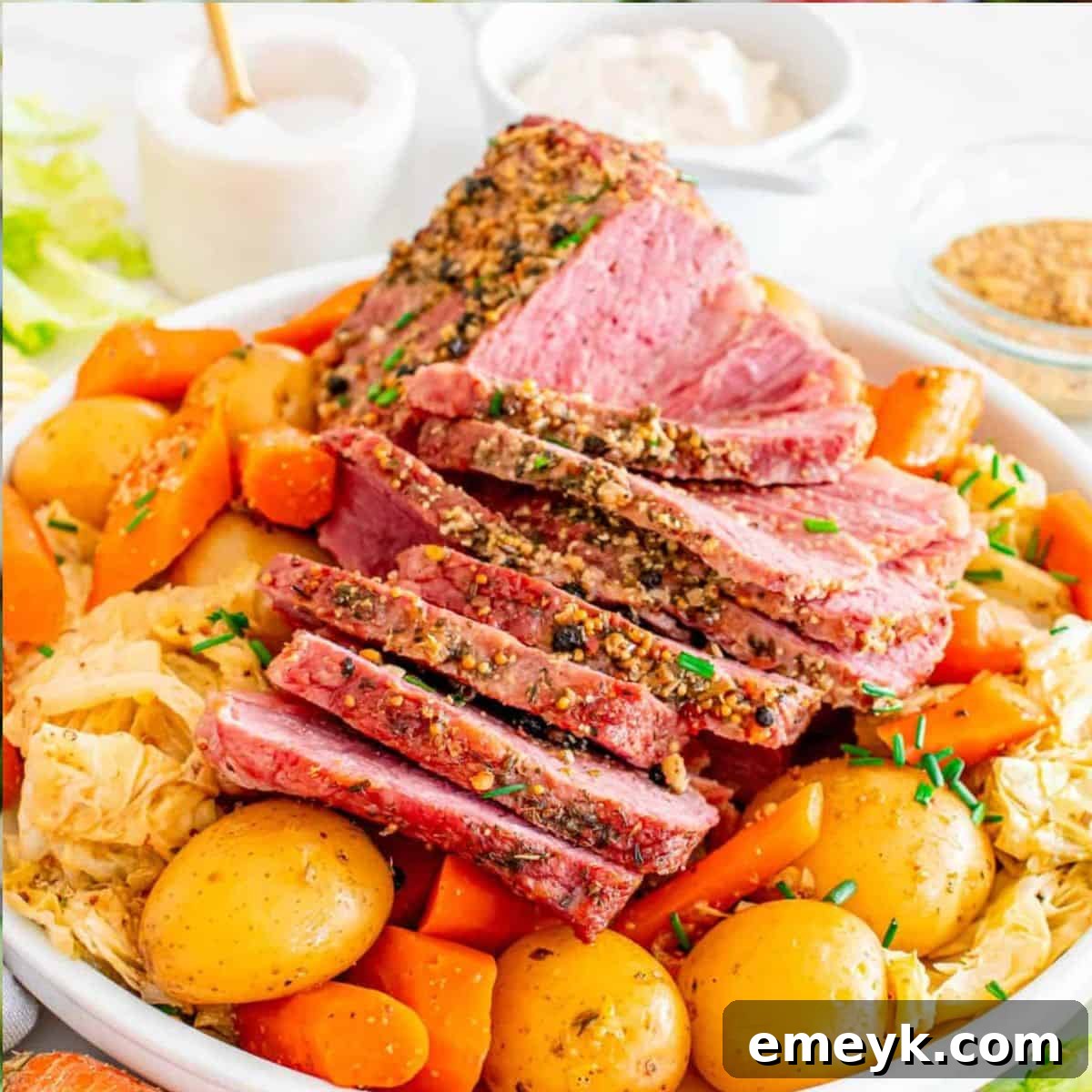
Baked Corned Beef and Cabbage offers a classic, comforting meal, cooked low and slow in the oven until every bite is incredibly tender and bursting with savory flavor. This hearty dish brings together succulent corned beef brisket with a medley of fresh carrots, aromatic onions, tender cabbage, and wholesome potatoes, creating a complete and satisfying experience. Whether you’re planning your weekly family dinners or celebrating the festive spirit of St. Patrick’s Day, this foolproof recipe promises a mouthwatering result that will become a cherished tradition.
This baked rendition of corned beef and cabbage stands out as my preferred method for preparing this iconic dish. The slow-cooking process transforms humble ingredients into a symphony of flavors, especially with the generous addition of vegetables, cabbage, and potatoes that make it a truly complete and balanced meal. It’s a dish that embodies warmth and tradition.
As the vibrant hues of spring emerge and St. Patrick’s Day approaches, many of us turn to the timeless tradition of cooking corned beef. While it’s often associated with this specific holiday, the rich flavors and comforting nature of this dish make it a fantastic option throughout the year.
I genuinely love corned beef, and while I admit I only make it a few times a year, my absolute favorite way to prepare it is undoubtedly in the oven, cooked slowly and patiently. This method, in my opinion, yields the most tender and flavorful corned beef imaginable. The low, consistent heat allows the beef to break down beautifully, absorbing all the delicious cooking liquids and spices, resulting in a melt-in-your-mouth texture that simply cannot be replicated.
If your schedule demands a quicker approach, you might consider trying my Instant Pot Corned Beef and Cabbage recipe for a fast yet flavorful alternative. For those who appreciate robust beef dishes, explore more of my beef recipes here. You might also enjoy the smoky flavors of this Grilled Flank Steak with Dry Rub, the vibrant notes of Asian Marinated Flank Steak, or the rich tang of this Balsamic Marinated Skirt Steak.
Why You Will Love This Baked Corned Beef and Cabbage Recipe
This recipe for baked corned beef and cabbage is a standout, especially when preparing for St. Patrick’s Day. Beyond its visual appeal on your dinner table, it offers a multitude of benefits that make it a cherished meal:
- Effortlessly Easy to Make: The hands-on preparation time for this recipe is remarkably minimal, typically requiring only about 20 minutes. After a quick prep, simply place your Dutch oven in the oven and let it cook low and slow. The oven does most of the work, allowing you to focus on other tasks or simply relax.
- Convenient One-Pot Wonder: Everything, from the savory corned beef to the robust vegetables, cooks together in a single pot. This not only allows the flavors to meld beautifully and intensify into a cohesive, delicious dish but also significantly reduces the amount of washing up afterwards. It’s the ultimate solution for a flavorful meal with minimal cleanup.
- Intensely Flavor-Packed: The magic of this dish lies in its slow-baking process. The corned beef is cooked gently over several hours, allowing it to become incredibly tender while absorbing the rich nuances of the cooking liquid and accompanying spices. This results in exquisitely flavorful slices of meat and perfectly cooked vegetables, delivering a truly comforting and satisfying culinary experience.
- Tender Vegetables: You simply cannot beat the tenderness of the cabbage, carrots, and potatoes that emerge from the pot, having simmered alongside the beef, soaking up all the rich juices. They perfectly complement the corned beef, elevating the entire meal. It’s truly a magnificent way to celebrate any holiday or enjoy a hearty family dinner.
This recipe transforms a simple cut of meat into a centerpiece dish, worthy of any festive occasion or a cozy weekend gathering. The aroma alone will draw everyone to the kitchen!
Essential Ingredients for Perfect Baked Corned Beef and Cabbage
Crafting this delicious baked corned beef and cabbage requires a selection of quality ingredients that work in harmony to produce its signature flavor. Here’s a breakdown of what you’ll need for both the main dish and its zesty accompanying sauce:
For the Corned Beef and Vegetables:
- Corned Beef Brisket: I typically use a 3-4 pound cut of corned beef brisket, which comfortably serves 6 people. When selecting your brisket, look for one that includes a spice packet. This packet, often containing peppercorns, bay leaves, and mustard seeds, adds an essential layer of traditional flavor to the cooking liquid. Both flat cut and point cut briskets work well, with flat cut generally being leaner and easier to slice evenly.
- Olive Oil: A tablespoon of good quality olive oil is my preferred choice for its subtle, nutty flavor, which complements the beef beautifully. However, feel free to substitute with any cooking oil you have on hand.
- Beef Broth: Two cups of beef broth form the flavorful base for our slow-cook. Opt for a good quality beef broth, or a gluten-free beef stock if dietary needs require. Chicken broth, chicken stock, or even vegetable broth can also be used as alternatives, though beef broth offers the deepest flavor profile.
- Whole Grain Mustard: Three tablespoons of whole grain mustard are incorporated into the cooking liquid. Its distinctive tang and textural seeds not only infuse the beef with a delightful flavor but also add an interesting dimension to the broth. Dijon mustard can be used as a substitute if whole grain is unavailable.
- Aromatics and Seasoning:
- Garlic: Five cloves of garlic, either minced or smashed, add pungent depth to the dish.
- Yellow Onion: One large yellow onion, sliced into substantial wedges, sweetens the broth as it cooks down.
- Whole Black Peppercorns: 10-15 whole peppercorns contribute a subtle, earthy spice.
- Italian Seasoning: A tablespoon of Italian seasoning adds a balanced blend of herbs like oregano, basil, and thyme, enhancing the overall savory profile. You can also use a homemade spice blend if your brisket doesn’t come with one.
- Fresh Vegetables: To complete this hearty one-pot meal, we add a vibrant mix of vegetables during the final stages of cooking.
- Carrots: Six medium carrots, peeled and chopped into large chunks. You can also use baby carrots for convenience.
- Green Cabbage: One large head of green cabbage, cut into thick wedges. These wedges soften perfectly while retaining a pleasant texture.
- Baby Potatoes: Approximately 24 ounces of baby potatoes. These small potatoes cook evenly and become wonderfully tender. Red potatoes or chopped Russet potatoes can be used if baby potatoes are not available.
For the Zesty Horseradish Sauce:
This creamy, spicy sauce is the perfect counterpoint to the rich corned beef, adding a refreshing kick. The quantity listed here is ideal for serving alongside 6 portions of corned beef.
- Sour Cream: Three-quarters of a cup of sour cream provides a creamy, tangy base that perfectly balances the heat of the horseradish. Greek yogurt can be a lighter alternative.
- Lime Juice: The juice of 1 fresh lime adds a bright, acidic lift to the sauce, cutting through the richness of the beef. Lemon juice works equally well.
- Seasoning: A quarter teaspoon of kosher salt and an eighth of a teaspoon of black pepper are added to enhance the flavors of the sauce. Adjust to your taste preferences.
- Prepared Horseradish: Three tablespoons of prepared horseradish are key to the sauce’s characteristic zing. This is made from grated horseradish root, vinegar, and salt, providing that essential spicy element.
- Fresh Chives: Two tablespoons of freshly chopped chives introduce a mild, oniony freshness and a beautiful green garnish.
For precise ingredient measurements and detailed instructions, please refer to the complete recipe card below.
Ways to Modify This Baked Corned Beef and Cabbage Recipe
This baked corned beef and cabbage recipe is wonderfully versatile, allowing for various modifications to suit your taste preferences or available ingredients. Don’t hesitate to personalize it!
- Beef Cut Alternatives: While a flat cut brisket is commonly used for its leanness and ease of slicing, any cut of beef brisket will work beautifully in this slow-cooked recipe. Point cut brisket, for instance, tends to be fattier and often becomes even more tender. If your brisket comes with a very thick layer of fat, you might prefer to trim some of it off before cooking, though a moderate layer will render down and add incredible flavor and moisture to the dish.
- Potato Variations: Baby potatoes are convenient and cook well, but you can easily substitute them with other varieties. Red potatoes hold their shape nicely and offer a slightly waxy texture, while chopped Russet potatoes will become wonderfully fluffy and absorbent. Just ensure they are cut into roughly uniform sizes for even cooking.
- Expand Your Vegetable Medley: This recipe is a fantastic canvas for adding more vegetables. Celery, cut into large chunks, makes an excellent addition, contributing a subtle savory note. You could also include sliced mushrooms or green beans towards the end of the cooking process for added texture and nutrients. Feel free to experiment with what you have in your fridge!
- Mustard Choices: Whole grain mustard provides a distinctive flavor and texture, but if you prefer a smoother sauce or a different tang, Dijon mustard is an excellent alternative. It offers a sharper, more refined mustard flavor that pairs well with corned beef.
- Custom Spice Packet: Most corned beef briskets come with their own spice packet, which is highly recommended for convenience and traditional flavor. However, if yours doesn’t, or if you prefer to control the blend, you can easily create your own spice packet using ingredients like whole peppercorns, bay leaves, mustard seeds, and cloves.
- Alternative Sauces: The homemade horseradish sauce is truly the perfect condiment for corned beef and cabbage, offering a spicy, tangy counterpoint. However, if you find it too spicy or simply prefer a different flavor, Thousand Island dressing also makes a surprisingly delicious accompaniment, adding a creamy, slightly sweet and tangy profile. A simple mustard sauce or even a plain creamy dill sauce would also be great.
How to Bake Corned Beef and Cabbage in the Oven
Achieving perfectly tender and flavorful baked corned beef and cabbage is a straightforward process when you follow these steps. The key is low and slow cooking, allowing the flavors to develop fully.
Step 1: Prepare Your Beef for Baking
Begin by carefully rinsing your corned beef brisket under cold water. Pat it thoroughly dry with paper towels to remove any excess salt from the curing process. To further reduce the sodium content and prevent an overly salty final dish, you can soak the corned beef in cold water for about 20 minutes. If the water becomes cloudy from the released salt, change it and continue soaking for the remainder of the 20 minutes. This crucial step prevents the finished dish from being too salty.
While the beef is soaking, preheat your oven to 325 degrees F (160 degrees C).
Step 2: Assemble Ingredients in Your Dutch Oven
In a large Dutch oven or a substantial, oven-safe baking dish with a lid, combine the beef broth and whole grain mustard. Stir these ingredients well to ensure they are fully incorporated. Next, add the carrots and potatoes to the bottom of the pot. Place the corned beef brisket on top of the vegetables, ensuring the fat side is facing up. This allows the fat to render and baste the meat as it cooks, keeping it moist and adding flavor.
Add the minced garlic, onion wedges, whole peppercorns, and Italian seasoning to the pot. If your brisket came with a spice packet, include that as well for an extra layer of traditional flavor. (Note: Some prefer to omit the packet if they want to control the seasoning precisely, but it’s generally recommended.)
Crucially, ensure the corned beef is adequately covered by the liquid. If it isn’t, add a bit more water or beef broth until the meat is mostly submerged. Cover the Dutch oven tightly with its lid or a double layer of heavy-duty foil. Transfer the covered pot to your preheated oven and cook for an initial 2 hours.
Step 3: Prepare the Zesty Horseradish Sauce
While the corned beef is in its initial cooking phase, prepare the delicious horseradish sauce. In a small mixing bowl, whisk together the sour cream, fresh lime juice, kosher salt, black pepper, prepared horseradish, and fresh chopped chives until smooth and well combined.
Cover the bowl tightly with plastic wrap or a lid and place it in the refrigerator to chill. This allows the flavors to meld and ensures it’s perfectly cool and refreshing when you’re ready to serve.
Step 4: Continue Cooking and Basting
After the corned beef has cooked for the initial 2 hours, carefully remove the Dutch oven from the oven. Spoon some of the rich cooking juices over the potatoes, carrots, and the corned beef. This basting helps to keep everything moist and distributes the flavors. Re-cover the pot tightly and return it to the oven to cook for another 1 hour and 30 minutes.
Step 5: Introduce the Cabbage
Once the additional 1 hour and 30 minutes of cooking time have passed, remove the Dutch oven from the oven. Carefully lift the lid and add the cabbage wedges into the pot, nestling them among the beef and other vegetables. Make sure the cabbage is largely covered by the simmering liquid to ensure it cooks evenly and becomes tender.
Step 6: The Final Bake for Tenderness
Re-cover the Dutch oven and continue baking for another 30 minutes, or until the corned beef is exceptionally tender when pierced with a fork. The internal temperature of the corned beef should register between 160-185 degrees F (71-85 degrees C) for optimal tenderness and food safety, though it is safe to eat at 145F with a rest.
EXPERT TIP: To confirm your brisket is perfectly cooked, insert a fork into the thickest part of the meat. If it slides in easily with little to no resistance, your corned beef is done. If you encounter any resistance, continue baking in 10-15 minute increments, checking for tenderness each time. The total cooking time can vary based on the exact size and thickness of your corned beef, potentially requiring up to an additional hour of cooking beyond the recommended time.
Step 7: Rest, Slice, and Serve Your Feast
Once the corned beef is tender, remove the Dutch oven from the oven. Carefully transfer the tender meat to a cutting board, cover it loosely with foil, and allow it to rest for at least 5-10 minutes. This resting period is crucial as it allows the juices to redistribute throughout the meat, resulting in a more succulent and flavorful slice.
Using a sharp knife, slice the corned beef against the grain into desired thickness. This helps to break up the muscle fibers, ensuring each slice is as tender as possible. Arrange the sliced corned beef on a platter with the tender vegetables (cabbage, carrots, and potatoes). Serve immediately with a generous dollop of the chilled horseradish sauce on top or on the side. This meal pairs wonderfully with classic rye bread or traditional Irish soda bread for a truly authentic experience. Any delicious leftovers can be stored in an airtight container in the fridge for 4-5 days.
Storage and Freezing: Enjoying Leftovers
This baked corned beef and cabbage recipe yields delicious leftovers that can be savored for days or even months with proper storage:
- Refrigeration: For optimum freshness, store leftover corned beef and vegetables separately in airtight containers in the refrigerator. The meat will remain delicious for up to 4-5 days, while the vegetables maintain their quality for up to 4 days. The homemade horseradish sauce, stored in a separate airtight container, will stay fresh in the fridge for up to 3 days.
- Freezing: If you’re wondering whether you can freeze corned beef, the answer is a resounding yes! Both the cooked corned beef and the vegetables can be frozen. Allow them to cool completely before transferring them to freezer-safe bags or airtight containers. Store them separately in the freezer for up to 3 months. To reheat, thaw the frozen portions in the refrigerator overnight, then gently warm them on the stovetop, in the oven, or in the microwave until heated through.
Frequently Asked Questions (FAQ) about Corned Beef
For this recipe, I highly recommend using a Flat Cut Brisket due to its consistent thickness and leanness, which makes it easy to slice. However, both Bottom Round and Point Cut Brisket also work exceptionally well. Point cut tends to be fattier and often results in an even more tender, shreddable texture. Regardless of the cut, always aim to purchase a brisket that includes a spice packet; these pre-portioned spices are formulated to complement the corned beef perfectly.
Yes, it is strongly recommended to rinse your corned beef before cooking. This simple step helps to remove the excess salt used during the curing process, preventing your final dish from being overly salty. For an even more thorough desalinization, you can soak the brisket in cold water for 20-30 minutes, changing the water if it becomes cloudy, which indicates salt is being drawn out. This ensures a balanced, flavorful outcome.
A general guideline for cooking corned beef is approximately 1 hour per pound of meat when baked at 325-350 degrees F (160-175 degrees C). For example, a 3-pound brisket would typically require about 3 hours of total cooking time. Here are some common cooking times based on weight:
- 1 pound corned beef: Bake for approximately 1 hour.
- 2 pounds corned beef: Bake for approximately 2 hours.
- 2.75 pounds corned beef: Bake for approximately 2 hours and 45 minutes.
- 3 pounds corned beef: Bake for approximately 3 hours.
- 3.5 pounds corned beef: Bake for approximately 3 hours and 30 minutes.
Always check for tenderness, as actual cooking times can vary based on oven calibration and the specific thickness of your brisket.
While corned beef is considered safe to eat once its internal temperature reaches 145 degrees F (63 degrees C) with a three-minute rest, for optimal tenderness and the desired “fall-apart” texture, it should be cooked longer. The collagen in corned beef doesn’t begin to dissolve and tenderize significantly until the internal temperature reaches between 160-185 degrees F (71-85 degrees C). Therefore, aim for this higher range for truly fork-tender results. It’s also important to note that corned beef may retain a pinkish hue after cooking due to the nitrites used in the curing process; this is normal and does not indicate it is undercooked if the proper internal temperature has been reached.
For the best results and ideal texture, add the harder vegetables like carrots and potatoes during the initial cooking phase of the beef (after about 2 hours), and the cabbage for only the final hour of cooking. Adding them earlier can cause them to become overly soft and mushy during the long braising process. If you prefer your vegetables to have a bit more bite and richer caramelization, or if you want to prevent them from becoming too tender, you can roast them separately on a baking sheet with a drizzle of olive oil. Cabbage, in particular, cooks faster than potatoes and carrots, so if roasting separately, you might want to pull it out of the oven sooner to maintain some crispness.
Other Delicious Beef Recipes to Try:
Beef
Slow Cooker Italian Beef Sandwiches
Beef
Slow Cooker Beef Barbacoa
Beef
Instant Pot Corned Beef and Cabbage
Beef
Beef Shawarma
Baked Corned Beef and Cabbage
Ingredients
- 3-4 pounds corned beef brisket, with spice packet
- 1 tablespoon olive oil
- 2 cups beef broth
- 3 tablespoons whole grain mustard
- 5 cloves garlic, minced or smashed
- 1 large yellow onion, sliced into wedges
- 10-15 whole peppercorns
- 1 tablespoon Italian seasoning
- 6 carrots, peeled and sliced into large chunks
- 1 large head green cabbage, sliced into thick wedges
- 24 ounces baby potatoes
For the horseradish sauce:
- 3/4 cup sour cream
- Juice of 1 lime
- 1/4 teaspoon kosher salt
- 1/8 teaspoon black pepper
- 3 tablespoons prepared horseradish
- 2 tablespoons fresh chives, chopped
Instructions
- Start by rinsing your corned beef and patting it dry. You can also soak it in cold water for 20 minutes to remove excess salt. Change the water if it becomes cloudy.
- Preheat oven to 325 degrees F (160 degrees C).
- In a large Dutch oven or oven-safe baking dish, add the beef broth and mustard; stir well.
- Add the carrots and potatoes. Place the corned beef fat side up, along with garlic, onions, peppercorns, Italian seasoning, and the spice packet. Ensure the beef is covered by liquid (add more water or broth if needed). Cover tightly and cook in the oven for 2 hours.
- While the beef cooks, prepare the horseradish sauce: In a small bowl, whisk together sour cream, lime juice, salt, pepper, horseradish, and chives. Cover and chill in the fridge until ready to serve.
- After 2 hours, remove the pot from the oven. Spoon juices over the potatoes, vegetables, and corned beef. Re-cover and cook for another 1 hour and 30 minutes.
- Remove from the oven and add the cabbage wedges into the pot, ensuring the cabbage is covered by liquid.
- Cover again and cook for another 30 minutes, or until the corned beef is tender when pierced with a fork and reaches an internal temperature of 160-185 degrees F (71-85 degrees C).
- TIP: If the brisket feels resistant when pierced with a fork, it needs more cooking. Bake in 10-minute increments and recheck. Cooking time may extend up to an additional hour depending on brisket size.
- Remove from the oven, transfer the beef to a cutting board, cover with foil, and let rest for 5-10 minutes.
- Use a sharp knife to cut the corned beef against the grain. Serve with the horseradish sauce and the tender vegetables. Store leftovers in the fridge for up to 4-5 days.
Notes
- For vegetables with more color and firmer texture, consider roasting them separately. Drizzle cabbage with olive oil and roast for a shorter time than carrots and potatoes.
- Corned beef is safe at an internal temperature of 145°F (63°C) with a three-minute rest, but cooking to 160-185°F (71-85°C) will ensure it’s fork-tender. The pink color is normal due to the curing nitrites.
- To check doneness, insert a fork into the thickest part of the corned beef; it should slide in easily. Rest the meat for at least 5-10 minutes before slicing.
- Storage: Store leftover meat and vegetables separately in airtight containers in the fridge for up to 4-5 days. Horseradish sauce stays fresh for up to 3 days in the fridge.
- Freezing: Cooked corned beef and vegetables can be stored separately in the freezer for up to 3 months. Thaw overnight in the fridge before reheating.
Nutrition Information (Approximate)
Serving: 6g, Calories: 705kcal, Carbohydrates: 41g, Protein: 41g, Fat: 43g, Saturated Fat: 14g, Polyunsaturated Fat: 2g, Monounsaturated Fat: 20g, Trans Fat: 0.002g, Cholesterol: 139mg, Sodium: 3355mg, Potassium: 1765mg, Fiber: 9g, Sugar: 11g, Vitamin A: 10585IU, Vitamin C: 147mg, Calcium: 177mg, Iron: 6mg.
Nutrition information is automatically calculated and should only be used as an approximation.