
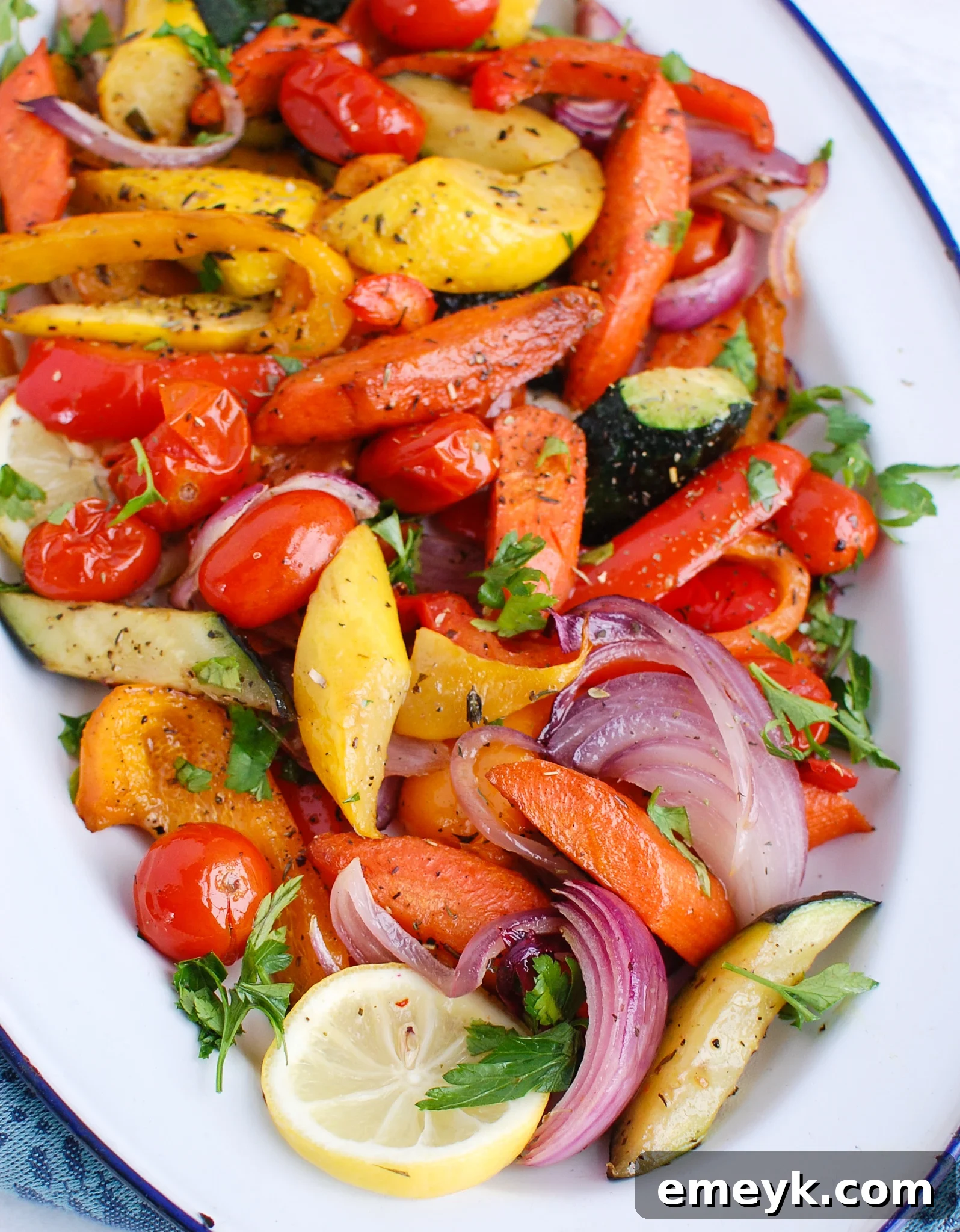
Mediterranean Roasted Vegetables: A Delightful and Healthy Side Dish
Prepare to tantalize your taste buds with Mediterranean Roasted Vegetables, a vibrant dish bursting with naturally sweet flavors that emerge beautifully through the roasting process. This colorful medley of fresh vegetables, seasoned with aromatic oregano, thyme, a hint of garlic, and a bright squeeze of lemon juice, creates a truly unforgettable culinary experience. More than just a side, these roasted vegetables are a versatile, vegan-friendly addition to any meal, whether paired with succulent grilled meats, tossed into a hearty rice bowl, or enjoyed as a light and wholesome stand-alone dish. Experience the taste of the Mediterranean in every bite, offering both incredible flavor and robust nutrition.
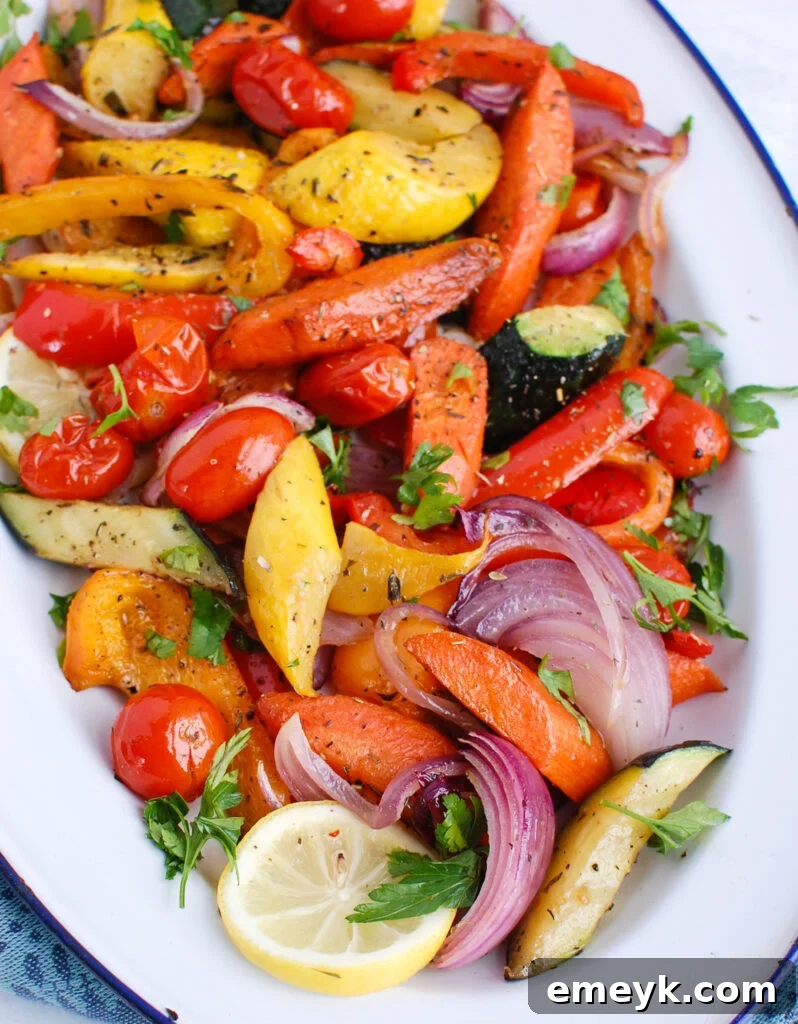
The Magic of Roasting: Unleashing Natural Sweetness
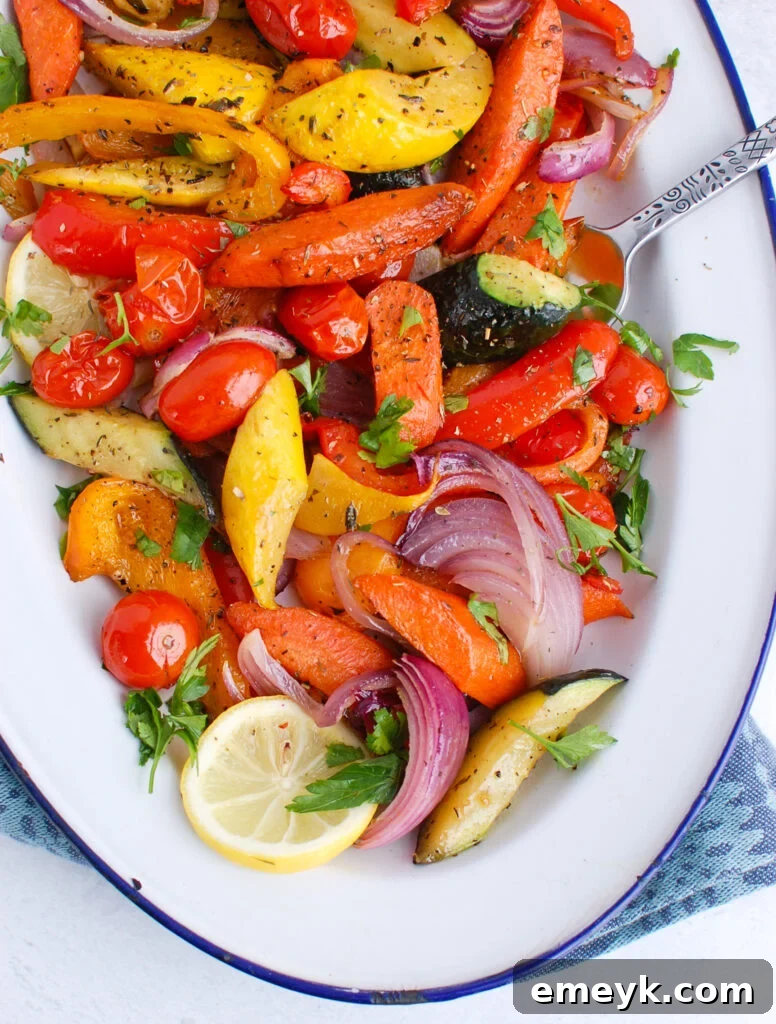
There’s an undeniable magic that happens when fresh vegetables are exposed to the high heat of an oven. The roasting process caramelizes their natural sugars, intensifying their inherent sweetness and transforming their textures into something wonderfully tender with slightly crisped edges. This method not only enhances flavor but also creates an enticing aroma that fills your kitchen. For me, a plate adorned with a rainbow of roasted vegetables signals pure happiness. I prepare them year-round, knowing they are the perfect complement to countless meals or satisfying on their own.
Why Mediterranean Roasted Vegetables Are a Must-Try
This Mediterranean-inspired version elevates simple roasted vegetables with a blend of classic herbs and a touch of citrus. The combination of oregano and thyme, paired with high-quality extra virgin olive oil and fresh lemon juice, imparts a distinctive, vibrant flavor profile. The beauty of this recipe lies in its adaptability; you can customize the vegetables and spices to suit your preference, making it a staple in your culinary repertoire. It’s a fantastic way to incorporate more vegetables into your diet, offering a delicious and healthy option that’s quick to prepare.
Elevate Your Dish with Mediterranean Spices and Fresh Herbs
Beyond the fundamental oregano and thyme, consider experimenting with other iconic Mediterranean spices to truly enhance this dish. Sumac, with its tangy, slightly sour flavor, adds a bright zest, while Za’atar, a blend of thyme, sesame seeds, and sumac, introduces a nutty and earthy complexity. These spices beautifully complement the inherent sweetness of roasted vegetables, taking them to new heights. My absolute favorite part of this recipe, however, is the finishing touch: a generous scattering of fresh herbs. Fresh parsley, mint, basil, or dill can dramatically elevate the dish, adding a burst of freshness and aromatic depth that transforms a simple side into a gourmet experience. Don’t skip this step – fresh herbs are a game-changer!
Recipe Ingredients: Crafting Your Mediterranean Masterpiece
Creating these delightful Mediterranean Roasted Vegetables requires a selection of fresh produce and key seasonings. Here’s a breakdown of the essential ingredients and tips for choosing them:
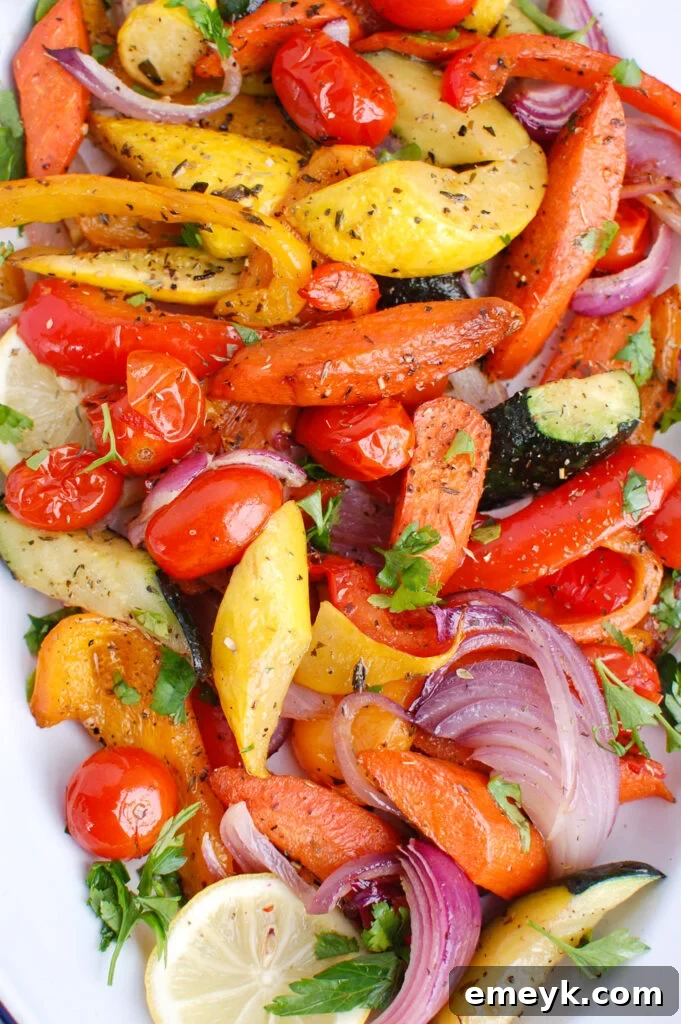
- Vegetables: The core of this dish! You have complete freedom to choose your favorites or whatever seasonal produce you have on hand. The key to even cooking is to cut all your vegetables into roughly similar sizes. My preferred selection for a Mediterranean blend often includes zucchini, carrots, red onion, bell peppers (red and yellow for color), eggplant, summer squash, and cherry tomatoes. These vegetables not only offer a beautiful spectrum of colors but also cook wonderfully together, absorbing the flavors of the seasoning. Feel free to add broccoli, cauliflower, or even potatoes for a heartier mix.
- Extra Virgin Olive Oil (EVOO): Essential for achieving that perfect roasted texture and flavor. A good quality extra virgin olive oil not only helps the vegetables caramelize but also infuses them with rich, healthy fats characteristic of Mediterranean cuisine. Don’t be shy with it! A light drizzle after roasting can also add a fresh, vibrant finish and extra health benefits.
- Lemon Juice: While optional, a squeeze of fresh lemon juice is highly recommended. It introduces a bright, zesty note that beautifully contrasts with the sweetness of the roasted vegetables and the earthiness of the spices. It acts as a natural flavor enhancer, lifting the entire dish. Start with half a lemon’s juice and adjust to your taste. For an even more stunning presentation and subtle flavor, add a few lemon slices directly to the baking sheet during roasting.
- Spices: The heart of the Mediterranean flavor. Our base includes dried oregano and thyme, which are foundational. To truly transport your palate, I highly suggest incorporating Za’atar (a blend of dried thyme, marjoram, oregano, sumac, and toasted sesame seeds) or Sumac (a tart, slightly fruity spice). These spices are staples in Mediterranean cooking and add incredible depth. If you don’t have them, Italian seasoning or a mix of garlic powder and onion powder can work in a pinch. Don’t forget salt and freshly ground black pepper to taste.
- Fresh Herbs: This is where the dish truly shines and gets elevated from good to extraordinary. Once the vegetables are roasted, chop some fresh parsley, mint, basil, or dill and sprinkle generously over the warm medley. These fresh herbs provide a refreshing counterpoint to the roasted flavors, adding brightness and aromatic complexity. A mix of a couple of these herbs works wonderfully.
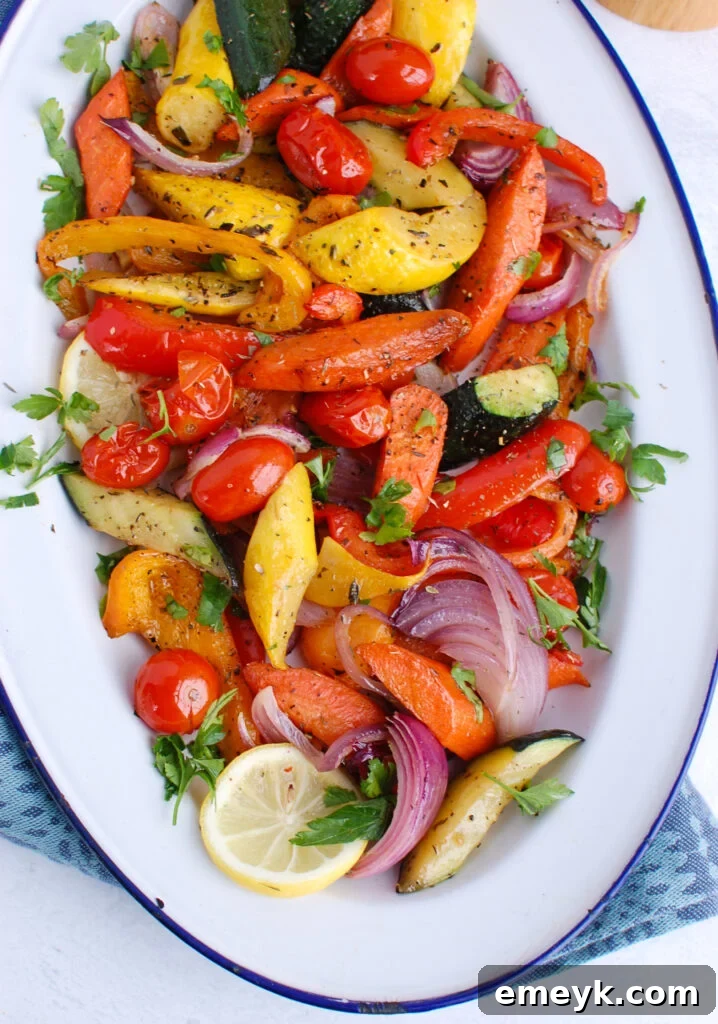
How to Make Mediterranean Roasted Vegetables: A Simple Step-by-Step Guide
Creating this delicious and healthy side dish is incredibly straightforward. Follow these simple steps for perfectly roasted vegetables every time:
- Preheat Your Oven: Start by preheating your oven to a robust 425 degrees Fahrenheit (220 degrees Celsius). A high temperature is crucial for achieving that desirable caramelization and tender-crisp texture.
- Prepare Your Vegetables: Wash and thoroughly dry all your chosen vegetables. The most important step here is to cut them into uniform, bite-sized pieces. This ensures that all the vegetables cook evenly and finish roasting at roughly the same time. Place the cut vegetables into a large mixing bowl.
- Whisk the Flavorful Marinade: In a separate small mixing bowl or a jar with a lid, combine the extra virgin olive oil, minced garlic, dried thyme, dried oregano, and your optional Za’atar or Sumac. Add salt and freshly ground black pepper. If using, squeeze in the fresh lemon juice. Whisk vigorously or shake the jar until all the ingredients are well combined, forming an aromatic marinade.
- Coat the Vegetables: Pour the prepared olive oil and spice mixture over the chopped vegetables in the large mixing bowl. Toss everything together thoroughly, ensuring every piece of vegetable is evenly coated. You want a thin, even layer of oil and seasoning on each vegetable for optimal roasting.
- Spread on Baking Sheets: Arrange the seasoned vegetables in a single, even layer on one or two large baking sheets. It’s critical not to overcrowd the pan. If the vegetables are too close together, they will steam instead of roast, resulting in soggy instead of perfectly caramelized edges. Use two baking sheets if necessary, giving the vegetables plenty of space.
- Roast to Perfection: Place the baking sheets in the preheated oven. Roast for approximately 30 to 35 minutes. Halfway through the cooking time, at about the 15-minute mark, give the vegetables a good stir or toss them with a spatula. This promotes even browning on all sides. Continue roasting until the vegetables are tender, slightly caramelized, and have just begun to develop a delicious char on their edges.
- Garnish and Serve: Once roasted, remove the vegetables from the oven. Transfer them to a serving platter and garnish generously with your freshly chopped herbs (parsley, mint, basil, or dill). Serve warm and enjoy immediately!
Expert Tips and Modifications for Your Mediterranean Roasted Vegetables
Achieving perfectly roasted vegetables is an art, but with these tips, you’ll master it in no time. Plus, discover ways to adapt this recipe to your preferences:
- Consistency is Key: Cut Evenly: This cannot be stressed enough. For uniformly cooked vegetables, ensure all pieces are cut to a similar size and thickness. Carrots and potatoes, for instance, are denser and may need to be cut smaller or roasted longer than softer vegetables like zucchini or bell peppers. Even cutting is the secret to avoiding some pieces being raw while others are burnt.
- Promote Browning: Toss the Vegetables: During the roasting process, it’s beneficial to toss the vegetables at least once, ideally halfway through the cooking time. This ensures all sides get exposed to the direct heat, leading to even browning and delicious caramelization. It prevents one side from becoming overly charred while others remain pale.
- Optimal Temperature for Roasting: The ideal temperature for most roasted vegetables is high heat, specifically 400-425 degrees Fahrenheit (200-220°C). This high temperature creates a crispy exterior and a tender interior. While the exact timing will vary based on vegetable density and size, I find 425°F to be the “sweet spot” for achieving fantastic results. Start checking for tenderness and desired char around the 25-minute mark, and continue up to 35-40 minutes as needed.
- Don’t Skimp on Seasoning: Spices are paramount to flavorful roasted vegetables. The heat of the oven brings out and amplifies the flavors of the herbs and spices. Don’t be afraid to season generously. Beyond oregano and thyme, consider other Mediterranean favorites like smoked paprika, a pinch of red pepper flakes for a subtle kick, or even a touch of coriander. Taste before and after roasting to understand how the flavors evolve.
- Grilling Option for Summer Days: This recipe is incredibly adaptable for grilling! If you prefer grilled vegetables, simply follow the same preparation steps, but instead of roasting in the oven, cook them on the grill. For smaller vegetables that might fall through the grates, a grill basket or a cast-iron grill pan works wonders. Ensure your grill isn’t too hot to prevent burning before they cook through. I often cook them on an upper rack while grilling meats, allowing them to gently char and absorb smoky flavors.
- Avoid Overcrowding the Pan: This is a common mistake. When vegetables are packed too tightly on a baking sheet, they release moisture and steam rather than roast. This results in soft, watery vegetables without any crispy, caramelized edges. Always spread your vegetables in a single layer, ensuring there’s enough space between them. If necessary, use two baking sheets.
What to Pair With Your Mediterranean Roasted Vegetables: Versatile Serving Suggestions
These flavorful Mediterranean Roasted Vegetables are incredibly versatile and can elevate a wide variety of meals. Here are some fantastic pairing ideas:
- Rice & Buddha Bowls: Create a wholesome and satisfying meal by incorporating these roasted veggies into grain bowls. They pair perfectly with fluffy couscous, quinoa, or brown rice. Try them in a Chicken Shawarma Rice Bowl for an authentic Mediterranean experience, or with Beef Kafta Meatballs for a rich and flavorful combination.
- Grilled Meats: Roasted vegetables are the ultimate companion to any grilled protein. Their smoky, sweet flavors complement savory meats beautifully. Serve them alongside delicious Greek Beef Kabobs, vibrant Asian Marinated Flank Steak, or juicy Tandoori Chicken for a complete and balanced meal. They also go wonderfully with Shish Tawook Chicken Thighs, creating a harmonious blend of flavors.
- Seafood Delights: The light and fresh notes of Mediterranean roasted vegetables make them an excellent match for various seafood dishes. If you’re a salmon lover, try them with this 15-Minute Grilled Salmon. For white fish enthusiasts, they would be exquisite with Baked Cod with Lemon or this Easy Baked Fish recipe.
- Holiday Feasts: Don’t reserve roasted vegetables just for weeknights! They make a fantastic, healthy addition to holiday spreads. During Thanksgiving, these Mediterranean roasted vegetables provide a lighter, flavorful alternative or complement to traditional sides. Pair them with a succulent Herb Roasted Turkey for a feast that impresses.
- Appetizer or Mezze Platter: Serve them chilled or at room temperature as part of a Mediterranean mezze platter alongside hummus, olives, pita bread, and feta cheese.
- Egg Dishes: Chop up any leftovers and stir them into scrambled eggs, omelets, or frittatas for a nutritious breakfast or brunch.
- Warm Salads: Combine the roasted vegetables with fresh greens, a light vinaigrette, and perhaps some chickpeas or couscous for a hearty and healthy warm salad.
More Delicious Vegetable Recipes
If you loved these Mediterranean Roasted Vegetables, you might enjoy exploring other vibrant and flavorful vegetable dishes:
Sides
Balsamic Roasted Mushrooms
Vegetarian
Bok Choy Stir Fry
Sides
Easy Bok Choy Recipe
Vegetarian
Za’atar Roasted Carrots
Tried this recipe? Leave a star rating and comment below! Subscribe to my newsletter or follow me on
Facebook,
Instagram, or
Pinterest for the latest.
Mediterranean Roasted Vegetables
By Julia Jolliff
Mediterranean Roasted Vegetables are bursting with the sweet flavors that happen when you roast vegetables. This vibrant dish is a perfect vegan side for any meal.
Print Recipe
Ingredients
- 1 zucchini, sliced and quartered
- 3 carrots, peeled and cut into chunks
- 1 red bell pepper, sliced
- 1 yellow bell pepper, sliced
- 1 red onion, chopped or sliced
- 1 yellow squash, sliced and quartered
- 2 cups cherry tomatoes
- 3 Tablespoons olive oil
- 4 cloves garlic, minced
- 1 teaspoon oregano
- 1 teaspoon thyme
- 1 teaspoon za’atar, or sumac (optional)
- 1/4 teaspoon salt
- 1/8 teaspoon black pepper
- 1/2 lemon, juiced (optional)
- Fresh parsley, mint, basil or dill, chopped (for garnish)
- Lemon slices, for serving (optional)
Instructions
- Preheat the oven to 425 degrees F (220°C).
- Cut all of your vegetables to your desired size, ensuring they are about the same size for even roasting, and place them in a large mixing bowl.
- In a small mixing bowl or mason jar, combine the olive oil, minced garlic, thyme, oregano, za’atar or sumac (if using), lemon juice (if using), and salt and pepper. Stir or shake to combine.
- Pour the olive oil mixture over the vegetables and toss to coat them thoroughly.
- On one or two baking sheets, spread the seasoned vegetables out in a single, even layer. Avoid crowding the pan to ensure proper roasting.
- Roast the vegetables for about 30 to 35 minutes, or until they are soft and just starting to show some char on the edges. Make sure to stir the vegetables at about the 15-minute mark for even cooking.
- Garnish with fresh herbs and serve warm, optionally with additional lemon slices.
Notes
- Store leftover vegetables in an airtight container in the fridge for up to 3 to 4 days.
- You can modify the spices to your liking and also adjust the amount of lemon juice based on your preference.
Nutrition Information
Carbohydrates: 20g
Protein: 4g
Fat: 11g
Saturated Fat: 2g
Polyunsaturated Fat: 1g
Monounsaturated Fat: 8g
Sodium: 194mg
Potassium: 774mg
Fiber: 5g
Sugar: 9g
Vitamin A: 9240IU
Vitamin C: 141mg
Calcium: 74mg
Iron: 2mg
Nutrition information is automatically calculated, so should only be used as an approximation.
Tried this recipe?
Mention @acedarspoon or tag #acedarspoon!