
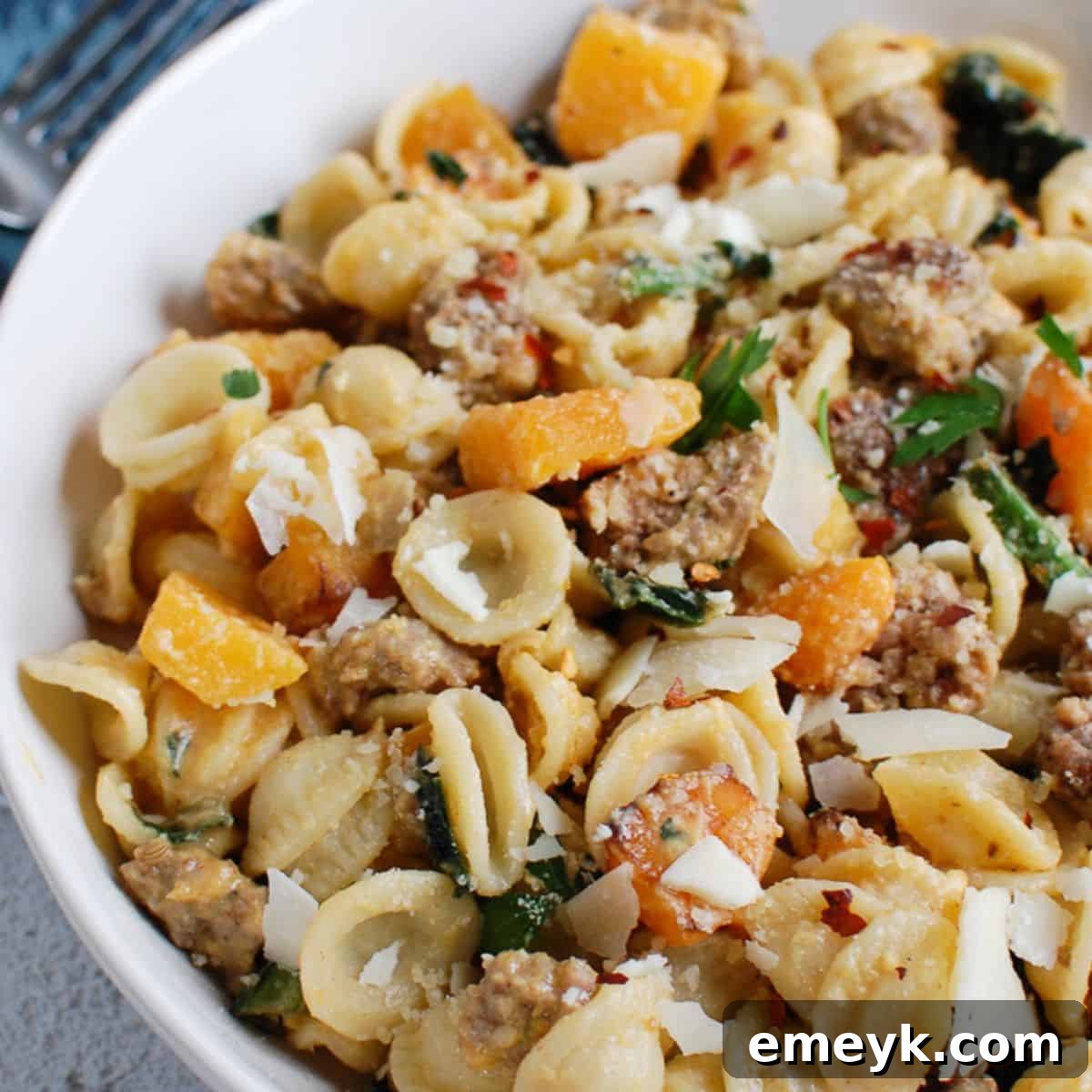
Creamy Butternut Squash Pasta with Sausage: Your New Favorite Fall Comfort Food
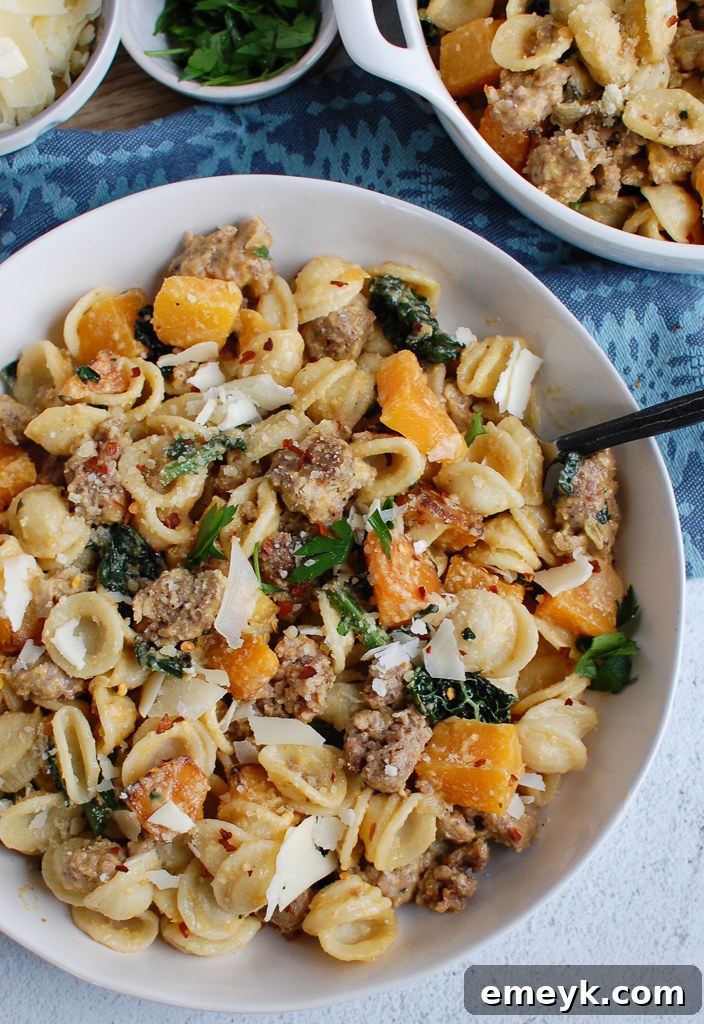
Embrace the season with this incredibly comforting and flavorful butternut squash pasta. It captures the very essence of autumn in a single bowl, featuring a luxuriously smooth and creamy squash sauce, perfectly complemented by savory sausage and aromatic sage. As the days grow shorter and the air turns crisp, this hearty fall meal becomes a go-to favorite, promising warmth and satisfaction. Whether you’re seeking a simple yet elegant weeknight dinner or a special dish to share with loved ones, this recipe delivers on both taste and ease.
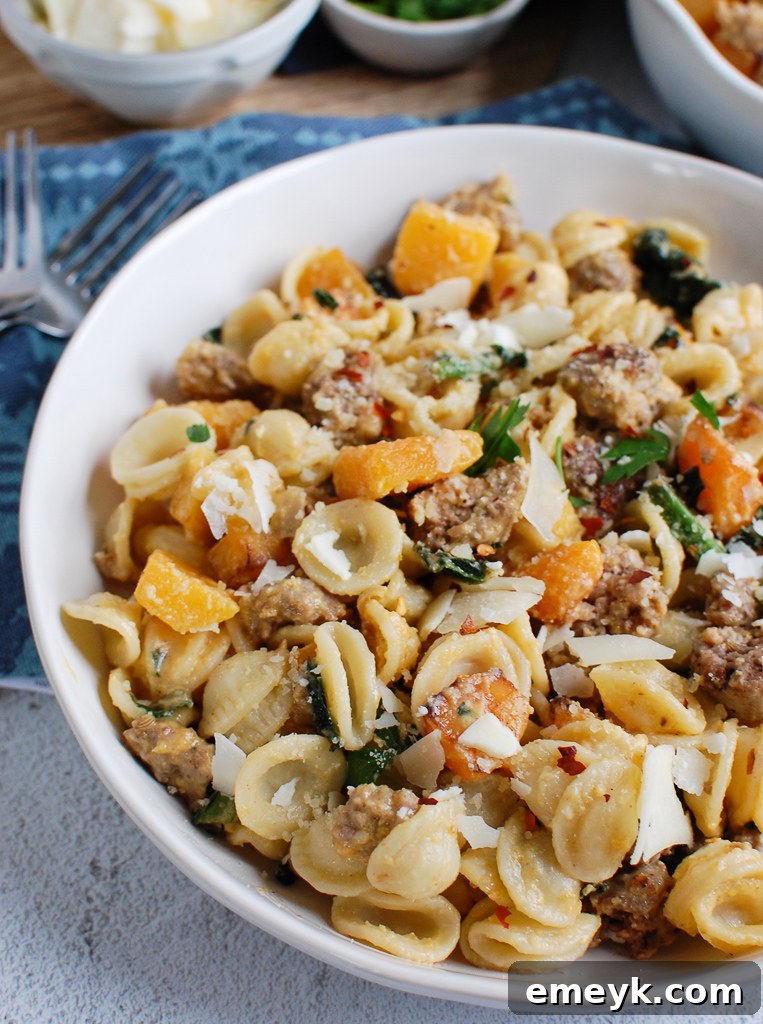
As soon as vibrant butternut squash begins to appear at local markets, this pasta dish immediately earns its spot on my weekly meal plan. It’s one of those quintessential fall recipes I’ve perfected over countless seasons, loved for its ability to transform simple, seasonal ingredients into a truly indulgent and comforting experience. It perfectly balances rich flavors with a texture that feels decadent without being heavy.
The magic begins with roasted butternut squash, which caramelizes to bring out its natural sweetness and depth. This roasted goodness then blends seamlessly with browned savory sausage, fragrant garlic, and earthy sage, creating a silky-smooth sauce that clings beautifully to every piece of pasta. If you’re a fan of cozy, squash-forward dishes like my Cheesy Butternut Squash Orzo or Easy Roasted Butternut Squash Soup, this incredible pasta is destined to become a staple in your fall cooking repertoire. For those who appreciate the robust flavors of stuffed squash, be sure to explore my Mediterranean Stuffed Butternut Squash or the equally delicious Mediterranean Stuffed Acorn Squash.
Why You’ll Love This Butternut Squash Pasta Recipe

This butternut squash pasta stands out for so many reasons, making it a beloved dish in my kitchen and, I’m sure, soon to be in yours. Its appeal lies in its perfect blend of simplicity and sophisticated flavor, making it incredibly versatile for any occasion.
- Family-Friendly Delight: One of its greatest charms is how universally appealing it is. The blended squash sauce is naturally mild, velvety, and subtly sweet, making it a hit even with picky eaters. The texture allows the sauce to beautifully coat every piece of pasta, ensuring a flavorful bite every time. It’s a perfect kid-friendly meal that comes together with minimal fuss on busy weeknights, delivering maximum satisfaction.
- Fantastic Leftovers: Not only is this dish simple to prepare, but it also yields exceptional leftovers. In fact, many find the pasta even more delicious the next day, as the rich, earthy flavors of the squash and sage have more time to meld and deepen into the pasta. This makes it an ideal make-ahead option, offering a beautifully reheatable meal for lunch or another dinner. Prepare it once, enjoy it twice!
- Silky Smooth Squash Sauce: The secret to this pasta’s irresistible appeal is the sauce. Roasting the butternut squash caramelizes its natural sugars, intensifying its flavor before it’s blended into a smooth, luxurious purée. This creates a sauce that is wonderfully silky and coats the pasta without feeling overly heavy or cloying. It’s the kind of deeply comforting meal that provides warmth and coziness on a chilly fall evening, truly a hug in a bowl.
- Incredibly Versatile: This recipe is a canvas for culinary creativity. You can easily adapt it to suit your preferences or what you have on hand. Switch the ground sausage for lean ground chicken or turkey for a lighter alternative, or opt for plant-based sausage or hearty chickpeas to make it a delicious vegetarian meal. Boost the nutritional content and add vibrant color by incorporating extra vegetables like diced carrots, bell peppers, or a handful of fresh greens such as spinach or kale towards the end of cooking.

Essential Ingredients for a Flavorful Butternut Squash Pasta
Crafting this delightful butternut squash pasta requires just a few readily available ingredients, many of which you likely already have in your pantry. Each component plays a vital role in building the layers of flavor that make this dish so special. For precise measurements and detailed printable instructions, please refer to the recipe card below.
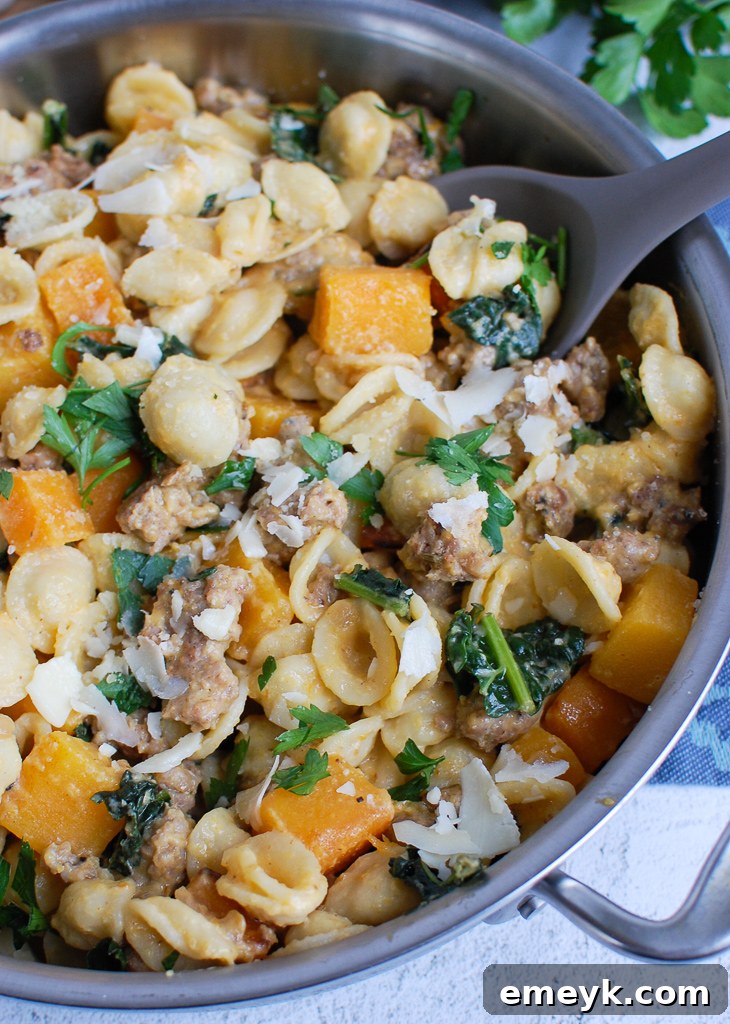
- Butternut Squash: The star of our show! Roasting the squash is a crucial step that intensifies its natural sweetness and nutty flavor, ensuring a rich, deeply flavored sauce. A portion of the roasted squash will be blended into the velvety sauce, while the remaining diced pieces are folded into the finished pasta, adding wonderful texture and bursts of sweet squash flavor with every bite.
- Ground Sausage: Mild Italian ground sausage introduces a savory depth and a delightful richness that perfectly balances the sweetness of the squash. Its fat renders during cooking, contributing to a flavorful base for the sauce. Feel free to customize: opt for spicy sausage for a kick, lean ground turkey or chicken sausage for a lighter meal, or even a plant-based sausage substitute or crumbled firm tofu for a vegetarian twist.
- Pasta: The ideal vessel for our luxurious sauce! Orecchiette, with its unique “little ear” shape, is particularly excellent as it masterfully cups and holds the creamy sauce in every nook and cranny. However, any medium-shaped pasta will work beautifully, such as shells, rotini, cavatappi, or short tube shapes like penne or rigatoni, all of which are excellent at picking up and carrying a hearty sauce.
- Parmesan Cheese: Freshly grated Parmesan cheese is essential. It not only contributes a sharp, nutty, and umami-rich flavor that enhances the entire dish but also helps to slightly thicken the squash cream sauce, giving it a more luxurious mouthfeel. Always opt for freshly grated over pre-shredded for superior melting and flavor.
- Cream: A small amount of heavy cream is added to the blended squash to create that signature smooth, silky, and utterly irresistible purée. For a dairy-free alternative, you can achieve a similar creamy consistency by blending the squash with vegetable broth and a dollop of unsweetened dairy-free yogurt or a splash of cashew cream.
- Sage: This herb is the quintessential pairing for fall flavors, especially squash. Fresh sage brings a distinct earthy, slightly peppery, and pine-like aroma that beautifully complements the sweetness of the butternut squash and the savoriness of the sausage, tying all the components together into a harmonious autumn dish.
- Garlic & Olive Oil: These foundational ingredients create the aromatic base for the sausage and infuse the sauce with essential flavor.
- Salt & Pepper: Simple seasonings are vital to enhance and balance all the flavors.
- Crushed Red Pepper (Optional): For those who enjoy a subtle warmth, a pinch of crushed red pepper adds a delightful, gentle heat that can elevate the dish without overpowering it.
This heartwarming butternut squash pasta promises to bring comfort and joy to any fall table. If you’re passionate about squash-forward meals, I highly recommend trying my Butternut Squash Sage Risotto next for another delightful culinary experience.
Get Creative: Exciting Recipe Variations for Your Pasta
One of the best aspects of this creamy butternut squash pasta is its adaptability. Don’t hesitate to experiment with these variations to suit your taste, dietary needs, or simply to use up what you have on hand, ensuring this dish never gets boring!
- Protein Swaps: While ground sausage offers a classic, rich flavor, you can easily substitute it. Try ground turkey or ground chicken for a leaner protein option. For a slightly different flavor profile, consider using chicken or turkey sausage links, removed from their casings and crumbled. Bacon or pancetta, crisped and crumbled, can also add a delightful smoky element.
- Make it Vegetarian or Vegan: To transform this into a vegetarian masterpiece, simply omit the meat. Instead, consider adding a can of drained and rinsed chickpeas or cannellini beans to the sautéed garlic for extra protein and fiber. For a fully vegan version, use a plant-based sausage alternative, substitute the cream with a plant-based milk (like unsweetened cashew or oat milk) mixed with a bit of nutritional yeast for cheesy flavor, and replace parmesan with a dairy-free parmesan alternative or blend in some soaked cashews for creaminess.
- Different Squash Varieties: If butternut squash isn’t available or you prefer another kind, feel free to swap it! Acorn squash or delicata squash are excellent alternatives. They roast similarly and offer a subtly different, yet equally delicious, sweetness and texture to the sauce. You can also mix different types of winter squash for a more complex flavor.
- Cheese Alternatives: While Parmesan is traditional, other cheeses can offer exciting twists. Crumbled feta cheese provides a salty, tangy counterpoint, while creamy goat cheese can add a lovely richness and a hint of tartness. A sprinkle of smoked gouda or gruyere could also introduce a sophisticated depth.
- Boost with Veggies: Enhance the nutritional value and texture by incorporating additional vegetables. Sauté finely diced carrots, celery, or bell peppers with the sausage and garlic. Stir in a handful of fresh spinach or kale during the last few minutes of cooking until wilted, adding a pop of color and extra vitamins. Roasted mushrooms or sun-dried tomatoes could also be excellent additions.
- Herb Enhancements: Beyond sage, consider fresh thyme or rosemary for complementary autumnal flavors. A sprinkle of fresh parsley or chives at the end can add brightness and a fresh finish.
- A Touch of Spice: If you love heat, increase the amount of crushed red pepper flakes, or add a pinch of cayenne pepper to the sauce for a bolder kick.
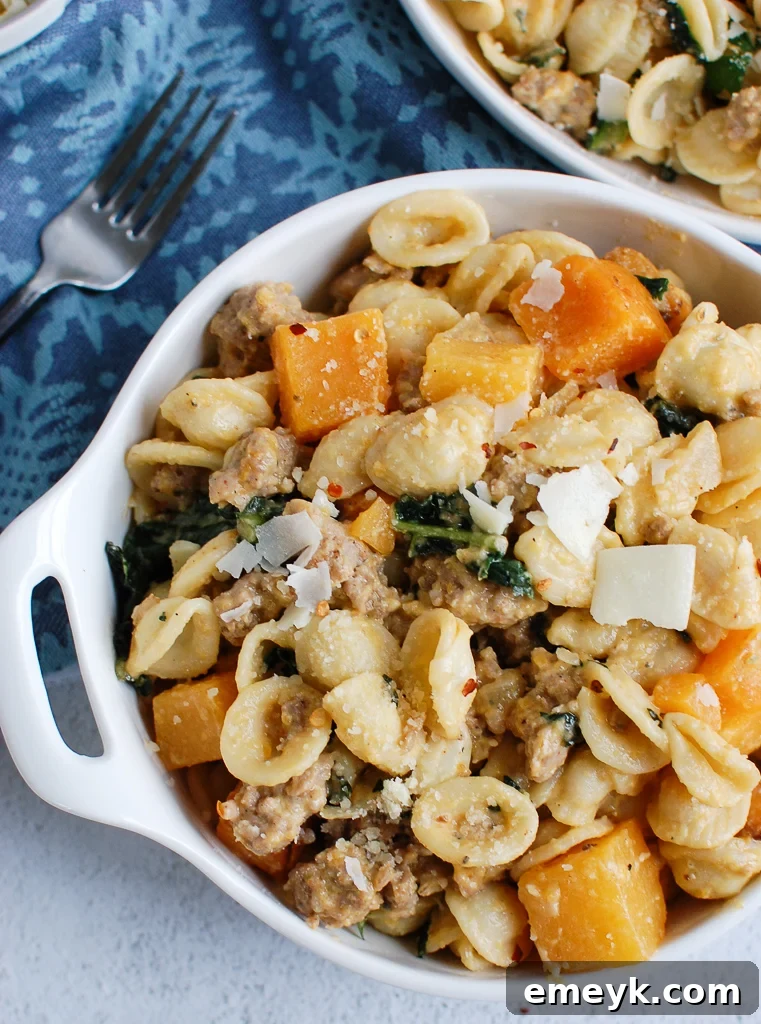
How to Make This Creamy Butternut Squash Sausage Pasta
Creating this delicious fall pasta is a straightforward process, broken down into simple, manageable steps. Follow these instructions to bring a bowl of autumn comfort to your table.
- Step 1: Prepare the Squash for Roasting. Preheat your oven to 400°F (200°C). In a large mixing bowl, combine the peeled and diced butternut squash with half of the olive oil (2 tablespoons), a generous pinch of salt, and freshly ground black pepper. Toss well to ensure all the squash pieces are evenly coated.
- Step 2: Roast the Butternut Squash. Spread the seasoned squash in a single layer on a large baking sheet. Roast for approximately 30 minutes, or until the squash is golden-brown at the edges and fork-tender. Make sure to stir the squash a few times throughout the roasting process to promote even caramelization.
- Step 3: Cook the Pasta. While the squash roasts, bring a large pot of salted water to a rolling boil. Add your chosen pasta (orecchiette works wonderfully) and cook according to the package directions until al dente. Before draining, reserve about 1/4 to 1/2 cup of the starchy pasta water – this is crucial for adjusting the sauce’s consistency later. Drain the pasta and, for best results, run it briefly under cold water to prevent it from sticking together. Transfer the cooled pasta to a large mixing bowl.
- Step 4: Brown the Sausage and Garlic. In a large skillet or Dutch oven, warm the remaining olive oil (2 tablespoons) over medium heat. Add the ground sausage, breaking it apart with a wooden spoon as it cooks. Allow the sausage to brown nicely, letting it sit undisturbed for a minute or two to develop a rich caramelization. Once the sausage is nearly cooked through, add the minced garlic and cook for another minute until fragrant, being careful not to burn the garlic.
- Step 5: Combine Sausage with Pasta. Once the sausage mixture is cooked, transfer it from the skillet directly into the large mixing bowl with the cooked pasta.
- Step 6: Prepare the Creamy Butternut Squash Sauce. Remove the roasted butternut squash from the oven. Set aside about 1/4 cup of the roasted squash cubes for texture later. Transfer the remaining roasted squash into a blender. Add the fresh sage leaves, a clove of minced garlic, 1/4 cup of freshly grated Parmesan, 1/4 cup of the reserved pasta water, and 1/4 cup of cream. Blend until completely smooth and silky. If the sauce is too thick, add a little more pasta water, one tablespoon at a time, until it reaches your desired consistency.
- Step 7: Coat the Pasta with Sauce. Pour the warm, creamy butternut squash sauce over the pasta and sausage mixture in the large mixing bowl. Toss everything gently but thoroughly to ensure every strand and piece of pasta is beautifully coated with the rich sauce. If the sauce seems too thick, gradually add more reserved pasta water until it reaches a luscious, clingy consistency.
- Step 8: Finish and Serve. Gently fold in the 1/4 cup of reserved roasted squash cubes into the pasta. This adds a lovely textural contrast to the smooth sauce. Stir in the crushed red pepper (if using), additional freshly grated Parmesan cheese, and season with salt and pepper to taste. Garnish generously with extra fresh sage leaves or chopped Italian parsley before serving warm. Enjoy immediately!
Expert Tips for the Best Butternut Squash Pasta Texture and Flavor
Achieving a truly exceptional butternut squash pasta isn’t just about following the steps; it’s about understanding the nuances that elevate the dish. Here are some pro tips to ensure your pasta is perfectly textured and bursting with flavor:
- The Importance of Roasting the Squash: This is arguably the most critical step. Roasting the butternut squash at a higher temperature for a sufficient duration does two important things: it concentrates the squash’s natural sugars, deepening its flavor profile from mild to richly sweet and nutty, and it removes excess moisture. This prevents your sauce from becoming watery or bland. If, after blending, the sauce still seems a bit thick for your liking, gradually add warm pasta water until it reaches the desired smooth, flowing consistency. Conversely, if it appears too thin, blend in a few more roasted squash pieces or a little extra grated Parmesan cheese to thicken it. If you find the sauce leans too sweet, a pinch of salt or a small splash of fresh lemon juice can help balance and brighten the flavors.
- Proper Sausage Browning is Key: Don’t rush this step! Achieving a good, deep brown on your ground sausage makes a significant difference in the overall flavor of the dish. Instead of constantly stirring, let the sausage sit undisturbed in the hot pan for a minute or two at a time before breaking it apart. This allows for proper caramelization and the development of a flavorful crust, which adds a crucial savory depth that wonderfully contrasts the natural sweetness of the squash. If your pan seems too dry during cooking, a small splash of olive oil can help the sausage crisp rather than steam, enhancing its texture and flavor.
- Common Pitfalls and How to Avoid Them:
- Overly Sweet Sauce: This usually happens if the squash wasn’t roasted long enough or at a high enough temperature to properly caramelize. Ensure your squash is deeply golden-brown and tender.
- Overly Thick Sauce: Adding too much Parmesan cheese at once can cause the sauce to tighten quickly. Start with a smaller amount and gradually add more, stirring and checking the consistency as you go.
- Dry Pasta: If your finished pasta seems dry, it often indicates that the pasta water was not incorporated slowly and gradually. Pasta water contains starch that helps emulsify the sauce, allowing it to cling beautifully to the pasta. Ladle it in a tablespoon or two at a time while tossing, until the sauce coats the pasta perfectly without becoming thin or watery.
- Fresh Herbs Make a Difference: While dried sage can be used, fresh sage leaves truly elevate this dish with their vibrant, earthy aroma. Don’t skip them if you can help it!
- Taste and Adjust: Always taste your sauce before combining it with the pasta. Adjust seasonings—salt, pepper, and crushed red pepper—as needed to achieve your perfect flavor balance. A little extra Parmesan never hurt, either!
Make-Ahead & Storage Tips for Convenience
This butternut squash pasta is not only delicious freshly made but also incredibly convenient for meal prep. Here’s how to store it and enjoy it later:
- Freezer-Friendly Sauce: The creamy butternut squash sauce is perfect for making ahead and freezing. Once you’ve blended the sauce, allow it to cool completely to room temperature. Transfer it to an airtight, freezer-safe container or heavy-duty freezer bags, removing as much air as possible to prevent freezer burn. It can be stored in the freezer for up to three months. To reheat, thaw the sauce overnight in the refrigerator, then gently warm it on the stovetop over low heat, stirring occasionally. Add a splash of vegetable broth, milk, or reserved pasta water to restore its creamy consistency if needed.
- Storing Leftover Pasta: Any leftover pasta keeps beautifully in an airtight container in the refrigerator for up to four days. As pasta tends to absorb sauce overnight, you might find it a bit thicker upon reheating.
- Reheating Leftovers: When you’re ready to enjoy your leftovers, reheat them gently. You can warm individual portions in the microwave, stirring halfway through. For larger quantities, transfer the pasta to a skillet and heat over medium-low heat. The key is to add a small amount of liquid – a tablespoon or two of water, broth, or milk – as it heats up. This will rehydrate the pasta and loosen the sauce, bringing back that wonderful creamy texture. Stir frequently until heated through.
Frequently Asked Questions About Butternut Squash Pasta
Absolutely! To make this dish dairy-free, simply replace the heavy cream with vegetable broth blended with a dollop of unsweetened dairy-free yogurt (such as cashew or almond yogurt) or a splash of full-fat coconut milk for extra richness. For the Parmesan, use a high-quality dairy-free Parmesan substitute or blend in some nutritional yeast for a cheesy flavor. Ensure any sausage used is also dairy-free.
Yes, frozen butternut squash can be used as a convenient alternative to fresh. For the best flavor and texture in the sauce, ensure it’s still roasted until it achieves a nice caramelization. Thaw it slightly before roasting to help it dry out and brown more effectively.
Pasta shapes that have nooks and crannies or a broader surface area are ideal for thicker, creamy sauces like this one. Orecchiette, shells (conchiglie), cavatappi, fusilli, and short tube shapes such as penne or rigatoni are excellent choices because they effectively “cup” or hold the sauce, ensuring a flavorful bite every time.
Butternut squash can be naturally sweet, especially when roasted. To balance this sweetness in the sauce, you can add a pinch more salt, a small splash of fresh lemon juice (which adds brightness and cuts through richness), or a dash of crushed red pepper flakes for a subtle savory warmth. Ensuring your sausage is well-browned also contributes savory notes that provide a beautiful contrast.
If you don’t have a blender, you can use an immersion blender directly in a deep pot or a food processor. If neither is available, you can try mashing the roasted squash very well with a fork or potato masher, then whisking in the cream, Parmesan, and seasonings until as smooth as possible. The sauce won’t be as silky, but it will still be incredibly delicious and comforting.
More Delightful Squash Recipes to Explore
Vegetarian
Butternut Squash Chickpea Coconut Curry
Slow Cooker
Slow Cooker Butternut Squash Apple Soup
Vegetarian
Butternut Squash Apple Bake
Sides
Parmesan Delicata Squash
Tried this recipe? Leave a star rating and comment below! Subscribe to my newsletter or follow me on Facebook, Instagram, or Pinterest for the latest.
★
★
★
★
Creamy Butternut Squash Pasta with Sausage
Ingredients
- 4 Tablespoons olive oil, separated
- 1 butternut squash, peeled and diced (about 1 pound)
- 1 pound ground sausage, mild
- 4 cloves garlic , minced
- 1/2 pound orecchiette pasta, or pasta of your choice
- 1/4 cup reserved pasta water, more or less for desired consistency
- 1/4 cup parmesan, freshly grated
- 1/2 teaspoon crushed red pepper, optional for a little spice
- Salt and pepper to taste
- 1/4 cup roasted butternut squash (for sauce)
- 1 clove garlic , minced (for sauce)
- 1/4 cup parmesan, freshly grated (for sauce)
- 3 sage leaves (for sauce)
- 1/4 cup pasta water, reserved (for sauce)
- 1/4 cup cream (for sauce)
Instructions
- Preheat oven to 400 degrees Fahrenheit (200°C). In a large mixing bowl, toss the peeled and cubed butternut squash with 2 Tablespoons of olive oil, a dash of salt, and pepper.
- Spread the squash on a non-stick baking sheet. Roast for 30 minutes, stirring a few times throughout cooking until golden and tender.
- While the butternut squash roasts, cook the pasta according to package directions. Reserve 1/4 cup of pasta water before draining. Rinse pasta under cold water and transfer to a large mixing bowl once cooled.
- In a large skillet, heat the remaining 2 Tablespoons of olive oil over medium heat. Add the ground sausage and cook, breaking it apart with a wooden spoon, until browned. Add the minced garlic and cook until fragrant, about 1 minute.
- Add the cooked sausage mixture to the pasta in the large mixing bowl.
- Remove the roasted butternut squash from the oven. Set aside 1/4 cup of the roasted squash cubes for texture. Add the remaining roasted squash to the mixing bowl with the sausage and pasta.
- In a blender, combine the 1/4 cup of set-aside roasted butternut squash, the fresh sage leaves, 1 minced garlic clove, 1/4 cup Parmesan cheese, 1/4 cup reserved pasta water, and 1/4 cup cream. Blend until completely smooth and silky.
- Pour the butternut squash sauce over the pasta mixture and toss to combine. Add more reserved pasta water if needed to reach your desired consistency.
- Fold in the reserved roasted squash cubes. Sprinkle with crushed red pepper (if using), more freshly grated Parmesan, and salt and pepper to taste. Garnish with fresh sage or Italian parsley and serve warm.
Notes
- Store leftover pasta in an airtight container in the refrigerator for up to 4 days. To reheat, warm in a skillet or microwave, adding a splash of water or broth to loosen the sauce as needed.
Nutrition
Carbohydrates: 34g,
Protein: 16g,
Fat: 27g,
Saturated Fat: 9g,
Polyunsaturated Fat: 3g,
Monounsaturated Fat: 13g,
Trans Fat: 0.1g,
Cholesterol: 53mg,
Sodium: 472mg,
Potassium: 572mg,
Fiber: 3g,
Sugar: 3g,
Vitamin A: 10669IU,
Vitamin C: 22mg,
Calcium: 141mg,
Iron: 2mg
Nutrition information is automatically calculated, so should only be used as an approximation.
Tried this recipe?Mention @acedarspoon or tag #acedarspoon!