
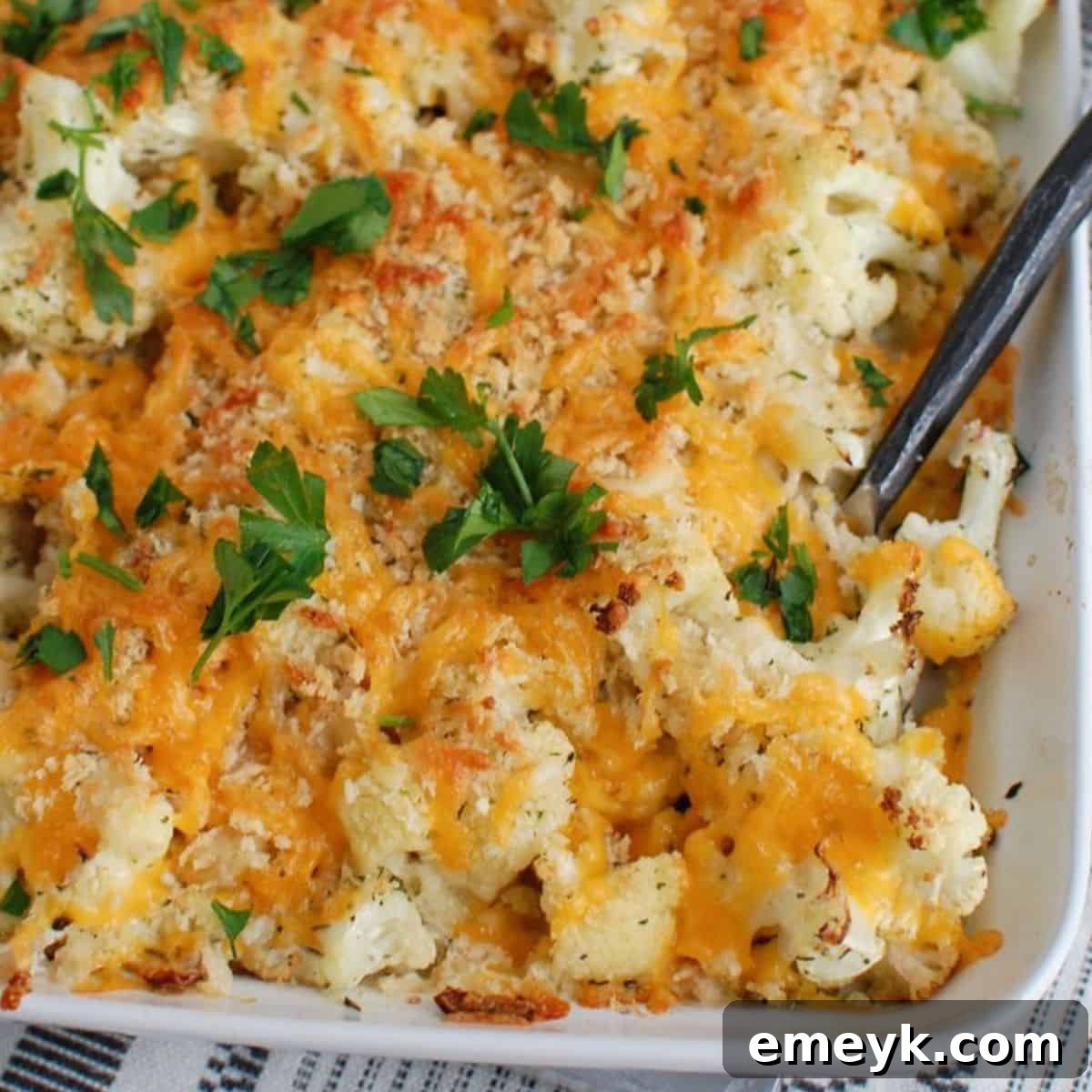
Prepare to elevate your holiday feast with this exquisite **Roasted Cauliflower Gratin**. This dish isn’t just a side; it’s a culinary masterpiece, combining tender, caramelized roasted cauliflower with a luxuriously rich and creamy cheese sauce, all crowned with a golden, crispy panko topping. It’s an absolute crowd-plepleaser, destined to become a cherished addition to your annual holiday traditions or any special gathering that calls for comfort and indulgence.

As the holiday season draws near, my thoughts invariably turn to the comforting and elaborate meals that define this special time of year. While the main course often takes center stage, it’s the symphony of delectable side dishes that truly completes the experience. Among my personal favorites, a well-executed gratin holds a special place, and this **Cauliflower Gratin** truly shines. It marries the earthy sweetness of roasted cauliflower with an incredibly velvety and cheesy sauce, creating a dish that’s both elegant and deeply satisfying.
What sets this recipe apart is the initial step of roasting the cauliflower. This isn’t just a trivial detail; it’s the secret to unlocking a profound depth of flavor. Roasting caramelizes the cauliflower florets, enhancing their natural sweetness and imparting a slight crispness that beautifully contrasts with the creamy sauce. This technique transforms a simple vegetable into a star ingredient, making every bite a delightful experience.
Last summer, my family absolutely adored a Zucchini Gratin recipe I developed, and it immediately sparked the idea to create a similar showstopper using cauliflower. I am always on the lookout for innovative and exciting side dishes to grace our holiday table, and this cauliflower gratin has certainly earned its spot in our permanent rotation. Beyond this recipe, I’m also planning to explore classic favorites like a homemade Green Bean Casserole, a luxurious Potato Gratin, and these wonderfully vibrant Honey Garlic Butter Carrots.
Why This Cauliflower Gratin Is a Must-Try
There are countless reasons to add this Cauliflower Gratin to your culinary repertoire. It’s more than just a side dish; it’s a creamy, dreamy experience that will leave everyone asking for the recipe. Here’s why you’ll fall in love with it:
- **Unforgettable Flavor Profile:** The combination of sweet, roasted cauliflower, savory cheeses, and aromatic spices creates a harmonious blend that’s incredibly satisfying.
- **Luxurious Texture:** From the tender-crisp cauliflower to the silky smooth cheese sauce and the crunchy panko topping, every spoonful offers a delightful textural contrast.
- **Holiday Elegance:** This gratin looks as good as it tastes, making it a perfect center-piece worthy side for Thanksgiving, Christmas, or any special occasion.
- **Simple Yet Sophisticated:** Despite its impressive appearance and taste, the steps are straightforward, making it achievable for cooks of all skill levels.
- **Make-Ahead Friendly:** You can prepare much of this dish in advance, easing your stress on busy event days.
The Magic of Roasted Cauliflower
While many gratin recipes call for steaming or boiling cauliflower, our approach involves a crucial preliminary step: roasting. This technique is a game-changer for several reasons:
- **Enhanced Sweetness:** High heat caramelizes the natural sugars in the cauliflower, bringing out a deeper, sweeter flavor that can’t be achieved otherwise.
- **Improved Texture:** Roasting gives the florets a slightly firm, tender-crisp texture that holds up beautifully under the rich sauce, preventing the mushiness often associated with boiled cauliflower.
- **Complex Flavor Base:** The roasted edges add a lovely, subtle char and nutty notes, building a more complex flavor foundation for the entire dish.
- **Reduced Water Content:** Roasting helps to dry out the cauliflower slightly, ensuring that your gratin remains rich and creamy, rather than watery.
Taking this extra step makes all the difference, transforming a good gratin into an extraordinary one.
Essential Ingredients for the Perfect Cauliflower Gratin
Crafting this incredible cauliflower gratin begins with selecting quality ingredients. Each component plays a vital role in achieving that rich, creamy, and utterly delicious outcome:
- Cauliflower: The undeniable star of the show. I prefer using a large, fresh head of cauliflower, cut into uniformly sized florets to ensure even roasting. Roasting first is key to drawing out its natural sweetness and providing a pleasing texture.
- Spices: A simple blend of dried oregano and parsley infuses the cauliflower with aromatic depth. For those who enjoy a little kick, a pinch of cayenne pepper can add a fantastic twist. Alternatively, a whisper of nutmeg in the cheese sauce can introduce a classic, warm, and sophisticated note.
- Cheese: This gratin is a celebration of cheese, utilizing a trifecta of flavors: nutty Parmesan, sharp cheddar, and rich Gruyere. This combination creates a complex, savory, and incredibly gooey cheese sauce. Feel free to experiment with your favorite melting cheeses, such as Fontina or Comté, to customize the flavor profile to your liking. Always shred your own cheese from blocks; pre-shredded varieties often contain anti-caking agents that can hinder smooth melting.
- Milk/Cream: To achieve a truly thick, luxurious, and decadent sauce, heavy cream is my top recommendation. Its high-fat content ensures a velvety texture that coats the cauliflower beautifully. If you prefer a lighter option, whole milk or 2% milk can also be used, though the sauce may be slightly thinner. I advise against 1% or skim milk, as they tend to result in a less robust and watery sauce.
- Breadcrumbs: A generous topping of panko breadcrumbs is crucial for that desirable golden-brown, crispy crust. Panko provides a lighter, airier crunch compared to regular breadcrumbs. If panko isn’t available, standard breadcrumbs work well, or you can omit them entirely for a gluten-free option, though you’ll miss that delightful textural contrast.
- Aromatics: Thinly sliced red onion and minced garlic are roasted alongside the cauliflower, adding layers of savory flavor and aromatic complexity to the dish. Their sweetness mellows beautifully during the roasting process.
- Fat: Olive oil for roasting the cauliflower ensures even browning and helps the spices adhere. Butter is used for creating the roux, forming the base of our rich cheese sauce.
- Flour: All-purpose flour is essential for creating a roux with the butter, which thickens the cream into a luscious béchamel-style cheese sauce.

How to Make the Best Cauliflower Gratin: Step-by-Step Guide
Creating this irresistible cauliflower gratin is simpler than you might think. Follow these detailed steps for a perfect result every time:
Step 1: Prepare and Roast the Cauliflower
Begin by preheating your oven to 425 degrees F (220 degrees C). In a large mixing bowl, combine the cauliflower florets, thinly sliced red onion, and minced garlic. Drizzle with olive oil, then sprinkle generously with dried parsley, oregano, salt, and black pepper. Toss everything together until the cauliflower and aromatics are thoroughly coated. Spread the seasoned cauliflower mixture in a single, even layer on a large baking sheet. Roast in the preheated oven for approximately 25 minutes, making sure to stir the florets halfway through to ensure even browning and caramelization. This roasting step is crucial for developing a rich, sweet flavor in the cauliflower.
Step 2: Craft the Creamy Cheese Sauce
While the cauliflower roasts, prepare your decadent cheese sauce. In a medium saucepan, melt the butter over medium heat. Once the butter is fully melted and slightly foamy, whisk in the all-purpose flour. Continue to whisk constantly for 1-2 minutes to cook out the raw flour taste, creating a smooth roux. Gradually, and while continuously whisking, pour in the heavy cream. Increase the heat to medium-high and bring the mixture to a gentle simmer, whisking constantly to prevent lumps and ensure a silky consistency.
Step 3: Thicken the Sauce and Add First Layer of Cheese
Reduce the heat to medium and continue to simmer, whisking frequently, until the sauce visibly thickens to a consistency that coats the back of a spoon. This typically takes a few minutes. Remove the pot from the heat. Stir in 1/2 cup of the shredded Gruyere cheese and 1/4 cup of the grated Parmesan cheese until completely melted and smooth. Season the sauce with a pinch more salt and pepper to taste.
Step 4: Assemble the Gratin
Once the roasted cauliflower is tender and slightly caramelized, remove it from the oven. Carefully transfer the roasted cauliflower and onions to a non-stick 8×11 inch baking pan or a similar gratin dish. Pour the warm, creamy cheese sauce evenly over the cauliflower, ensuring every floret is beautifully coated. Gently spread it out with a spatula if needed.
Step 5: Final Bake and Golden Finish
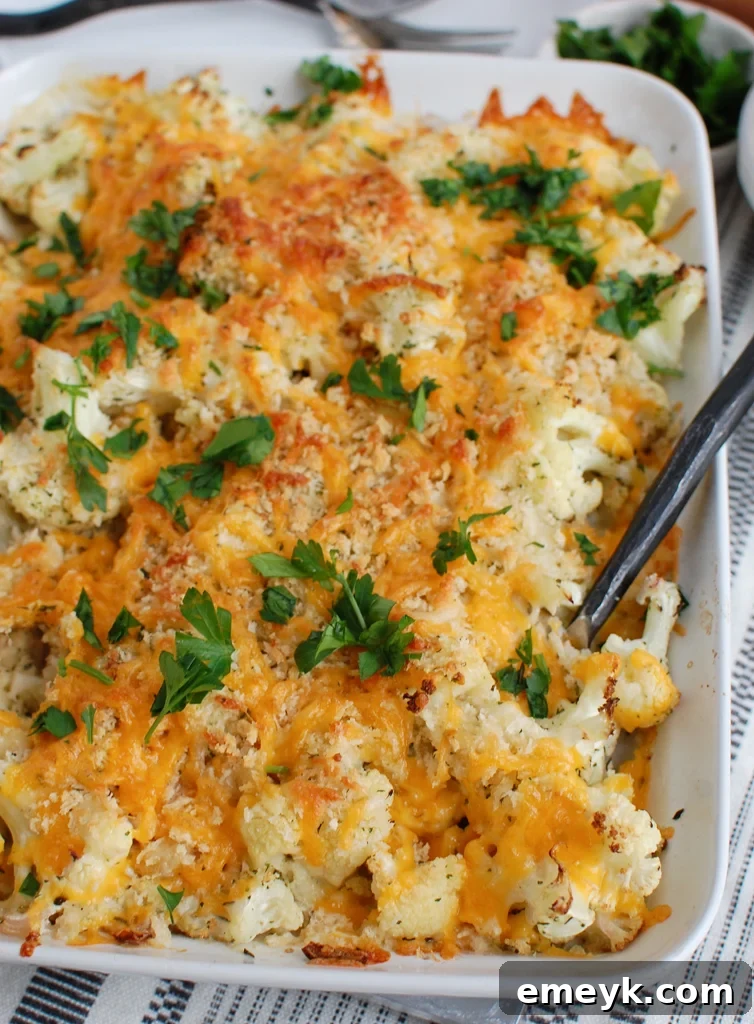
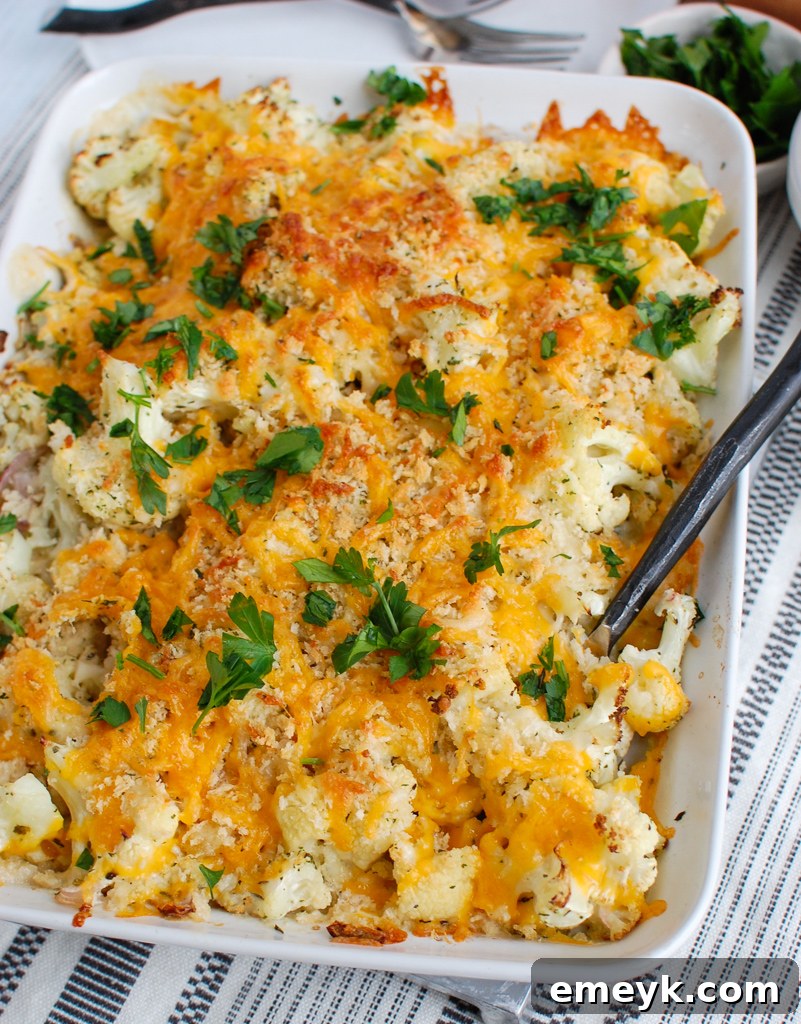
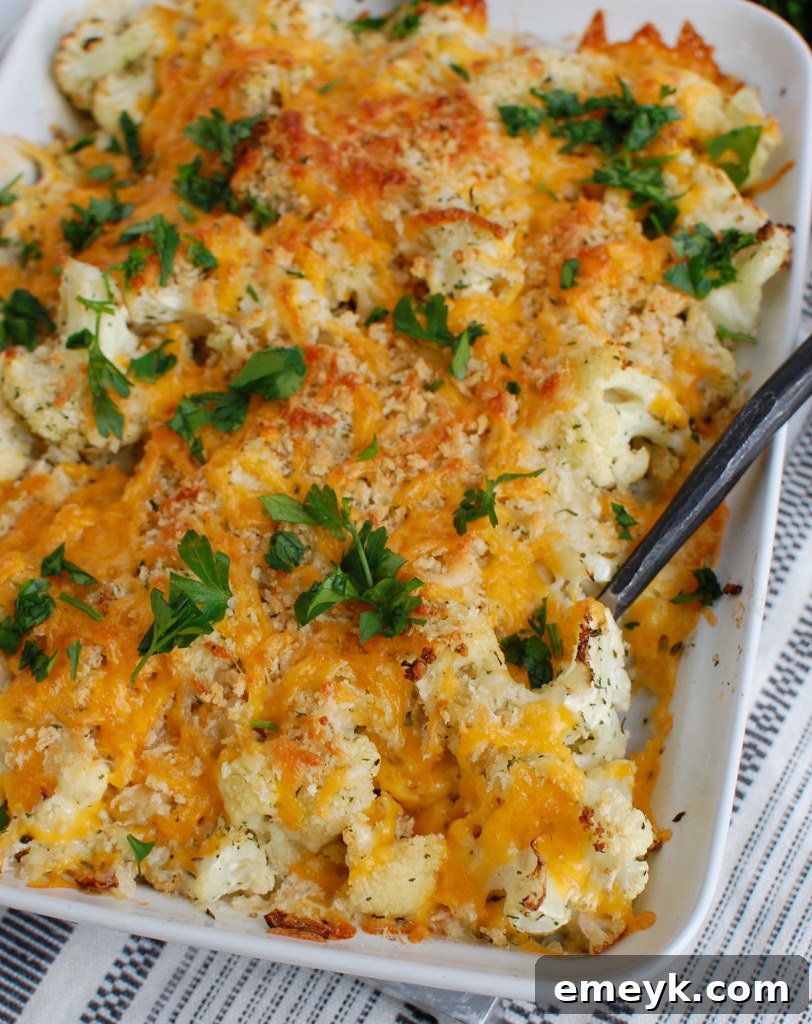
Return the baking pan to the oven and bake for 10 minutes. This allows the flavors to meld and the gratin to heat through. After 10 minutes, remove the gratin from the oven. Evenly sprinkle the remaining Gruyere cheese, the sharp cheddar cheese, and the panko breadcrumbs (if using) over the top. Return to the oven and bake for an additional 5-10 minutes, or until the cheese is bubbling and melted, and the panko breadcrumbs are golden brown and crispy. Keep a close eye on it during the final few minutes to prevent over-browning.
Serve hot and enjoy this glorious, cheesy masterpiece!
Recipe Tips and Tricks for Success
- **Don’t overcrowd the baking sheet:** When roasting cauliflower, ensure it’s spread in a single layer. Overcrowding will steam the cauliflower instead of roasting it, preventing that crucial caramelization. Use two baking sheets if necessary.
- **Freshly shredded cheese is best:** While pre-shredded cheese is convenient, it often contains anti-caking agents that can make the cheese sauce grainy or prevent it from melting smoothly. Shredding cheese from a block ensures a truly silky and creamy sauce.
- **Whisk constantly for a smooth sauce:** When making the roux and adding the cream, continuous whisking is key to preventing lumps and achieving a perfectly smooth, luscious cheese sauce.
- **Adjust seasonings to taste:** Always taste your cheese sauce before pouring it over the cauliflower. Adjust salt, pepper, or add a pinch of nutmeg or cayenne if desired.
- **Broil for extra crispness:** If your panko topping isn’t as golden and crispy as you’d like after the final bake, you can carefully broil it for 1-2 minutes. Watch it very closely, as it can burn quickly!
Cauliflower Gratin Variations and Customizations
This recipe is incredibly versatile and can be adapted to suit your taste or what you have on hand:
- **Spice it up:** Add a pinch of smoked paprika, a dash of hot sauce to the cheese sauce, or even a sprinkle of red pepper flakes for an extra layer of flavor.
- **Herb additions:** Incorporate fresh thyme, rosemary, or chives into the cheese sauce or as a garnish for added freshness.
- **Different cheeses:** Experiment with other good melting cheeses like provolone, smoked gouda, or even a spicy Monterey Jack for a different twist.
- **Add other vegetables:** Broccoli florets, sliced leeks, or even some sautéed mushrooms can be added to the roasted cauliflower mixture.
- **Make it heartier:** Transform this side into a main course by adding cooked shredded chicken, diced ham, or crispy bacon bits.
- **Gluten-free option:** Simply omit the flour in the cheese sauce (using cornstarch slurry to thicken instead) and skip the panko breadcrumbs, or use gluten-free breadcrumbs.
Recipe FAQ: Frequently Asked Questions
Absolutely! While heavy cream offers the richest, most decadent sauce, you can certainly substitute it. Whole milk or 2% milk will work well, producing a slightly lighter sauce. For a dairy-free alternative, consider using full-fat coconut milk (ensure it’s unsweetened) or a homemade cashew cream for a rich consistency.
Yes, frozen cauliflower can be used, but with a crucial preparatory step. Frozen cauliflower retains a lot more water than fresh. You’ll need to thaw it completely and then thoroughly drain and pat it dry with paper towels to remove as much excess moisture as possible. This prevents the gratin from becoming watery and mushy. You might still want to roast it for a slightly longer period to ensure proper caramelization and moisture evaporation.
Adding protein is an excellent idea to turn this delicious side dish into a more substantial main course! Shredded cooked chicken, diced ham, crumbled cooked bacon, or even cooked sausage pieces would be fantastic additions. Simply stir your chosen protein into the cauliflower mixture before pouring the cheese sauce over it.
Yes, this gratin is a great make-ahead dish, which is perfect for busy holiday preparations! You can assemble the entire gratin (roasting the cauliflower, making the sauce, and layering it in the baking dish, but omitting the panko topping) up to a day in advance. Cover it tightly with plastic wrap and refrigerate. When ready to bake, remove it from the fridge 30 minutes to an hour beforehand to allow it to come closer to room temperature, then add the panko and bake as directed, potentially adding an extra 10-15 minutes to the overall baking time to ensure it heats through completely.
Store any leftover gratin in an airtight container in the refrigerator for up to 3-4 days. To reheat, you can either warm individual portions in the microwave or, for best results, reheat the entire dish (covered with foil to prevent drying) in a preheated oven at 350°F (175°C) until heated through, about 20-30 minutes. Remove the foil for the last 5-10 minutes if you want to re-crisp the topping.
What to Pair with This Creamy Cauliflower Gratin: Serving Suggestions
This creamy cauliflower gratin is incredibly versatile and pairs wonderfully with a variety of main courses and other side dishes, especially during holiday meals. Here are some of my favorite accompaniments that create a balanced and memorable feast:
- Roasted Turkey or Chicken: The richness of the gratin complements the savory flavors of a perfectly roasted turkey or a tender baked chicken breast beautifully.
- Baked Ham: The salty notes of ham provide a delightful contrast to the creamy, cheesy cauliflower.
- Steak or Pork Chops: For a weeknight indulgence or a special dinner, serve this gratin alongside a juicy steak or pan-seared pork chops.
- Honey Glazed Carrots: These sweet and tender carrots, glazed with honey and fresh parsley, offer a bright, colorful, and sweet counterpoint to the savory gratin. They make an excellent addition to any holiday spread or a simple weeknight dinner.
- Green Beans with Brown Butter and Toasted Almonds: A sophisticated twist on traditional green beans, this dish features crisp green beans tossed in nutty brown butter and crunchy toasted almonds. It adds another layer of texture and a rich, earthy flavor that pairs perfectly with the gratin.
- Slow Cooker Gouda Mashed Potatoes: For those who can’t get enough creamy sides, these mashed potatoes, enriched with Gouda cheese, Greek yogurt, butter, and milk, offer a hands-off, equally luxurious alternative to stove-top preparations. They free up valuable stove space during busy meal prep and perfectly complement the gratin.
- Fresh Green Salad: A simple, crisp green salad with a light vinaigrette can cut through the richness of the gratin, offering a refreshing element to the meal.
More Delicious Cauliflower Recipes to Explore
Vegetarian
Curry Roasted Cauliflower
Mediterranean
Cauliflower Tabbouleh
Vegetarian
Roasted Buffalo Cauliflower
Vegetarian
Za’atar Roasted Cauliflower with Yogurt Tahini Sauce
Tried this recipe? Leave a star rating and comment below! Subscribe to my newsletter or follow me on
Facebook,
Instagram, or
Pinterest for the latest recipes.
Cauliflower Gratin

Ingredients
- 1 large head cauliflower, cut into large florets (about 6 to 7 cups)
- 3 tablespoons olive oil
- 1/2 teaspoon dried parsley
- 1/2 teaspoon oregano
- 1/2 teaspoon salt
- 1/8 teaspoon black pepper
- 1/2 of a small red onion, thinly sliced
- 3 garlic cloves, minced
- 2 tablespoons butter
- 3 tablespoons all-purpose flour
- 1/2 cup heavy cream
- 3/4 cup shredded Gruyere cheese, divided
- 1/2 cup grated Parmigiano-Reggiano cheese {or regular Parmesan cheese}, divided
- 1/4 cup sharp cheddar cheese
- 1 cup panko crumbs {optional}
Instructions
- Preheat oven to 425 degrees F (220°C).
- Toss the cauliflower, red onion, and garlic in a large bowl with the olive oil, parsley, oregano, salt, and pepper until well coated.
- Spread the cauliflower evenly on a baking sheet and roast in the oven for 25 minutes, stirring once halfway through.
- While the cauliflower is roasting, melt the butter in a medium pot over medium heat. Once melted, add the flour and whisk continuously for 1-2 minutes to form a roux.
- Slowly add the heavy cream into the flour mixture, whisking constantly. Increase the heat to medium-high and simmer, whisking constantly until the mixture is thickened.
- Remove the pot from the heat and stir in 1/2 cup of the Gruyere cheese and 1/4 cup of the Parmesan cheese until melted and smooth.
- Remove the roasted cauliflower from the oven and transfer to a non-stick 8×11 inch baking pan or gratin dish. Pour the cream cheese sauce evenly over the cauliflower.
- Bake in the oven for 10 minutes. Then, add the remaining Gruyere cheese, the sharp cheddar cheese, and the panko breadcrumbs (optional) on top.
- Bake for another 5-10 minutes, or until the cheese is melted and bubbly, and the topping is golden brown and crispy. Serve hot.
Notes
- You can omit the red onion and the breadcrumbs if you prefer.
- For the topping, you can use either regular breadcrumbs or panko for extra crunch.
- For a creamier sauce, I recommend heavy cream. Whole milk or 2% milk can be used for a slightly lighter sauce, but 1% or skim milk are not recommended as they result in a much thinner, less creamy sauce.
Nutrition
Carbohydrates: 17g,
Protein: 13g,
Fat: 28g,
Saturated Fat: 14g,
Polyunsaturated Fat: 2g,
Monounsaturated Fat: 11g,
Trans Fat: 0.2g,
Cholesterol: 61mg,
Sodium: 614mg,
Potassium: 377mg,
Fiber: 3g,
Sugar: 4g,
Vitamin A: 680IU,
Vitamin C: 47mg,
Calcium: 361mg,
Iron: 1mg
Nutrition information is automatically calculated, so should only be used as an approximation.