
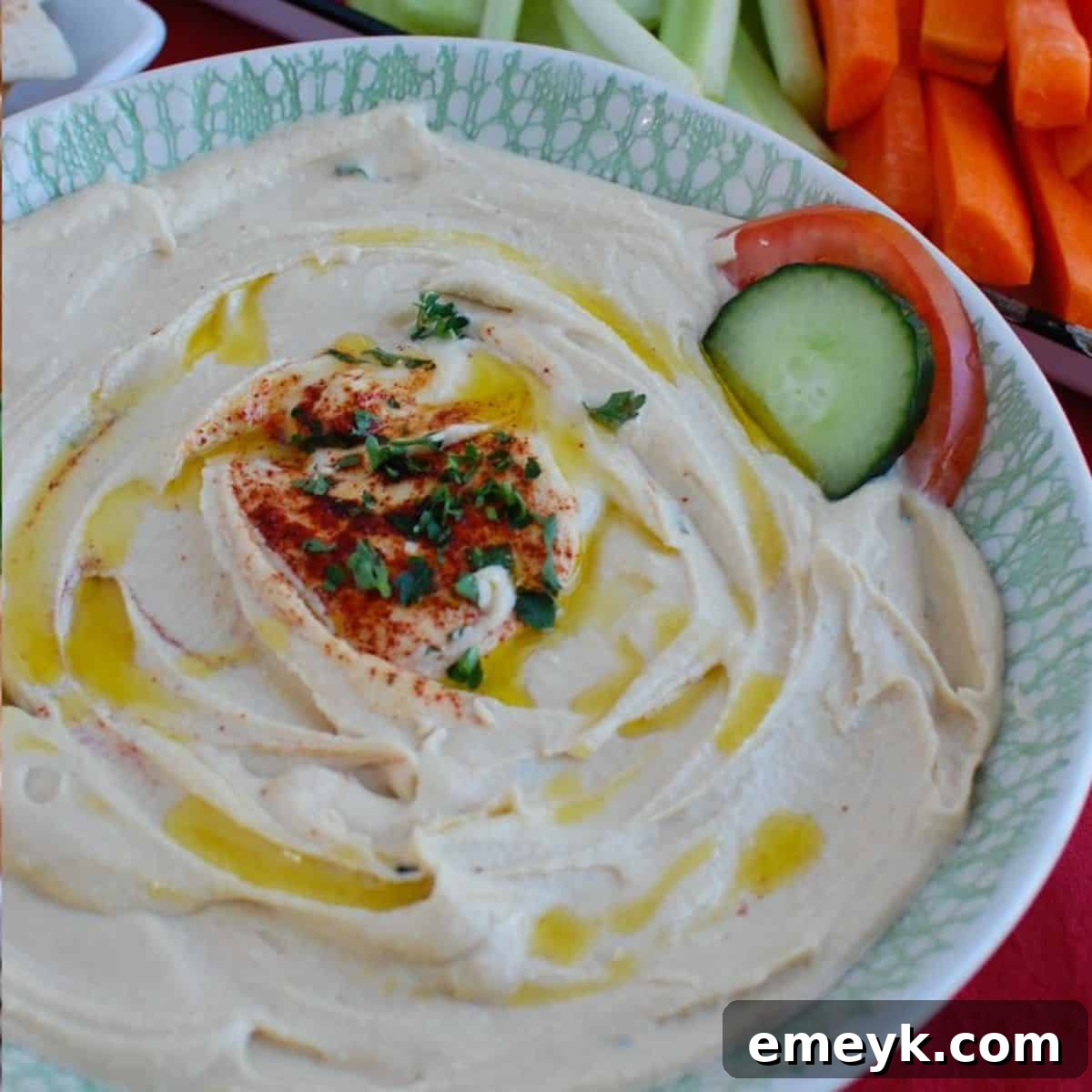
Elevate your snacking game with a delightful batch of homemade Authentic Lebanese Hummus. This creamy, protein-packed dip is incredibly versatile, perfect for healthy meal prep throughout your week. Pair it effortlessly with warm pita bread, crisp fresh vegetables, or even spread it generously on sandwiches and wraps for a burst of Mediterranean flavor.
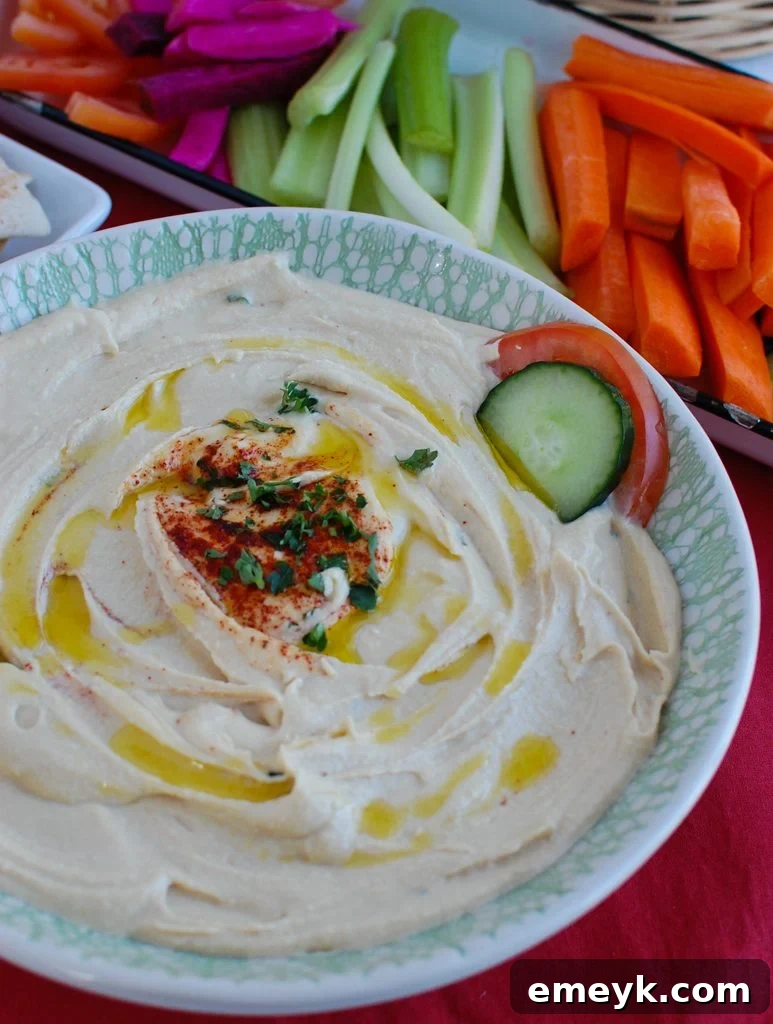
The aroma of freshly made hummus instantly transports me back to my childhood. I vividly recall my Mom meticulously preparing her irresistibly creamy hummus before every family gathering. It was a staple that would vanish from the table within minutes, often accompanied by slices of warm, pillowy pita bread from our beloved small Lebanese market in Akron, Ohio. This market was a special place, a weekly pilgrimage with my Grandpa where we’d stock up on Jordan Almonds and countless bags of pita. Hummus isn’t just a dish for us; it’s a vibrant tapestry of cherished memories, an essential appetizer that graces almost every family reunion.
Today, I’m thrilled to share the very Lebanese Hummus Recipe that has been a constant in my kitchen for years. This foundational recipe is perfect on its own, but also serves as an excellent canvas for culinary creativity. Feel free to explore exciting variations like Roasted Red Pepper Hummus, bright Lemon Hummus, or a zesty Spicy Hummus. Each variation adds a unique twist while retaining the wholesome goodness of the original.
The Versatility of Hummus: More Than Just a Dip
Hummus transcends the role of a simple dip; its rich texture and savory flavor make it an incredibly adaptable ingredient in a myriad of dishes. If you’re planning your meals, consider incorporating this versatile spread into your repertoire. It pairs exquisitely with main courses such as Greek Marinated Chicken with Tzatziki Sauce, Mediterranean Baked Turkey Meatballs, or as a flavorful accompaniment to Lebanese Meat Pies and Easy Spinach Fatayer (Lebanese Spinach Pies).
Beyond traditional pairings, hummus shines in innovative applications. Transform your lunch with a Mediterranean Sandwich featuring a generous smear of hummus, or create a quick and satisfying snack with Mediterranean Hummus Toast with Za’atar. For a heartier option, try serving hummus with Spiced Beef and Toasted Pine Nuts, turning a classic appetizer into a robust meal. The possibilities are truly endless, making homemade Lebanese hummus a culinary powerhouse in any kitchen.
Essential Hummus Ingredients
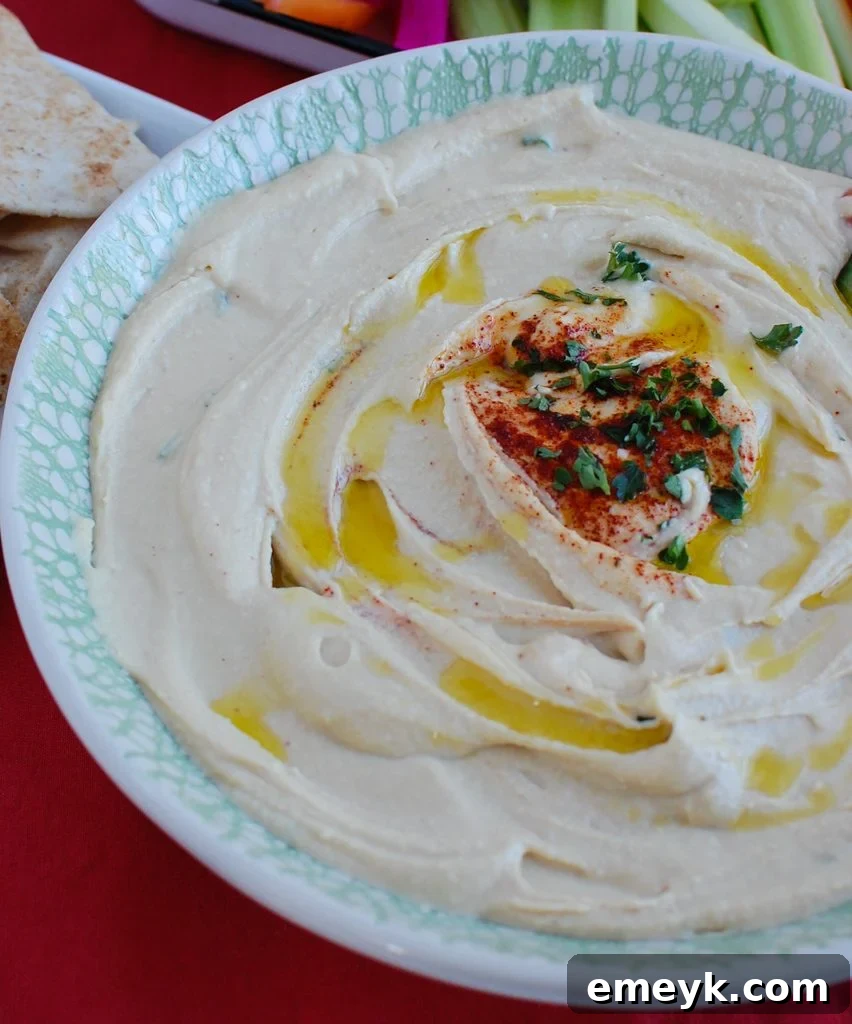
Crafting the perfect Lebanese hummus requires just a few simple, high-quality ingredients. Each component plays a vital role in achieving that characteristic creamy texture and balanced, savory flavor.
- Chickpeas (Garbanzo Beans): The heart of any hummus, chickpeas provide its distinct base. While dried chickpeas offer a slightly superior flavor and texture when cooked from scratch, using canned chickpeas significantly reduces prep time without compromising much on quality, especially if treated right. Always remember to drain and rinse them thoroughly before use. A crucial tip: reserve some of the chickpea liquid (aquafaba) from the can; it’s a secret weapon for adjusting the consistency of your hummus, allowing you to achieve a smoother, thinner dip without diluting the flavor.
- Fresh Lemon Juice: Lemon juice is indispensable. It brightens the hummus, adding a zesty tang that cuts through the richness of the tahini and enhances the overall flavor profile. Always opt for freshly squeezed lemon juice over bottled for the best, most vibrant taste.
- Tahini: This creamy paste made from ground sesame seeds is what gives hummus its signature nutty flavor and silky texture. It’s a cornerstone of Middle Eastern cuisine, offering a slightly bitter, earthy undertone that complements the chickpeas beautifully. When purchasing tahini, look for a smooth, pourable consistency. You can typically find it in the international or Middle Eastern aisle of your local grocery store. A high-quality tahini is key to truly authentic Lebanese hummus.
- Garlic: Fresh garlic cloves infuse the hummus with a pungent, aromatic depth. While not strictly essential for everyone, incorporating one or two cloves (or more, if you’re a garlic enthusiast!) adds a layer of complexity that elevates the dip from good to exceptional. Finely minced or crushed garlic blends best for a smooth finish.
- Extra Virgin Olive Oil: A generous drizzle of high-quality extra virgin olive oil not only adds a luxurious sheen to the finished hummus but also contributes to its smooth texture and rich flavor. It’s essential for garnishing and can also be used during blending if you desire a thinner consistency.
- Garnish: A sprinkle of freshly chopped parsley and a dash of paprika or sumac not only adds visual appeal but also enhances the flavor.
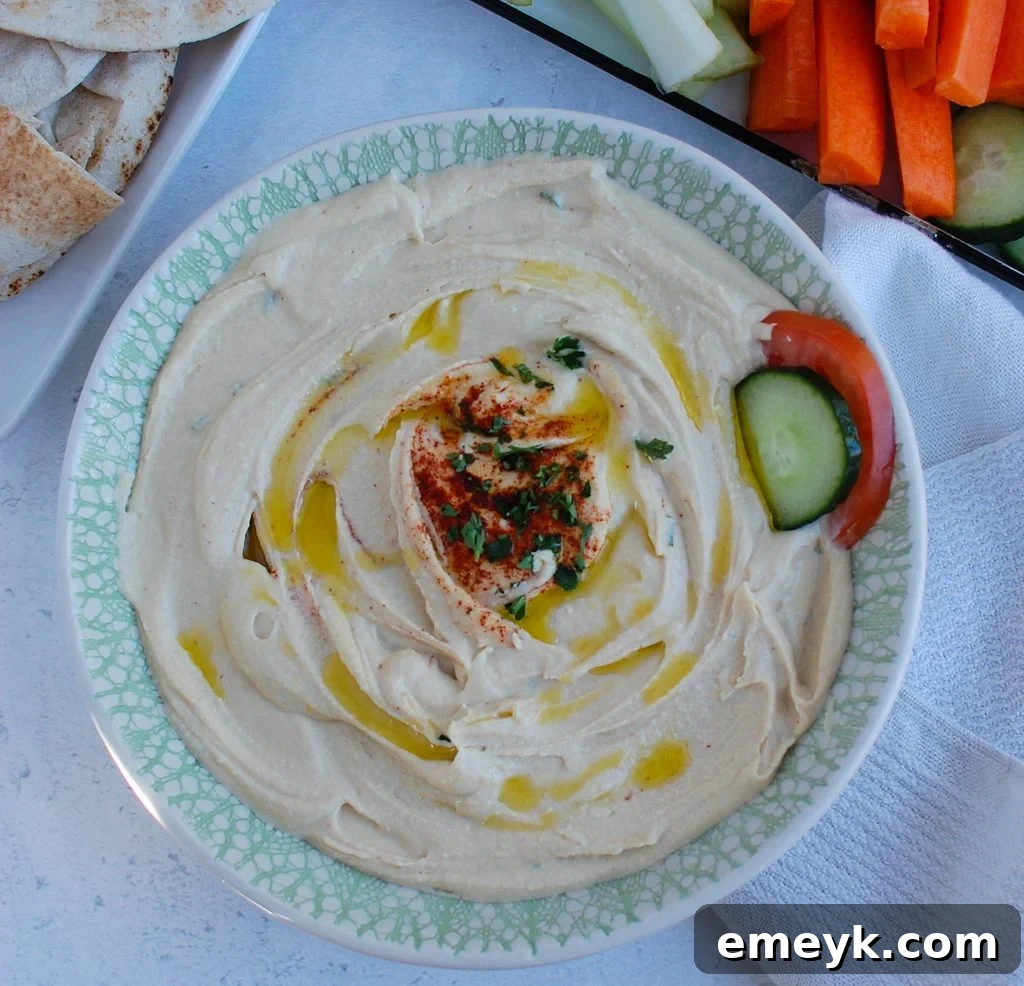
Crafting Your Homemade Lebanese Hummus: A Simple Guide
Making hummus from scratch is surprisingly straightforward and yields a dip far superior to anything store-bought. Follow these simple steps for a truly authentic and delicious result.
-
Prepare the Ingredients:
Start by ensuring your chickpeas are well-drained and rinsed. If you’re aiming for an exceptionally creamy hummus, consider removing the skins from the chickpeas (see “Tips for Ultra-Creamy Hummus” below for methods). This step is optional but highly recommended for the smoothest possible texture. Have your lemon juice, tahini, garlic, and a good quality extra virgin olive oil ready.
-
Blend for Creaminess:
Place the drained and rinsed chickpeas, fresh lemon juice, tahini, and garlic cloves into the bowl of a food processor. Add about half of the recommended extra virgin olive oil to start. Process the mixture for 60 seconds, allowing the ingredients to break down and begin emulsifying. Stop the food processor halfway through to scrape down the sides with a spatula, ensuring all ingredients are evenly incorporated.
-
Adjust Consistency and Flavor:
After the initial blending, taste the hummus and adjust seasonings as needed. This is your chance to add a pinch more salt, a squeeze more lemon juice, or an extra touch of garlic. If the hummus is too thick for your preference, turn on the food processor again and slowly drizzle in small amounts of cold water or the reserved chickpea liquid until you achieve your desired creamy consistency. Continue blending for another 30-60 seconds to ensure it’s incredibly smooth. For an even lighter, fluffier texture, you can add a few ice cubes during the final blend.
-
Serve and Garnish:
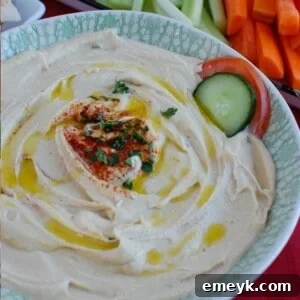
Once your hummus has reached its perfect texture, use a spatula to scrape it into a shallow serving bowl. Create a small well in the center of the hummus with the back of a spoon. Drizzle a generous amount of fresh extra virgin olive oil over the top, allowing it to pool slightly in the center. Garnish with freshly chopped parsley, a sprinkle of paprika, or even a dash of sumac for an authentic touch. Serve immediately with warm pita bread, fresh vegetable sticks, or your favorite Mediterranean accompaniments.
Tips for Ultra-Creamy Hummus
Achieving that velvety, restaurant-quality hummus at home is entirely possible with a few simple techniques:
- Remove Chickpea Skins: This is arguably the most impactful step for creaminess. You can rub canned chickpeas between a kitchen towel to loosen the skins, or for a faster method, simmer drained and rinsed canned chickpeas in water with a pinch of baking soda for 10-15 minutes. The baking soda helps soften the skins, making them easier to slip off under running water.
- Use Ice Water: Adding a few ice cubes while blending the hummus can make a remarkable difference. The cold temperature helps to emulsify the ingredients more effectively, resulting in a lighter and smoother consistency.
- Blend Longer: Don’t be afraid to let your food processor or high-speed blender run for several minutes. The extended blending time allows all the ingredients to fully break down and combine, creating a truly emulsified and silky-smooth hummus. Stop periodically to scrape down the sides of the bowl.
- High-Quality Tahini: The quality of your tahini profoundly impacts the final texture and flavor. Opt for a smooth, runny tahini without separation of oil and paste for the best results.
Storage and Freezing Guidelines for Hummus
Homemade hummus is wonderfully fresh, but sometimes you might make more than you can enjoy in one sitting. Proper storage ensures its deliciousness lasts longer.
- Refrigeration: You can store freshly made hummus in an airtight container in the refrigerator for up to 5 to 7 days. For extra freshness, drizzle a thin layer of olive oil over the surface before sealing the container. This creates a protective barrier that helps prevent the hummus from drying out and maintains its vibrant flavor.
- Freezing: Hummus freezes remarkably well! Spoon it into an airtight, freezer-safe container, leaving about an inch of headspace to allow for expansion. It can be frozen for up to 3 months. When you’re ready to enjoy it, thaw the hummus overnight in the refrigerator. Before serving, give it a good stir, and if needed, add a splash of lemon juice or a drizzle of olive oil to restore its creamy texture.
Frequently Asked Questions About Hummus
Here are answers to some common questions about making and enjoying homemade hummus:
How do I make hummus extra creamy and smooth?
For an ultra-creamy hummus, the best trick is to remove the skins from the chickpeas. You can do this by gently rubbing canned chickpeas between a kitchen towel after draining and rinsing. Alternatively, simmer canned chickpeas in water with a small amount of baking soda for 10-15 minutes to further soften them, making the skins easier to peel or blend. Another excellent tip is to drizzle a few tablespoons of ice-cold water into the food processor while blending; this helps emulsify the ingredients and achieve a lighter, fluffier texture. Ensure you let your food processor or blender run for several minutes, stopping to scrape the sides, to fully emulsify the hummus.
What should I do if my hummus is too thick?
If your hummus turns out thicker than you prefer, don’t worry! There are several easy ways to thin it out. While the food processor is running, slowly add more fresh lemon juice, a tablespoon at a time of cold water, or additional extra virgin olive oil until you reach your desired consistency. The reserved liquid from the canned chickpeas (aquafaba) is also excellent for thinning without diluting flavor.
Can I make hummus without tahini?
Yes, you can make a hummus-like dip without tahini, but it won’t have the traditional, authentic flavor and texture you’re likely used to. Tahini provides a distinctive nutty depth and creaminess that is hard to replicate. If you need a substitute, you could try using Greek yogurt for a tangier, lighter version, or nut butters like almond butter or cashew butter for a different kind of nutty richness. Be aware that these substitutions will significantly alter the flavor profile.
Can I use dried chickpeas instead of canned?
Absolutely! Using dried chickpeas often yields an even more flavorful and creamier hummus. You’ll need to soak them overnight (at least 8-12 hours) and then cook them until very tender, usually 1.5 to 2 hours, or in a pressure cooker. Ensure they are exceptionally soft before blending, as this contributes significantly to the final texture.
What are the health benefits of hummus?
Hummus is a powerhouse of nutrition! It’s rich in plant-based protein from chickpeas, which helps with satiety and muscle health. It’s also an excellent source of dietary fiber, promoting digestive health and blood sugar control. The healthy fats from tahini and olive oil contribute to heart health and nutrient absorption. Additionally, hummus provides essential vitamins and minerals like iron, folate, and manganese, making it a truly wholesome and satisfying food choice.
Discover More Hummus Creations
Appetizers
Lebanese Style Hummus
Appetizers
Southwestern Hummus Baked Wonton Cups
Appetizers
Cucumber Hummus Bites
Beef
Hummus with Spiced Beef and Toasted Pine Nuts
Tried this recipe? Leave a star rating and comment below! Subscribe to my newsletter or follow me on
Facebook,
Instagram, or
Pinterest for the latest.
Lebanese Hummus Recipe
Whip up a batch of homemade Lebanese Hummus Recipe and keep it for snacking throughout the week. It is packed with protein, pairing perfectly with pita bread or vegetables.
Ingredients
- 1 -15 oz can of chickpeas, drained and rinsed (reserve some liquid)
- Juice of 1 fresh lemon
- 1/3 cup tahini
- 1 or 2 cloves garlic (adjust to your preference)
- 3 tablespoons extra virgin olive oil (plus more for garnish and thinning)
- Fresh parsley and paprika for garnish
Instructions
- Combine all ingredients (drained chickpeas, lemon juice, tahini, garlic, and 3 tablespoons olive oil) in a food processor.
- Blend for 30 seconds to 1 minute. Stop and scrape down the sides of the bowl. Continue blending until smooth and creamy. For an extra creamy texture, blend for a total of 2-3 minutes, adding a few ice cubes if desired.
- If the hummus is too thick, with the food processor running, slowly drizzle in additional olive oil or the reserved chickpea liquid (aquafaba) until you achieve your desired consistency.
- Transfer the hummus to a serving bowl.
- Garnish with a swirl of extra virgin olive oil, a sprinkle of fresh chopped parsley, and a dusting of paprika or sumac.
- Serve immediately with warm pita bread, an assortment of fresh vegetables, or store in the refrigerator.
Notes
- When blending, I typically process for 30 seconds, then pause to scrape the sides of the food processor bowl, and blend for another 30 seconds. If it’s not as thin or creamy as desired, slowly add a drizzle of olive oil or chickpea liquid and blend further.
- For an exceptionally light and fluffy hummus, add 2-3 ice cubes to the food processor during the blending process.
- To achieve a thinner hummus, save some of the liquid from the can of chickpeas (aquafaba) and add it slowly, a tablespoon at a time, while the food processor is running.
- For an even smoother consistency, consider removing the skins from the chickpeas before blending.
Nutrition Information (Approximate)
Carbohydrates: 6 g,
Protein: 4 g,
Fat: 21 g,
Saturated Fat: 3 g,
Polyunsaturated Fat: 6 g,
Monounsaturated Fat: 12 g,
Sodium: 8 mg,
Potassium: 116 mg,
Fiber: 1 g,
Sugar: 0.3 g,
Vitamin A: 15 IU,
Vitamin C: 1 mg,
Calcium: 33 mg,
Iron: 1 mg
Nutrition information is automatically calculated and should be used as an approximation.
Tried this recipe?
Mention @acedarspoon or tag #acedarspoon!