
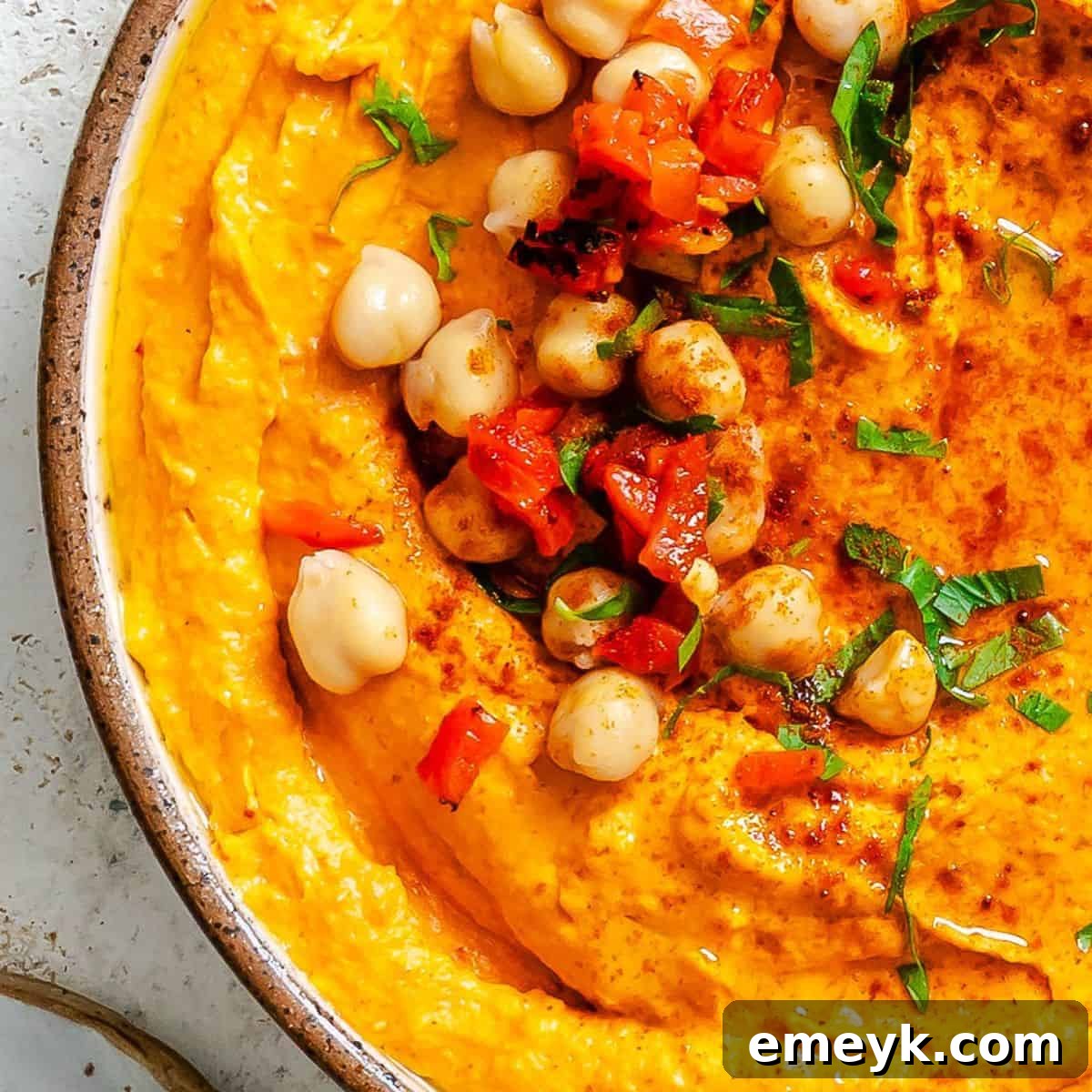
Creamy Roasted Red Pepper Hummus: Your Ultimate Homemade Recipe Guide
Elevate your culinary repertoire with this delightful Roasted Red Pepper Hummus recipe. By incorporating the rich, smoky sweetness of roasted peppers into traditional hummus, we create a dip that is not only incredibly easy to prepare but also bursting with vibrant flavor. This versatile creation is perfect for spreading on wraps, serving as a dynamic dip for fresh vegetables and pita bread, or forming the wholesome base of a vibrant hummus bowl. Get ready to transform your snacking and meal preparation with this irresistible, healthy, and deeply satisfying twist on a classic Mediterranean staple.
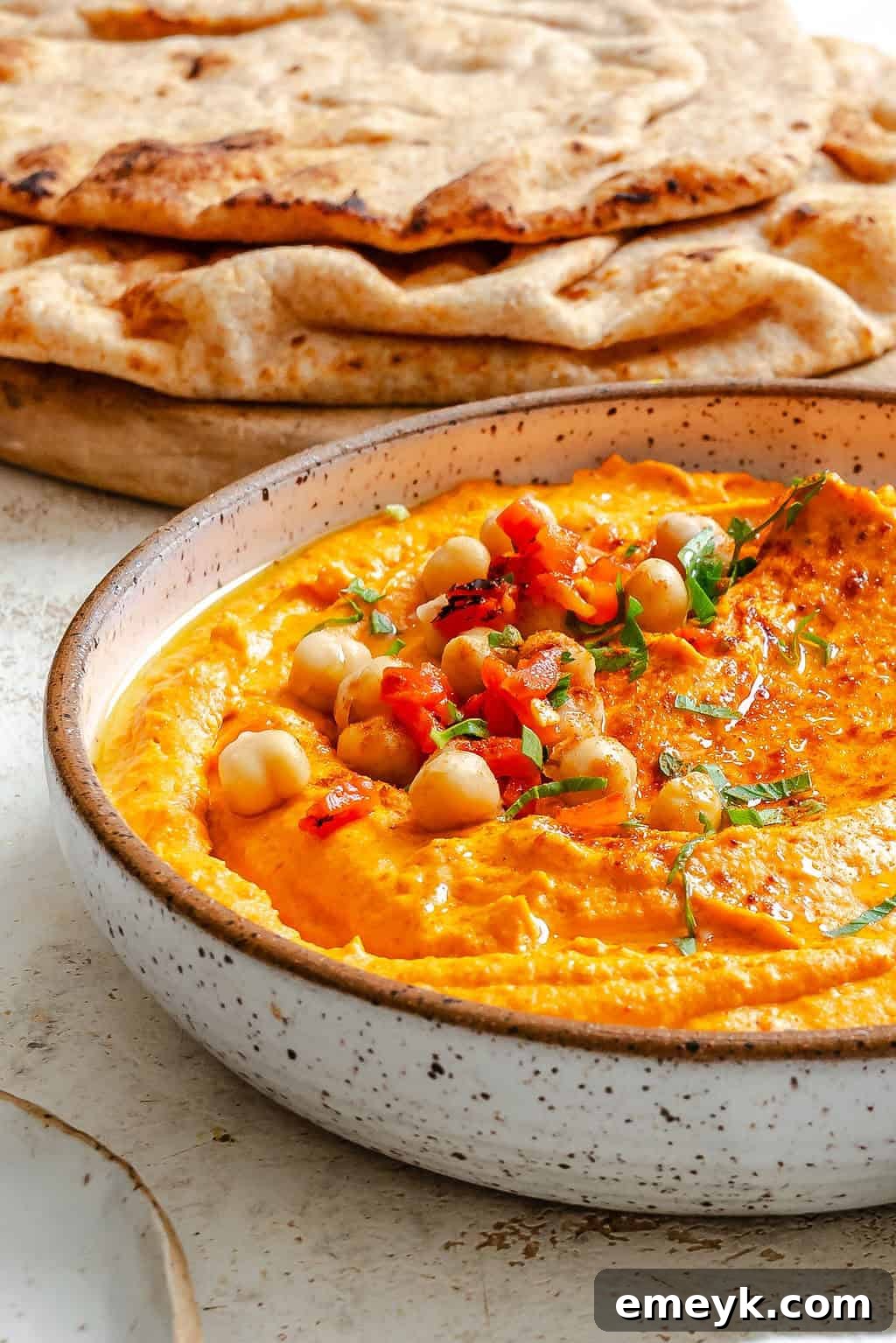
A Culinary Journey: The Heart and Soul of Hummus in My Lebanese Family
This Roasted Red Pepper Hummus recipe resonates deeply with childhood memories, evoking the warmth and chatter of family gatherings around our kitchen table. In my Lebanese household, food was never just sustenance; it was a powerful medium for connection, shared stories, and the forging of unbreakable bonds. As I often share, my mother’s heritage is rooted in Lebanon, a culture where culinary traditions are interwoven with everyday life and family values.
When acquaintances inquire about unique Lebanese customs, my thoughts immediately turn to our vibrant cooking and, without fail, the ubiquitous presence of hummus. It’s more than a dish; it’s a symbol of hospitality and the generous spirit of our culture. Hummus was a constant in our home, a staple that embodied both the simplicity and profound richness of our traditions. This particular variation, infused with the delightful essence of roasted red peppers, honors its authentic roots while introducing a sophisticated, subtly sweet dimension that truly enhances the beloved classic.
Unleashing Flavor: Why Homemade Hummus Triumphs Over Store-Bought
The difference between commercially produced hummus and a freshly made batch from your kitchen is monumental. Once you experience the superior taste and texture of homemade hummus, you’ll undoubtedly become a convert. Crafting hummus at home offers a multitude of advantages that simply cannot be matched by pre-packaged alternatives:
- Unrivaled Freshness and Purity: When you prepare hummus from scratch, you control every single ingredient. This means no hidden preservatives, unnecessary sugars, or artificial additives that often dilute the natural goodness of the dip. You get pure, wholesome ingredients contributing to exceptional flavor.
- Tailored to Perfection: Homemade allows for complete customization. You can adjust the acidity with more lemon, enhance the pungency with extra garlic, perfect the nutty notes with varying amounts of tahini, and season the salt level precisely to your palate. Craving a zingier dip? Add more lemon. Desire a bolder garlic presence? Go for an extra clove!
- Superior Texture and Creaminess: Achieving that luxuriously smooth, velvety texture is far easier at home. With the right techniques and a good food processor, your hummus will be light and airy, a stark contrast to the often dense and pasty store-bought versions.
- Economical and Sustainable: Making hummus at home is surprisingly cost-effective. Chickpeas and tahini are relatively inexpensive pantry staples, and you avoid the premium price tag associated with convenience. Plus, it reduces packaging waste, making it a more environmentally friendly choice.
The simple act of blending a few high-quality ingredients transforms into a creamy, flavorful dip that caters precisely to your cravings and offers a genuine taste of the Mediterranean.
Beyond the Dip Bowl: The Incredible Versatility of Hummus
Hummus is a truly remarkable culinary creation, boasting incredible versatility that extends far beyond being a mere dip. In my family, it’s not confined to just being an appetizer or snack; it frequently makes appearances as a satisfying side dish. On many occasions, especially when paired with grilled chicken, seasoned ground beef (like kibbeh), or roasted vegetables, it transforms into a light yet fulfilling main course. Its rich, creamy texture and profound flavor also make it an outstanding spread for sandwiches, wraps, and even toast, adding a healthy and delicious layer to any meal.
Once you fall in love with this Roasted Red Pepper Hummus, consider exploring other exciting variations and serving suggestions. The world of hummus is vast and inviting:
- Easy Beet Hummus: A stunningly vibrant and earthy option that adds a beautiful pop of color to any spread.
- Easy Lebanese Hummus: For those who appreciate the pure, unadulterated classic experience, this recipe captures the authentic flavors perfectly.
- Hummus Platter: Get inspired by creative presentation ideas and discover how to build an appealing spread with various toppings and dippers.
- Spicy Hummus: For palates that crave a fiery kick, this variation brings a delightful heat that perfectly complements the creamy texture.
Unveiling the Essentials: Ingredients for Your Perfect Roasted Red Pepper Hummus
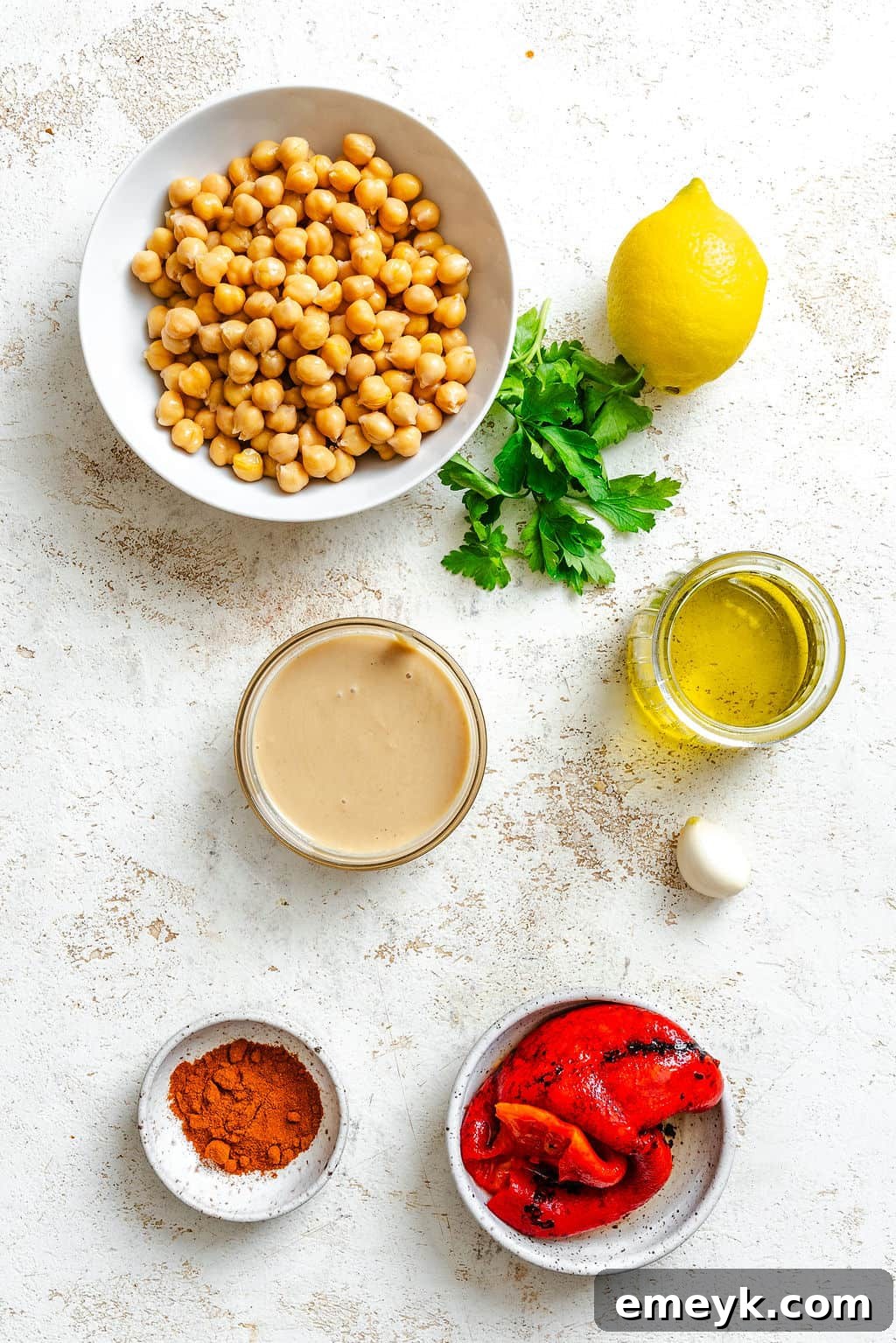
Crafting an exceptional Roasted Red Pepper Hummus relies on a few simple yet incredibly impactful ingredients. Each component plays a vital role in achieving the desired taste and texture. Below, we delve into what you’ll need, along with expert tips for selection and preparation. For exact measurements, please refer to the comprehensive recipe card provided further down the page.
- Chickpeas (Garbanzo Beans): These legumes form the creamy heart of your hummus. While you can cook dried chickpeas, using canned chickpeas offers unparalleled convenience without compromising quality. Ensure you thoroughly drain and rinse them under cold water to remove excess sodium and any canning liquid, which can affect flavor. Expert Tip for Ultimate Creaminess: Reserve about 1/4 to 1/2 cup of the chickpea liquid (also known as aquafaba) from the can. This starchy liquid is invaluable for thinning your hummus to the ideal consistency without diluting its rich flavor. For an ultra-smooth, restaurant-quality hummus, consider investing a few extra minutes to remove the skins from the chickpeas – a small effort that yields a remarkably silken texture.
- Roasted Red Peppers: The star ingredient that defines this hummus variant! Jarred roasted red peppers are a fantastic and convenient option, already imbued with a wonderfully smoky and sweet depth. Be sure to drain them very well before adding them to your food processor to prevent excess moisture from making your hummus watery. If you prefer, you can also roast fresh red bell peppers at home for an even fresher flavor.
- Fresh Lemon Juice & Zest: The vibrant, tangy punch of fresh lemon juice is non-negotiable for authentic hummus. It provides essential acidity that brightens the flavors and balances the richness. Always opt for freshly squeezed lemon juice over bottled varieties for the most superior taste. A touch of lemon zest can also intensify the aromatic citrus notes.
- Tahini: This rich, creamy paste made from finely ground sesame seeds is absolutely crucial for the characteristic nutty flavor and smooth, buttery consistency of traditional hummus. Look for high-quality tahini that is light in color and has a pourable consistency, similar to runny peanut butter, but with a distinct savory and slightly bitter profile. You can typically find tahini in the Middle Eastern or international foods aisle of your local grocery store.
- Fresh Garlic: Fresh garlic cloves infuse the hummus with a pungent, aromatic warmth that is fundamental to its flavor profile. The quantity is a matter of personal preference; typically, one large clove or two smaller ones strike a good balance. For a milder garlic flavor, you can roast the garlic gently before adding it to the food processor, which sweetens and mellows its intensity.
- Extra Virgin Olive Oil: A generous drizzle of good quality extra virgin olive oil (EVOO) contributes not only to the luxurious texture of the hummus but also imparts a fruity, sometimes peppery, undertone that enhances the overall flavor. EVOO is highly recommended for its health benefits and superior taste. While regular olive oil or avocado oil can be used, EVOO offers the best flavor. A final elegant drizzle over the finished hummus before serving is both a visual and flavorful enhancement.
Elevate Your Experience: Creative Modifications & Exciting Garnishes for Your Hummus
One of the most exciting aspects of making hummus at home is the boundless opportunity for customization. This Roasted Red Pepper Hummus, while delightful on its own, serves as a perfect canvas for your culinary creativity. Don’t hesitate to experiment with these suggestions to tailor your dip to your precise preferences and impress your guests:
- Infuse with Aromatic Spices for Depth:
- Smoked Paprika: A natural pairing, it enhances the inherent smoky notes of the roasted red peppers, adding a beautiful color.
- Ground Cumin: An indispensable spice in Mediterranean cuisine, cumin provides a warm, earthy undertone that complements chickpeas beautifully.
- Greek Seasoning Blend: A harmonious mix often containing oregano, thyme, and marjoram, perfect for a broader Mediterranean flavor profile.
- Ground Coriander: Offers a unique citrusy and slightly floral note that brightens the dip.
- Brighten with Fresh Herbs for Zest:
- Fresh Parsley: A classic choice, providing a clean, peppery freshness that cuts through the richness. It also makes a fantastic garnish.
- Fresh Dill: Adds a distinct, slightly anisy flavor that surprisingly pairs exceptionally well with roasted peppers.
- Fresh Mint: For an unexpected, cooling, and wonderfully refreshing twist, especially invigorating in warmer weather.
- Fresh Cilantro: If you enjoy its distinctive, bright flavor, it can add a lovely herbaceous dimension.
- Turn Up the Heat: For those who enjoy a bit of spice, these additions will deliver:
- Harissa Paste: A fiery North African chili paste that brings complex, smoky, and aromatic heat. Add a teaspoon at a time.
- Crushed Red Pepper Flakes: A simple yet effective way to introduce customizable heat; blend directly into the hummus.
- Cayenne Pepper: For a straightforward, clean, and fiery punch throughout the dip.
- Fresh Jalapeños or Serrano Peppers: Finely diced and blended in, they offer a bright, vegetal heat. Remove seeds for less intensity.
- Dazzle with Exciting Garnishes: Garnishes are not just for aesthetics; they add crucial texture, additional flavor, and visual appeal:
- Chopped Olives: Briny Kalamata or buttery Castelvetrano olives offer a wonderful salty counterpoint.
- Toasted Pine Nuts: Lightly toasted, they provide a rich, buttery crunch and a sophisticated touch.
- Feta Cheese Crumbles: For a tangy, salty, and creamy Mediterranean upgrade (if not keeping it strictly vegan).
- Quick Pickled Red Onions: Their tangy, slightly sweet crunch provides an excellent contrast.
- Assorted Pickled Vegetables: Such as cucumbers or turnips, adding a delightful acidic zing and crunch.
- A Swirl of Pesto: Either traditional basil pesto or a vibrant sun-dried tomato pesto for an extra layer of flavor.
Your Guide to Perfection: How to Make Creamy Roasted Red Pepper Hummus
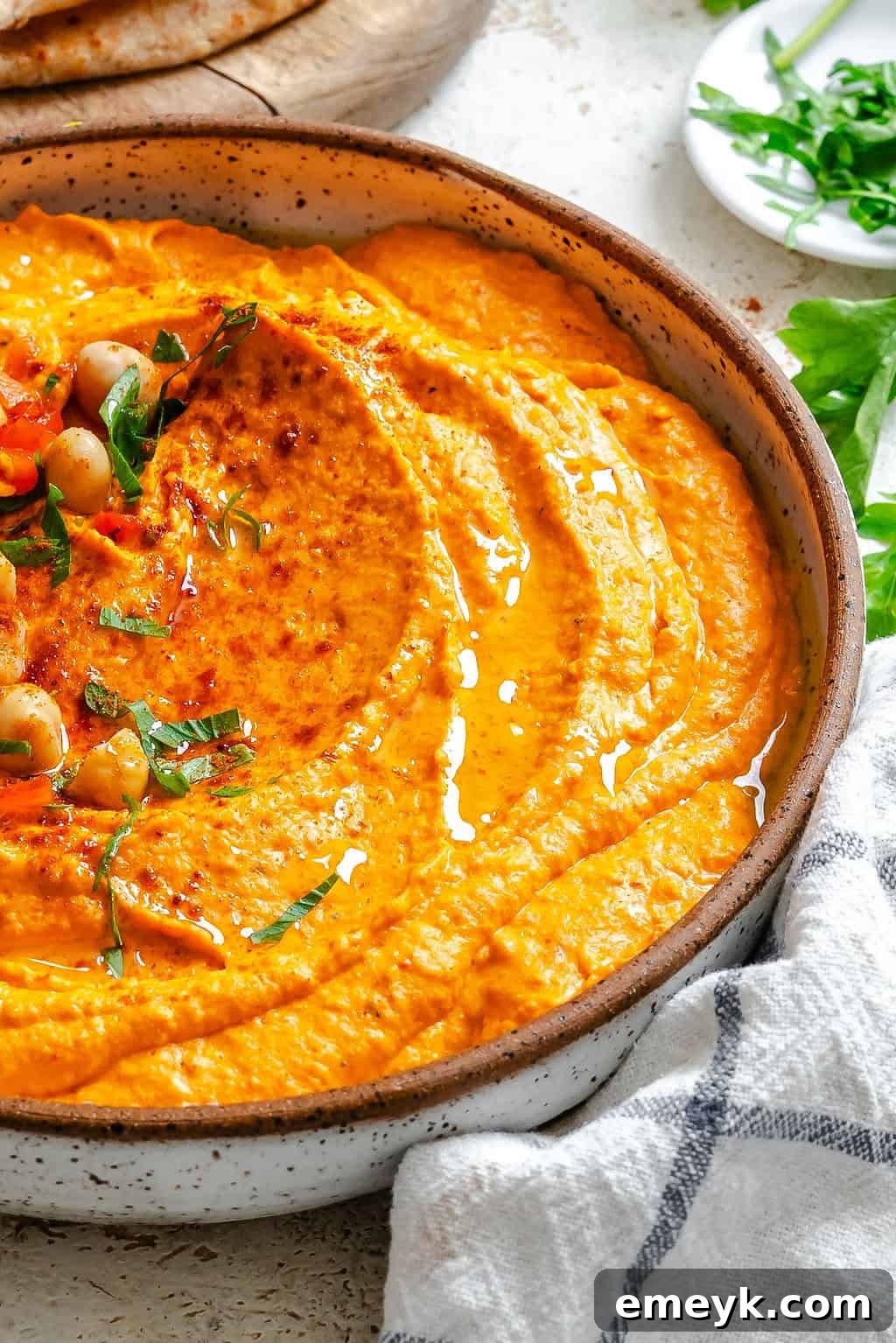
Step 1: The Art of Seamless Blending
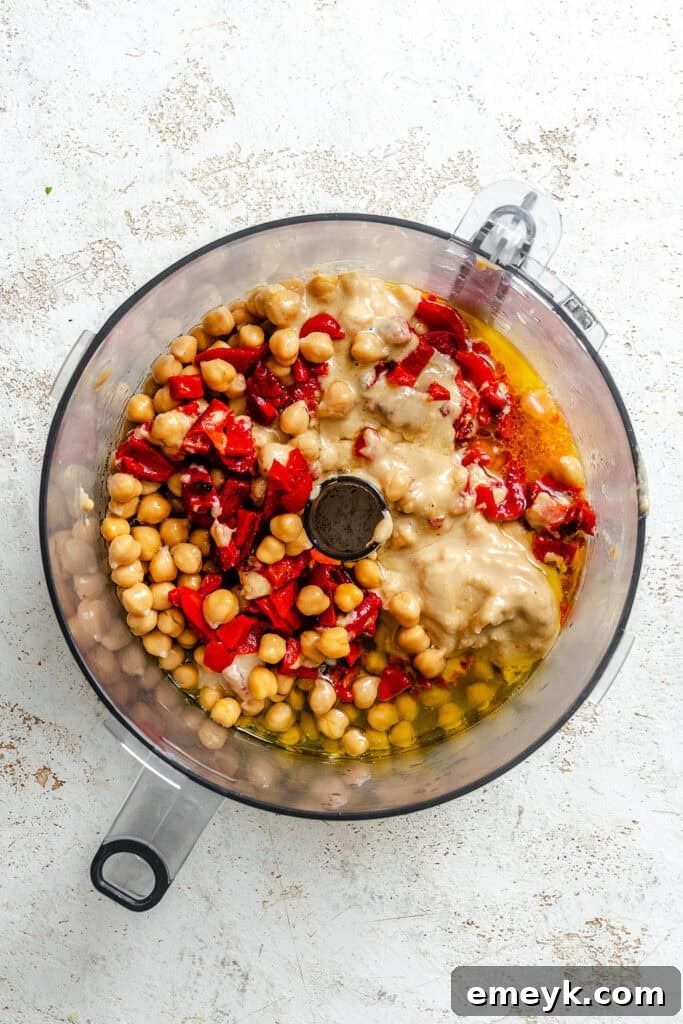
Achieving that signature velvety-smooth texture is the secret to an exceptional homemade hummus. Begin by gathering all your prepared ingredients: the thoroughly drained and rinsed chickpeas (remember to reserve some aquafaba!), the flavorful roasted red peppers, freshly squeezed lemon juice, quality tahini, minced garlic cloves, and a generous initial drizzle of extra virgin olive oil. Carefully place all these ingredients into the bowl of a powerful food processor.
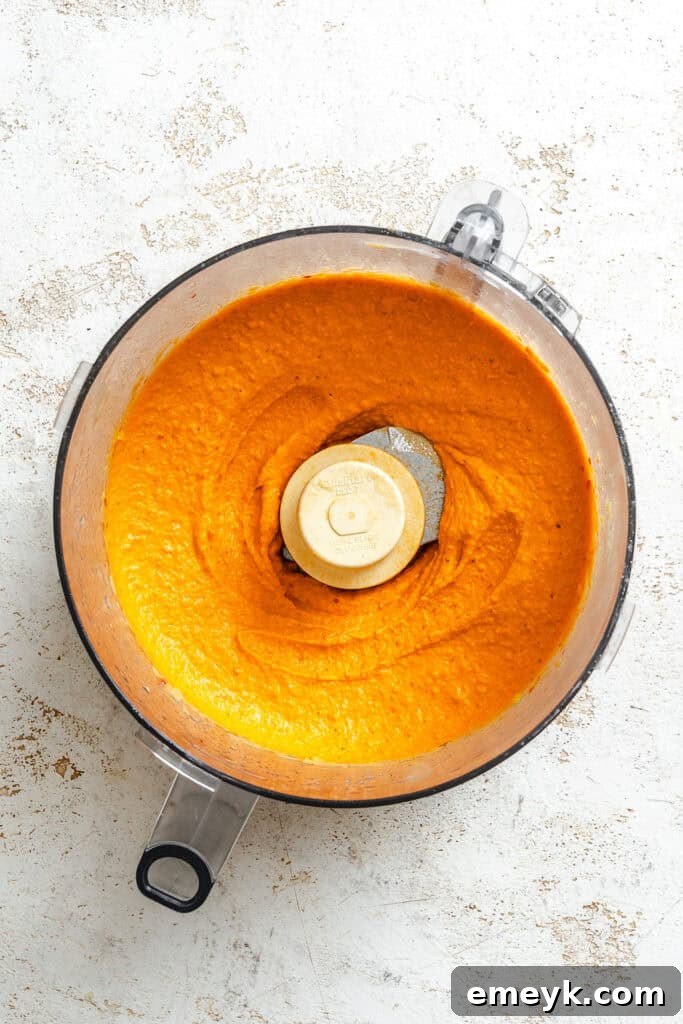
Initiate the blending process, pureeing the mixture for at least 60 seconds. For an exceptionally smooth and airy consistency, you might even extend this to 2-3 minutes. It is absolutely crucial to pause the food processor midway through blending and use a spatula to scrape down the sides of the bowl. This ensures that all ingredients are fully incorporated and prevents any stubborn, unblended chunks from remaining. Continue blending until the hummus achieves a completely smooth, light, and almost whipped appearance.
Taste and Refine: Once the blending is complete, take a moment to taste your hummus. This is your opportunity to personalize the flavor! Does it require an extra squeeze of lemon for more brightness? A sprinkle more salt to heighten the flavors? Or perhaps another small piece of garlic for an intensified kick? Adjust according to your preference. If you find the hummus is too thick for your liking, turn the food processor back on and slowly add small amounts (one tablespoon at a time) of the reserved chickpea liquid (aquafaba) or a dash of cold water until you reach your desired creamy, effortlessly spreadable consistency. Remember, thinning can happen quickly, so add liquid incrementally and blend thoroughly after each addition.
Step 2: The Art of Presentation
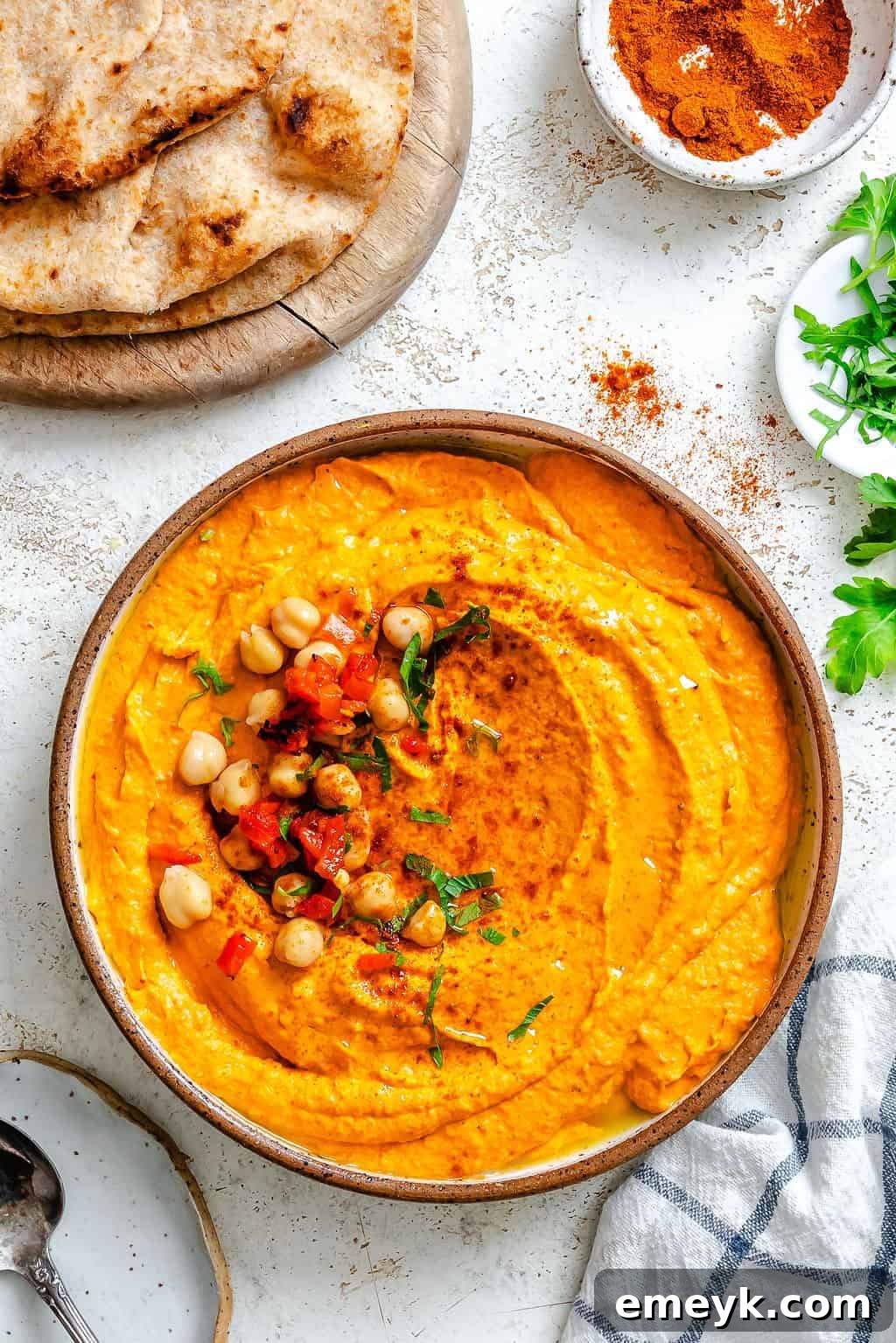
With the perfect flavor and consistency achieved, gently transfer the velvety hummus from the food processor into a shallow serving bowl using a spatula. Create a small, attractive swirl or well in the center of the hummus. This provides a perfect pocket for a final, crucial step: generously drizzle your finest extra virgin olive oil over the surface. This not only adds a beautiful sheen and rich flavor but also helps to prevent the hummus from drying out.
For an enticing visual and textural contrast, garnish your masterpiece! Sprinkle a pinch of vibrant paprika for color, add a scattering of freshly chopped parsley for a burst of green freshness, and perhaps a few whole chickpeas or small slivers of roasted red pepper. Serve your freshly made Roasted Red Pepper Hummus immediately with warm, pillowy pita bread, an array of crisp fresh vegetables (such as cucumber slices, carrot sticks, and bell pepper strips), or your favorite sturdy crackers. Any delicious leftovers can be stored in an airtight container in the refrigerator for up to 7 days, ensuring you can enjoy this delightful dip whenever inspiration strikes!
Preserving Perfection: Storage Tips for Your Homemade Hummus
To maximize the freshness and flavor of your homemade hummus for as long as possible, follow these practical storage recommendations:
- Refrigeration: Any leftover hummus should be transferred to an airtight container and stored in the refrigerator. It will maintain its deliciousness for up to 5-7 days. A clever trick to prevent the surface from drying out and to lock in freshness is to pour a thin layer of extra virgin olive oil over the top of the hummus before sealing the container. This creates a protective barrier.
- Freezing: Yes, hummus is surprisingly freezer-friendly! This is an excellent option for meal prepping large batches or simply preserving excess hummus. Transfer the hummus into a freezer-safe, airtight container, ensuring you leave about an inch of headspace at the top. This allows for slight expansion during the freezing process. Your hummus can be stored in the freezer for up to 3 months. When you’re ready to enjoy it, simply thaw the container overnight in the refrigerator. Before serving, give the thawed hummus a vigorous stir to restore its original creamy texture. If needed, a splash more olive oil or a fresh squeeze of lemon juice can rejuvenate its flavor and consistency.
Frequently Asked Questions About Crafting Homemade Hummus
How can I make my homemade hummus incredibly creamy and smooth?
Achieving that coveted ultra-creamy, velvety texture is often the ultimate goal for homemade hummus enthusiasts. Here are the top secrets to perfecting your dip:
- Remove Chickpea Skins: This is arguably the most impactful step for superior creaminess. For canned chickpeas, you can gently rub them between two kitchen towels to loosen and remove the skins. Alternatively, simmering canned chickpeas in water with a pinch of baking soda for 10-15 minutes helps soften the skins, making them much easier to blend away seamlessly.
- Incorporate Ice Water: Instead of adding regular tap water to thin your hummus, gradually drizzle in small amounts of ice-cold water while the food processor is running. The cold temperature helps emulsify the ingredients more effectively, resulting in a lighter, airier, and distinctly smoother consistency.
- Blend for Longer: Don’t rush the blending process. Allow your food processor or high-speed blender to run for several minutes (up to 3-5 minutes, depending on your machine). Continuous blending ensures that all ingredients are thoroughly broken down, mixed, and perfectly emulsified, which is key to that desirable silken finish.
Is it possible to make hummus without tahini?
While tahini is a cornerstone ingredient that imparts the distinctive nutty flavor and characteristic creamy texture of traditional hummus, you certainly *can* create a chickpea dip without it. However, it’s important to note that it won’t be considered authentic hummus in the traditional sense, as tahini is a defining component. If you need a substitute due to allergies or availability, consider these alternatives:
- Greek Yogurt: This will add a creamy, tangy element to your dip, but it will significantly alter the traditional flavor profile and introduce dairy.
- Nut Butters: Smooth almond butter or cashew butter can provide a similar richness and texture to tahini. Be mindful, however, that these will impart their own distinct nutty flavors, which will change the overall taste of your dip. Start with small amounts and taste as you go to avoid overpowering the other flavors.
For the most authentic and satisfying hummus experience, we strongly recommend including tahini if possible.
What should I do if my homemade hummus turns out too thick?
If your freshly made hummus is thicker than your preference, don’t fret – it’s a common and easily rectifiable issue! The key is to add liquid gradually while your food processor is running. Here are the best options for thinning your hummus to the perfect consistency:
- Reserved Chickpea Liquid (Aquafaba): This is the ideal choice, as it maintains the chickpea flavor profile without dilution.
- Cold Water: A classic and effective thinning agent that works wonderfully to achieve a lighter consistency.
- Fresh Lemon Juice: Adding more lemon juice will not only thin the hummus but also boost its brightness and tangy flavor.
- Extra Virgin Olive Oil: A small additional drizzle of olive oil can help thin the hummus while simultaneously enhancing its creaminess and richness. Use this option sparingly to avoid making the hummus overly oily.
Always add liquid one tablespoon at a time and blend thoroughly after each addition. Hummus can thin out quite quickly, so slow and steady additions are key to achieving your desired texture.
Expand Your Horizons: More Delightful Hummus Recipes
If you’ve thoroughly enjoyed creating and savoring this vibrant Roasted Red Pepper Hummus, you’re in for a treat! The world of hummus offers an array of incredible variations and ingenious ways to serve this beloved dip. Explore these other fantastic recipes to continue your hummus journey:
Appetizers
Authentic Lebanese Style Hummus
Appetizers
Refreshing Cucumber Hummus Bites
Beef
Hearty Hummus with Spiced Beef and Toasted Pine Nuts
Vegetarian
Flavorful Mediterranean Hummus Toast with Za’atar
Roasted Red Pepper Hummus Recipe

By: Julia Jolliff
Description: This easy homemade Roasted Red Pepper Hummus recipe transforms traditional hummus with a smoky, sweet, and incredibly fresh flavor. It’s perfectly smooth, versatile, and ideal for dipping, spreading on sandwiches, or creating healthy hummus bowls. A staple for any Mediterranean food lover!
Prep time: 10 mins
Total time: 10 mins
Servings: 4
Ingredients
- 1 (15-ounce) can chickpeas, drained and thoroughly rinsed (reserve 1/4 cup of the liquid)
- Juice of 1 large fresh lemon (approximately 2-3 tablespoons, adjust to taste)
- 1/3 cup high-quality tahini (light in color, runny consistency)
- 1-2 cloves fresh garlic, peeled and minced (use 1 for a milder taste, 2 for a bolder garlic flavor)
- 3 tablespoons extra virgin olive oil, plus extra for drizzling
- 3/4 cup chopped jarred roasted red peppers, well-drained
- 1/2 teaspoon sea salt, or to taste
- Fresh parsley and paprika for garnish (optional)
Instructions
- Prepare for Blending: In the bowl of a food processor, combine the drained and rinsed chickpeas, fresh lemon juice, tahini, minced garlic, 3 tablespoons of extra virgin olive oil, and the well-drained chopped roasted red peppers. Add 1/2 teaspoon of sea salt to start.
- Achieve Creamy Texture: Process the mixture for 30 seconds to 1 minute, pausing frequently to scrape down the sides of the bowl with a rubber spatula. Continue blending until the hummus is completely smooth, creamy, and free of any lumps. For an even lighter, more ethereal texture, blend for up to 2-3 minutes straight.
- Adjust Consistency and Flavor: Taste the hummus and adjust the seasonings as needed. If you desire a brighter flavor, add more lemon juice. For additional saltiness, add more salt. If the hummus appears too thick, with the food processor running, slowly drizzle in 1 tablespoon at a time of the reserved chickpea liquid (aquafaba) or cold water until your desired creamy, spreadable consistency is achieved.
- Serve and Garnish: Transfer the finished hummus into a shallow serving bowl. Create an attractive swirl on the surface with the back of a spoon. Drizzle generously with additional extra virgin olive oil. For an appealing presentation and an extra layer of flavor, garnish with freshly chopped parsley and a sprinkle of paprika.
- Enjoy Immediately: Serve your homemade Roasted Red Pepper Hummus immediately with warm pita bread, an assortment of fresh crunchy vegetables (like cucumber slices, carrot sticks, or bell pepper strips), sturdy crackers, or as a flavorful spread in your favorite sandwiches and wraps.
Notes
- Storage Guidelines: Leftover hummus can be stored in an airtight container in the refrigerator for up to 5-7 days. To help preserve its freshness and prevent the surface from drying out, consider drizzling a thin layer of extra virgin olive oil over the top before sealing the container.
- Freezing Hummus: Hummus freezes remarkably well! To freeze, transfer it to a freezer-safe, airtight container, ensuring you leave approximately one inch of space at the top to account for expansion. It can be stored in the freezer for up to 3 months. When ready to use, thaw the hummus overnight in the refrigerator. Before serving, give it a vigorous stir to restore its creamy texture, and if necessary, revitalize the flavor with a dash of fresh olive oil or a squeeze of lemon juice.
- For Ultra-Smooth Hummus: For an exceptionally velvety texture, consider taking the extra step of removing the skins from the chickpeas. This can be done by gently rubbing them between a kitchen towel after rinsing. Alternatively, simmering canned chickpeas with a pinch of baking soda for 10-15 minutes helps to soften the skins significantly, making them easier to blend or remove. Adding a few ice cubes or a tablespoon of ice water during the blending process can also contribute to a lighter, airier, and smoother consistency.
Nutrition Information (Approximate per Serving)
Serving Size: 4g, Calories: 229kcal, Carbohydrates: 8g, Protein: 4g, Fat: 21g, Saturated Fat: 3g, Polyunsaturated Fat: 6g, Monounsaturated Fat: 12g, Sodium: 367mg, Potassium: 154mg, Fiber: 2g, Sugar: 0.3g, Vitamin A: 152IU, Vitamin C: 13mg, Calcium: 44mg, Iron: 1mg
Please note: Nutrition information is an automatic calculation and should be used as an approximation. Actual values may vary based on specific ingredients and preparation methods.