
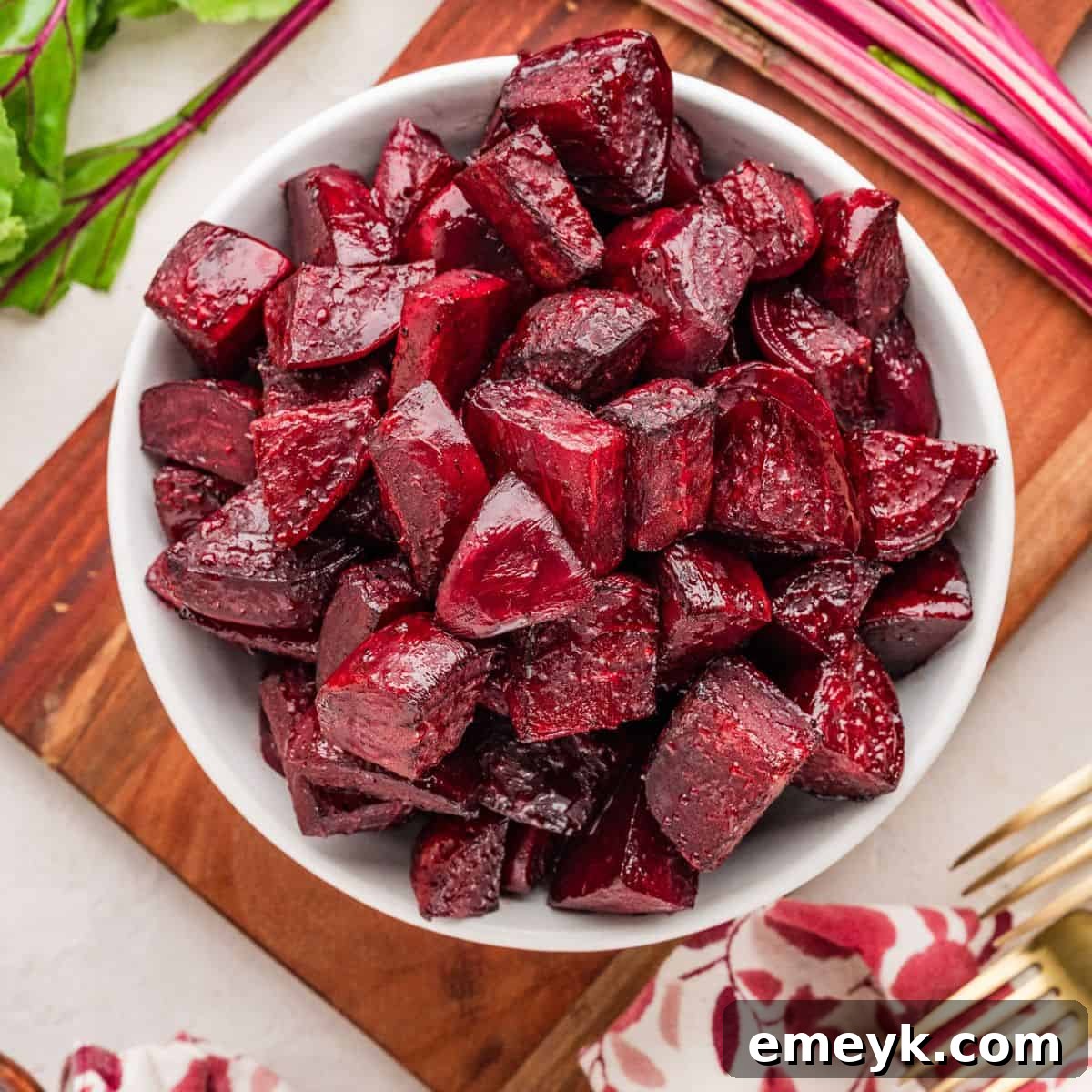
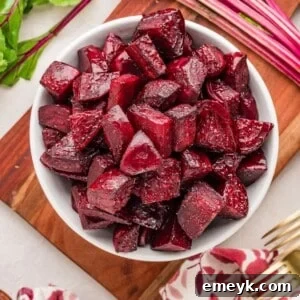
Unlock the secret to perfect oven roasted beets with this simple, foil-free method. This recipe delivers fork-tender beets with irresistibly deep, caramelized edges and a rich, earthy sweetness every single time. Simply toss them in olive oil and balsamic vinegar, spread them on a sheet pan, and let your oven work its magic. In just 30 minutes, you’ll have a versatile and delicious side dish that will change the way you think about beets forever.
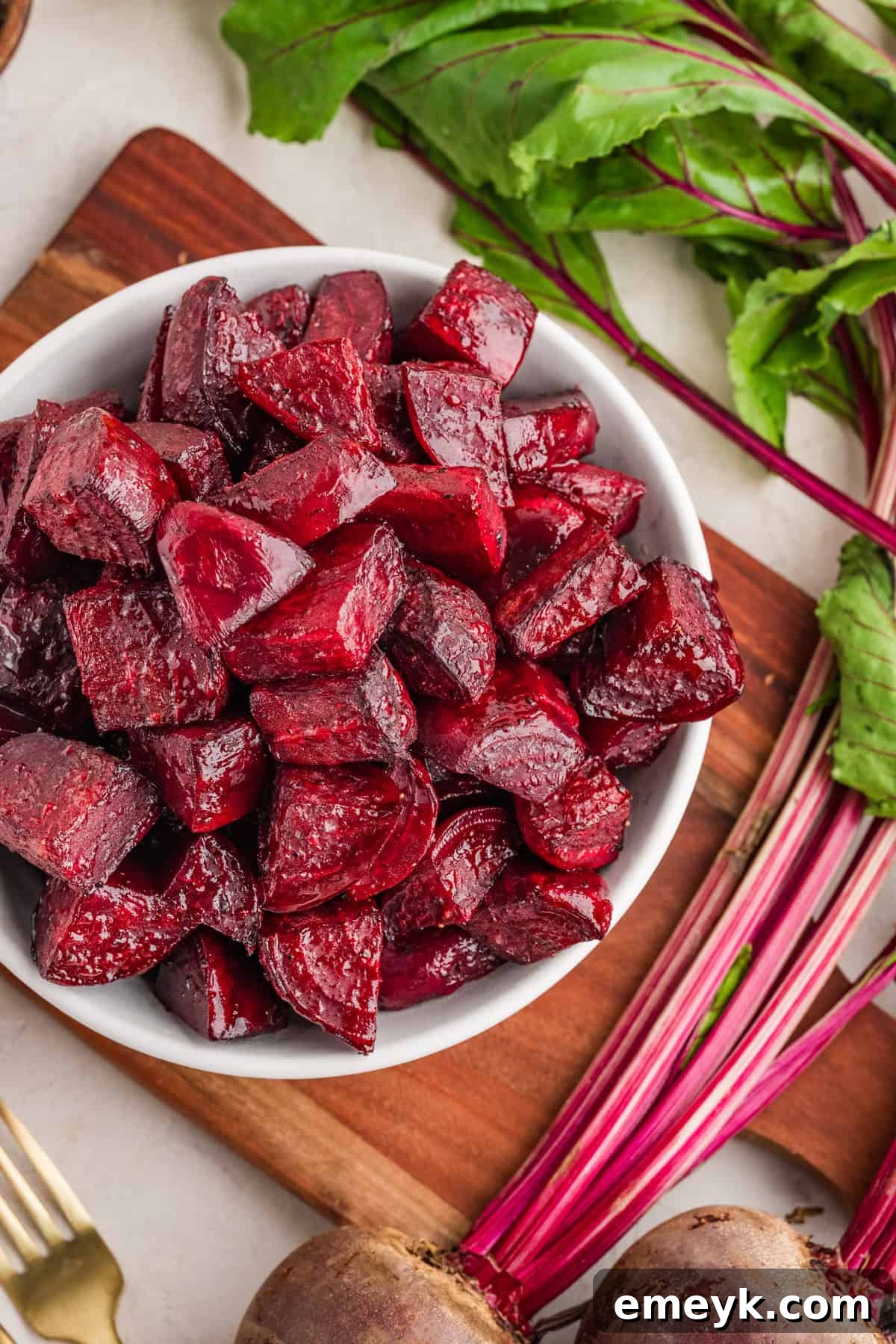
If you’ve been avoiding beets because you thought roasting them was a complicated, time-consuming, or messy affair, prepare to be amazed. This recipe is a true game-changer, streamlining the process for maximum flavor with minimal effort.
Our method for oven roasted beets completely bypasses the traditional aluminum foil wrap. Instead of steaming whole beets for nearly an hour, we peel and cube them first. A quick toss in high-quality olive oil and a splash of tangy balsamic vinegar is all they need before heading into a hot 400°F oven. Thirty minutes later, you’re rewarded with deeply ruby-colored gems that are perfectly tender on the inside, beautifully caramelized on the outside, and bursting with a naturally sweet, earthy flavor that is simply unparalleled.
This has become my go-to recipe for beets because of their incredible versatility. They are a fantastic addition to almost any meal. Scatter them over a vibrant salad, serve them as a hearty side dish alongside grilled chicken or fish, or simply enjoy them straight from the pan while they’re still warm. This is the kind of reliable, delicious side dish that quickly earns a permanent spot in your weekly meal rotation.
Why Cubing Beets is Better Than the Foil Method

Many roasted beet recipes instruct you to wrap whole, unpeeled beets in foil and bake them for 45 to 60 minutes. While this method does produce a tender beet, it’s technically steaming, not roasting. The foil traps moisture, preventing the direct, dry heat of the oven from working its magic. You get softness, but you miss out on the incredible depth of flavor and texture that comes from true roasting.
By cubing the beets first, you achieve two crucial things. First, you dramatically reduce the cooking time to just 30 minutes. Second, and most importantly, you create a vastly larger surface area. This increased surface area is key to caramelization—the process where the natural sugars in the vegetable brown in the oven’s heat, creating complex, sweet, and nutty flavors. Those dark, slightly crispy edges are where the real flavor is concentrated. Plus, this method saves you from the messy and dangerous task of peeling a scorching-hot beet straight from the oven. Once you try roasting beets this way, you’ll understand why it’s the superior technique.
What You’ll Need: The Simple Ingredients
The beauty of this recipe lies in its simplicity. With just a few pantry staples, you can transform humble beets into a spectacular dish.
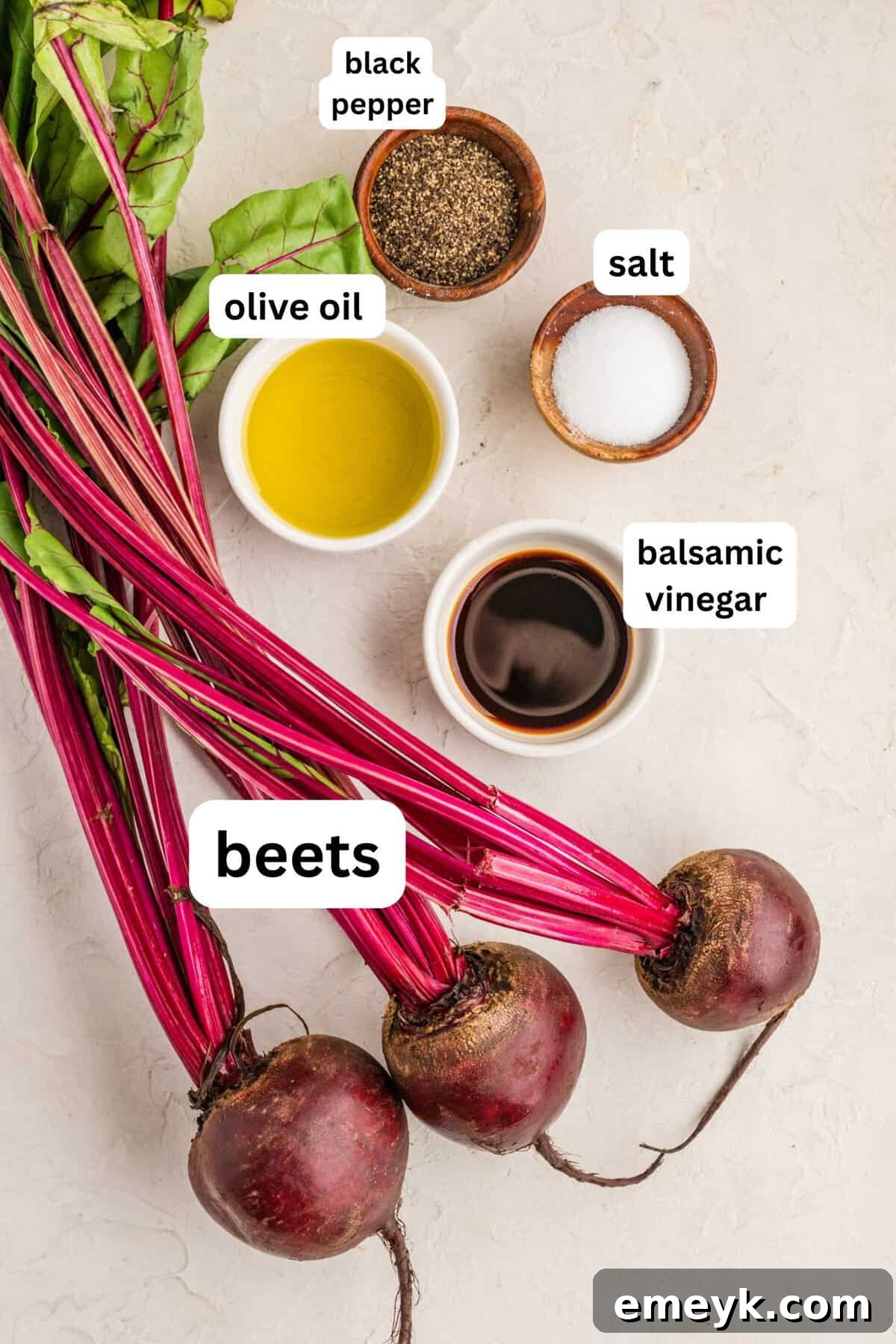
- Fresh Beets: The star of the show! Look for firm, fresh beets with no soft spots or blemishes. Medium-sized beets are typically the easiest to handle, peel, and chop. While classic red beets are fantastic, don’t hesitate to use golden beets for a milder flavor and a stunning visual contrast. A mix of both looks beautiful on the plate.
- Olive Oil: A good quality extra-virgin olive oil is essential. It helps the beets roast evenly, prevents them from sticking, and adds a rich, fruity flavor that complements their earthiness.
- Balsamic Vinegar: This is the secret weapon. Just a tablespoon adds a layer of complexity, providing a tangy counterpoint to the beets’ natural sweetness. As it roasts, the vinegar reduces into a subtle, delicious glaze on the edges of the beets. It’s a small addition that makes a huge difference.
- Salt and Pepper: Simple seasonings are all you need to enhance the natural flavors of the other ingredients.
Creative Variations and Flavor Boosters
While this recipe is perfect as is, it also serves as a wonderful canvas for other flavors. Here are a few ideas to customize your roasted beets:
- Herbal Infusions: Add robust fresh herbs like sprigs of thyme or rosemary to the pan before roasting. Their woodsy aroma will infuse the beets beautifully. For a fresh finish, toss the roasted beets with finely chopped parsley, chives, or dill before serving.
- Sweet and Tangy Twists: If you don’t have balsamic, red wine vinegar or even fresh lemon juice can provide a bright, acidic kick. For a sweeter profile, a small drizzle of maple syrup or honey over the beets before roasting will enhance caramelization and add a lovely glaze.
- Warm Spices: Introduce a warm, earthy depth by tossing the beets with a pinch of cumin, smoked paprika, or ground coriander before they go into the oven.
- Nutty and Cheesy Finishes: Once the beets are roasted, take them to the next level with toppings. Crumbled feta or goat cheese adds a creamy, salty contrast. Toasted nuts like pecans, walnuts, pistachios, or sliced almonds provide a welcome crunch.
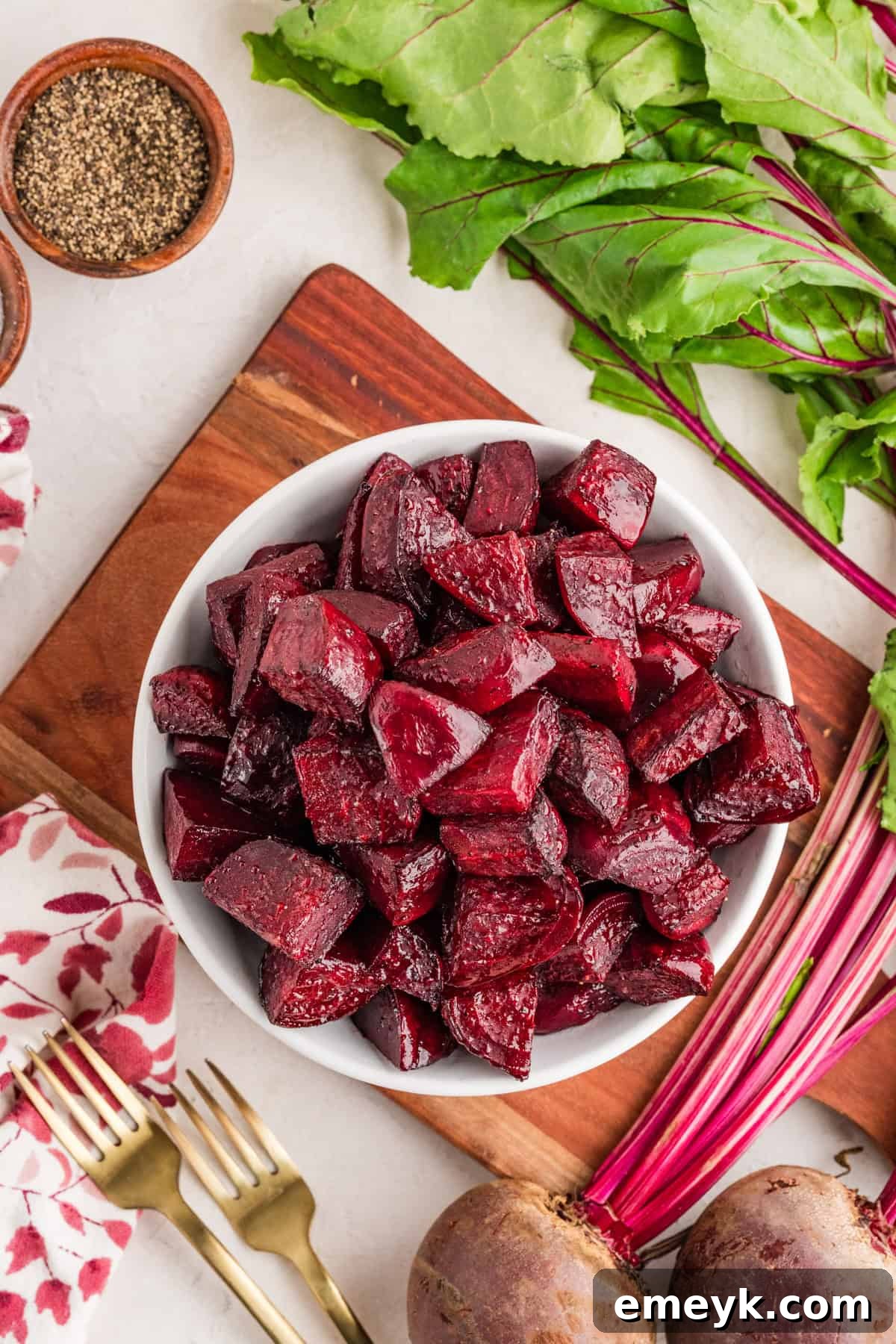
A Mess-Free Guide to Prepping Beets
Beet juice has a notorious reputation for staining everything it touches. With a few simple precautions, you can keep your hands and your kitchen clean.
- Protect Your Surfaces: Use a plastic or glass cutting board. Beet juice can permanently dye wooden cutting boards a vibrant shade of pink.
- Wear Gloves: Disposable kitchen gloves are your best friend here. They will prevent your hands and nails from turning purple for days.
- Don an Apron: Protect your clothing from any unexpected splatters by wearing an apron.
- Smart Peeling Technique: Leave a small portion of the stem attached to the beet while you peel it. This gives you a natural handle to hold onto, making it much easier to maneuver a vegetable peeler around the root. Once peeled, slice off the stem and root ends, then chop the beet into uniform one-inch cubes.
How to Make Perfect Oven Roasted Beets (Step-by-Step)
Step 1: Prepare Your Oven and Pan. Preheat your oven to a hot 400°F (200°C). Line a large, rimmed baking sheet with parchment paper. This is crucial for easy cleanup and preventing the beets from sticking.
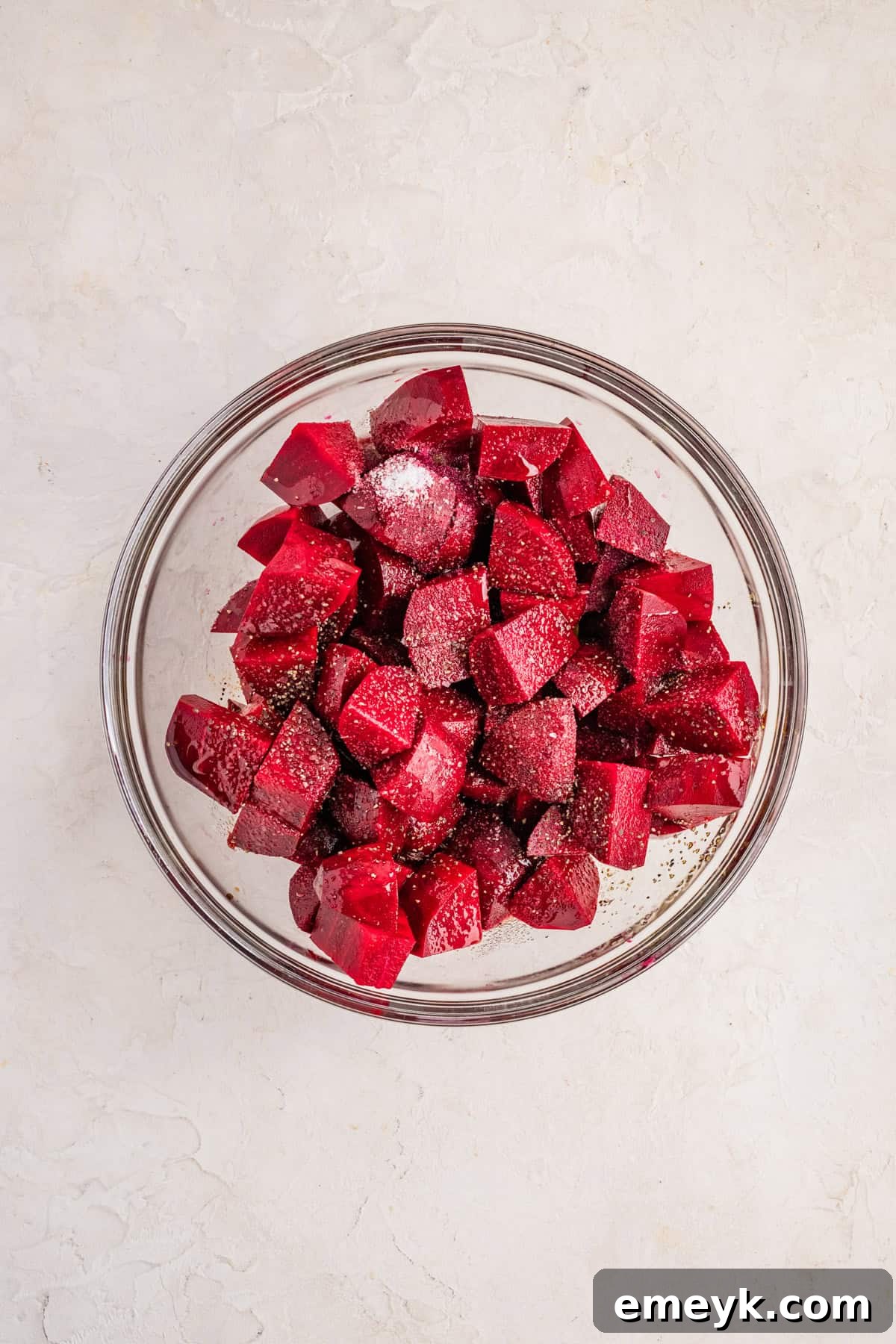
Step 2: Season the Beets. Place your peeled and cubed beets in a large mixing bowl. Drizzle with the olive oil and balsamic vinegar, then sprinkle generously with salt and pepper. Use a large spoon or your gloved hands to toss everything together until each cube is evenly and lightly coated in the mixture.
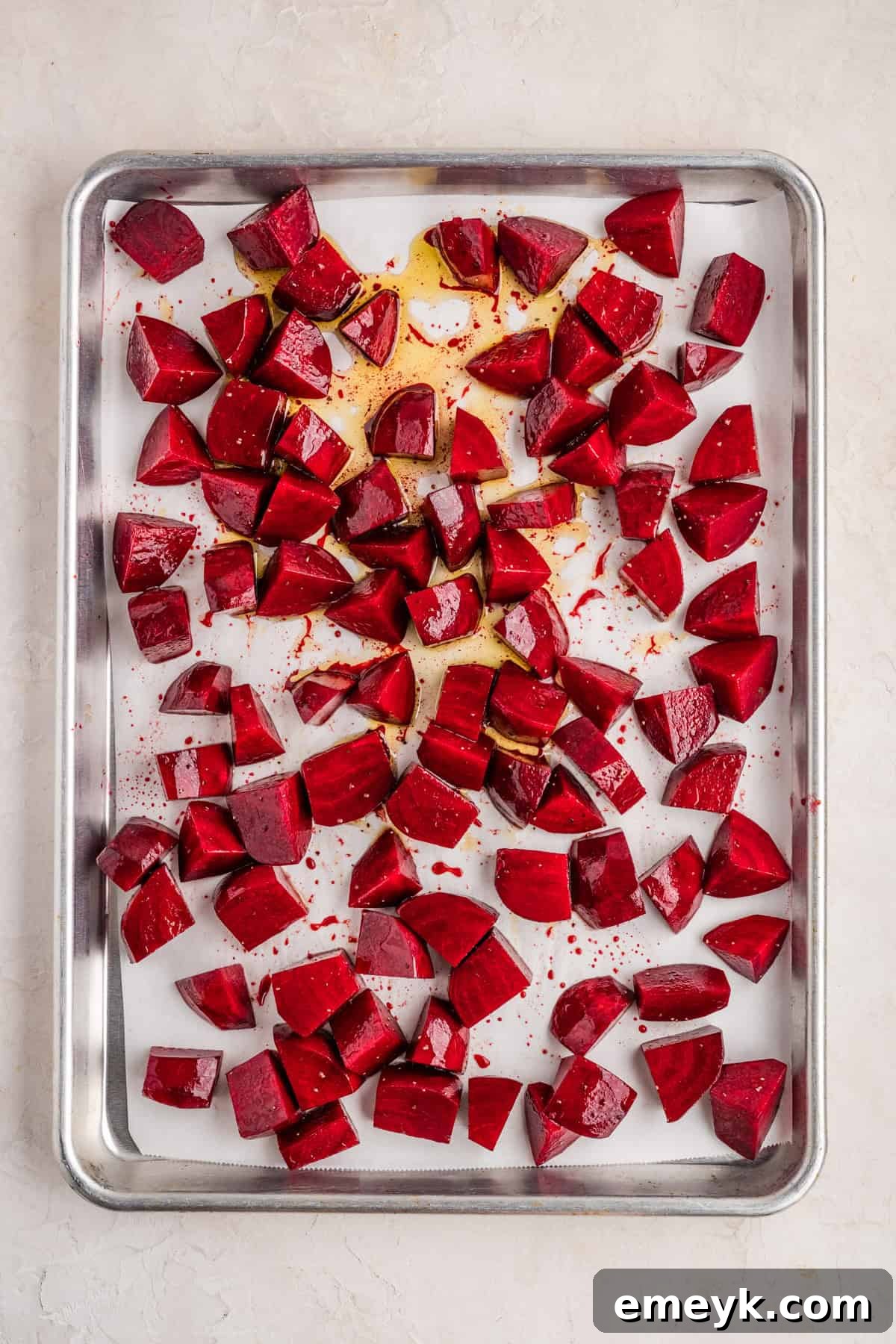
Step 3: Arrange in a Single Layer. Pour the seasoned beets onto your prepared baking sheet. Spread them out into a single, even layer. This is the most important step for achieving caramelization. If the beets are crowded, they will steam instead of roast, and you’ll miss out on those crispy, flavorful edges. Ensure each piece has a little breathing room.
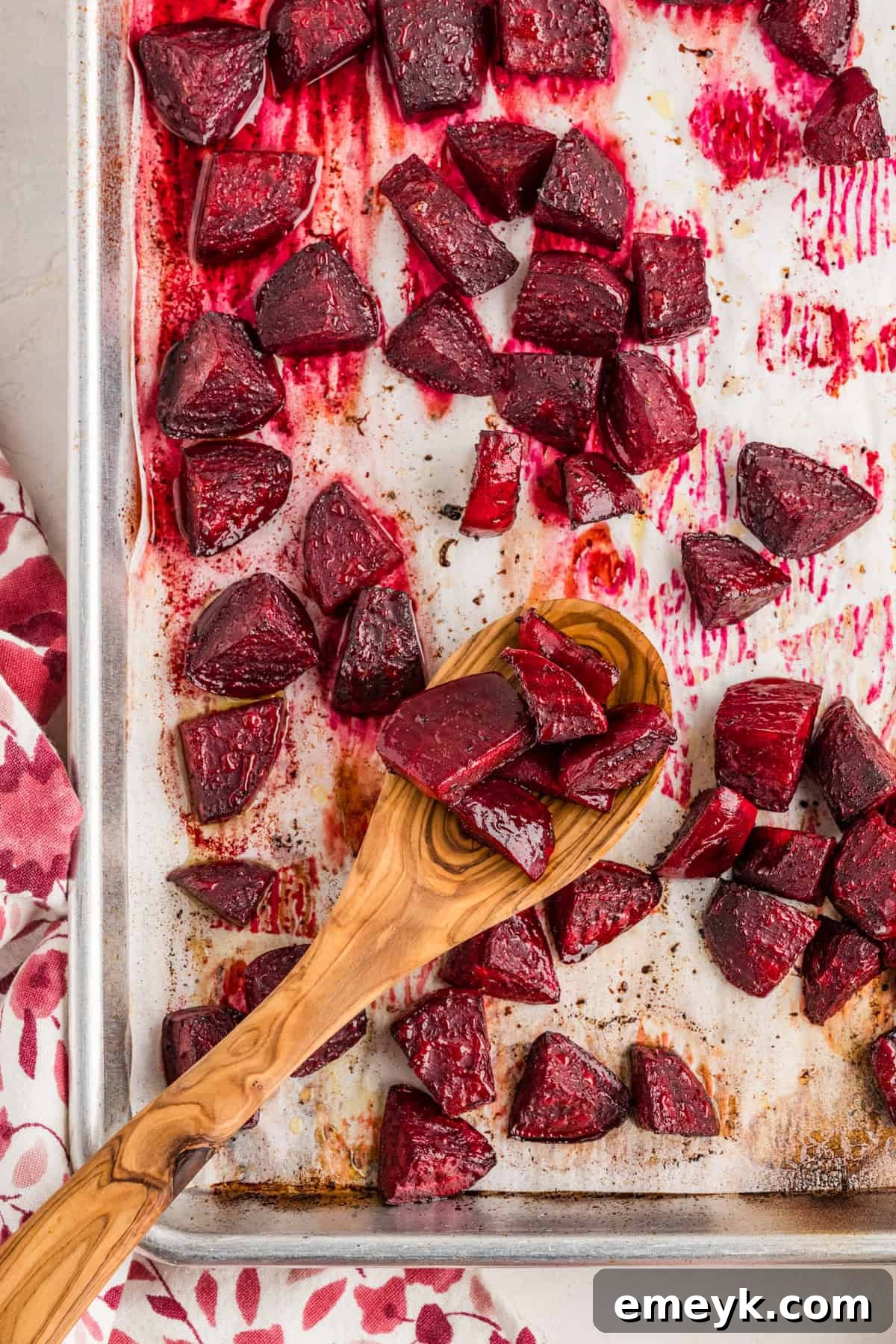
Step 4: Roast to Perfection. Place the baking sheet in the preheated oven and roast for 30 minutes. You don’t need to stir them. They are done when a fork can be inserted into a cube with no resistance, and the edges look deeply colored, slightly shrunken, and caramelized.
How to Tell When Roasted Beets Are Perfectly Cooked
There are two key indicators of perfectly roasted beets: texture and color.
- The Fork Test: The most reliable test for doneness is tenderness. A fork or the tip of a sharp knife should slide into the center of the largest beet cube with ease and no resistance. If you feel any hardness, they need a few more minutes in the oven.
- Visual Cues: Look for visual signs of caramelization. The edges of the beets should be a deep, burnished ruby color, and some corners might look slightly crispy and almost jammy. The balsamic vinegar will have created a beautiful dark glaze on the pan and the beets themselves.
- When in Doubt, Roast a Little Longer: It’s better to slightly over-roast beets than to under-roast them. Overdone beets will be sweeter and more tender, while underdone beets can have a firm, chalky, and unpleasant texture.
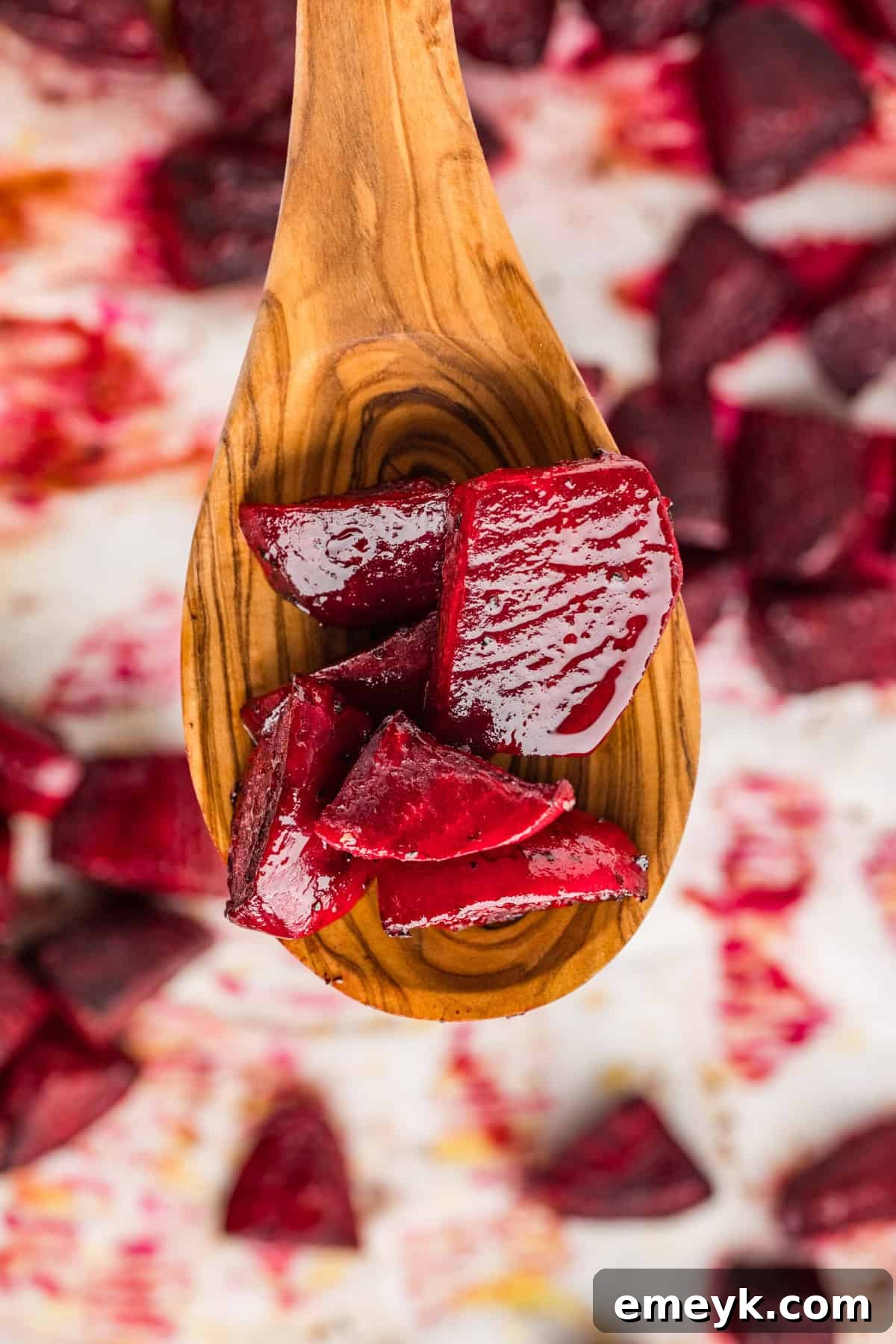
Serving Suggestions: How to Enjoy Your Beets
These oven roasted beets are incredibly versatile. Here are some of my favorite ways to serve them:
- As a Simple Side Dish: They are a fantastic accompaniment to roasted or grilled proteins like chicken, salmon, steak, or pork tenderloin. Their earthy sweetness balances rich meats perfectly.
- In a Vibrant Salad: Cooled roasted beets are a star ingredient in salads. For a classic combination, toss them with fresh arugula, creamy goat cheese, toasted walnuts, and a simple lemon vinaigrette.
- In Hearty Grain Bowls: Make a nutritious and satisfying lunch by stirring roasted beets into cooked quinoa, farro, or couscous. Add chickpeas, fresh herbs, and a tahini dressing for a complete meal-prep-friendly bowl.
- On a Hummus Platter: For a stunning and delicious appetizer, spread a generous layer of creamy hummus on a plate. Top with a pile of warm roasted beets, a drizzle of extra virgin olive oil, and a sprinkle of flaky sea salt. Serve with warm pita bread for dipping.
Meal Prep and Storage Tips
- Make-Ahead: These beets are an excellent choice for meal prep. You can roast a large batch at the beginning of the week. Their flavor actually deepens and improves after a day in the refrigerator.
- Storing Leftovers: Allow the beets to cool completely to room temperature. Transfer them to an airtight container and store them in the refrigerator for up to 5 days.
- Reheating: To restore some of their crispy texture, reheat the beets on a baking sheet in a 375°F (190°C) oven for about 10 minutes until warmed through. You can also enjoy them cold or at room temperature, especially in salads.
- Freezing: You can freeze roasted beets. Spread the cooled beets in a single layer on a baking sheet and freeze until solid. Then, transfer them to a freezer-safe bag or container. They will keep for up to 3 months. Note that the texture may be slightly softer upon thawing.
Frequently Asked Questions
While beet skin is edible, I highly recommend peeling them for this recipe. Peeling removes any tough or earthy-tasting skin, allowing for a more uniform texture and better caramelization on all sides of the beet cube.
Absolutely! In fact, it’s the better way to do it. Roasting without foil on a sheet pan exposes the beets to direct, dry heat, which is essential for developing the deep, caramelized flavor and slightly crispy edges that make them so delicious. Foil traps steam, which only softens them.
There are a few common reasons. First, your oven might not be hot enough; ensure it’s fully preheated to 400°F. Second, the beets are likely too crowded on the pan. Give each piece space to roast rather than steam. Finally, make sure they are lightly but evenly coated in oil, which helps conduct heat and promotes browning.
Yes, golden beets work perfectly in this recipe. They have a slightly milder and sweeter flavor than their red counterparts and follow the exact same cooking instructions. A major bonus is that golden beets don’t stain, which makes preparation much cleaner!
More Roasted Vegetable Recipes You’ll Love
Roasted Carrots and Beets with Tahini
Spicy Curry Roasted Cauliflower
Roasted Cauliflower with Almond Panko Topping
Simple Perfect Roasted Broccoli
Easy Oven Roasted Beets (No Foil)
Forget the foil. These oven roasted beets come out fork-tender with deeply caramelized edges and rich, earthy flavor every single time. Toss them in olive oil and balsamic vinegar, spread them on a sheet pan, and let your oven do the rest in just 30 minutes.
Ingredients
- 5 to 6 medium whole beets, peeled and chopped into 1-inch pieces
- 2 tablespoons extra-virgin olive oil
- 1 tablespoon balsamic vinegar
- 1 teaspoon kosher salt
- 1/8 teaspoon coarse ground black pepper
Instructions
- Preheat the oven to 400°F (200°C) and line a large, rimmed baking sheet with parchment paper.
- In a large mixing bowl, combine the beet cubes, olive oil, balsamic vinegar, salt, and pepper. Toss well until every piece is evenly coated.
- Spread the beets onto the prepared baking sheet in a single layer, making sure the pieces are not overcrowded.
- Roast for 30 minutes, or until the beets are tender when pierced with a fork and the edges are deeply colored and caramelized. Serve warm.
Notes
- Uniform Cutting: For even cooking, try to cut your beets into uniformly sized one-inch pieces. This ensures they all become tender at the same time.
- Don’t Crowd the Pan: Give the beets space on the baking sheet. This is the key to roasting, not steaming, and achieving those delicious caramelized edges. Use two pans if necessary.
- Golden Beets: This recipe works equally well with golden beets, which are less messy to prepare. For a beautiful presentation, mix both red and golden beets, but roast them on separate pans to prevent the colors from bleeding.
- Storage: Store leftovers in an airtight container in the refrigerator for up to 5 days. The flavor improves overnight, making them perfect for meal prep.
Nutrition
Serving: 1g | Calories: 73kcal | Carbohydrates: 7g | Protein: 1g | Fat: 5g | Saturated Fat: 1g | Sodium: 442mg | Potassium: 226mg | Fiber: 2g | Sugar: 5g