
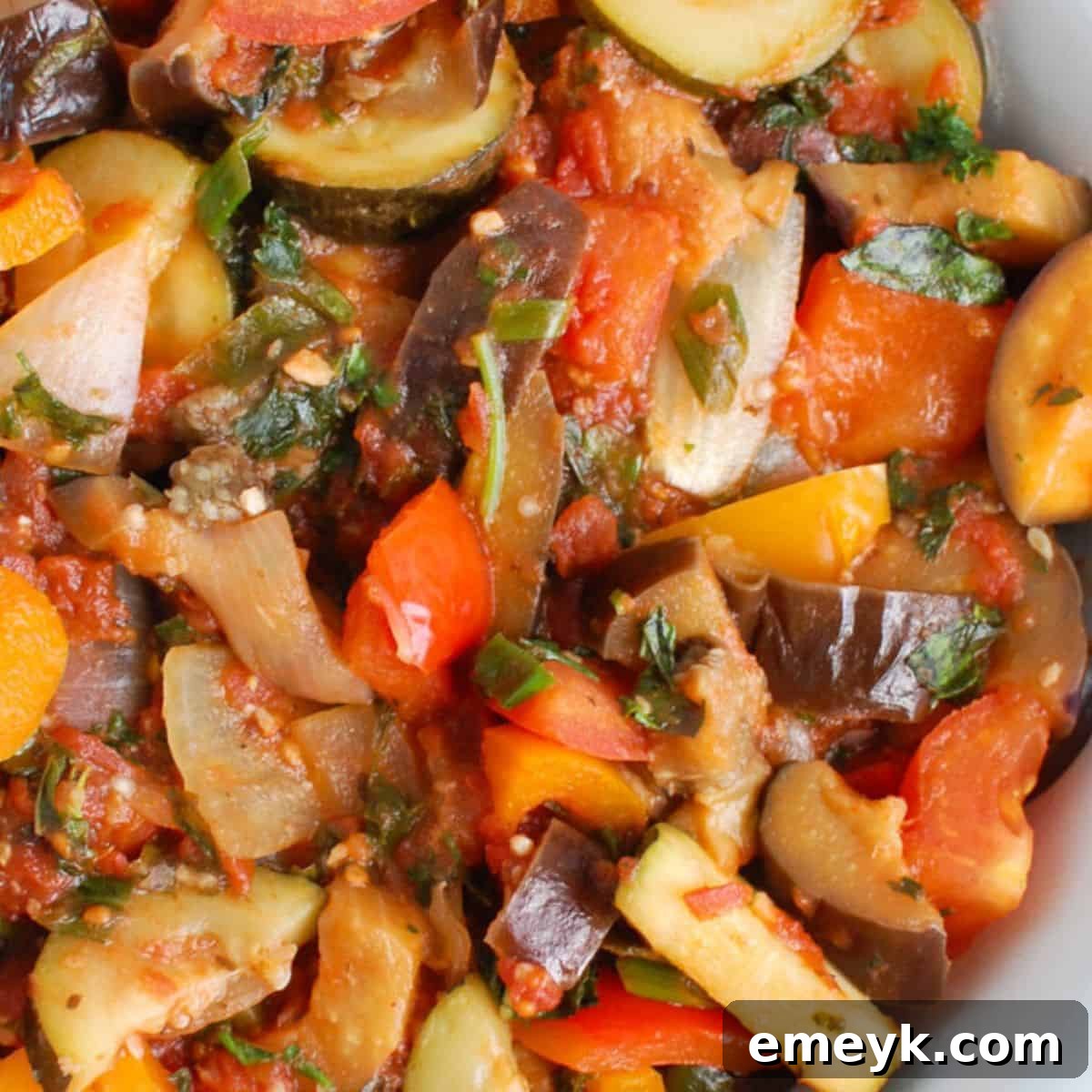
Welcome to the ultimate guide for preparing the **Best Ratatouille Recipe** you’ll ever encounter. This cherished recipe, a culinary heirloom passed down from my mother, embodies the heart and soul of traditional French cooking. It transforms simple, fresh vegetables like vibrant zucchini, tender eggplant, sweet bell peppers, and ripe tomatoes into a rich, aromatic stew. Simmered to perfection with a thoughtful blend of herbs and spices, this dish is not only an incredibly easy vegan meal but also a versatile addition to any table. Enjoy it on its own for a light yet satisfying dinner, serve it generously over fluffy rice, or pair it with your favorite pasta for a hearty family feast. Prepare to fall in love with this effortless and deeply flavorful ratatouille!
Embracing Summer’s Bounty: The Joy of Seasonal Cooking
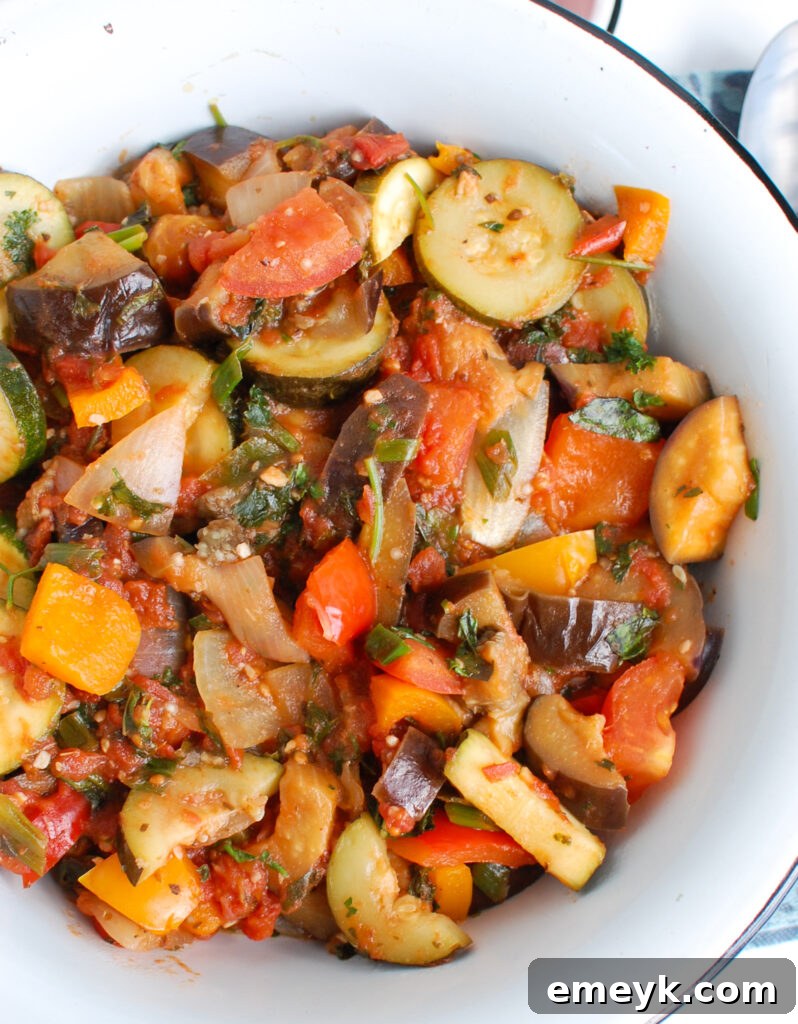
Summer is a season of abundance, particularly when it comes to fresh produce. As the farmers’ markets burst with vibrant colors and crisp textures, it’s the perfect time to celebrate the gifts of the garden. This ratatouille recipe is a prime example of how simple, peak-season ingredients can create culinary magic. Just like our popular **Easy Lebanese Salad** or the refreshing **Summer Orzo Pasta Salad**, this dish highlights the natural sweetness and robust flavors of freshly harvested vegetables.
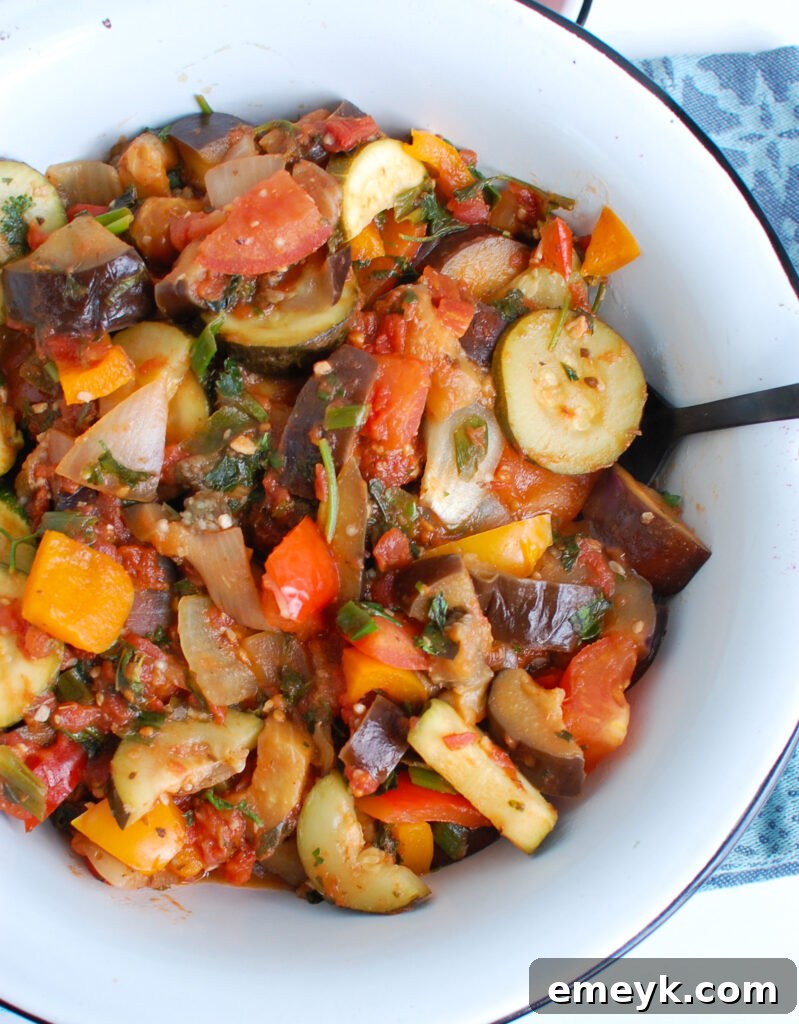
The harmonious blend of sweet bell peppers, earthy eggplant, tender zucchini, and juicy diced tomatoes creates a symphony of flavors that is both comforting and incredibly fresh. It’s an ideal recipe for utilizing the overflowing bounty from your backyard garden or for showcasing the incredible quality of local farmers’ market finds. Beyond its delicious taste, ratatouille offers a visually stunning and healthy dish that’s perfect for any occasion – whether you’re bringing a colorful potluck contribution to a friend’s gathering, seeking a flavorful accompaniment to grilled chicken, or desiring a wholesome, stand-alone main course for lunch or dinner.
What is Ratatouille? A Culinary Journey to Provence
Ratatouille, pronounced *ra-ta-TOO-ee*, is a beloved vegetable stew that hails from the picturesque region of Provence, France. Specifically, it’s often associated with Nice, giving rise to its full name, *Ratatouille Niçoise*. This rustic, yet elegant, dish has captivated palates worldwide, earning its place as a staple in kitchens far beyond its Mediterranean origins.
At its core, traditional ratatouille is a medley of summer vegetables cooked together until tender and fragrant. The foundational ingredients typically include ripe tomatoes, pungent garlic, sweet onions, firm zucchini, meaty eggplant, and colorful bell peppers. These are lovingly simmered with a selection of aromatic leafy herbs such as basil and parsley, and a warming blend of spices like dried oregano, thyme, and paprika. The slow simmering process allows the vegetables to meld their flavors beautifully, creating a rich, deeply satisfying stew that is greater than the sum of its parts. It’s not just a dish; it’s an experience that transports you straight to the sun-drenched hills of Southern France.
Creative Ways to Enjoy Your Ratatouille
One of ratatouille’s most charming qualities is its incredible versatility. While it shines brightly as a standalone meal, its robust flavors make it an excellent partner for a variety of proteins and grains. Consider these delightful pairings to elevate your dining experience:
- **Protein Power-Ups:** Enhance your ratatouille with lean protein for a more complete and satisfying meal. It pairs wonderfully with these **Mediterranean Baked Meatballs**, succulent **Greek Marinated Chicken with Tzatziki Sauce**, or flaky **Baked Cod with Lemon.**
- **Grain & Pasta Harmony:** Serve it over a bed of fluffy couscous, quinoa, brown rice, or alongside a warm loaf of crusty bread to soak up every last drop of the flavorful sauce. It’s also fantastic stirred into pasta, reminiscent of our popular **Mediterranean Orzo Pasta Recipe.**
- **Light Lunch Options:** For a lighter meal, enjoy ratatouille spooned into lettuce cups or as a vibrant filling for a wholesome sandwich or wrap.
- **Brunch Beauty:** It can even be a delightful addition to a brunch spread, served alongside scrambled eggs or as a side to a savory tart.
And if you’re exploring more Mediterranean-inspired plant-based dishes, you might also enjoy our **Mediterranean Chickpea Skillet** or the refreshing **Mediterranean Eggplant Salad**, both bursting with similar wholesome goodness.
Essential Ratatouille Ingredients
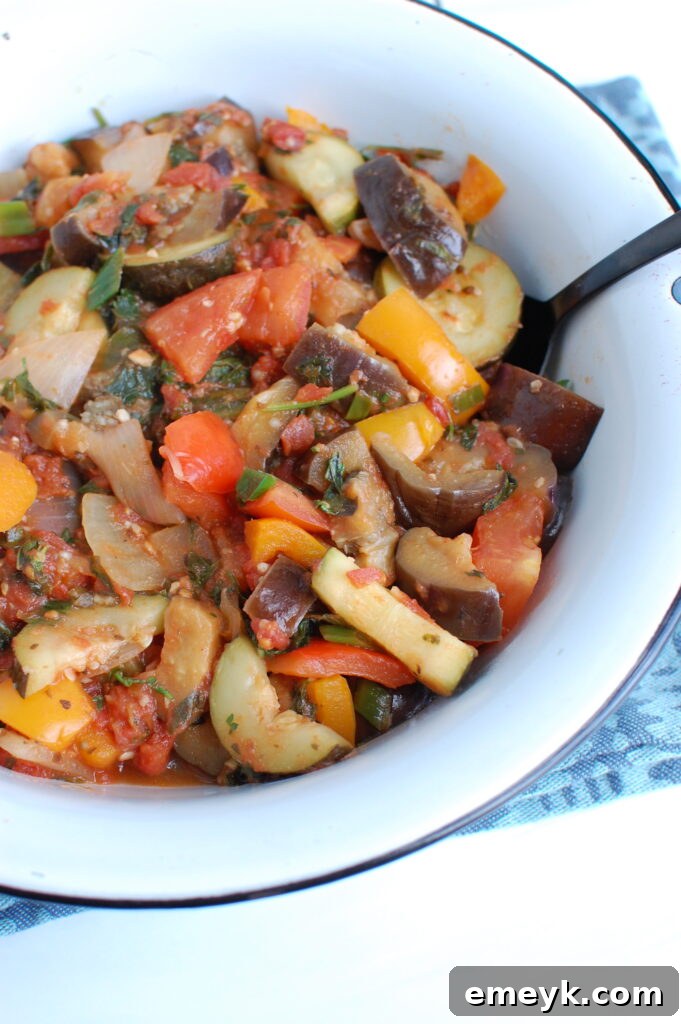
Crafting the perfect ratatouille requires a selection of fresh, high-quality ingredients. While the dish might seem elaborate, the beauty lies in its simplicity, relying on common pantry staples and seasonal produce. Here’s a closer look at what you’ll need:
- **Assorted Vegetables**: The heart of this dish! We use a colorful blend of **onions** for a sweet base, **eggplant** for its tender texture, fresh **zucchini** for lightness, and a mix of **red, green, and orange bell peppers** for vibrant sweetness and crunch. Ripe **tomatoes** form the succulent, slightly tangy foundation of the stew. Opt for firm, unblemished vegetables for the best results.
- **Aromatic Fresh Herbs**: Fresh herbs are non-negotiable for that authentic Provencal flavor. Bright, peppery **fresh parsley** and fragrant **fresh basil** are stirred in at the end, providing a burst of refreshing aroma and taste that truly elevates the dish.
- **Warming Spices**: A carefully selected mix of dried spices infuses the ratatouille with depth and warmth. **Dried oregano** adds an earthy, slightly minty note, while **ground coriander** brings a hint of citrusy, sweet complexity. **Paprika** contributes a mild, smoky sweetness and a beautiful red hue, and **dried thyme** lends its subtle, savory, and floral essence, complementing the fresh herbs perfectly.
- **Olive Oil**: Essential for sautéing the vegetables and adding a rich, Mediterranean character to the stew.
- **Garlic**: Minced garlic is crucial for building a flavorful aromatic base.
- **Salt and Pepper**: To taste, enhancing all the natural flavors.
Refer to the detailed recipe card below for precise measurements and printable instructions, ensuring a flawless execution of this classic dish.
Creative Variations and Customizations for Your Ratatouille
While the classic ratatouille recipe is perfect as is, it’s also wonderfully adaptable! Feel free to get creative with additions and substitutions to suit your taste, dietary needs, or whatever fresh ingredients you have on hand. Here are some popular ways to modify your ratatouille:
- **Add Legumes for Extra Protein**: For a heartier, more filling meal, especially if you’re looking to boost the protein content, consider adding a can of drained and rinsed **chickpeas** or **white beans** (like cannellini or great northern beans) during the last 10-15 minutes of simmering. While not traditional, this addition makes it a complete and satisfying vegan main course that will keep you full and energized.
- **Enhance with Cheese**: A sprinkle of cheese can add a delightful salty and creamy element. Crumbled **feta cheese** or tangy **goat cheese** are fantastic choices, added just before serving. For a more savory, umami kick, freshly grated **Parmesan cheese** is also a delicious option, particularly if you’re not strictly vegan.
- **Boost with Leafy Greens**: To incorporate more vitamins and minerals, stir in a handful of fresh **spinach, kale,** or **Swiss chard** towards the end of the cooking process. Simmer just until the greens wilt, retaining their vibrant color and nutritional value. This is a great way to use up any greens that might be nearing their expiration date.
- **Experiment with Other Vegetables**: Don’t be afraid to deviate from the core vegetables! Other seasonal produce can be easily integrated. Try adding **yellow squash** for more sweetness, thinly sliced **carrots** for an earthy note, diced **celery** for subtle crunch, or sliced **mushrooms** for an umami depth. Simply add them in with the other vegetables at the sautéing stage.
- **Spice it Up (or Down)**: Adjust the spices to your preference. A pinch of red pepper flakes can add a welcome kick, or a bay leaf can deepen the savory notes during simmering.
- **Tomato Base Variations**: If you prefer a richer, more intensely tomato-flavored ratatouille, you can increase the amount of diced tomatoes (perhaps using two 15-ounce cans or more fresh tomatoes). Using fire-roasted diced tomatoes can also add a delightful smoky depth.
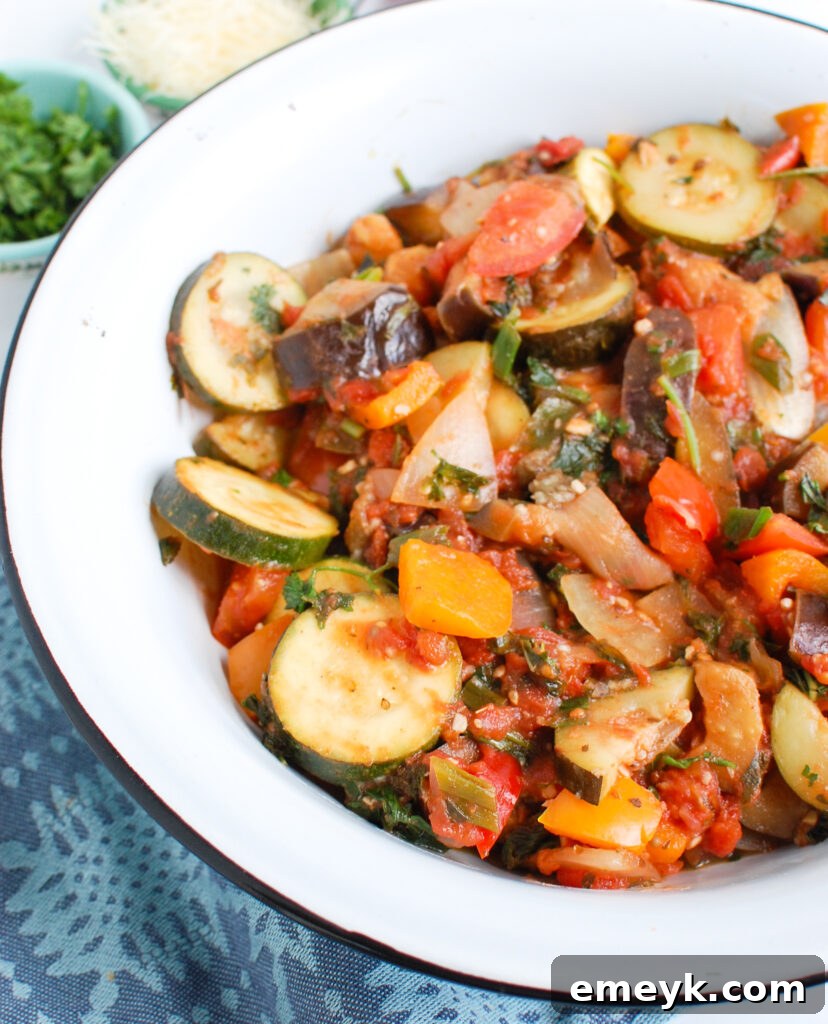
Step-by-Step Guide: Crafting Your Perfect Ratatouille
Making ratatouille is a straightforward process, but a few key steps ensure maximum flavor and ideal texture. Follow these instructions to create a truly memorable dish:
Step 1: Preparing the Eggplant (Optional but Recommended)
For the best texture and to minimize any potential bitterness, we highly recommend salting the eggplant. Place the 1-inch eggplant pieces in a colander, generously sprinkle them with salt, and let them sit for 20-30 minutes. This process draws out excess moisture and bitterness, resulting in a creamier, less watery final dish. After resting, rinse the eggplant thoroughly under cold water to remove the salt, then pat them completely dry with paper towels before proceeding to cook.
Step 2: Sautéing the Aromatics and Vegetables
In a large, heavy-bottomed pot or a Dutch oven, heat the olive oil over medium heat. Add the chopped onion and minced garlic, sautéing for about 4-5 minutes until the onion becomes translucent and fragrant. Next, add the bell peppers and continue cooking for another 4-5 minutes, allowing them to soften slightly. Finally, introduce the diced tomatoes, zucchini, and the prepared eggplant. Stir in the dried herbs and spices: thyme, oregano, paprika, and ground coriander. Give everything a good stir to ensure all the vegetables are coated with the aromatics and spices. Season generously with salt and black pepper to taste.
Step 3: Simmering for Flavor Development
Increase the heat to medium-high and bring the mixture to a gentle boil. Once boiling, reduce the heat to low, cover the pot, and let the ratatouille simmer for at least 30 minutes. This slow simmering process is crucial; it allows the vegetables to become tender, the flavors to meld beautifully, and the sauce to thicken slightly, creating that signature rich and comforting texture.
Step 4: Finishing Touches and Serving
Once the simmering time is complete, remove the pot from the heat. Taste the ratatouille and adjust the seasoning as needed, adding more salt, pepper, or any of the spices to suit your preference. Stir in the fresh basil and parsley, allowing their vibrant flavors to awaken in the warmth of the stew. If you’re adding feta or goat cheese, now is the perfect time to gently fold it in. Serve your exquisite ratatouille warm, either on its own with a slice of crusty bread, over a bed of brown rice, or tossed with your favorite pasta for a complete and delicious meal.
Storage and Freezing Tips for Ratatouille
Ratatouille is an excellent dish for meal prepping and enjoying throughout the week, as its flavors often deepen and improve over time. It’s also remarkably freezer-friendly, making it a convenient option for busy days.
- **Refrigeration**: Store any leftover ratatouille in an airtight container in the refrigerator for up to 4 days. To reheat, you can gently warm it in a skillet over medium-low heat on the stovetop, or microwave it in individual portions until heated through. Add a splash of vegetable broth or water if it seems too thick.
- **Freezing**: Yes, ratatouille freezes beautifully! This makes it a fantastic make-ahead meal for those nights when you need a quick and healthy dinner.
- **To Freeze**: Ensure your ratatouille has cooled completely to room temperature before freezing. Transfer it to freezer-safe airtight containers or heavy-duty freezer bags. If using bags, lay them flat to freeze, which helps save space. It can be stored in the freezer for up to 3 months.
- **To Thaw & Reheat**: When you’re ready to enjoy your frozen ratatouille, transfer it from the freezer to the refrigerator to thaw overnight. Once thawed, you can reheat it quickly on the stovetop in a pot or skillet, or in the microwave. Taste and adjust seasonings as needed, perhaps stirring in a fresh sprinkle of herbs like basil or parsley to freshen up the flavors.
Frequently Asked Questions About Ratatouille
Absolutely! Ratatouille is one of those magical dishes that often tastes even better the day after it’s made, as the flavors have more time to fully develop and meld. The leftovers are truly exceptional, especially when served over brown rice or pasta. You can find inspiration with our **Ratatouille Pappardelle** recipe. Ratatouille will keep beautifully in an airtight container in the fridge for approximately 3 to 4 days, though its texture might soften slightly over time.
Yes, you certainly can! While fresh, ripe tomatoes offer an unparalleled robust and vibrant flavor, canned diced or crushed tomatoes are an excellent alternative, particularly when fresh tomatoes are out of season. For an extra layer of depth and a hint of smoky flavor, consider using fire-roasted diced tomatoes. Adjust the amount of liquid as needed if using very watery canned tomatoes.
We highly recommend salting the eggplant. This simple step involves placing the eggplant pieces in a colander and sprinkling them with salt, allowing them to sit for 20-30 minutes. This process effectively draws out excess moisture and any bitterness, which significantly improves the eggplant’s texture, making it less spongy and more tender. Remember to rinse the eggplant thoroughly and pat it completely dry before adding it to the recipe.
Yes, absolutely! Ratatouille is inherently a very healthy dish. It’s packed with a variety of fresh vegetables, which provide essential vitamins, minerals, and dietary fiber. It’s naturally vegan, gluten-free (when served appropriately), and low in calories, making it a fantastic choice for those following a Mediterranean diet or simply looking for a wholesome, plant-based meal. The olive oil adds healthy monounsaturated fats, contributing to heart health.
Ratatouille is incredibly versatile! You can serve it hot, warm, or even at room temperature. It’s wonderful as a main dish with crusty bread for dipping, or alongside grains like rice, quinoa, or couscous. It also makes a fantastic side dish for grilled meats, fish, or poultry. For a light lunch, enjoy it as a topping for bruschetta or mixed into an omelet. Its adaptability means there’s almost no wrong way to serve it!
More Delicious Vegetarian & Vegan Recipes to Explore
Mediterranean
Air Fryer Eggplant
Mediterranean
Air Fryer Eggplant Fries Recipe
Vegetarian
Easy Eggplant Curry
Vegetarian
Lebanese Vegetables
Tried this recipe? Share your thoughts below! Follow us on
Facebook,
Instagram, or
Pinterest for the latest recipes and culinary inspiration.
Authentic Ratatouille Recipe
Julia Jolliff
Pin
10 minutes
30 minutes
40 minutes
6
Ingredients
- 3 tablespoons olive oil
- 4 cloves garlic, minced
- 1 medium onion, chopped
- 1 pound eggplant, peeled, and cut into 1-inch pieces
- 2 small zucchinis, halved length-wise, then cut into small half moon shapes
- 1 small red, green and orange pepper, seeds removed, chopped into 1 inch chunks {or colors of your choice}
- 1 – 15 ounce can diced tomatoes or 2 cups of freshly diced tomatoes
- 1/4 cup fresh parsley, chopped
- 1/4 cup fresh basil, chopped
- 1 teaspoon dried oregano
- 1/8 teaspoon ground coriander
- 1 teaspoon paprika
- 1 teaspoon dried thyme
- Dash of salt and pepper
- Optional: feta or goat cheese
- Serve over brown rice or pasta
Instructions
-
**Optional Eggplant Preparation:** To reduce bitterness and excess moisture, generously salt the cut eggplant pieces and let them sit in a colander for 20–30 minutes. This step also improves the texture. After resting, rinse the eggplant thoroughly under cold running water and pat dry with paper towels before cooking.
-
In a large pot or Dutch oven, heat the olive oil over medium heat. Add the chopped onion and minced garlic, then sauté for about 4-5 minutes until the onion is translucent and fragrant.
-
Add the chopped bell peppers and continue to cook for another 4-5 minutes until they begin to soften.
-
Stir in the diced tomatoes, zucchini, eggplant, dried thyme, oregano, paprika, and ground coriander. Mix thoroughly to combine all ingredients. Season with salt and pepper to taste.
-
Increase the heat to medium-high and bring the mixture to a boil. Once boiling, reduce the heat to low, cover the pot, and simmer gently for 30 minutes, allowing the flavors to deepen and the vegetables to become tender.
-
Remove the ratatouille from the heat. Taste and adjust the spices, salt, and pepper according to your preference.
-
Stir in the fresh basil and parsley. If you wish to add crumbled feta or goat cheese, do so now.
-
Serve warm by itself with crusty bread, or as a flavorful accompaniment to rice or pasta.
Chef’s Notes & Tips for Success
- **Tomato Intensity**: If you prefer a more tomato-rich ratatouille, feel free to add an extra can of diced tomatoes (making it a total of two cans) or incorporate more freshly diced tomatoes to achieve your desired consistency and flavor.
- **Freezing for Convenience**: This dish freezes exceptionally well. Allow it to cool completely to room temperature before transferring it to an airtight, freezer-safe container. It makes for a wonderful, quick meal on busy weeknights.
- **Herb & Spice Customization**: Don’t hesitate to personalize the flavor profile! Feel free to adjust the quantities of fresh herbs and dried spices, or even introduce new ones like a pinch of dried rosemary or bay leaf, to match your personal taste.
- **Eggplant Peeling**: Whether to peel the eggplant is a matter of personal preference. I often leave the skin on for added texture and nutrients, but many prefer it peeled for a smoother consistency. If peeling, you might still benefit from salting to remove bitterness.
- **Enhancing Eggplant Flavor (Alternative Method)**: Another way to develop the taste of the eggplant and reduce bitterness is to place the eggplant pieces in a colander over your sink, sprinkle generously with salt, and let them sit for 20 minutes. As the eggplant sweats out its bitterness, you’ll see moisture bead on the surface. Pat dry thoroughly before incorporating into your recipe.
- **Sautéing Order**: While all vegetables are simmered together, briefly sautéing harder vegetables (like onions and peppers) first helps them soften and release their initial flavors, building a robust base for the stew.
Nutrition Information (per serving)
Calories: 112kcal
,
Carbohydrates: 11g
,
Protein: 2g
,
Fat: 8g
,
Saturated Fat: 1g
,
Polyunsaturated Fat: 1g
,
Monounsaturated Fat: 5g
,
Sodium: 11mg
,
Potassium: 460mg
,
Fiber: 4g
,
Sugar: 6g
,
Vitamin A: 1215IU
,
Vitamin C: 45mg
,
Calcium: 43mg
,
Iron: 1mg
Nutrition information is automatically calculated and should be used as an approximation. Actual values may vary based on specific ingredients and preparation methods.
Tried this recipe?
Mention @acedarspoon or tag #acedarspoon!