
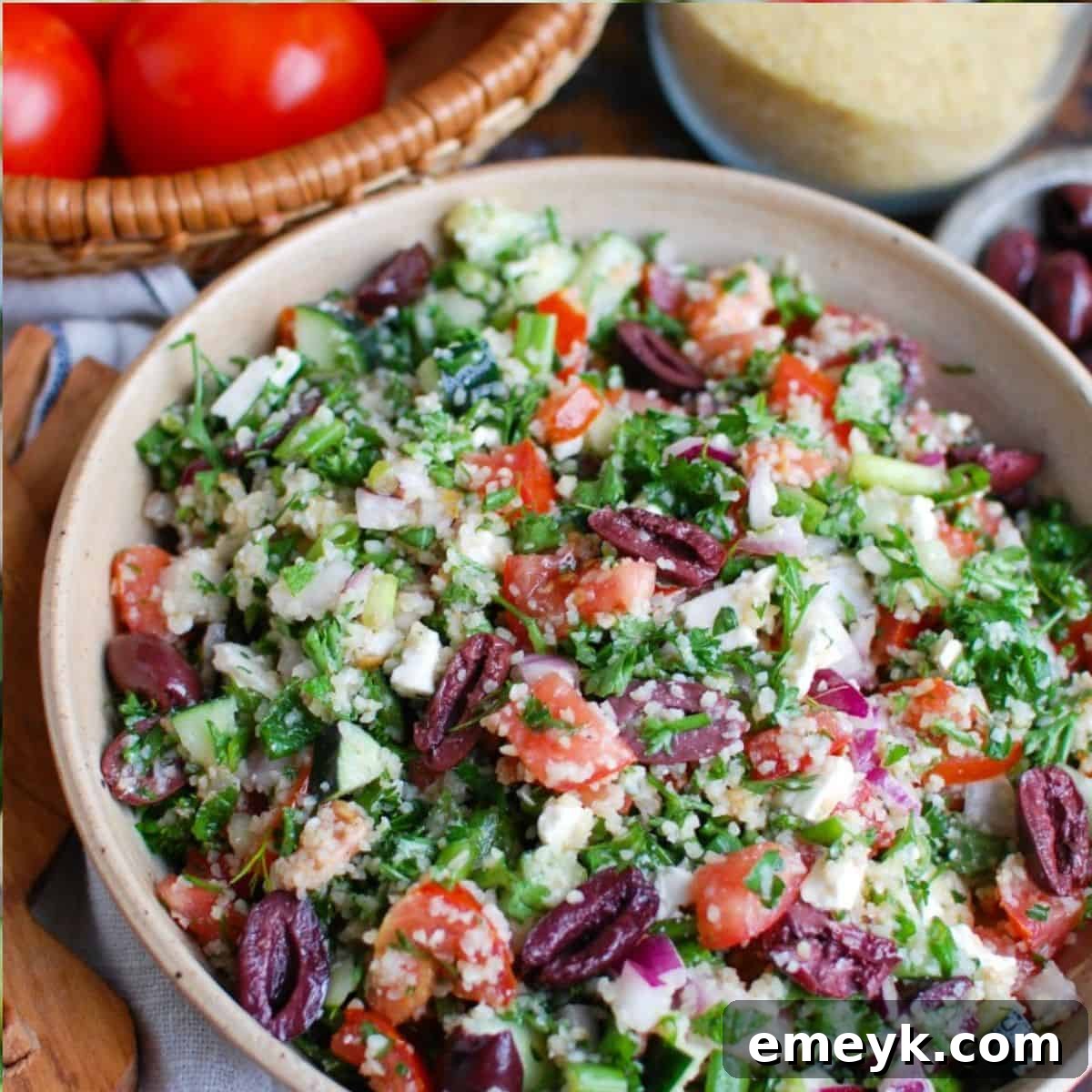
Greek Tabbouleh: A Vibrant Mediterranean Salad with Feta and Kalamata Olives
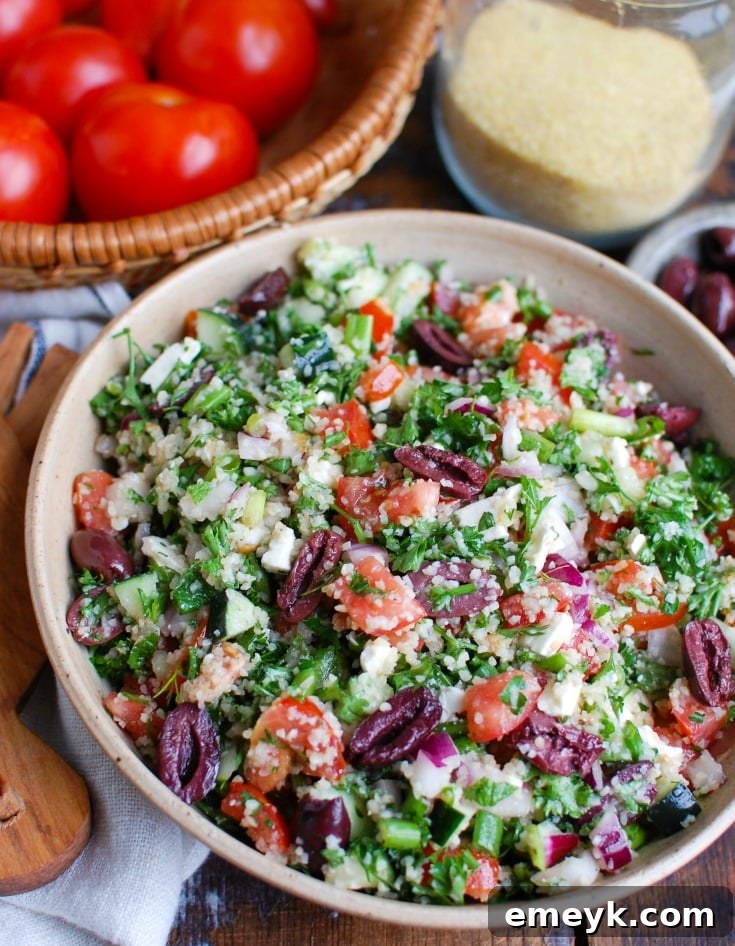
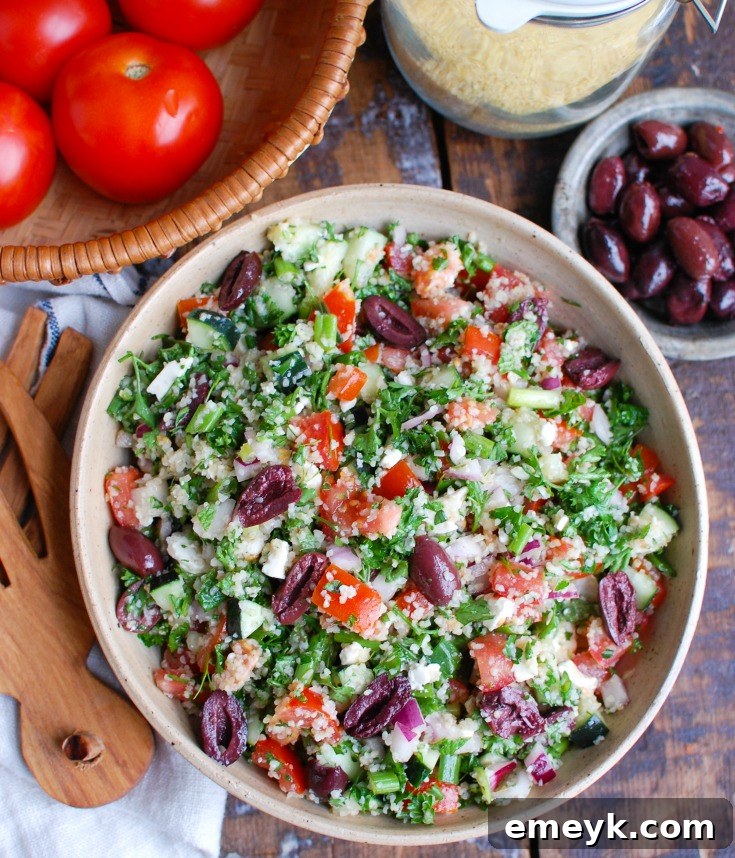
Embrace the fresh, invigorating flavors of the Mediterranean with our delightful Greek Tabbouleh recipe. This salad is a brilliant twist on the classic tabbouleh, infusing it with iconic Greek ingredients like briny Kalamata olives, creamy feta cheese, and crisp cucumber. Paired with traditional elements such as ripe tomatoes, fragrant parsley, and zesty green onions, all brought together by a light, lemony dressing, this Greek Tabbouleh is a true celebration of healthy and delicious eating.
If you’re a fan of Greek-inspired salads, prepare for a culinary treat! Our Greek Tabbouleh masterfully combines the best of both worlds: the refreshing base of traditional tabbouleh with the distinctive punch of Mediterranean Greece. It’s not just a salad; it’s an experience that transports you straight to the sun-drenched shores of the Aegean.
During the warmer months, I find myself preparing a batch of classic Easy Tabbouleh almost every week. There’s something incredibly satisfying about using fresh, seasonal produce, especially from my garden or the local farmers market. However, my love for tabbouleh knows no season. I enjoy exploring various versions of this beloved grain salad throughout the year, making it a regular fixture on my table.
Over the years, I’ve experimented with several exciting variations, including a refreshing Kale Cucumber Tabbouleh and a unique Cauliflower Tabbouleh, both offering wonderful twists on the traditional recipe. For those new to the art of making tabbouleh, understanding the fundamentals is key to achieving that perfect, fluffy texture and balanced flavor profile.
Why You’ll Love This Greek Tabbouleh
This Greek Tabbouleh is more than just a salad; it’s a testament to simple, wholesome ingredients creating extraordinary flavor. Here’s why it will quickly become one of your favorite go-to recipes:
- Effortlessly Delicious: With minimal prep and straightforward steps, you can create a sophisticated and satisfying dish that tastes like it came from a gourmet kitchen.
- Nutrient-Packed: Loaded with fresh vegetables, whole grains, and healthy fats, this salad is a powerhouse of vitamins, minerals, and fiber, making it a smart choice for any meal.
- Bursting with Flavor: The combination of tangy lemon, briny olives, salty feta, and aromatic fresh herbs creates a symphony of tastes that awakens the palate with every bite.
- Highly Customizable: This recipe serves as a fantastic base for creativity. You can easily adapt it to your preferences, adding various vegetables, proteins, or other ingredients you have on hand.
- Perfect for Any Occasion: Whether you need a quick weekday lunch, a vibrant side dish for a dinner party, or a refreshing addition to a potluck, Greek Tabbouleh is always a crowd-pleaser.
- Meal Prep Friendly: It stores beautifully in the refrigerator, making it an excellent option for meal prepping healthy lunches or snacks throughout the week.
Essential Ingredients for Your Greek Tabbouleh
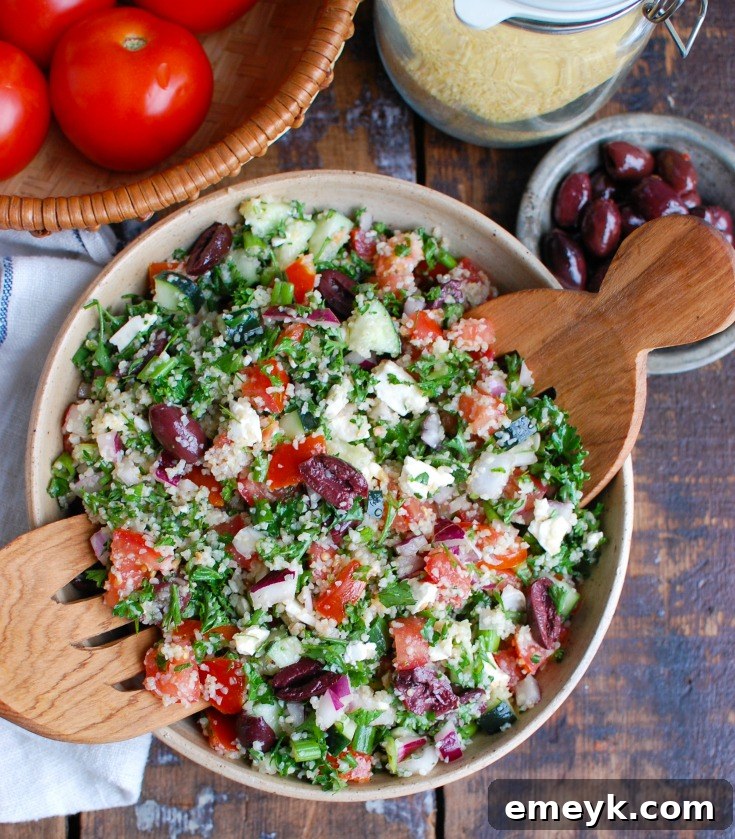
Crafting this easy and delicious salad relies on a few simple, high-quality ingredients that truly shine. Each component plays a vital role in creating the vibrant flavors and appealing textures of our Greek Tabbouleh:
- Bulgur Wheat: This ancient grain is the heart of traditional tabbouleh. For a perfectly soft and fluffy texture that’s ready quickly, we recommend using extra-fine bulgur wheat. It requires just soaking in cold water, eliminating the need for cooking. If you opt for medium or coarse bulgur, a brief soak in hot water will be necessary to achieve the desired tenderness.
- Fresh Vegetables: A colorful medley of fresh vegetables provides both crunch and a sweet, tangy balance. This recipe calls for finely chopped red onion, ripe Roma tomatoes, crisp English cucumber, and bright green onions. Feel free to adjust quantities based on your preference, or substitute with other seasonal veggies like bell peppers or radishes.
- Kalamata Olives: These dark, almond-shaped Greek olives are a signature ingredient, lending a distinct salty and fruity flavor that is essential for the “Greek” twist. Always use pitted Kalamata olives and slice them in half to distribute their rich taste evenly throughout the salad. If you’re not an olive enthusiast, they can be omitted, but they add an authentic touch.
- Feta Cheese: Creamy, salty, and wonderfully tangy, good quality feta cheese is a glorious addition. We highly recommend using freshly crumbled feta, as it delivers a superior flavor and texture compared to pre-crumbled varieties. It melts beautifully into the salad, adding a luxurious creaminess.
- Fresh Herbs: The aromatic backbone of any great tabbouleh comes from an abundance of fresh herbs. This recipe features a delightful trio of fresh mint, parsley, and dill. These herbs contribute a refreshing, vibrant, and slightly peppery note. While fresh is always best for maximum flavor, dried herbs can be used in a pinch (use about a third of the fresh quantity).
- Light Lemony Dressing: A simple yet incredibly flavorful dressing ties all the ingredients together. Our lemony dressing combines high-quality extra virgin olive oil for richness, a touch of red wine vinegar for sharpness, and plenty of fresh lemon juice for a bright, zesty finish. A pinch of salt and freshly ground black pepper completes this perfect vinaigrette.
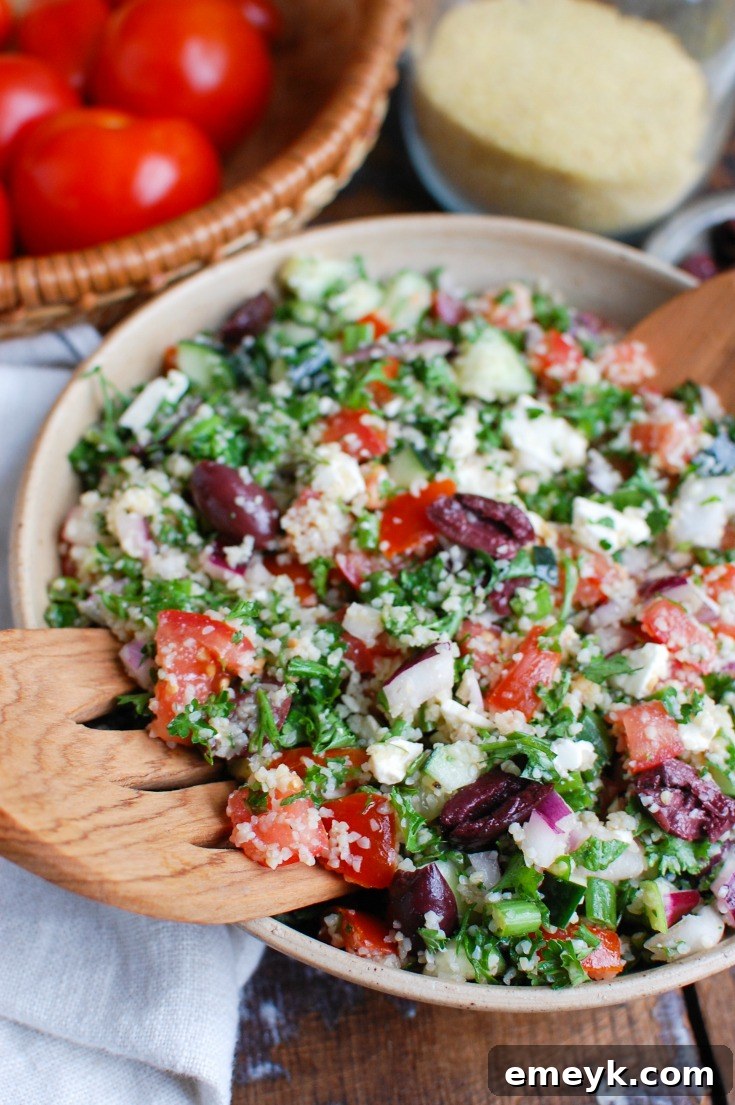
Creative Ways to Customize Your Greek Tabbouleh
One of the many joys of making Greek Tabbouleh is its incredible versatility. While the core recipe is utterly delicious on its own, it also serves as a fantastic canvas for culinary creativity. Don’t hesitate to experiment with additions and substitutions to make this salad uniquely yours, catering to your taste, dietary needs, or what you have available in your kitchen.
- Additional Vegetables: Elevate the nutritional profile and flavor complexity by incorporating more vegetables. Consider adding vibrant bell peppers (red, yellow, or orange) for sweetness and crunch, thinly sliced radishes for a peppery bite, crisp celery for added texture, sun-dried tomatoes for intense umami, or shredded carrots for a touch of sweetness and color.
- More Fresh Herbs: While parsley, mint, and dill are key, other fresh herbs can introduce exciting new dimensions. Try a sprinkle of fresh cilantro for an earthy, citrusy note, a dash of oregano for a classic Greek aroma, or basil for a sweet and peppery finish.
- Hearty Beans and Legumes: Transform your tabbouleh into a more substantial meal by adding cooked chickpeas (garbanzo beans) for a nutty flavor and creamy texture, or white beans (such as cannellini or great northern) for a mild, earthy addition that boosts protein and fiber.
- Alternative Cheeses: If you’re looking to switch things up, while feta is traditional, other cheeses can work wonderfully. Crumbled goat cheese offers a tangy, creamy alternative, while small cubes of fresh mozzarella or even shaved Parmesan can add a different kind of richness.
- Crunchy Nuts and Seeds: Introduce a delightful textural contrast and healthy fats by sprinkling in toasted nuts or seeds. Sesame seeds, sunflower seeds, slivered almonds, pine nuts, walnuts, or even cashews can add an appealing crunch and depth of flavor.
- Lean Protein Boost: To make this salad a complete and satisfying main course, incorporate your favorite protein. Cooked shrimp, shredded rotisserie chicken, grilled chicken breast, canned tuna (drained), flaked salmon, thinly sliced steak, or even marinated baked tofu cubes are excellent choices.
- Leafy Green Additions: For added volume and nutrients, mix in a handful of fresh leafy greens. Delicate baby spinach pairs wonderfully, while peppery arugula adds a sophisticated, slightly bitter note. Chopped romaine lettuce can also provide a refreshing crispness.
Storage and Meal Prep Tips for Greek Tabbouleh
Greek Tabbouleh is not only delicious freshly made, but it also stores beautifully, making it an excellent choice for meal prepping. With proper storage, you can enjoy this vibrant salad for several days.
To maximize freshness and flavor, store your Greek Tabbouleh in an airtight container in the refrigerator for up to 3-4 days. As the salad sits, the bulgur wheat and vegetables will absorb more of the dressing, intensifying the flavors. It’s common for some excess liquid to accumulate at the bottom of the container; simply drain this before serving.
For optimal enjoyment, I often like to “freshen up” the salad right before serving. A drizzle of extra virgin olive oil and a squeeze of fresh lemon juice can revive the flavors and bring back that lively zest. Give it a gentle toss, and it will taste as vibrant as when it was first made.
If you’re planning to make a large batch for meal prep and want it to last even longer, consider storing the dressing separately from the main salad ingredients. Mix the chopped vegetables, herbs, olives, and feta in one container, and keep the bulgur wheat in another (after it’s been soaked and drained). Store the dressing in a separate jar. Combine all components just before serving to maintain the freshest texture and prevent the bulgur from becoming overly soft or the greens from wilting.
Frequently Asked Questions About Greek Tabbouleh
For authentic, perfectly textured tabbouleh, extra-fine bulgur wheat is highly recommended. Its delicate grain absorbs liquid quickly, becoming soft and fluffy without requiring any cooking, just a simple soak in cold water for about an hour. If you use a coarser grade of bulgur (medium or coarse), it’s best to soak it in hot water for at least an hour, or until it reaches the desired tenderness. Ensure it’s thoroughly drained before mixing into the salad to avoid a watery consistency.
Tabbouleh is delicious served either cold or at room temperature. Both methods work wonderfully, depending on your preference and the occasion. Many traditional recipes, including the way I grew up eating it, often suggest serving it at room temperature to allow the full spectrum of flavors to shine. Chilling it, however, provides a more refreshing experience, especially on a warm day. Whichever you choose, ensure the flavors have had at least 30 minutes to meld after dressing for the best taste.
Yes, finely chopping the parsley is crucial for achieving the characteristic light and fluffy consistency of traditional tabbouleh. The goal is to create small, uniform pieces that blend seamlessly with the other ingredients, rather than large, unwieldy leaves. Use a very sharp knife to finely mince the parsley and other vegetables. This technique prevents bruising the delicate herbs and ensures that each bite of the salad offers a harmonious blend of flavors and textures without any one ingredient dominating.
Absolutely! While bulgur wheat is a traditional component, you can easily make this Greek Tabbouleh gluten-free by substituting the bulgur with an alternative grain. Cooked quinoa is an excellent choice, offering a similar texture and a mild, nutty flavor that complements the Greek ingredients beautifully. Cooked millet or sorghum can also be used as gluten-free alternatives, ensuring everyone can enjoy this vibrant salad.
Greek Tabbouleh is a fantastic make-ahead dish. You can prepare it up to 1-2 days in advance, and the flavors will often deepen and meld even more beautifully overnight. If preparing further in advance, consider keeping the dressing separate and only combining it with the rest of the ingredients a few hours before serving. This helps maintain the fresh texture of the vegetables and prevents the bulgur from becoming too soggy. Always store it in an airtight container in the refrigerator.
Tried this recipe? We’d love to hear your thoughts! Leave a star rating and comment below. Stay updated with new recipes by subscribing to our newsletter or following us on
Facebook,
Instagram, or
Pinterest.
Greek Tabbouleh
Print Recipe
Ingredients
- 1/2 cup bulgur wheat, extra fine
- 1/3 cup red onion, chopped
- 5-6 Roma Tomatoes, diced
- 2 cups parsley, finely chopped
- 1/2 English cucumber, diced
- 6-7 green onions, green and white parts chopped
- 3/4 cup kalamata olives, pitted, halved
- 3 ounces feta cheese, crumbled
- 1/4 cup mint, finely chopped
- 2 Tablespoons dill, chopped
- 1/4 cup extra virgin olive oil
- 2 Tablespoons red wine vinegar
- 1/4 cup lemon juice
- Salt and pepper to taste
Instructions
- Rinse the extra-fine bulgur wheat in a small bowl with cold water. Gently squeeze the wheat in your hand to remove excess water and transfer it to a new dish. Repeat this rinsing and squeezing process two more times for optimal cleanliness and texture.
- Once rinsed and drained, cover the bulgur wheat and refrigerate for at least one hour. This allows the bulgur to fully hydrate and soften, achieving the perfect fluffy consistency without cooking.
- In a large mixing bowl, combine all the fresh, chopped vegetables: red onion, diced Roma tomatoes, finely chopped parsley, diced English cucumber, chopped green onions (including both green and white parts), halved Kalamata olives, crumbled feta cheese, finely chopped dill, and fresh mint.
- Prepare the light lemony dressing: In a mason jar or a small salad dressing container, combine the extra virgin olive oil, fresh lemon juice, red wine vinegar, a pinch of salt, and freshly ground black pepper. Secure the lid and shake vigorously until all ingredients are well mixed and emulsified.
- After the bulgur wheat has chilled and softened, add it to the bowl with the chopped vegetables and herbs. Gently toss all the ingredients together, ensuring an even distribution.
- Pour the prepared dressing generously over the tabbouleh mixture. Toss again gently until all components are thoroughly coated. If time permits, refrigerate the salad for an additional 30 minutes to allow the flavors to truly meld and deepen. Otherwise, serve immediately and enjoy the refreshing taste!
Notes
- Tabbouleh also works great with other grains, including quinoa and sorghum, for a delicious gluten-free alternative.
- Enhance the protein content by adding grilled chicken or plant-based options like chickpeas or white beans to make it a more substantial meal.
- For the best texture and flavor, ensure all vegetables and herbs are finely chopped to match the size of the bulgur wheat.
Nutrition
Calories: 214kcal,
Carbohydrates: 17g,
Protein: 5g,
Fat: 15g,
Saturated Fat: 4g,
Polyunsaturated Fat: 1g,
Monounsaturated Fat: 9g,
Cholesterol: 13mg,
Sodium: 445mg,
Potassium: 404mg,
Fiber: 5g,
Sugar: 3g,
Vitamin A: 2479IU,
Vitamin C: 42mg,
Calcium: 136mg,
Iron: 2mg
Nutrition information is automatically calculated, so should only be used as an approximation.

Tried this recipe?Mention @acedarspoon or tag #acedarspoon!
Conclusion: A Taste of the Mediterranean at Your Table
This Greek Tabbouleh recipe offers a delightful culinary journey, bringing the fresh, vibrant essence of Mediterranean cuisine right into your home. It’s a dish that embodies both health and flavor, combining the wholesome goodness of bulgur wheat with the unmistakable tang of Greek ingredients like Kalamata olives and feta cheese.
Whether you’re looking for a light and refreshing lunch, a perfect side dish for grilled meats, or a vibrant addition to a mezze platter, this tabbouleh delivers on all fronts. Its ease of preparation and versatility make it a fantastic choice for home cooks of all skill levels, and its ability to store well means you can enjoy its deliciousness throughout the week.
We encourage you to try this recipe and experience the harmonious blend of textures and tastes. Don’t be afraid to personalize it with your favorite additions, making it truly your own. Share your creations and connect with us on social media – we love seeing how you enjoy our recipes!
So, gather your fresh ingredients, embrace the simplicity, and prepare to be enchanted by the refreshing magic of Greek Tabbouleh. Kali Orexi!