
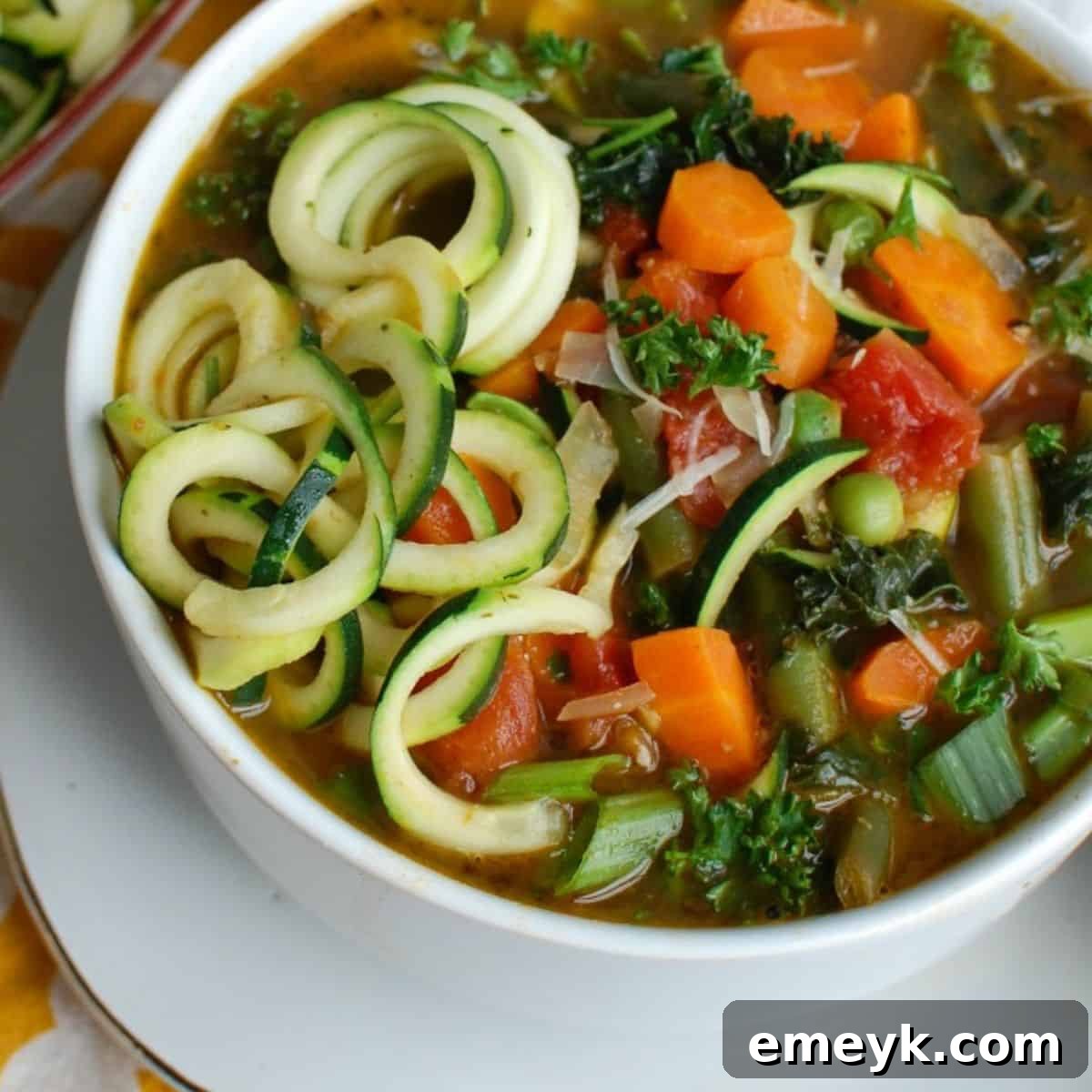
Spring Vegetable Minestrone is more than just a soup; it’s a celebration of fresh produce, offering a nourishing and incredibly flavorful vegan meal. Bursting with an array of vibrant vegetables, diced tomatoes, aromatic pesto, and fragrant fresh herbs, this minestrone promises a delightful culinary experience. Whether you’re a seasoned vegan, a dedicated vegetarian, or simply looking to incorporate more plant-based meals into your diet, this recipe is a fantastic choice. It’s easily customizable and can be bulked up with protein-rich chickpeas or white beans, transforming it into an even more substantial and satisfying dish. If you’re a fan of classic minestrone, prepare to be amazed by this unique version, elevated by the bright, herbaceous notes of pesto!
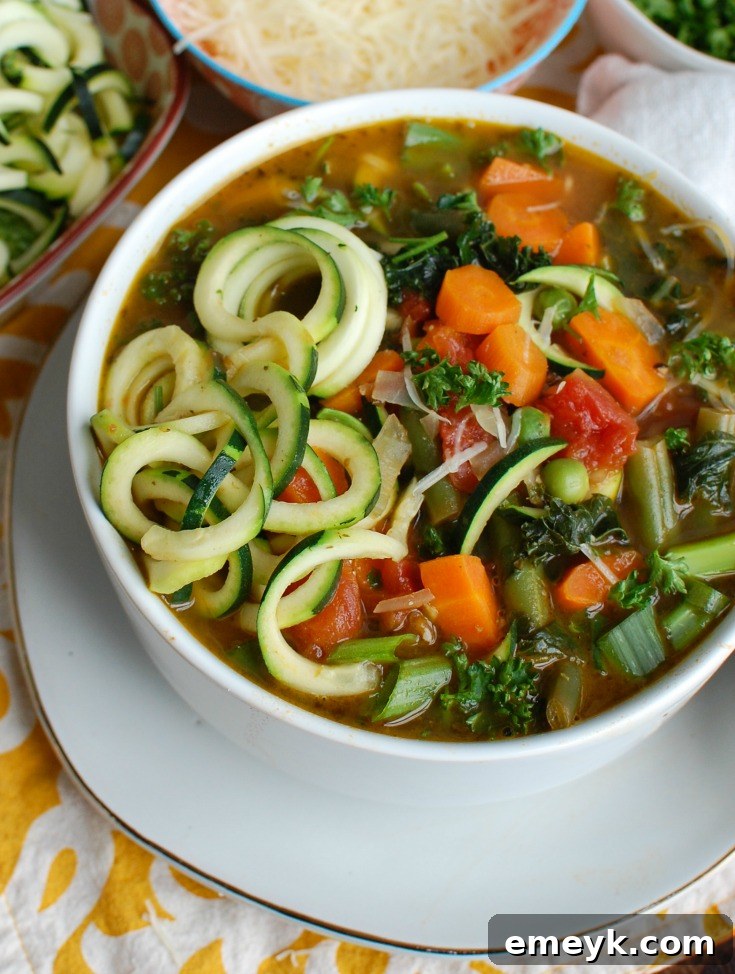
As the days grow longer and the first signs of warmth emerge, my mind invariably drifts towards spring. Though March can still bring its share of stubborn snow and chilly temperatures, the promise of warmer weather, a symphony of bright spring flowers, and light, refreshing meals is always on the horizon. My kitchen has already embraced this seasonal shift, inspiring me to create this delightful Spring Vegetable Minestrone. I hope it brings a touch of spring into your home, no matter where you live! This exceptional soup is not only vegan and wonderfully light but also brimming with nutritious, wholesome vegetables.
At its heart, this minestrone boasts a robust vegetable broth base, infused with the deep, tangy flavor of diced tomatoes. But what truly sets this soup apart is the addition of vibrant pesto. The pesto introduces a fantastic, herby dimension, adding layers of fresh, aromatic flavor that perfectly complement the vegetables and broth. You can choose your favorite high-quality store-bought pesto for convenience, or if you enjoy a hands-on approach, a homemade pesto will truly elevate the dish. For those who appreciate the comforting embrace of a classic minestrone, I highly recommend trying my Homemade Minestrone as well.
My ongoing culinary journey involves incorporating more vegetarian and plant-based meals into my family’s diet, and this Spring Vegetable Minestrone aligns perfectly with that goal. It’s a meal you can feel genuinely good about serving – nutritious, delicious, and satisfying for everyone at the table. If you’re also seeking to introduce more plant-forward recipes into your weekly rotation, explore some of my other popular dishes:
- Mediterranean Hummus Bowl
- Mediterranean Buddha Bowl
- Hearty Vegetarian Chili
- Easy Vegetarian Quesadillas
- Wholesome Vegetarian Breakfast Egg Burritos
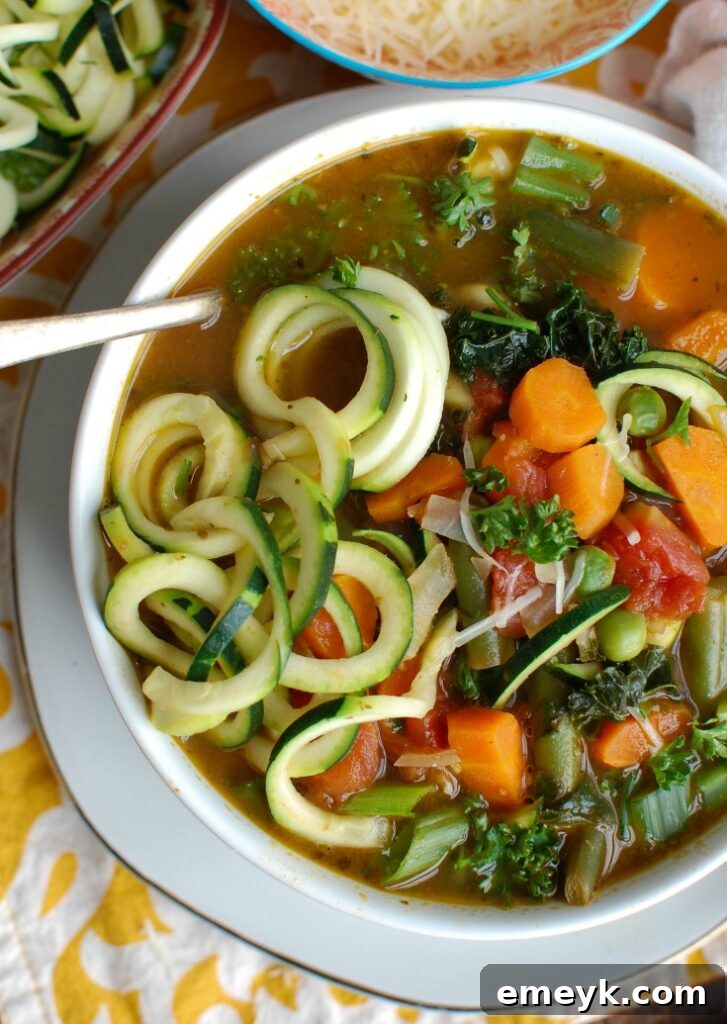
Why You’ll Adore This Vegetable Minestrone

This light, flavorful, and incredibly wholesome vegetarian soup is a true kitchen hero. Here’s why it will quickly become a favorite:
- Unparalleled Versatility: One of the greatest attributes of this minestrone is its adaptability. It’s a fantastic “clean out the fridge” recipe, allowing you to utilize whatever seasonal vegetables you have on hand. For me, a bag of crisp carrots and a handful of fresh greens are always a given in my minestrone soup, but from there, the possibilities are endless. Don’t hesitate to experiment with different vegetables to make it truly your own.
- Packed with Nutrient-Rich Veggies: This soup is a nutritional powerhouse, brimming with an abundance of delicious, health-boosting vegetables. By thoughtfully incorporating zucchini noodles in place of traditional pasta, you’re effortlessly boosting your daily vegetable intake, bringing you closer to your “5-a-day” goal in the most delicious way possible. Each spoonful delivers a vibrant mix of vitamins, minerals, and fiber.
- Effortless Scaling for Any Occasion: Whether you’re cooking for a cozy family dinner or preparing to feed a larger gathering of friends, this recipe scales up beautifully. It’s incredibly easy to double or even triple the ingredients, ensuring you have plenty of this delightful soup to go around, or even for convenient meal prepping throughout the week.

Essential Ingredients and Clever Substitutions
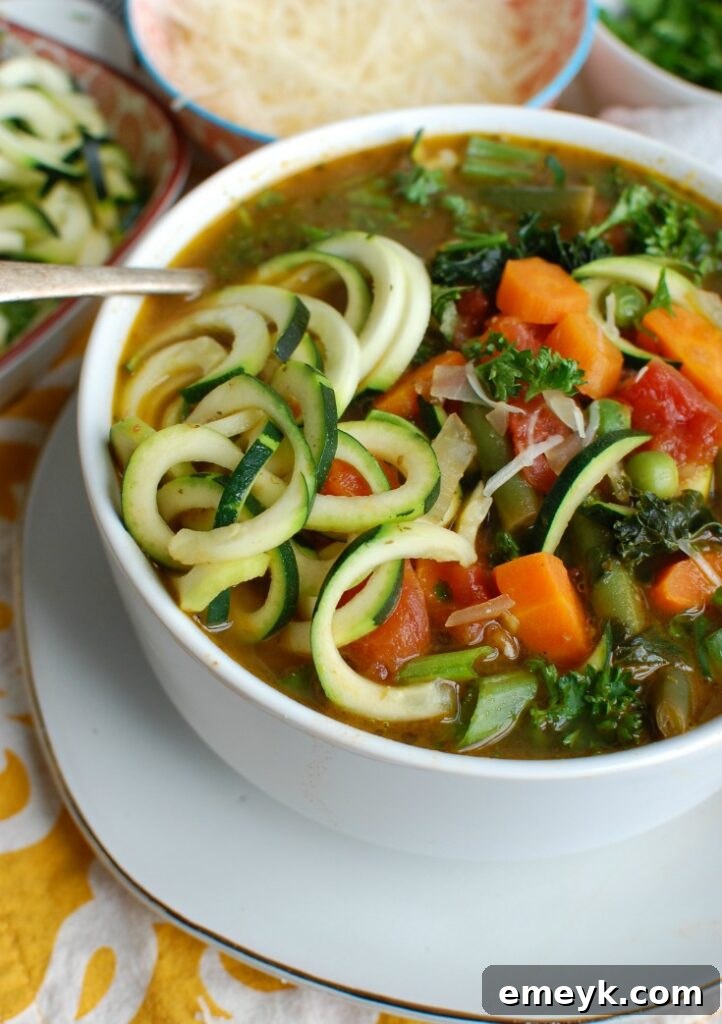
Crafting this flavorful minestrone relies on a selection of fresh, high-quality ingredients. Here’s what you’ll need, along with suggestions for delightful substitutions:
- Base Aromatics: We begin with a classic mirepoix foundation: sweet onion, fragrant garlic, and tender carrots. Sautéing these together creates a deep, savory base that forms the soul of any exceptional soup. Feel free to add celery for an even more traditional flavor profile.
- Vegetable Broth: The quality of your broth is paramount! Opt for a good quality vegetable broth to ensure a rich and robust flavor. If you’re not strictly vegan or vegetarian, you could substitute with chicken broth for a different depth of flavor, but vegetable broth keeps it plant-based and vibrant.
- Diced Tomatoes: A can of diced tomatoes adds a lovely tang and body to the soup, contributing to its comforting, rustic character. Fire-roasted diced tomatoes can introduce an extra smoky depth.
- Fresh Vegetables: This recipe shines with fresh green beans, sweet frozen peas, and a generous amount of nutrient-dense greens like kale or spinach. But don’t stop there! This soup is incredibly forgiving. Consider adding bell peppers, mushrooms, zucchini, yellow squash, chopped cabbage, or even small broccoli florets. Adjust cooking times based on the hardness of the vegetables.
- Herbs: Dried oregano and thyme infuse the broth with classic Mediterranean warmth. For an extra burst of freshness, finish with fresh parsley or basil. You could also experiment with a pinch of dried rosemary or bay leaf during simmering.
- Noodles (Zoodles!): We opt for spiralized zucchini (zoodles) in this recipe, offering a lighter, lower-carb, and gluten-free alternative to traditional pasta. Zoodles absorb the soup’s flavors beautifully and cook quickly.
- Pesto: The secret ingredient! A few generous spoons of pesto stirred in at the end truly elevate this minestrone, adding a vibrant, herbaceous, and garlicky richness. Use your favorite homemade pesto or a high-quality store-bought variety. For a vegan option, ensure your store-bought pesto is dairy-free, or make your own with nutritional yeast instead of Parmesan.
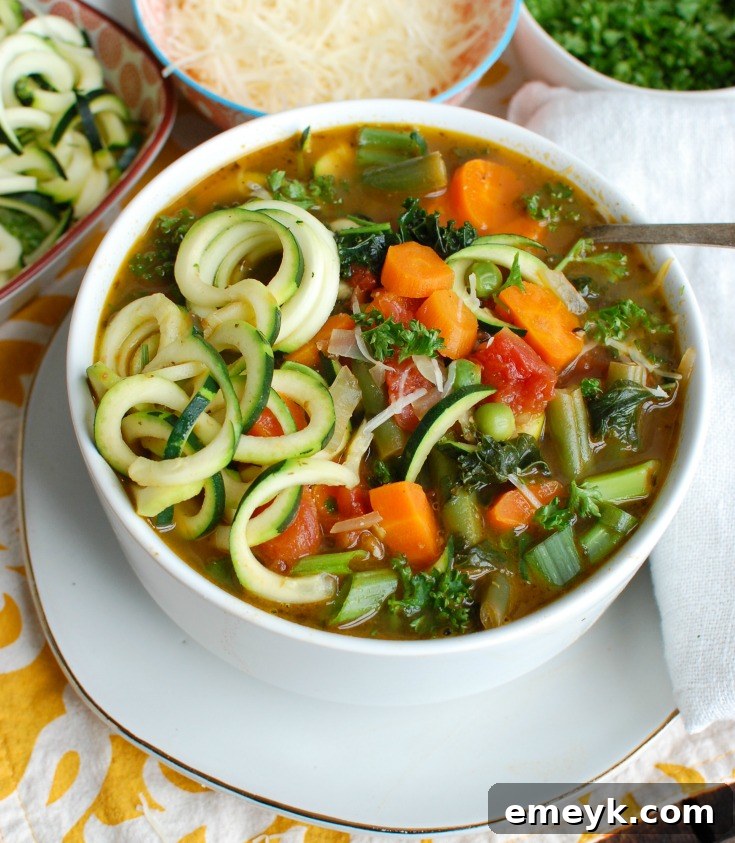
Crafting Your Spring Vegetable Minestrone: A Step-by-Step Guide
This delicious and healthy soup comes together with ease, making it perfect for busy weeknights. Follow these simple steps to create your own vibrant Spring Vegetable Minestrone:
Step 1: Build Your Flavor Foundation. Begin by heating two tablespoons of olive oil in a large, heavy-bottomed pot or Dutch oven over medium heat. Add the diced sweet onion and sauté for about 2 minutes, stirring occasionally, until it becomes soft and translucent, releasing its sweet aroma. Next, stir in the minced garlic and continue to sauté for another 2 minutes, being careful not to let the garlic brown, as this can make it bitter.
Step 2: Introduce the Carrots, Tomatoes, and Herbs. Add the chopped carrots to the pot and sauté for approximately 3 minutes, allowing them to soften slightly and deepen their flavor. Pour in the vegetable broth and the entire can of diced tomatoes. Stir in the green beans, along with the dried oregano and thyme. Give everything a good stir to combine all the wonderful ingredients.
Step 3: Simmer to Perfection. Increase the heat to medium-high and bring the soup to a gentle boil. Once boiling, reduce the heat to a low simmer, cover the pot, and let it cook for 20 minutes. Stir occasionally to prevent sticking and to ensure all the flavors meld beautifully.
Step 4: Incorporate the Final Freshness. After 20 minutes, add the frozen peas, your chosen greens (such as kale or spinach), and the spiralized zucchini noodles (zoodles) to the simmering soup. Continue to simmer for another 2-3 minutes, or until the greens have wilted and the zoodles are tender-crisp, yet still retaining a slight bite. Be careful not to overcook the zoodles, as they can become mushy.
Step 5: Swirl in the Pesto and Serve. Remove the pot from the heat and stir in the pesto until it is thoroughly combined and has dissolved into the broth, infusing the entire soup with its vibrant, herbaceous essence. Ladle the warm minestrone into bowls. Garnish generously with fresh chopped parsley, basil, and a sprinkle of vegan Parmesan cheese (or regular Parmesan if not strictly vegan). Serve immediately and enjoy!
Pro Tip for Meal Prep: Make Ahead. To get a head start on this recipe, you can prepare the soup up to the end of Step 2 the day before or earlier in the day. Store the cooled soup base in an airtight container in the refrigerator. When you’re ready to enjoy, simply reheat the base on the stove, then add the peas, greens, and zucchini noodles fresh, simmering for 2-3 minutes, followed by the pesto and any desired garnishes. This method ensures your fresh components remain vibrant and perfectly cooked.
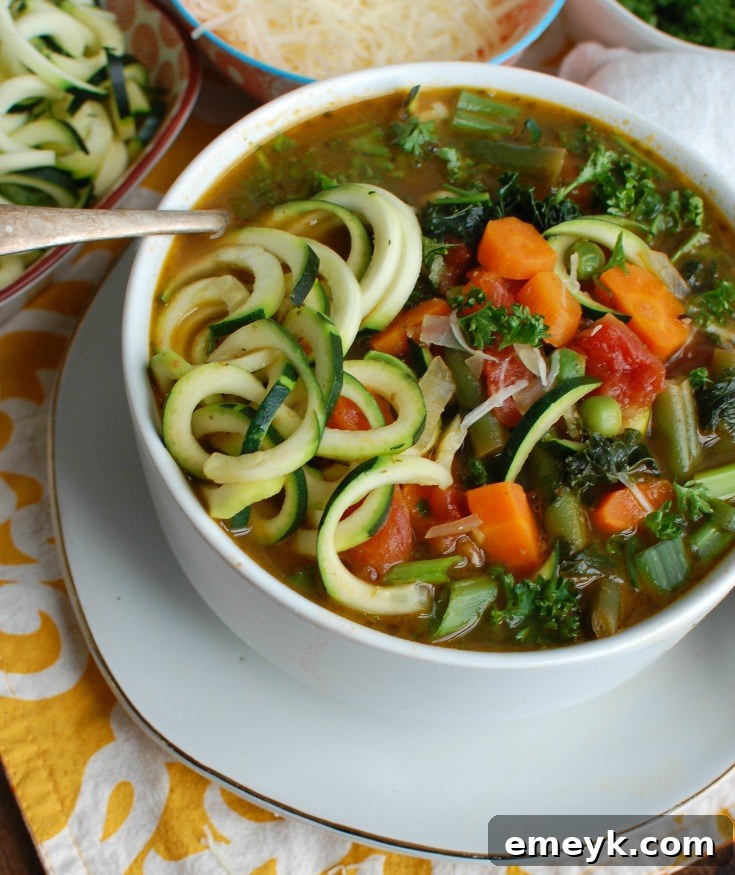
Creative Recipe Modifications for Your Minestrone
This Spring Vegetable Minestrone recipe is wonderfully adaptable, allowing you to tailor it to your personal preferences or what you have available. Don’t be afraid to get creative!
- Expand Your Vegetable Palette: The beauty of minestrone lies in its flexibility with vegetables. Beyond the core ingredients, consider adding thinly sliced bell peppers (any color!), tender mushrooms, diced eggplant, chopped celery, leeks, or even small florets of broccoli or cauliflower. Root vegetables like parsnips or sweet potatoes can add a different sweetness and texture if added earlier in the simmering process. Experiment with seasonal offerings for the freshest flavors.
- Noodle Alternatives: While zoodles (zucchini noodles) offer a light, gluten-free, and low-carb option, you can certainly use traditional pasta if you prefer. Choose small- to medium-sized pasta shapes like ditalini, small shells, elbow macaroni, or orzo.
- Adding Traditional Pasta: If incorporating pasta, add it to the simmering soup about 10-12 minutes before the end of the cooking time, or according to package directions, to ensure it cooks al dente and doesn’t become overcooked or mushy. Remember that pasta will absorb a lot of liquid, so you might need an extra splash of broth or water.
- Boost with Beans & Pulses: For an extra boost of plant-based protein and fiber, stir in a can of drained and rinsed chickpeas, cannellini (white) beans, kidney beans, or even lentils during the last 10 minutes of simmering. This makes the soup even heartier and more filling, keeping you satisfied for longer.
- Non-Vegan Protein Options: If you’re not strictly vegan, you can add cooked meat-based protein. Stir in shredded grilled chicken, leftover roast chicken, crumbled cooked turkey sausage, or small cubes of cooked lean pork tenderloin towards the end of the cooking process to warm through.
- Flavor Enhancers: A squeeze of fresh lemon juice at the end can brighten all the flavors. A dash of red pepper flakes will add a subtle kick. For a deeper, umami flavor, a tablespoon of nutritional yeast can be stirred in (especially if making a vegan pesto). A drizzle of high-quality balsamic glaze before serving can also add a complex sweetness.
Recipe Tip for Freezing: If you plan to freeze portions of this soup, be aware that the freezing and defrosting process can alter the texture of some vegetables, making them a little softer. To revive its freshness after thawing and reheating, I always recommend adding a handful of fresh herbs and a few fresh greens or a splash of fresh broth.
Storage & Reheating for Freshness
Proper storage ensures you can enjoy this delicious Spring Vegetable Minestrone for days to come:
- Leftovers: Store any leftover soup in an airtight container in the refrigerator for up to 2-3 days. The flavors tend to deepen beautifully overnight!
- Reheating: To reheat, simply transfer the desired portion into a pot on the stove over medium heat and warm gently until piping hot. If the soup appears too thick after refrigeration, add a splash of vegetable broth or water to reach your preferred consistency. You can also stir in a few fresh greens or herbs to “freshen up” the taste.
- Freezing: This soup freezes exceptionally well. Once cooked and completely cooled, transfer the vegetable minestrone into freezer-safe airtight containers or heavy-duty freezer bags, leaving a little headspace. It can be stored in the freezer for up to 3 months. When ready to enjoy, defrost thoroughly in the refrigerator overnight, then reheat on the stove as described above. Remember the tip about adding fresh herbs and greens after reheating to revitalize the flavors and texture.
More Comforting & Healthy Soup Recipes
Soups
Classic Homemade Minestrone Soup
Soups
Spiced Moroccan Red Lentil Soup
Vegetarian
Flavorful Moroccan Carrot Red Lentil Soup
Pork
Hearty White Bean and Ham Soup
Tried this recipe? Leave a star rating and comment below! Subscribe to my newsletter or follow me on
Facebook,
Instagram, or
Pinterest for the latest recipes and updates.
Spring Vegetable Minestrone

Ingredients
- 2 Tablespoons olive oil
- 1/2 sweet onion, diced
- 3 cloves garlic, minced
- 2 large carrots, peeled and chopped
- 32 ounces vegetable broth
- 16 ounce diced tomatoes
- 6 ounces green beans, chopped in half
- 1 teaspoon oregano
- 1/2 teaspoon thyme
- 1/2 cup frozen peas
- 2 cups greens of your choice (kale or spinach work well)
- 1 large zucchini, spiralized into zoodles
- 2 Tablespoons pesto (homemade or store-bought)
- Fresh parsley, chopped (for garnish)
- Fresh basil, chopped (for garnish)
- Feta cheese (optional, for garnish, or vegan alternative)
- Parmesan cheese (optional, for garnish, or vegan alternative)
Instructions
-
Heat the 2 Tablespoons olive oil in a large pot over medium heat. Add the onion and sauté for 2 minutes, until soft and fragrant. Add the garlic and continue to sauté for 2 more minutes.
-
Add the carrots and sauté for 3 minutes, stirring occasionally. Pour in the vegetable broth, diced tomatoes and add in the green beans, oregano and thyme.
-
Turn the heat to medium high and bring the soup to a boil and then turn the heat down and simmer for 20 minutes, stirring occasionally.
-
Add the peas, greens and zucchini noodles and let simmer for another 2-3 minutes, or until the greens are wilted and the zoodles are soft.
-
Stir in the pesto until well combined. Serve warm with the fresh parsley, basil and parmesan cheese.
Notes
- This soup is great with beans added in. I like chickpeas or white beans for extra protein.
- If you prefer pasta, add it about 10 minutes before the end of the cooking process. Smaller to medium pastas work best.
- Feel free to add whatever seasonal vegetables you have on hand to customize this versatile minestrone.
Nutrition
Calories: 128 kcal, Carbohydrates: 15g, Protein: 3g, Fat: 7g, Saturated Fat: 1g, Polyunsaturated Fat: 1g, Monounsaturated Fat: 3g, Cholesterol: 0.4mg, Sodium: 687mg, Potassium: 498mg, Fiber: 4g, Sugar: 8g, Vitamin A: 5630IU, Vitamin C: 34mg, Calcium: 90mg, Iron: 2mg
Nutrition information is automatically calculated, so should only be used as an approximation.
Tried this recipe?Mention @acedarspoon or tag #acedarspoon!