
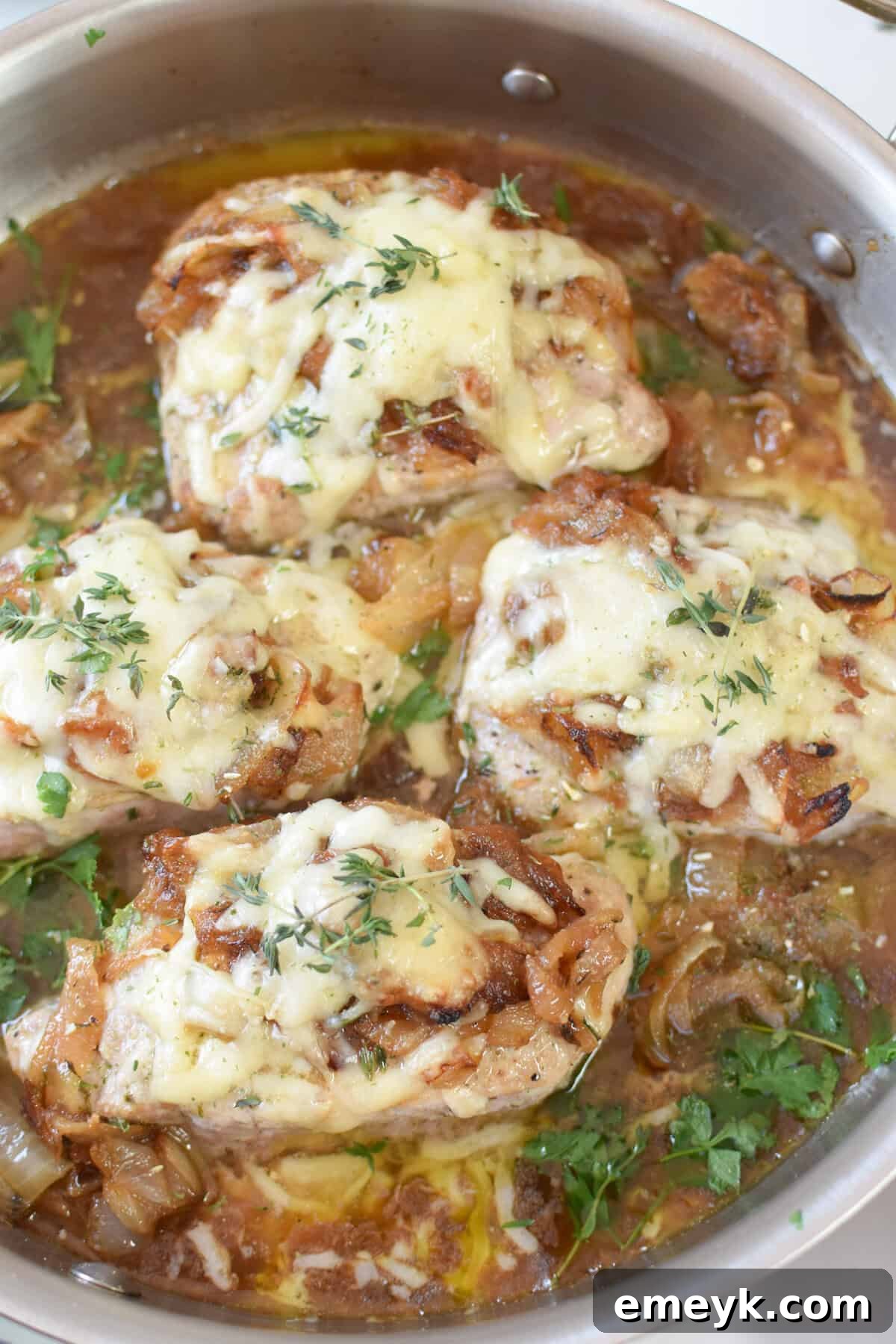
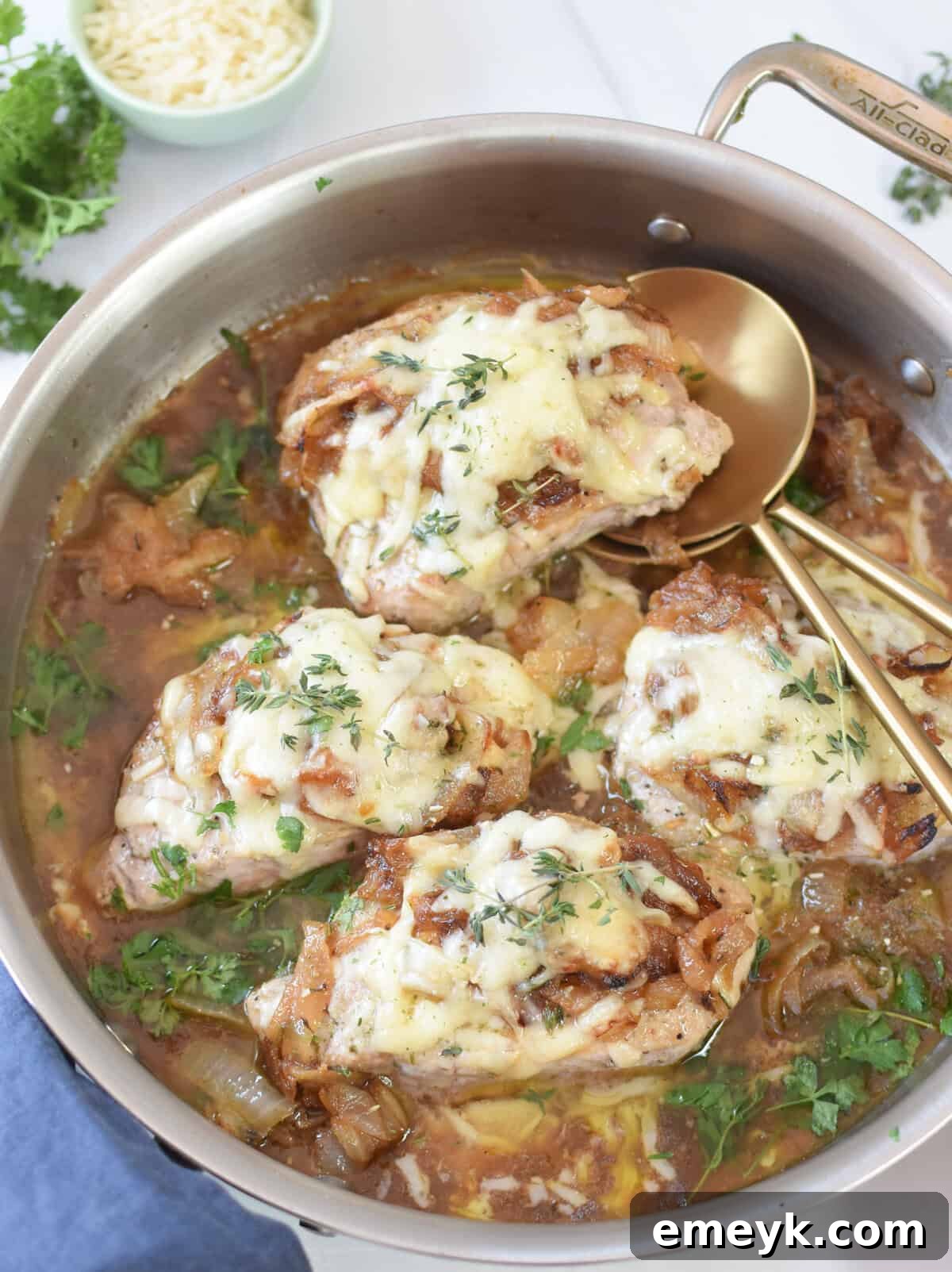
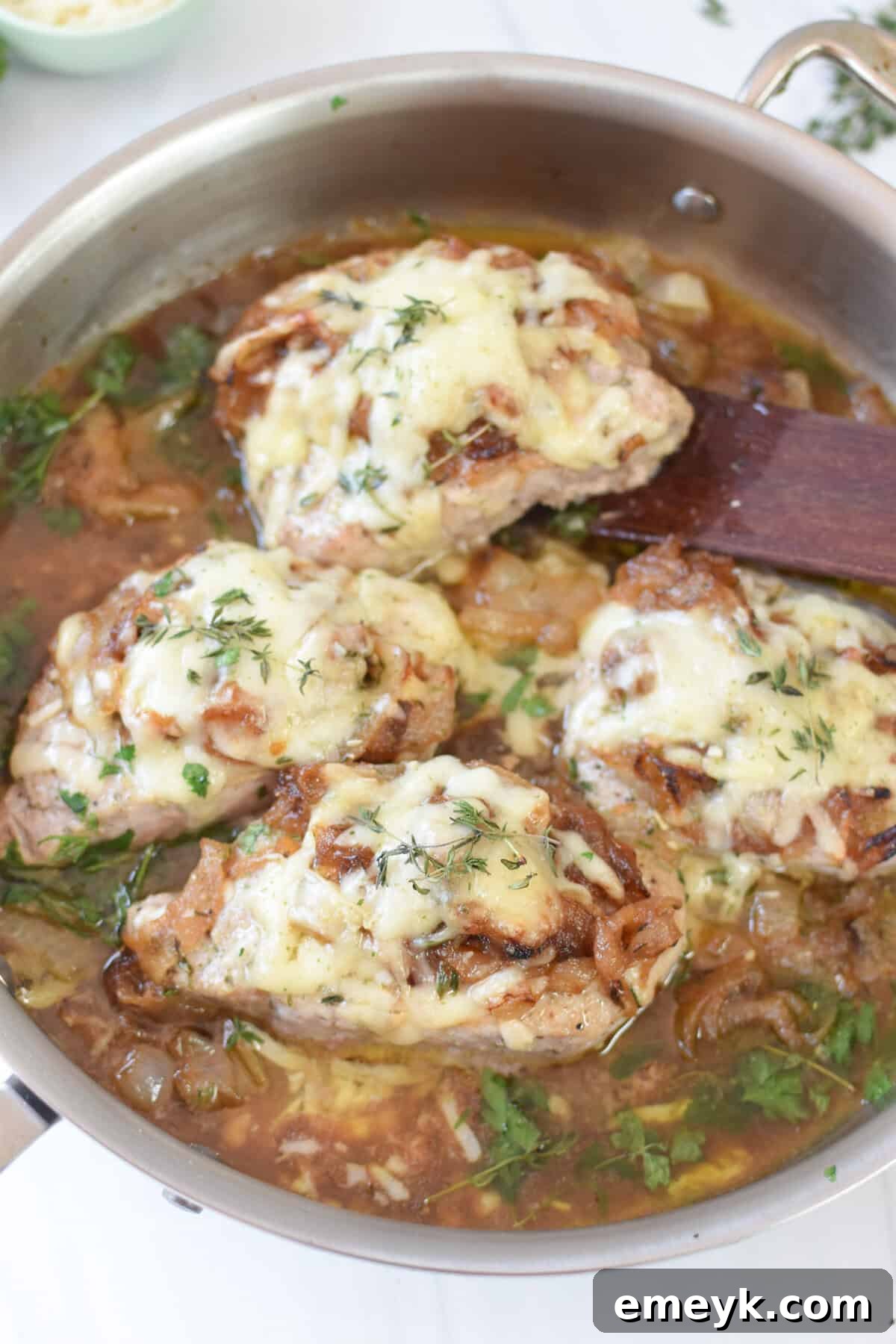
These French Onion Pork Chops are a true culinary gem, effortlessly blending simplicity with gourmet elegance. This recipe delivers a dish brimming with rich, savory flavors that are sure to impress, whether you’re preparing a quick weeknight dinner or a romantic date night meal. Featuring tender boneless pork chops, this exquisite creation is enhanced by deeply caramelized onions, a luscious white wine and garlic sauce, fragrant thyme, and a decadent topping of melted Gruyère cheese, all finished with a sprinkle of fresh herbs. It’s a comforting yet sophisticated meal that will quickly become a household favorite.
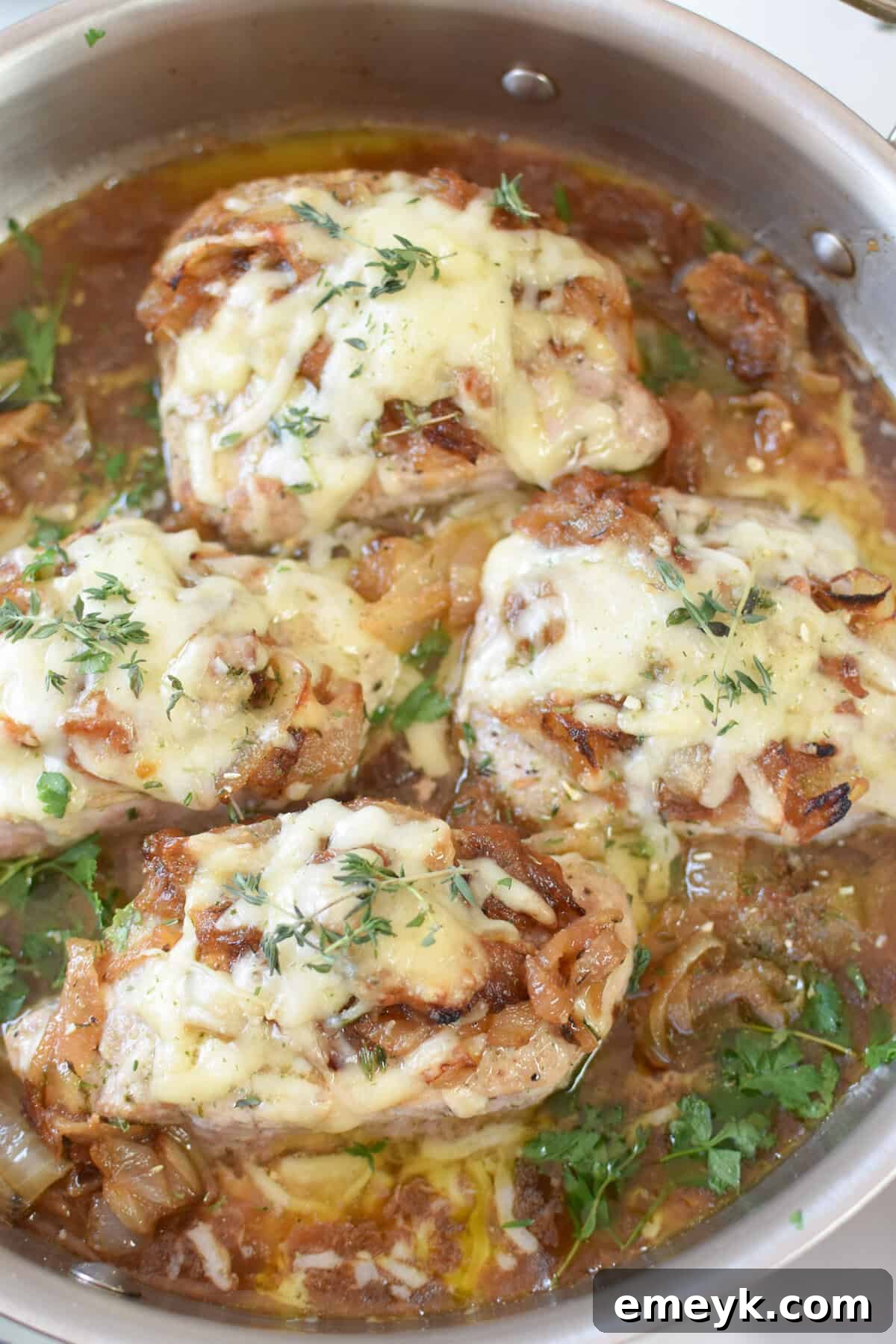
If you appreciate the versatility of pork chops but are eager to explore innovative and exciting ways to prepare them, then this French Onion Pork Chops recipe is precisely what you’ve been searching for. It draws inspiration from the beloved classic French onion soup, transforming humble pork chops into a dish that’s both deeply comforting and wonderfully complex.
The harmonious combination of juicy, boneless pork chops, delicately sweet and savory caramelized onions, a splash of dry white wine, aromatic thyme, and robust garlic creates a truly unforgettable flavor profile. Crowned with creamy, melt-in-your-mouth Gruyère cheese, this dish offers a symphony of tastes that is simply irresistible. This recipe is not only a delight for the palate but also incredibly practical; many home cooks find themselves doubling the ingredients to ensure ample delicious leftovers. These extra servings are perfect for quick, satisfying lunches or effortless dinners throughout the busy week. Pork chops are an excellent choice for any meal, celebrated for their exceptional taste, adaptability, and often being a very cost-effective cut of meat, making them a smart choice for discerning cooks.
For those who enjoy experimenting with diverse pork chop preparations, we invite you to explore some of our other cherished recipes. Discover the perfect balance of sweet and tangy with our Easy Pineapple Pork Chops, savor the rich and smoky notes of our BBQ Baked Pork Chops, embark on a tropical flavor journey with Grilled Hawaiian Pork Chops, indulge in the crispy, cheesy goodness of Parmesan Crusted Pork Chops, or experience the sophisticated sweetness of our Maple Bourbon Pork Chops. Each recipe offers a unique take on this versatile cut of meat.
Pork chops are remarkably adaptable to various cooking methods, allowing you to achieve delicious results whether you prefer grilling, pan-searing on the stovetop, baking in the oven, or achieving a crispy finish in the air fryer. To help you master these techniques, we offer detailed, easy-to-follow instructions. Learn How to Bake Pork Chops in the Oven to perfection with just a few simple seasonings, and master the art of cooking Boneless Pork Chops in the Air Fryer for incredibly tender and flavorful results every single time.
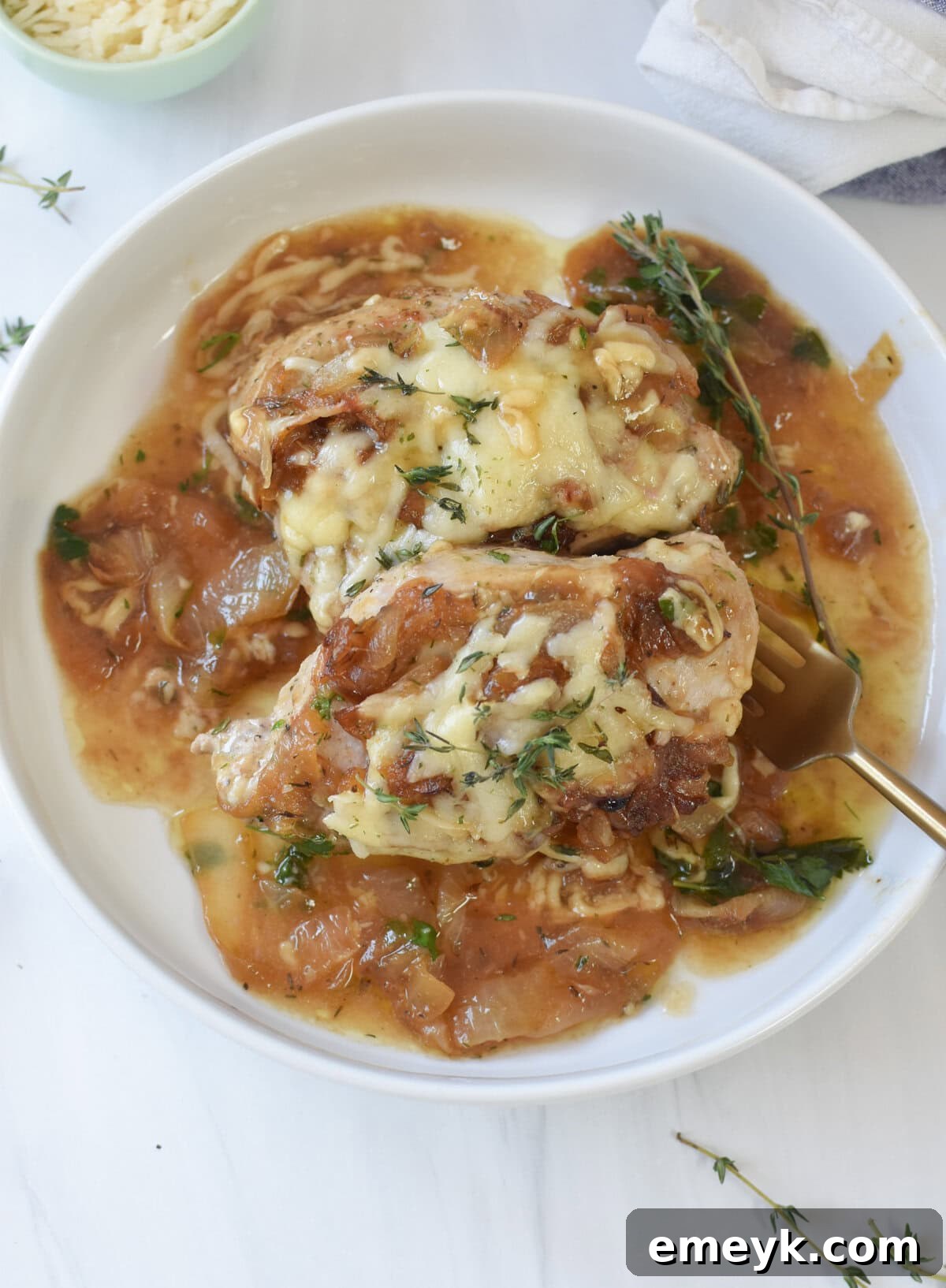
Why You Will Absolutely Love This French Onion Pork Chops Recipe
This French Onion Pork Chops recipe transcends a simple meal; it’s an experience that brings gourmet restaurant quality right to your kitchen with surprising ease. Here are compelling reasons why this dish is destined to become a staple in your cooking repertoire:
- Effortlessly Delicious: Despite its sophisticated flavor profile and elegant appearance, this is an incredibly straightforward pork chop recipe. It’s designed for ease, making it the perfect solution for busy weeknights when you crave something special without the extensive prep time. Its rich, comforting taste is a guaranteed crowd-pleaser for the entire family.
- Scalable for Any Gathering: Whether you’re cooking for an intimate family dinner or entertaining a larger group, this recipe is remarkably easy to scale. Simply double or triple the ingredients to accommodate more guests. Its affordability and universal appeal make it an excellent and impressive choice for any social occasion, ensuring everyone leaves satisfied.
- Power-Packed with Lean Protein: By opting for boneless, skinless pork chops, this recipe provides a meal that is not only delicious but also lean and healthy. This cut significantly reduces saturated fat content while delivering a substantial boost of high-quality protein. Pork is an excellent source of essential nutrients, contributing to muscle health and overall well-being, making this a satisfying and nourishing dinner option.
- Gourmet Flavors at Home: Indulge in the opulent flavors reminiscent of classic French onion soup, all created from the comfort of your own home. The deep umami of slowly caramelized onions, the subtle tang and complexity of white wine, and the creamy, nutty richness of melted Gruyère cheese combine to form an extraordinary sauce. This luxurious accompaniment elevates simple pork chops to an unforgettable, restaurant-quality dish.
- Incredibly Versatile and Adaptable: While the recipe is fantastic as written, its true beauty lies in its adaptability. Feel empowered to customize it to your personal preferences or dietary needs. Easily swap different types of cheeses, adjust the seasonings to your liking, or incorporate additional vegetables such as mushrooms or bell peppers. This flexibility ensures you can put a fresh and exciting spin on the dish every time you prepare it.
- Comfort Food with Elegance: This dish perfectly strikes the balance between comforting, hearty home cooking and elegant, refined dining. It’s the kind of meal that warms the soul and delights the senses, proving that extraordinary food doesn’t have to be complicated.
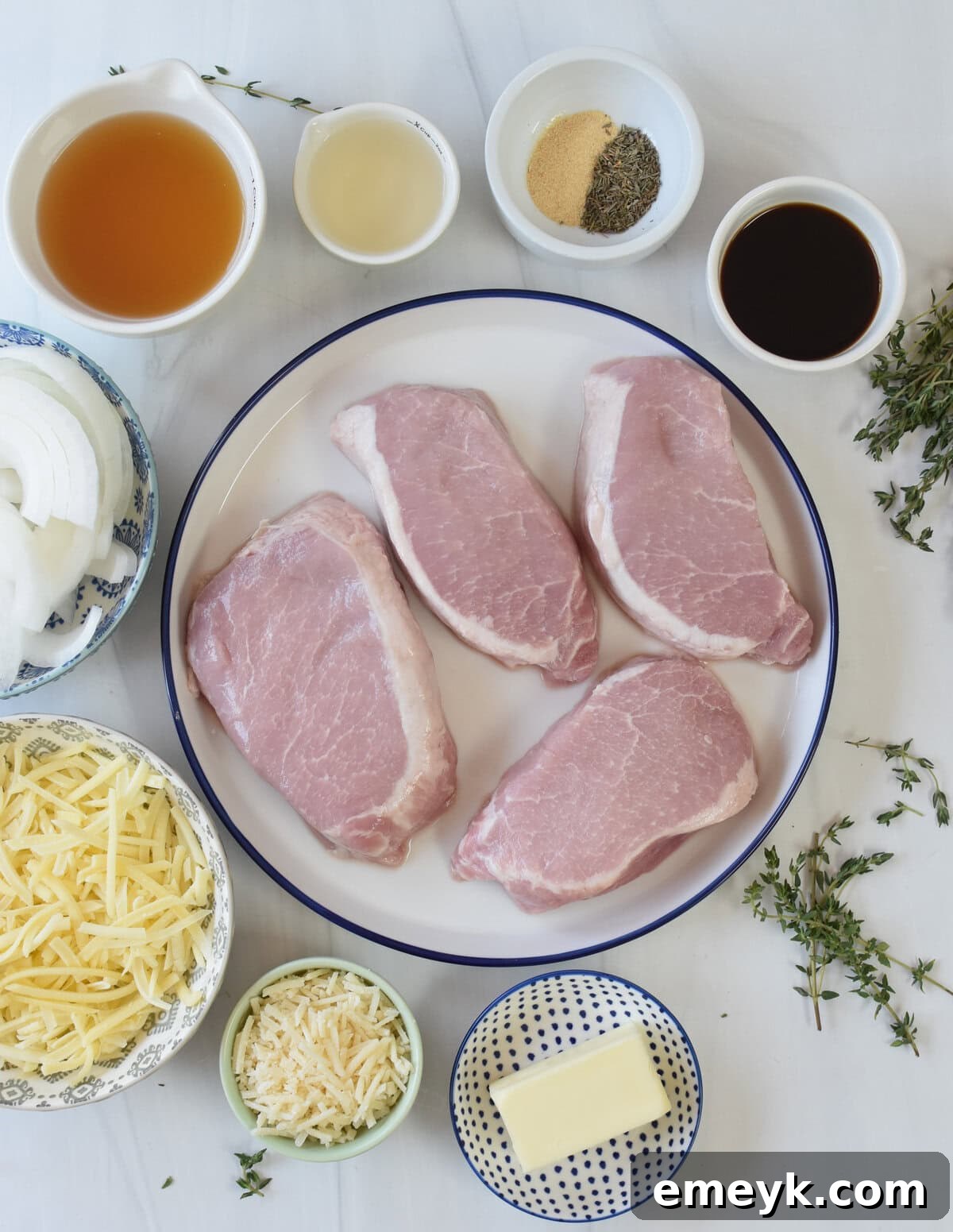
Essential Ingredients & Smart Substitutions for French Onion Pork Chops
The foundation of truly exceptional French Onion Pork Chops lies in selecting high-quality ingredients. Here’s an in-depth look at what you’ll need, along with flexible substitution ideas to help you adapt this recipe to your pantry and preferences:
- Onions: We highly recommend thinly sliced yellow onions for this dish. When caramelized slowly, they develop a profound, sweet-savory flavor that forms the aromatic heart of the “French onion” experience. Their structure breaks down beautifully, creating a tender and rich base. Alternatively, sweet onions, such as Vidalia or Walla Walla, are an excellent choice if you desire a milder, even sweeter caramelization. The key for consistent cooking and melting is to slice them uniformly.
- Wine: A dry white wine is indispensable for deglazing the pan, a crucial step that lifts all the flavorful browned bits from the bottom, adding incredible depth and complexity to your sauce. Opt for a good quality wine that you would genuinely enjoy drinking, such as a Sauvignon Blanc, Pinot Grigio, or even an unoaked Chardonnay. The alcohol evaporates during cooking, leaving behind a nuanced and aromatic flavor. For a non-alcoholic alternative, a high-quality chicken or vegetable broth can be used, although the final flavor profile will be slightly different, lacking some of the wine’s characteristic tang.
- Thyme: Dried thyme works exceptionally well, infusing the dish with its classic earthy, slightly peppery, and subtly minty notes. For an added layer of brightness and visual appeal, consider incorporating fresh thyme sprigs. You can add a few sprigs during the cooking process to release their oils, then garnish with fresh leaves at the very end for a vibrant burst of color and aroma. Remember that dried herbs are generally more concentrated than fresh, so if substituting fresh for dried, use roughly three times the amount.
- Pork: Our preferred cut is boneless, skinless pork chops, ideally about 1-inch thick. They cook relatively quickly and offer a lean, tender result. If you choose to use bone-in pork chops, anticipate a slightly longer baking time and always ensure they reach an internal temperature of 145 degrees F (63 degrees C). Pork tenderloin (also known as pork filet) can also be used; simply slice it into thicker medallions before searing.
- Seasoning: A fundamental yet highly effective seasoning of coarse salt and freshly ground black pepper is all that’s required to amplify the natural deliciousness of the pork. Using freshly ground black pepper will provide the most potent and aromatic flavor.
- Broth: Chicken broth serves as the savory and enriching liquid base for the sauce. Both chicken stock and vegetable broth are excellent, interchangeable substitutes, offering similar depth of flavor. If you’re mindful of sodium intake, opt for a low-sodium version of your chosen broth.
- Worcestershire Sauce: A modest splash of Worcestershire sauce acts as a secret weapon in this recipe. It contributes a wonderful umami richness and a subtle tang that perfectly balances the inherent sweetness of the caramelized onions and the richness of the cheese. Whenever possible, avoid omitting this ingredient, as it significantly boosts the dish’s overall savory profile.
- Cheese: Shredded Gruyère cheese is the star topping, celebrated for its superior melting qualities and distinct nutty, earthy, and savory flavor. This is the cheese that truly defines the “French onion” character of the dish. Swiss cheese is a readily available and similar alternative, providing a comparable texture and mild, slightly sweet taste. For a different texture, mozzarella cheese offers a delightfully creamy and stretchy melt. If you prefer a bolder flavor, a sharp white cheddar can be a fantastic choice, or even Colby Jack or Pepper Jack for a gentle spicy kick. A blend of two or more cheeses can also create a wonderful complexity.
How to Prepare Perfect French Onion Pork Chops: A Detailed Step-by-Step Guide
Follow these meticulously detailed instructions to craft a truly memorable and succulent French Onion Pork Chops meal. Paying close attention to the caramelization of the onions and the precise cooking of the pork will yield the most outstanding results.
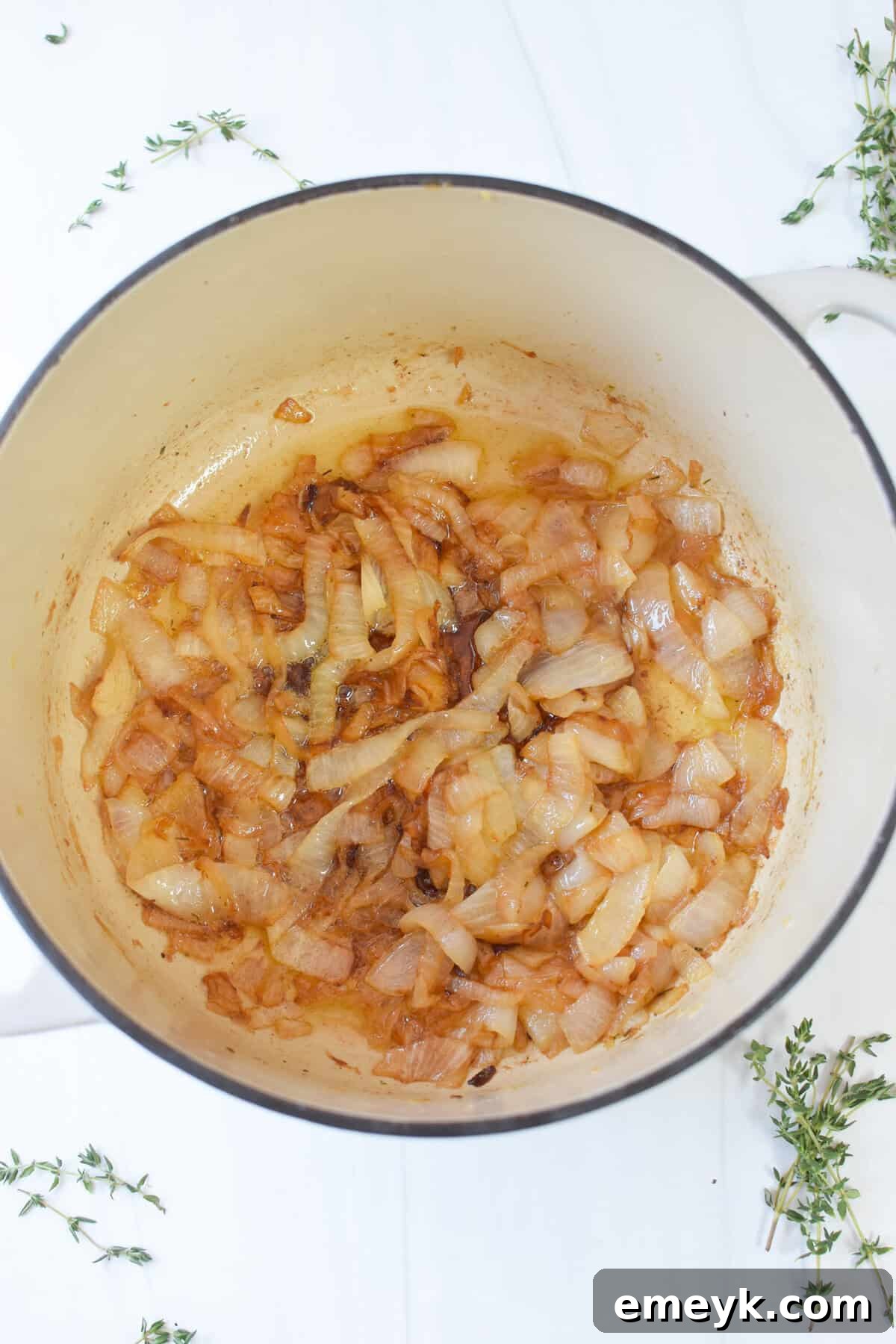
- Preheat Oven & Sauté Onions: Begin by preheating your oven to 400 degrees F (200 degrees C). Place a large Dutch oven or a sturdy, oven-safe skillet over medium-high heat on your stovetop. Add the butter and allow it to melt completely until shimmering. Reduce the heat significantly to medium-low, then add your thinly sliced yellow onions. Cook the onions slowly and patiently, stirring every few minutes to ensure they don’t stick or brown too quickly in any single spot. This gradual cooking process, typically lasting 15–20 minutes, is absolutely essential for achieving a beautiful blonde color and developing their deep, complex caramelized sweetness without burning them. Resist the urge to rush this step; it’s the cornerstone of the dish’s rich flavor.
- Deglaze and Season Onions: Once the onions have reached a perfect state of caramelization, pour the dry white wine into the pot. This vital step is known as deglazing; use a wooden spoon to scrape up any flavorful browned bits stuck to the bottom of the pan, as these fond particles add immense depth to your sauce. Allow the wine to simmer and cook for approximately 3 more minutes, or until it has significantly reduced. Stir in the garlic powder and dried thyme, mixing them thoroughly with the caramelized onions. Once combined, carefully remove the seasoned onions from the pot and set them aside on a plate.
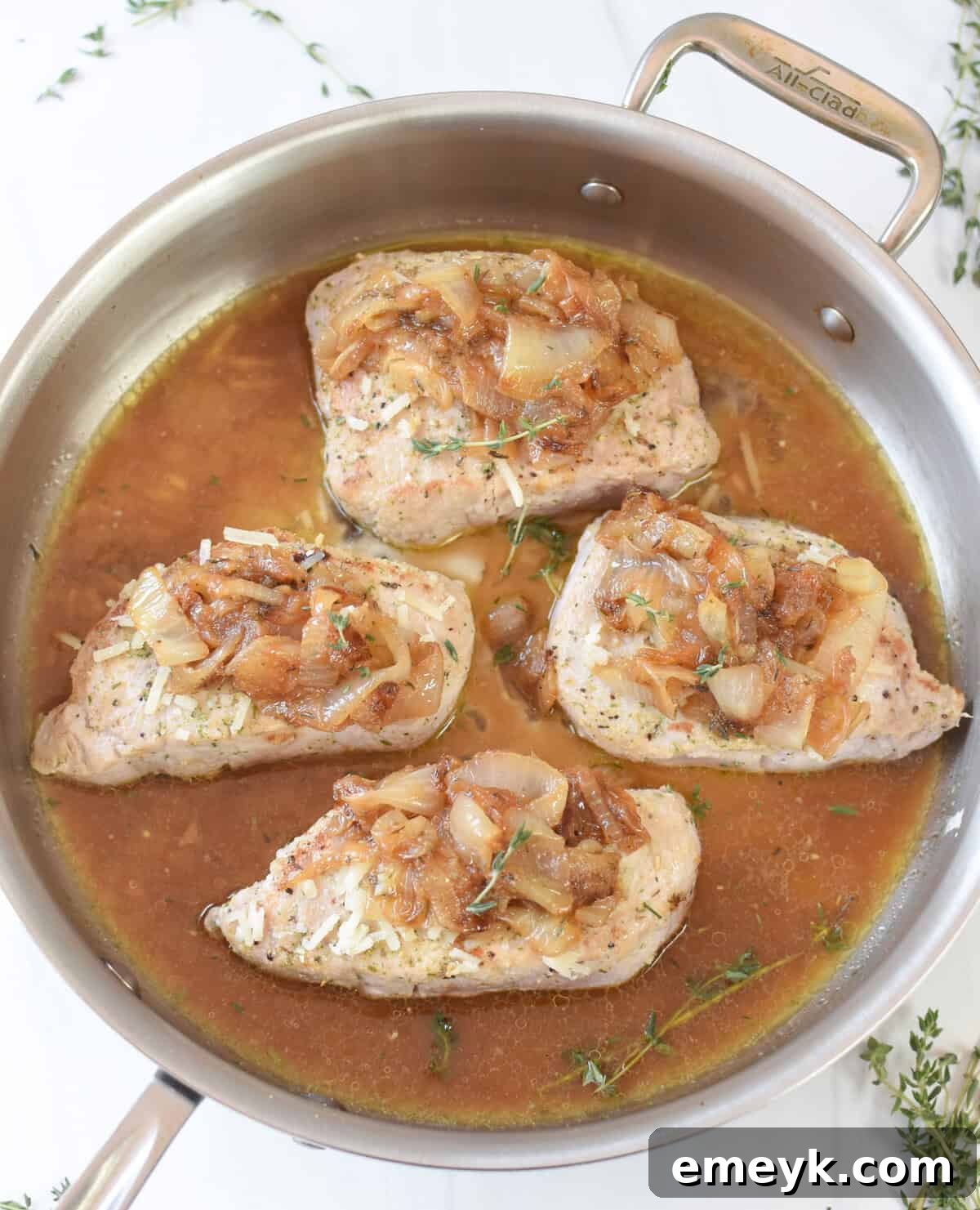
- Sear the Pork Chops: Return the same Dutch oven or skillet to medium heat. Add 2 tablespoons of extra virgin olive oil and allow it to heat until shimmering. Season each boneless pork chop generously on both sides with salt and freshly ground black pepper. Carefully place the seasoned pork chops into the hot skillet in a single layer (work in batches if necessary to avoid overcrowding, which can steam rather than sear). Sear for 3 minutes on one side until a beautiful golden-brown crust forms. Flip the chops and sear the other side for an additional 3 minutes. This searing process is key to creating a delicious crust and locking in the natural juices of the pork.
- Prepare the Sauce: While the pork chops are searing, or immediately after you’ve removed the caramelized onions, prepare the thickening mixture. In a small bowl, vigorously whisk together the chicken broth, Worcestershire sauce, and cornstarch until the mixture is completely smooth and no lumps remain. The cornstarch will act as a thickening agent, giving your sauce a lovely, glossy consistency. Add this broth mixture directly into the Dutch oven or skillet with the seared pork chops.
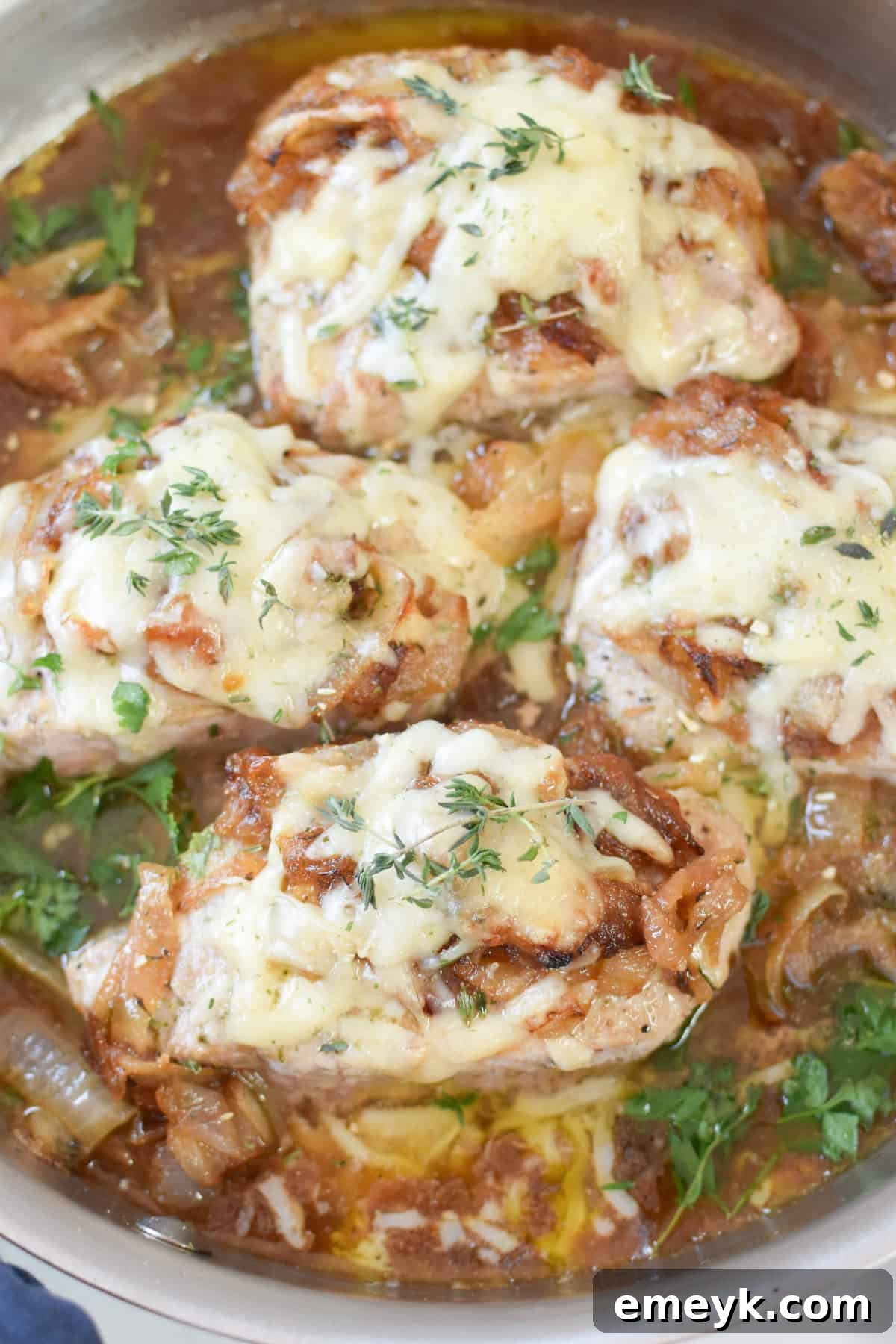
- Top and Bake the Chops: Carefully and evenly distribute the reserved caramelized onions over the top of each pork chop in the skillet. Then, generously sprinkle the shredded Gruyère cheese over the onions and pork, ensuring good coverage for an even melt. Transfer the Dutch oven or skillet into your preheated oven. Bake for 8-10 minutes, or until the cheese is wonderfully melted, bubbly, and lightly golden, and, most importantly, the internal temperature of the pork reaches 145 degrees F (63 degrees C) when measured with a reliable meat thermometer inserted into the thickest part of the chop.
- Garnish and Serve: Once baked to perfection, carefully remove the skillet from the oven. It is crucial to allow the chops to rest for at least 5 minutes before serving; this vital step allows the internal juices to redistribute throughout the meat, resulting in maximum tenderness and enhanced flavor. Garnish generously with a sprinkle of fresh Parmesan cheese, finely chopped fresh parsley, and a few delicate sprigs of fresh thyme. For an optional, delightful textural crunch, you can also sprinkle a handful of golden breadcrumbs over the top. Serve warm and prepare to savor every exquisite bite!
Customizing Your French Onion Pork Chops: Creative Modifications & Variations
One of the most appealing aspects of this French Onion Pork Chops recipe is its inherent flexibility. Feel empowered to experiment with these creative modifications and substitutions to perfectly tailor the dish to your specific tastes, dietary needs, or simply to utilize ingredients you already have on hand.
- Pork Varieties: While boneless pork chops are favored for their quick cooking and lean profile, bone-in pork chops can be used for an even deeper, richer flavor. Keep in mind that bone-in cuts will generally require a slightly longer cooking time. Always ensure the internal temperature reaches 145 degrees F (63 degrees C) for safety and optimal tenderness. For a significantly leaner option, pork tenderloin (often labeled pork filet) can be sliced into thicker medallions and cooked similarly, though its faster cooking time will demand careful monitoring to prevent it from drying out.
- Wine Alternatives: A dry white wine, such as Sauvignon Blanc or Pinot Grigio, contributes essential acidity and aromatic complexity to the sauce. It’s a general rule of thumb that you should always use a wine you would genuinely enjoy drinking, as its quality will directly influence the overall flavor of your finished dish. For an alcohol-free version, a robust chicken or beef broth can be used as a direct substitute. To mimic some of the wine’s characteristic acidity and brightness, consider adding a small splash of red wine vinegar or a squeeze of fresh lemon juice at the very end of the cooking process.
- Cheese Choices: Gruyère cheese is the traditional and preferred choice for its nutty, earthy flavor and exceptional melting properties, which are hallmarks of classic French onion dishes. However, you are welcome to substitute with other cheeses that melt beautifully. Swiss cheese offers a very similar mild, nutty profile and smooth melt. For a creamier, stretchier texture, mozzarella cheese is an excellent option. If you crave a sharper, bolder flavor, consider using sharp white cheddar, Colby Jack, or even Pepper Jack cheese for a subtle, peppery kick. A delightful blend of two or more cheeses can also create a wonderful depth of flavor and texture.
- Spice & Herb Enhancements: Our basic seasoning blend of salt, black pepper, garlic powder, and dried thyme establishes a perfect, savory foundation. To explore different flavor dimensions, consider adding a pinch of smoked paprika for a warm, smoky undertone, dried oregano for an Italian-inspired twist, Herbes de Provence for a more refined and aromatic French character, or even a touch of onion powder alongside the garlic powder for amplified savory depth. Fresh rosemary or sage, used sparingly, can also introduce lovely complementary flavors.
- Adding More Vegetables: Beyond the essential caramelized onions, this dish is wonderfully receptive to other vegetables. Sliced mushrooms, added during the onion caramelization stage, will beautifully absorb the rich flavors of the sauce. Thinly sliced bell peppers (any color), carrots, broccoli florets, or green beans can be lightly sautéed either with the onions or separately, then incorporated into the pan during the sauce-making stage to boost both the nutritional content and visual appeal of your meal.
- For a Creamier Sauce: If you desire an even richer, more luxurious sauce, stir in a tablespoon or two of heavy cream or cream cheese at the very end of the stovetop cooking process, just before transferring the skillet to the oven. This addition will lend an incredibly velvety mouthfeel to the dish.
Expert Tips for Achieving Perfectly Tender and Flavorful Pork Chops
To truly elevate your French Onion Pork Chops from simply good to absolutely exceptional, keep these expert culinary tips in mind. They address common cooking challenges and ensure a consistently delicious, restaurant-quality outcome every time you prepare this dish.
- Mastering Internal Temperature is Key: The ultimate secret to cooking juicy, incredibly tender pork chops lies in precise temperature monitoring. Always invest in and utilize a reliable meat probe thermometer. For pork cuts like tenderloin and chops, the safe and optimal internal temperature is 145°F (63°C). At this temperature, the pork will retain a slight blush of pink in the center, which is perfectly safe to consume and indicates maximum juiciness and tenderness. A common mistake is overcooking pork until it’s grey throughout, which inevitably results in dry, tough, and less flavorful chops. Note that ground pork, however, should always be cooked to 160°F (71°C).
- The Critical Importance of Resting: Once your French Onion Pork Chops emerge from the oven, resist the immediate urge to slice into them. Instead, transfer them to a cutting board or platter and allow them to rest for at least 5 minutes, loosely tented with aluminum foil. This seemingly simple yet crucial step permits the juices, which have naturally migrated to the center of the meat during cooking, to redistribute evenly throughout the entire chop. The result is consistently more tender, significantly moister, and infinitely more flavorful pork.
- Reheating Leftovers Gracefully: To preserve the quality and deliciousness of any leftover French Onion Pork Chops, gently reheat them to avoid drying them out. Place the chops and their accompanying sauce into a skillet over medium-low heat on your stovetop. Warm them slowly and gently until they are heated through. If the sauce appears to have thickened too much or the chops seem a bit dry, add a splash (a tablespoon or two) of chicken broth or water to bring back their moisture and desired consistency. Avoid using high heat or prolonged reheating, as this can severely compromise the texture and flavor.
- Patience with Caramelization is a Virtue: The deeply sweet and complex caramelized onions are the absolute backbone of this dish’s signature flavor. To achieve this, cook them slowly over medium-low heat for the full recommended 15-20 minutes, or even longer if needed, until they reach a beautiful golden-blonde hue and are incredibly soft. Rushing this process by using higher heat will only lead to burnt or underdeveloped onions, which means you’ll miss out on the essential rich sweetness and umami depth that defines this dish.
- Always Pat Your Pork Dry: Before you begin searing your pork chops, it is absolutely crucial to pat them thoroughly dry on all sides using paper towels. Any excess moisture on the surface of the meat will cause it to steam rather than sear, preventing that desirable, flavorful golden-brown crust from forming. A dry surface is the fundamental key to achieving a perfect, restaurant-quality sear.
- Uniform Slicing for Onions: For the most consistent and even caramelization, ensure that your onions are sliced as uniformly as possible. This allows them to cook at the same rate, preventing some pieces from burning while others remain undercooked or raw.
Storage and Reheating Tips for French Onion Pork Chops
Proper storage and careful reheating techniques are essential to ensure you can continue to enjoy the exquisite deliciousness of your French Onion Pork Chops for days to come, making meal planning and prep a convenient breeze.
- Refrigerator Storage: Allow any leftover French Onion Pork Chops to cool completely to room temperature before transferring them into an airtight container. Store them securely sealed in the refrigerator for up to 3 days. This method ensures maximum freshness and prevents any premature spoilage.
- Freezing for Future Enjoyment: French Onion Pork Chops actually freeze exceptionally well, making them an excellent candidate for meal prepping. Once the chops are fully cooked and have cooled thoroughly, carefully place them and their accompanying onion sauce into a freezer-safe airtight container or heavy-duty freezer bags. Ensure as much air as possible is removed from the bags to prevent freezer burn. They can be safely stored in the freezer for up to 3 months. When you’re ready to savor them again, simply transfer them to the refrigerator and allow them to defrost thoroughly overnight.
- Optimal Reheating Methods: To reheat defrosted or refrigerated chops and sauce, the best method is to gently warm them in a skillet on the stovetop over medium-low heat. Stir the sauce occasionally to ensure even heating and prevent sticking. Continue warming until everything is heated through to your satisfaction. If you notice the sauce has thickened too much during storage, or if the chops appear a bit dry, simply add a tablespoon or two of chicken broth or water to restore the desired consistency and moisture. Alternatively, you can reheat them in a preheated oven at 300°F (150°C) until warmed through, covering the dish with foil to help retain moisture and prevent drying.
What to Serve with French Onion Pork Chops: Perfect Pairings
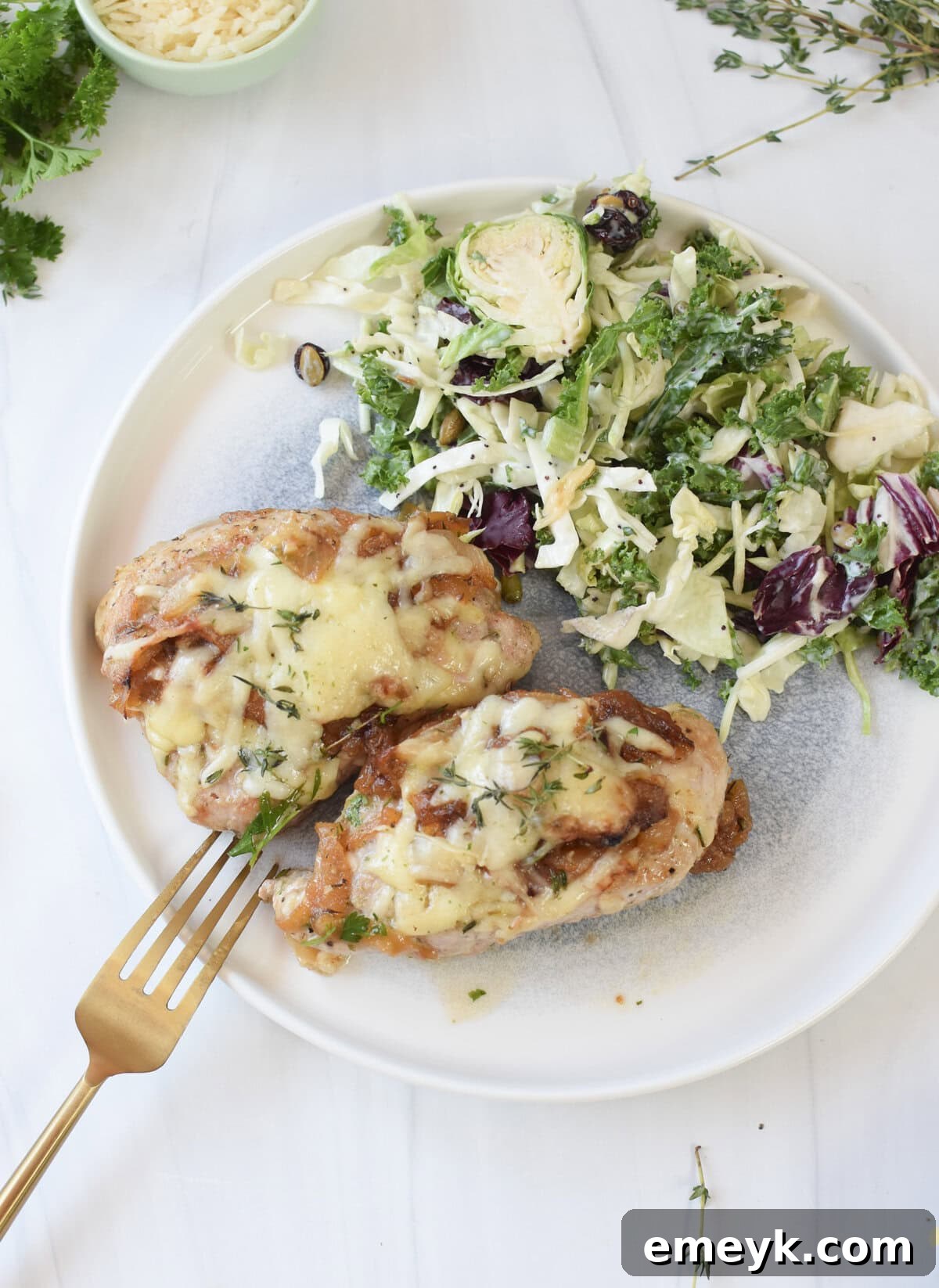
This rich, savory, and wonderfully comforting dish pairs beautifully with a diverse array of side dishes that can perfectly complement its deep flavors and luxurious sauce. Here are some excellent serving suggestions to complete your meal:
- Creamy Mashed Potatoes: An absolute classic pairing, the fluffy mashed potatoes are ideal for soaking up every last drop of the luscious French onion sauce.
- Garlic Parmesan Risotto: For an extra layer of indulgent comfort and a touch of Italian flair, a creamy risotto adds a sophisticated carb component.
- Crusty Artisan Bread: Essential for wiping the plate clean of that amazing, flavorful sauce. A fresh baguette or a slice of sourdough bread works wonders.
- Roasted Asparagus or Green Beans: Simple, crisp-tender green vegetables provide a refreshing contrast in texture and a light, vibrant counterpoint to the richness of the pork.
- Steamed Rice or Quinoa: If you prefer a lighter grain option, plain steamed white or brown rice, or even protein-rich quinoa, will beautifully absorb the savory sauce.
- Simple Side Salad: A fresh, crisp green salad dressed with a light vinaigrette can effectively cut through the richness of the pork chops, offering a palate cleanser.
- Roasted Root Vegetables: Hearty vegetables like roasted carrots, parsnips, or potatoes (beyond just mashed) tossed with herbs can add an earthy and satisfying element to the meal.
- Glazed Carrots: Sweet and tender glazed carrots offer a lovely sweet counterpoint to the savory notes of the pork chops.
Frequently Asked Questions (FAQ) About French Onion Pork Chops
Here are answers to some of the most common questions you might have when preparing this delicious French Onion Pork Chops recipe, helping you achieve perfect results every time:
- Can I use bone-in pork chops for this recipe?
- Yes, you absolutely can! Bone-in pork chops often contribute even more flavor to the dish and can sometimes be less prone to drying out. If you choose bone-in chops, be sure to increase the cooking time in the oven slightly, typically by about 5-10 minutes, and always rely on a reliable meat thermometer to confirm they reach an internal temperature of 145°F (63°C) for safe consumption.
- What if I don’t have white wine, or prefer not to use alcohol?
- If you prefer to avoid alcohol, you can successfully substitute the white wine with an equal amount of good quality chicken broth or beef broth. To replicate some of the acidity and brightness that wine provides, you might consider adding a small splash (about a teaspoon) of apple cider vinegar or fresh lemon juice to the broth mixture.
- How do I ensure my onions caramelize properly without burning?
- The key to achieving perfectly caramelized onions is patience and consistently low heat. Cook them over medium-low heat, stirring frequently every few minutes, for the full recommended time (15-20 minutes, or even longer if you desire a deeper, richer color). Avoid the temptation to rush the process by increasing the heat, as this will only lead to burnt or underdeveloped onions, causing you to miss out on the essential sweetness and depth of flavor.
- My pork chops always turn out dry. How can I prevent this with this recipe?
- The most common reason for dry pork chops is simply overcooking them. The best way to prevent this is to invest in and use a good quality meat thermometer. Cook your chops to an internal temperature of precisely 145°F (63°C). Remember that a slight blush of pink in the center of pork chops at this temperature is perfectly safe and indicates optimal juiciness. Additionally, allowing them to rest for 5 minutes after cooking is crucial for the juices to redistribute, ensuring tender meat. Searing them first also helps to create a flavorful crust and lock in moisture.
- Can I prepare elements of this dish ahead of time?
- Absolutely! You can prepare the caramelized onions in advance and store them in an airtight container in the refrigerator for up to 3 days. When you’re ready to cook, you can then proceed with searing the pork chops, making the sauce, and assembling the dish. The entire finished dish also reheats wonderfully, making it a great option for meal prepping throughout the week.
- What kind of skillet or pot should I use for this recipe?
- A large Dutch oven or a sturdy, oven-safe skillet (such as a cast iron skillet or a high-quality stainless steel pan) is ideal for this recipe. Using an oven-safe vessel allows you to seamlessly transition from searing the pork chops and building the sauce on the stovetop directly into the oven for baking, which significantly minimizes cleanup and streamlines the cooking process.
More Delicious Pork Recipes to Explore
Pork
Easy Thai Pork Stir-Fry
Pork
Grilled Hawaiian Pork Chops
Pork
Juicy Baked BBQ Pork Chops
Mediterranean
Pork Souvlaki with Tzatziki
Tried this recipe? Share your star rating and leave a comment below! For new recipes every week, consider subscribing to our newsletter or following us on social media.
French Onion Pork Chops
Julia Jolliff
Print Recipe
15 mins
40 mins
55 mins
4
Ingredients
- 4 tablespoons butter
- 2 medium yellow onions, thinly sliced
- 1/4 cup dry white wine (e.g., Sauvignon Blanc or Pinot Grigio)
- 1 teaspoon garlic powder
- 1 teaspoon dried thyme
- 2 tablespoons extra virgin olive oil
- 4 boneless, skinless pork chops (about 1-inch thick)
- 1/2 teaspoon salt
- 1/4 teaspoon black pepper
- 3/4 cup chicken broth
- 2 tablespoons Worcestershire sauce
- 1 tablespoon cornstarch
- 1/2 cup shredded Gruyère cheese
- Parmesan cheese, to garnish (optional)
- Fresh parsley, chopped, to garnish (optional)
- Fresh thyme sprigs, to garnish (optional)
- Breadcrumbs, to garnish – optional
Instructions
- Preheat the oven to 400 degrees F (200 degrees C).
- Heat a large Dutch oven or oven-safe skillet over medium-high heat. Add the butter and melt. Turn down the heat to medium-low and add the thinly sliced yellow onions. Cook, stirring every few minutes to prevent sticking, until blonde-colored and deeply caramelized, about 15–20 minutes.
- Pour the white wine into the pot to deglaze, scraping up any browned bits. Cook until the wine is reduced, around 3 more minutes. Stir in the garlic powder and dried thyme and mix well. Remove the caramelized onions and set aside on a plate.
- Add 2 tablespoons of extra virgin olive oil to the Dutch oven and heat over medium heat. Sprinkle the salt and pepper generously over each pork chop. Add the pork into the skillet and sear on one side for 3 minutes until golden brown. Flip and sear the other side for another 3 minutes.
- In a small bowl, whisk together the chicken broth, Worcestershire sauce, and cornstarch until smooth. Add this broth mixture into the Dutch oven or skillet with the pork chops.
- Evenly top each seared pork chop with the caramelized onions, then generously sprinkle with the shredded Gruyère cheese.
- Transfer the Dutch oven or skillet into the preheated oven. Bake for 8-10 minutes, or until the cheese is melted and bubbly, and the internal temperature of the pork reaches 145 degrees F (63 degrees C).
- Remove from heat and let rest for 5 minutes. Garnish with Parmesan cheese, fresh parsley, fresh thyme, and optional breadcrumbs. Serve warm and enjoy!
Notes
- Pork: If using bone-in pork chops, increase baking time and ensure internal temperature reaches 145°F (63°C).
- Wine: Use a good quality dry white wine like Sauvignon Blanc or Pinot Grigio for the best flavor.
- Pork Temperature: Always cook pork chops to an internal temperature of 145°F (63°C) using a meat thermometer. A slight pink hue is safe and indicates juicy pork. Overcooking will result in dry, tough chops.
- Resting: Allow chops to rest for 5 minutes after baking to keep them tender and moist.
Nutrition
Calories: 483kcal
,
Carbohydrates: 10g
,
Protein: 35g
,
Fat: 33g
,
Saturated Fat: 15g
,
Polyunsaturated Fat: 3g
,
Monounsaturated Fat: 14g
,
Trans Fat: 1g
,
Cholesterol: 139mg
,
Sodium: 841mg
,
Potassium: 691mg
,
Fiber: 1g
,
Sugar: 3g
,
Vitamin A: 531IU
,
Vitamin C: 5mg
,
Calcium: 210mg
,
Iron: 2mg
Nutrition information is automatically calculated and should be used as an approximation.
Today’s post is sponsored by the Ohio Pork Council. As always, opinions are 100% my own.