
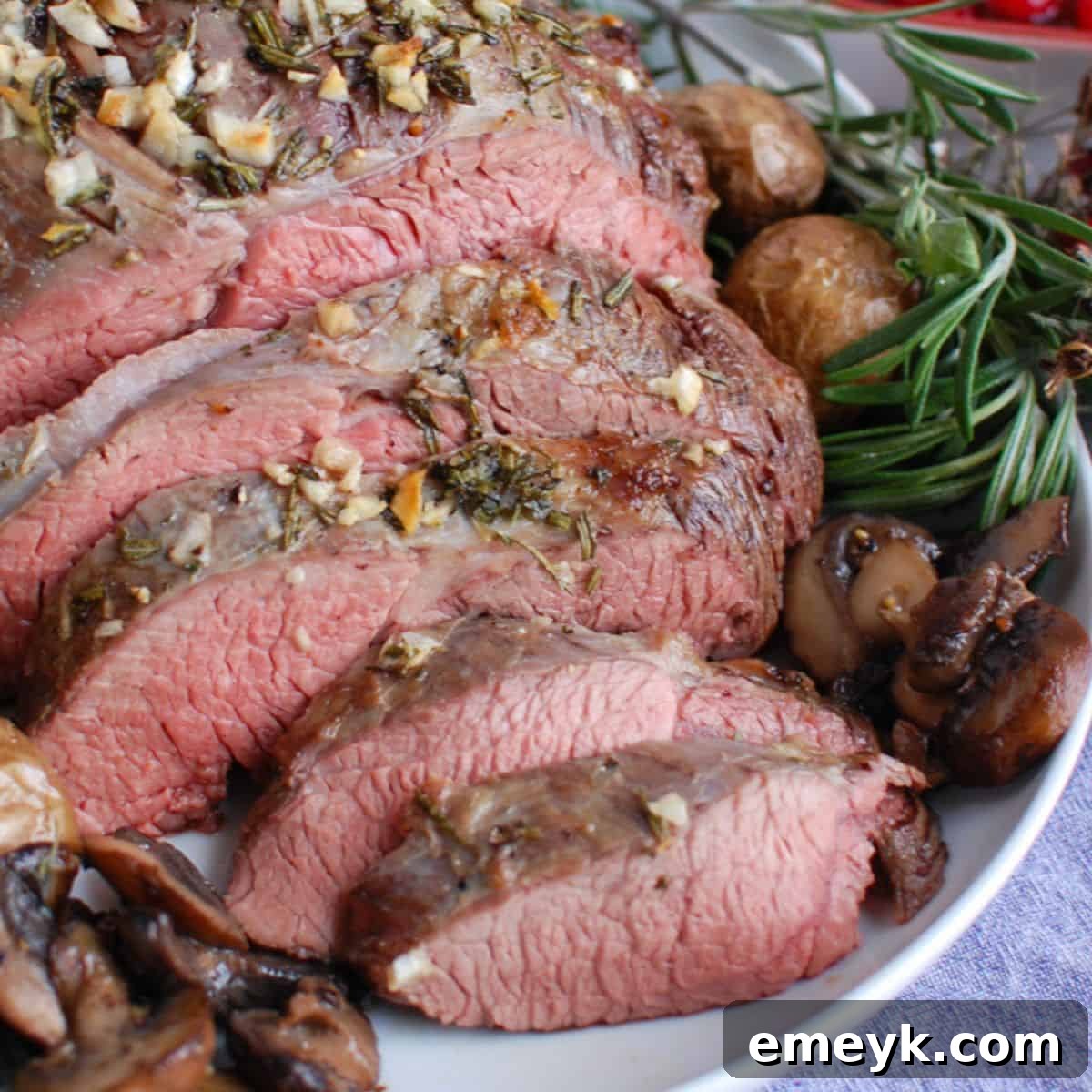
The Ultimate Rosemary Garlic Roast Beef Recipe: Perfect for Holidays & Special Occasions
Prepare to impress your guests this holiday season or at your next special gathering with this incredible Rosemary Garlic Roast Beef Recipe. This isn’t just any roast beef; it’s a culinary masterpiece that promises a tender, juicy interior with a beautifully savory herb-crusted exterior. A simple yet powerful blend of olive oil, freshly chopped rosemary, thyme, parsley, and garlic creates an aromatic crust that elevates the beef to new heights. Perfectly paired with a robust Cabernet Sauvignon and your favorite festive side dishes, this recipe is designed to be a show-stopping centerpiece that’s surprisingly easy to achieve.
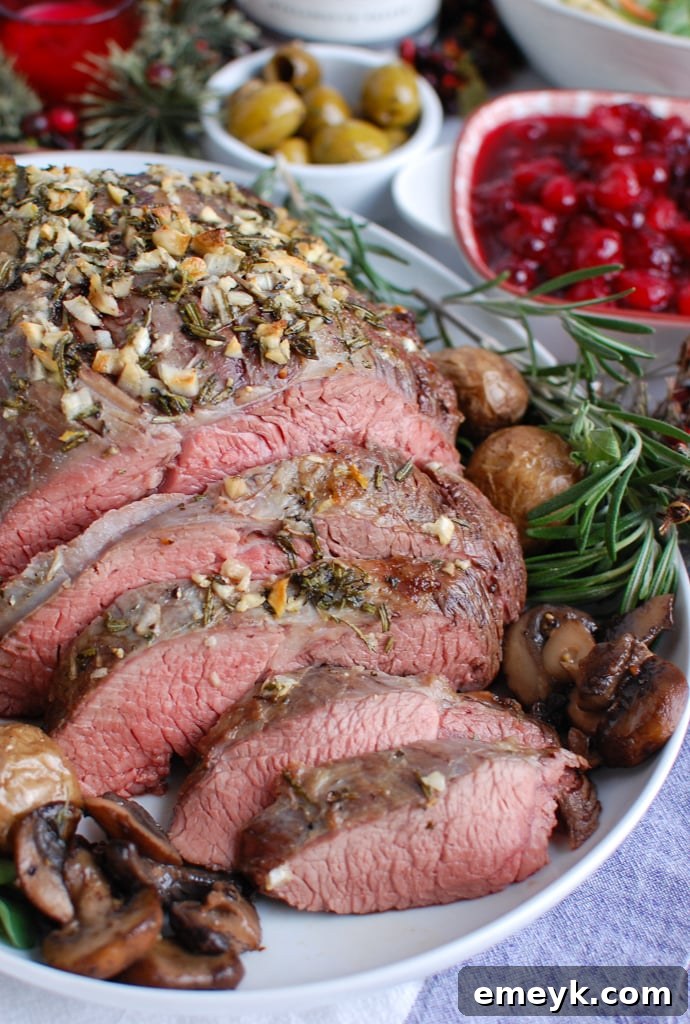
Beef roasts have long been a cherished tradition, gracing tables from elaborate Christmas dinners to comforting Sunday meals. Their ability to feed a crowd with minimal fuss makes them a holiday classic. After years of perfecting, this particular roast beef recipe has become my absolute go-to, consistently delivering exceptional results that garner rave reviews. It’s a flavorful cut of beef that transforms into an unforgettable holiday meal with minimal effort.
If you appreciate hearty beef dishes for special occasions, you might also enjoy exploring other robust recipes such as a Slow Cooker Mexican Beef Brisket for a unique twist, a comforting Greek Beef Stew with Orzo, or the savory Lebanese Greens with Beef. Each offers distinct flavors perfect for various celebrations.
Why This Rosemary Garlic Roast Beef is a Must-Try
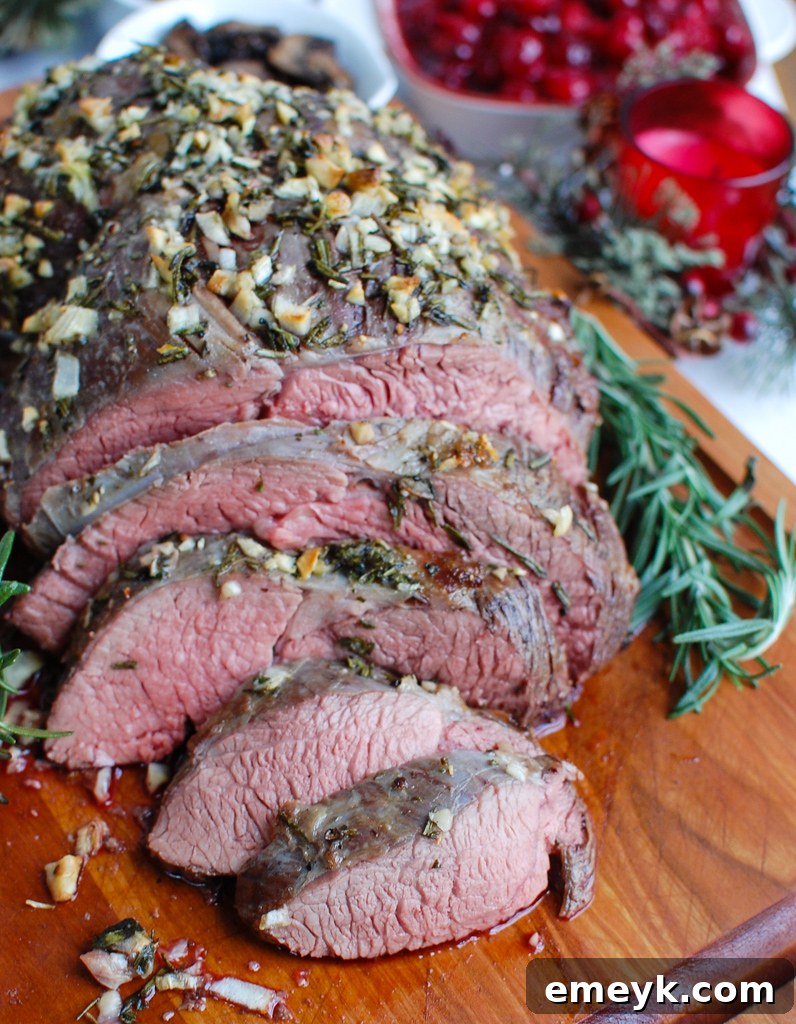
During busy holiday seasons, I constantly seek dishes that are not only crowd-pleasing but also genuinely foolproof. This “spoon roast” – typically a top round sirloin roast – checks both boxes with confidence. Its magic lies in the simple yet impactful preparation: a generous coating of extra virgin olive oil infused with a fragrant mixture of fresh garlic, aromatic rosemary, vibrant parsley, and earthy thyme. This creates a deeply savory herb crust that locks in moisture and infuses every bite with incredible flavor.
The secret to achieving an incredibly tender and juicy roast lies in the slow roasting method. This approach ensures the beef cooks evenly, preventing dryness and yielding a melt-in-your-mouth texture. It’s a standout centerpiece that beautifully complements a wide array of classic side dishes. One of the best aspects of this recipe is that it largely cooks itself in the oven, freeing you up to prepare the rest of your festive spread without feeling overwhelmed. The power of fresh herbs truly makes this roast shine, elevating it from good to absolutely extraordinary.
For an unforgettable meal, I love serving this roast beef alongside creamy garlic mashed potatoes, savory roasted balsamic mushrooms, and crisp green beans. A rich, homemade gravy, preferably made from the pan drippings, is an essential accompaniment for an added layer of flavor. And don’t forget the glorious leftovers! Sliced thinly, they make for divine roast beef sandwiches, perfect for a next-day treat.
Essential Recipe Ingredients for Flavorful Roast Beef
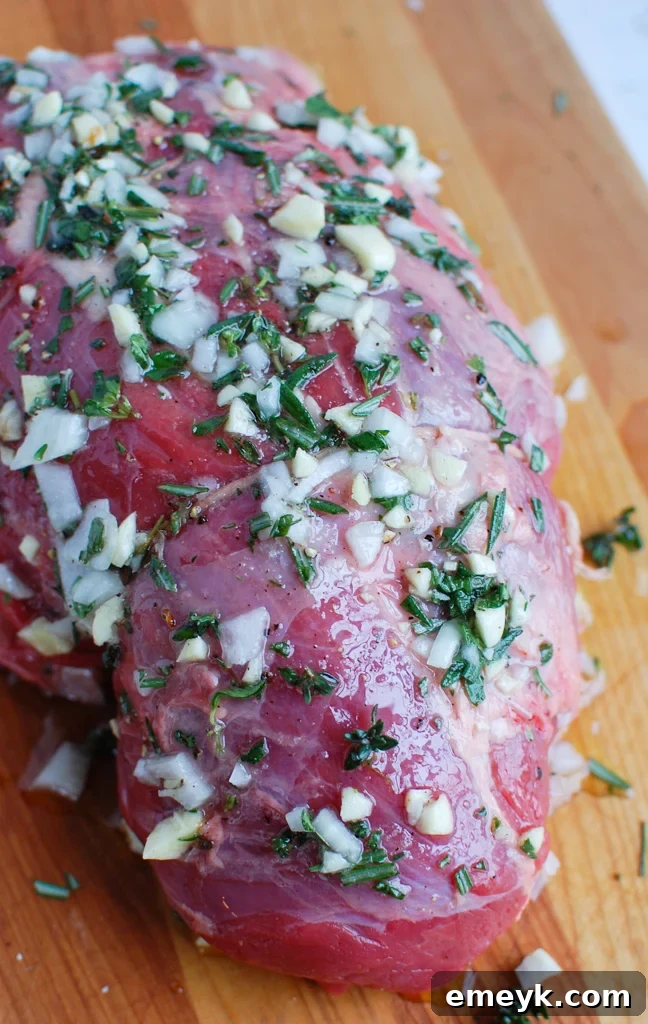
Crafting the perfect roast beef begins with selecting quality ingredients. Here’s a detailed look at what you’ll need to create this impressive dish. Refer to the complete recipe card below for precise measurements and printable instructions.
- Beef: This recipe specifically calls for a Top Round Beef Roast. This cut is lean, intensely flavorful, and highly economical, making it an excellent choice for roasting and ideal for serving a larger group without breaking the bank. Its inherent leanness benefits greatly from the slow roasting method, ensuring tenderness.
- Extra-Virgin Olive Oil: A good quality extra-virgin olive oil is crucial. It acts as the perfect binder, helping the herb and garlic mixture adhere beautifully to the beef, and contributes to the formation of that irresistible golden, savory crust.
- Garlic (Fresh or Powder): Freshly minced garlic is always preferred for its vibrant, pungent depth of flavor that truly permeates the meat. However, if fresh garlic isn’t readily available, high-quality garlic powder can serve as a convenient and effective substitute in the seasoning blend.
- Fresh Herbs: The combination of fresh herbs is what makes this roast truly aromatic and memorable.
- Rosemary: Provides a woody, pine-like aroma that pairs exceptionally well with beef.
- Thyme: Offers a subtle, earthy, and slightly floral note that complements the other herbs.
- Parsley: Adds a fresh, bright, and slightly peppery counterbalance to the rich flavors.
- Oregano: Introduces a robust, slightly bitter, and peppery flavor that enhances the Mediterranean profile of the rub.
Using fresh herbs makes a significant difference, infusing the roast with a more complex and brighter flavor profile than dried alternatives.
- Kosher Salt & Black Pepper: These fundamental seasonings are essential for drawing out the natural flavors of the beef and contributing to the crust. Kosher salt provides a clean, even seasoning.
Step-by-Step Guide: How to Make a Perfect Spoon Roast
Achieving a perfectly cooked, tender, and flavorful roast beef is simpler than you might imagine. Follow these detailed steps for an impressive culinary triumph:
- Prepare the Beef (Room Temperature is Key): Remove your Top Round Roast from the refrigerator at least 30 minutes to 1 hour before you plan to cook it. Allowing the beef to come to room temperature ensures more even cooking and helps prevent the exterior from cooking too quickly while the interior remains cold.
- Preheat Your Oven: Preheat your oven to a high temperature of 450°F (232°C). This initial high heat will help create that desirable savory crust.
- Craft the Flavorful Herb Mixture: In a small bowl, combine the freshly chopped oregano, rosemary, thyme, parsley, minced garlic, olive oil, kosher salt, and black pepper. Mix thoroughly until all ingredients are well incorporated, forming a fragrant paste.
- Generously Coat the Beef: Using your hands, generously rub the entire herb and garlic mixture over all surfaces of the beef roast. Ensure an even coating, pressing the herbs gently into the meat to form a robust crust.
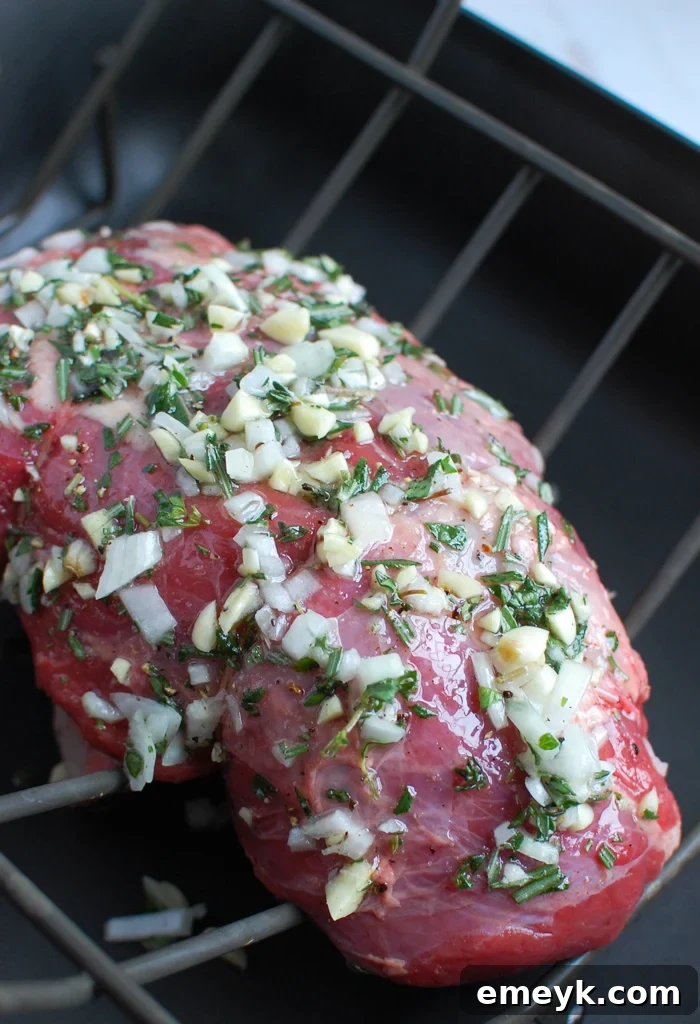
- Prepare for Roasting: Place the seasoned roast on a wire rack set inside a shallow baking dish or a dedicated roasting pan with a wire rack. This setup allows for even heat circulation around the beef and ensures a crispy bottom. For good measure, you can sprinkle a little extra salt and pepper over the coated roast.
- Initial High-Heat Roast: Place the roasting pan in the preheated 450°F (232°C) oven and roast for an initial 15 minutes. This high-heat sear is crucial for developing that flavorful crust.
- Slow Roast to Perfection: After 15 minutes, reduce the oven temperature to 325°F (160°C). Continue roasting for an additional 1 hour to 1 hour and 5 minutes, or until an instant-read meat thermometer inserted into the thickest part of the roast (avoiding bone or fat) registers your desired level of doneness. For medium-rare, aim for 125-130°F (52-54°C). Remember, the temperature will rise slightly as the meat rests.
- Rest and Serve: Once the roast reaches your desired temperature, carefully remove it from the oven. Transfer it to a carving board and loosely tent it with aluminum foil. Allow the roast to rest for at least 15 minutes. This critical step allows the juices to redistribute throughout the meat, ensuring a tender and moist result. After resting, slice the roast thinly against the grain and serve immediately. Garnish with fresh parsley and pair with sautéed mushrooms, a crisp salad like this Lemon Arugula Salad, and your other favorite sides.
Expert Tips for a Flawless Roast Beef Every Time
Mastering the art of roast beef involves a few key techniques that can significantly impact the final outcome. Incorporate these tips to ensure your roast is consistently perfect:
- Proper Roasting Pan Setup: Always place the roast fat-side up on a wire rack within a shallow roasting pan. The only exception is a bone-in rib roast, where the ribs naturally create a rack. Roasting on a rack allows hot air to circulate evenly around the entire piece of meat, promoting uniform cooking and preventing the bottom from steaming. The fat cap will also slowly render, basting the meat and adding flavor and moisture.
- The “Low and Slow” Advantage: Oven roasting is particularly ideal for holiday meals because the low and slow heat application results in incredibly tender and juicy meat. After the initial high-heat sear, reducing the temperature allows the connective tissues in the beef to break down gently over time, without drying out the exterior. This “set it and forget it” approach ensures perfectly cooked roast beef with minimal active monitoring.
- Invest in a Meat Thermometer: For larger cuts of beef, an oven-safe, leave-in meat thermometer is an invaluable tool. Insert it into the thickest part of the roast, ensuring it doesn’t touch any bone, before placing the roast in the oven. This allows you to monitor the internal temperature without frequently opening the oven door, which causes temperature fluctuations, and avoids piercing the meat multiple times, which can lead to moisture loss. This precision is key to hitting your desired doneness every time.
- The Importance of Resting: After roasting, it’s crucial to transfer the beef to a carving board and loosely tent it with aluminum foil. Let it rest for a minimum of 15–20 minutes. This resting period allows the muscle fibers, which contract during cooking, to relax and reabsorb the flavorful juices. Skipping this step will result in a drier roast as the juices will simply run out onto your cutting board when sliced. Use this valuable resting time to prepare a flavorful au jus from the pan drippings by deglazing the roasting pan.
- Carving Against the Grain: When it’s time to carve, always slice the beef thinly against the grain. This shortens the muscle fibers, making each slice much more tender and enjoyable to eat.
Storage and Reheating Tips for Roast Beef
Having leftovers from this delicious roast beef is a treat! Here’s how to properly store and enjoy them later:
- Refrigeration: Cooked roast beef can be stored in the refrigerator for up to 3-5 days. Ensure it’s tightly wrapped in aluminum foil or placed in an airtight container to maintain freshness and prevent it from drying out.
- Freezing: For longer storage, roast beef freezes beautifully. To freeze, slice the roast into desired portions or keep it as a larger piece. Double-wrap the beef tightly in plastic wrap, then an additional layer of aluminum foil, and finally place it in a freezer-safe zip-top bag, pressing out as much air as possible. It can be frozen for up to 2-3 months. Thaw overnight in the refrigerator before reheating.
- Reheating: To reheat, slice the roast thinly and gently warm it in a skillet with a splash of beef broth or water to keep it moist. You can also warm larger pieces in the oven at a low temperature (around 250°F / 120°C), covered with foil, until just heated through. Avoid overheating to prevent it from drying out.
Frequently Asked Questions About Roast Beef
How do I measure roast beef doneness accurately?
For a Top Sirloin Roast cooked using the low and slow oven method, you can generally estimate approximately 20-25 minutes per pound for medium-rare doneness. However, this is just a guideline. The exact cooking time can vary significantly based on the thickness of your roast, whether you brought it to room temperature before cooking, and your specific oven. The most accurate way to measure doneness is by using an instant-read meat thermometer. Start checking the internal temperature after about an hour of cooking, inserting the thermometer into the thickest part of the meat without touching bone. Target 125-130°F (52-54°C) for medium-rare, remembering the temperature will rise during resting.
What is the best technique for cooking roast beef to ensure tenderness?
The optimal method for cooking roast beef to achieve maximum tenderness and a beautiful crust involves a two-stage approach: start with high heat, then finish with low heat. Begin by roasting the beef at a high temperature (around 450°F / 232°C) for 15-20 minutes. This initial burst of heat creates a flavorful, browned crust on the exterior. After searing, reduce the oven temperature to a lower setting (typically 325°F / 160°C) and continue cooking the roast slowly. This “low and slow” phase allows the internal temperature to rise gradually, gently breaking down the muscle fibers and connective tissues, which tenderizes the meat and prevents it from becoming tough and dry.
How do I choose the right cut of beef for roasting?
When selecting beef for roasting, the choices can sometimes feel overwhelming. Your decision should largely depend on your budget and the occasion. For an impressive presentation and superior tenderness, especially when entertaining a larger group, premium cuts like Prime Rib, Ribeye Roast, or Beef Tenderloin are excellent, albeit more expensive, options. These cuts are known for their marbling and inherent tenderness. For more economical yet still delicious alternatives that offer great flavor and tenderness with proper cooking, consider cuts such as Sirloin Tip Roast, Bottom Round Roast, or a Rump Roast. These leaner cuts benefit immensely from slow roasting and a good seasoning rub, providing a fantastic roast beef experience without the premium price tag.
Discover More Delicious Beef Recipes
Beef
Mediterranean Beef Kabobs
Beef
Beef Tenderloin Steaks with Creamy Blue Cheese Sauce
Beef
Beef Kafta Meatballs
Beef
Grilled Beef Kofta Kebabs
Tried this recipe? Leave a star rating and comment below! Subscribe to our newsletter or follow us on
Facebook,
Instagram, or
Pinterest for the latest recipes.
The Best Roast Beef Recipe
By Julia Jolliff
This is The Best Roast Beef Recipe that you will serve guests this holiday season. Olive oil is mixed with freshly chopped rosemary and garlic to create a flavorful crust. Pair this with a cabernet sauvignon and your favorite side dishes.
Prep Time: 15 mins
Cook Time: 1 hr 20 mins
Total Time: 1 hr 35 mins
Servings: 6
Pin Recipe | Print Recipe
Ingredients
- 4 pound Beef Top Round Roast
- 2 teaspoon fresh oregano, chopped
- 2 teaspoons fresh rosemary, chopped
- 1 teaspoon fresh thyme, chopped
- 3 teaspoons fresh parsley, chopped
- 2 tablespoons olive oil
- 4 garlic cloves, minced
- 2 teaspoons kosher salt
- 1/4 teaspoon black pepper
Instructions
- Take your beef out of the fridge and let it come to room temperature on the counter for about a 1/2 hour.
- Preheat your oven to 450 degrees F (232°C).
- Combine all of the spices and garlic in a small bowl along with the olive oil.
- Coat the beef with the herb and garlic mixture, making sure to coat both sides.
- Place the roast on a wire rack inside a shallow baking dish or use a roasting pan with a wire rack. Sprinkle with a bit more salt and pepper.
- Roast for 15 minutes at 450 degrees F (232°C).
- Reduce temperature to 325°F (160°C) and roast an additional 1 hour to 1 hour and 5 minutes or until the beef reads medium rare (125- to 130°F / 52-54°C) doneness on an instant-read thermometer at the thickest part of the roast.
- Remove from the oven and tent with tin foil for 15 minutes. Slice into thin pieces and serve with fresh parsley, sautéed mushrooms and any additional favorite sides.
Notes
- A top sirloin roast done in this low and slow method in the oven will take you approximately 20-25 minutes per pound of meat.
- This also depends on the thickness of your roast, if you let it come to room temperature, and other factors. Always use a meat thermometer and start checking after the first hour of cooking.
Nutrition
Serving: 6g, Calories: 585kcal, Carbohydrates: 1g, Protein: 87g, Fat: 24g, Saturated Fat: 9g, Polyunsaturated Fat: 2g, Monounsaturated Fat: 14g, Trans Fat: 1g, Cholesterol: 245mg, Sodium: 981mg, Potassium: 1145mg, Fiber: 0.4g, Sugar: 0.05g, Vitamin A: 45IU, Vitamin C: 1mg, Calcium: 53mg, Iron: 9mg
Nutrition information is automatically calculated and should only be used as an approximation.
Tried this recipe?
Mention @acedarspoon or tag #acedarspoon!