
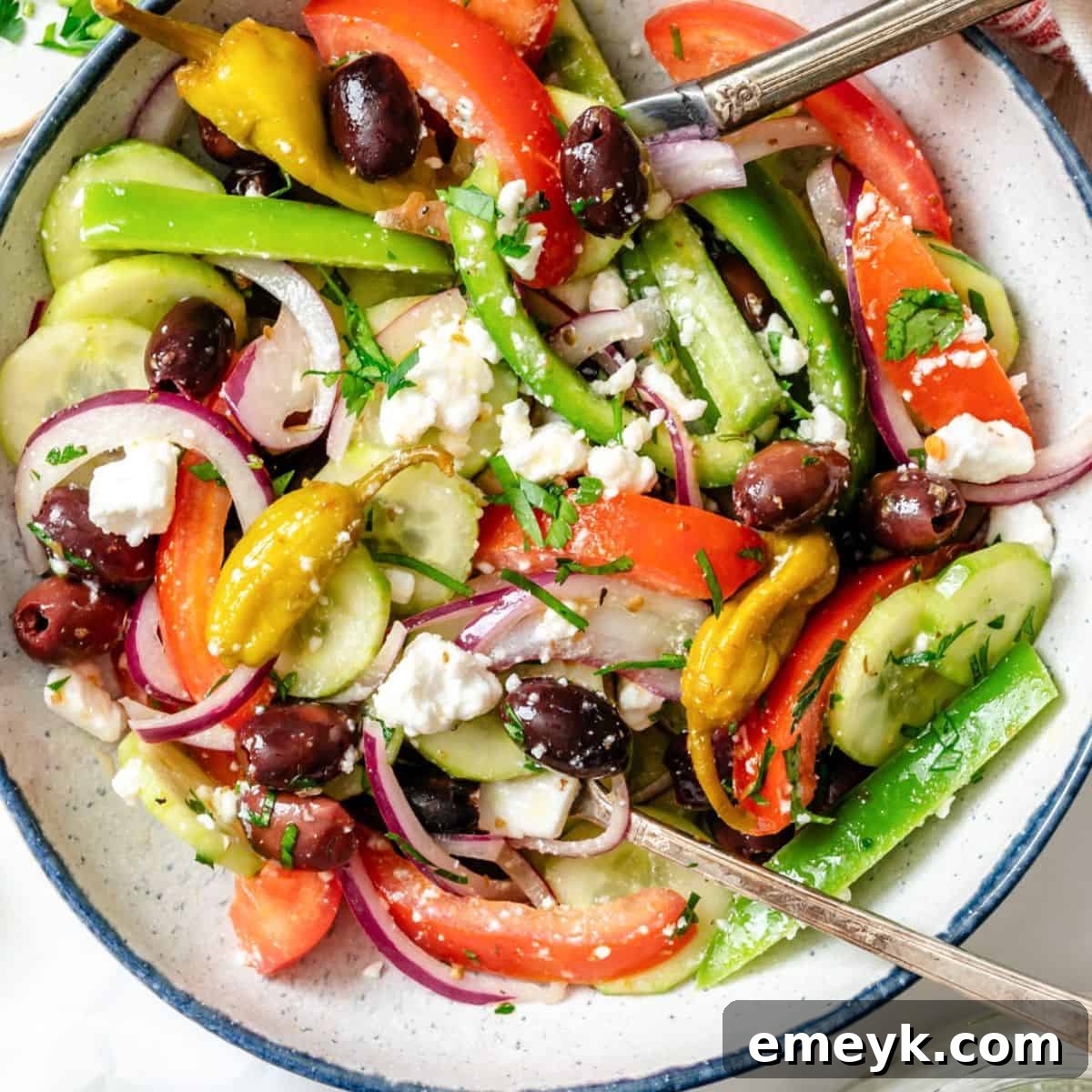
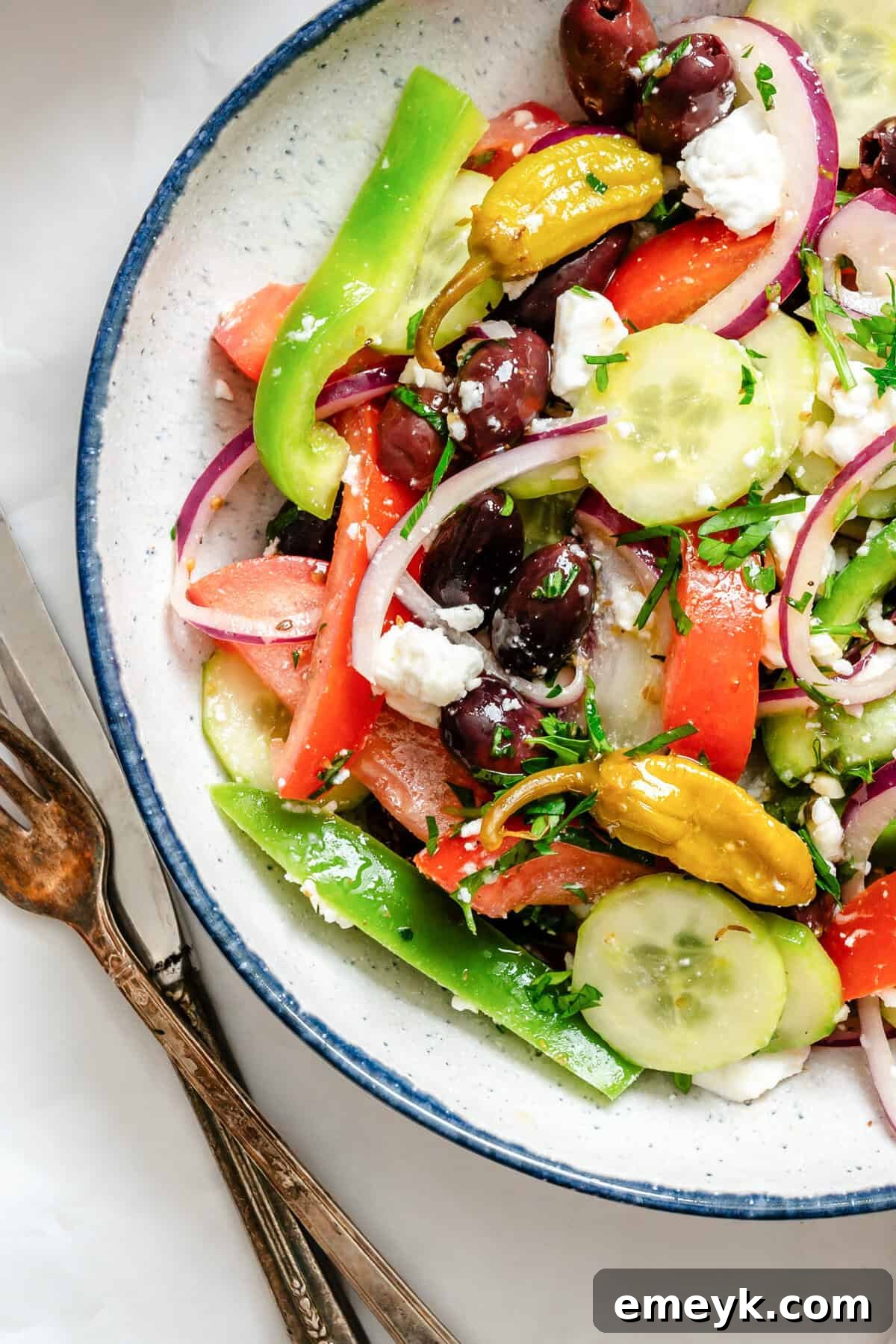
Embark on a culinary journey to the sun-drenched shores of Greece with this exquisite, vegetable-packed **Greek Village Salad**, famously known as **Horiatiki Salad**. This vibrant dish combines the freshest garden vegetables with creamy, briny feta cheese, robust Kalamata olives, and a zesty touch of pepperoncinis. Finished with a light and fragrant Greek-style dressing, it’s a celebration of simple, wholesome ingredients that capture the essence of Mediterranean cuisine. Whether served as a refreshing side dish alongside your favorite grilled meats or elevated to a complete meal with the addition of protein like chicken or shrimp, this salad promises a taste of authentic Greece in every bite.
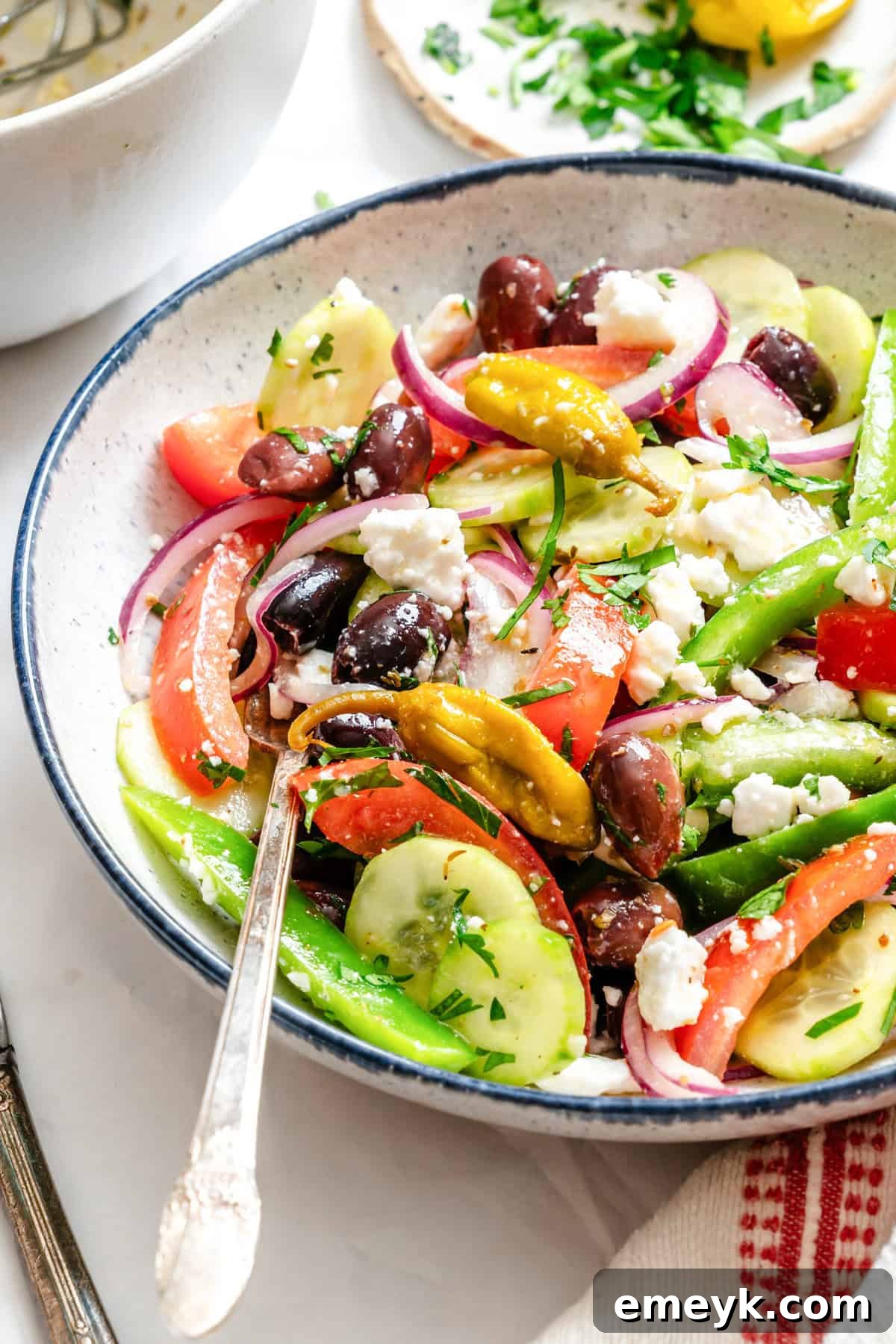
For those who appreciate the bounty of the Mediterranean diet, the allure of Greek cuisine is undeniable. My own affection for these recipes deepened significantly during a memorable trip to Greece a few years ago. Among the many culinary delights, the Horiatiki Salad stood out as our absolute favorite. It wasn’t just a dish; it was an experience, embodying the profound Greek philosophy of hospitality and the joy of sharing meals with loved ones. This beautiful tradition of family-style eating, where platters of food are passed around the table, is a cornerstone of Greek culture and connection. The Greek Village Salad, with its generous portions and wholesome ingredients, is often at the heart of such gatherings.
There’s an unparalleled satisfaction in the harmony of textures and flavors found in a well-made Horiatiki. Imagine the satisfying crunch of crisp cucumbers and the burst of juicy, ripe tomatoes, perfectly complemented by the soft, tangy creaminess of authentic feta cheese and the salty, briny notes of Kalamata olives and mild pepperoncinis. It’s a symphony of fresh ingredients that sings of summer and simplicity.
The beauty of this traditional Greek Village Salad extends to its dressing, which is remarkably simple yet incredibly versatile. Crafted with high-quality extra virgin olive oil, fresh lemon juice, aromatic dried oregano, and vibrant fresh parsley, this light vinaigrette enhances the natural flavors of the vegetables without overpowering them. It’s so good, you might find yourself making a double batch to keep on hand for other salads throughout the week. The grassy, nutty, and distinctly fresh taste of good olive oil is absolutely essential, pairing harmoniously with the bright citrus and earthy herbs.
My passion for Greek-style food extends far beyond this salad. I frequently prepare a variety of Greek-inspired dishes that bring the same fresh and wholesome flavors to my table. Some of my go-to recipes include the flaky Greek Baked Tilapia, the succulent Pan Seared Greek Salmon, the tender and tangy Greek Lemon Chicken, the flavorful Greek Marinated Chicken, and these incredibly delicious Greek Meatballs. Each recipe reflects the vibrant, healthy, and satisfying qualities that make Greek cuisine so beloved.
Why You’ll Adore This Authentic Greek Village Salad (Horiatiki)
This simple, genuine Greek Village Salad, known as Horiatiki, is a testament to the idea that the best dishes are often the least complicated. Using fresh, wholesome ingredients, it quickly becomes a cherished favorite. Here’s why this recipe will earn a permanent spot in your culinary repertoire:
- Effortless Preparation: Forget about extensive cooking! This salad is a breeze to assemble, requiring no heat whatsoever. From chopping to serving, you can have this vibrant dish ready in minutes. It’s the perfect way to utilize seasonal produce from your garden or local farmers market, transforming fresh vegetables into a gourmet experience with minimal effort. This makes it ideal for busy weeknights or impromptu gatherings when you need a quick, impressive meal.
- Incredible Versatility: The Horiatiki salad is a true chameleon on the menu. It shines as a light and satisfying lunch, a refreshing dinner option, or a dynamic side dish to a myriad of main courses. Pair it with grilled seafood, succulent chicken, or even a hearty piece of pita bread for a complete meal. Its crisp, cool nature makes it an absolute essential for summer months, backyard barbecues, and picnics. You can also prepare components ahead for easy meal prep throughout the week.
- Simple Customization: One of the greatest advantages of this recipe is its adaptability. It’s incredibly forgiving, allowing you to tailor it precisely to your taste preferences. If you’re not fond of a particular ingredient, simply omit it or swap it for something you love. Want extra herbs? Go for it! Prefer a different type of olive? Absolutely! This flexibility ensures everyone at your table will find something to love.

Essential Ingredients for Your Authentic Greek Village Salad
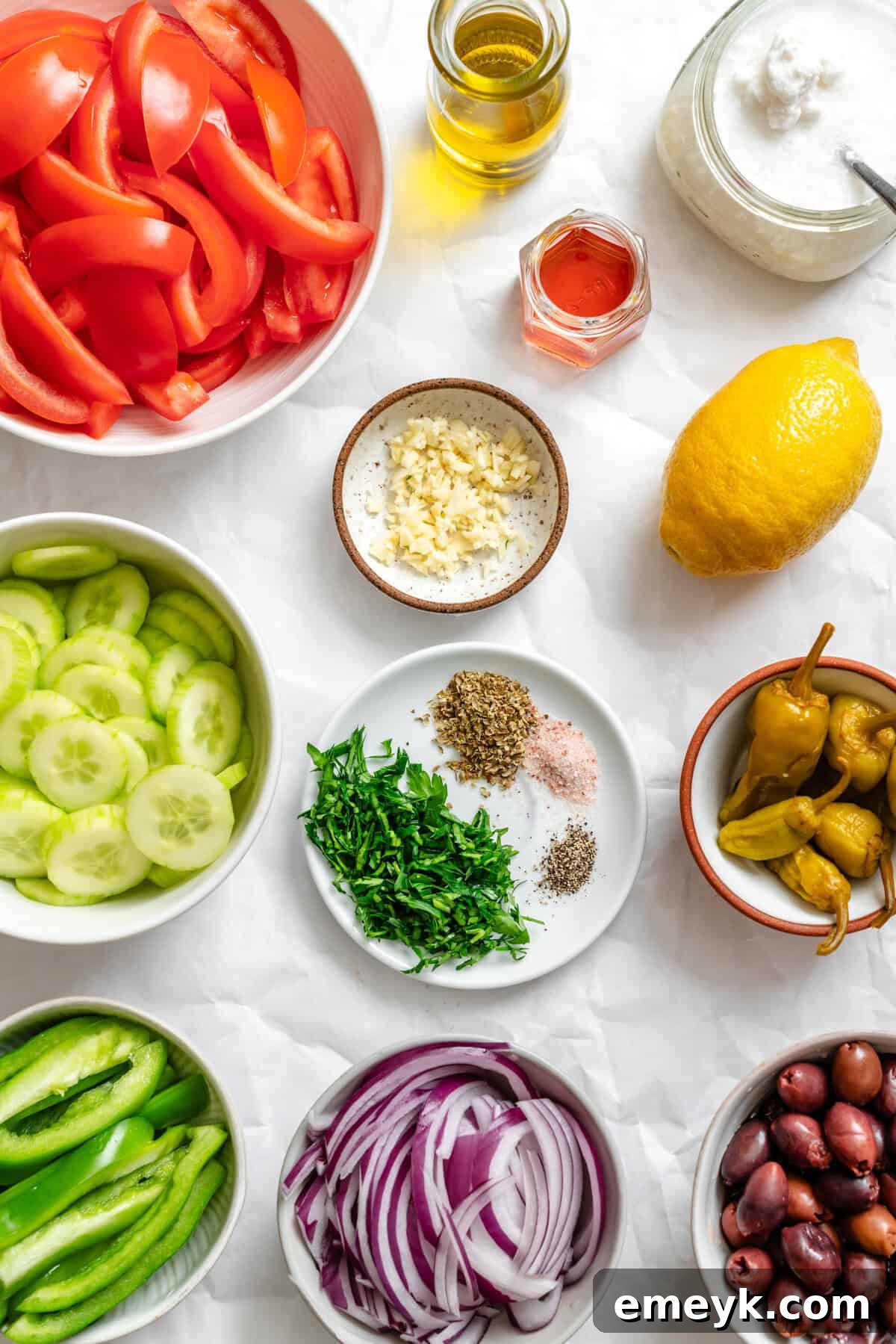
For the precise measurements and step-by-step instructions, please refer to the comprehensive recipe card provided further down the page. But first, let’s dive into the star ingredients that make this Horiatiki salad truly special.
For the Salad:
- Cucumber: I highly recommend using crisp English cucumbers for this recipe. Their thin skin and minimal seeds mean they don’t require peeling or deseeding, saving you time and retaining more nutrients. They also have a wonderfully firm texture that holds up well in salads. If English cucumbers aren’t available, a regular garden cucumber will work beautifully; just be sure to peel it and remove any large seeds for a similar texture.
- Tomatoes: The soul of a Greek salad relies on exceptionally ripe, juicy tomatoes. I typically use four large, vine-ripe tomatoes, cutting them into generous wedges to showcase their vibrant color and sweet-tart flavor. For a different presentation or if they are in season, cherry or grape tomatoes can be halved and tossed in, offering a delightful pop of sweetness with every bite. The quality of your tomatoes truly makes a difference here.
- Red Onion: A thinly sliced red onion adds a crucial, yet milder, onion flavor and a beautiful purple hue to the salad. Its delicate pungency is less harsh than other onions, complementing the fresh vegetables without overwhelming them. For an even milder touch, you could opt for shallots, which offer a similar flavor profile with a gentler bite. Slicing them paper-thin is key for an even distribution of flavor.
- Bell Pepper: Traditionally, a vibrant green bell pepper is used in Horiatiki for its distinct peppery flavor and crisp texture. I’ve stuck with this classic choice, slicing it into thin strips. However, feel free to experiment with other colors like red, yellow, or orange bell peppers. Red bell pepper, for instance, offers a sweeter contrast, while yellow and orange add a beautiful visual variety and mild flavor.
- Olives: No Greek salad is complete without the rich, briny taste of Kalamata olives. Their distinct fruity and smoky notes are unmistakable and elevate the entire dish. Always choose pitted Kalamata olives for convenience. While Kalamatas are traditional, you can certainly substitute with your favorite type of olive, such as large green olives, if preferred, though the flavor profile will shift slightly.
- Feta: The undisputed star of the Greek Village Salad, authentic Greek feta cheese is paramount. I swear by the feta sold in brine, often found at specialty stores like Trader Joe’s, as it retains its moisture and offers the best salty, tangy flavor and creamy-crumbly texture. If feta in brine is hard to find, good quality crumbled feta will suffice. When reading labels, look for “Greek feta cheese” made from sheep’s or goat’s milk for the most authentic taste and texture. Nothing quite compares to its salty creaminess!
- Pepperoncinis: These delightful mild pickled peppers introduce a lovely tang and a hint of subtle chili heat that brightens the entire salad. You can add them whole for a dramatic presentation or slice them for easier integration into each bite. Their vinegary kick cuts through the richness of the feta and complements the fresh vegetables beautifully, adding another layer of complexity to the flavor profile.
For the Simple Greek Salad Dressing:
- Lemon: Freshly squeezed lemon juice is non-negotiable for the brightest, most vibrant dressing. Its zesty acidity provides a crucial counterpoint to the richness of the olive oil and the saltiness of the feta. While bottled lemon juice can be used in a pinch, fresh lemon juice delivers an incomparable burst of flavor that truly elevates the salad.
- Extra Virgin Olive Oil: The foundation of any good Mediterranean dressing, extra virgin olive oil is key. Opt for a high-quality, cold-pressed olive oil for its deep, complex, fruity, and slightly peppery flavor. This isn’t just a fat; it’s a flavor enhancer and a source of healthy monounsaturated fats, crucial to the Mediterranean diet.
- Vinegar: Red wine vinegar is my preferred choice for its robust, slightly sweet, and tangy profile, which beautifully complements the lemon and herbs. However, white wine vinegar offers a crisper acidity, and sherry vinegar provides a nuttier, more nuanced flavor if you’re looking to experiment.
- Garlic: Freshly minced garlic cloves impart a pungent, aromatic depth to the dressing that is irreplaceable. The raw garlic contributes a bold flavor that mellows slightly upon mixing. While garlic powder can be used as a last resort, fresh garlic provides superior taste and aroma.
- Herbs: Dried Greek oregano is essential for that unmistakable authentic Greek flavor. It’s more potent than common oregano and has a distinctive earthy, slightly minty aroma. Coupled with fresh parsley, which adds a clean, bright, and slightly peppery note, these herbs create a fragrant and herbaceous dressing that ties all the flavors together.
- Salt & Black Pepper: These seasonings are crucial for balancing and enhancing all the other flavors. Adjust them to your personal preference, ensuring the dressing is perfectly seasoned.
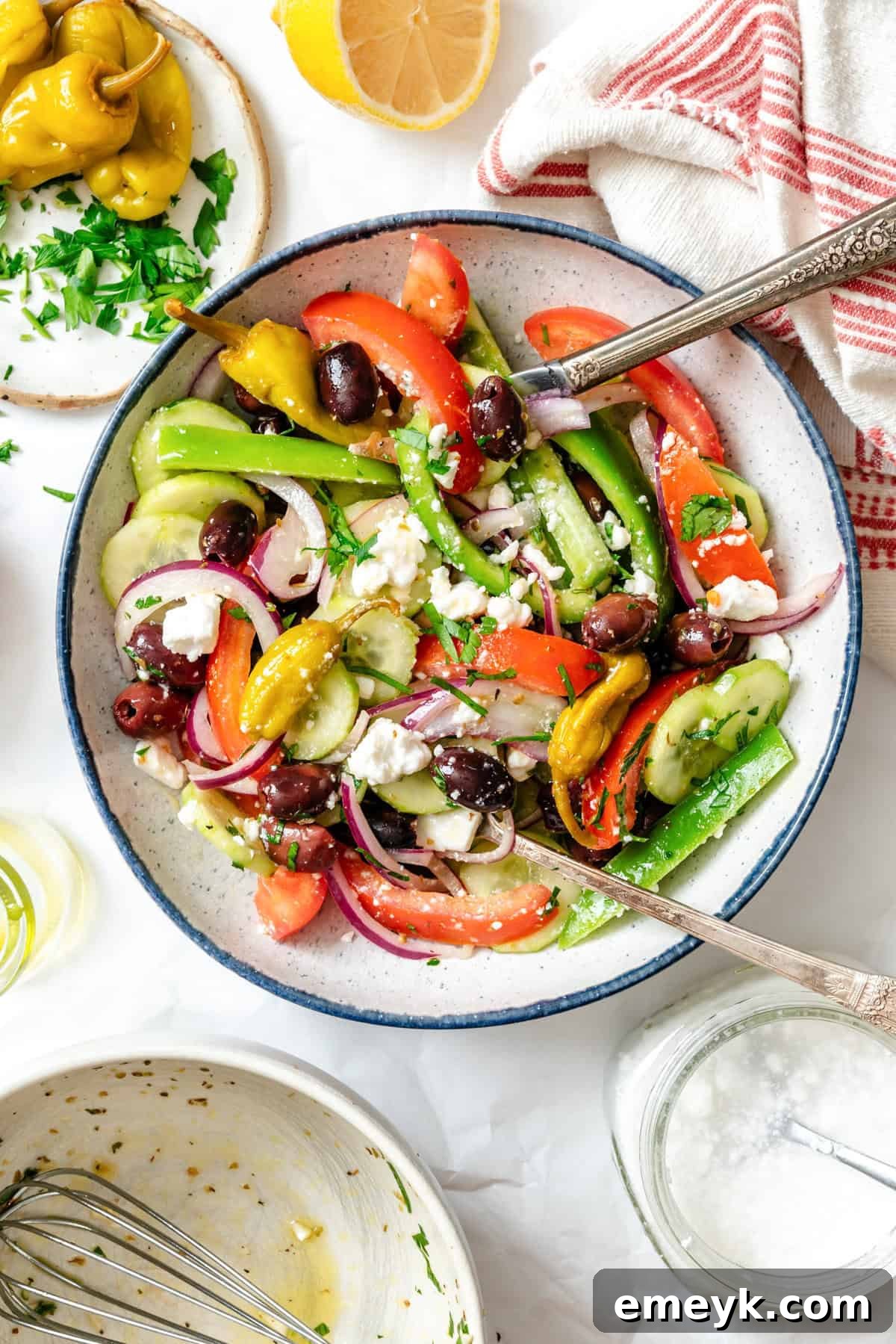
Exciting Recipe Variations & Enhancements for Your Horiatiki
- Nuts & Seeds: Introduce an extra layer of crunch and healthy fats by sprinkling in a handful of toasted pine nuts, slivered almonds, sunflower seeds, or pumpkin seeds just before serving. Toasting them briefly in a dry pan enhances their flavor and aroma significantly.
- Different Olives: While Kalamata olives are traditional and highly recommended, don’t hesitate to experiment! You can use any variety or color of olive, such as bright green Castelvetrano olives for a buttery taste, or even create a mix of your favorite black and green olives for a diverse flavor profile.
- Fresh Herbs: Elevate the aromatic complexity of your salad with an additional burst of fresh herbs. Beyond parsley, consider scattering freshly chopped dill for a distinctive savory note, or fresh mint for a surprisingly refreshing twist, especially invigorating during warmer months.
- Hearty Pulses: To transform this delightful side into a more substantial meal, incorporate some protein-rich pulses. Chickpeas (garbanzo beans) are a classic choice, adding a creamy texture and satisfying bulk. White beans, such as cannellini or great northern beans, would also be a fantastic, subtly earthy addition.
- Add Lean Meat: For meat lovers, this salad serves as an excellent base for grilled proteins. Top it with thinly sliced grilled chicken breast, tender lamb skewers, flavorful pork tenderloin, or perfectly seared beef for a complete and satisfying entrée. Marinating the meat with Greek herbs like oregano and lemon juice will enhance the overall flavor.
- Succulent Seafood: Embrace the coastal flavors of Greece by adding a variety of seafood options. Pan-fried shrimp, quickly seared tuna steak, or flaky grilled salmon would be exquisite. Even a good quality canned tuna (packed in olive oil) can be flaked over the salad for a quick protein boost.
- Include Avocado: For an extra layer of creaminess and healthy fats, dice a ripe avocado and gently fold it into the salad just before serving. Its buttery texture complements the crisp vegetables beautifully.
- Spicy Kick: If you enjoy a bit more heat, a pinch of red pepper flakes in the dressing or a few slices of a mild chili pepper can add an exciting zing.
Crafting Your Authentic Greek Village Salad: Step-by-Step
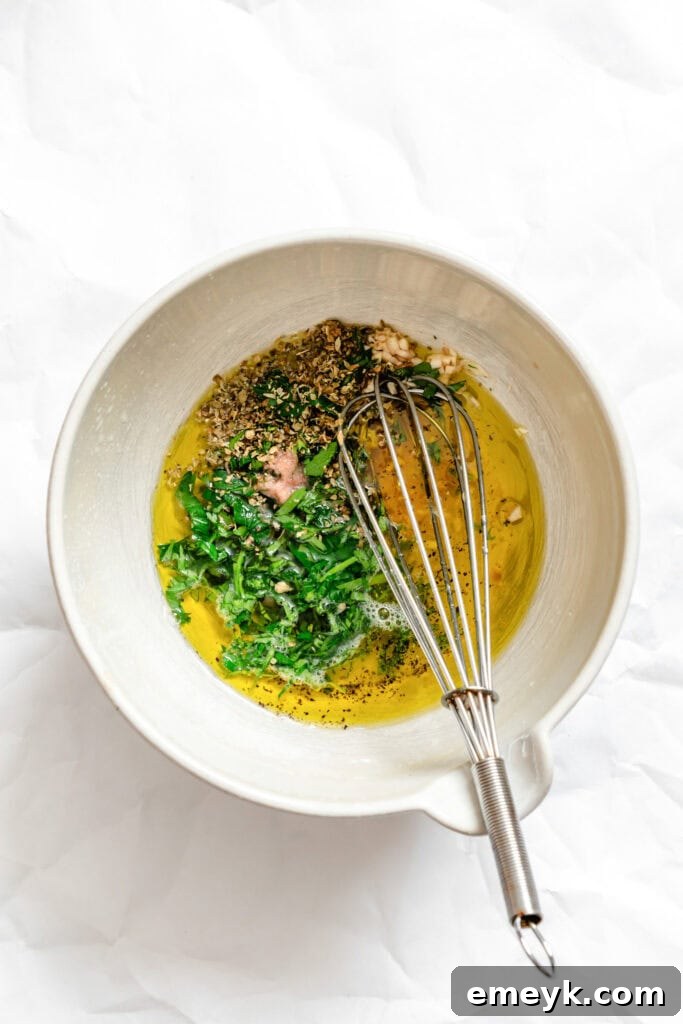
Step 1: Whisk Together the Zesty Dressing
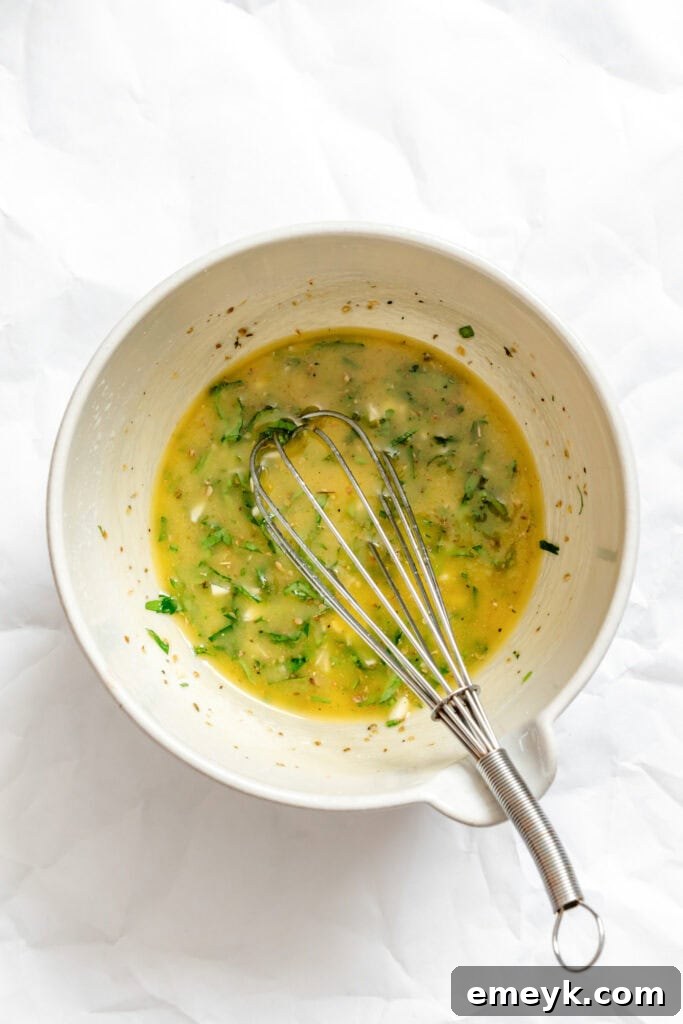
In a medium mixing bowl or a large mason jar, combine the fresh lemon juice, high-quality extra virgin olive oil, red wine vinegar, minced garlic, dried oregano, and chopped fresh parsley. Whisk vigorously or shake well until all ingredients are thoroughly combined and the dressing is emulsified. Season with salt and black pepper to taste, then set aside to allow the flavors to meld.
Step 2: Prepare and Combine the Fresh Vegetables
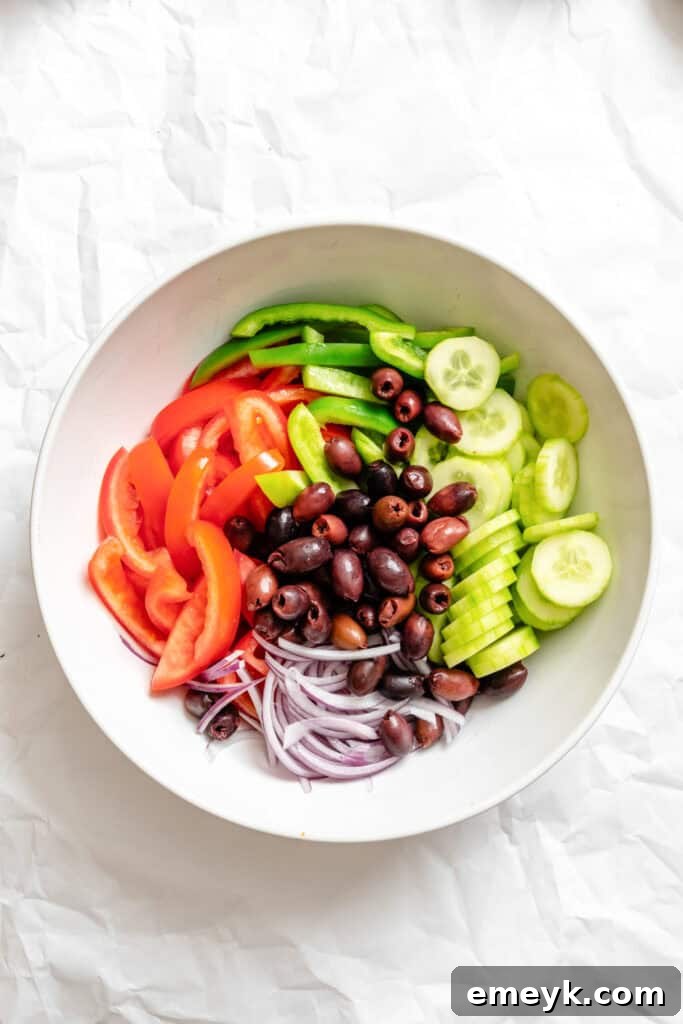
In a spacious large bowl, combine your prepared cucumber slices, ripe tomato wedges, thinly sliced red onion, green bell pepper strips, and pitted Kalamata olives. Gently toss these vibrant vegetables together to distribute them evenly.
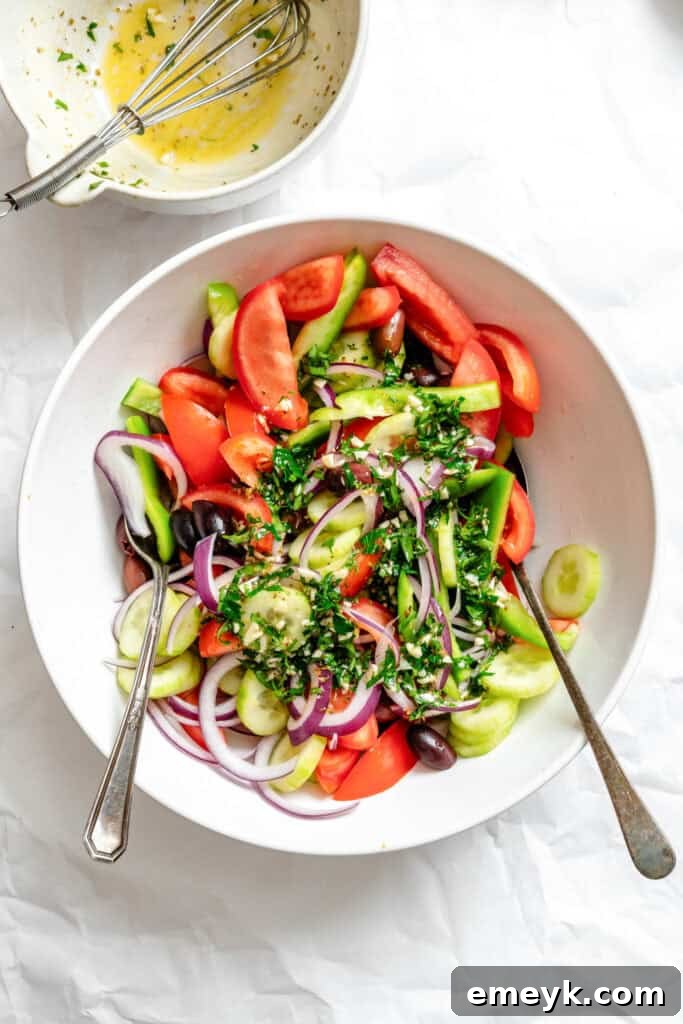
Step 3: Dress, Garnish, and Serve Your Horiatiki
Carefully drizzle the prepared dressing over the combined vegetables. Toss lightly to ensure every piece is coated with the fragrant vinaigrette. Finally, generously sprinkle the chopped feta cheese over the salad and arrange the pepperoncinis artistically. For the best flavor and texture, serve your Greek Village Salad immediately. If preparing ahead, store the dressing and vegetables separately, combining them just before serving. Leftovers can be refrigerated in an airtight container for up to 4 days.
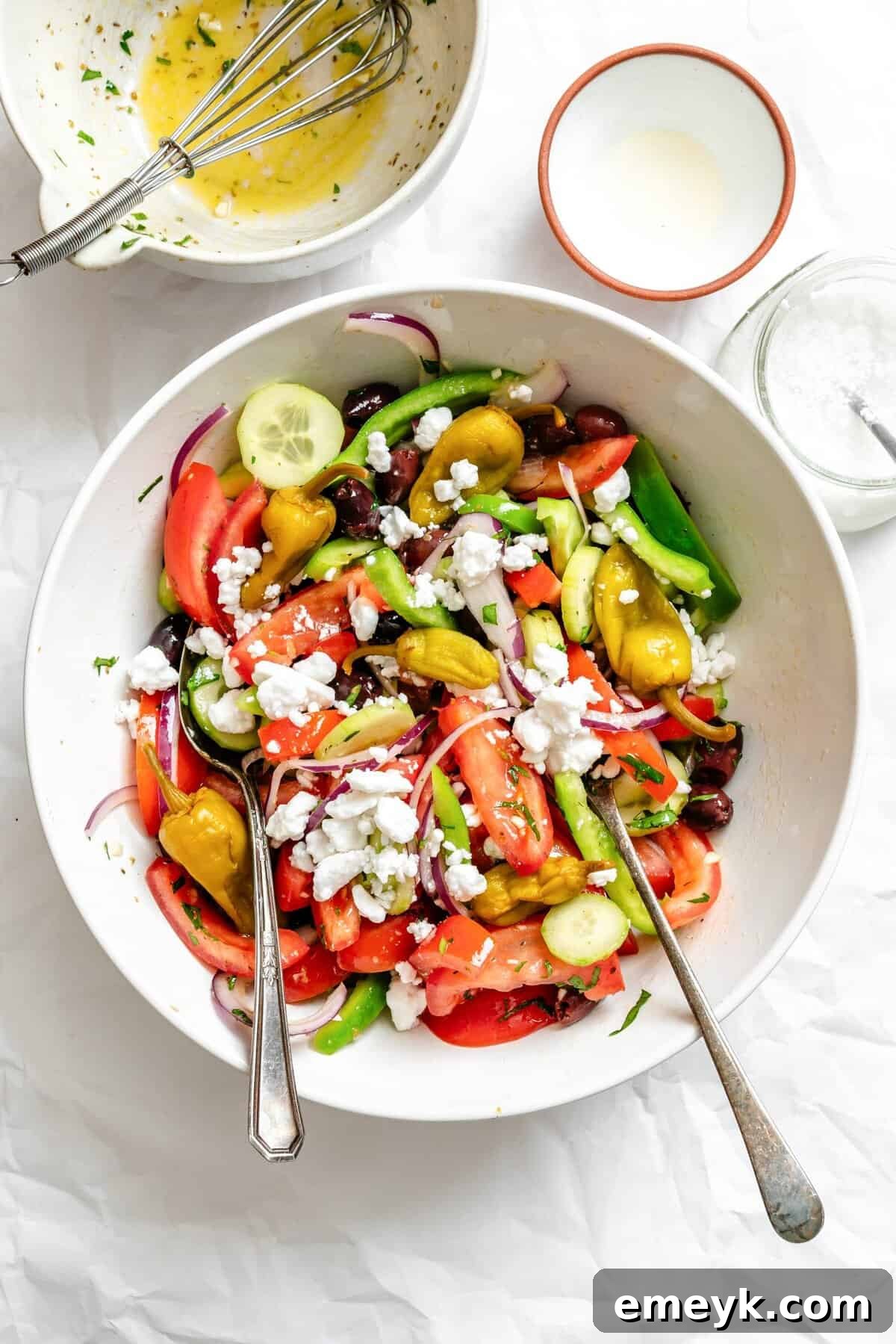
Expert Tips for the Perfect Greek Village Salad
- **Quality Ingredients are Key:** Since this salad is all about fresh flavors, using the highest quality, ripest vegetables and best extra virgin olive oil will make a significant difference. Seek out vine-ripe tomatoes and crisp cucumbers.
- **Authentic Feta Matters:** Don’t skimp on the feta! Opt for genuine Greek feta cheese, preferably packed in brine, for the most authentic salty, tangy flavor and delightful texture.
- **Don’t Overdress:** The dressing is meant to enhance, not drown, the fresh ingredients. Start with a moderate amount and add more if needed, tossing gently.
- **Slightly Chill (Optional):** While best served immediately, a brief chill (10-15 minutes) after dressing can allow the flavors to meld beautifully. Avoid chilling for too long, as vegetables can become watery.
- **Cut Uniformly:** Cutting your vegetables into roughly similar sizes ensures an even distribution of flavors and makes for a more pleasant eating experience.
The Wholesome Goodness of Horiatiki: Health Benefits
Beyond its incredible taste, the Greek Village Salad is a powerhouse of nutrition, perfectly embodying the principles of the renowned Mediterranean diet. It’s naturally:
- Rich in Vitamins & Antioxidants: Fresh tomatoes, cucumbers, and bell peppers provide a wealth of vitamins (C, K, A) and potent antioxidants that support overall health and fight inflammation.
- Full of Healthy Fats: Extra virgin olive oil is a cornerstone of this salad, offering beneficial monounsaturated fats that are known to support heart health and cholesterol levels.
- High in Fiber: The abundance of fresh vegetables contributes significant dietary fiber, aiding digestion and promoting a feeling of fullness.
- Hydrating: With its high water content from cucumbers and tomatoes, this salad is incredibly refreshing and helps keep you hydrated, especially during warmer weather.
- Good Source of Protein & Calcium: Feta cheese provides a healthy dose of protein and calcium, essential for bone health and muscle function.
- **Naturally Gluten-Free:** Without any grains, this salad is an excellent choice for those following a gluten-free diet.
Storage Tips for Your Greek Village Salad
For optimal freshness and flavor, it’s best to dress and serve your Greek Village Salad immediately. However, if you have leftovers or are preparing ahead, store the salad in an airtight container in the refrigerator for up to 4 days. If you anticipate leftovers, consider storing the dressing separately and only dressing the portion you plan to consume. This prevents the vegetables from becoming soggy. Before serving chilled leftovers, give the salad a gentle stir to redistribute any settled dressing and reinvigorate the flavors.
Frequently Asked Questions About Greek Village Salad
A traditional Greek salad, or Horiatiki (meaning “village” salad), is characterized by its rustic simplicity and emphasis on farm-fresh ingredients. It typically includes generous chunks of ripe cucumber, juicy tomatoes, thinly sliced red onion, crisp green bell pepper, briny Kalamata olives, and a substantial slab or crumbles of authentic feta cheese. These ingredients are lightly tossed with a simple dressing made primarily from good quality extra virgin olive oil and fresh lemon juice, often seasoned with dried oregano.
The quintessential Greek salad dressing is refreshingly simple, allowing the quality of its ingredients to shine. It typically features premium extra virgin olive oil as its base, combined with the bright tang of freshly squeezed lemon juice. Minced garlic, dried Greek oregano, and a touch of salt and black pepper are crucial for its signature flavor. Some variations may also incorporate a splash of red wine vinegar or fresh herbs like parsley or mint for added depth, but the olive oil and lemon remain the stars.
The Greek Village Salad, or horiatiki salata (χωριάτικη σαλάτα), is a dish deeply rooted in Greek culinary tradition and daily life. Its history reflects the simplicity and resourcefulness of rural life in Greece and the Mediterranean region’s emphasis on fresh, seasonal ingredients. It was originally a practical and nourishing meal for farmers and villagers, made with whatever fresh produce was readily available from their gardens and local markets. Unlike modern salads, it traditionally does not contain leafy greens, a testament to its rustic origins as a hearty “farmer’s salad” meant to sustain manual laborers. It’s a dish born out of necessity and abundance, celebrated for its freshness and vibrant flavors.
While the Greek Village Salad is best enjoyed immediately for optimal freshness and texture, you can certainly prepare components in advance. Chop all the vegetables and store them in an airtight container in the refrigerator. Prepare the dressing and store it separately. Combine the vegetables, dressing, feta, and pepperoncinis just before serving to prevent the salad from becoming watery or soggy. This strategy works perfectly for meal prep or entertaining.
Yes, the traditional Greek Village Salad is inherently vegetarian-friendly, as its core ingredients are fresh vegetables, olives, and feta cheese. It makes a wonderfully satisfying and flavorful meal for vegetarians. For vegans, simply omit the feta cheese or substitute it with a plant-based feta alternative, and the salad remains a delicious and wholesome choice.
Discover More Delicious Greek-Inspired Recipes
Salads
Greek Chickpea Salad
Mediterranean
Maroulosalata (Greek Lettuce Salad)
Vegetarian
Greek Orzo Pasta Salad
Mediterranean
Greek Quinoa Salad
Tried this recipe? Share your thoughts with a comment below! For more delicious recipes and updates, follow us on
Facebook,
Instagram, or
Pinterest.
Greek Village Salad
Julia Jolliff
Escape to Greece with an easy vegetable packed Greek village Salad mixing fresh vegetables, creamy feta cheese, kalamata olives and pepperoncinis. This authentic Horiatiki is finished with a light Greek style dressing, making it the perfect addition to any meal.
Print Recipe
15 mins
15 mins
4
Ingredients
For the Salad:
- 1 english cucumber, peeled, sliced
- 4 large, ripe tomatoes, cut into wedges
- 1/2 medium red onion, thinly sliced
- 1 green bell pepper, seeds removed, sliced
- 1 cup kalamata olives, pitted
- 8 ounces feta in brine, drained, chopped
- 1/4 cup pepperoncinis
For the Dressing:
- 1 lemon, juiced {about 2 Tablespoons}
- 3 tablespoons Extra Virgin Olive Oil
- 1 tablespoon red wine vinegar
- 3 garlic cloves, minced
- 1 teaspoon oregano
- 2 teaspoons fresh parsley, chopped
- 1/4 teaspoon salt
- 1/8 teaspoon black pepper
Instructions
- In a medium mixing bowl or large mason jar, combine the lemon juice, extra virgin olive oil, red wine vinegar, minced garlic, oregano, and parsley. Whisk or shake vigorously to combine. Add salt and pepper to taste, then set aside.
- In a large mixing bowl, combine the prepared cucumber, tomatoes, red onion, bell pepper, and olives. Gently toss these vibrant ingredients together.
- Evenly drizzle the prepared dressing over the salad and toss lightly to coat all the ingredients. Sprinkle the chopped feta cheese over the salad and arrange the pepperoncinis.
- Serve your authentic Greek Village Salad immediately for the freshest taste. If you have leftovers, refrigerate them in an airtight container for up to 4 days.
Notes
- For added protein and substance, chickpeas make a wonderful addition to this salad.
- For the best flavor and texture, I recommend using feta cheese stored in brine. It’s often available at specialty food stores. If not, high-quality crumbled feta will also work.
- English cucumbers are preferred for their thin skin and fewer seeds, eliminating the need for peeling or deseeding. However, a regular cucumber can be used if peeled and deseeded.
- If vine-ripe tomatoes are not available, cherry or grape tomatoes can be halved and used as a delicious alternative.
Nutrition Information (Approximate Per Serving)
Carbohydrates: 18g,
Protein: 11g,
Fat: 28g,
Saturated Fat: 10g,
Polyunsaturated Fat: 2g,
Monounsaturated Fat: 14g,
Cholesterol: 50mg,
Sodium: 1330mg,
Potassium: 598mg,
Fiber: 5g,
Sugar: 7g,
Vitamin A: 1631IU,
Vitamin C: 65mg,
Calcium: 348mg,
Iron: 2mg
Nutrition information is automatically calculated and should be used as an approximation only. Values may vary based on specific ingredients and preparation methods.
Tried this recipe?
Mention @acedarspoon or tag #acedarspoon on Instagram!