
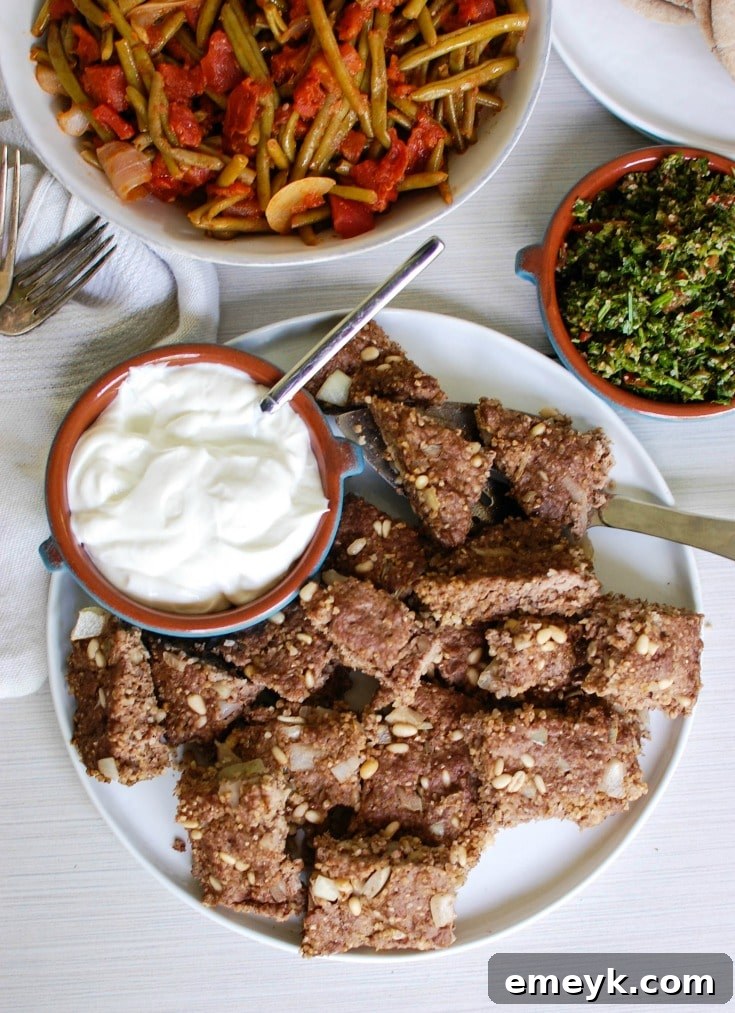
Authentic Lebanese Baked Kibbeh: A Beloved Middle Eastern Comfort Food
Embark on a culinary journey to the heart of the Middle East with this timeless recipe for **Baked Kibbeh**. A cornerstone of Lebanese and Syrian cuisine, Kibbeh is a rich, flavorful dish crafted from finely ground meat (typically beef or lamb) and bulgur wheat, exquisitely seasoned with aromatic spices like cinnamon and cumin, and often enhanced with savory onions. This baked version offers a wholesome and comforting experience, perfect for sharing with family and friends. It is traditionally served alongside creamy yogurt and a vibrant spread of other traditional Mediterranean delights, making it an ideal centerpiece for any gathering.
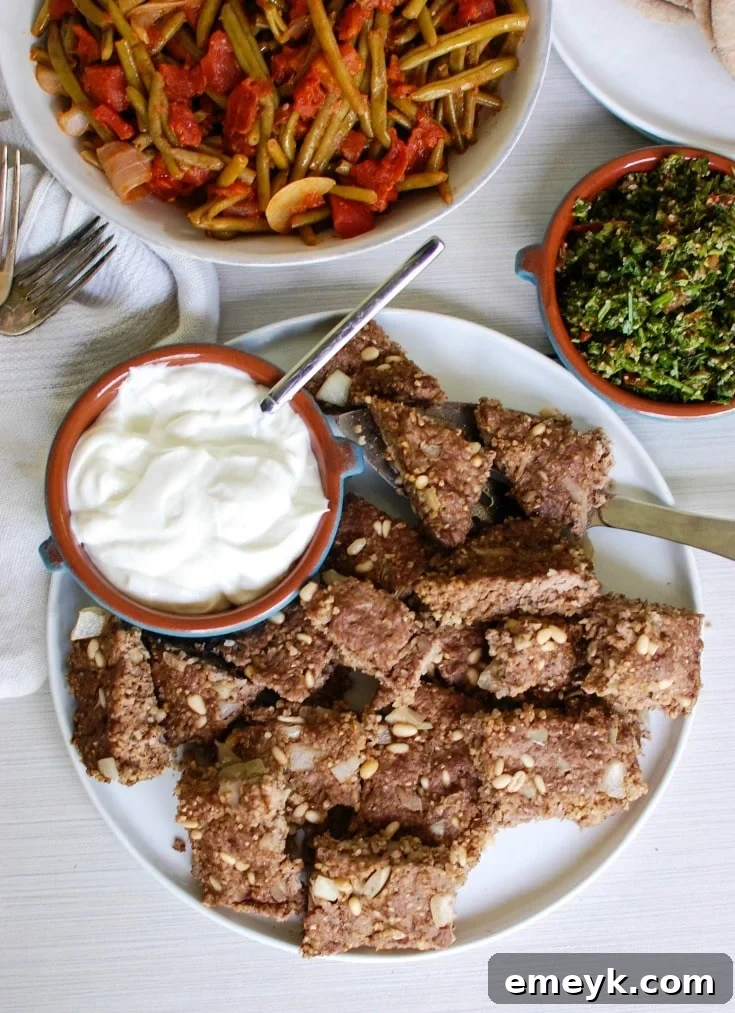
A Taste of Home: Embracing Lebanese Culinary Traditions
For many, Lebanese meals evoke cherished memories and a deep sense of connection to heritage. Growing up, the vibrant flavors of the Lebanese table were always my favorite, and that hasn’t changed a bit. Dishes like flavorful **tabbouleh**, refreshing **fattoush**, creamy **hummus**, warm pita bread, tangy yogurt, and tender **Lebanese green beans** instantly transport me back to my childhood kitchen. These are not just meals; they are experiences, stories told through generations, and a testament to the warmth of family gatherings.
Kibbeh has always held a special place in our family’s cooking repertoire. It’s more than just food; it’s a symbol of comfort, tradition, and the rich culinary heritage passed down through generations. Despite its sophisticated taste, the process of making traditional Kibbeh is surprisingly straightforward, allowing even novice cooks to achieve a delicious result. Its distinctive flavors, dominated by the warm notes of cumin and cinnamon, create an irresistible aroma that fills the kitchen and promises a truly satisfying meal. This baked version is particularly loved for its crispy exterior and tender, juicy interior, offering a perfect balance of textures.
What is Kibbeh? Exploring This Iconic Middle Eastern Dish
Kibbeh is not a single dish but rather a versatile family of dishes with numerous regional and personal variations across the Middle East. At its core, it represents a masterful blend of finely ground meat and bulgur wheat, a staple grain in the region. The careful combination of these two primary ingredients, along with a unique blend of spices, gives Kibbeh its characteristic flavor and texture. While the most common forms involve shaping and cooking, there are several exciting ways to enjoy this classic:
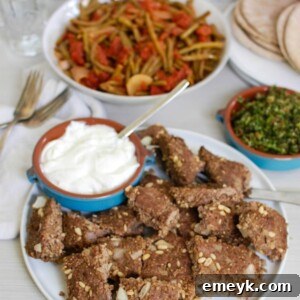
- **Baked Kibbeh (Kibbeh Bil Sanieh):** The version we’re focusing on today, typically baked in a tray and often presented with a decorative pattern scored into its surface. It’s a popular choice for larger family meals due to its ease of preparation for a crowd.
- **Fried Kibbeh (Kibbeh Maklieh):** These are small, oval-shaped croquettes, often filled with a savory mixture of spiced meat and toasted pine nuts. They are deep-fried to a golden crisp, offering a delightful crunch with every bite, often served as appetizers or part of a mezze spread.
- **Raw Kibbeh (Kibbeh Nayyeh):** A delicacy similar to steak tartare, prepared with raw lean meat, very fine bulgur, and a selection of fresh herbs and spices. This version requires the freshest, highest quality meat and is a true test of a chef’s skill and ingredient sourcing.
- **Vegetarian Kibbeh:** In recent years, creative versions using potatoes, pumpkin, or lentils as the base have gained popularity, offering delightful plant-based alternatives that capture the essence of Kibbeh’s flavor profile without the meat. These often incorporate similar spices and bulgur for texture.
Our family’s preferred method for this particular baked Kibbeh recipe involves using either lean ground beef or ground lamb, or sometimes a combination of both, to achieve a rich and robust flavor profile. The choice of meat significantly influences the final taste and moisture content of the dish. An optional, but highly recommended, addition is toasted pine nuts. Stirring these into the mixture introduces a wonderful crunch and a delicate, nutty undertone that complements the savory meat and bulgur beautifully. Each variation of Kibbeh offers a unique texture and taste, but they all share the distinctive aromatic spice blend that makes Kibbeh so uniquely Middle Eastern and universally loved.
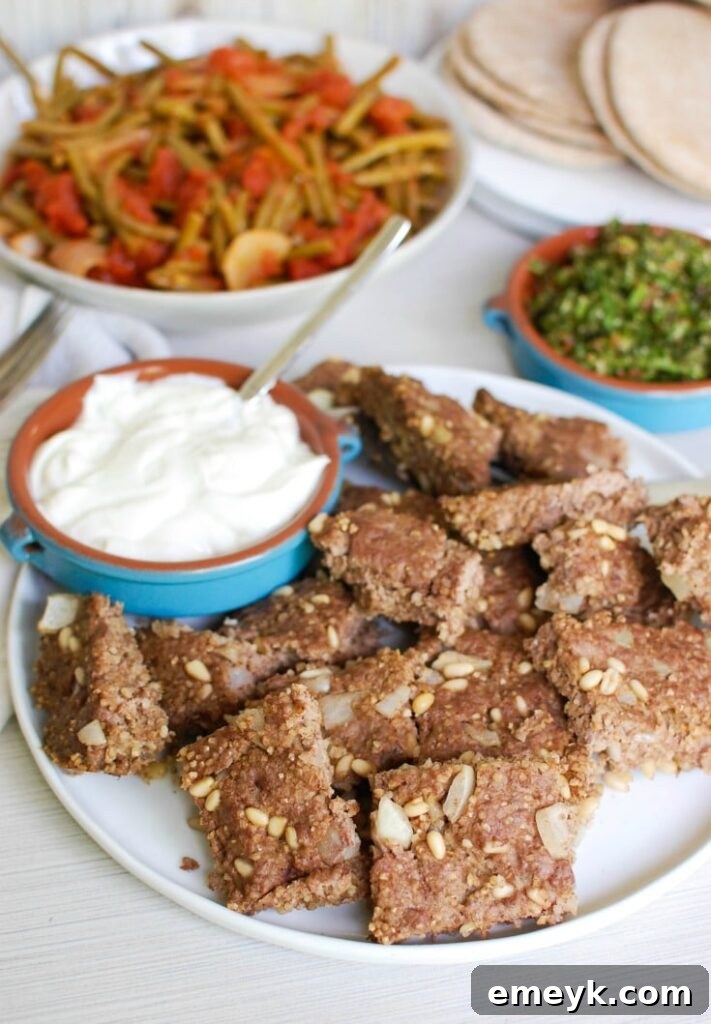
Crafting Your Own Baked Kibbeh: A Simple Guide to Middle Eastern Flavors
You might be surprised by how straightforward it is to prepare a truly authentic and delicious batch of Baked Kibbeh right in your own kitchen. The key lies in simple, fresh ingredients and a few easy steps that transform them into a culinary masterpiece. Let’s walk through the process, ensuring a perfect result every time that will impress your family and friends.
Essential Ingredients for Baked Kibbeh
Gathering the right ingredients is the first step to a successful Kibbeh. Each component plays a vital role in creating its signature taste and texture, so choosing quality ingredients is paramount:
- **Bulgur Wheat (Medium or #2):** This cracked wheat is the backbone of Kibbeh, providing its unique texture and acting as a binder. Medium-grain bulgur is ideal as it absorbs moisture well and provides the perfect texture without becoming mushy. Avoid fine bulgur for baked Kibbeh, as it can become too soft.
- **Ground Beef (80/20 lean):** A good quality ground beef with an 80/20 lean-to-fat ratio ensures the Kibbeh remains moist and flavorful during baking. The fat content prevents it from drying out and contributes to its rich taste. Ground lamb is also an excellent alternative or can be used in combination for a more traditional flavor profile.
- **Cinnamon:** A surprising but essential spice that adds a warm, sweet, and aromatic depth, beautifully balancing the savory notes of the meat and enhancing the overall complexity of the dish.
- **Ground Cumin:** Provides an earthy, warm, and slightly pungent flavor that is characteristic of Middle Eastern cuisine. Cumin is a cornerstone spice in many Lebanese dishes.
- **Black Pepper (Cracked):** Freshly cracked black pepper adds a subtle heat and pungent aroma, complementing the other spices without overpowering them.
- **Salt:** Crucial for enhancing all the other flavors. Adjust to taste, remembering that it’s easier to add more salt than to remove it.
- **Sweet Onion (Finely Chopped):** Adds essential moisture, natural sweetness, and a foundational savory flavor to the mix. Fine chopping ensures it integrates smoothly into the Kibbeh without creating large chunks.
- **Optional: Toasted Pine Nuts:** For an added layer of texture and a delicate, buttery nuttiness that complements the savory meat and bulgur beautifully. To toast, simply dry-fry them in a pan over medium heat until lightly golden.
Step-by-Step Preparation: Bringing the Flavors Together
Follow these simple instructions to prepare your delectable Baked Kibbeh. Precision in each step ensures a perfect outcome:
- **Preheat Your Oven:** Begin by preheating your oven to 350 degrees Fahrenheit (175°C). This ensures the Kibbeh bakes evenly and develops a beautiful golden crust from the moment it enters the oven.
- **Prepare the Bulgur Wheat:** Place the cracked bulgur wheat in a bowl and cover it completely with cold water. Let it soak for approximately 30 minutes. This step is crucial for softening the bulgur, allowing it to absorb moisture and become tender, which is essential for the cohesive texture of the Kibbeh. While the bulgur soaks, you can proceed with preparing the other ingredients, such as chopping the onion.
- **Chop the Onion:** Finely chop your sweet onion. The finer the chop, the better it will integrate into the meat mixture, distributing its flavor evenly without discernible pieces. You want the onion to melt into the Kibbeh as it bakes.
- **Combine Ingredients:** Once the bulgur wheat has finished soaking, it’s time to remove excess water. This is a critical step: using your hands, firmly squeeze out as much water as possible from the bulgur. The bulgur should feel moist but not wet. Transfer the squeezed bulgur to a large mixing bowl. Add the ground beef, finely chopped onion, cinnamon, ground cumin, black pepper, and salt.
- **Mix Thoroughly:** Using a sturdy spoon or, ideally, your hands, thoroughly incorporate all the ingredients. Knead the mixture for several minutes until everything is well combined and the mixture has a uniform, paste-like consistency. This vigorous mixing helps to bind the bulgur and meat, giving Kibbeh its characteristic smooth texture.
- **Optional Pine Nuts:** If you choose to add toasted pine nuts, gently fold them into the mixture after the main ingredients are combined. Their delicate nature means they don’t need extensive mixing; just ensure they are evenly distributed.
- **Prepare for Baking:** Lightly grease an 8×8 inch square baking dish with a non-stick spray or a thin layer of olive oil. Evenly spread the Kibbeh mixture into the prepared dish. Use your hands to gently pat it down, ensuring a flat and compact layer. This helps the Kibbeh bake uniformly and achieve a consistent texture and appealing presentation.
- **Score the Kibbeh:** Before baking, use a knife to cut diamond shapes or any desired pattern into the top of the Kibbeh. This scoring is not just for aesthetics; it helps with even cooking and makes serving easier after it’s baked, allowing the spices to penetrate deeper.
- **Bake and Serve:** Bake the Kibbeh in the preheated oven for 30 minutes, or until the top is beautifully golden brown and the meat is cooked through. The internal temperature should reach 160°F (71°C). Remove it from the oven and let it rest for 5-10 minutes before serving. This resting period allows the juices to redistribute, ensuring a tender and flavorful result.
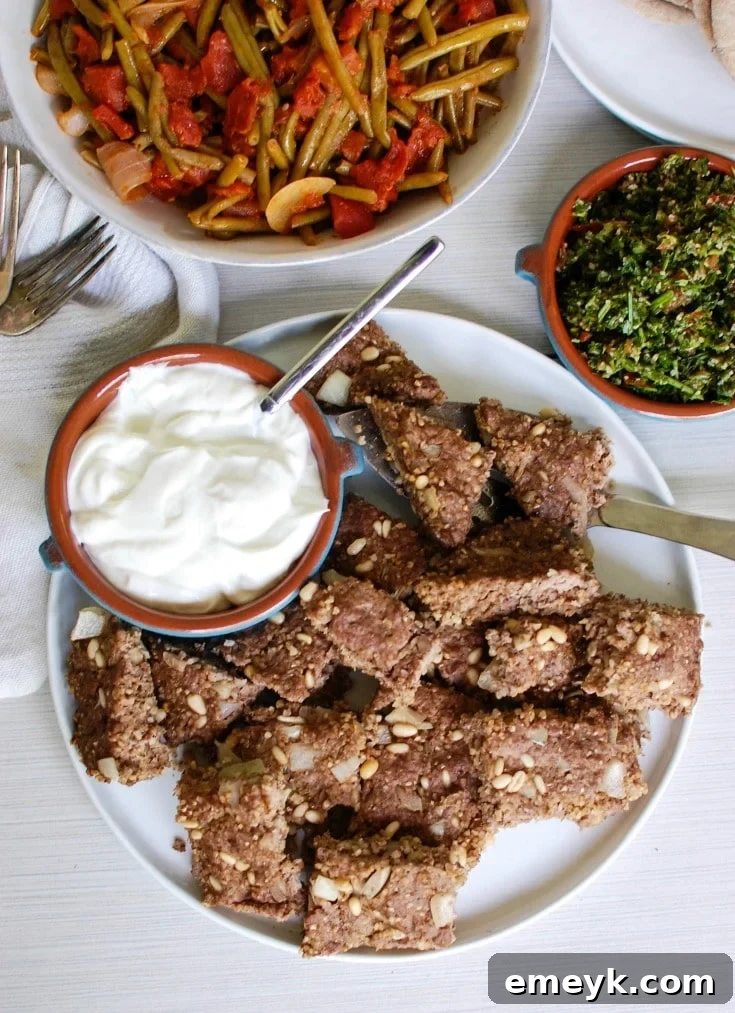
Customizing Your Kibbeh: Experimenting with Flavors and Spice
While the traditional spice blend of cinnamon and cumin is undeniably delicious and forms the authentic essence of Kibbeh, the dish is also wonderfully adaptable to personal taste and regional variations. If you enjoy a bit more heat and complexity in your meat dishes, consider adding a dash of paprika and a pinch of cayenne red pepper to the mixture. Paprika offers a mild, sweet warmth and vibrant color, while cayenne red pepper will provide a delightful kick, elevating the flavor profile without overwhelming the traditional essence of the dish. Experiment with these additions to find your perfect balance of warmth and spice, perhaps starting with a quarter teaspoon of each and adjusting according to your preference.
For those looking for further enhancements, consider incorporating fresh herbs like finely chopped mint or parsley into the mixture. These additions can brighten the flavor and add a fresh, herbaceous note, bringing another layer of complexity to the dish. A tiny pinch of allspice or nutmeg can also deepen the Middle Eastern character of the Kibbeh, creating an even more authentic taste experience. Feel free to explore these subtle changes to make this classic recipe truly your own.
Serving Suggestions: The Complete Mediterranean Feast
Baked Kibbeh shines brightest when served as part of a traditional Middle Eastern spread. Its rich, savory flavors are beautifully complemented by cool, tangy, and fresh accompaniments. Here are some classic ways to enjoy your homemade Kibbeh, turning a simple meal into a delightful feast:
- **Creamy Yogurt:** A dollop of plain, unsweetened yogurt or labneh (strained yogurt) provides a refreshing contrast to the warmth of the Kibbeh. Its tanginess cuts through the richness of the meat, creating a harmonious and balanced bite.
- **Fresh Pita Bread:** Warm pita bread is an essential component for scooping up the Kibbeh and any accompanying sauces or dips, making it a truly interactive and enjoyable meal.
- **Hummus:** The classic chickpea dip adds a creamy, earthy element and is a staple on any Mediterranean table, offering a smooth counterpoint to the Kibbeh’s texture.
- **Tabbouleh:** This vibrant salad of finely chopped parsley, ripe tomatoes, fresh mint, onion, and fine bulgur, all dressed with lemon juice and olive oil, offers a refreshing, herbaceous counterpoint that cleanses the palate.
- **Fattoush:** Another delightful Lebanese salad featuring mixed greens, cucumbers, tomatoes, radishes, and toasted or fried pita bread pieces, dressed in a zesty sumac vinaigrette. Its crunch and freshness are a wonderful addition.
- **Lebanese Green Beans (Lubee):** Tender green beans simmered in a flavorful tomato sauce make for a delicious and wholesome side dish that adds a touch of vegetable goodness.
- **Simple Green Salad:** A basic salad with a lemon-tahini dressing or just a simple vinaigrette can also offer a light and fresh element, ensuring a well-rounded meal.
- **Fresh Lemon Wedges:** A squeeze of fresh lemon juice over the Kibbeh before eating can brighten all the flavors, adding a zesty zing that elevates the dish.
Together, these dishes create a balanced and incredibly satisfying meal, celebrating the diverse and delicious flavors of Lebanese cuisine. Each component adds to the overall experience, making Kibbeh not just a dish, but a feast for the senses and a journey into rich culinary traditions.
Beyond Kibbeh: Exploring More Beef Recipes
If you’ve enjoyed the authentic flavors and satisfying experience of preparing this Baked Kibbeh, you’ll be delighted to discover other fantastic Middle Eastern beef recipes that share similar spice profiles and cooking traditions. The rich, savory taste of ground beef, often combined with aromatic spices and fresh herbs, is a hallmark of many beloved dishes in the region. Exploring these recipes can expand your culinary horizons and bring even more delightful tastes of the Middle East into your home. Here are a few more beef-centric recipes to inspire your culinary adventures and continue your journey through Lebanese and Mediterranean cuisine:
Beef
Beef Kafta Meatballs
Beef
Beef Kafta Kabobs
Beef
Mediterranean Ground Beef Stuffed Peppers
Beef
Slow Cooker Mediterranean Beef Meatballs
Baked Kibbeh Recipe
This recipe brings the authentic flavors of the Middle East right to your dinner table. Enjoy making this cherished dish that’s surprisingly simple yet profoundly satisfying.
Kibbeh
By Julia Jolliff
Kibbeh is a Middle Eastern favorite of ground beef, bulgur wheat, cinnamon, cumin, and onion, baked to perfection and served alongside yogurt and other traditional Mediterranean favorites. This recipe offers a straightforward approach to creating a comforting and flavorful meal.
Prep Time: 15 minutes
Cook Time: 30 minutes
Total Time: 45 minutes
Servings: 6 servings
Ingredients
- 1 cup cracked bulgur wheat (medium or #2)
- 1 pound ground beef (80/20 fat content recommended)
- 1 teaspoon ground cinnamon
- 2 teaspoons ground cumin
- 1/2 teaspoon cracked black pepper
- 1/2 teaspoon salt
- 1/2 sweet onion, finely chopped
Instructions
- Preheat the oven to 350°F (175°C).
- Place cracked bulgur wheat in a bowl and cover with cold water to soak for 30 minutes.
- Once the bulgur wheat is done soaking, use your hands to firmly squeeze out as much water as possible from the cracked wheat and place it in a large mixing bowl. Add the ground beef, cinnamon, cumin, salt, pepper, and finely chopped onion. Mix thoroughly (preferably with your hands) until all ingredients are well combined and the mixture has a uniform consistency.
- Lightly spray an 8×8 inch square baking dish with non-stick spray. Using your hands, evenly spread the Kibbeh mixture into the prepared baking dish and gently pat it down into a flat, compact layer.
- Use a knife to cut diamond shapes (or your preferred pattern) into the meat before cooking. This helps with even baking and presentation.
- Bake the Kibbeh for 30 minutes, or until the top is golden brown and the meat is cooked through. Remove from oven and let it rest for a few minutes before serving.
- Serve the baked Kibbeh alongside fresh yogurt, warm pita bread, creamy hummus, and refreshing tabbouleh for a complete traditional Middle Eastern meal.
Notes
- **Meat Variation:** You can use ground lamb instead of ground beef, or a combination of the two, for a slightly different, richer flavor profile.
- **Nutty Crunch:** For added texture and a delicate nutty flavor, stir in 1/4 cup of toasted pine nuts into the mixture just before pressing the meat into your baking dish.
- **Spicy Kick:** If you prefer a bit more heat, add a dash of paprika and a pinch of cayenne red pepper to the meat mixture along with the other spices.
- **Fresh Herbs:** Incorporate 1-2 tablespoons of finely chopped fresh mint or parsley into the mixture for an even brighter, herbaceous flavor.
Nutrition Information (Approximate per serving)
Serving: 6g, Calories: 279kcal, Carbohydrates: 19g, Protein: 16g, Fat: 16g, Saturated Fat: 6g, Polyunsaturated Fat: 1g, Monounsaturated Fat: 7g, Trans Fat: 1g, Cholesterol: 54mg, Sodium: 250mg, Potassium: 329mg, Fiber: 5g, Sugar: 1g, Vitamin A: 13IU, Vitamin C: 1mg, Calcium: 34mg, Iron: 3mg
Nutrition information is automatically calculated and should be used as an approximation. Individual results may vary based on exact ingredients and preparation methods.