
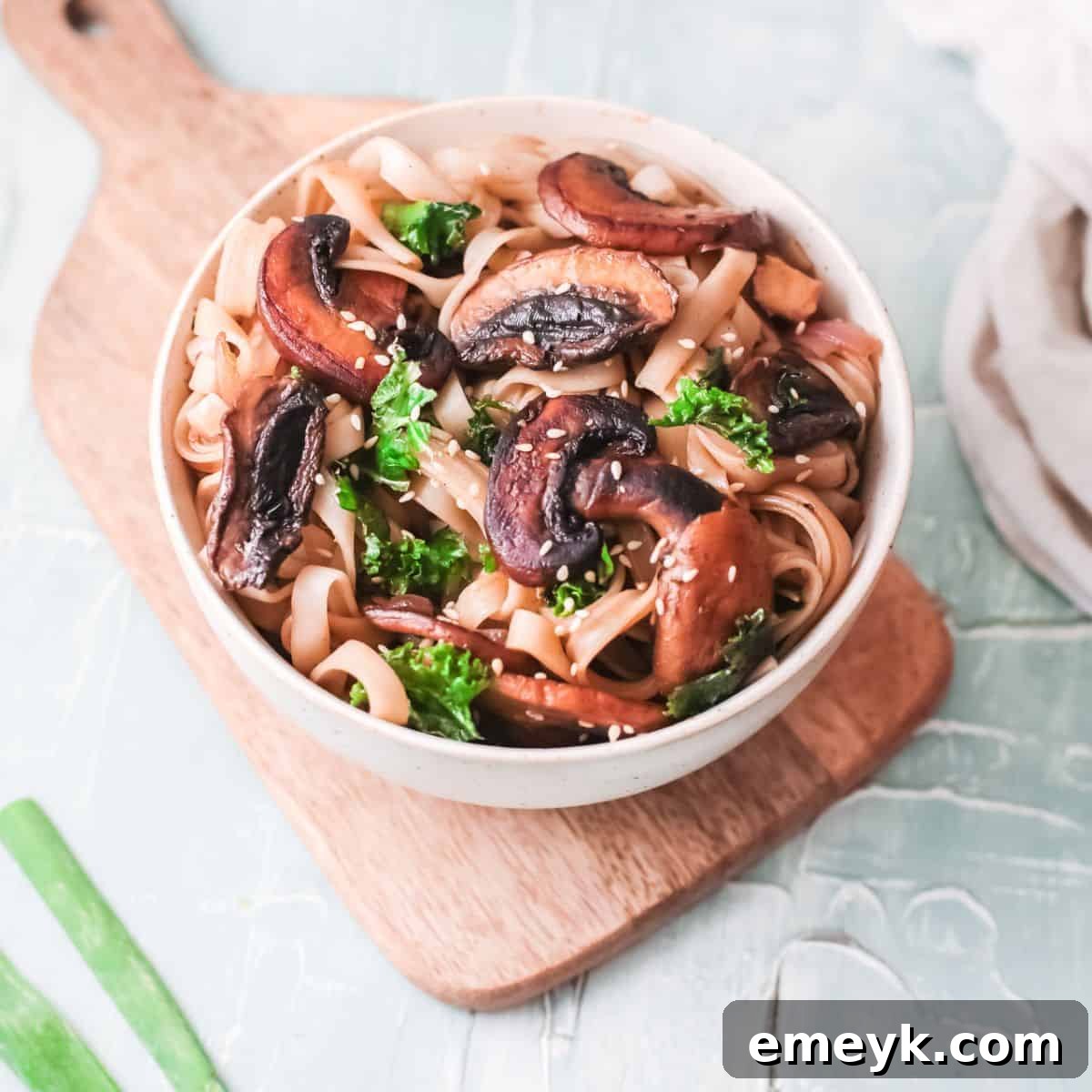
Craving a vibrant, flavorful meal that comes together in a flash? This Easy Korean Noodles Recipe is your answer. In under 20 minutes, you can create a restaurant-quality dish right in your own kitchen. Picture tender rice noodles, perfectly sautéed mushrooms, and healthy kale, all harmoniously tossed in a delectable sweet and savory soy-ginger sauce. Garnish your culinary masterpiece with a sprinkle of toasted sesame seeds and fresh green onions for an extra layer of flavor and visual appeal.
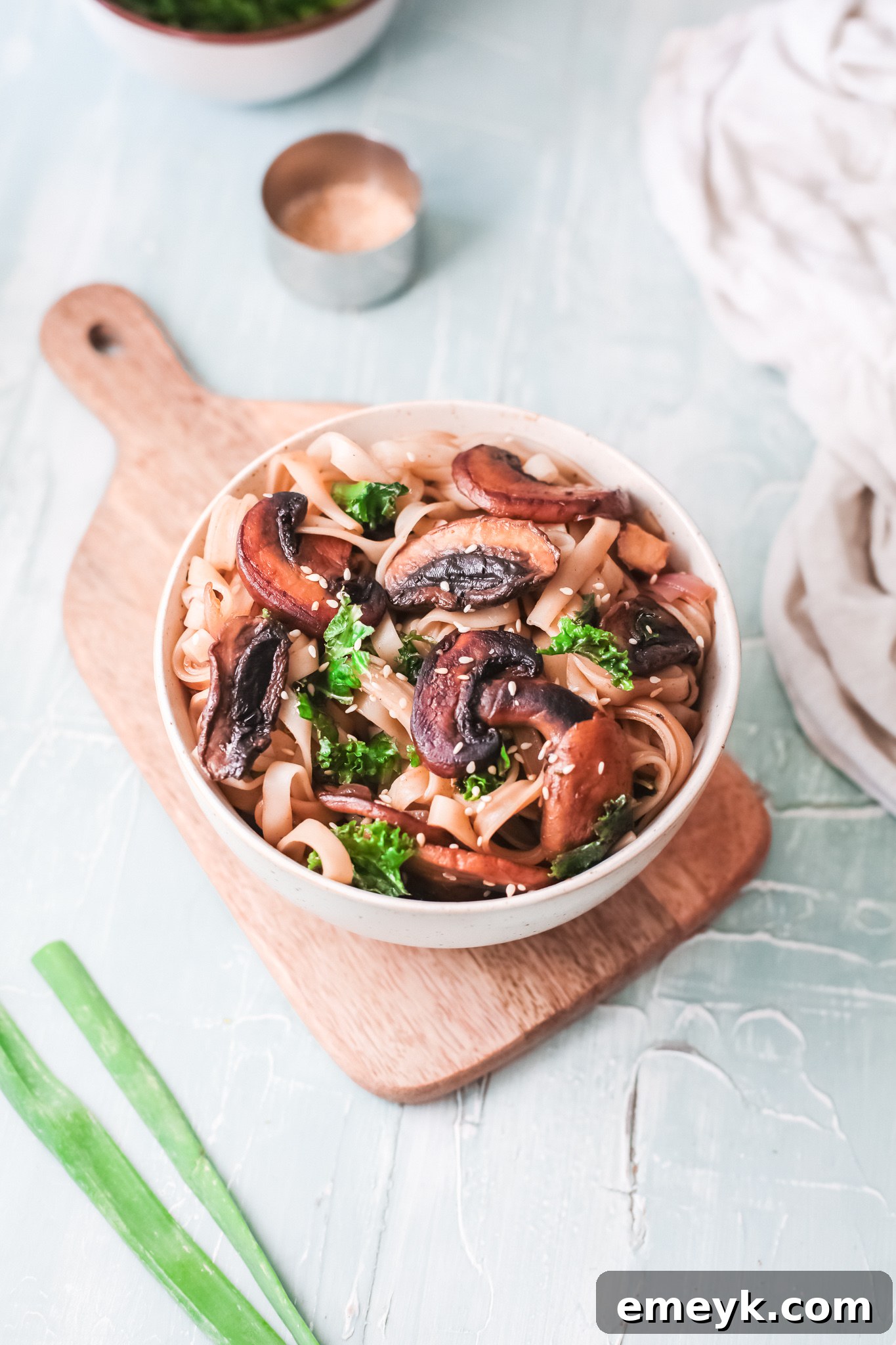
There’s an undeniable joy in recreating beloved Asian-inspired noodle dishes at home. While dining out offers its own charm, the satisfaction of whipping up your favorite flavors with fresh ingredients and personal touches is unmatched. Dishes like a Spicy Thai Basil Chicken Stir-Fry often inspire me to experiment in my kitchen, leading to exciting new discoveries.
What truly sets this particular Korean Noodle recipe apart is its incredible sauce. It strikes a delicate and delightful balance between sweetness and savory depth, creating an umami experience that will keep you coming back for more. This dish isn’t just delicious; it’s also wonderfully customizable, a feature I absolutely adore!
The base recipe is completely vegetarian, showcasing a delightful blend of earthy mushrooms, nutrient-rich kale, and comforting rice noodles. However, its adaptability means you can effortlessly incorporate a variety of additional vegetables, leafy greens, or even your preferred protein. If you’re someone who enjoys a little heat, a dash of Sriracha or some finely diced jalapeños can easily transform this into a spicy Korean noodle sensation.
When I’m in the mood for noodles, I love rotating between this Easy Korean Noodles recipe and other favorites like Asian Chicken Noodle Soup, Spicy Asian Chicken Soup, and this Easy Chicken Ramen Noodle Stir Fry. Each offers a unique flavor profile but shares the common thread of being wonderfully satisfying.
If you’re a fan of mushrooms, you’ll appreciate how they shine in this dish. Their meaty texture and ability to absorb flavors make them a fantastic addition. You might also enjoy these other mushroom-centric recipes: Balsamic Roasted Mushrooms, Garlic Sautéed Mushrooms, or these indulgent Caprese Stuffed Portobello Mushrooms.
Essential Ingredients for Your Korean Noodles
Crafting this quick and flavorful Korean noodle dish requires a few key components. Each ingredient plays a vital role in building the delightful layers of taste and texture that define this recipe.
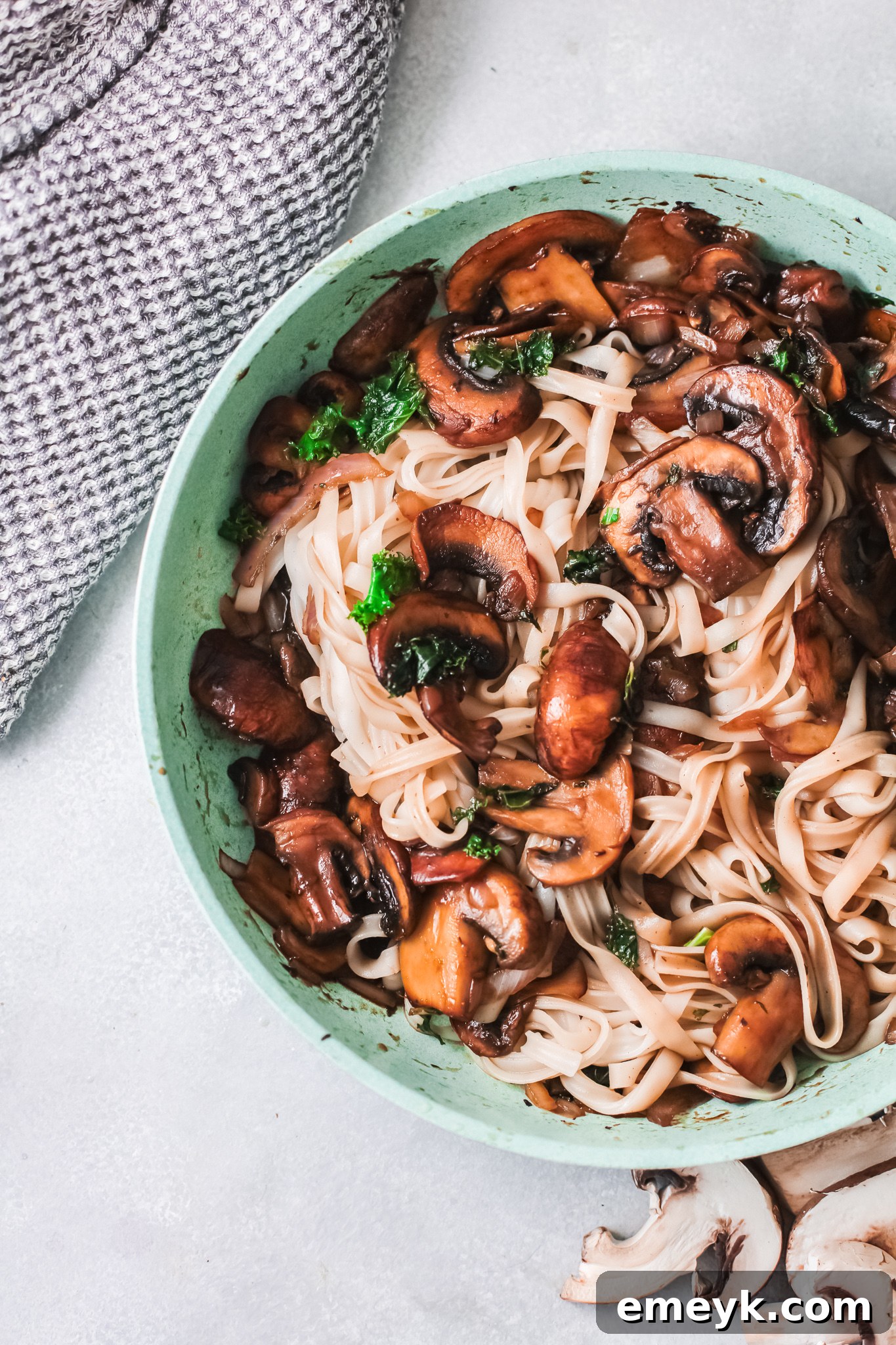
- Mushrooms: The star vegetable of this dish, mushrooms bring an earthy umami and a satisfying, meaty texture. Any variety will work wonderfully, whether you prefer cremini, shiitake, or even a mixed wild mushroom blend. Their ability to caramelize beautifully is crucial for the depth of flavor.
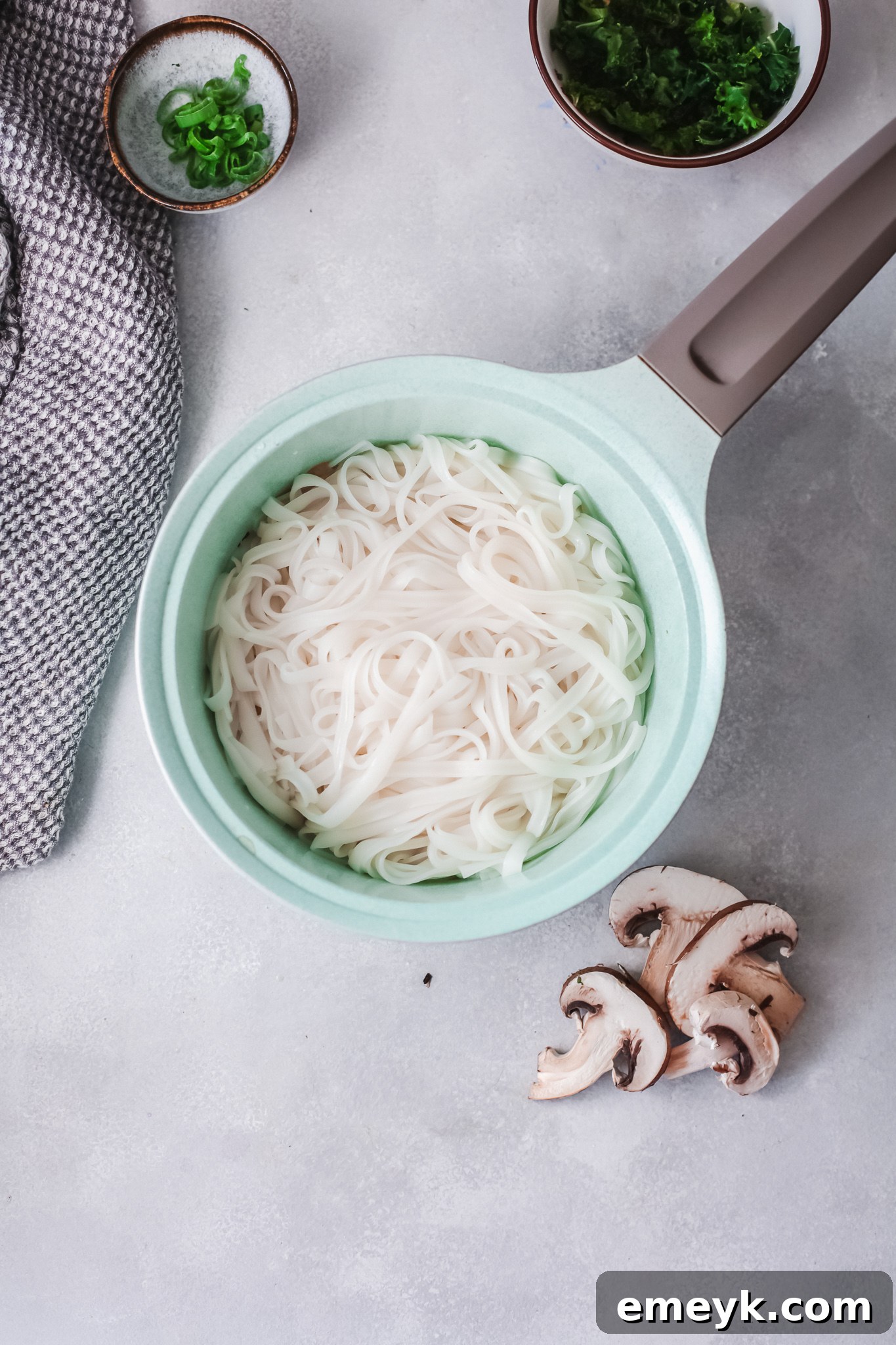
- Noodles: We opt for delicate rice noodles in this recipe. Their light texture is perfect for absorbing the rich sauce without becoming heavy. They also cook incredibly fast, contributing to the dish’s rapid preparation time. Feel free to use wider or thinner rice noodles based on your preference.
- Kale: Adding a generous portion of kale not only boosts the nutritional value but also introduces a slightly bitter, robust flavor that beautifully contrasts with the sweet and savory sauce. Curly kale is a great choice, but lacinato kale (dinosaur kale) also works well. Remember to chop it into smaller, manageable pieces for easy eating.
- The Signature Sauce: This is where the magic happens! Our sauce is a symphony of sweet and savory notes, meticulously crafted from essential Asian pantry staples. It features savory soy sauce (low-sodium recommended), tangy rice vinegar, rich vegetable stock, a touch of sweet honey, and pungent fresh ginger. This combination creates a coating that is both sticky and bursting with flavor.
- Aromatics & Fat: Butter and sesame oil lay the foundation for sautéing, adding richness and a distinctive nutty aroma. Red onion and grated garlic provide a pungent, aromatic base that infuses the entire dish with irresistible fragrance.
Elevate Your Dish: Customization Tips for These Noodles
One of the best aspects of this Korean noodle recipe is its incredible versatility. It serves as a fantastic base, allowing you to easily adjust it to suit your personal tastes, dietary needs, or whatever ingredients you have on hand. Don’t be afraid to get creative!
- Add More Vegetables: Amp up the nutrition and crunch by incorporating extra vegetables. Some excellent choices include thinly sliced zucchini, matchstick carrots, crisp celery, vibrant bell peppers (red or yellow for sweetness), or even snap peas. Add harder vegetables like carrots earlier in the cooking process, and softer ones like zucchini closer to the end.
- Boost Your Greens: While kale is featured, a variety of other leafy greens can be swapped in or added alongside. Consider fresh spinach (stirred in at the very end until wilted), sturdy Swiss chard, slightly peppery mustard greens, or crunchy bok choy.
- Introduce Protein: While delicious as a vegetarian meal, adding a protein makes it even more substantial.
- Seafood: Sautéed shrimp or flaky salmon are fantastic options, cooking quickly and absorbing the sauce beautifully.
- Poultry: Diced chicken or thinly sliced turkey breast can be stir-fried with the mushrooms.
- Beef/Pork: Thinly sliced beef (like sirloin or flank steak) or pork tenderloin can be marinated and quickly cooked before adding other ingredients.
- Vegetarian/Vegan Protein: Cubed firm tofu or tempeh, pressed and pan-fried until golden, makes an excellent plant-based addition. Edamame beans are another easy way to add protein.
- Explore Different Noodles: Don’t limit yourself to rice noodles! Experiment with various noodle types for a different culinary experience.
- Ramen Noodles: Quick-cooking and satisfying.
- Glass Noodles (Dangmyeon): Made from sweet potato starch, they offer a chewy, translucent texture.
- Udon Noodles: Thick, chewy wheat noodles, perfect for a heartier dish.
- Soba Noodles: Japanese buckwheat noodles with a distinct, slightly nutty flavor.
- Somen Noodles: Very thin Japanese wheat noodles, ideal for a lighter feel.
- Spice it Up: If you love heat, transforming this into Spicy Korean Noodles is simple.
- Sriracha: Drizzle directly into the sauce or serve on the side.
- Gochujang (Korean Chili Paste): A spoonful added to the sauce provides a complex, fermented heat and a beautiful color.
- Red Pepper Flakes: A simple and effective way to add a kick.
- Fresh Chilies: Thinly sliced bird’s eye chilies or serrano peppers can be added with the garlic and onion.
- Flavor Enhancements: A splash of toasted sesame oil at the very end enhances the nutty aroma. A squeeze of lime juice can add brightness.
Step-by-Step Guide: Crafting Your Easy Korean Noodles
Making these delicious Korean noodles is incredibly straightforward, perfect for a quick weeknight meal. Follow these simple steps to bring this flavorful dish to life:
Step 1: Prepare Your Noodles
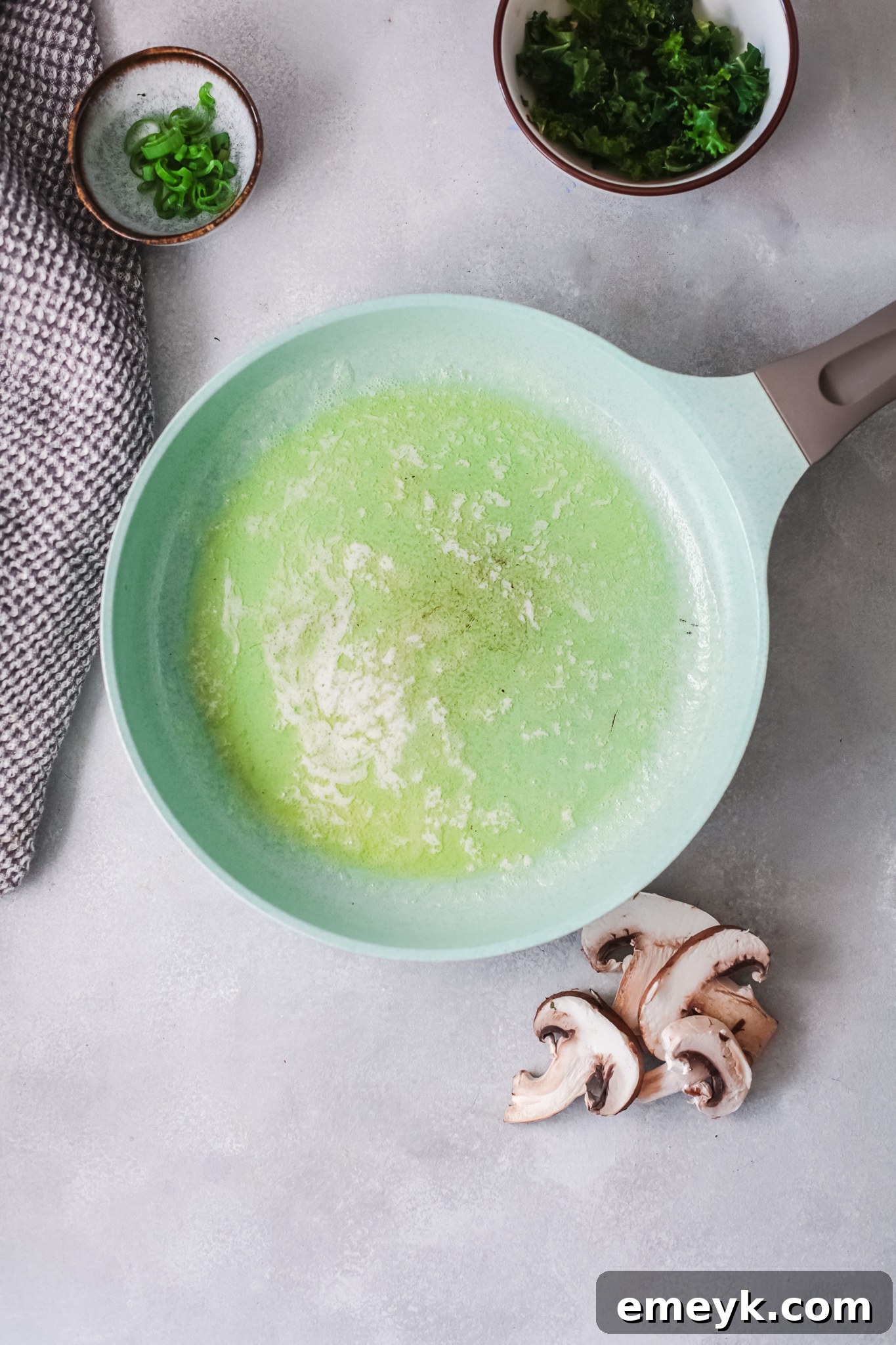
Begin by cooking your chosen noodles according to the package directions. For rice noodles, this usually involves soaking in hot water or a brief boil. While the noodles are cooking, melt the butter and sesame oil in a large skillet or wok over medium-high heat. This creates a flavorful base for your vegetables.
Step 2: Caramelize the Mushrooms
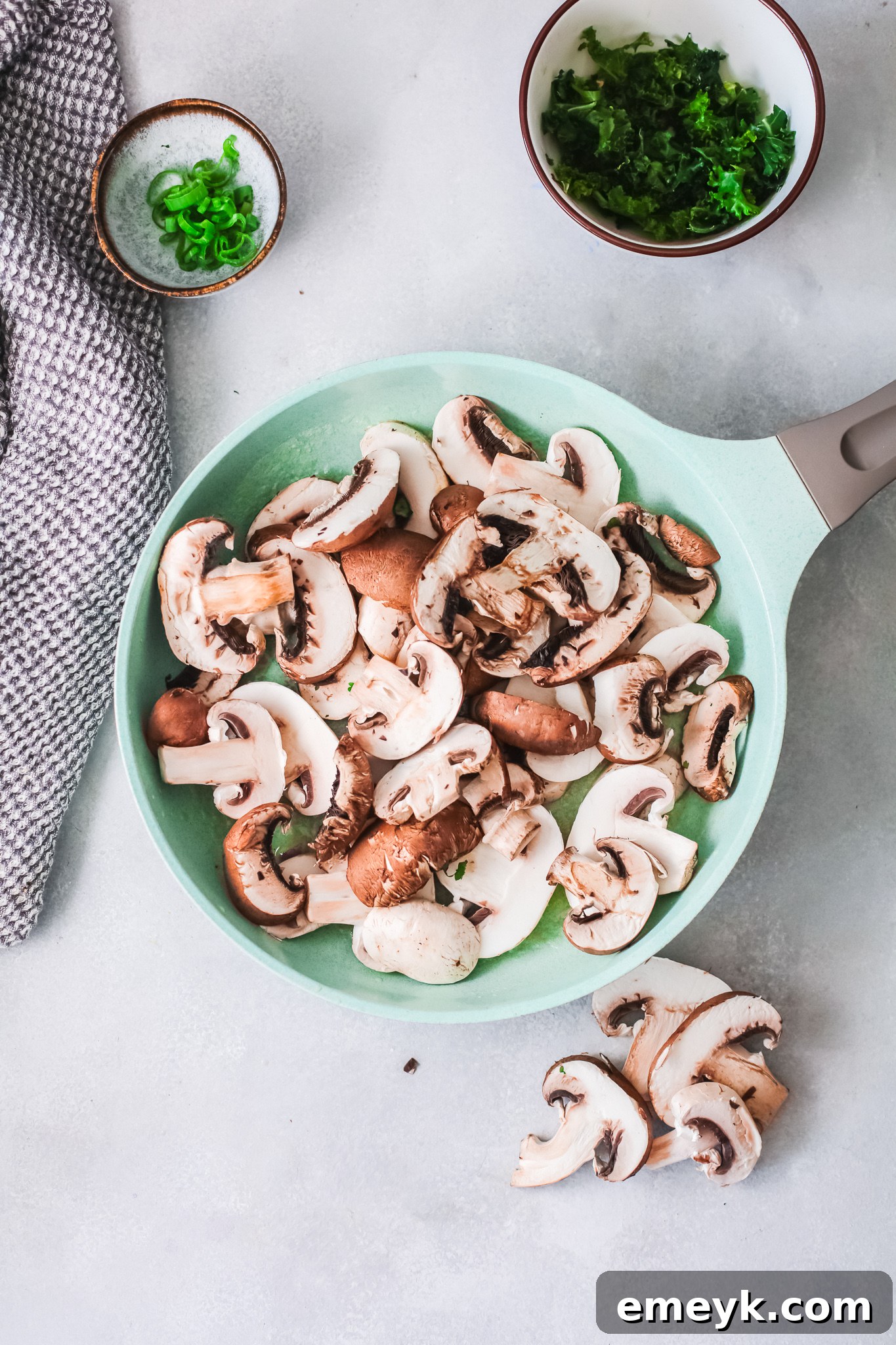
Add the sliced mushrooms to the hot pan. This is a crucial step for flavor development! Cook them without moving for about 5 minutes. Resist the urge to stir; allowing them to sit undisturbed helps them achieve a beautiful golden-brown caramelization, intensifying their earthy flavor. This is the secret to deeply flavorful mushrooms.
Step 3: Finish Mushroom Sauté
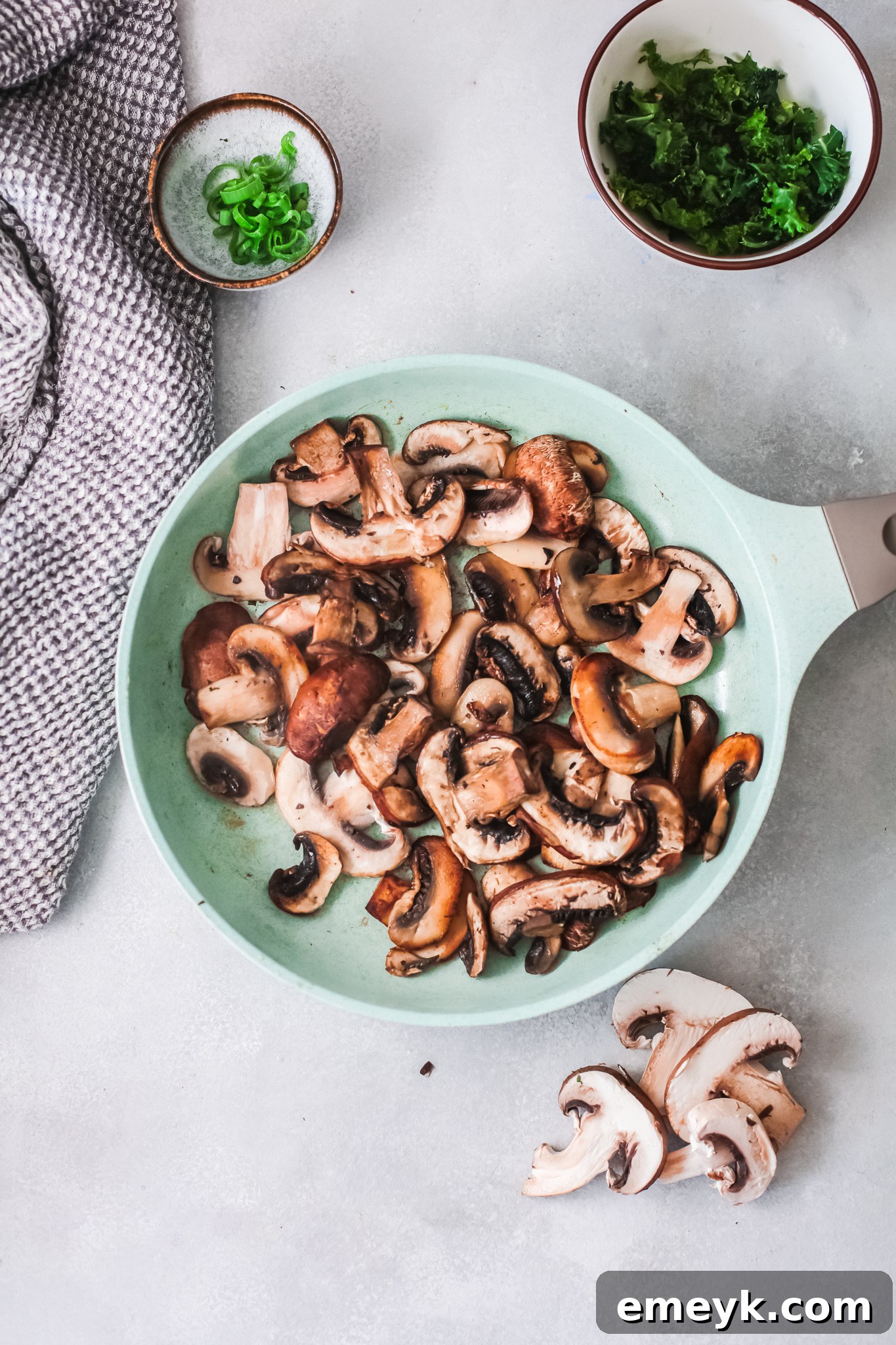
After the initial caramelization, toss the mushrooms and continue cooking for another 3 minutes, or until they are tender and richly browned on all sides. The caramelized edges add incredible depth to the dish.
Step 4: Add Aromatics
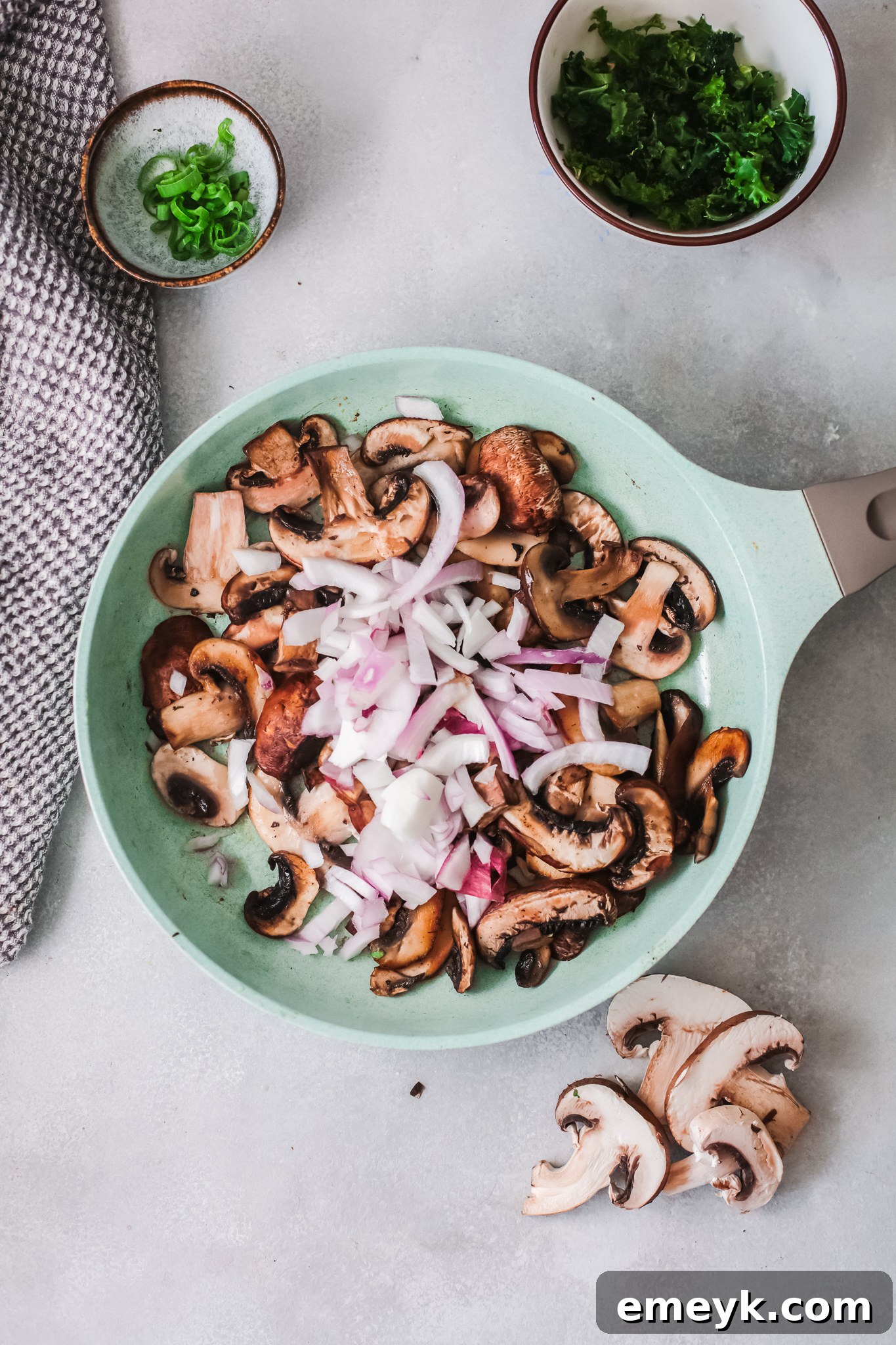
Introduce the sliced red onion and grated garlic to the skillet with the mushrooms. Stir well to combine all ingredients. Sauté for about 3 minutes, or until the onion becomes slightly translucent and fragrant. This step infuses the dish with essential aromatic flavors.
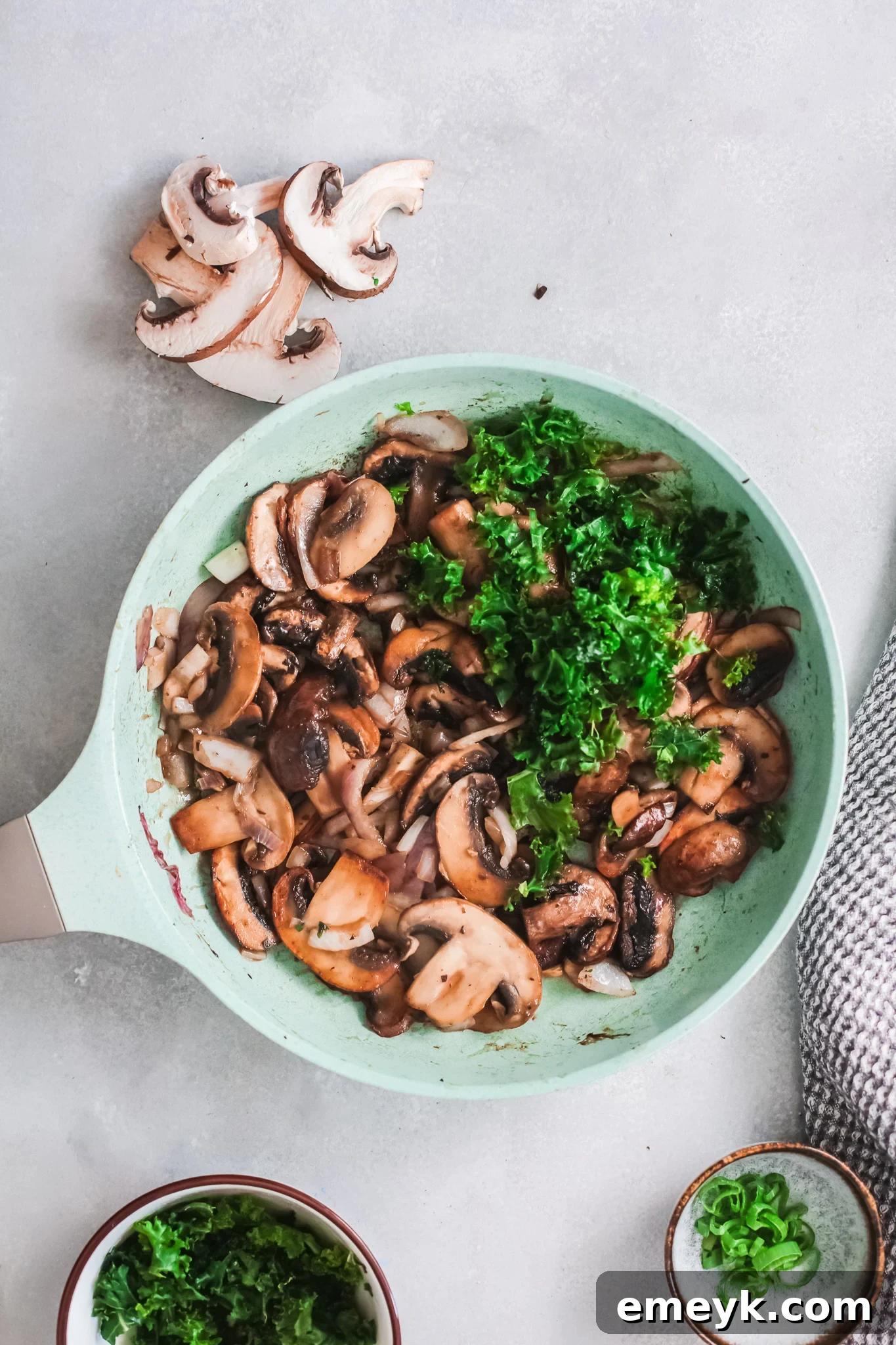
Step 5: Incorporate Kale
Add the chopped kale to the pan. Sauté for a few minutes, stirring occasionally, until the kale has wilted and turned a vibrant green. Be careful not to overcook it; you want it tender-crisp rather than soggy.
Step 6: Combine with Sauce
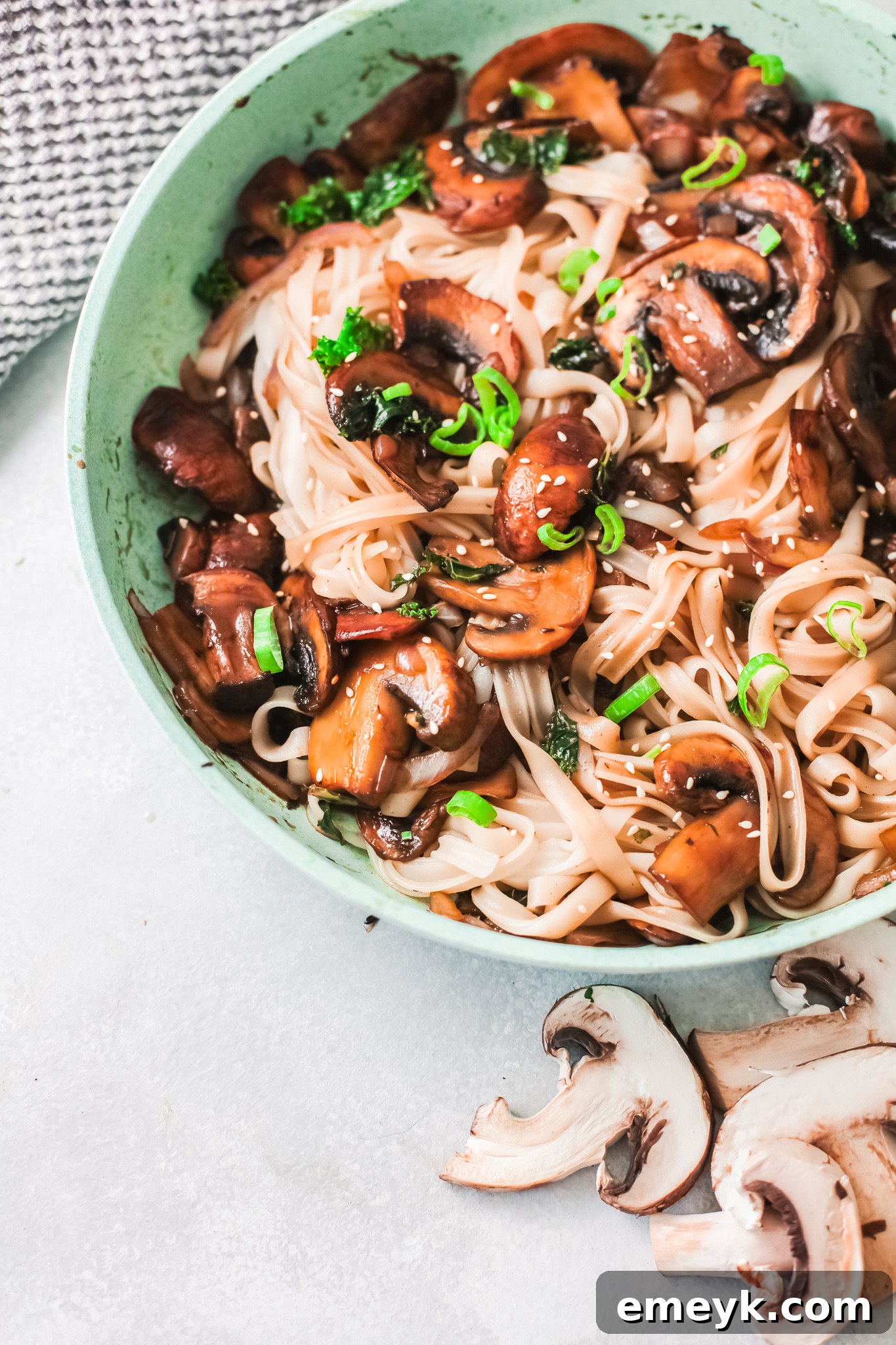
Pour in the soy sauce, rice vinegar, vegetable stock, honey, and grated ginger. Stir everything thoroughly to combine, ensuring the sauce coats all the vegetables evenly. The aroma at this point will be incredible!
Step 7: Final Toss and Serve
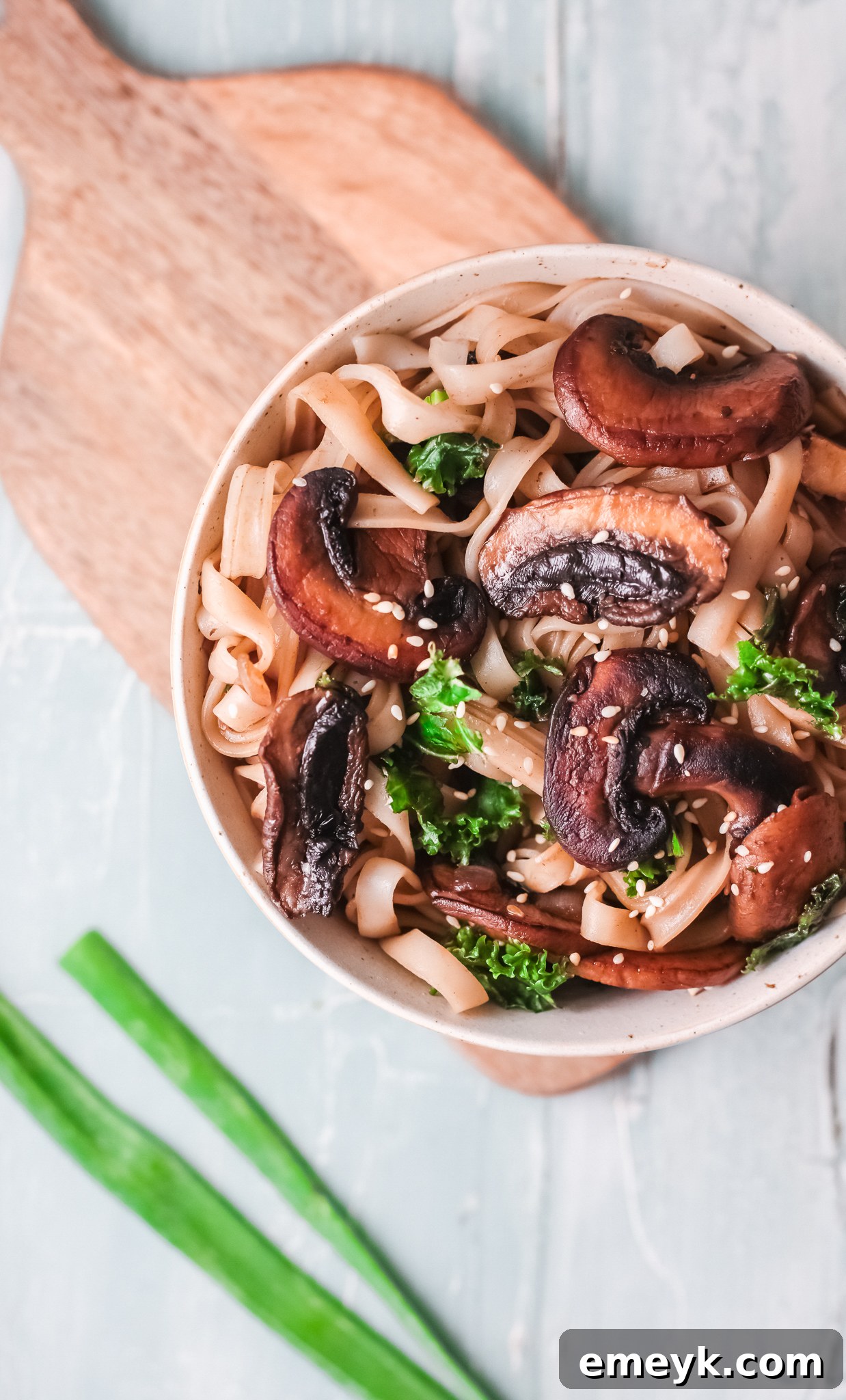
Add the cooked and drained noodles to the skillet. Toss everything gently but thoroughly, ensuring the noodles are completely coated with the rich sauce. Cook for just 2 more minutes to allow the flavors to meld and the noodles to warm through. Serve immediately, topped with fresh green onions and a generous sprinkle of sesame seeds.
Frequently Asked Questions About This Recipe
To minimize sticking, especially with rice or glass noodles, rinse them in cold water immediately after cooking and draining. This removes excess starch. You can also toss them with a tiny bit of sesame oil to keep them separate and add a lovely flavor.
Beyond green onions and sesame seeds, the possibilities are endless! Consider a soft-boiled egg, a dollop of kimchi for fermentation and spice, thinly sliced pickled radish, more pickled red onion, or even crumbled nori (seaweed). For a twist, some Korean-style ramyeon dishes are topped with a slice of American cheese, which melts into a creamy sauce.
Absolutely! Simply substitute regular soy sauce with tamari, which is a gluten-free alternative. Ensure your vegetable stock is also gluten-free, and you’re all set.
While best served fresh, these noodles can be meal-prepped. Cook all components, then store the noodles and sauce/vegetable mix separately in airtight containers in the refrigerator for up to 3 days. Reheat gently in a skillet or microwave, adding a splash of water or stock if needed to loosen the sauce. The noodles might absorb more sauce upon standing, so a little extra liquid helps revive them.
More Delightful Noodle Inspirations
If you enjoyed this easy Korean noodle dish, you’re in for a treat! Our collection features a variety of satisfying noodle recipes perfect for any occasion. Explore more ways to bring incredible flavors to your table with these popular options:
Chicken
Lemongrass Chicken Noodle Bowls
Soups
Easy Ramen Noodle Soup
Vegetarian
Spicy Ramen Noodle Recipe
Chicken
Easy Chicken Ramen Noodle Stir Fry
Tried this recipe? Share your experience and leave a comment below! Follow us on Facebook, Instagram, or Pinterest for the latest recipes and culinary inspiration.
Easy Korean Noodles Recipe
Julia Jolliff
This Easy Korean Noodles Recipe is a vibrant, flavorful, and incredibly quick vegetarian meal perfect for any night of the week.
5 mins
15 mins
20 mins
4
Ingredients
- 1 tablespoon butter
- 1 tablespoon sesame oil
- 2 cups mushrooms, sliced (e.g., cremini, shiitake)
- ½ Red onion, sliced thinly
- 2 garlic cloves, grated (or finely minced)
- 1 cup kale, chopped (curly or lacinato)
- 1 – 12 ounce package rice noodles, cooked according to package directions
- ¼ cup low-sodium soy sauce (or tamari for gluten-free)
- 2 tablespoons rice vinegar
- ¼ cup vegetable stock
- 2 tablespoons honey
- 1 teaspoon ginger, grated (fresh is best!)
- Garnishes: sesame seeds, green onions (sliced)
Instructions
- Cook the rice noodles according to the package directions. Drain and set aside.
- While noodles cook, melt the butter and sesame oil in a large pan or wok over medium-high heat.
- Add the sliced mushrooms to the pan. Cook without stirring for 5 minutes to allow them to caramelize. Then, toss and cook for an additional 3 minutes, or until deeply browned and tender.
- Stir in the sliced red onion and grated garlic. Sauté for about 3 minutes, or until the onion is translucent and fragrant.
- Add the chopped kale and sauté until just wilted, about 2-3 minutes.
- Pour in the soy sauce, rice vinegar, vegetable stock, honey, and grated ginger. Stir well to combine all ingredients and coat the vegetables.
- Add the cooked noodles to the pan and toss everything gently until the noodles are thoroughly coated with the sauce. Cook for 2 more minutes to heat through and allow flavors to meld.
- Serve immediately, garnished with fresh green onions and sesame seeds.
Chef’s Notes & Tips
- For a gluten-free option, substitute regular soy sauce with tamari.
- The key to maximum flavor from your mushrooms is proper caramelization. Ensure they have enough space in the pan and resist stirring them frequently during the initial cooking phase. This creates a deep, rich umami.
- If you prefer a spicier dish, consider adding a teaspoon of chili flakes with the sauce, or a drizzle of Sriracha to taste. For a sweeter profile, you could add a touch more honey or a tablespoon of teriyaki sauce.
Nutrition Information
Calories: 127kcal, Carbohydrates: 15g, Protein: 4g, Fat: 7g, Saturated Fat: 2g, Polyunsaturated Fat: 2g, Monounsaturated Fat: 2g, Trans Fat: 0.1g, Cholesterol: 8mg, Sodium: 899mg, Potassium: 237mg, Fiber: 1g, Sugar: 11g, Vitamin A: 644IU, Vitamin C: 7mg, Calcium: 26mg, Iron: 1mg
Nutrition information is an estimate based on the ingredients listed and may vary depending on specific brands and preparation methods. It should be used as an approximation only.
Tried this recipe? Share your creation! Mention @acedarspoon or tag #acedarspoon on social media. We love seeing your delicious results!