
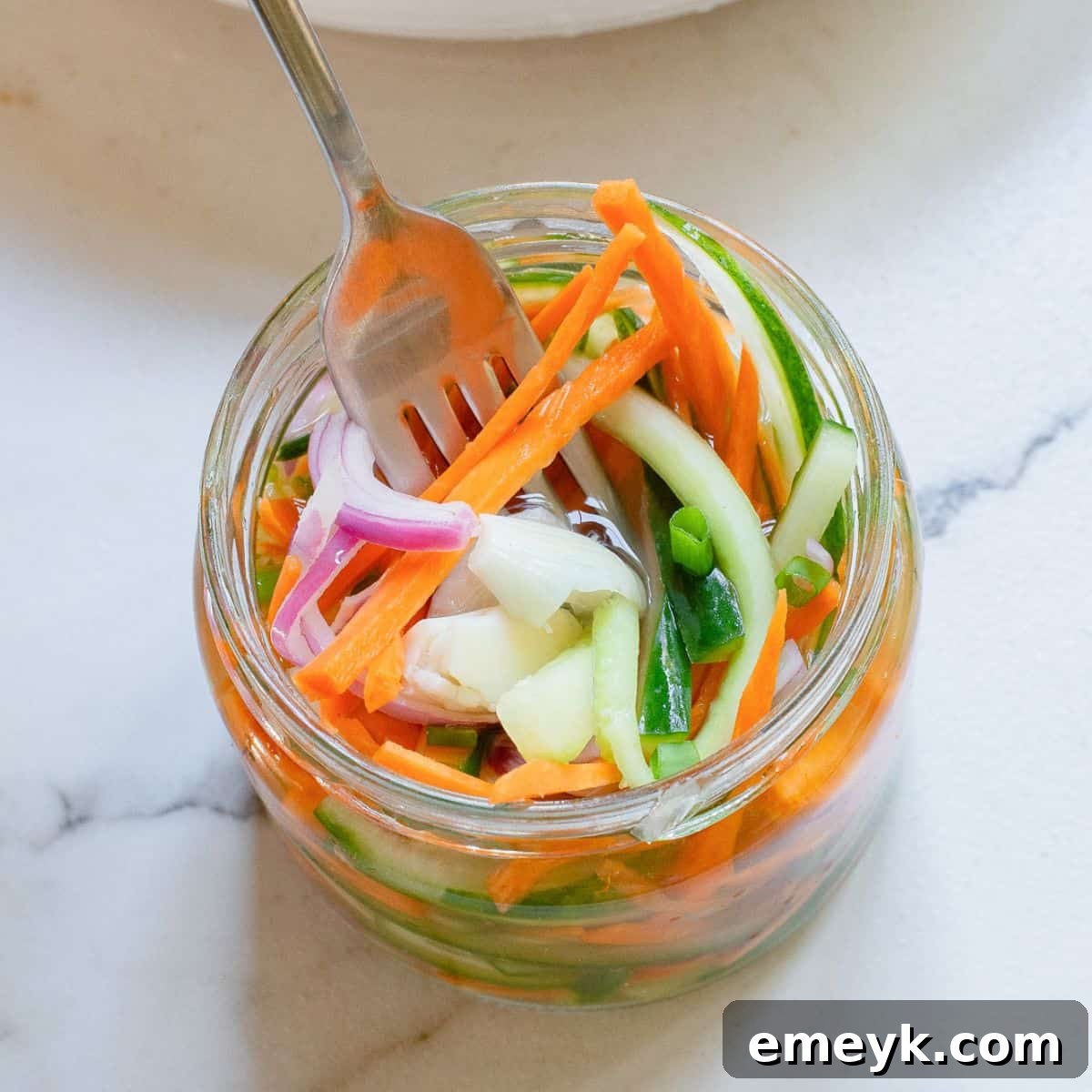
Quick Pickled Vegetables are an exceptionally simple and rewarding way to preserve fresh produce you have on hand. These vibrant refrigerator pickles effortlessly infuse a burst of tangy flavor and satisfying crunch into a myriad of dishes, transforming everyday meals like salads, tacos, rice bowls, and wraps into culinary delights. Designed for convenience, these homemade pickled veggies can be stored in your refrigerator for up to two weeks, offering a versatile solution to minimize food waste and add gourmet flair to your table. You can easily adapt this recipe with various vegetables, making it a staple for any home cook.
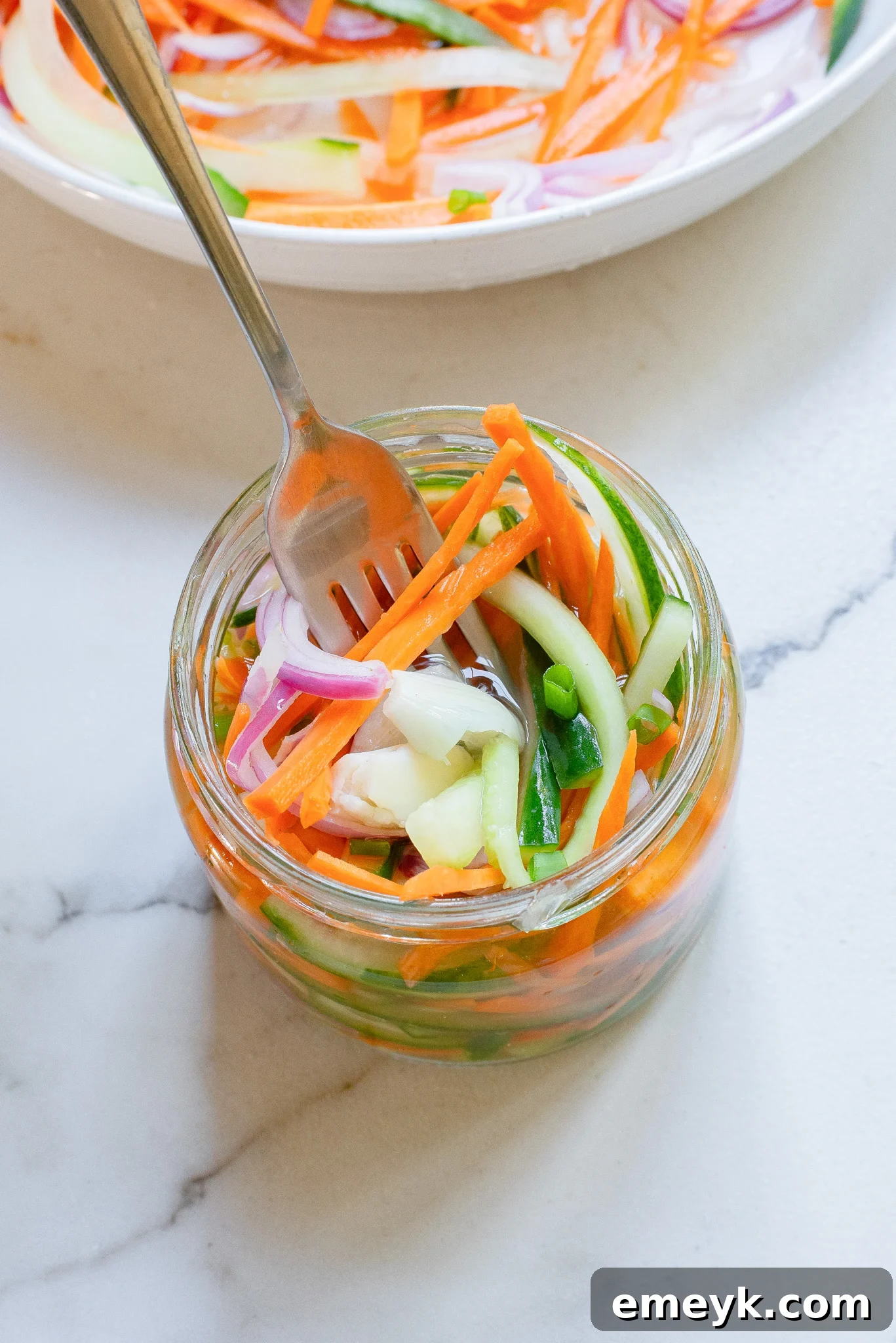
My Pickling Journey: From Obsession to Homemade Delights
My passion for all things pickled runs deep. From classic dill pickles to more adventurous spicy pickled carrots, I’m constantly seeking that perfect balance of tang and crunch. It was this very obsession that led me to discover the sheer simplicity of making quick pickled vegetables at home, eliminating the need for complex, traditional canning methods. Today’s recipe for Quick Pickled Vegetables is designed to be incredibly easy, highly customizable, and a fantastic way to enjoy a wide array of fresh produce, spices, and herbs.
If you enjoy the vibrant flavors of pickled foods, you might also love my Easy Curtido Recipe, a Salvadoran cabbage slaw that’s both tangy and refreshing. For a specific pickled favorite, don’t miss out on these Quick Pickled Red Onions, which are perfect for topping burgers and sandwiches.
Quick Pickling vs. Traditional Canning: Understanding the Difference
One common question I encounter is the distinction between quick pickling vegetables and traditional canning. Quick pickling, also widely known as refrigerator pickling or cold pickling, is a straightforward and rapid technique for preserving vegetables. It involves submerging fresh vegetables in a flavorful brine solution, without the necessity of heat processing or extensive fermentation that characterize traditional canning.
Unlike conventional canning methods that demand precise heat treatment and airtight sealing for long-term shelf stability at room temperature, quick pickling simply requires immersing vegetables in a vinegar-based brine and then storing them in the refrigerator. This process allows the vegetables to rapidly develop their signature tangy, pickled flavor and maintain a wonderfully crisp texture. Crucially, quick pickled vegetables must always be stored in the fridge and are best enjoyed within two weeks to ensure optimal freshness and safety. If you appreciate incorporating fresh vegetables into your cooking, you might also like exploring these other delightful recipes: Balsamic Roasted Mushrooms, Easy Bok Choy Recipe, Bok Choy Stir Fry, or these incredibly flavorful Honey Balsamic Roasted Carrots.
Why We Adore Quick Pickled Vegetables

These homemade pickled vegetables are not just easy to make; they bring a host of benefits to your kitchen and your meals:
- Unbeatable Flavor Boost: Quick pickled vegetables are a game-changer for adding a bright, tangy, and zesty kick to countless dishes. Imagine the crunch and flavor they bring to rice bowls, tacos, wraps, sandwiches, and even simple grain bowls. The beauty is you can customize the type of vegetables to perfectly complement whatever you’re serving.
- Remarkably Quick & Simple: Forget the lengthy processes of traditional canning! This quick pickling method is designed for speed and ease, making it accessible even for novice home cooks. While the vegetables benefit greatly from sitting in the fridge overnight to fully absorb the flavors, you can certainly enjoy them shortly after preparation. This convenience means you can whip up a batch whenever inspiration strikes or when you need a speedy side dish.
- Sustainable & Waste-Reducing: This recipe is a fantastic solution for utilizing abundant vegetables. Whether you have an overflowing garden, just returned from a farmers market with a bounty, or simply need to use up fresh produce in your fridge before it spoils, quick pickling offers an excellent way to extend their life and prevent food waste. It’s a sustainable practice that benefits both your pantry and the planet.
- Healthy & Versatile Addition: Beyond their incredible taste, quick pickled vegetables are a low-calorie way to add more veggies to your diet. They are a wonderful alternative to heavier condiments and can brighten up any meal without adding excessive fat or calories. Their versatility means they can be a snack on their own, a crunchy topping, or a flavorful ingredient in more complex recipes.

Essential Recipe Ingredients
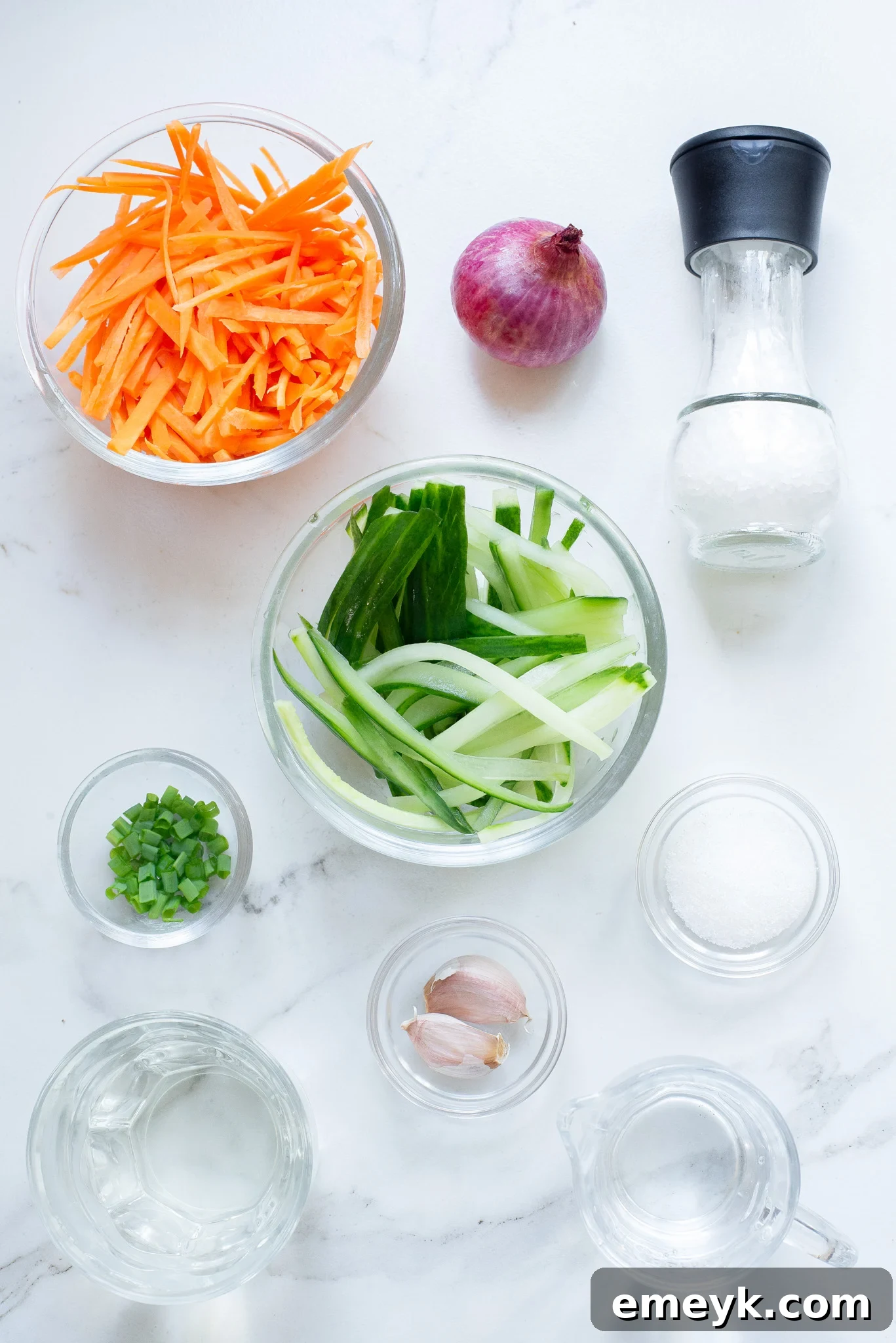
This easy recipe shines with its simple, wholesome ingredients, making it one of my absolute favorites. Here’s what you’ll need:
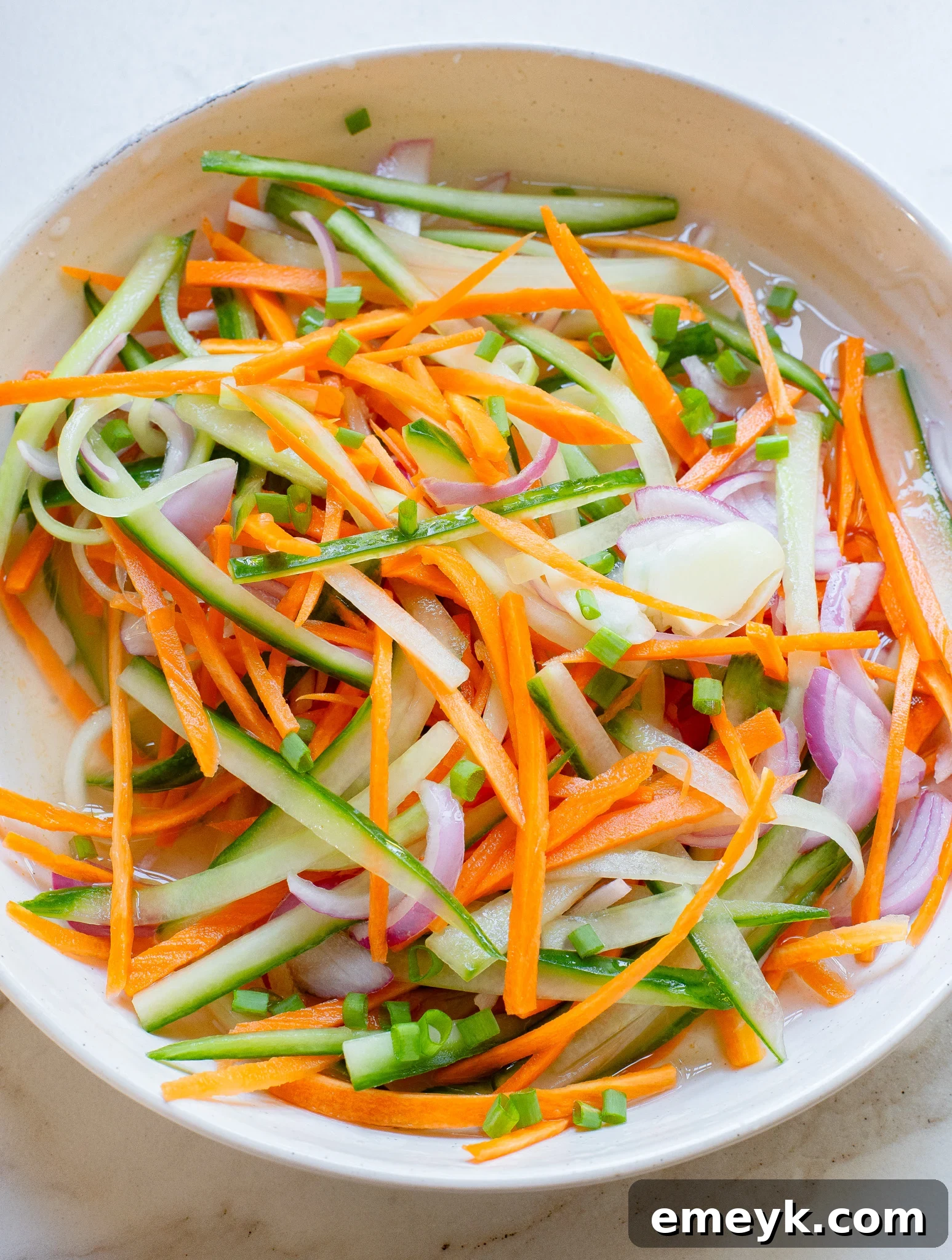
- Vegetables: While you can truly use almost any vegetable for pickling, this particular recipe features a classic trio: crisp carrots, refreshing cucumber, and sharp red onion. Ensure they are sliced or cut into julienne strips of an appropriate size to fit neatly into your Mason jar.
- White Vinegar: The cornerstone of our pickling brine, white vinegar provides the essential acidity that preserves the vegetables and imparts that characteristic tangy flavor we all love. It’s a fundamental component for quick pickling.
- Fresh Garlic Cloves: For an aromatic depth and pungent kick, fresh garlic cloves are indispensable. Lightly crushing them before adding to the brine allows their potent flavor to infuse beautifully into the vegetables.
- Aromatic Spices: To elevate the flavor profile, a selection of whole spices is highly recommended. For the best results, try to use fresh, whole spices rather than ground varieties, as they offer a more complex and robust flavor without clouding the brine. This recipe specifically calls for whole peppercorns, earthy coriander seeds, and pungent mustard seeds. These spices contribute a warm, slightly spicy, and deeply aromatic essence to your pickled vegetables.
- Water & Sugar & Salt: These balance the brine. Water dilutes the vinegar to create a palatable pickling liquid. Sugar helps to mellow the sharp acidity of the vinegar and adds a subtle sweetness that enhances the overall flavor. Salt, typically sea salt or kosher salt, is vital for flavor, crispness, and also plays a role in preservation.
Unleash Your Inner Chef: Customizing Your Quick Pickles
The beauty of quick pickling lies in its incredible versatility. Don’t be afraid to experiment and tailor this recipe to your unique taste preferences and what you have available in your pantry.
- Experiment with Spices and Herbs: This is where you can truly make the recipe your own! Spices are a phenomenal way to introduce new layers of flavor. Beyond the suggested peppercorns, coriander, and mustard seeds, consider additions like fennel seeds for a touch of licorice, juniper berries for a piney note, anise seed for sweetness, dill seed for classic pickle flavor, allspice, whole cloves, or cumin seeds for an earthy warmth. For those who love a bit of heat, a pinch of crushed red pepper flakes or even a few slices of fresh jalapeño can add a welcome zing.
- Infuse with Fresh Herbs: Fresh herbs lend a vibrant, aromatic quality to your pickled vegetables. Dill is a perennial favorite, but parsley, oregano, basil, bay leaves, chives, rosemary, or sage can all create distinct and delicious flavor profiles. Try a single herb or a complementary blend.
- Add a Touch of Citrus: Citrus zest can introduce a wonderful brightness and subtle sweetness to your brine. A few strips of orange, lemon, or lime zest can truly elevate the complexity of your pickled veggies, adding a refreshing top note.
- Choose the Right Vinegar: The type of vinegar you use will significantly impact the final flavor. While white vinegar is a classic choice for its clean acidity, and apple cider vinegar offers a fruitier, mellower tang, don’t stop there! Explore rice vinegar for an Asian-inspired flavor, white wine vinegar for a delicate touch, or red wine vinegar for a bolder, more robust profile. Each vinegar opens up a new world of possibilities for your quick pickles.
- Adjust Sweetness and Saltiness: The balance of sugar and salt in your brine can be fine-tuned to suit your personal taste. Some prefer a sweeter pickle, while others lean towards a more savory or tart profile. Just remember that salt is crucial for the vegetables’ crispness and also acts as a preservative, so don’t omit it entirely. Start with the recommended amounts and adjust in subsequent batches. You might consider using maple syrup or honey as an alternative sweetener for a different nuance.
- Explore Different Vegetable Cuts: While julienne is great, consider spears, coins, or even small florets. The cut can affect both the texture and how quickly the vegetables pickle.
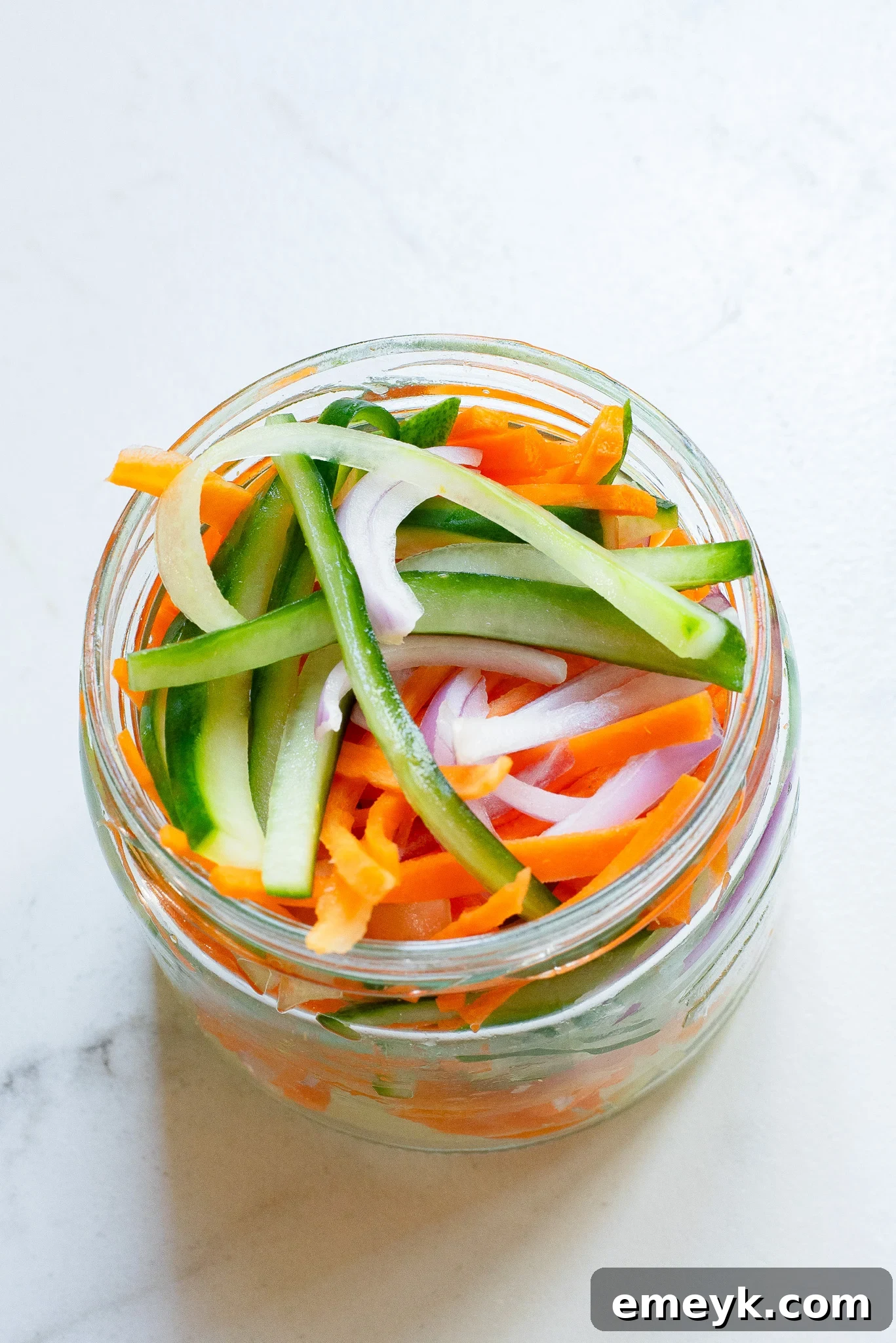
Simple Steps to Homemade Pickling: How Do You Make Quick Pickled Vegetables?
Creating your own quick pickled vegetables is incredibly straightforward. Follow these steps for delicious results:
- Prepare Your Mason Jar: Start with a clean, sterilized Mason jar. A quart-sized jar is usually ideal for this recipe. Ensure it’s completely dry before adding any ingredients.
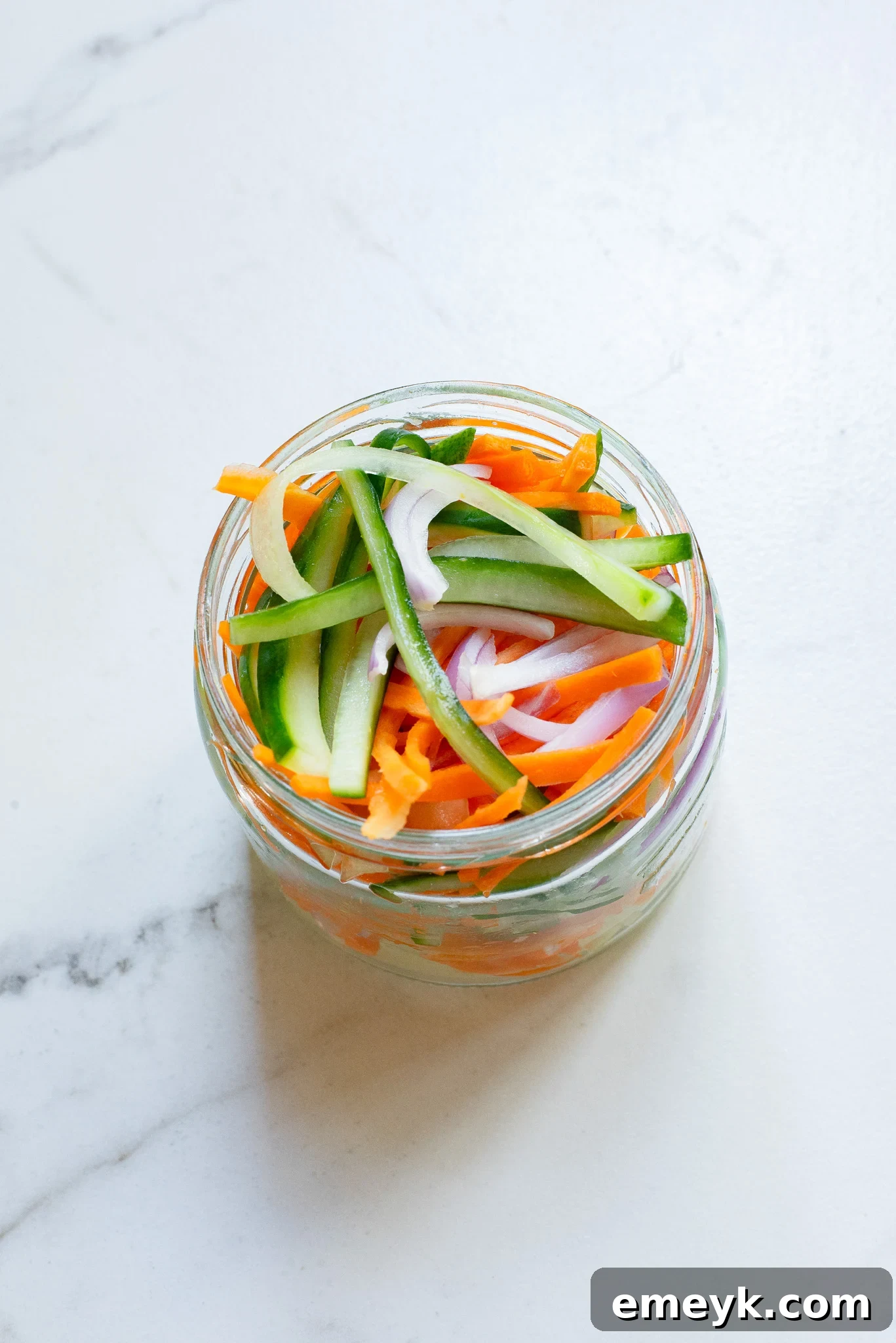
- Fill with Fresh Vegetables: Carefully arrange your prepared carrots (julienned), cucumber (julienned), and thinly sliced red onion into the Mason jar. Pack them snugly but don’t overfill, leaving about half an inch of headspace from the top rim.
- Craft the Flavorful Brine: In a medium saucepan, combine the white vinegar, water, white sugar, crushed garlic cloves, and sea salt. Bring this mixture to a rolling boil over medium-high heat, stirring continuously until both the sugar and salt have completely dissolved. Once dissolved, remove the saucepan from the heat and allow the brine to cool down slightly until it is warm to the touch, but not scalding hot.
- Pour the Brine: Carefully pour the cooled pickling liquid over the vegetables in the Mason jar. Ensure that all the vegetables are fully submerged in the brine. If needed, gently press down the vegetables with a clean utensil to keep them under the liquid.
- Infuse with Spices and Herbs: Now is the time to add your aromatic elements! Add the whole spices such as whole peppercorns, coriander seeds, and mustard seeds directly into the jar. For fresh herbs, add a few sprigs of dill, or experiment with other fresh herbs like parsley or oregano. If you enjoy a little heat, sprinkle in a pinch of crushed red pepper flakes. Finally, toss in the chopped green onion for an extra layer of flavor.
- Seal and Chill: Allow the jar to sit at room temperature for about two hours, giving the initial flavors a chance to meld. After this period, securely seal the Mason jar with its lid and give it a gentle shake to distribute all the wonderful ingredients evenly.
- Refrigerate for Flavor Development: Transfer the sealed jar of pickled veggies to your refrigerator. For the best flavor and texture, allow them to refrigerate for at least 10 hours before enjoying. This crucial step allows the vegetables to fully pickle and soak in all the delicious flavors of the brine and spices.
Storage Reminder: Store your quick pickled vegetables in the refrigerator for up to 2 weeks. Remember, these are NOT canned for long-term, shelf-stable storage; they rely on constant refrigeration.
Pro-Tip for Optimal Crunch: Let the brine cool slightly before pouring. While pouring hot brine over vegetables can help soften tougher ones a bit, allowing it to cool for a few minutes to a warm temperature before it goes into the jars is key. This prevents more delicate vegetables from becoming overly cooked and ensures they retain their delightful crisp texture.
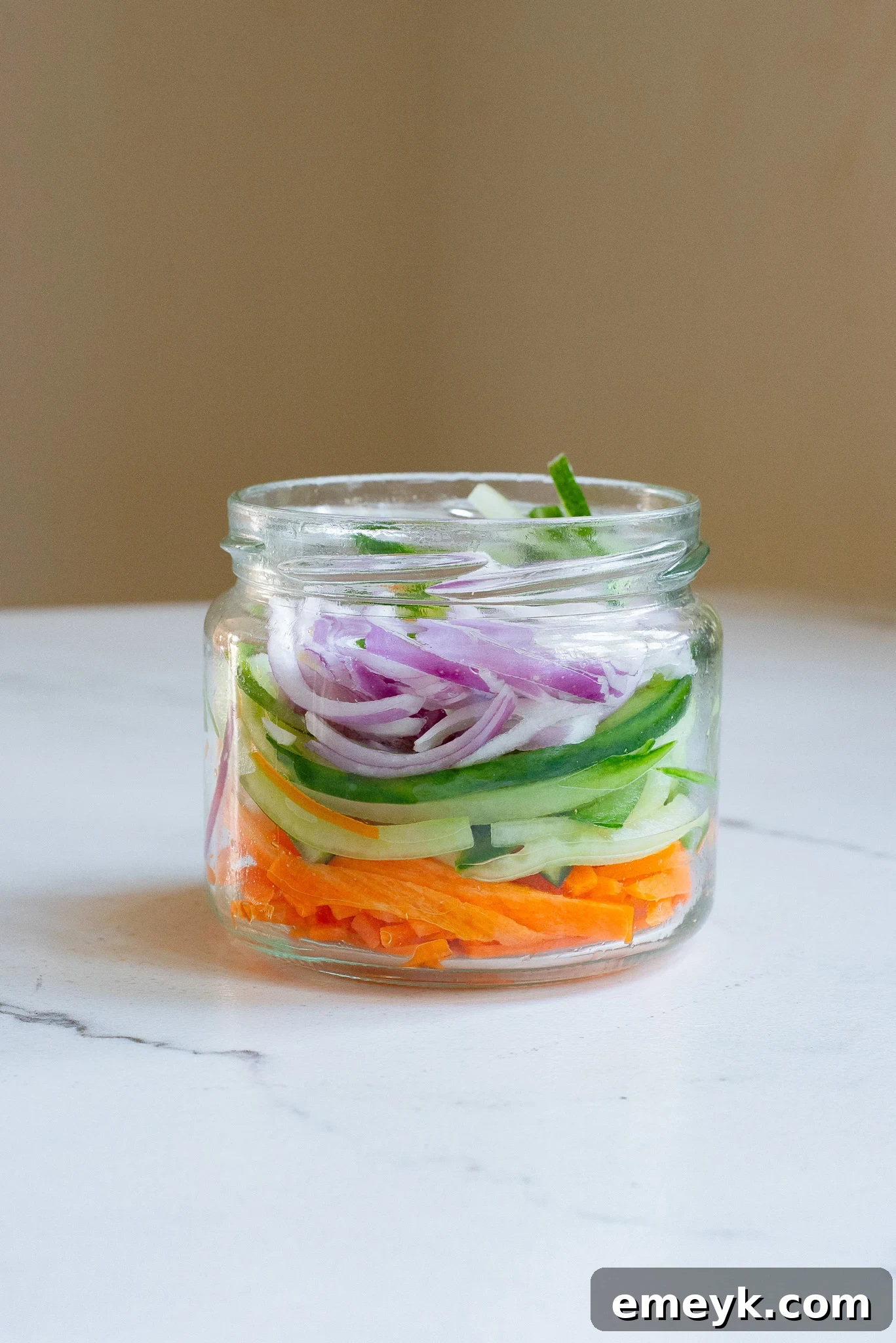
Beyond the Basics: What Vegetables Can You Pickle?
The wonderful news is that almost any vegetable can be transformed through the quick pickling process! The possibilities are truly endless. Here are just a few ideas to get you started on your pickling adventure, extending beyond the typical:
- Cucumbers: A quintessential pickling candidate! Cucumbers are naturally suited for quick pickles, offering a refreshing crispness. For a dedicated recipe, you can find my separate Refrigerator Dill Pickles recipe here, which is a beloved classic.
- Radishes: These root vegetables bring a beautiful vibrant color and a peppery, zesty crunch to any dish. Pickled radishes are especially fantastic in Mexican and Southwest-inspired meals, adding a unique bite.
- Jalapeños: If you crave a spicy kick, pickled jalapeños are a must-try. They instantly elevate various dishes, from tacos and burritos to rice bowls and nachos, with their delightful heat and tang.
- Bell Peppers: Sweet, colorful, and crunchy, pickled bell peppers (especially red bell pepper) are excellent additions to sandwiches, wraps, and salads. Their mild sweetness pairs wonderfully with the tangy brine.
- Beets: For a vibrant and earthy option, pickled beets are superb. They develop a sweet and tangy flavor profile that makes them a delightful addition to salads or as a colorful side dish.
- Zucchini and Summer Squash: When sliced, zucchini or other summer squash varieties can be quickly pickled, offering a tender yet firm texture and a refreshing flavor. They make a great side dish or sandwich topping.
- Okra: A Southern delicacy, pickled okra is celebrated for its crisp texture and distinctive tangy flavor. It’s a unique addition to relish trays or as a standalone snack.
- Green Beans: Pickled green beans, often called “dilly beans,” offer a wonderful crunch and a savory-tart flavor. They’re excellent in Bloody Marys or as a snack.
- Asparagus: Thin asparagus spears can be pickled for an elegant and flavorful side, perfect for spring.
- Cauliflower and Broccoli Florets: These cruciferous vegetables absorb the brine beautifully, becoming tender-crisp and wonderfully tangy. They’re great in antipasto platters or as a healthy snack.
- Turnips: Pickled turnips are a staple in many Mediterranean and Middle Eastern cuisines, adding a unique, earthy tang and crispness to hummus bowls, wraps, salads, and rice bowls.
Important Storage Tips for Your Quick Pickles
For optimal freshness and safety, always store your quick pickled vegetables in the refrigerator. They will remain delicious and crisp for up to 2 weeks. It’s crucial to remember that these are “quick pickles” or “refrigerator pickles” and are not processed for long-term, shelf-stable canning. Therefore, consistent refrigeration is absolutely essential to prevent spoilage and maintain their quality.
Frequently Asked Questions About Quick Pickling
- How long do quick pickled vegetables last?
- When stored properly in the refrigerator, quick pickled vegetables will last for up to 2 weeks. Beyond that, the texture may soften, and the flavors might diminish.
- Do I need to sterilize my jars for quick pickling?
- While not as critical as for traditional canning, it’s good practice to use clean, sterilized jars and lids to minimize the risk of spoilage and ensure the best quality and shelf life for your refrigerator pickles. You can sterilize them by washing them in hot, soapy water and then rinsing thoroughly, or by running them through a dishwasher on a hot cycle.
- Can I reuse the pickling brine?
- It’s generally not recommended to reuse pickling brine. Once used, the brine absorbs flavors and some moisture from the vegetables, diluting its acidity and potentially compromising its preserving properties. For best results and safety, always prepare a fresh batch of brine for each new batch of quick pickles.
- Why are my quick pickles not crisp?
- Several factors can affect crispness. Ensure your vegetables are very fresh. Overcooking the vegetables by pouring extremely hot brine can also soften them too much (this is why we let it cool slightly). Also, a proper salt-to-liquid ratio in the brine is important for maintaining crispness. Adding a grape leaf or a pinch of pickling crisp (calcium chloride) can sometimes help, though it’s often unnecessary with fresh vegetables and proper technique.
- Can I use less sugar or no sugar?
- Yes, you can adjust the sugar content to your preference. Sugar helps balance the acidity and contributes to the overall flavor, but it’s not strictly necessary for preservation in quick pickling. You can reduce it, omit it entirely, or use an alternative sweetener. Just be aware that omitting it will result in a much tarter pickle.
More Delicious Vegetable Recipes to Explore
Sides
Easy Bok Choy Recipe
Vegetarian
Instant Pot Lebanese Green Beans
Vegetarian
Balsamic Roasted Carrots
Vegetarian
Za’atar Roasted Carrots
Tried this recipe? We’d love to hear your thoughts! Leave a star rating and comment below. You can also subscribe to my newsletter or follow me on
Facebook,
Instagram, or
Pinterest for the latest recipes and updates.
Quick Pickled Vegetables
Ingredients
- 1 small carrot, peeled, cut in julienne
- 1/3 English cucumber, cut in julienne
- 1 medium red onion, sliced thinly
- 1 cup white vinegar
- 1/2 cup water
- 1 tablespoon white sugar
- 4 cloves garlic , crushed
- 1/2 teaspoon sea salt
- 2 teaspoon whole peppercorns, optional
- 1 tablespoon coriander seeds, optional
- 2 teaspoon mustard seeds, optional
- fresh dill, optional
- Pinch crushed red pepper flakes, optional
- 1 tablespoon green onion, chopped
Instructions
-
Prepare a clean, sterilized Mason jar for the vegetables.
-
Add the julienned carrot, cucumber, and thinly sliced red onion to the Mason jar, packing them gently.
-
In a saucepan, bring the white vinegar, water, white sugar, crushed garlic, and sea salt to a boil. Stir until the sugar and salt are fully dissolved. Remove from heat and allow the brine to cool until it is slightly warm to the touch. Pour this liquid mixture over the vegetables in the Mason jar, ensuring they are fully submerged.
-
Add the whole peppercorns, coriander seeds, and mustard seeds to the jar.
-
Add a few sprigs of fresh dill (or other herbs like parsley or oregano), a pinch of crushed red pepper flakes, and the chopped green onion. Let the jar cool to room temperature for two hours, then seal tightly with the lid and give it a good shake.
-
Refrigerate the pickled vegetables for a minimum of 10 hours before serving. This allows the flavors to properly meld and the vegetables to pickle.
-
Store the quick pickled vegetables in the refrigerator for up to 2 weeks. (These are not canned for long-term storage; please ensure they remain refrigerated.)
Notes
- Make sure the pickling liquid covers all the vegetables, but also leave about a half-inch of room between the brine and the top of the jar/lid. This allows for any expansion and ensures a proper seal.
- Feel free to use any combination of vegetables you have readily available. The key is to cut them to an appropriate size and shape so they fit comfortably into your Mason jar and pickle evenly.
- Please remember these are refrigerator pickles and are not intended for long-term, shelf-stable storage. They must always be kept refrigerated to ensure freshness and safety.
- For an extra layer of complexity, you can lightly toast the whole spices (peppercorns, coriander, mustard seeds) in a dry pan for a minute or two before adding them to the brine. This process helps to release their aromatic oils.
- If you prefer a sweeter pickle, you can slightly increase the amount of sugar in the brine. Conversely, for a tarter flavor, you can slightly decrease it. Taste and adjust to your preference over time.
Nutrition
Carbohydrates: 28g,
Protein: 4g,
Fat: 4g,
Saturated Fat: 0.3g,
Polyunsaturated Fat: 1g,
Monounsaturated Fat: 2g,
Sodium: 510mg,
Potassium: 477mg,
Fiber: 7g,
Sugar: 12g,
Vitamin A: 4333IU,
Vitamin C: 12mg,
Calcium: 142mg,
Iron: 3mg
Nutrition information is automatically calculated, so should only be used as an approximation and for general guidance.
Tried this recipe?
Mention @acedarspoon or tag #acedarspoon!