
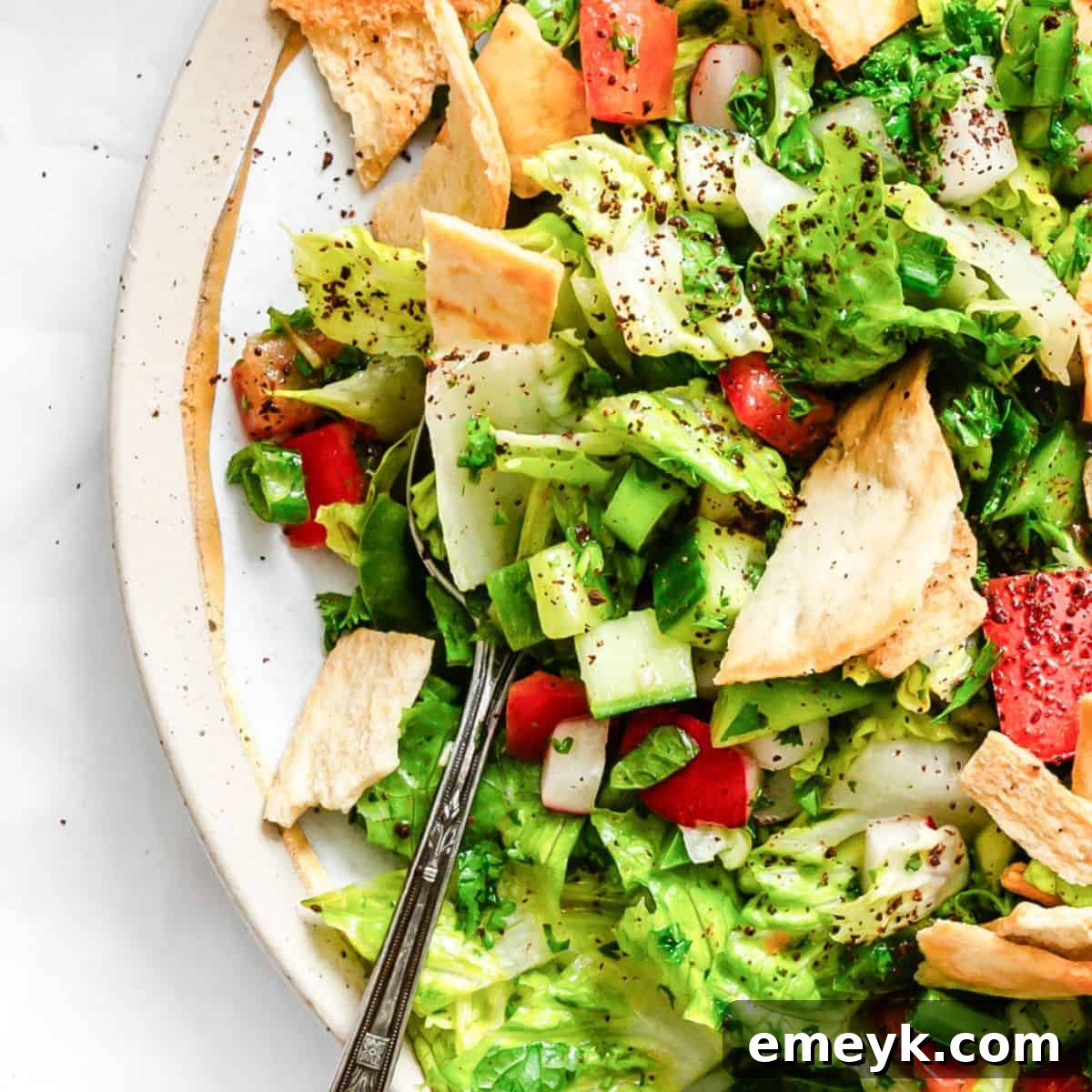
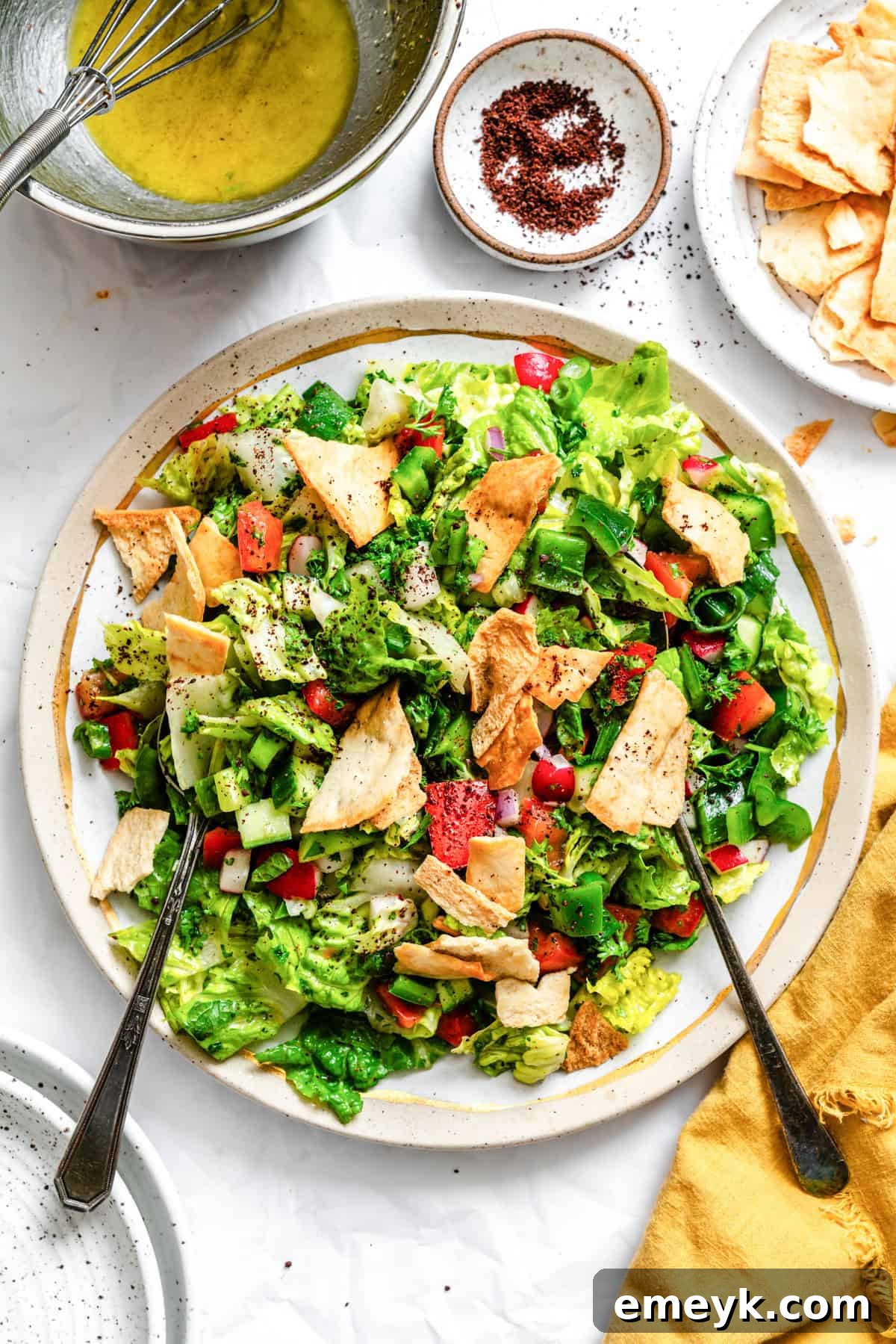
Embark on a culinary journey with the vibrant and refreshing **Fattoush Salad**, a cornerstone of Middle Eastern cuisine. This delightful Levantine salad perfectly blends crisp greens, an array of fresh garden vegetables, crunchy homemade pita chips, and a zesty, aromatic sumac dressing. More than just a salad, Fattoush is a celebration of fresh produce, making it an ideal choice for any season, especially when ingredients are at their peak from a local farmers market or your own thriving garden.
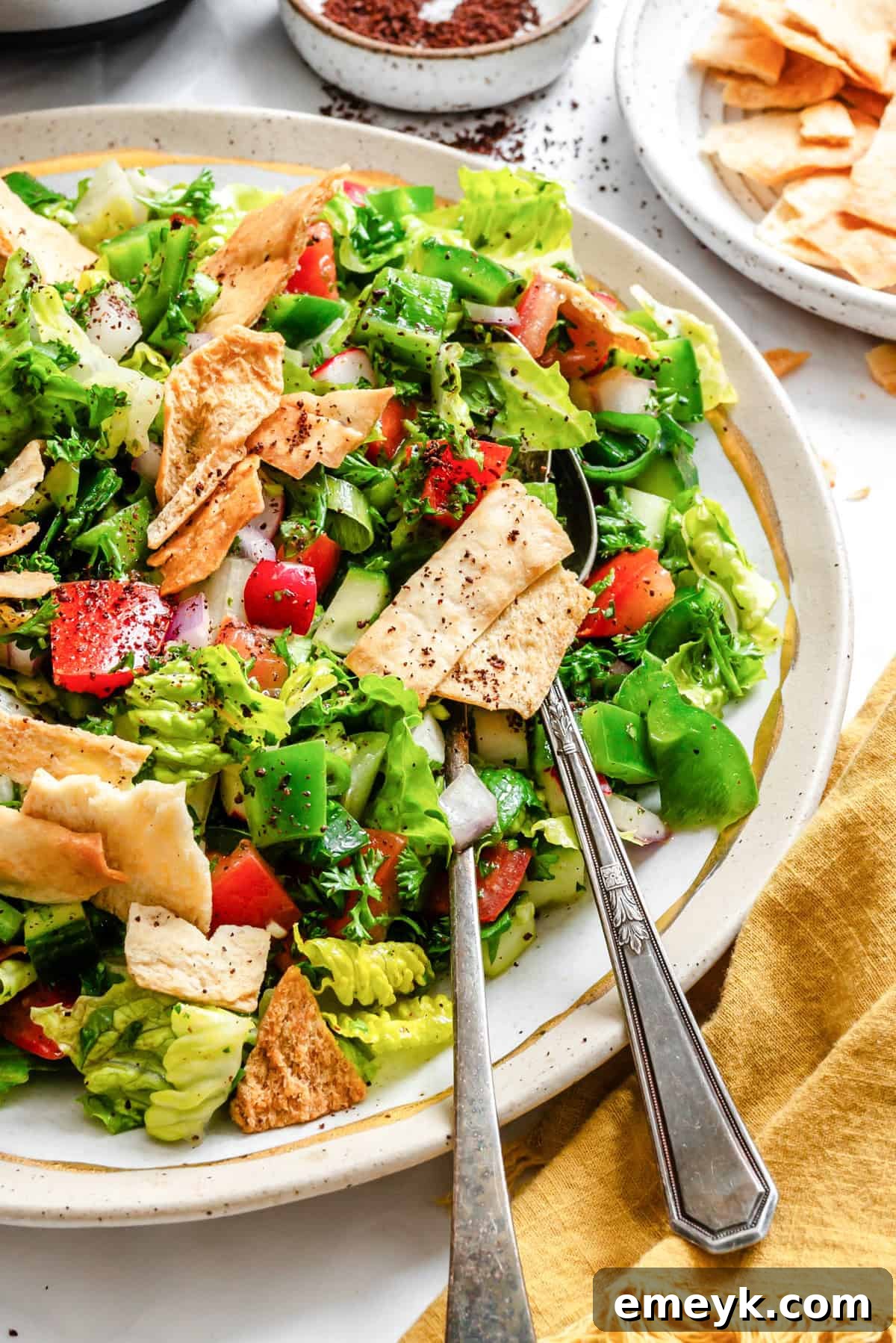
Growing up in a Lebanese household, our tables were always adorned with an abundance of fresh, flavorful salads. Among them, Fattoush Salad held a special place, alongside other beloved classics like Easy Lebanese Salad, Mediterranean Bean Salad, and the iconic Tabbouleh. While each offers a distinct taste and texture profile, they all share common threads: an explosion of fresh flavors, a bounty of healthy ingredients, and the versatility to serve as a satisfying light lunch or a vibrant accompaniment to any dinner.
Fattoush, with its satisfying crunch and tangy dressing, has naturally become my personal go-to when I crave a truly vegetable-packed, refreshing meal. It truly shines during the summer months, when the availability of ripe, succulent produce from local farmers markets or a home garden elevates its taste to an unparalleled level. The beauty of Fattoush lies in its simplicity yet profound flavor.
This classic recipe artfully combines crisp romaine lettuce, crunchy radishes, juicy tomatoes, cool cucumbers, and the essential crispy pita chips, all brought together by a bright, lemony sumac dressing. For those looking to transform this delightful side into a hearty main course, consider adding a protein element. It pairs wonderfully with lean options like Mediterranean Chicken, protein-rich Crispy Chickpeas, or savory Grilled Beef Kofta Kebabs, creating a complete and balanced meal that’s both nutritious and incredibly delicious.
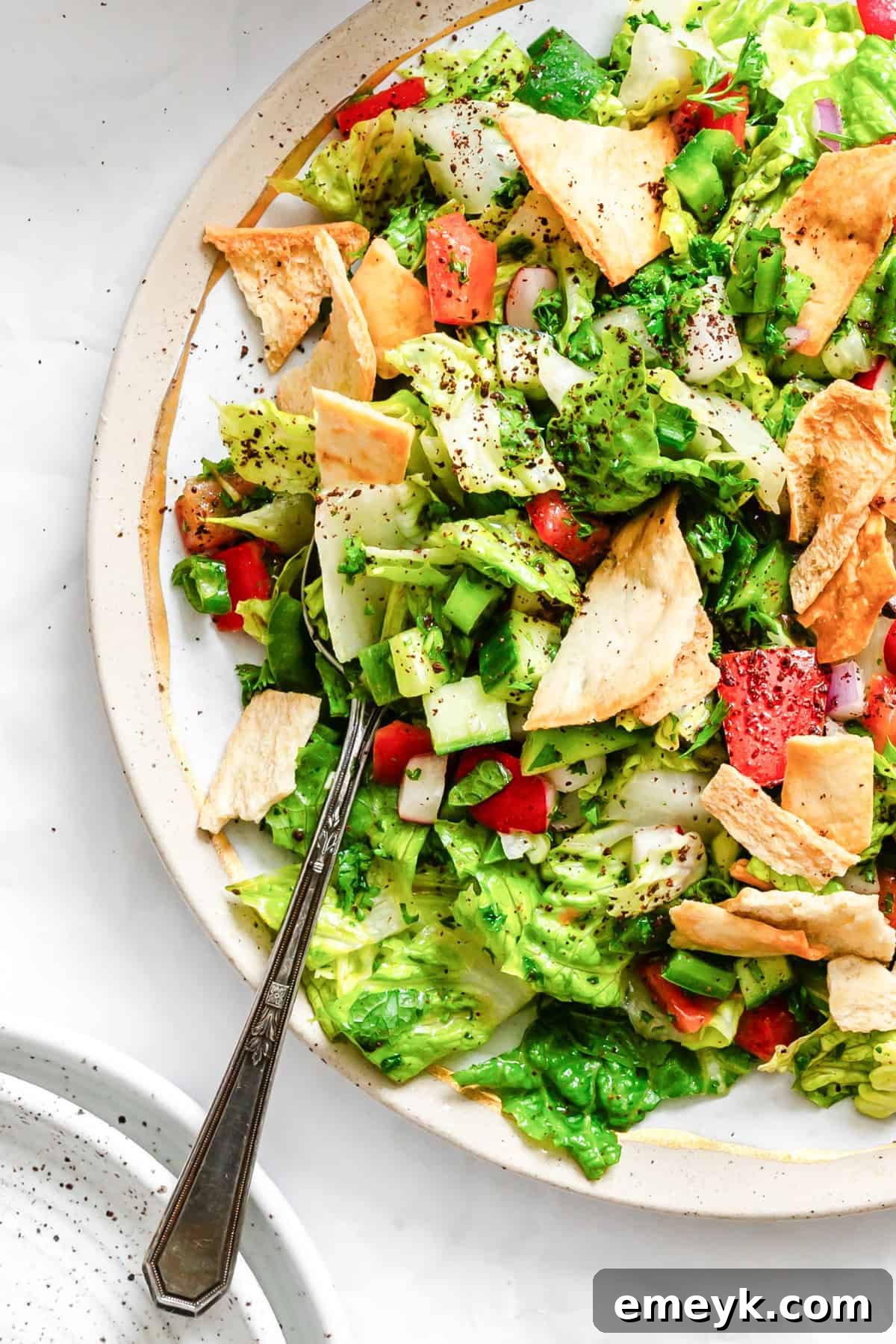
What is Fattoush? Unveiling a Levantine Delight
Fattoush (Arabic: فتوش, often spelled fattush, fatush, fattoosh, or fattouche) is a celebrated Levantine salad, deeply rooted in the culinary traditions of the Middle East. Its defining characteristic is the inclusion of toasted or fried pieces of khubz (Arabic flatbread), which provide a delightful textural contrast to the fresh, crisp vegetables. This foundational element is then generously combined with a medley of mixed greens and other garden-fresh vegetables, most commonly featuring vibrant radishes and ripe tomatoes.
At its heart, Fattoush is an iconic Lebanese salad, a staple in countless family meals across the region. Typically, it features a robust base of crisp romaine lettuce, refreshing cucumbers, the peppery bite of radishes, and sweet, juicy tomatoes, all crowned with those irresistible crispy pita pieces. For many, including my own family, Fattoush isn’t just a dish; it’s a cherished memory, a taste of home that evokes warmth and tradition with every bite. The beauty of Fattoush lies in its ability to transform simple, wholesome ingredients into an extraordinary culinary experience.
The magic truly happens with its signature dressing. This light yet incredibly flavorful vinaigrette masterfully blends robust extra virgin olive oil, the bright acidity of fresh lemon juice, and the distinct, earthy tang of sumac. Sumac, a burgundy-colored spice derived from dried and ground berries, is the secret weapon here. It imparts a unique, sharp, and subtly lemony flavor that beautifully brightens and enhances every component of the salad, creating a harmonious balance that distinguishes Fattoush from any other salad you’ve tasted. Its vibrant taste profile perfectly complements the fresh vegetables and crispy pita, tying the entire dish together with a delicate, tangy flourish.
Essential Ingredients for Your Perfect Fattoush Salad
Crafting an exceptional Fattoush Salad begins with selecting the finest, freshest ingredients. Each component plays a vital role in achieving the salad’s signature taste and texture. Below, we delve into the key elements that make this Middle Eastern classic truly unforgettable.
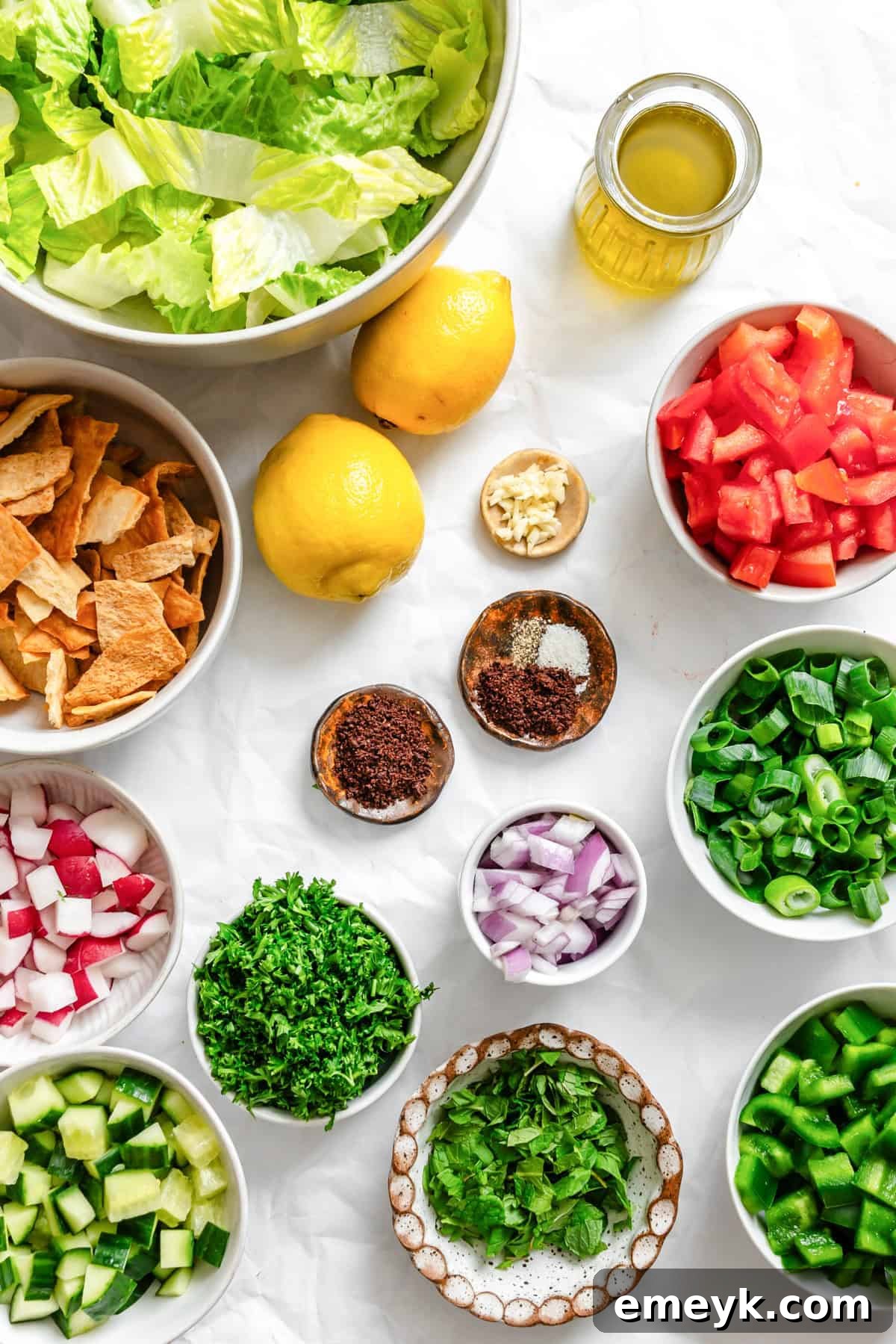
For precise measurements and detailed instructions, please refer to the comprehensive recipe card provided below.
- Greens: Romaine lettuce is the traditional choice for Fattoush, offering a crisp texture and a mild flavor that stands up well to the dressing. However, feel free to experiment with other sturdy greens like chopped kale or a robust mixed greens blend if you desire a different nutritional profile or texture. The key is a green that maintains its crunch.
- Pita Chips: These are non-negotiable for an authentic Fattoush experience. Their irresistible crunch and toasted flavor are what truly set this salad apart. While quality store-bought pita chips work well, making them from scratch elevates the salad. Try this simple homemade baked pita chip recipe; you can prepare them while assembling the salad or make them ahead of time for convenience.
- Fresh Vegetables: The beauty of Fattoush lies in its adaptability to fresh, seasonal produce. My preferred combination includes vibrant tomatoes, crisp green onions, refreshing cucumbers, sweet bell peppers, and the slightly peppery kick of radishes. Don’t hesitate to customize; feel free to incorporate your favorite garden vegetables. Common additions also include Persian cucumbers, thinly sliced bell peppers of various colors, or even a handful of chopped carrots for added sweetness and crunch.
- Fresh Herbs: As with many Middle Eastern dishes, fresh herbs are paramount to the flavor profile of Fattoush. A generous amount of fresh mint and parsley infuses the salad with bright, aromatic notes. These herbs don’t just garnish; they are integral to the taste. For an adventurous twist, consider adding a touch of fresh basil or dill, which can introduce interesting layers of flavor.
- The Dressing: What truly distinguishes Fattoush from other salads is its unique and perfectly balanced dressing. This flavorful concoction relies on the harmonious blend of extra virgin olive oil, fresh lemon juice, pungent garlic, and the star spice, sumac. The combination creates a tangy, slightly sweet, and utterly refreshing vinaigrette. It’s subtle enough not to overpower the delicate flavors of the fresh vegetables and herbs, yet robust enough to leave a lasting, delightful impression. Choosing a high-quality extra virgin olive oil will significantly enhance the depth of flavor in your dressing.
How to Prepare the Perfect Fattoush Salad: A Step-by-Step Guide
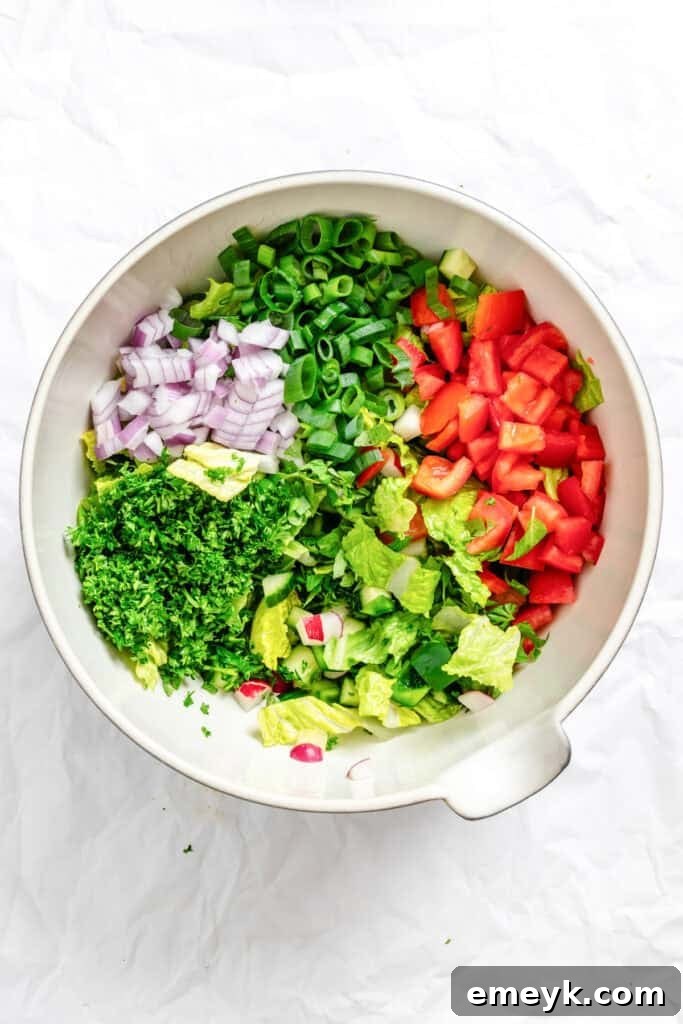
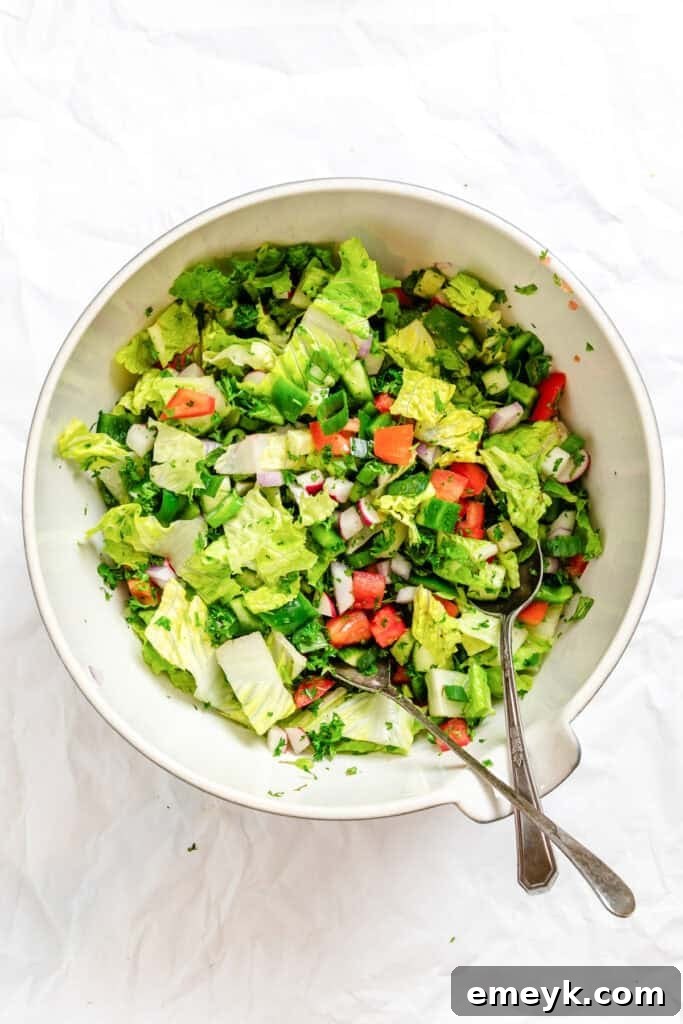
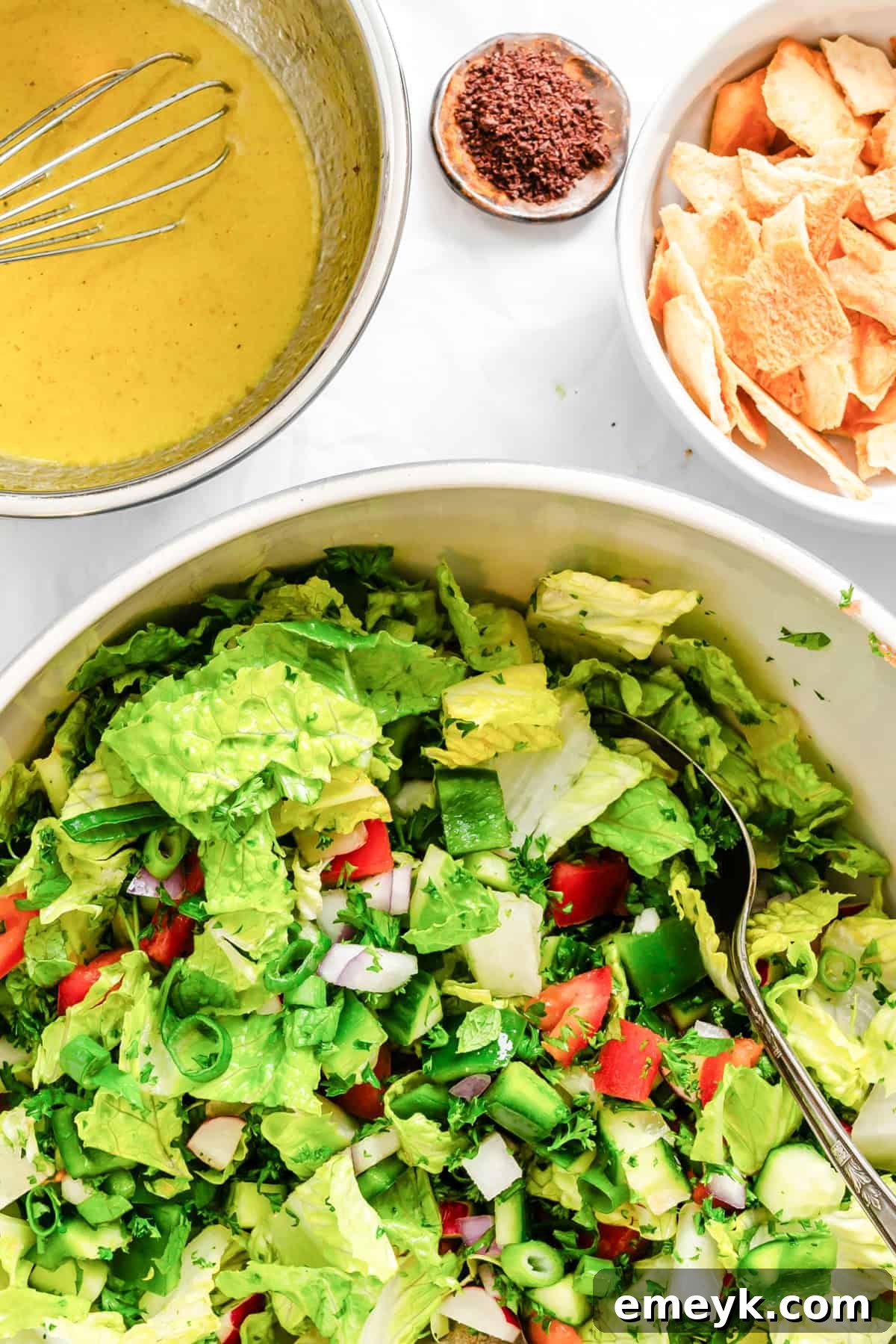
Step 1: Prepare Your Salad Base: Begin by thoroughly washing all your fresh vegetables and herbs under cold running water. Once cleaned, meticulously chop all the vegetables to a consistent, bite-sized dimension. This ensures a balanced texture in every mouthful. In a large mixing bowl, gently combine the chopped vegetables with the crisp romaine lettuce. A large bowl provides ample space for easy tossing, allowing all ingredients to mingle beautifully.
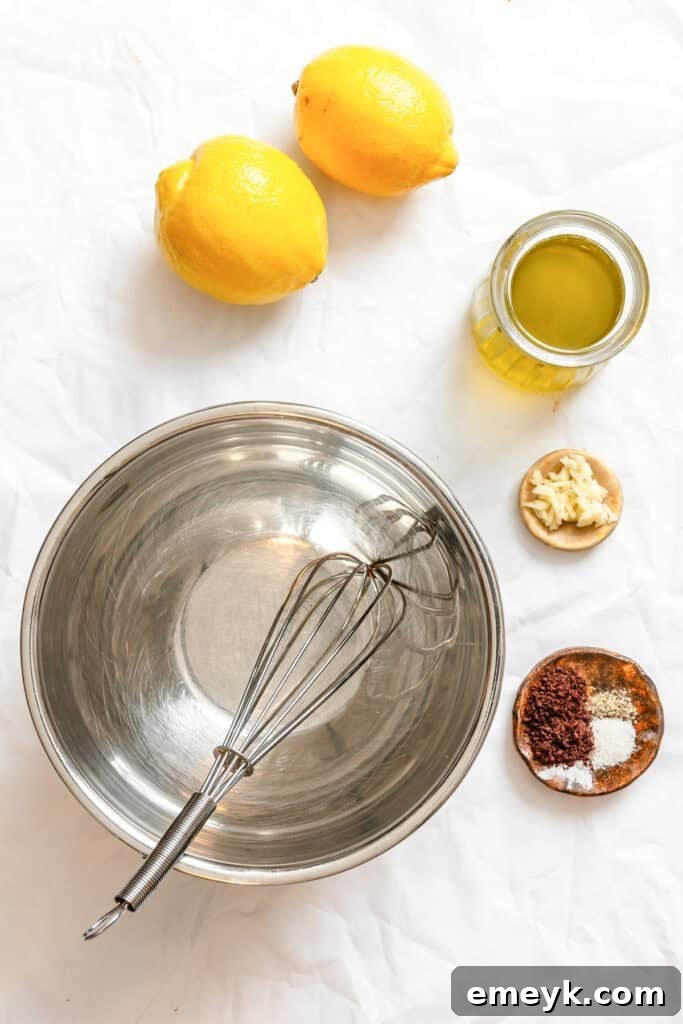
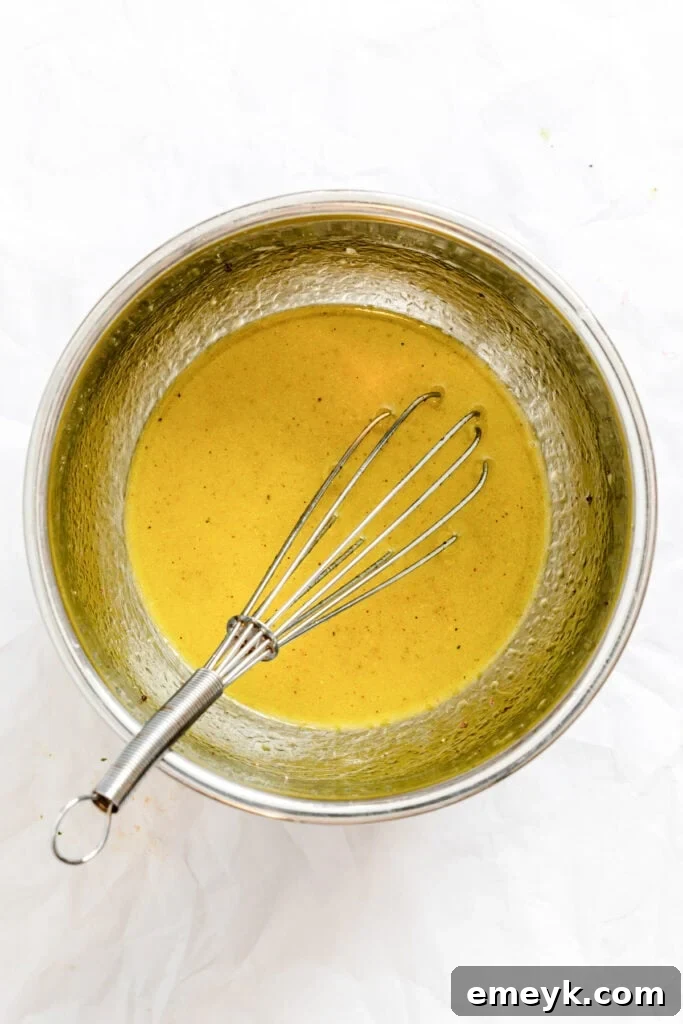
Step 2: Craft the Lemony Sumac Dressing: In a separate small bowl or a dedicated salad dressing shaker, combine the minced garlic, salt, pepper, the vibrant juice of fresh lemons, rich extra virgin olive oil, and the essential sumac. Whisk or shake vigorously until all ingredients are thoroughly combined and the dressing is well-emulsified. This ensures every component of the dressing contributes to its balanced, tangy flavor profile. For best results, use fresh garlic cloves and freshly squeezed lemon juice.
Step 3: Dress the Salad to Perfection: Just before serving, pour approximately half of the prepared dressing over your mixed salad ingredients. Gently toss the salad until everything is evenly coated. Taste a small portion, and if you desire more zest or moisture, gradually add additional dressing according to your personal preference. Remember, you can always add more, but you can’t take it away! Any remaining dressing can be stored in an airtight container in the refrigerator for future use.
Step 4: The Final Flourish: To complete your Fattoush, generously sprinkle an extra dash of sumac over the entire salad. This adds a beautiful pop of color and an intensified lemony aroma. Finally, top the salad with the crispy pita chips. It is crucial to add the pita chips at the very last moment, just before serving, to ensure they retain their delightful crunch and don’t become soggy from the dressing.
Storage Tip: For any delicious leftovers, store the dressed salad in an airtight container in the fridge for up to 3 days. However, for the absolute best texture and flavor, Fattoush is truly unparalleled when enjoyed fresh. If you anticipate having leftovers, consider dressing only the portion you plan to eat and storing the undressed salad components and dressing separately. This will preserve the crispness of your vegetables and the crunch of your pita chips for longer.
Maximizing Freshness: Smart Storage for Your Fattoush
To keep your Fattoush Salad at its best, store any leftovers in an airtight container in the refrigerator for up to 3 days. While it remains enjoyable, the salad truly shines on the first day, when the vegetables and romaine are at their peak crispness and freshness. To extend the freshness of the entire salad, especially if you anticipate leftovers, a strategic approach is key:
- Dress as You Go: The most effective way to prevent soggy pita chips and wilted greens is to add the dressing only to the portion of the salad you intend to consume immediately.
- Separate Storage: Store the chopped vegetables (excluding the pita chips) in one airtight container, and the dressing in another. The pita chips should be kept in a separate, dry container or bag at room temperature. When you’re ready for another serving, simply combine your desired amount of greens and veggies with a portion of dressing and fresh pita chips. This method ensures maximum crispness and flavor for each serving.
Fattoush Salad: Your Questions Answered
Absolutely! The essence of a truly outstanding Fattoush lies in the quality and freshness of its produce. Whenever possible, prioritize finding the freshest vegetables you can. This salad truly comes alive during the summer months when farmers markets are brimming with peak-season produce, or when you can harvest vibrant ingredients directly from your own garden. Freshness guarantees the crisp texture and bright flavors that are hallmarks of this traditional salad.
You have excellent options when it comes to pita chips. You can certainly use your favorite brand of store-bought pita chips – look for varieties that are lightly seasoned or plain to let the salad flavors shine. However, for an unparalleled taste and crunch, making your own pita chips at home is highly recommended. Our Homemade Baked Pita Chip Recipe provides a straightforward guide. For an extra layer of authentic Middle Eastern flavor, try sprinkling a little za’atar spice onto your pita bread before baking or frying them to golden perfection.
The dressing is arguably the soul of Fattoush, and its deliciousness hinges on a few key elements. First, invest in the best quality extra virgin olive oil you can find; its rich, fruity notes form the backbone of the dressing. Second, always use fresh lemon juice for a bright, vibrant acidity that powdered or bottled juice simply cannot replicate. Third, fresh garlic cloves are essential for that pungent, aromatic kick. Finally, the generous inclusion of sumac is crucial; its unique tangy, slightly fruity flavor is what truly defines the dressing. For an even more intense tangy experience, particularly if you adore sour notes, consider adding a teaspoon of pomegranate molasses to your dressing. Start with a small amount and adjust to your taste.
This is a common concern and easily avoided with one simple trick: timing. To maintain the crispness of your vegetables and, crucially, the crunch of your pita chips, toss the salad with the dressing only just before you are ready to serve. The pita chips should be added at the very last moment, literally right before the salad hits the table. This minimizes their exposure to the moisture from the dressing and ensures they provide that essential, satisfying crunch in every bite.
Explore More Refreshing Salad Recipes
Mediterranean
Mediterranean Bean Salad
Salad
Mediterranean Lentil Salad
Salads
Mediterranean Grilled Vegetable Couscous Salad
Mediterranean
Easy Lebanese Salad
Tried this recipe? Leave a star rating and comment below! Subscribe to my newsletter or follow me on
Facebook,
Instagram, or
Pinterest for the latest.
Fattoush Salad
Print Recipe
Ingredients
For the Salad:
- ▢ 1 head of romaine lettuce, chopped
- ▢ 1/2 English cucumber, diced
- ▢ 6 radishes, ends removed, chopped
- ▢ 4 green onions, green parts chopped
- ▢ 1/2 cup fresh curly parsley, chopped
- ▢ 1 green bell pepper, seeds removed, chopped {optional}
- ▢ 1/4 red onion, diced {optional}
- ▢ 1 cup of tomatoes, seeds removed, chopped
- ▢ 1/4 cup fresh mint, chopped
- ▢ 1 tablespoon sumac {more or less depending on your tastes}
- ▢ 1 1/2 cups pita chips
For the Dressing:
- ▢ 1 garlic clove, minced
- ▢ 1/4 teaspoon salt {more to taste}
- ▢ 1/8 teaspoon pepper
- ▢ Juice of two lemons
- ▢ 1/2 cup of olive oil
- ▢ 1 teaspoon sumac
Instructions
-
Wash and chop all vegetables. In a large mixing bowl, combine all of the chopped vegetables and the romaine.
-
In a small bowl or salad dressing shaker combine the garlic, salt, pepper, lemon juice, olive oil and sumac and mix well.
-
Pour half of the dressing on the salad and mix. Taste and add additional dressing to your preferences or store the remaining dressing in the refrigerator.
-
Sprinkle sumac over the entire salad and top with the pita chips.
-
Store the leftovers in the fridge for up to 3 days.
Notes
- I have seen Fattoush made in a variety of ways so feel free to use the vegetables I have listed or modify to your liking.
- If you like fresh herbs feel free to add more parsley and mint!
- Try adding pomegranate seeds to the salad or pomegranate molasses to the dressing for extra tangy flavor.
Nutrition
Nutrition information is automatically calculated, so should only be used as an approximation.