
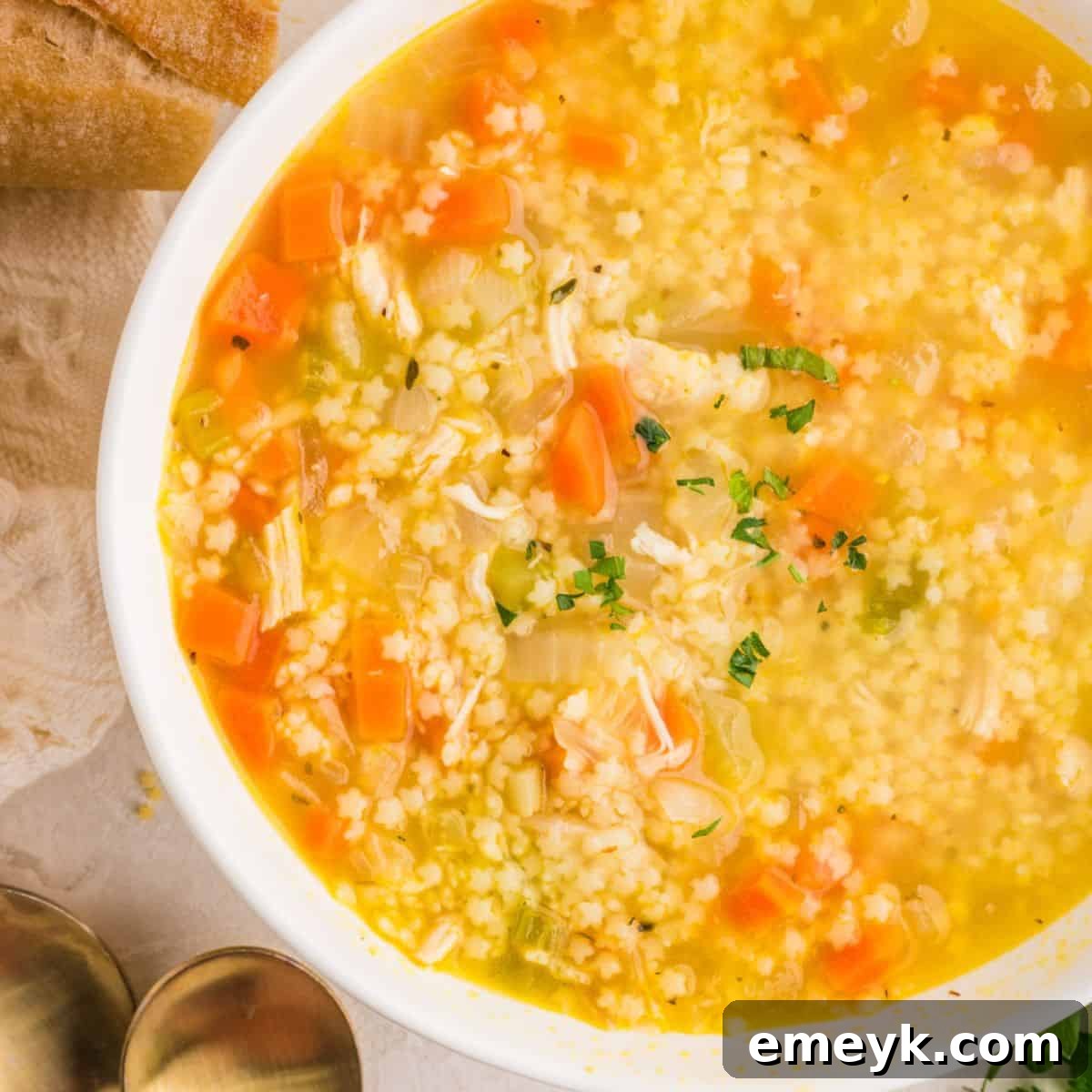
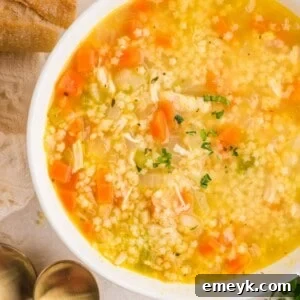
This Chicken Pastina Soup is a classic Italian comfort dish that generations of nonnas have turned to when someone needs soothing food. Tiny pastina pasta and tender shredded chicken simmer in a clear, savory broth with sweet, softened vegetables, and a final squeeze of lemon brightens the whole pot. The recipe is simple, comforting, and ready in under 45 minutes using ingredients most home cooks already have on hand.
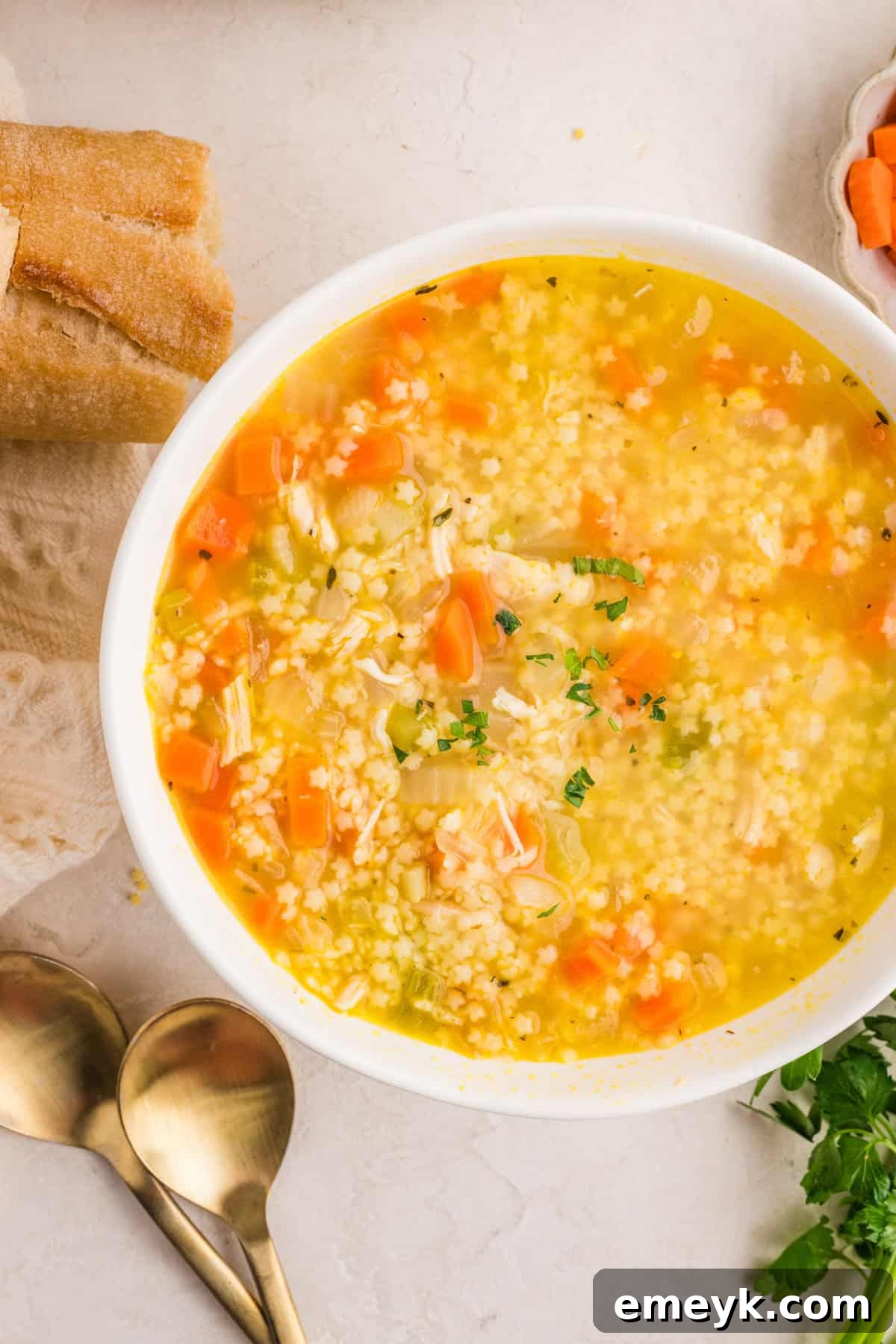
There’s a reason this soup has been simmering on family stoves for decades. Pastina becomes tender and almost silky in a well-seasoned broth, while shredded chicken adds satisfying protein. A basic soffritto of onion, celery, and carrot builds a sweet, rounded foundation for the soup; garlic, a touch of Italian seasoning, and freshly cracked pepper add depth. Finish with lemon to lift the flavors and serve with parsley and grated Parmesan if desired.
This version is fast and forgiving, about 40 to 45 minutes from start to finish. You can easily adapt it: use rotisserie chicken to save time, stir in a splash of cream for a richer finish, or add a handful of spinach or peas for extra color and nutrients. One important tip: pastina continues to absorb broth after cooking, so follow the storage and reheating suggestions below to keep leftovers from turning into porridge.
Why This Soup Works

• Pastina adds comforting texture. It cooks quickly and soaks up flavor, giving the soup a soft, silky mouthfeel.
• Soffritto builds real depth. Gently cooking the onion, celery, and carrot until very tender creates a sweet, rounded base for the broth.
• Lemon finishes the pot. A final squeeze of fresh lemon juice stirred in off the heat brightens the flavors and prevents the broth from tasting flat.

Ingredients You’ll Need
For exact amounts and a printable recipe card, see the recipe section below. Main ingredients include aromatics, broth, pastina, cooked chicken, and lemon.
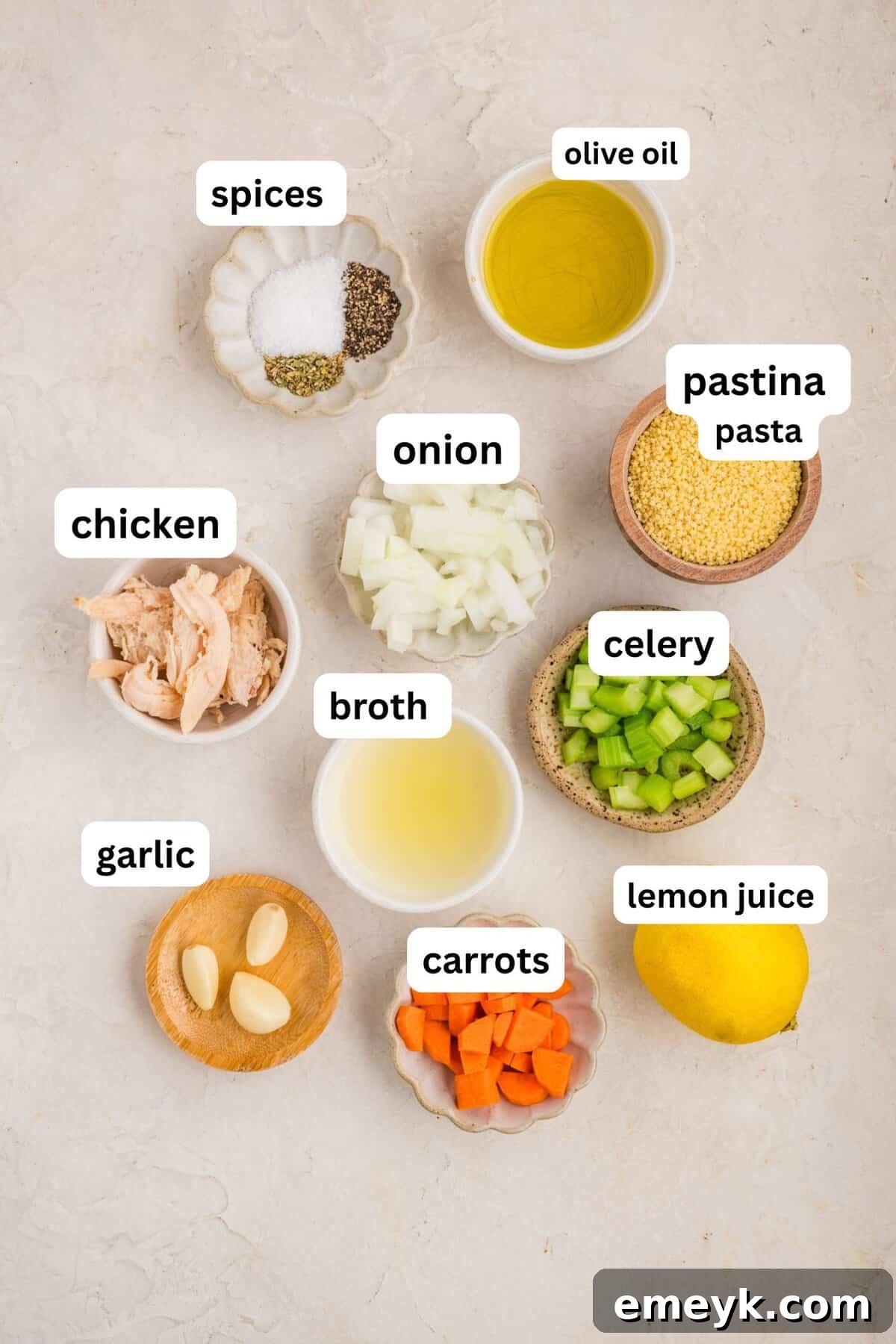
- Yellow onion, celery, and carrot: The classic soup trio. Dice to a similar size so they cook evenly.
- Garlic: Added after the vegetables so it doesn’t burn; use just enough to round the broth.
- Chicken broth: The heart of the soup; low-sodium broth lets you control salt levels.
- Kosher salt, Italian seasoning, and pepper: Simple seasoning that supports, not overwhelms, the flavors.
- Pastina: Tiny pasta that cooks in minutes and gives the soup its signature texture.
- Shredded chicken: Use cooked chicken—rotisserie or leftovers are ideal—or cook raw chicken in the broth and shred it before adding the pasta.
- Fresh lemon juice: Stir in at the end to brighten the broth.
Ways to Customize This Soup
- Make it creamy: Stir in about 1/4 cup of heavy cream at the end for a silkier broth.
- Blend for smoothness: Use an immersion blender on the broth and vegetables before adding pasta for a velvety texture.
- Control sodium: If you don’t use low-sodium broth, wait to add salt until the end and taste as you go.
- Swap pastina: Orzo, ditalini, or small broken pasta can be used if pastina isn’t available.
- Add vegetables: Stir in baby spinach or peas at the end for color and extra nutrients.
- Boost protein: For an egg-drop twist, stir a beaten egg in off the heat for delicate ribbons in the soup.
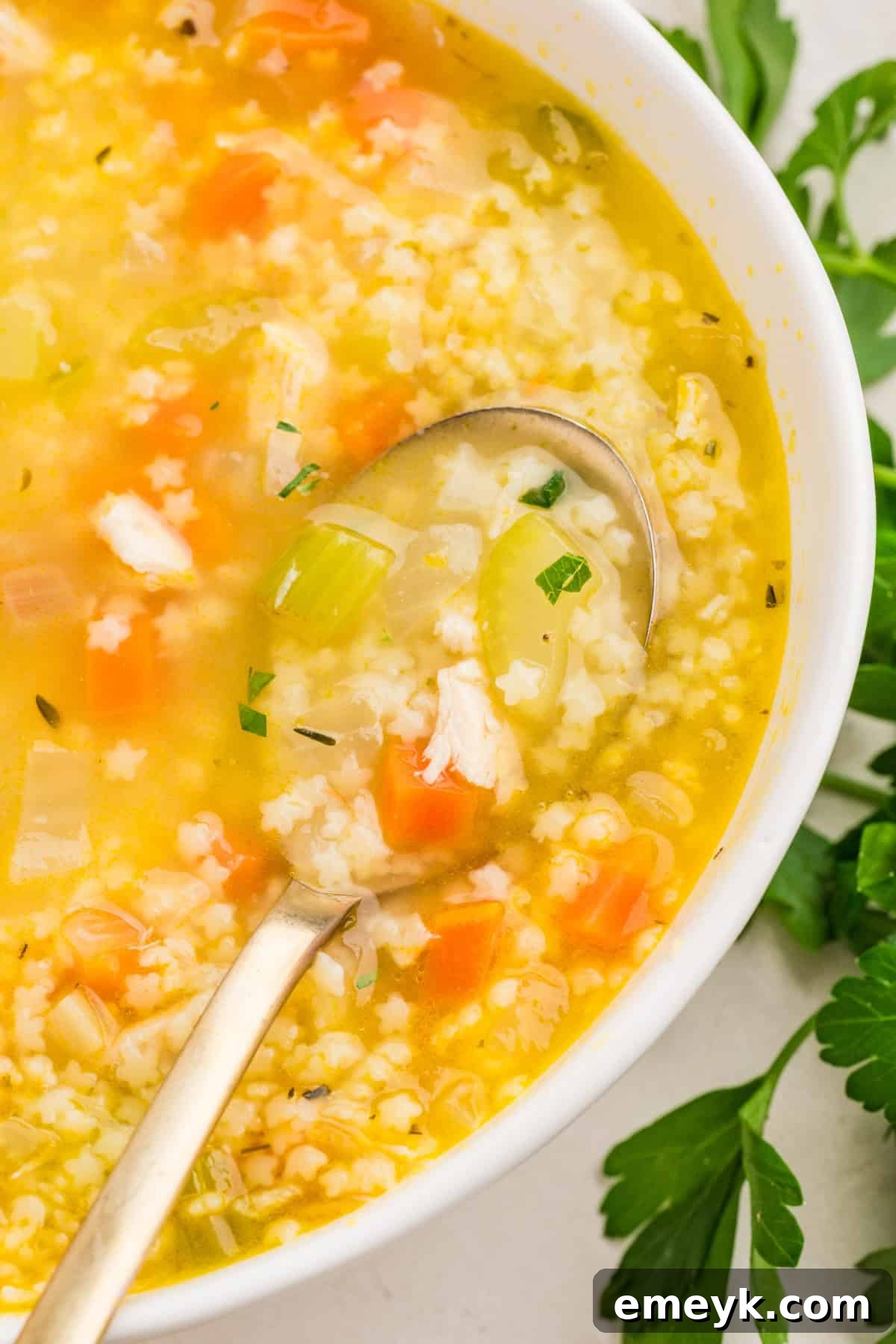
How to Make Chicken Pastina Soup
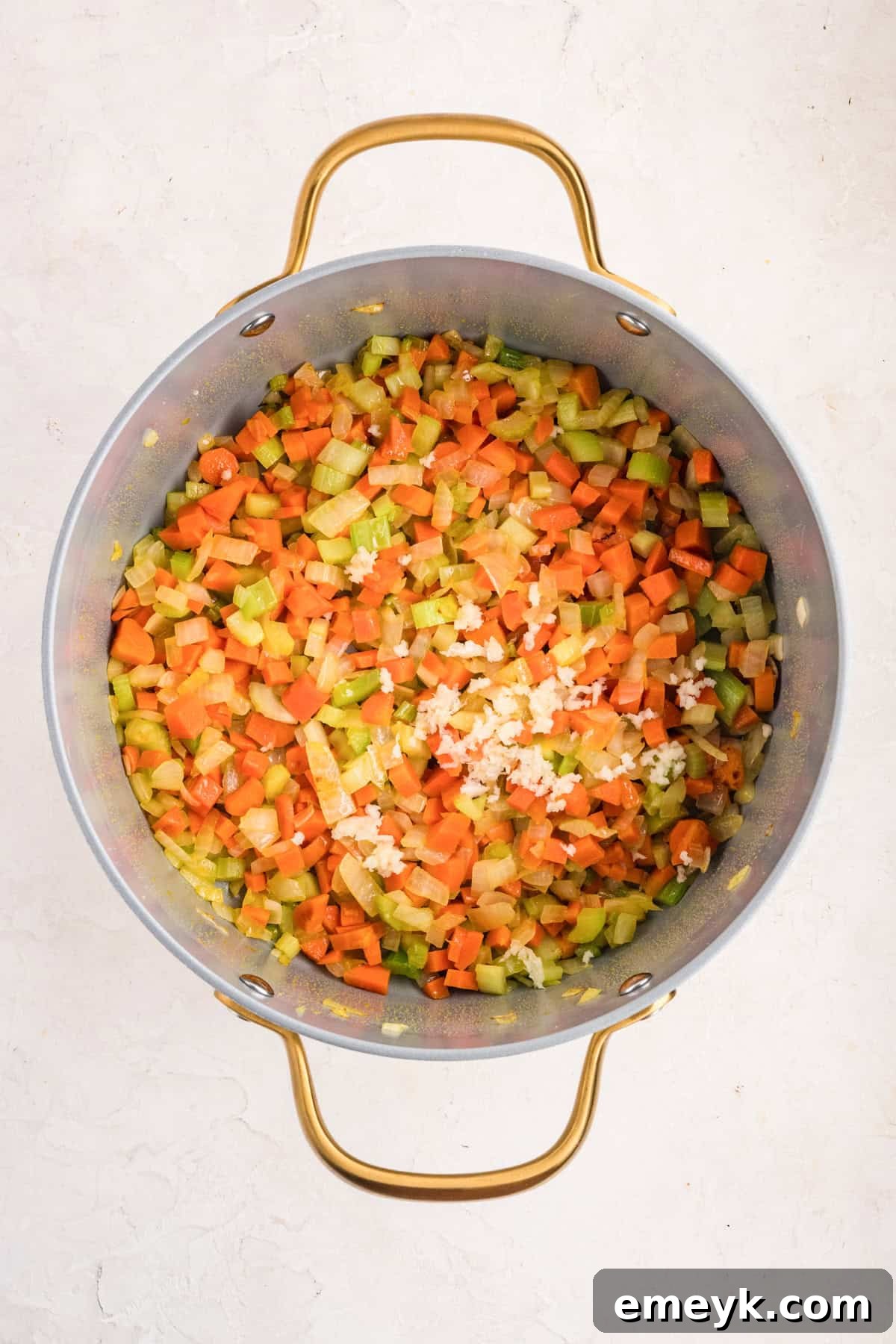
Step 1: Soften the vegetables. Heat olive oil in a large pot over medium-high heat. Add onion, celery, and carrot and cook until tender and beginning to turn translucent, about 6 to 8 minutes. A slow, patient sauté here builds a sweeter, more developed broth.
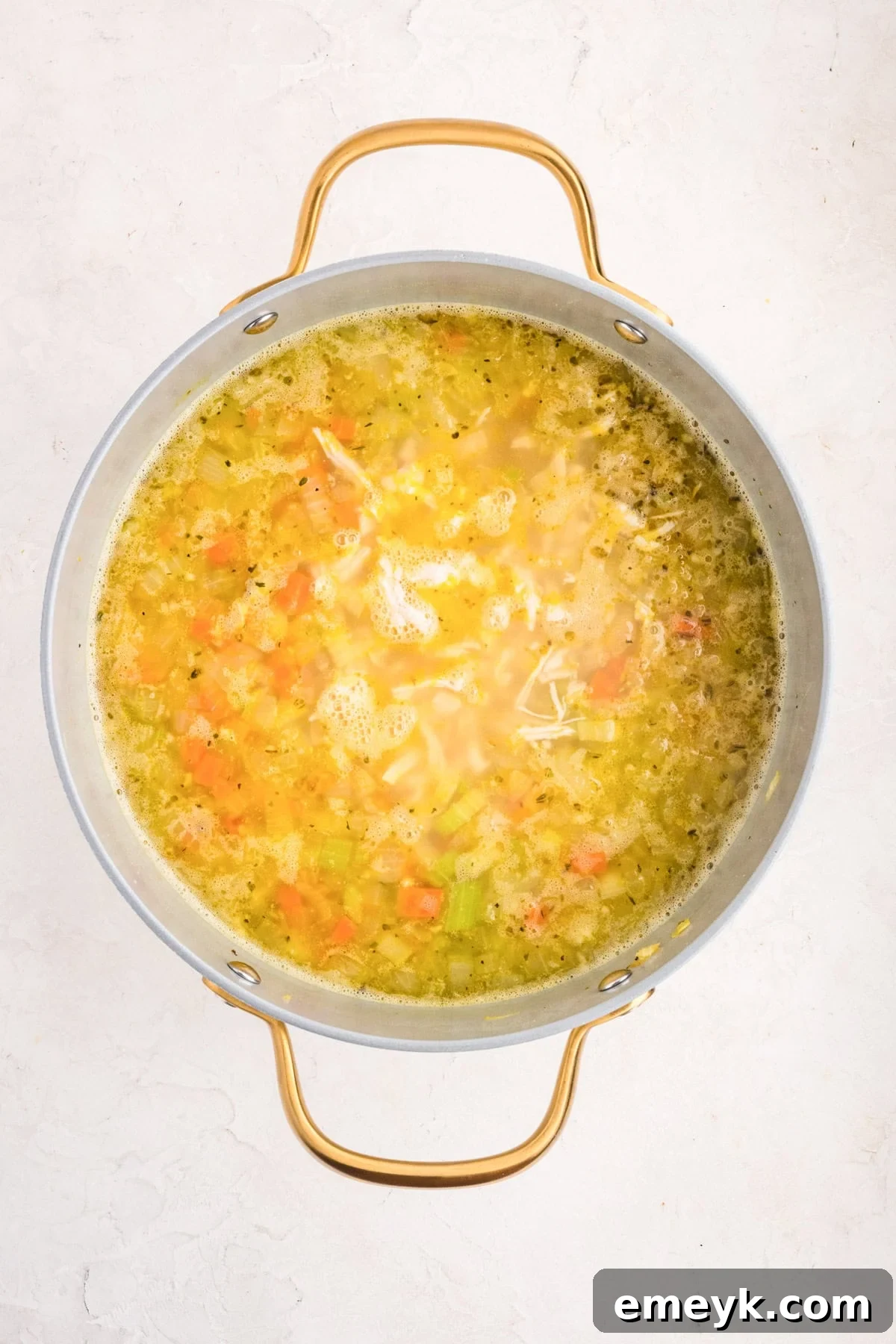
Step 2: Add garlic and broth. Reduce heat to medium, stir in the garlic for about a minute until fragrant, then add the chicken broth along with salt, Italian seasoning, and pepper.
Step 3: Cook the pasta and chicken. Bring the soup to a boil, then add the pastina and shredded chicken. Cook until the pasta is tender, about 7 to 10 minutes, stirring occasionally to prevent sticking. Start checking the pasta around 6 minutes because pastina can go from perfect to mushy quickly.
Step 4: Finish and serve. Remove the pot from the heat and stir in fresh lemon juice. Taste and adjust salt if needed. Serve hot, garnished with parsley and freshly grated Parmesan if desired.
Make it smooth: For a creamier texture with the vegetables hidden, blend the broth with an immersion blender after the vegetables are tender and before adding the pasta and chicken.
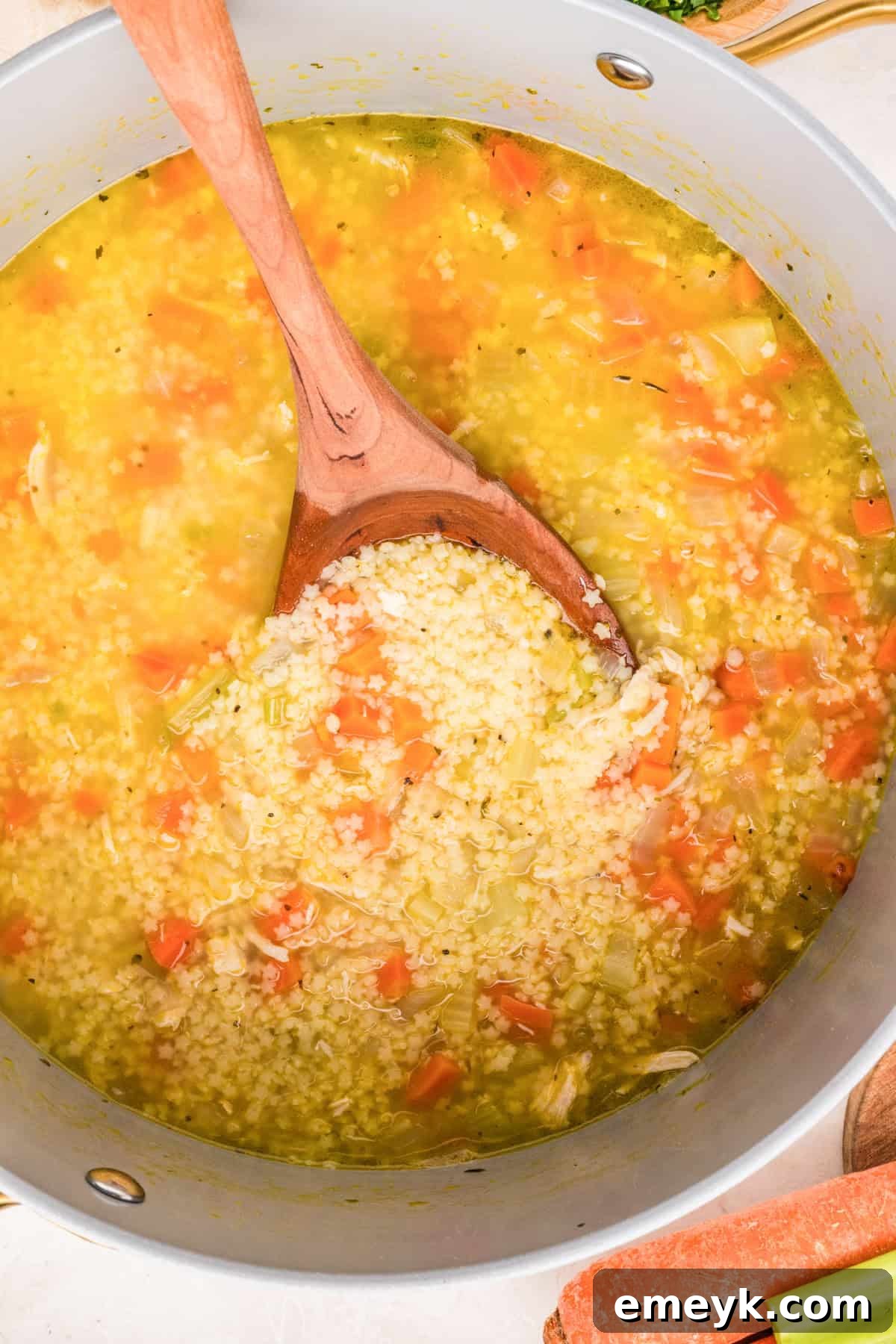
How to Keep the Pasta From Turning to Mush
Pastina continues to absorb liquid after cooking, so a brothy soup can thicken over time. Follow these strategies to preserve texture:
- Pull it early: Remove the pot from the heat when the pastina still has a slight bite; residual heat will finish it.
- Cook pasta separately for meal prep: Boil the pastina on its own and add a measured scoop to each bowl, then ladle hot broth and chicken over the top.
- Thin leftovers when reheating: If the soup has thickened in the fridge, add a splash of broth or water while reheating until the desired consistency returns.
Recipe Tips
- Dice evenly: Cut all vegetables to a similar size so they soften uniformly.
- Don’t skip softening: Fully cooked vegetables create a richer, sweeter broth.
- Watch the pasta: Pastina cooks fast and keeps absorbing broth, so monitor doneness closely.
- Add lemon last: Stir in lemon off the heat to keep the flavor bright.
- Use cooked chicken: Rotisserie or leftover shredded chicken speeds the recipe and only needs warming through.
- Taste before salting: If using regular broth, wait to add salt until the end to avoid over-seasoning.
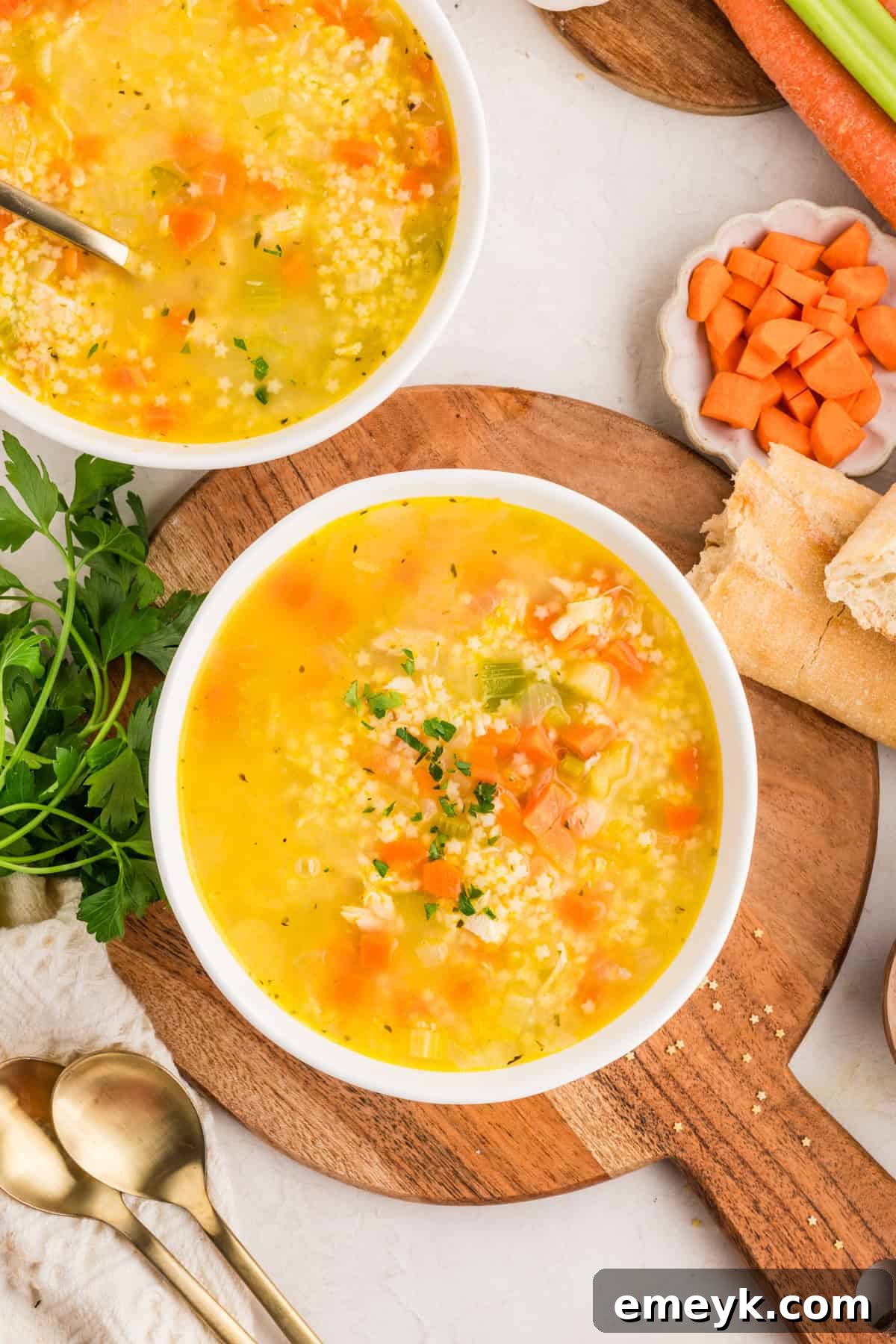
What to Serve With It
- Warm bread: Crusty bread or soft flatbreads are ideal for dunking into the broth.
- Light salad: A lemony arugula or mixed greens salad balances the soup with bright, peppery flavors.
- Vegetable sides: A simple chopped salad or raw vegetable platter keeps the meal fresh and balanced.
Make Ahead, Storage, and Freezing
This soup is best fresh, but leftovers can work well if you manage the pasta correctly.
- Refrigerator: Store in an airtight container for up to 4 days. Expect thickening and add broth or water when reheating.
- Freezer: For the best texture, freeze the broth and chicken without the pastina. Cook fresh pastina when ready to eat and add it to heated broth.
- Reheating: Warm gently on the stovetop over medium-low heat, stirring and adding liquid as needed to restore a soup consistency.
Recipe FAQ
Yes. Add raw chicken breast or thighs to the broth after it comes to a boil and simmer until fully cooked, about 15 to 20 minutes depending on size, then shred and continue with the pasta.
Pastina is a term for very small pasta shapes such as tiny stars, dots, or short strands. It’s commonly available in many grocery stores in the pasta aisle, often labeled as pastina or small pasta.
Pastina continues to absorb liquid as it cools and sits, which causes the soup to thicken. Add extra broth or water when reheating to restore the original consistency.
Chicken Pastina Soup
Ingredients
- 2 tablespoons olive oil
- 1 large yellow onion, diced
- 3 celery stalks, diced
- 3 carrots, diced
- 3 cloves garlic, minced
- 8 cups low-sodium chicken broth
- 1 1/2 teaspoons kosher salt, plus more to taste
- 1/4 teaspoon Italian seasoning
- 1/4 teaspoon coarse ground pepper
- 1 cup pastina pasta
- 1 cup finely shredded cooked chicken
- 1 tablespoon fresh squeezed lemon juice
- Fresh parsley and Parmesan, for serving (optional)
Instructions
- In a large pot, heat olive oil over medium-high heat. Add onion, celery, and carrots and cook until tender, about 6–8 minutes.
- Reduce heat to medium and add garlic. Sauté for about one minute, then pour in the broth. Add salt, Italian seasoning, and pepper.
- Bring to a boil, then add the pastina and shredded chicken.
- Cook until the pasta is tender, about 7–10 minutes, checking early to avoid overcooking.
- Remove from heat and stir in lemon juice. Adjust salt if needed. Serve hot, garnished with parsley and Parmesan if desired.
Notes
- Broth matters: Use low-sodium chicken broth so you can control the salt.
- Leftovers thicken: Pastina absorbs broth over time; add liquid when reheating.
- Freezing tip: Freeze broth and chicken without the pastina; cook fresh pasta when ready to serve.
- Optional cream: Stir in 1/4 cup heavy cream at the end for extra richness.
Nutrition
Nutrition information is an estimate and should be used as a guideline only.