
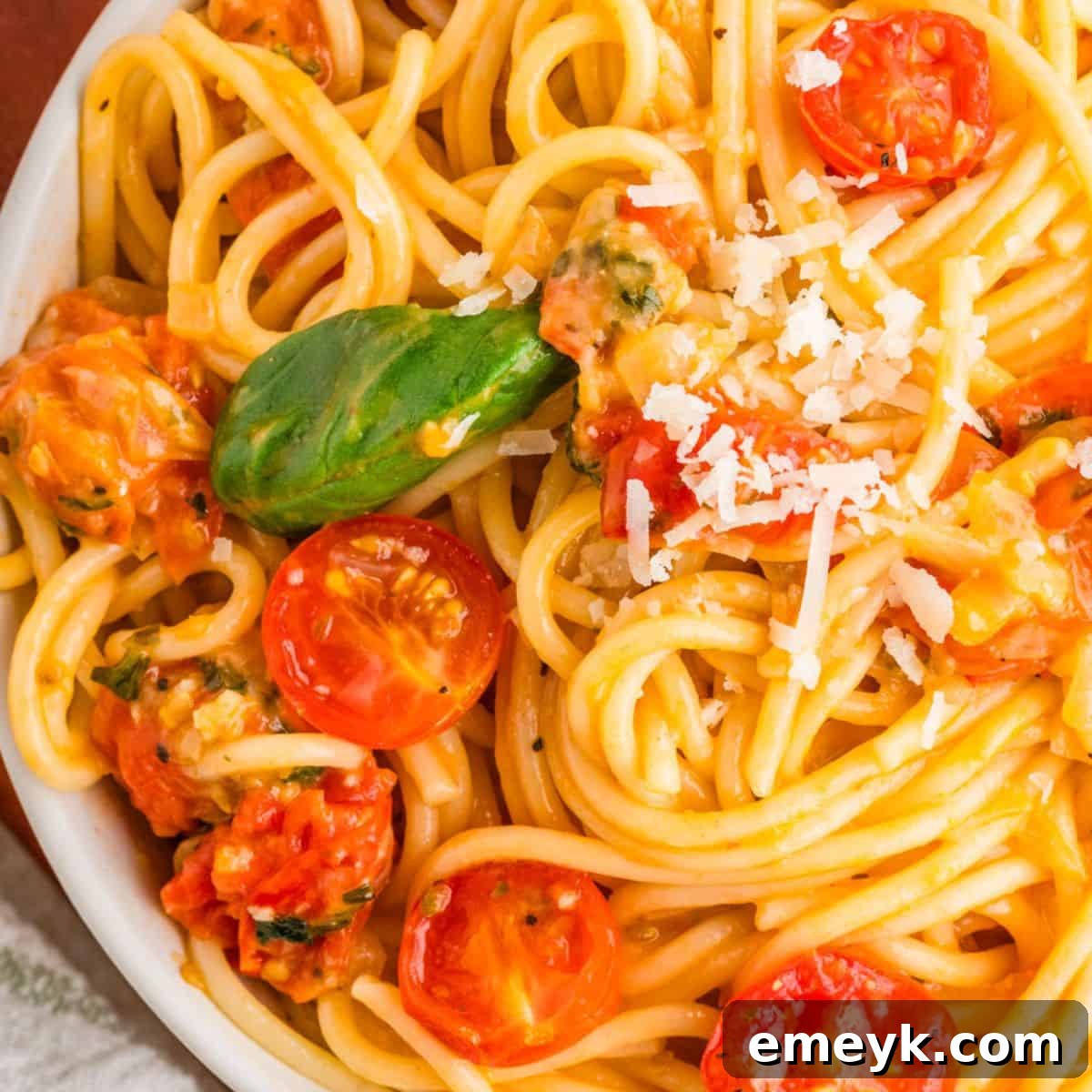
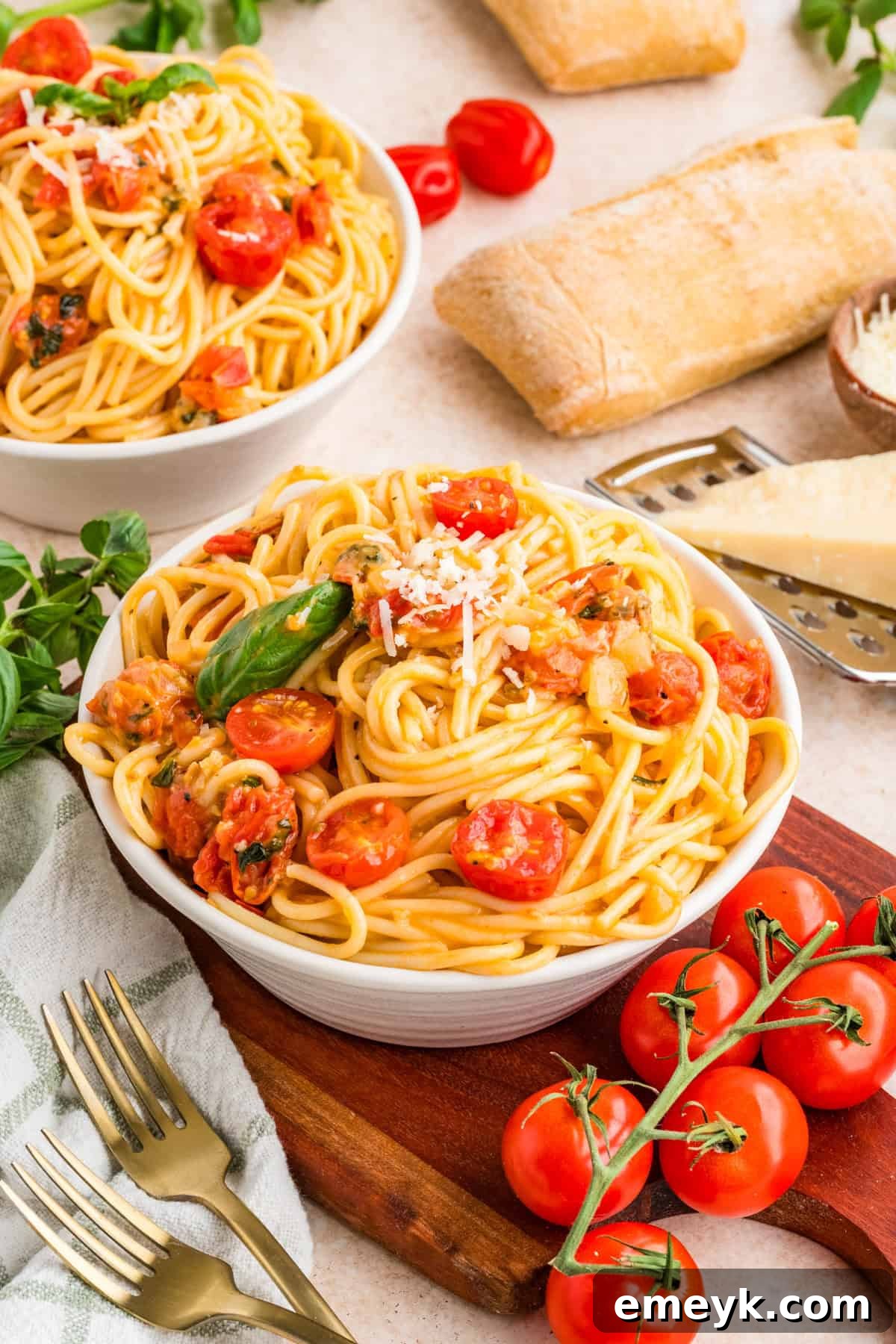
This Cherry Tomato Basil Pasta is a quick 30-minute weeknight dinner that highlights sweet, peak-season cherry tomatoes. Fresh basil, parsley, garlic, and parmesan come together in a silky sauce made directly in the pan—no canned tomatoes, no heavy cream—just simple, high-quality ingredients. This is the kind of summer pasta you’ll want to make again and again.
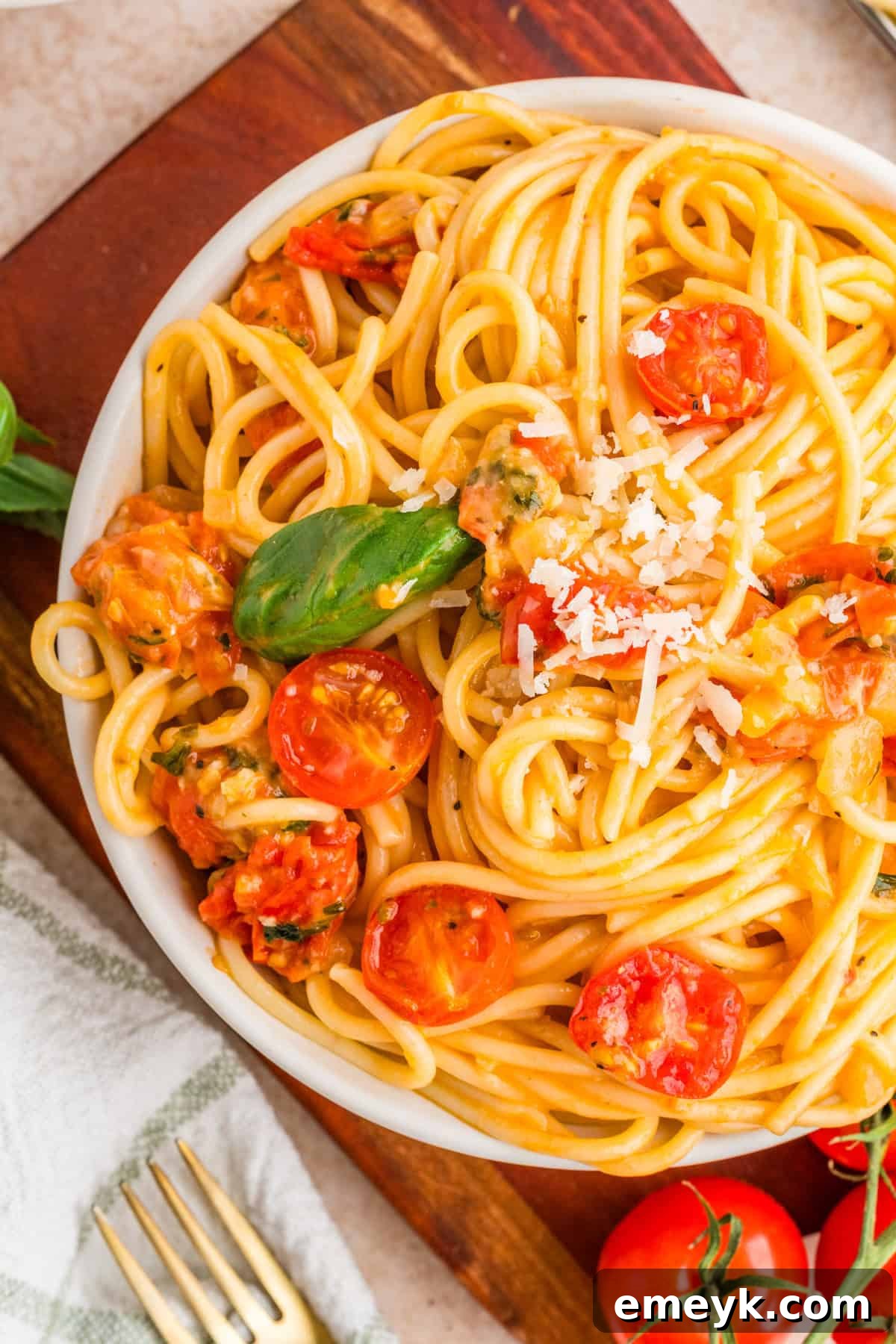
A ripe pint of cherry tomatoes sitting on the counter is a tiny invitation to cook something simple and delicious. This recipe is purposely uncomplicated: the tomatoes do the main work, releasing natural sweetness and juice as they cook. With a handful of pantry staples and fresh herbs, you can turn those tomatoes into a glossy sauce that clings to pasta in about 30 minutes.
The secret is slow, patient cooking of fresh tomatoes with olive oil, onion, garlic, and a few dried spices until they break down and become jammy. Stir in a splash of starchy pasta water and plenty of freshly grated parmesan to create a silky, cohesive sauce. The result tastes like it belongs at a relaxed Mediterranean restaurant—even though it comes together on a weeknight.
Why This Cherry Tomato Basil Pasta Is Worth Making

If you have a pint or two of cherry tomatoes, this is a perfect way to use them. Cherry tomato season is short and intense: at their peak they are sweet and juicy, and you don’t need much to make them shine. Olive oil, onion, garlic, a handful of herbs, and good parmesan are all you need.
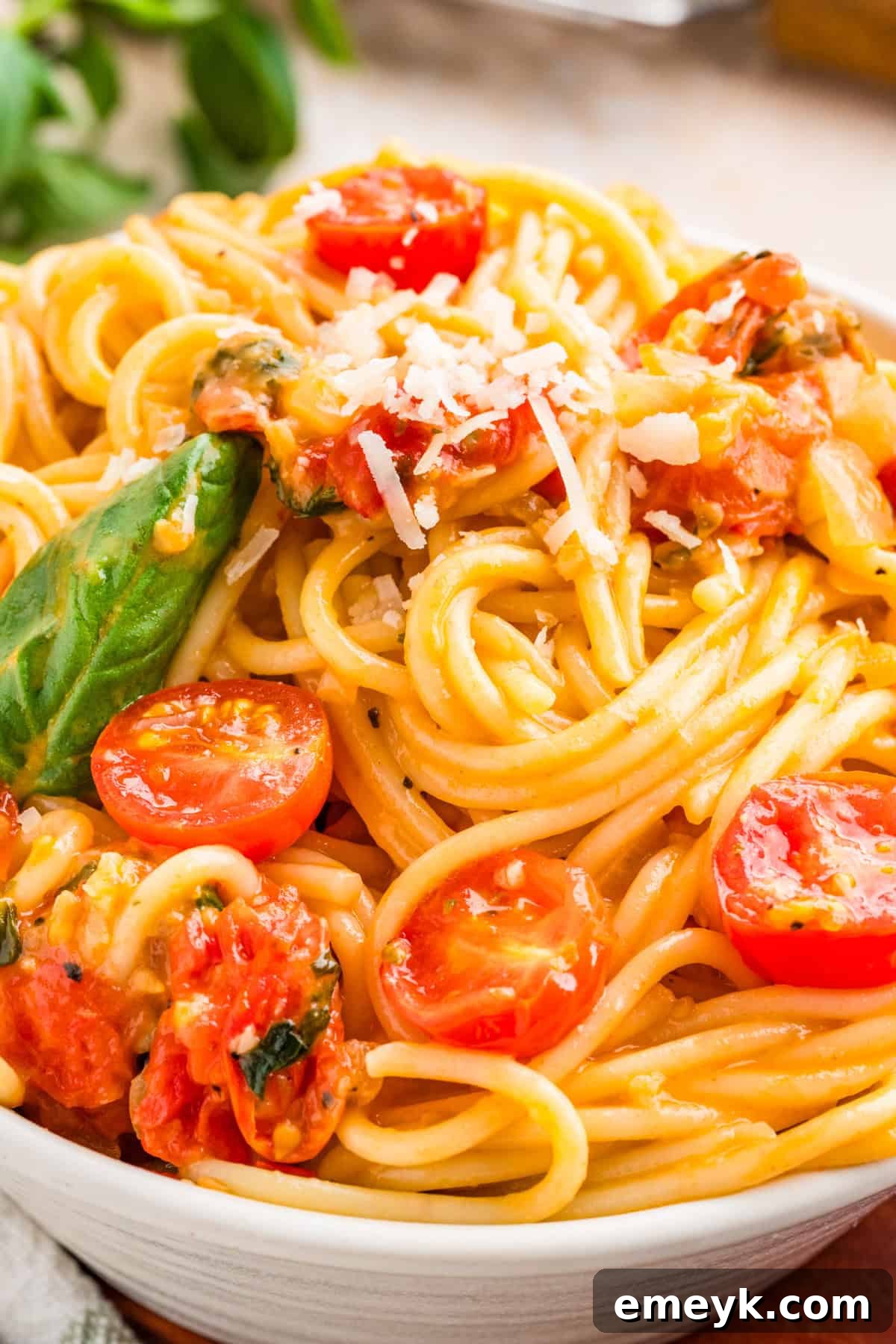
The tomatoes will soften, burst, and release bright, slightly acidic juice into the pan. After you stir in the herbs and toss with pasta and starchy cooking water, the parmesan melts into the liquid to form a glossy sauce that coats every strand of pasta. It’s an unfussy Mediterranean-style dinner that delivers maximum flavor with minimal fuss.

Recipe Ingredients
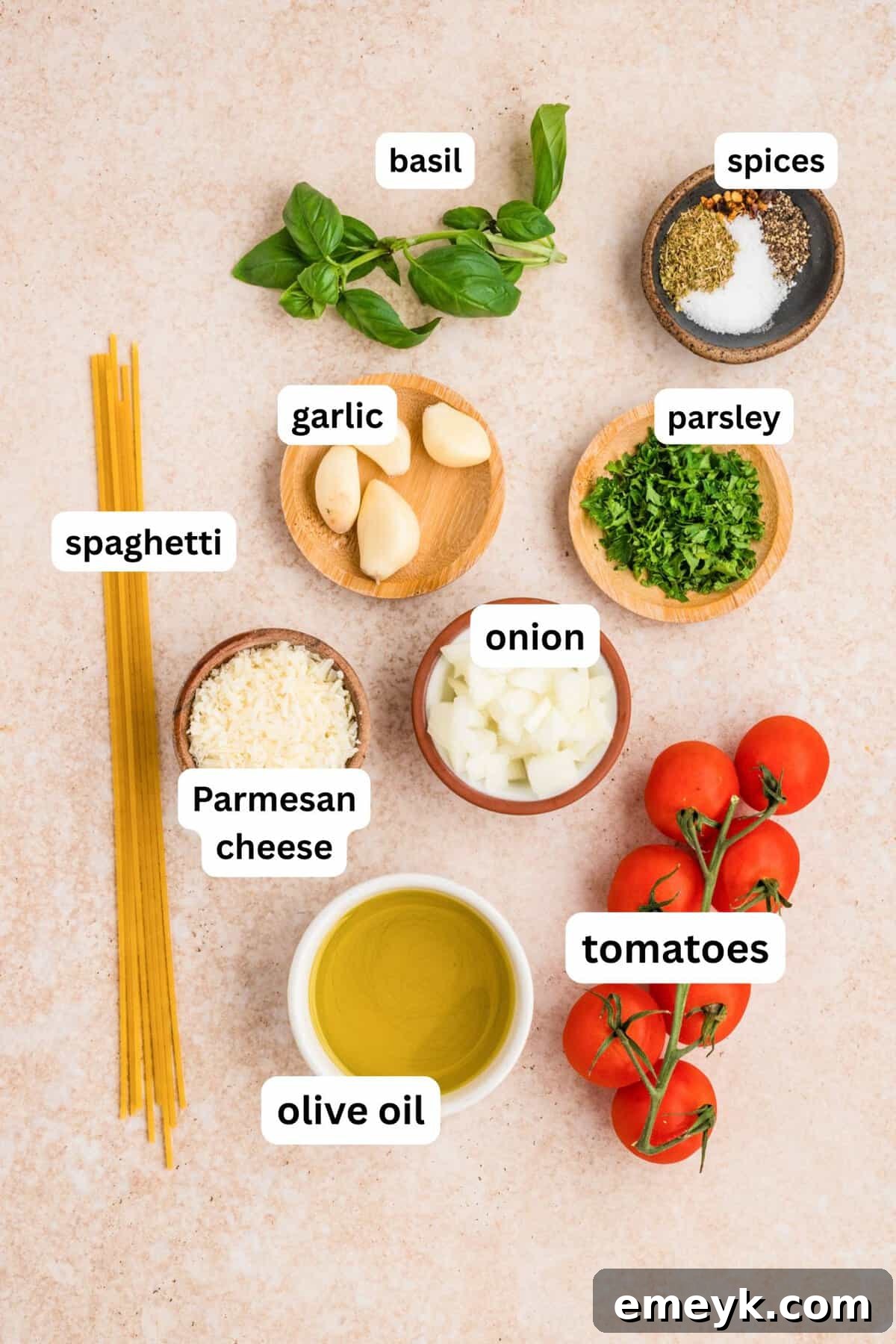
- Cherry tomatoes: Two pints, halved. Halving helps them release juice more quickly and evenly. Mix colors (red, orange, yellow) for extra visual appeal and layered sweetness. Grape tomatoes also work.
- Olive oil: Extra virgin olive oil is the base of the sauce—choose one you enjoy, since its flavor comes through.
- Yellow onion: Finely diced. Cooking the onion until soft adds subtle sweetness and body the sauce otherwise lacks if you only use garlic.
- Garlic: Four cloves, minced. Add after the onion has softened so the garlic doesn’t burn.
- Fresh basil and fresh parsley: Basil adds a sweet aromatic lift; parsley brightens and rounds the flavors. Use both if possible, but you can use just one if that’s what you have.
- Parmesan: One full cup, freshly grated. This helps create the silky texture of the finished sauce—avoid pre-shredded varieties.
- Pasta: 12 ounces, cooked al dente in well-salted water. Spaghetti is classic, but linguine, bucatini, or short shapes like rigatoni or penne work well.
- Spices: Dried oregano, coarse black pepper, and a pinch of red pepper flakes. Oregano adds an earthy depth that balances the sweetness of the tomatoes.
Ways to Modify This Cherry Tomato Pasta
- Substitute grape tomatoes or a pound of diced Roma or vine-ripe tomatoes when cherry tomatoes are out of season. The texture will be slightly different but still delicious.
- Swap pasta shapes freely: spaghetti, linguine, bucatini, rigatoni, penne, or fusilli all work. Short shapes capture chunkier sauce in their ridges.
- Use gluten-free pasta if needed—still reserve pasta water before draining.
- Swap parmesan for Pecorino Romano for a sharper, saltier flavor.
- For a Mediterranean twist, stir in a few crumbles of feta at the end for tang and creaminess.
- To make it dairy-free, omit the cheese and finish with an extra drizzle of good olive oil and a pinch of salt.
- Adjust heat by changing the amount of red pepper flakes. Omit for a kid-friendly version.
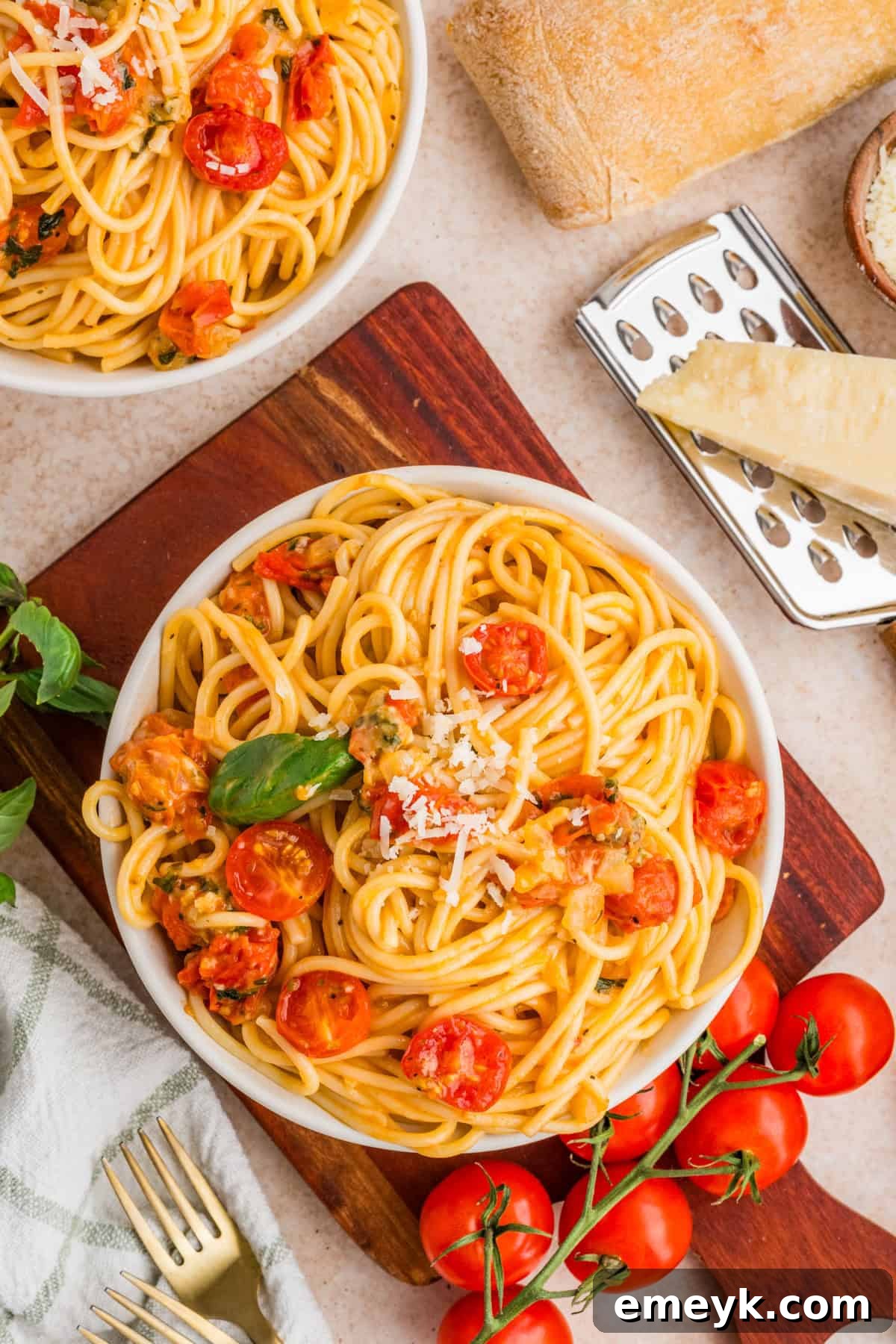
How to Make Cherry Tomato Basil Pasta
Step 1: Cook the pasta. Bring a large pot of well-salted water to a boil and cook the pasta to al dente according to package directions. Before draining, reserve at least 2 cups of pasta cooking water—this starchy water helps build the sauce.
Step 2: Sauté the onion. While the pasta cooks, heat olive oil in a large, deep skillet or pot over medium heat. Add the diced onion and cook about 5 minutes until soft and translucent.
Step 3: Add garlic. Add the minced garlic and cook 1–2 minutes until fragrant. Avoid browning the garlic.
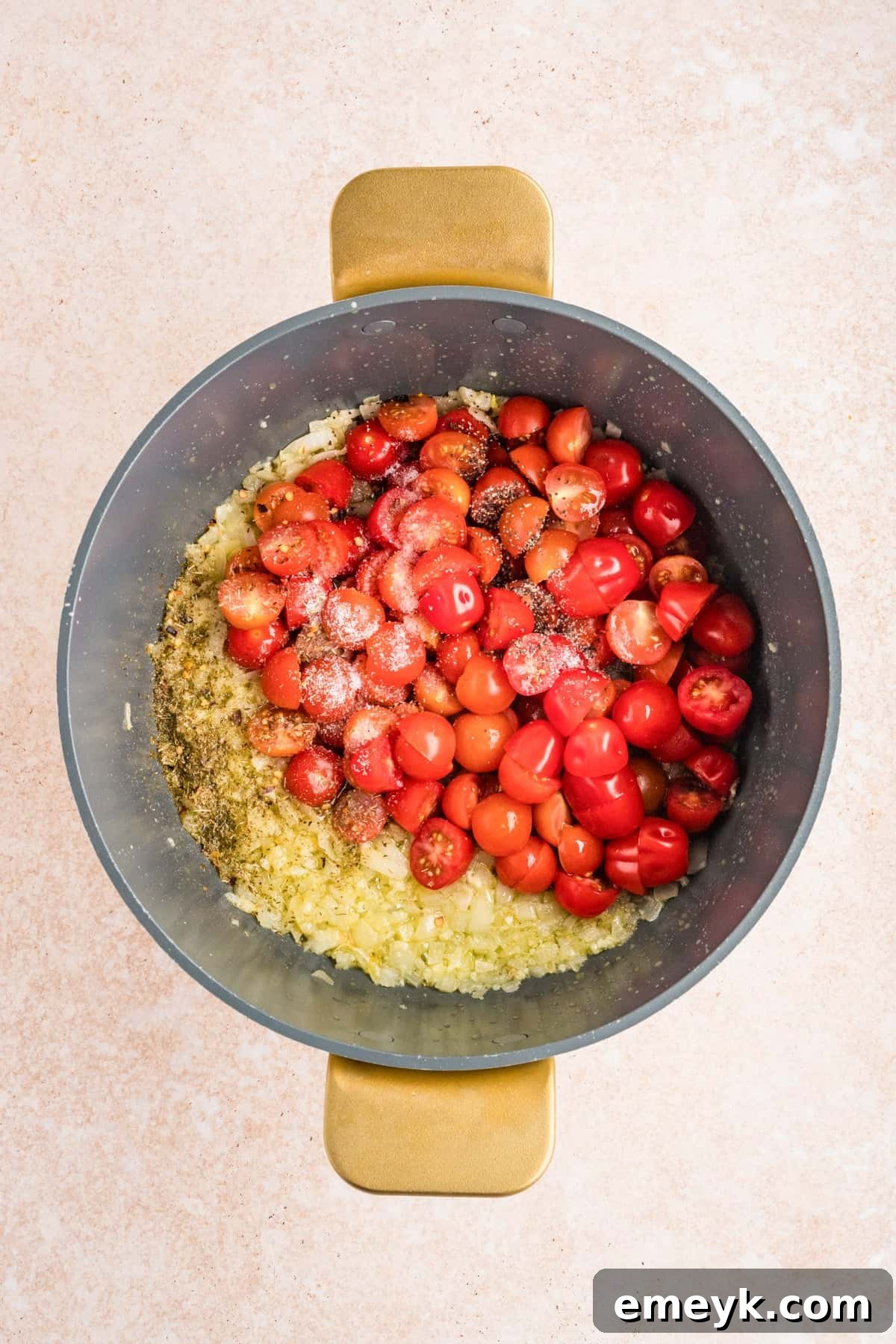
Step 4: Add tomatoes and seasoning. Add the halved cherry tomatoes, salt, dried oregano, black pepper, and red pepper flakes. Stir and cook about 5 minutes over medium heat, lowering heat as needed when the tomatoes begin to sputter. Crush a few tomatoes against the pan to release more juice.
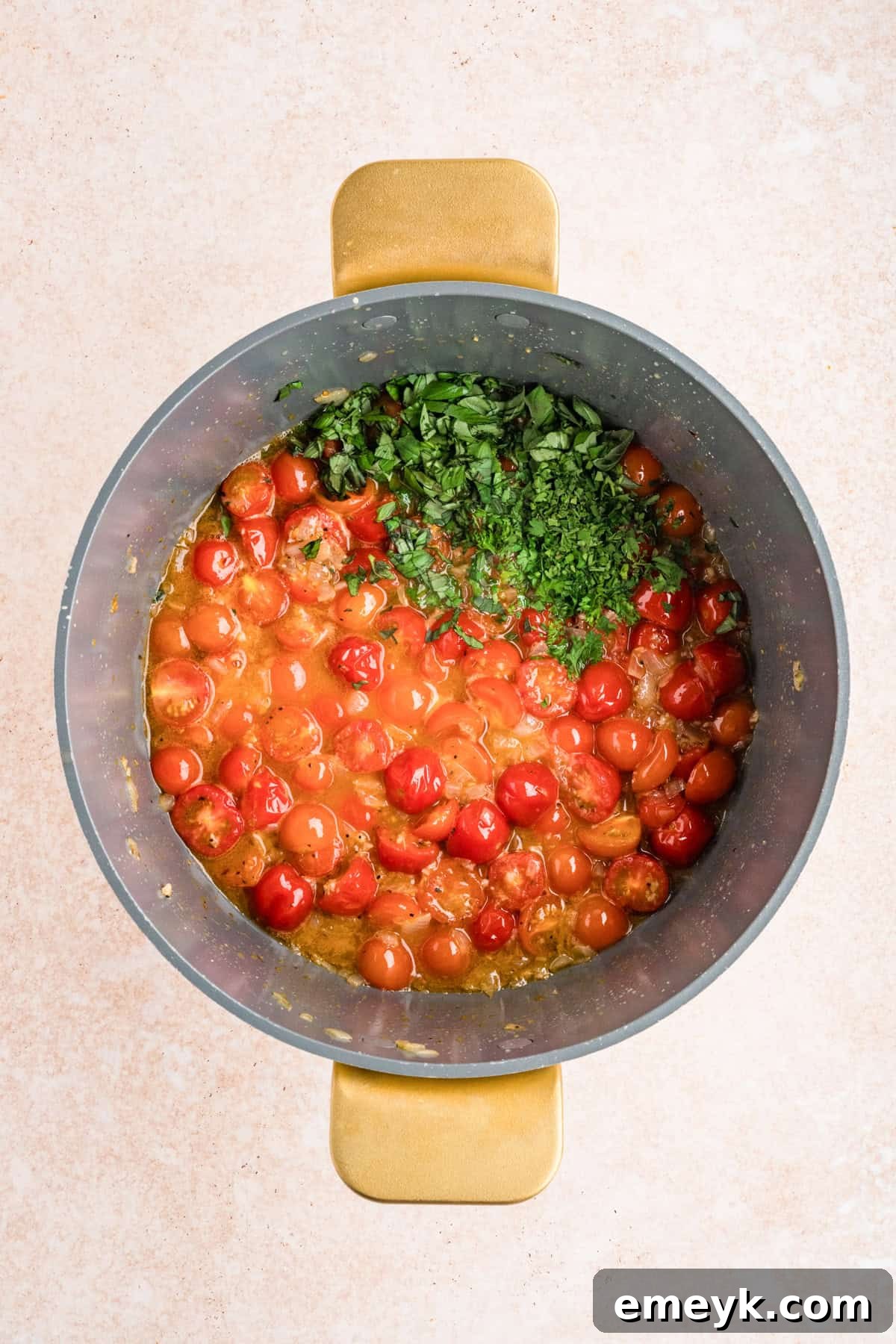
Step 5: Add the herbs. Stir in the basil and parsley and cook another 5 minutes, until the tomatoes are jammy but still have some texture.
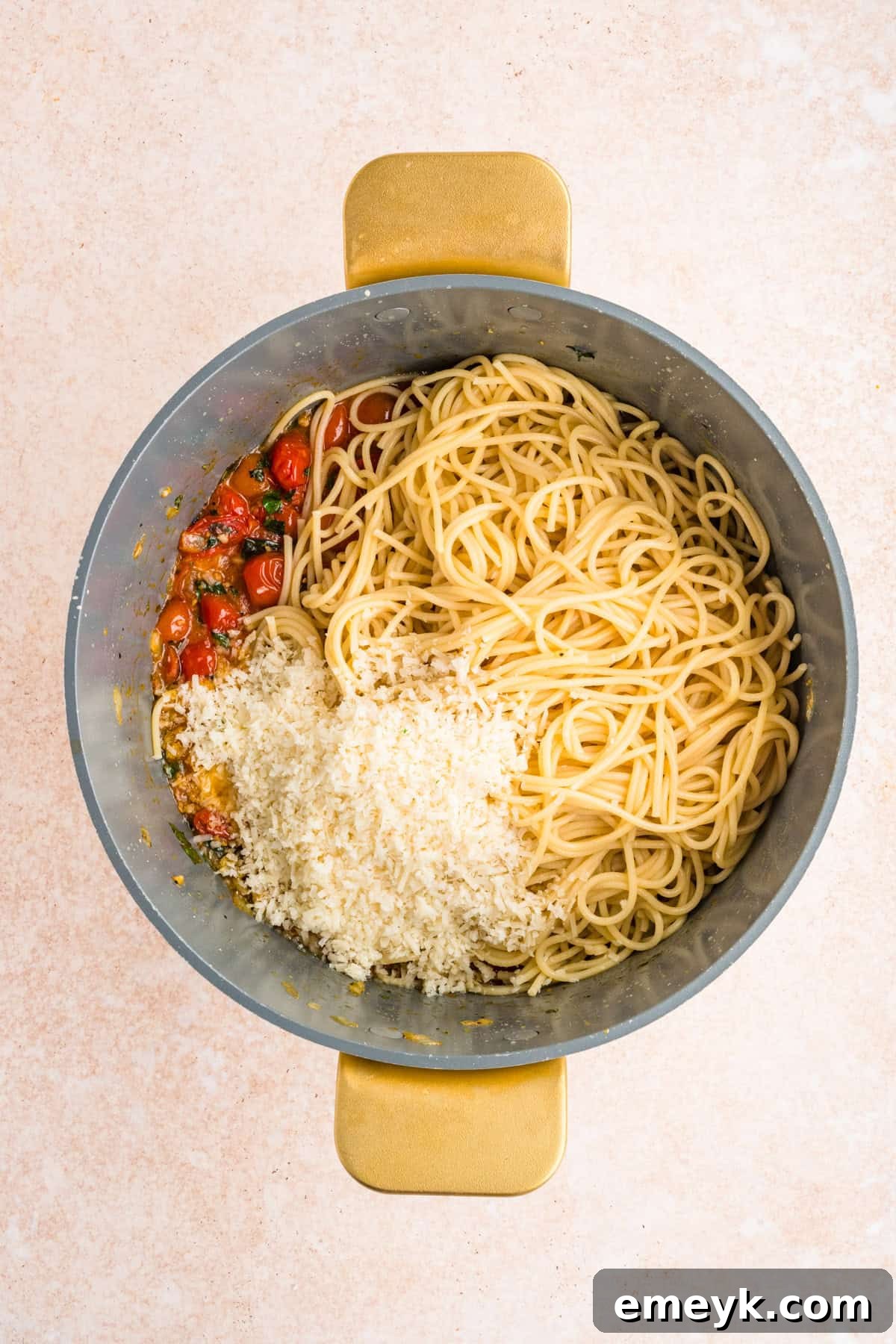
Step 6: Toss with pasta and parmesan. Add the drained pasta directly to the pan with the tomatoes. Add the grated parmesan and toss to coat. Gradually pour in about 2/3 cup of the reserved pasta water while using tongs to work the sauce through the noodles. Keep tossing until a silky, glossy sauce forms. Add more pasta water a splash at a time if the sauce looks too thick or the pasta sticks.
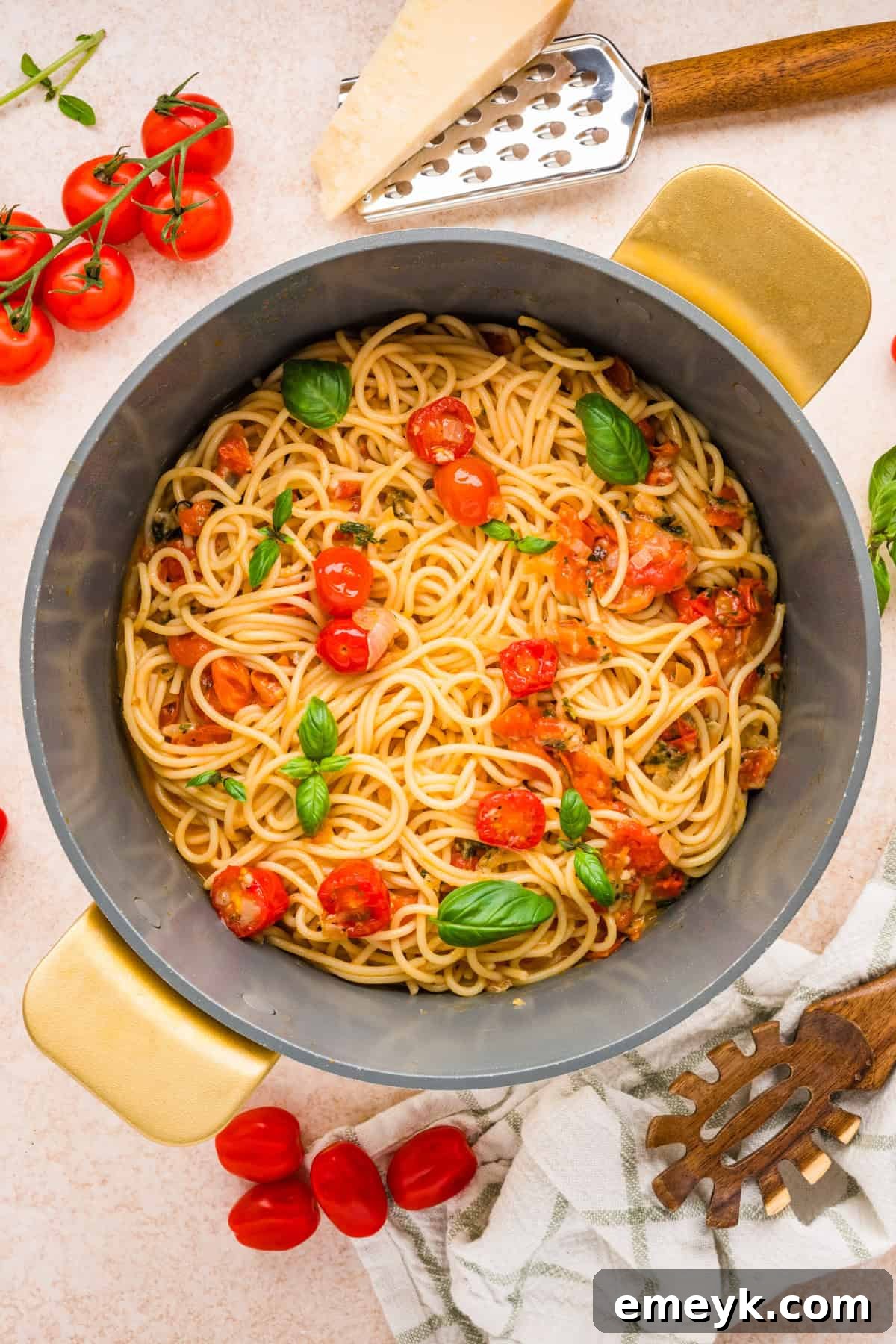
Step 7: Serve. Finish with extra parmesan and torn basil leaves. Serve immediately while the sauce is glossy and warm.
The Trick to a Silky Sauce
Pasta water is the home cook’s secret: it carries starch that emulsifies the olive oil, tomato juices, and cheese into a cohesive sauce that clings to pasta. Add it gradually while tossing the pasta and watch the sauce transform from loose to glossy and clingy. Reserve more water than you think you’ll need—one to two cups is a safe amount.
The Sputtering Tomato Problem (and How to Avoid It)
Hot tomatoes will sputter and pop as they release juices. This is normal. To manage it: lower heat to medium-low when bubbling starts, use a large pan with high sides, or partly cover the pan with a lid left slightly ajar for the first few minutes. These tips reduce splatter while allowing steam to escape so the sauce thickens instead of getting watery.
How to Make It a Meal
This pasta is satisfying on its own, or you can add protein and sides to round it out:
- Grilled chicken sliced on top for a simple protein addition.
- Sautéed or grilled shrimp cooked separately and added when tossing the pasta.
- White beans stirred into the tomato mixture for a vegetarian protein boost.
- Serve with a crisp salad and crusty bread to soak up extra sauce.
Storage, Reheating, and Next-Day Tips
- Store leftovers in an airtight container in the refrigerator for up to 4 days. The sauce will thicken as the pasta absorbs it—many people prefer the deeper flavor the next day.
- To reheat, warm gently in a skillet over medium-low with a splash of water or olive oil, stirring until loosened. The microwave works too; cover and add a little water before heating.
- Make-ahead option: Reserve some of the sauce before tossing with pasta and store sauce and pasta separately. The sauce freezes well for up to 3 months.
Recipe FAQ
Yes. Grape tomatoes are slightly firmer and less sweet but work well; halve them and follow the same cook time.
No. Both together add more complexity, but using just one is fine—basil makes the sauce sweeter and more aromatic, parsley adds brightness.
Yes. Omit the parmesan or use a dairy-free alternative. The sauce will be a bit thinner—add a bit more pasta water or a drizzle of olive oil to help it come together.
Spaghetti is classic because the long strands pick up sauce evenly, but linguine, bucatini, rigatoni, penne, or fusilli are all good choices. Cook the pasta al dente so it keeps a pleasant texture as it absorbs the sauce.
Ingredients (serves 4)
- 12 ounces pasta, cooked to al dente
- 4 tablespoons olive oil
- 1 small yellow onion, diced
- 4 cloves garlic, minced
- 2 pints cherry tomatoes, halved
- 1 teaspoon kosher salt, plus more to taste
- 1 teaspoon dried oregano
- 1/4 teaspoon coarse ground black pepper
- 1/8 teaspoon crushed red pepper flakes
- 1/4 cup fresh basil, chopped, plus more for garnish
- 1 tablespoon fresh parsley, chopped
- 1 cup parmesan cheese, freshly finely shredded, plus more for garnish
Instructions
- Cook the pasta to al dente in salted water. Before draining, reserve 2 cups of pasta water.
- Heat olive oil in a large pot over medium heat. Sauté the onion until softened, about 5 minutes. Add garlic and cook another minute.
- Add tomatoes, salt, oregano, pepper, and red pepper flakes. Cook about 5 minutes until softened; turn heat down if the tomatoes sputter. Crush a few tomatoes against the pan while stirring.
- Stir in basil and parsley and cook an additional 5 minutes until jammy but textured. Add cooked pasta and parmesan and toss to combine.
- Slowly pour in 2/3 cup reserved pasta water while tossing with tongs until a silky sauce forms; add more water as needed. Garnish with extra basil and parmesan and serve immediately.
Notes
- Use freshly grated parmesan for the best melt and texture.
- Measure basil as whole leaves before chopping; a measured 1/4 cup refers to whole leaves, not already chopped.
- Reserve at least 2 cups pasta water; you can always add more but you can’t take it back.
- Lower heat as soon as the tomatoes start to sputter to avoid excessive splatter and drying the sauce.
- For more heat, increase red pepper flakes to up to 1/2 teaspoon.
- If using table or fine sea salt instead of kosher salt, reduce the amount by about half.
- A colorful mix of cherry tomatoes adds flavor depth and makes the dish visually appealing.
- If you prefer some whole tomato halves for garnish, remove a few before adding the herbs and reserve for serving.
- Pecorino Romano can substitute for parmesan if you prefer a sharper, saltier flavor.
- Leftovers keep in the fridge for up to 4 days. Add a splash of water when reheating to loosen the sauce.
Nutrition (approximate per serving)
Calories: 598 kcal; Carbohydrates: 78 g; Protein: 23 g; Fat: 22 g; Saturated Fat: 6 g; Sodium: 1017 mg; Fiber: 5 g; Sugar: 10 g.
Nutrition information is an estimate and should be used only as a guide.