
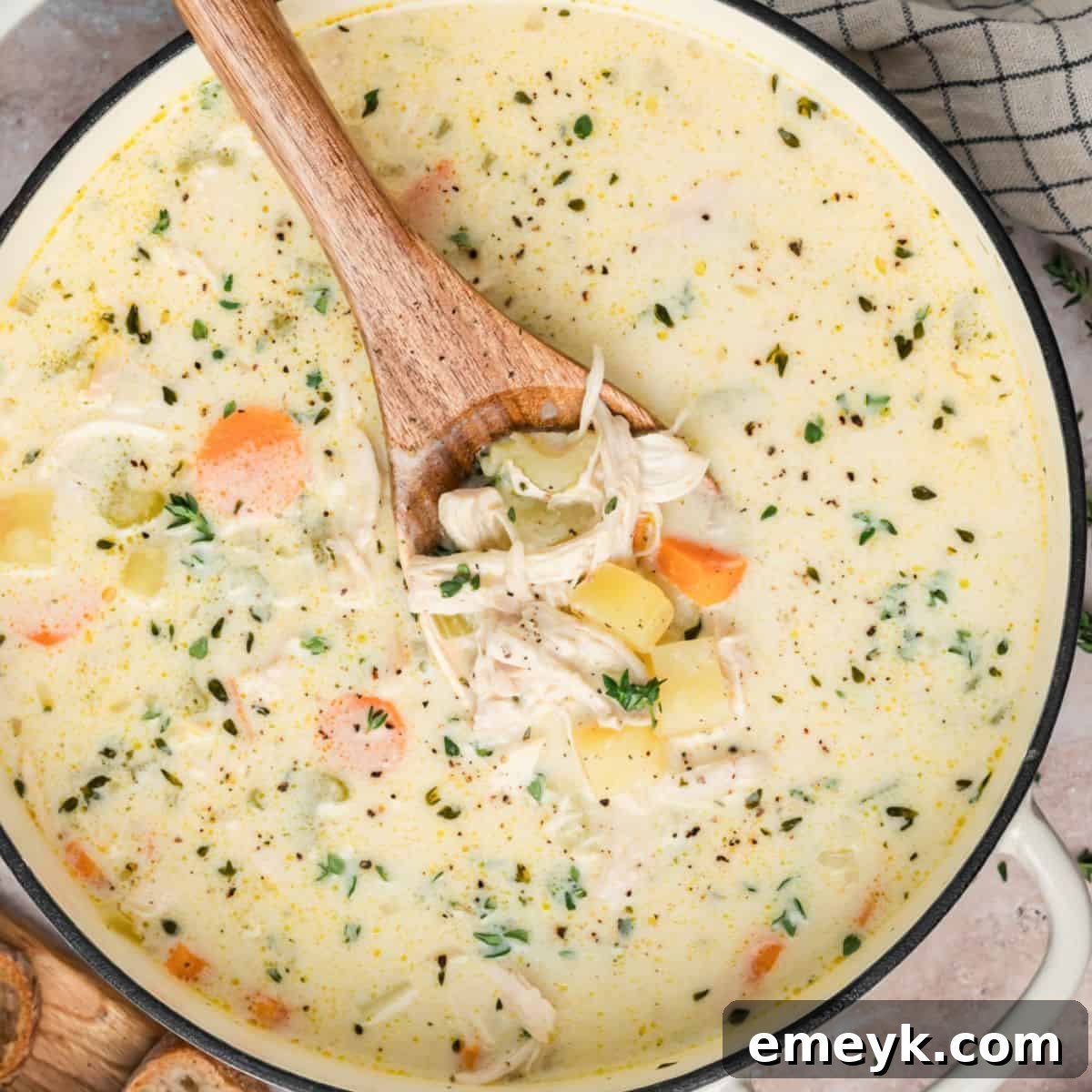
This creamy chicken and potato soup delivers rich, comforting texture without relying on heavy cream or bacon fat. A portion of the cooked potatoes is blended into the broth to thicken it naturally, while a finishing splash of Dijon mustard and fresh lemon juice keeps the flavor bright. Made in one pot in about 55 minutes, it’s a straightforward, no-fuss weeknight meal.
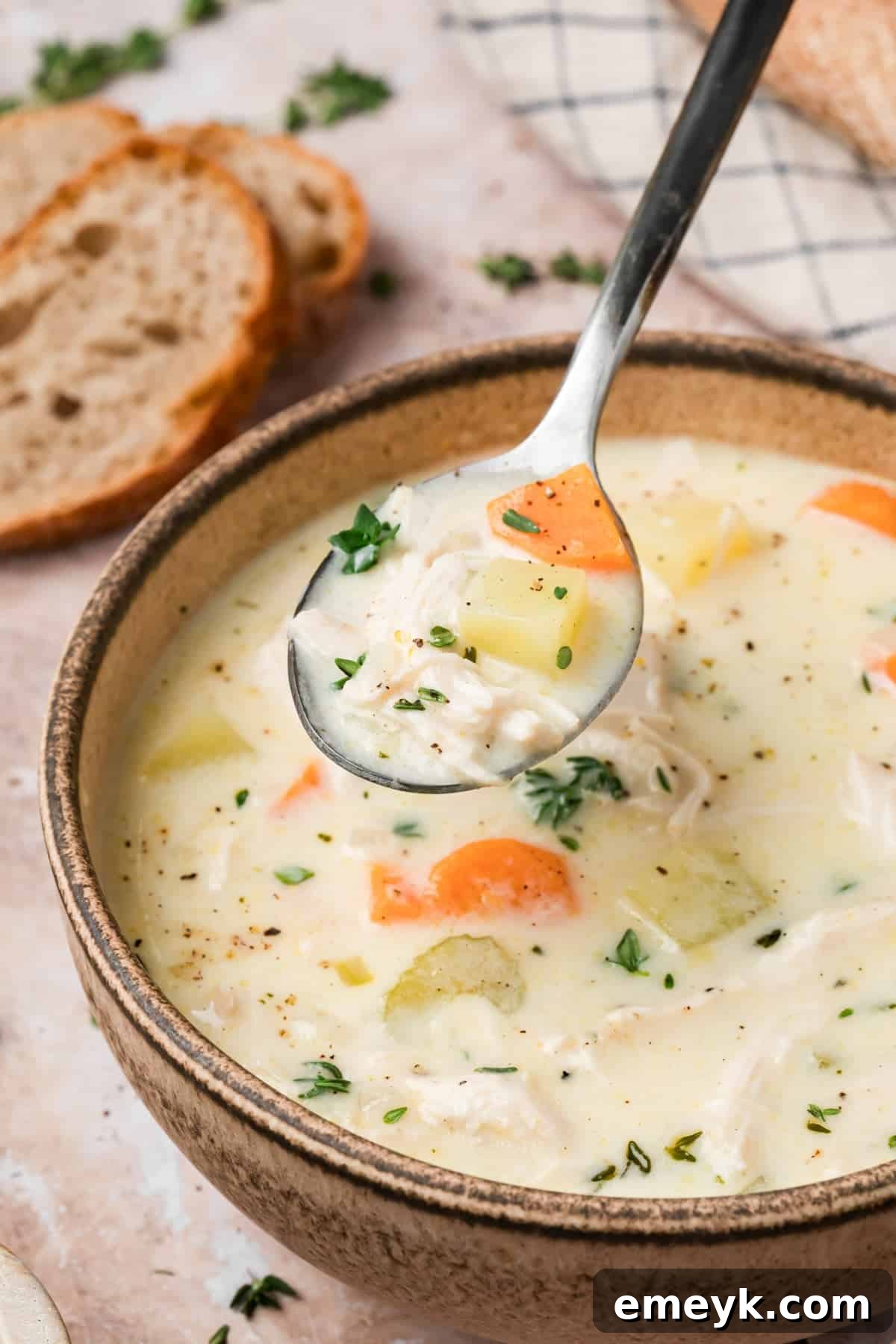
This version differs from classic chicken soups by using potatoes as the primary thickener. A portion of the cooked Yukon Golds is pureed and returned to the pot, creating a velvety body without an overload of dairy. The final additions—Dijon and lemon—add lift and depth so each spoonful tastes lively instead of heavy.
Everything cooks in one pot: chicken breasts poach right in the broth alongside the diced potatoes, so there’s no extra pan to clean and no waiting for a cooled rotisserie bird to shred. From prep to table takes under an hour, most of it hands-off while the soup simmers. It’s a dependable option when you want something homey, simple, and satisfying.
Why This Chicken and Potato Soup Works

Many creamy chicken-potato soups rely on a heavy pour of cream or cream cheese. Here, the thickening comes from the potatoes themselves: blend a cup or two of the finished soup (mostly potatoes and some broth) until smooth and stir it back in. That technique lets you finish with only a cup of half-and-half for silkiness rather than loading the pot with dairy.
Poaching the chicken in the broth with the potatoes keeps the process simple and saves dishes. The gently simmering broth cooks the chicken through while it absorbs aromatics from onion, carrot, celery, thyme, and bay leaf.

Recipe Ingredients
See the recipe card below for exact measurements and a concise instructions list. Ingredients used here are common pantry items and easy to swap to suit dietary needs.
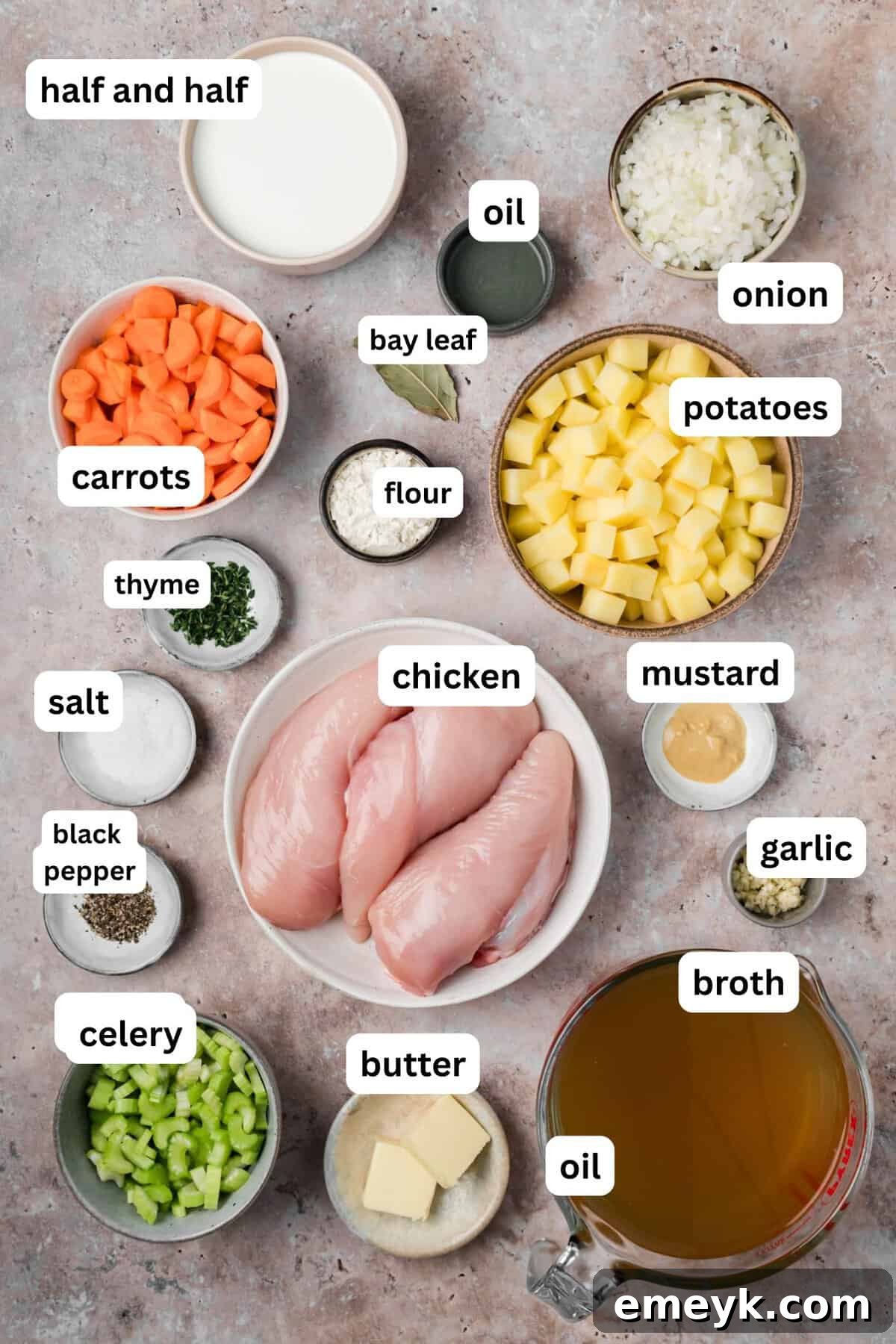
- Chicken breasts: Boneless, skinless breasts poach in the broth and shred easily. Boneless thighs are an option for a richer flavor but take slightly longer to cook.
- Onion, carrots, celery: The classic aromatic base; dice evenly so everything softens at the same rate.
- Chicken broth: Low-sodium broth is recommended so you can control the final seasoning. Homemade or store-bought both work.
- Yukon Gold potatoes: Their buttery texture makes the puree silky. Russets can be used but may break down more and become slightly grainy when blended.
- Fresh thyme and bay leaf: Thyme adds subtle earthiness and pairs well with chicken and potatoes; dried thyme can substitute if needed.
- Dijon mustard: A small amount deepens the broth without adding a noticeable mustard flavor.
- Half-and-half: Adds silkiness without weighing the soup down. Whole milk is a lighter alternative; heavy cream makes it richer.
- Fresh lemon juice: Stirred in at the end to brighten the flavors—this keeps the soup from tasting flat.
Ways to Modify
- Use thighs: Boneless, skinless thighs add richness and resist drying out.
- Dairy-free: Use olive oil in place of butter and substitute full-fat coconut milk or a dairy-free creamer for half-and-half. The blended potatoes still provide much of the creaminess.
- Lighten it: Substitute whole milk for half-and-half for a lighter bowl.
- Make it richer: Swap heavy cream for half-and-half for a more indulgent result.
- More vegetables: Add frozen peas or corn in the final minutes for color and texture.
- Rotisserie chicken: Stir in shredded rotisserie chicken when adding the half-and-half; increase the broth to compensate since the chicken won’t simmer in the pot.
- Herb variations: A pinch of rosemary or a small handful of dill with the thyme adds another flavor layer.
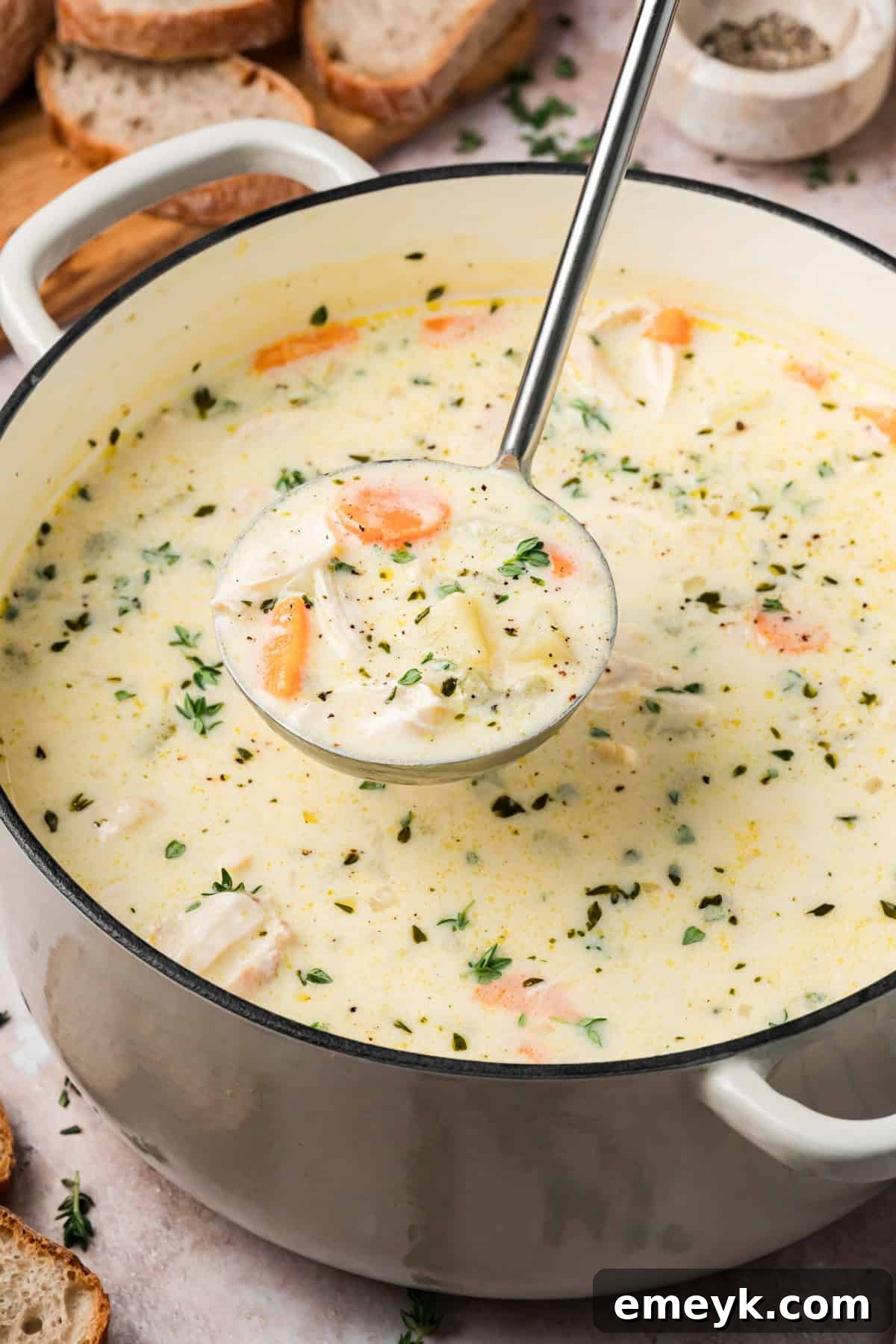
How to Make Chicken and Potato Soup
Step 1 — Soften the vegetables. Melt butter in a large pot or Dutch oven over medium heat. Add diced onion, sliced carrots, and celery and cook, stirring occasionally, until the onion is translucent and the vegetables begin to soften, about 5 to 6 minutes.
Step 2 — Build the base. Stir in minced garlic and cook until fragrant, about 30 seconds. Sprinkle flour over the vegetables and stir for about a minute to cook the raw flour taste. Slowly pour in the chicken broth, scraping the pot bottom so the flour dissolves and nothing sticks.
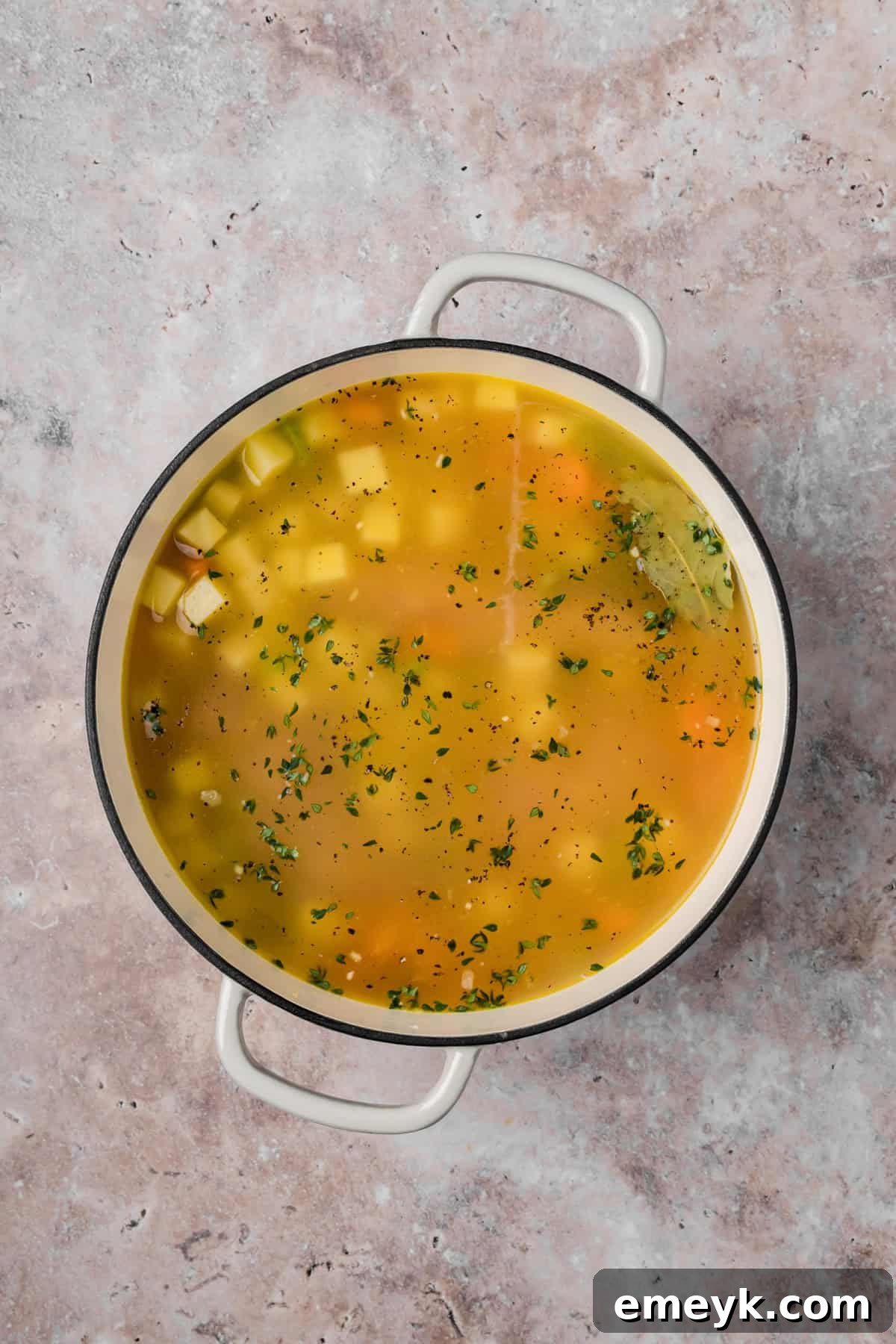
Step 3 — Simmer chicken and potatoes together. Add cubed potatoes, chicken breasts, thyme, bay leaf, salt, and pepper. Bring to a boil, then reduce heat to medium-low and partially cover. Simmer until the chicken is opaque and registers 165°F at the thickest part, about 12 to 15 minutes.
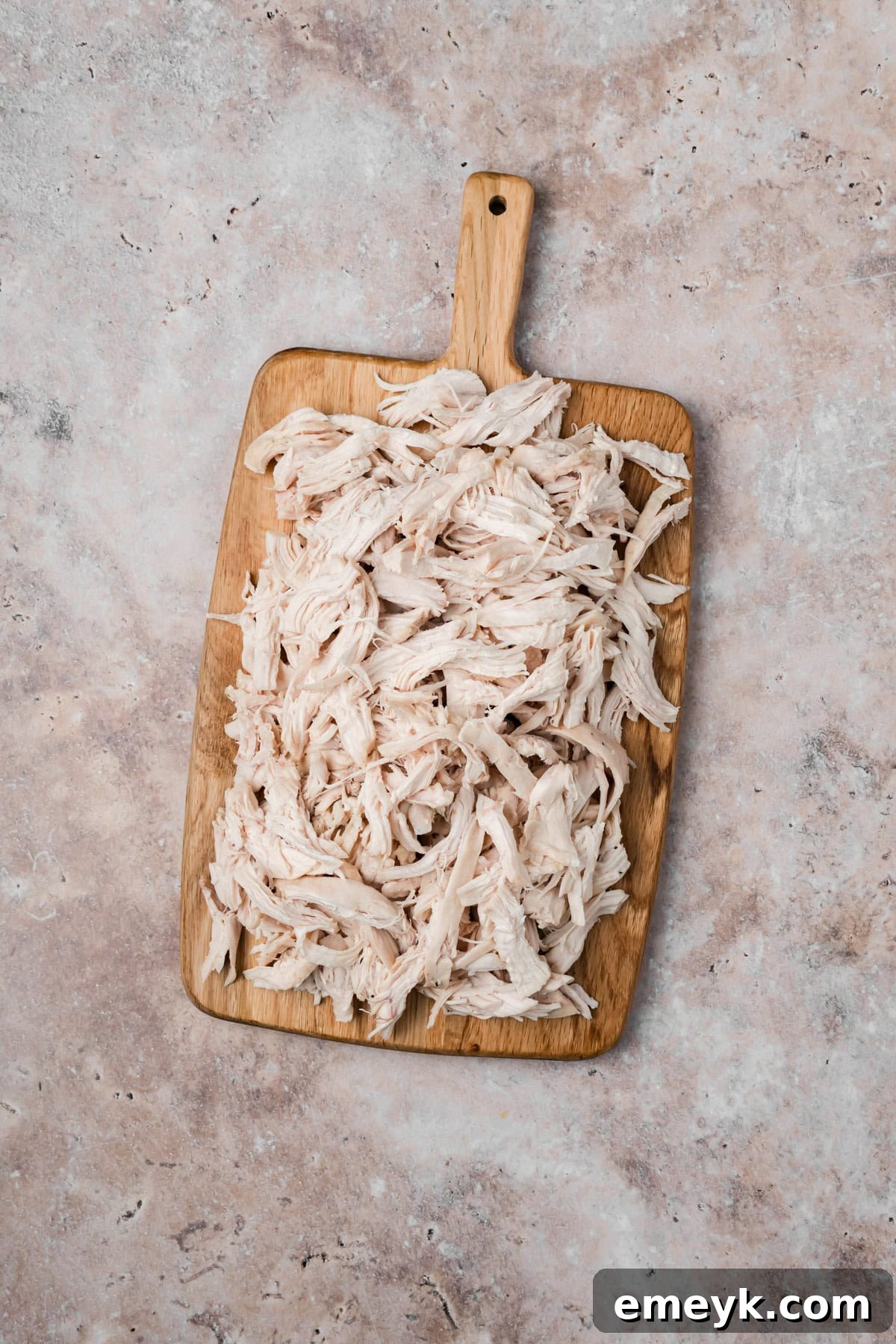
Step 4 — Shred the chicken. Transfer chicken to a cutting board and shred into bite-sized pieces with two forks. If potatoes aren’t fork-tender, continue simmering a few minutes while you shred.

Step 5 — Blend for creaminess. Ladle about 2 cups of soup into a container, taking mostly potatoes with some broth. Blend until smooth with an immersion blender or countertop blender, then stir the purée back into the pot. This thickens the soup naturally.

Step 6 — Finish the soup. Reduce heat to low. Stir in Dijon mustard and half-and-half, return the shredded chicken to the pot, and warm through for 2 to 3 minutes without boiling. High heat can cause the dairy to separate.
Step 7 — Brighten and season. Remove the bay leaf and stir in fresh lemon juice. Taste and adjust salt and pepper. Serve garnished with fresh thyme and a crack of black pepper; add chopped parsley if desired.
Recipe tip: If the soup thickens too much as it sits, stir in a splash of warm broth over low heat to loosen it.
Storage and Reheating
- Store leftovers in an airtight container in the refrigerator for 3 to 4 days. Reheat gently over low heat on the stovetop, stirring occasionally. If refrigerated soup becomes too thick, add a splash of broth or milk while reheating.
- The soup can be frozen, but for best texture freeze before adding the half-and-half. Stir in dairy fresh after thawing and reheating; dairy may change texture after freezing.

What to Serve With It
- A crusty loaf or sourdough makes a great dipping companion.
- A simple lemony arugula salad pairs well to cut the richness, or serve alongside a grain salad such as a Mediterranean-style quinoa salad or roasted vegetables to round out the meal.