
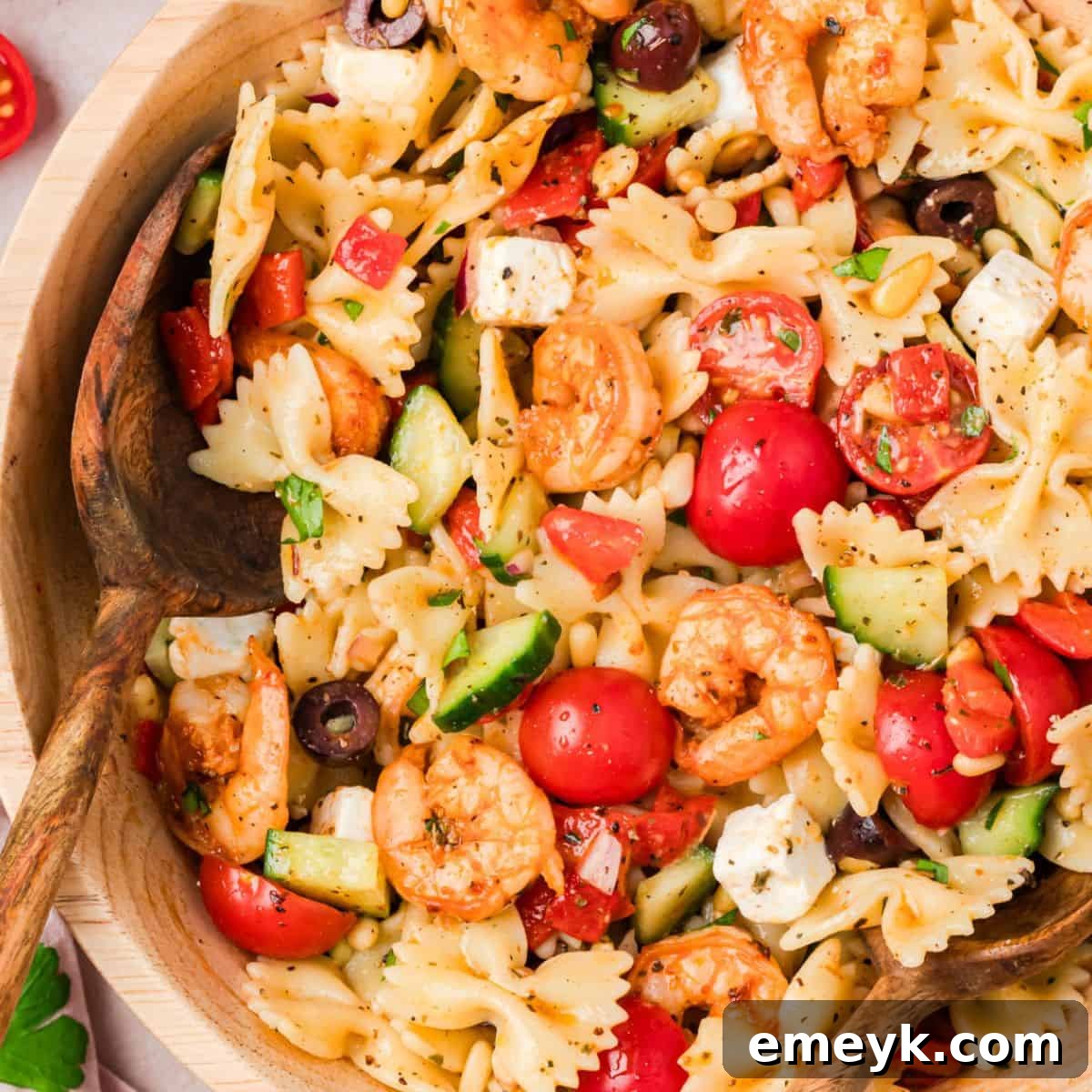
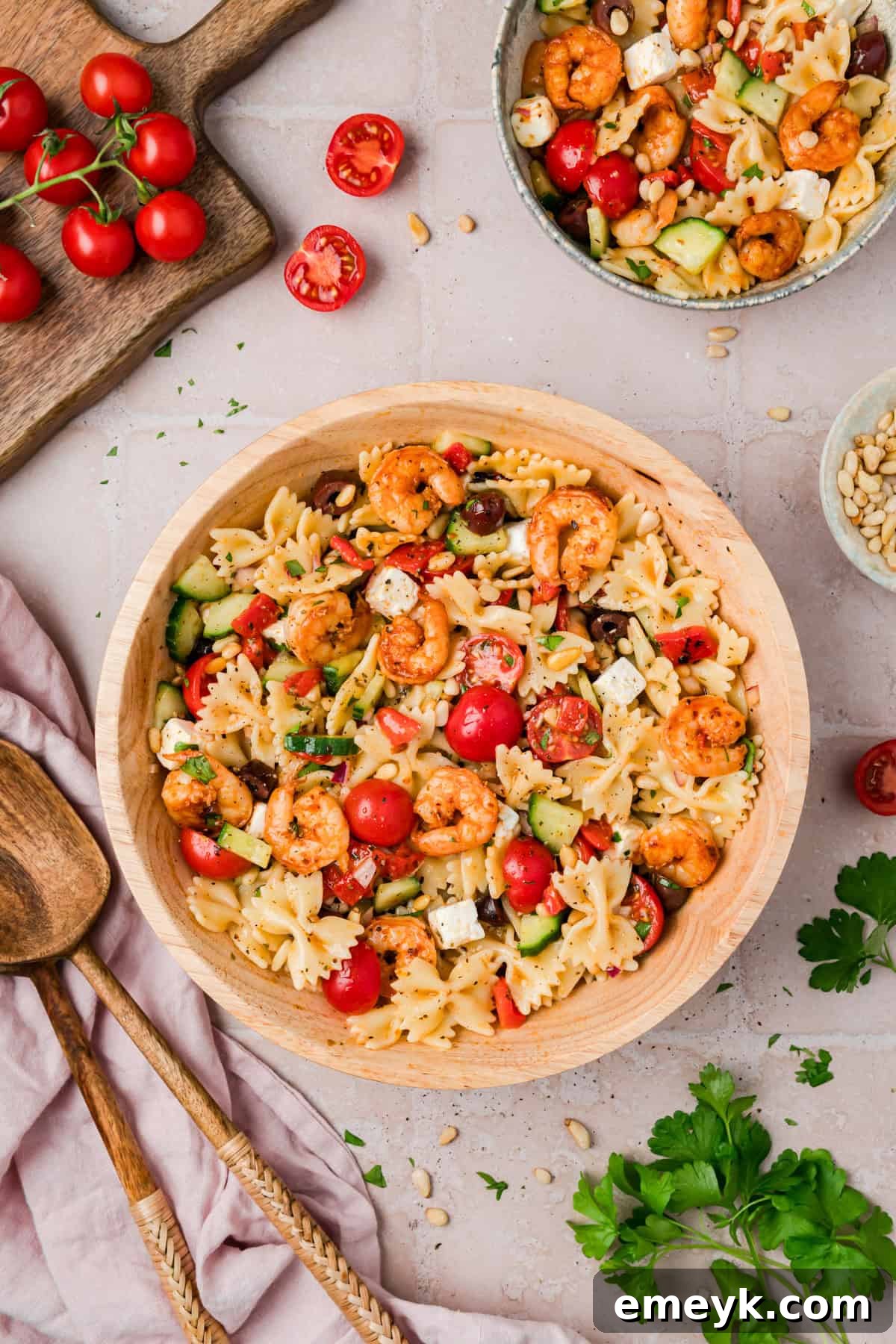
This Mediterranean Shrimp Pasta Salad is a fresh spin on a summer classic. Farfalle is tossed with seasoned pan-seared shrimp, cucumber, cherry tomatoes, roasted red peppers, Kalamata olives, feta, and toasted pine nuts, all coated in a bright red wine-herb vinaigrette. No mayonnaise, ready in about 30 minutes, and the flavors deepen as it rests.
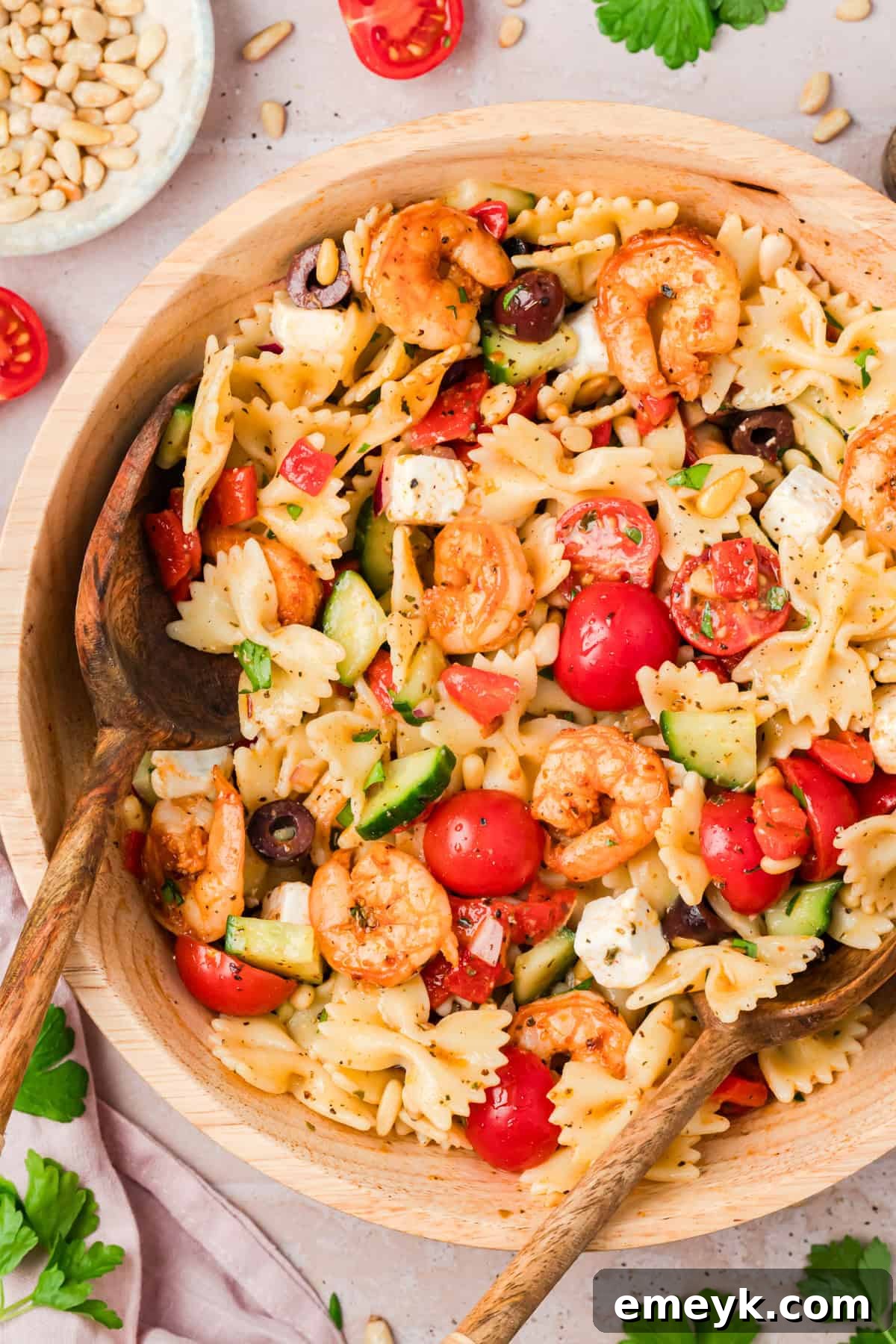
If you want a shrimp pasta salad that tastes like it came from a Mediterranean kitchen rather than a deli case, this is the one. Instead of pre-cooked shrimp and a mayonnaise-based dressing, this version uses raw shrimp tossed with smoked paprika and garlic, pan-seared to create a light crust, then combined with a bright red wine vinegar and Dijon vinaigrette and a lineup of Mediterranean ingredients that keep each bite interesting. It looks beautiful on the table, travels well, and works for quick lunches or summer gatherings.
Why This Shrimp Pasta Salad Works (and What Makes It Different)

Here the shrimp are the star. Before cooking they’re tossed with smoked paprika, garlic powder, salt, and pepper to build a flavorful edge. Cook 1–2 minutes per side until the shrimp are opaque and form a loose C—if they curl tightly into an O they’re overcooked. The dressing is a red wine vinegar vinaigrette with Dijon, honey, oregano, and basil: bright, tangy, and mayo-free so it keeps well in the fridge. Mix-ins—roasted red peppers, Kalamata olives, cucumber, cherry tomatoes, feta, toasted pine nuts, and parsley—give texture, salt, and freshness. It looks like a dish that took hours to make, but it takes about 30 minutes.

Ingredients You Need
Below is a concise look at the key ingredients and why they matter for flavor and texture.
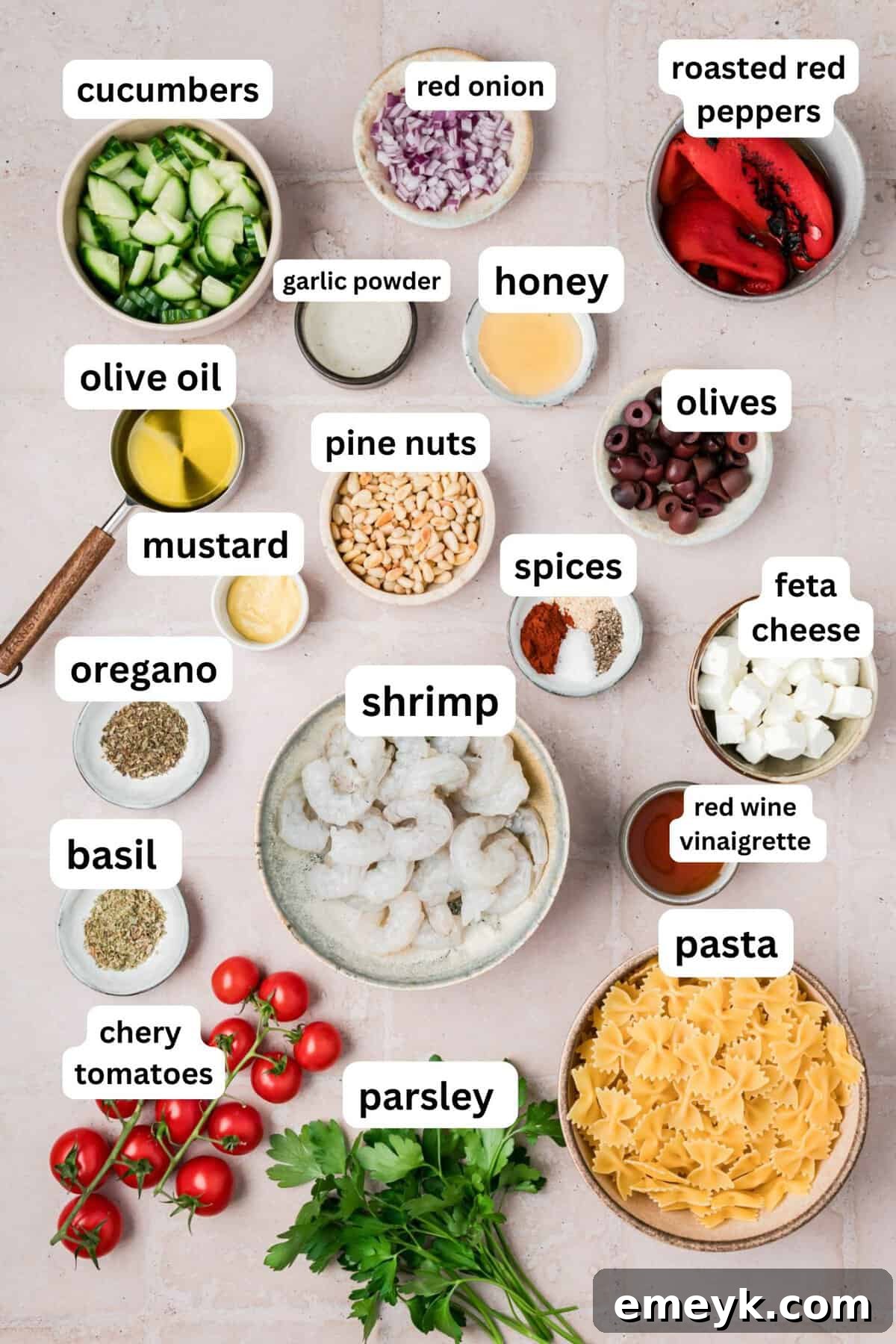
For the shrimp:
- Shrimp. Medium raw shrimp, peeled and deveined, work best for tender bites in proportion to the pasta. If using large shrimp, halve them after cooking so they distribute evenly. If using frozen, thaw and pat completely dry to ensure a proper sear.
- Smoked paprika. Adds warm, smoky depth that elevates the shrimp and the whole salad. Old Bay is a good alternative to add extra complexity.
For the salad:
- Farfalle. Bowtie pasta holds up well in cold salads due to its shape and thickness. Rotini, penne, or fusilli are suitable substitutes.
- Roasted red peppers. Jarred roasted peppers bring sweet, smoky notes that balance the briny olives and salty feta. Chop to match the size of other vegetables for even distribution.
- Kalamata olives. Provide a briny, meaty bite; other pitted olives can work if Kalamatas aren’t available.
- Feta cheese. Buy a block and cube it. Block feta is creamier and holds its shape better than pre-crumbled versions.
- Pine nuts. Toast them for two minutes in a dry pan until golden and fragrant—this step adds real flavor and crunch.
- Dressing. A red wine vinegar–olive oil base, made slightly more acidic so the pasta and feta don’t dull the flavors as they sit. Dijon helps emulsify, honey balances acidity, and dried oregano and basil give Mediterranean character.
Recipe Modifications
- Swap the pasta shape. Rotini, penne, or fusilli all work; choose short pasta with texture so the dressing clings.
- Citrus in the dressing. Add lemon or lime juice for a fresh tang.
- Different proteins. Grilled chicken, canned tuna, or flaked baked salmon can replace shrimp. Chickpeas make this vegetarian and add substance.
- More vegetables. Artichoke hearts, sun-dried tomatoes, avocado (added just before serving), or thinly sliced celery are great additions.
- Extra heat. Red pepper flakes in the dressing or a drizzle of harissa add a subtle kick.
- Extra herbs. Fresh dill, basil, or mint lift the salad further—use what you enjoy.
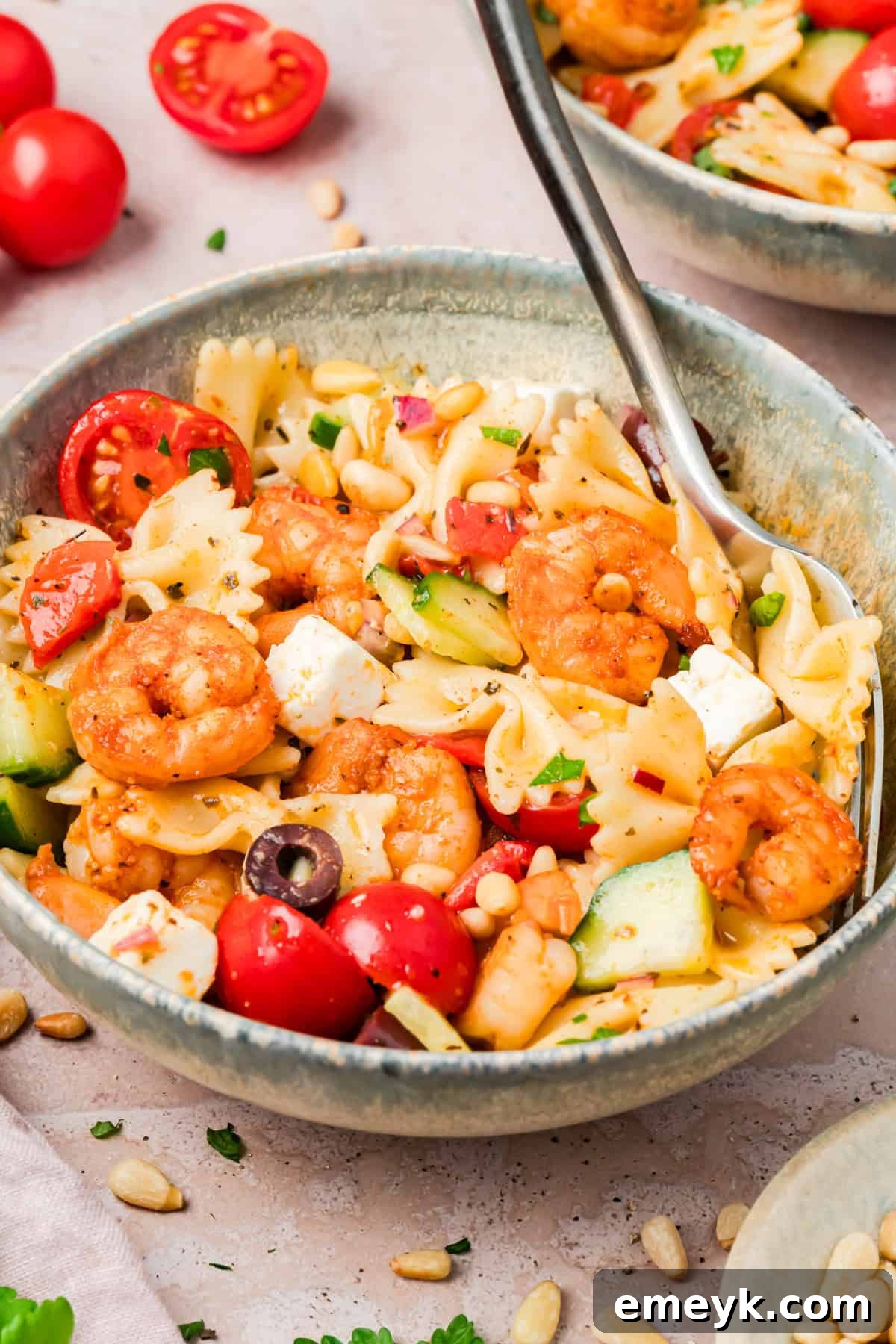
How to Make Shrimp Pasta Salad
Step 1: Cook the pasta. Bring a large pot of generously salted water to a boil and cook the farfalle until al dente. Drain and rinse briefly with cold water to stop cooking, then spread or toss to cool completely. Warm pasta will absorb dressing and dry out the salad.
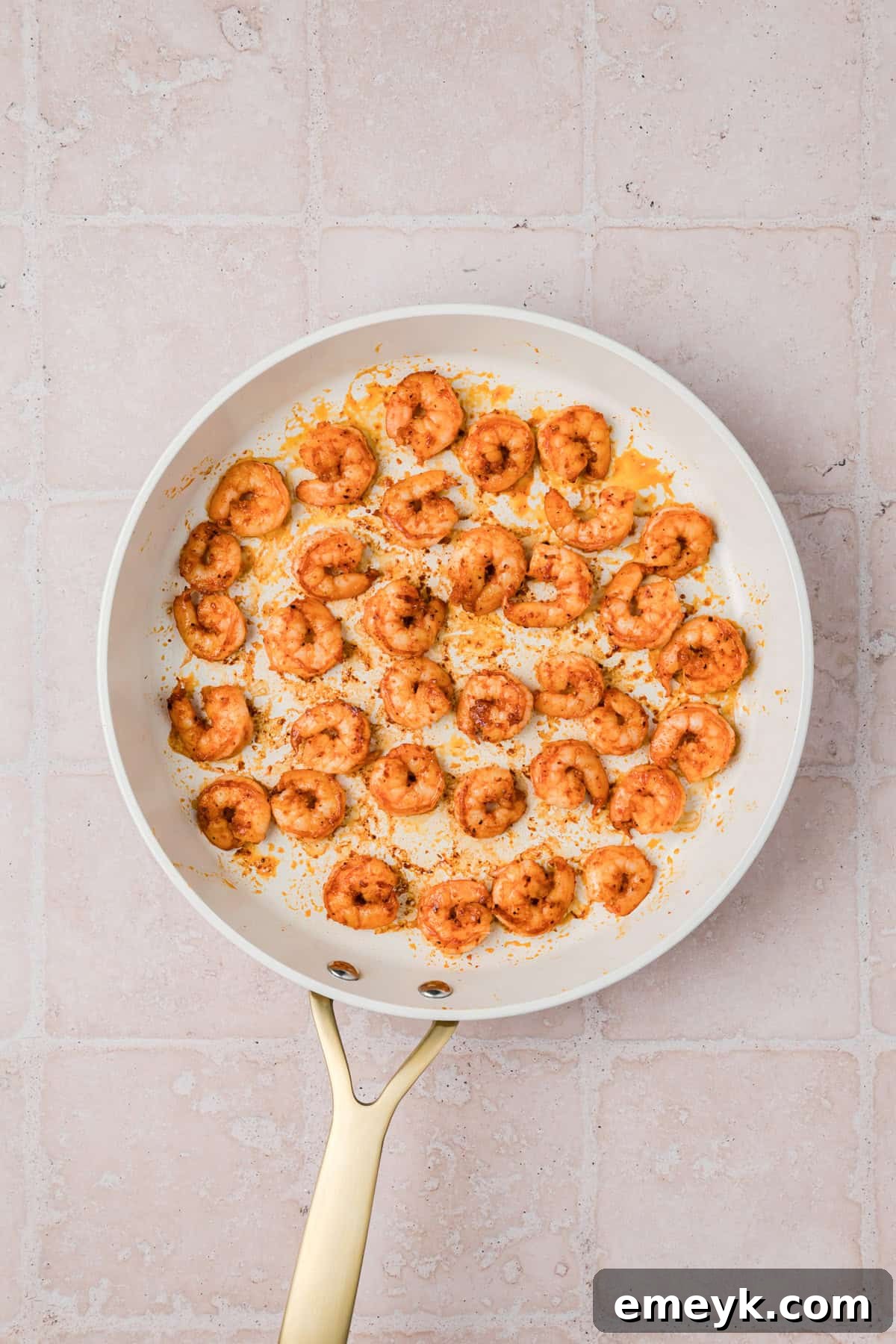
Step 2: Season and cook the shrimp. Pat shrimp very dry, toss with olive oil, smoked paprika, garlic powder, salt, and pepper. Heat a large skillet over medium-high and cook 1–2 minutes per side until opaque and just done. Transfer to a plate to cool before adding to the salad.
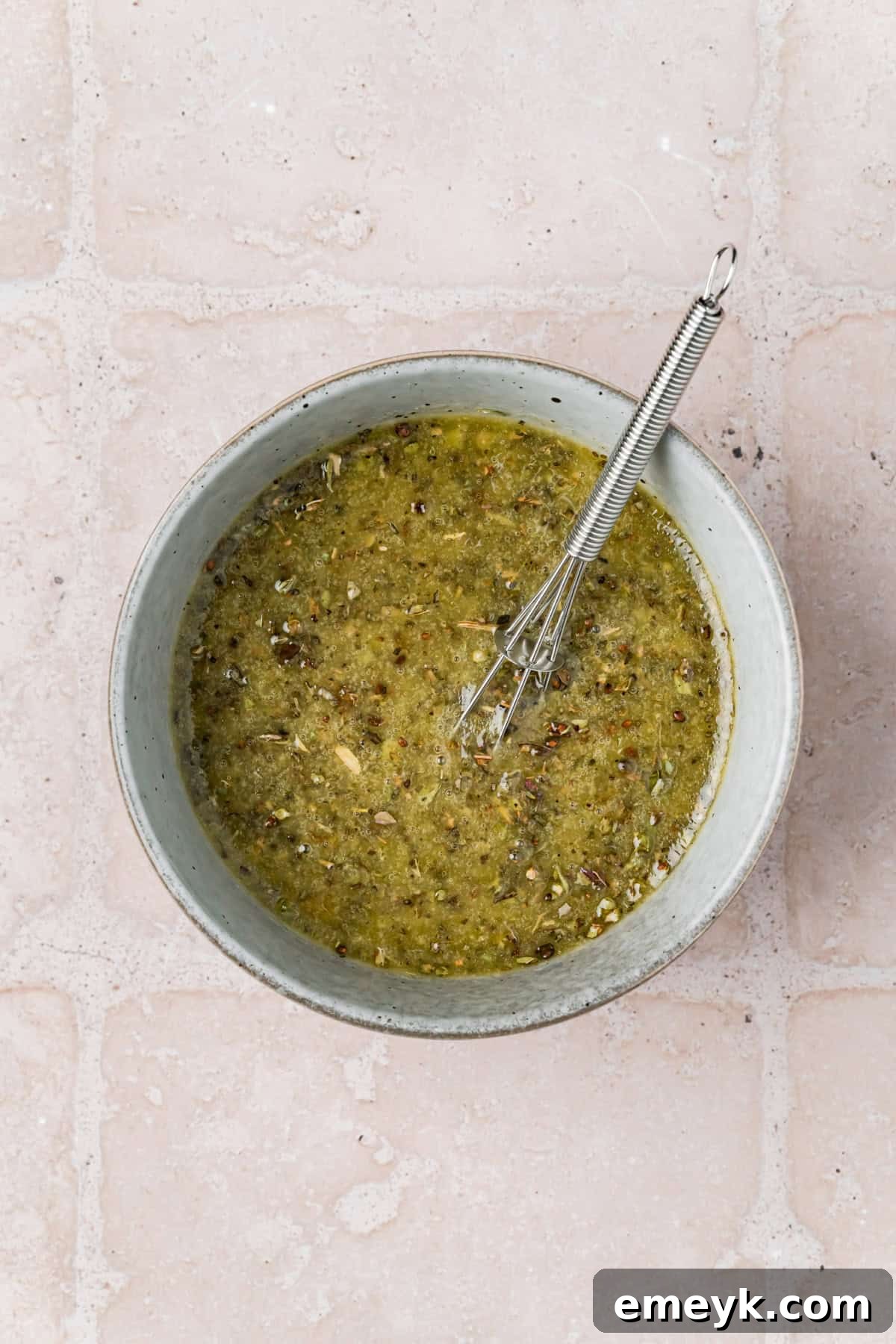
Step 3: Make the dressing. Whisk together olive oil, red wine vinegar, a bit of water, honey, Dijon mustard, oregano, basil, salt, and pepper until combined and slightly thickened. It should be bright and tangy—adjust salt or vinegar to taste.
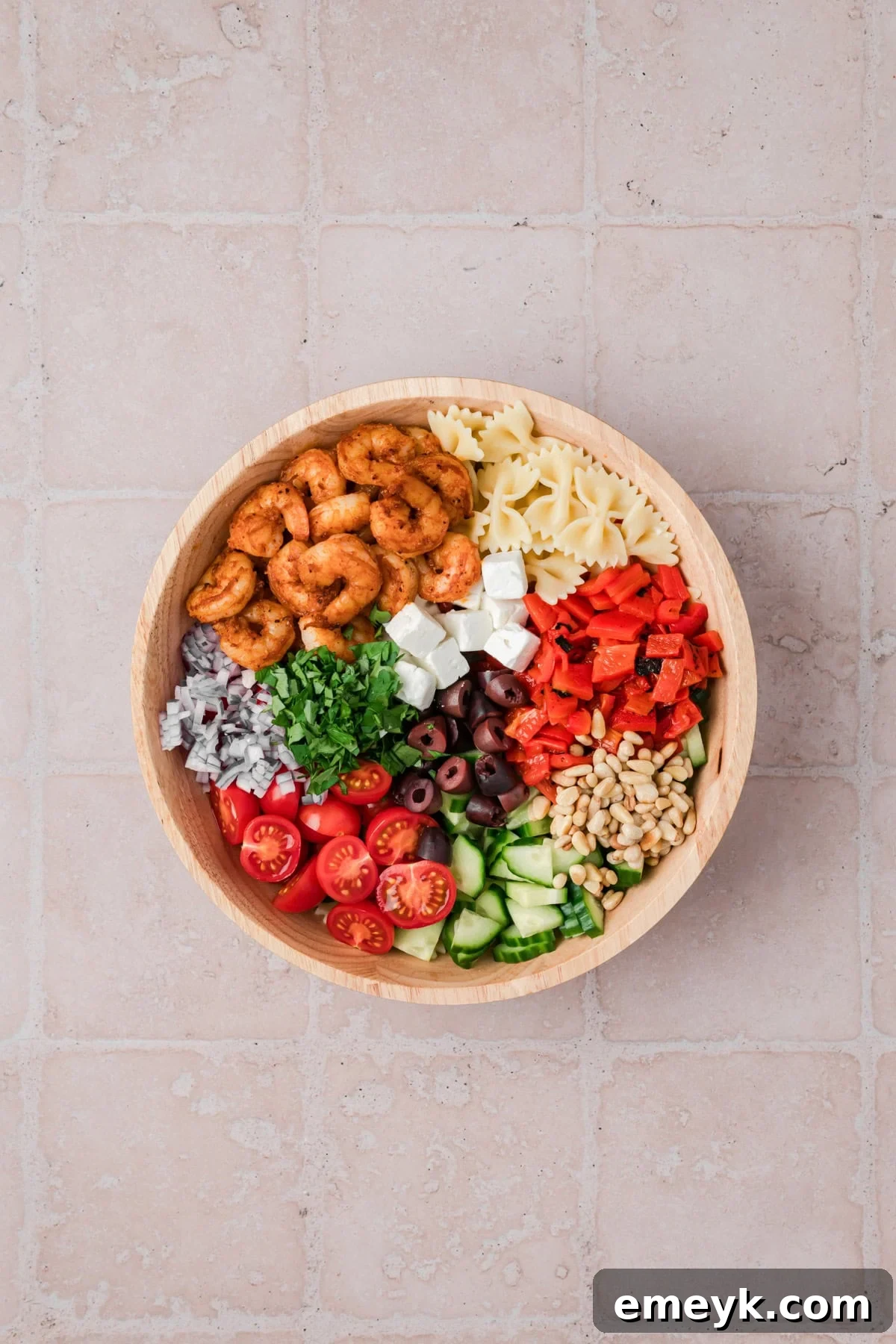
Step 4: Assemble the salad. In a large bowl combine cooled pasta, cooled shrimp, cucumber, cherry tomatoes, roasted red peppers, olives, red onion, feta, pine nuts, and parsley. Pour the dressing over and toss gently. Taste and adjust seasoning or add a splash more red wine vinegar for brightness.
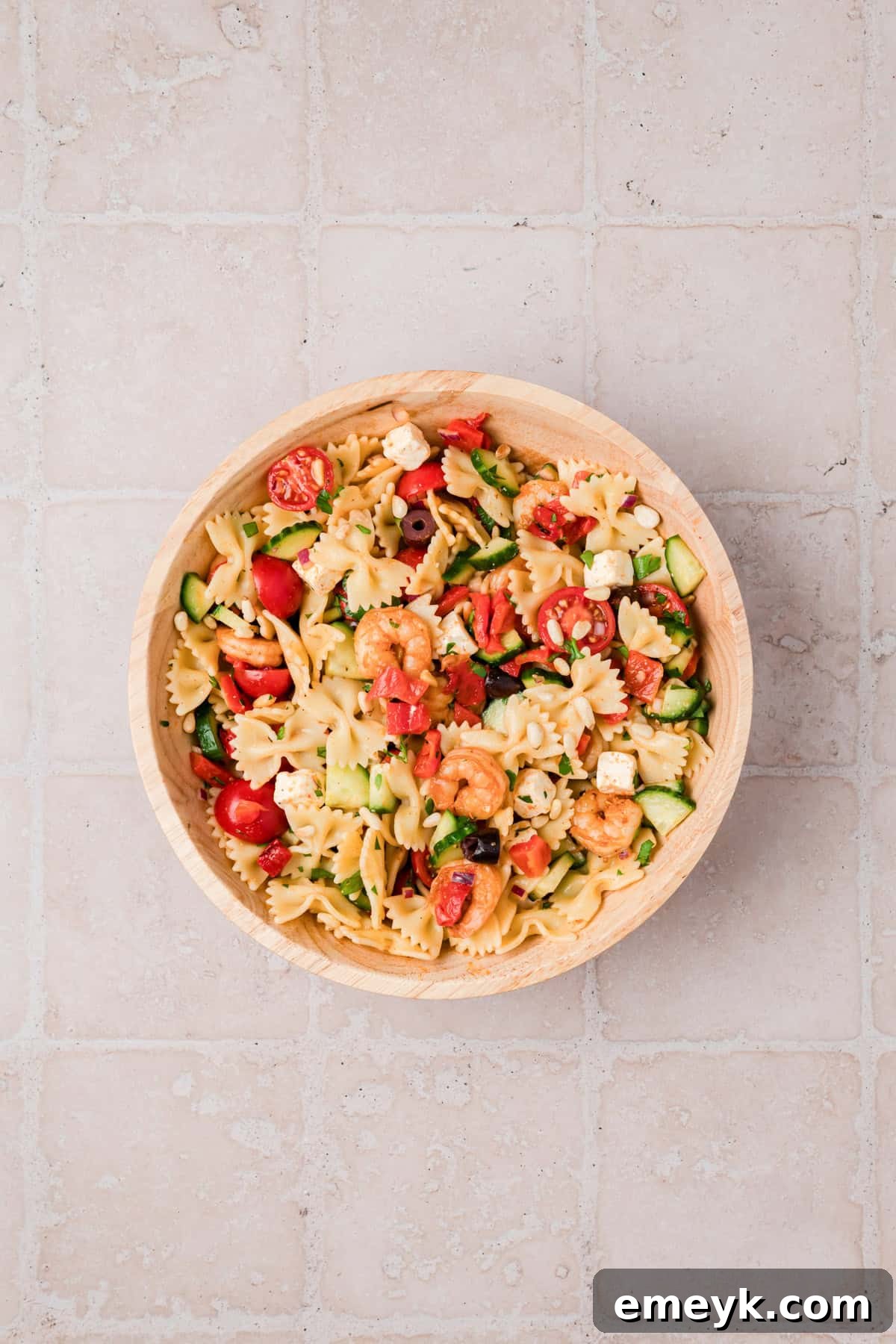
Step 5: Chill and serve. You can serve immediately, but 15–20 minutes in the fridge helps the pasta absorb the dressing and lets the flavors meld. If making ahead, reserve a few tablespoons of dressing and add it just before serving to refresh the salad.
Tips for the Best Shrimp Pasta Salad
- Dry the shrimp thoroughly. Pat with paper towels so they sear instead of steam. The pan should sizzle when shrimp hit it.
- Cool ingredients fully before assembling. Warm components wilt vegetables and absorb excess dressing.
- Start with less dressing. Toss most of the dressing, taste, then add more if needed.
- Make dressing ahead. It keeps up to a week in the fridge; whisk before using if the oil firms up.
- Toast pine nuts last-minute. They can go from golden to burnt quickly; watch them closely.
- Hold back dressing when making ahead. Reserve 2–3 tablespoons and add before serving to keep the salad lively.
Storage Instructions
- Store in an airtight container in the refrigerator for up to 2 days; the shrimp limit the salad’s shelf life. For longer storage, omit shrimp and add freshly cooked shrimp when ready to serve.
- Do not freeze: pasta and vegetables lose texture and feta does not thaw well.
Recipe FAQ
Yes. Thaw pre-cooked shrimp, pat them dry, toss with the seasoning, and add straight to the salad. You’ll miss a bit of seared flavor, but properly seasoned pre-cooked shrimp still work well—just ensure they’re dry so they don’t water down the dressing.
Farfalle, rotini, penne, and fusilli are best. Choose short pasta with texture or ridges so the dressing clings. Avoid long thin pastas that tangle or become limp in cold salads.
Yes. Assemble up to a day ahead but hold back some dressing and add it just before serving. If making more than a few hours ahead, consider adding the shrimp right before serving to preserve their texture.
Cooked shrimp are pink and opaque and form a loose C. If they curl tightly into an O and feel firm, they’re overcooked. Shrimp cook quickly—usually 1–2 minutes per side over medium-high heat.
Mediterranean Shrimp Pasta Salad
Ingredients
For the shrimp:
- 1 pound medium shrimp, peeled and deveined
- 1 tablespoon olive oil
- 1 teaspoon smoked paprika
- 1/2 teaspoon garlic powder
- 1/2 teaspoon fine sea salt
- 1/4 teaspoon black pepper
For the salad:
- 8 ounces farfalle (bowtie) pasta
- 1 cup diced cucumber
- 1 cup halved cherry tomatoes
- 3/4 cup roasted red peppers, chopped
- 1/4 cup sliced Kalamata olives
- 1/4 cup finely diced red onion
- 1/2 cup cubed feta cheese
- 1/4 cup toasted pine nuts
- 1/4 cup chopped fresh parsley
For the dressing:
- 1/3 cup olive oil
- 3 tablespoons red wine vinegar
- 2 tablespoons water
- 1 tablespoon honey
- 1 teaspoon Dijon mustard
- 1 teaspoon dried oregano
- 1 teaspoon dried basil
- 1/2 teaspoon fine sea salt
- Black pepper, to taste
Instructions
- Bring a large pot of generously salted water to a boil. Add pasta and cook until al dente according to package directions. Drain and run under cold water to stop cooking; set aside to cool completely.
- Dry shrimp with paper towels and place in a bowl. Add olive oil, smoked paprika, garlic powder, salt, and pepper; toss to coat evenly.
- Heat a large pan over medium-high heat. Cook the shrimp 1–2 minutes per side until opaque and cooked through. Transfer to a plate and let cool.
- In a small bowl or jar, whisk together olive oil, red wine vinegar, water, honey, Dijon, oregano, basil, salt, and pepper until combined.
- In a large bowl, combine cooled pasta, shrimp, cucumber, cherry tomatoes, roasted red peppers, olives, red onion, feta, pine nuts, and parsley. Pour the dressing over and toss gently.
- Taste and add more salt, pepper, or vinegar if desired. Serve chilled or slightly cool.
Notes
- Farfalle is preferred, but rotini, penne, or fusilli work well—choose a short pasta with texture so the dressing clings.
- Toast pine nuts in a dry pan for two minutes until golden for best flavor and crunch.
- If using larger shrimp, cut them in half after cooking so each bite has a balance of shrimp and pasta.
- The salad benefits from 15–20 minutes in the fridge before serving so flavors meld and the pasta absorbs the dressing.
- Leftovers keep in the refrigerator for up to 2 days. To extend shelf life, store shrimp separately and add fresh when serving.
Nutrition
Nutrition information is an approximation.