

Easy Eggplant Curry offers a delightful blend of tender roasted eggplant and a symphony of whole and ground spices, all harmoniously brought together in a luscious tomato and creamy coconut curry sauce. Garnished with fresh chopped cilantro and served alongside fluffy steamed rice, this dish is a truly satisfying and wholesome vegan curry that promises to be a family favorite.

Easy Eggplant Curry: Your New Favorite Vegan Weeknight Meal
Curry is a staple in many households, and for good reason—it’s incredibly versatile, packed with flavor, and often a comforting meal. This Easy Eggplant Curry recipe stands out as a particular favorite, mirroring the heartwarming richness found in traditional Indian Eggplant Curry or Brinjal Curry. It’s a beautifully crafted vegan dish, boasting a perfect balance of aromatic spices and the luxurious creaminess of coconut milk.
What makes this recipe truly special is its ability to deliver profound flavor with minimal effort. The eggplant is first roasted to perfection, giving it a melt-in-your-mouth texture that readily absorbs the fragrant curry sauce. This pre-roasting step not only enhances the eggplant’s natural sweetness but also adds a depth that simmering alone cannot achieve, making every bite a delightful experience. The robust blend of spices, from earthy cumin and coriander to exotic cardamom and cloves, infuses the dish with an irresistible aroma that fills your kitchen.
If you’re as passionate about curries as we are, you’ll love exploring other delicious options like our Easy Thai Vegetable Green Curry, Cauliflower Curry, Pumpkin Curry, Red Lentil Curry, Chickpea Curry, or this hearty Butternut Squash Chickpea Coconut Curry. Each offers a unique flavor profile, but all share that same comforting curry essence.
One of the best aspects of this eggplant curry is its family-friendly spice level. We’ve kept the chili heat mild, making it enjoyable for everyone at the table. For those who prefer a little more kick, simply offer some fresh red chili slices or crushed red pepper flakes on the side. The generous use of full-fat coconut milk ensures a wonderfully creamy sauce that’s naturally vegan, dairy-free, and gluten-free, catering to a variety of dietary needs without compromising on taste or texture.
Incorporating meat-free meals into our weekly rotation is a priority, and this flavorful eggplant curry is an excellent way to do just that. Eggplant is a versatile vegetable that shines in so many dishes. When my garden is overflowing with eggplants, I often turn to this curry to utilize the abundant harvest. Beyond this delightful curry, some of our favorite ways to enjoy eggplant include Baba Ghanoush, classic Ratatouille, crispy Air Fryer Eggplant Fries, or a refreshing Mediterranean Eggplant Salad.
This Easy Eggplant Curry is not just a meal; it’s an experience. It’s a testament to how simple, plant-based ingredients can transform into a rich, complex, and utterly satisfying dish. Whether you’re a seasoned vegan or just looking to incorporate more vegetables into your diet, this recipe is a must-try for its incredible taste and ease of preparation.
Essential Ingredients for Your Easy Eggplant Curry
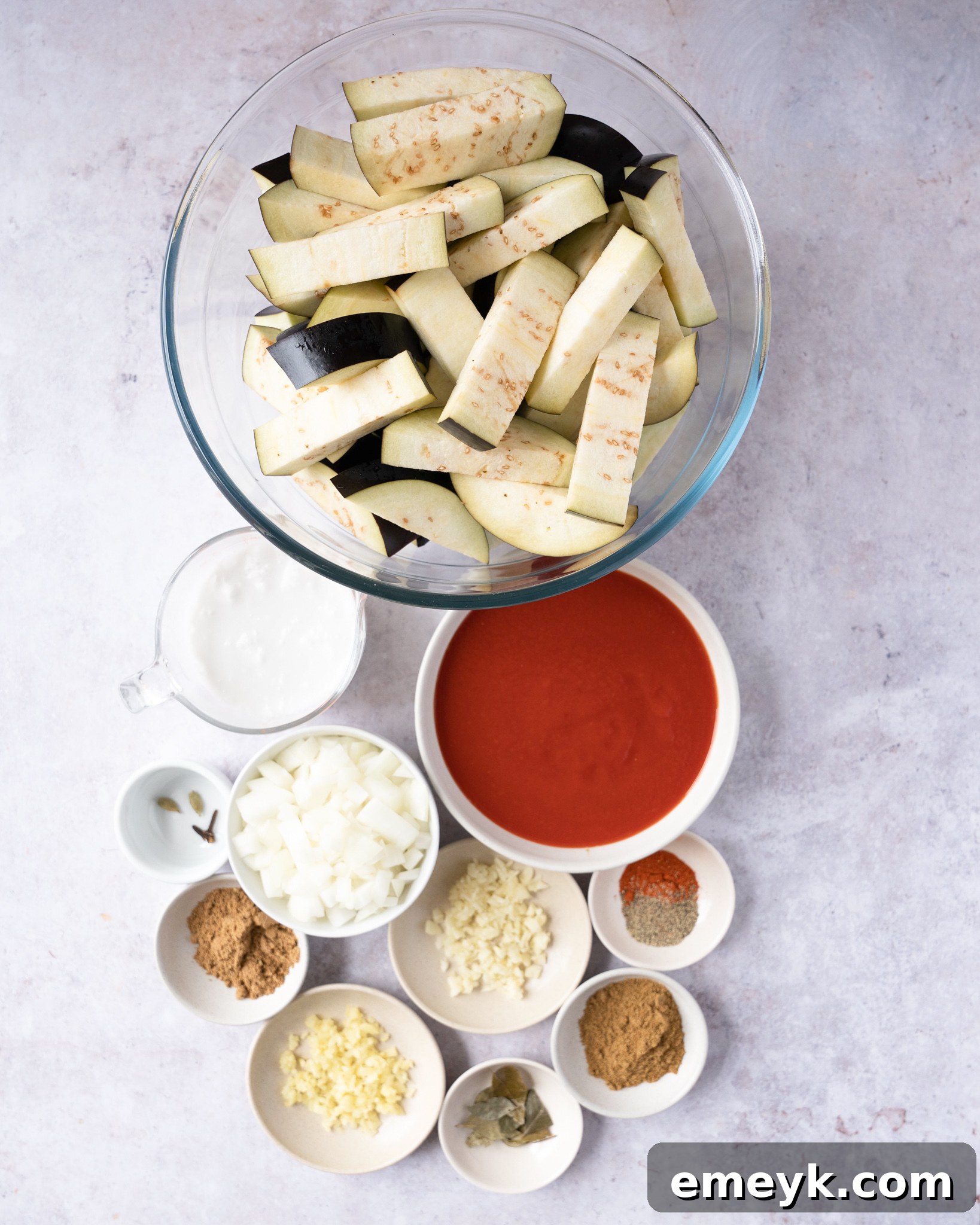
Crafting this flavorful eggplant curry requires a selection of fresh vegetables and aromatic spices, all coming together to create a deeply satisfying sauce. Here’s a detailed look at the simple ingredients we’ll be using, along with some tips for selection and substitution. For precise measurements, please refer to the complete recipe card below.
- Eggplant: We recommend using two medium-sized eggplants. Quarter them lengthwise, then cut them into 4–5-inch pieces. Both common globe eggplants and slender Japanese eggplants work wonderfully here. Look for firm, shiny eggplants without any soft spots or blemishes.
- Aromatic Vegetables: A small onion, finely diced, and four cloves of garlic, minced, form the foundational aromatic base of our curry sauce. These ingredients sautéed gently release essential flavors that set the stage for the spices.
- Spice Symphony: The heart of any great curry lies in its spices. For this recipe, we use a blend of both whole and ground spices.
- Whole Spices: Two lightly crushed cardamom pods and two whole cloves. These whole spices release their complex flavors slowly, adding a beautiful depth.
- Fresh Aromatics: Two teaspoons of freshly grated ginger introduce a bright, zesty warmth.
- Curry Leaves: About ten fresh curry leaves are traditional and add an authentic, unique flavor. If fresh leaves are unavailable, one teaspoon of good quality curry powder can be substituted.
- Ground Spices: One tablespoon of cumin powder, two teaspoons of coriander powder, half a teaspoon of chili powder (for a gentle warmth, easily adjustable), and an eighth of a teaspoon of black pepper complete the spice profile. While whole spices offer a deeper nuance, feel free to use ground versions if that’s more convenient; however, adjust quantities as ground spices are typically more potent. Don’t hesitate to omit any spices you prefer not to use.
- Tomato Base: One cup of tomato passata (also known as tomato puree or tomato sauce) creates a smooth and rich curry base. For those who enjoy a chunkier texture in their curry, a can of chopped tomatoes can be used as a substitute.
- Creamy Coconut Milk: Essential for that signature creamy texture and subtle sweetness, one 14-ounce can of full-fat coconut milk is used. Opting for full-fat milk ensures a rich, luxurious sauce with a robust coconut flavor that balances the spices perfectly.
- Olive Oil: About four tablespoons, divided, for roasting the eggplant and sautéing the aromatics. Extra virgin olive oil adds a lovely Mediterranean note.
- Salt and Pepper: To taste, for seasoning both the eggplant and the curry sauce.

Crafting Your Delicious Eggplant Curry: Step-by-Step Guide
Creating this flavorful Easy Eggplant Curry is a straightforward process, broken down into a few simple steps. The key to its rich taste lies in properly preparing the eggplant and patiently developing the spice base. Follow these instructions for a perfect vegan curry every time.
Step 1: Prepare the Eggplant
Begin by preheating your oven to a robust 450°F (230°C). While the oven heats, wash and thoroughly dry your eggplants with paper towels. Cut each eggplant in half lengthwise. This larger cut allows for optimal moisture extraction and roasting.
Generously sprinkle salt over the cut surfaces of each eggplant half. Let them sit for approximately 30 minutes. This crucial step helps to draw out excess moisture, preventing the eggplant from becoming watery in the curry and concentrating its flavor. After 30 minutes, use a paper towel to blot dry the eggplant, removing both the released moisture and any residual salt.
Step 2: Roast the Eggplant to Perfection
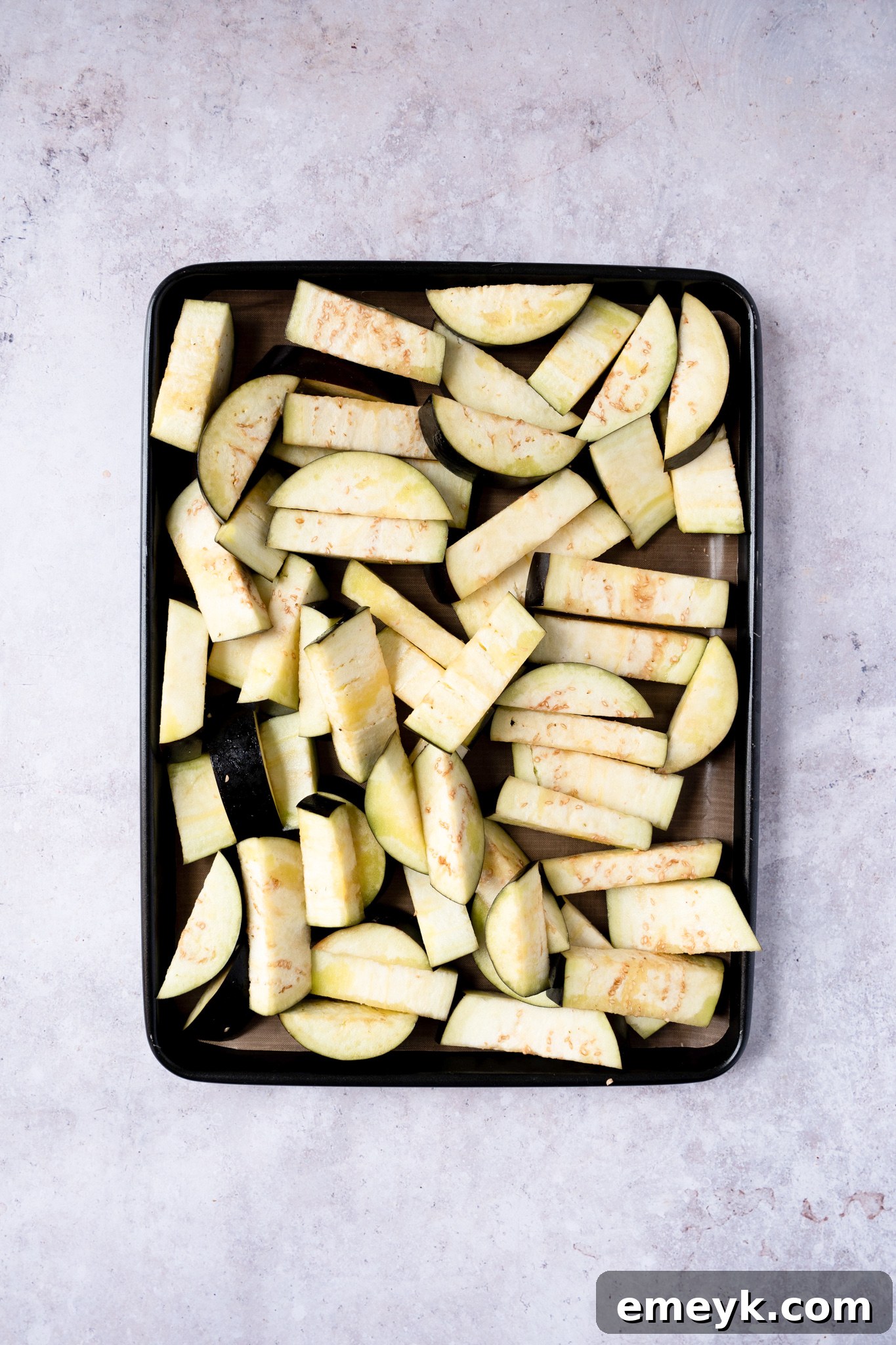
Once the eggplant is dried, brush the cut sides with two tablespoons of olive oil. Season generously with salt, pepper, and a pinch of your favorite spices (such as a little garlic powder or paprika for extra depth, if desired). Arrange the eggplant halves, cut side down, on a large non-stick baking sheet or one lined with parchment paper. This ensures even roasting and prevents sticking.
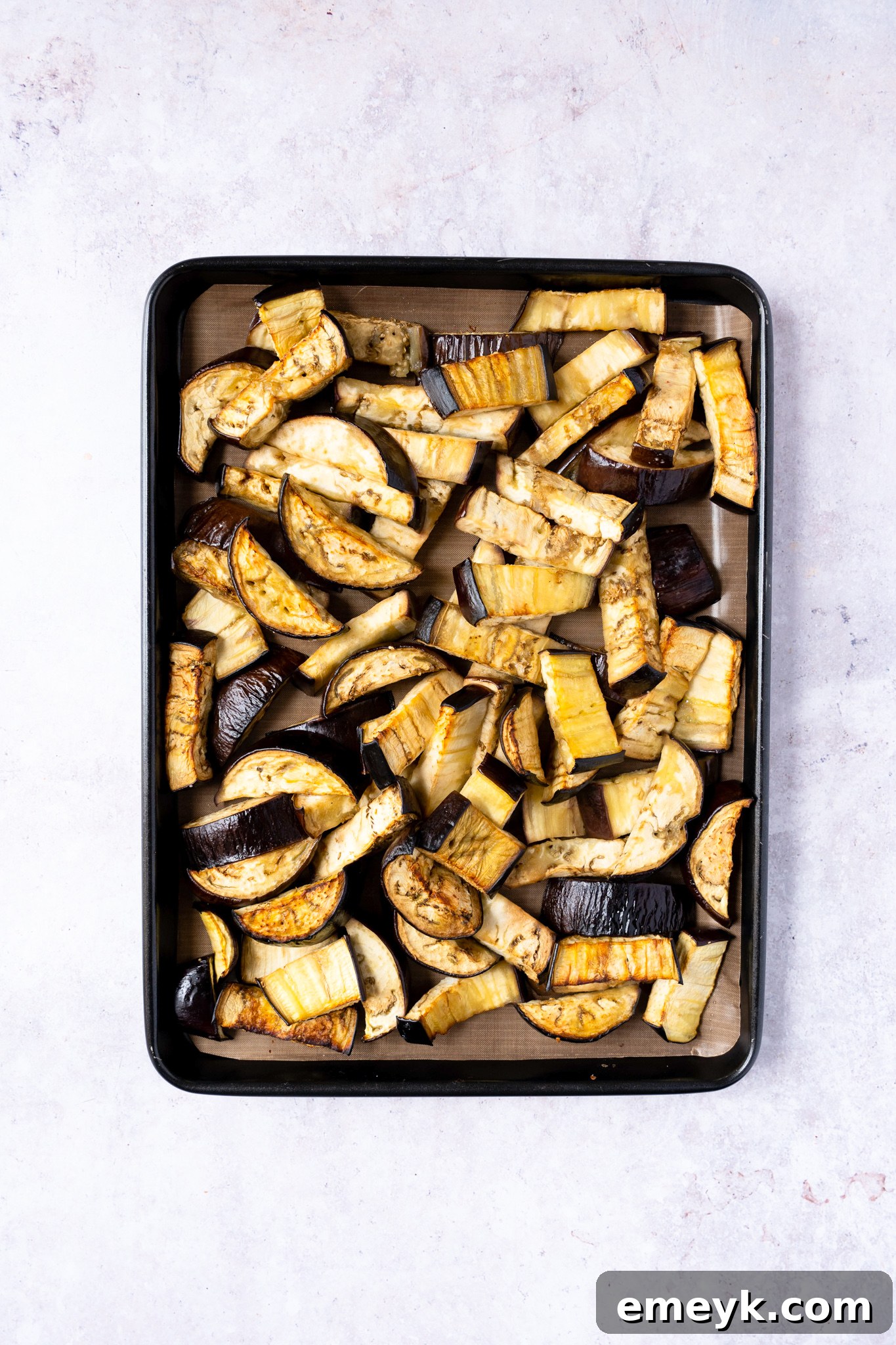
Roast in the preheated oven for 20 minutes. After this initial roasting time, carefully flip the eggplant pieces to ensure they cook evenly and develop a beautiful caramelization on both sides. Return them to the oven for another 10 minutes, or until the eggplant is visibly browned and fork-tender. The goal is soft, creamy eggplant that holds its shape, ready to absorb the rich curry sauce.
Step 3: Build the Aromatic Curry Base
While the eggplant finishes its last 10 minutes in the oven, heat the remaining two tablespoons of olive oil in a large, deep pan or Dutch oven over medium-high heat. Add the diced onion and sauté for about 5 minutes, stirring occasionally, until it softens and begins to turn a lovely golden brown. This step is crucial for developing a sweet, savory foundation for the curry.
Next, add the minced garlic, grated fresh ginger, crushed cardamom pods, whole cloves, and curry leaves. Fry these aromatics for about one minute, stirring constantly, until they become incredibly fragrant. Be careful not to burn the garlic. The kitchen will start to smell amazing! Then, stir in the remaining ground spices: cumin powder, coriander powder, chili powder, and black pepper. Continue to fry for another minute, ensuring the spices are well toasted to release their full flavor, but again, avoid burning them.
Step 4: Combine and Simmer to Perfection
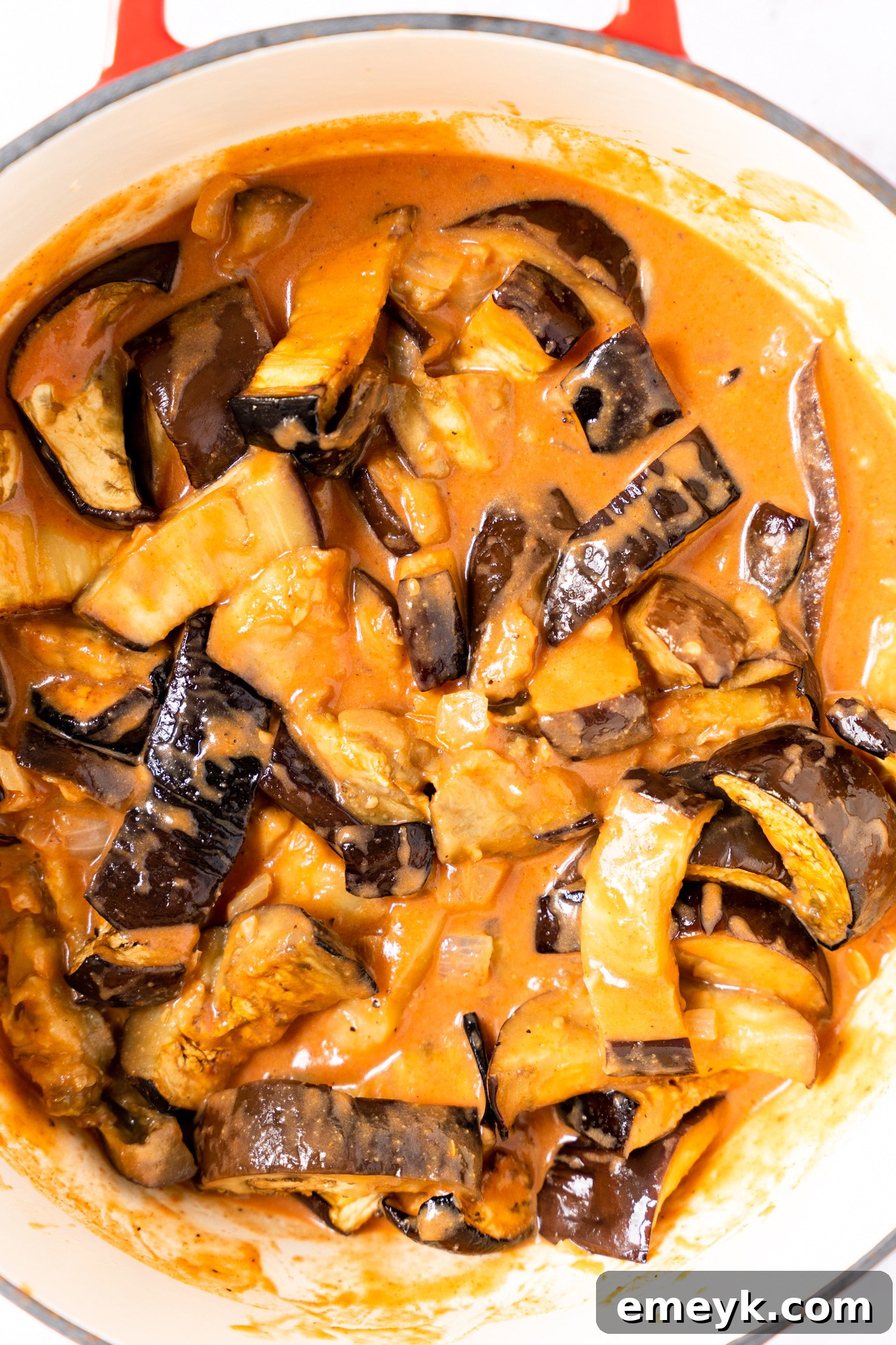
Pour in the tomato passata (or chopped tomatoes) and the full-fat coconut milk. Stir everything together thoroughly, ensuring all the spices are incorporated into the liquid. Bring the sauce to a gentle boil, then immediately reduce the heat to a low simmer. This allows the flavors to meld beautifully without overcooking.
Carefully add the roasted eggplant pieces to the simmering curry sauce. Gently stir to coat the eggplant. Continue to simmer, stirring occasionally, for another 10 minutes. This final simmer allows the eggplant to fully absorb the rich flavors of the curry sauce, making it incredibly tender and infused with spice. Before serving, remember to remove the whole cardamom pods and cloves for a smoother eating experience.
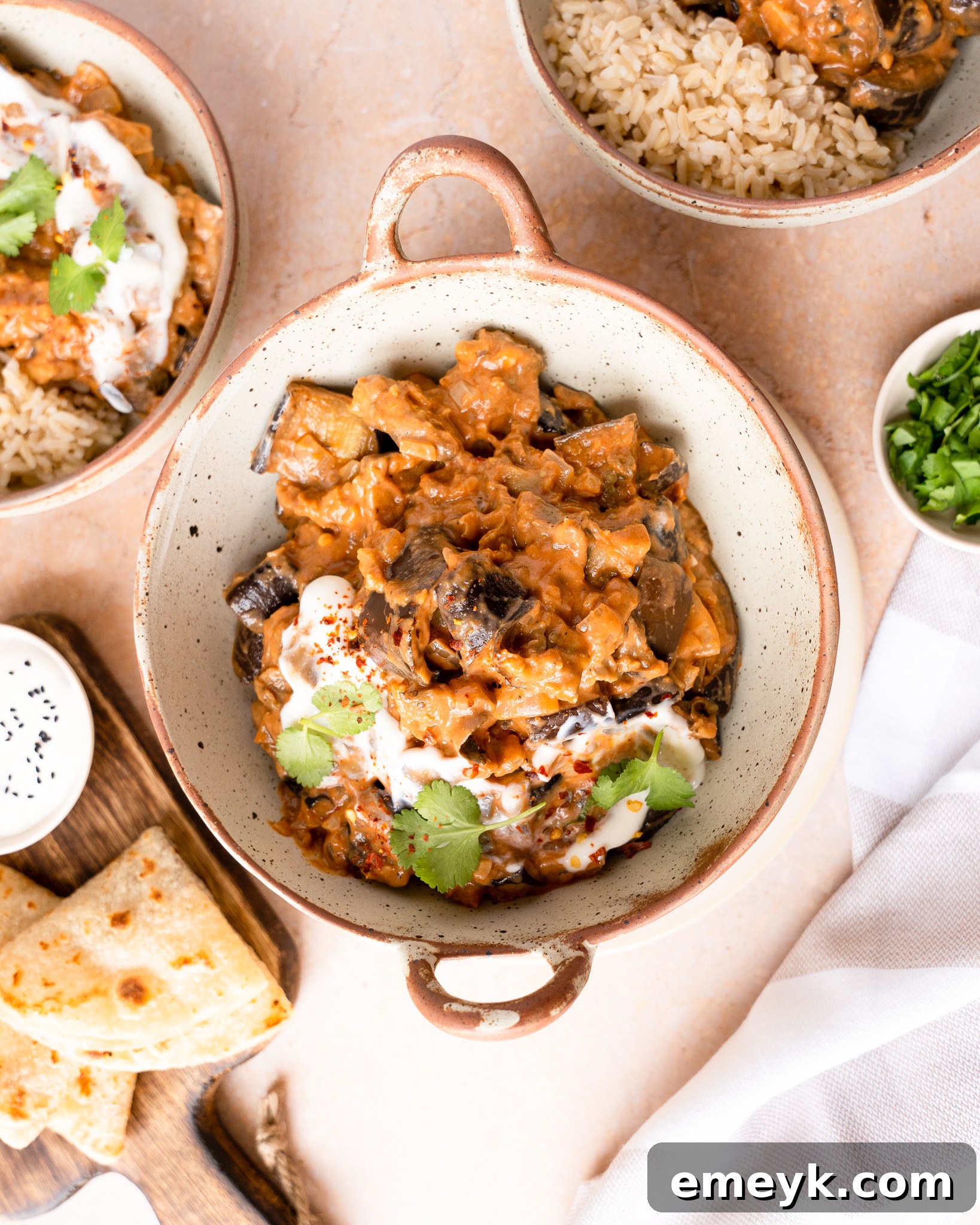
Spoon the delectable curry into bowls, serving it generously over warm basmati rice. Garnish with a sprinkle of fresh cilantro and, if desired, a side of warm flatbreads or naan for dipping. Enjoy this comforting and incredibly flavorful vegan meal!
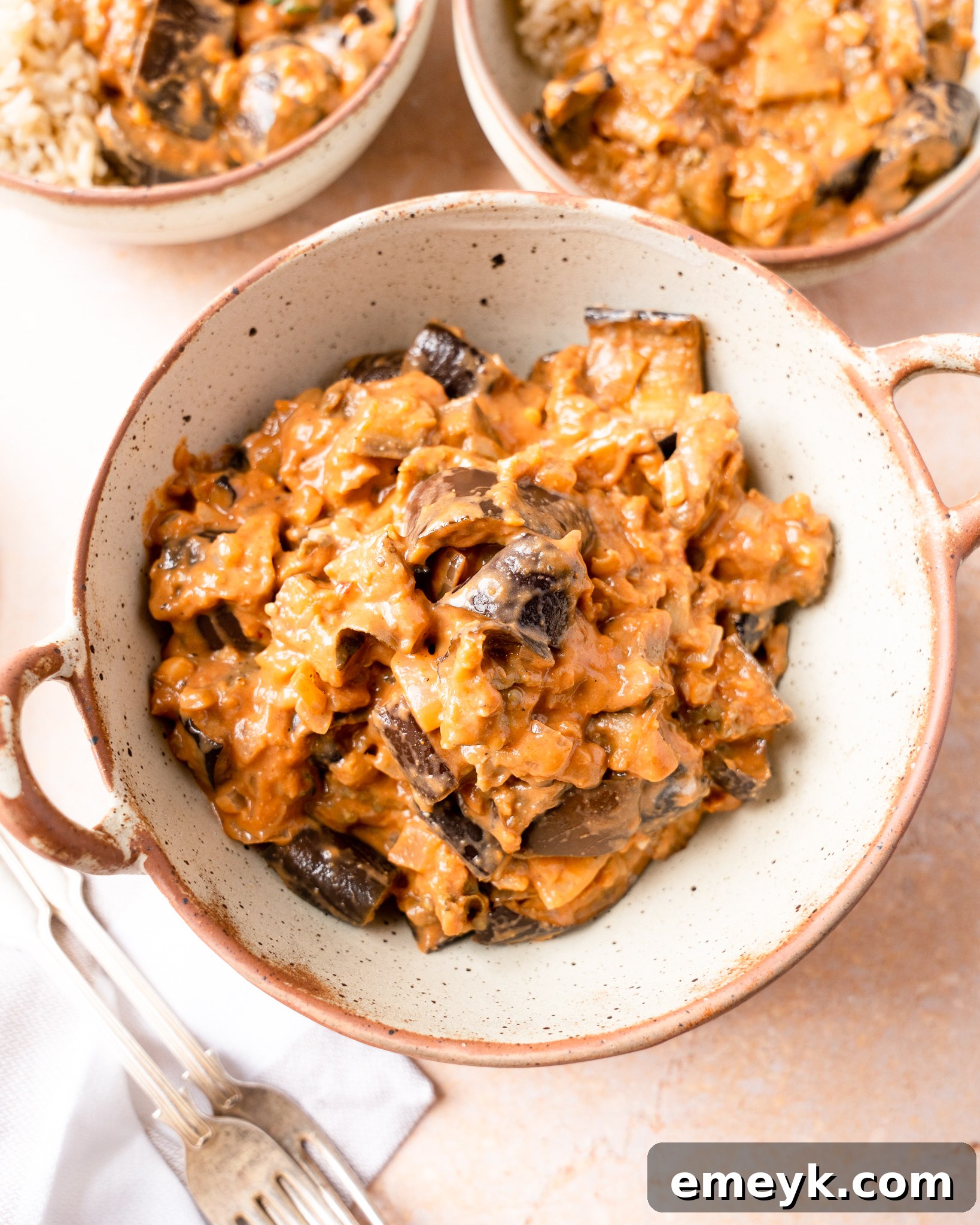
Creative Ways to Customize Your Eggplant Curry
This Easy Eggplant Curry recipe is incredibly versatile and can be adapted to suit your taste preferences or whatever ingredients you have on hand. Don’t be afraid to experiment and make it your own!
- Vegetable Variations: While eggplant is the star here, this recipe is highly adaptable to other vegetables. Feel free to incorporate or substitute with bell peppers, zucchini, green beans, mushrooms, or even potatoes. If adding other vegetables, you can skip the salting process that’s typically done for eggplant. Simply add harder vegetables like potatoes or carrots to the pan with the onions to give them a head start, and softer vegetables like bell peppers or zucchini during the last 10 minutes of simmering.
- Adjusting the Spice Level: The recipe uses a mild half teaspoon of chili powder, offering just a hint of warmth. For a spicier dish, you can easily increase the amount of chili powder to 1 teaspoon or more, depending on your heat tolerance. Alternatively, for fresh, vibrant heat, add one or two fresh red chilies (sliced or finely chopped) to the pan along with the garlic and onion. A pinch of cayenne pepper also works wonders.
- Adding a Tangy Citrus Twist: For those who appreciate a brighter, slightly sour note in their curry, offer some lime or lemon wedges on the side. A squeeze of fresh citrus juice over the finished curry can elevate the flavors and add a refreshing zest, cutting through the richness of the coconut milk.
- Protein Boost: To make this curry even heartier, consider adding a plant-based protein. Cooked chickpeas (garbanzo beans) are an excellent addition, offering extra fiber and protein. You can also stir in some crumbled tofu or tempeh during the last few minutes of simmering.
- Herb Enhancements: While cilantro is a classic garnish, feel free to experiment with other fresh herbs. A sprinkle of fresh mint or basil can introduce interesting new dimensions to the flavor profile.
Storage and Freezing Tips for Your Eggplant Curry
This Easy Eggplant Curry is delicious fresh, but it also makes for fantastic leftovers! Proper storage ensures you can enjoy its rich flavors days later or even months down the line.
- Refrigeration: Once your eggplant curry has cooled completely to room temperature, transfer it to an airtight container. It will keep well in the refrigerator for up to 3 days. Reheat gently on the stovetop or in the microwave until warmed through. Add a splash of water or vegetable broth if the sauce has thickened too much.
- Freezing: Eggplant curry freezes beautifully. After allowing the curry to cool completely, transfer it into freezer-safe airtight containers or heavy-duty freezer bags. Ensure there’s minimal air in the container to prevent freezer burn. It can be stored in the freezer for up to 3 months. When you’re ready to enjoy, thaw the curry overnight in the refrigerator, then reheat on the stovetop over medium heat, stirring occasionally, until hot.
Frequently Asked Questions About Easy Eggplant Curry
While whole spices like cardamom pods and cloves infuse a deeper, more complex flavor profile when bloomed in oil, you absolutely don’t have to use them. If you can’t find whole spices or prefer the convenience of ground spices, you can certainly substitute them. A good rule of thumb for dried herbs and spices is that 1 tablespoon of fresh herbs is roughly equivalent to 1 teaspoon of dried herbs or about 1/4 teaspoon for highly potent ground spices like cloves. For cardamom, a tiny pinch of ground cardamom can substitute a pod. Remember to adjust to your taste, as ground spices are typically more concentrated.
Selecting the perfect eggplant is key to a delicious curry. I recommend choosing smaller to medium-sized eggplants, as they tend to be less bitter and have fewer seeds. Look for eggplants that are firm to the touch, without any soft spots, dents, or large marks. The skin should be shiny and vibrant in color, not dull, which indicates freshness. Many people wonder if they should peel the eggplant before cooking, but for this recipe, it’s not necessary. The skin holds much of the eggplant’s flavor and helps maintain its texture during roasting and simmering. Peeling can sometimes lead to a less flavorful and mushy end result.
Historically, eggplants were often quite bitter, and salting them was a common technique to “draw out” this bitterness. However, modern varieties of eggplant have been cultivated to be much less bitter, so this step isn’t as critical for bitterness removal as it once was. In this recipe, we salt the eggplant primarily to draw out excess moisture. Removing moisture helps the eggplant caramelize better when roasted, resulting in a firmer, more flavorful texture that won’t water down your curry sauce. So, while it’s not strictly necessary for bitterness, it greatly enhances the texture and concentration of flavor in the finished dish.
This Easy Eggplant Curry pairs beautifully with a variety of accompaniments. The most classic choice is steamed basmati rice or brown rice, which perfectly soaks up the rich sauce. For a more complete meal, serve it with warm naan bread, roti, or chapati for dipping. A simple side salad, such as a cucumber raita or a fresh tomato and onion salad, can offer a refreshing contrast to the warmth of the curry. Don’t forget a sprinkle of fresh cilantro for garnish!
Explore More Delicious Eggplant Recipes
Mediterranean
Mediterranean Eggplant Chickpea Salad
Mediterranean
Air Fryer Eggplant
Mediterranean
Air Fryer Eggplant Fries Recipe
Mediterranean
Mediterranean Eggplant Salad
Tried this recipe? Share your thoughts and connect with us! Follow us on
Facebook,
Instagram, or
Pinterest for the latest recipes and updates.
Easy Eggplant Curry Recipe
Julia Jolliff

Find more delicious recipes on our site!
Prep Time: 10 mins
Cook Time: 40 mins
Total Time: 50 mins
Servings: 4
Ingredients
- 2 medium eggplants, quartered lengthways then chopped into long 4-5” chunks
- 4 tablespoons olive oil, divided
- 1 small onion, diced
- 4 cloves garlic, minced
- 2 teaspoons fresh ginger, grated (or 1/2 teaspoon ground ginger)
- 2 cardamom pods, lightly crushed to crack the shell
- 2 cloves (or 1/4 teaspoon ground cloves)
- 10 curry leaves (or 1 teaspoon curry powder)
- 1 tablespoon cumin powder
- 2 teaspoons coriander powder
- 1/2 teaspoon chili powder
- 1/8 teaspoon black pepper
- 1 cup passata (tomato puree or tomato sauce)
- 1 – 14 ounce can full-fat coconut milk
- Salt and pepper to taste
Instructions
- Preheat the oven to 450 degrees F (230°C). Wash and dry the eggplants, then cut each in half lengthwise.
- Generously sprinkle salt on each half of the eggplant and let sit for 30 minutes to draw out moisture. Use a paper towel to dry the eggplant and remove moisture.
- Brush the eggplant with 2 tablespoons of extra virgin olive oil. Sprinkle with salt, pepper, and your favorite spices. Lay the eggplant out on a large non-stick or lined baking sheet and roast in the oven for 20 minutes.
- Flip the eggplant and return to the oven for another 10 minutes until it’s started to brown and is perfectly tender.
- While the eggplant is in for its final 10 minutes, pour the remaining 2 tablespoons of olive oil into a large pan and bring to medium-high heat.
- Add the diced onion and cook for about 5 minutes until softened and starting to brown.
- Add the minced garlic, grated ginger, cardamom pods, cloves, and curry leaves. Fry for a minute until fragrant, then add the cumin powder, coriander powder, chili powder, and black pepper. Fry for another minute.
- Pour in the passata and coconut milk, stir well, and bring the sauce to a boil.
- Reduce to a low simmer and add the roasted eggplant. Continue to simmer and stir occasionally for 10 minutes. Before serving, remove the cardamom pods and whole cloves. Serve hot with fresh cilantro and basmati rice, or flatbreads.
Notes
- Once cooked and cooled, store the eggplant curry in an airtight container in the refrigerator for up to 3 days.
- To freeze, allow the curry to cool completely, then transfer to an airtight, freezer-safe container. It can be stored for up to 3 months.
- For the best texture and flavor, choose smaller, firm eggplants with shiny, vibrant skin. Peeling the eggplant is not necessary as the skin contributes to its flavor and texture.
Nutrition
- Serving: 4g
- Calories: 248kcal
- Carbohydrates: 24g
- Protein: 5g
- Fat: 17g
- Saturated Fat: 4g
- Polyunsaturated Fat: 2g
- Monounsaturated Fat: 11g
- Trans Fat: 0.003g
- Sodium: 308mg
- Potassium: 878mg
- Fiber: 10g
- Sugar: 12g
- Vitamin A: 438IU
- Vitamin C: 13mg
- Calcium: 84mg
- Iron: 4mg
Nutrition information is automatically calculated and should only be used as an approximation.
Tried this recipe?
Mention @acedarspoon or tag #acedarspoon on Instagram!