
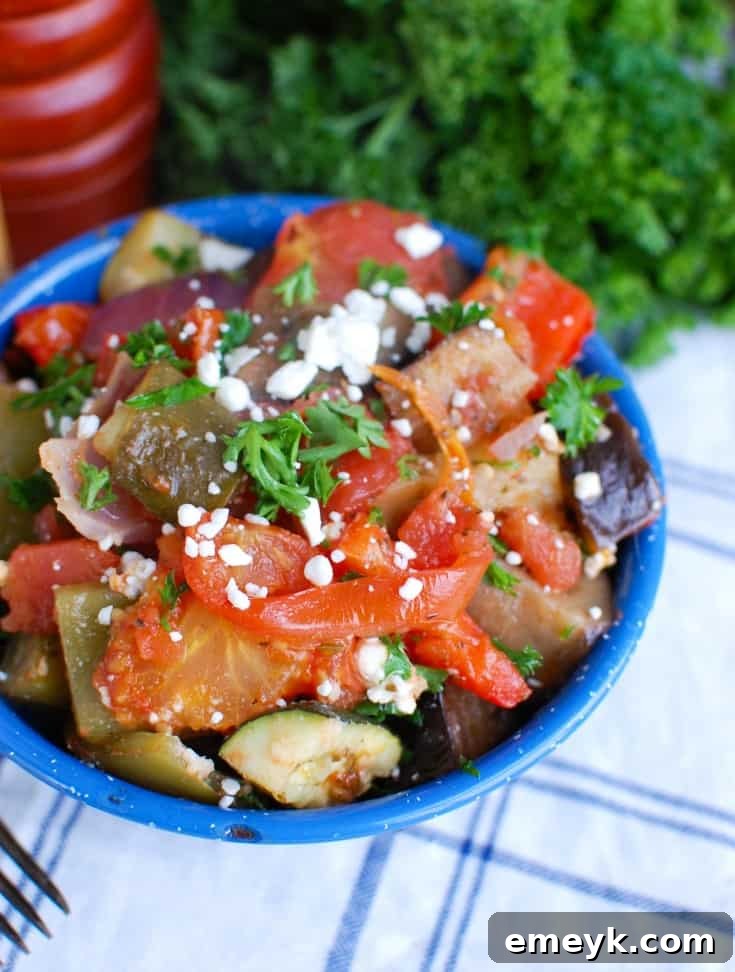
Greek Roasted Vegetables, affectionately known as Briami, offer a delightful journey to the heart of Mediterranean cuisine. This classic dish features an array of tender, flavorful vegetables expertly roasted in a rich, aromatic tomato-based sauce, then generously topped with fresh parsley and tangy feta cheese. Whether served as a robust main course over rice or pasta, or as a vibrant, healthy side dish, Briami is a versatile and incredibly satisfying meal that truly captures the essence of Greek home cooking.
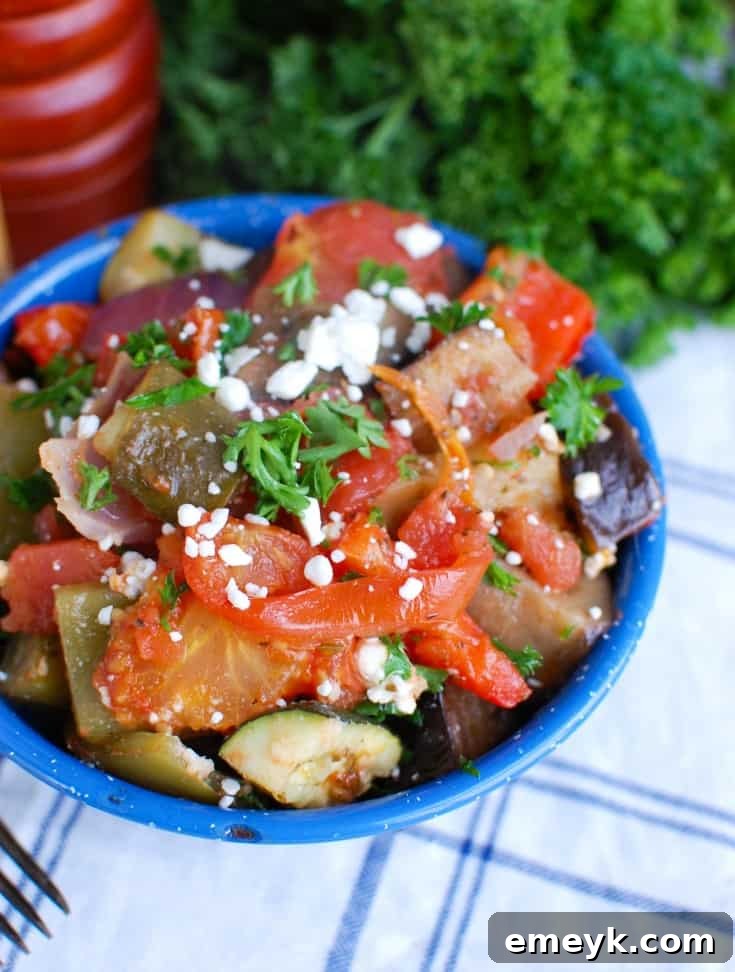
GREEK ROASTED VEGETABLES (BRIAMI): A MEDITERRANEAN CULINARY GEM
Having received numerous requests for an authentic Greek roasted vegetable dish, and with my deep love for the vibrant flavors of Mediterranean food, I was inspired to create and perfect this Briami recipe for all of you. For many years, I’ve cherished making Ratatouille, and these Greek Roasted Vegetables bring back that same comforting, wholesome essence – a medley of garden-fresh produce transformed into a hearty, flavorful meal. Briami, at its core, is a celebration of fresh, seasonal ingredients, roasted to perfection in a vibrant tomato sauce, a beloved staple in Greek homes and tavernas alike.
My version embraces a variety of classic Greek vegetables, allowing for delightful customization based on personal preference and what’s freshest at your local market. I’ve chosen succulent zucchini, hearty russet potatoes, tender eggplant, sweet bell peppers, a hint of red onion, and ripe tomatoes, all generously bathed in a rich, aromatic blend of canned diced tomatoes, savory tomato sauce, fragrant dried oregano, and refreshing dried mint. This carefully selected combination creates a symphony of textures and flavors that is both deeply satisfying and wonderfully light, embodying the principles of healthy Mediterranean eating.
The true beauty of this dish lies in its simplicity and the magical way the vegetables meld together during the slow roasting process. After about an hour in a warm oven, you’ll be met with an irresistible aroma that fills your kitchen, promising a dish so tempting, you’ll want to dive right in. I often enjoy Briami as an incredibly versatile side dish, perfectly complementing main courses such as Mediterranean Chicken with Basmati Rice or a comforting Slow Cooker Mediterranean Whole Chicken. Beyond its role as a side, Briami truly shines as a fulfilling vegetarian main course, served generously over fluffy white or brown rice, or tossed lovingly with your favorite pasta. A final flourish of tangy, crumbled feta cheese and a sprinkle of vibrant fresh parsley elevates this humble dish to culinary heaven, adding a fresh burst of flavor and color.
UNDERSTANDING BRIAMI: A TIMELESS GREEK STAPLE
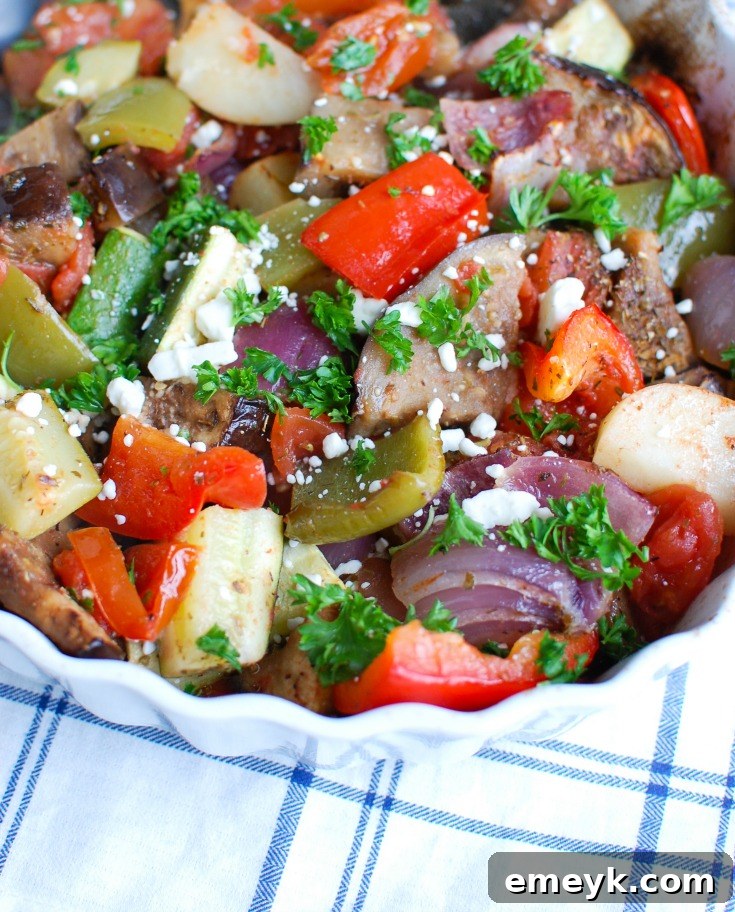
During my extensive research for this recipe, I extensively explored the traditional methods of preparing Greek Roasted Vegetables, consistently encountering the beloved name Briami. This cherished dish is more than just roasted vegetables; it’s a testament to the Greek philosophy of cooking, which celebrates fresh, local ingredients and simple, robust flavors. While there are countless regional variations across Greece, each with its unique nuances and preferred vegetable combinations, the essence remains steadfast: a celebration of wholesome, sun-kissed produce brought to life through slow roasting.
I decided to infuse my recipe with a particular twist, leaning into the richness of a tomato-based sauce, much like my popular Lebanese Green Beans. This approach not only imparts a deeper layer of umami and flavor but also plays a crucial role in tenderizing the vegetables beautifully, ensuring every bite is succulent and melts in your mouth. The gentle acidity of the tomatoes creates a wonderful counterpoint to the sweetness of the roasted vegetables and the earthy herbs.
The Mediterranean diet, renowned globally for its myriad health benefits, places a strong emphasis on vegetables, high-quality olive oil, and fresh herbs. Briami perfectly embodies these principles, offering a nutritious, naturally vegetarian, and incredibly satisfying meal. If a strong tomato flavor isn’t entirely to your preference, you can easily adjust the amount of diced tomatoes and tomato sauce, or even replace some of it with a splash of vegetable broth or water to aid in cooking, while still achieving perfectly tender vegetables. My upcoming trip to Greece with Mike in June is something I’ve eagerly anticipated for years. Beyond the breathtaking beaches, picturesque views, and iconic white-washed villages, it’s the authentic, local food that truly excites me. I look forward to experiencing Greek culinary traditions firsthand and returning home filled with inspiration to share even more delightful recipes with you all, perhaps even some new twists on Briami!
THE ART OF CHOOSING AND PREPARING YOUR VEGETABLES
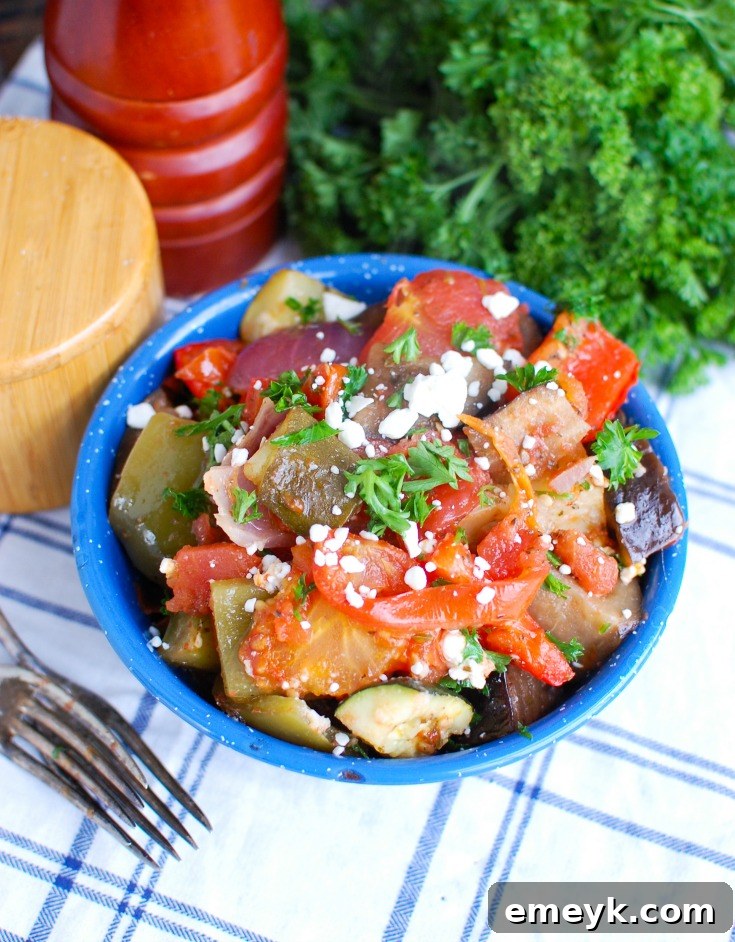
The foundation of an outstanding Briami lies squarely in selecting the freshest, highest-quality vegetables available. For this recipe, I wholeheartedly recommend using a vibrant combination of zucchini, russet potatoes, eggplant, colorful bell peppers, ripe tomatoes, and pungent red onion. When choosing your produce, always prioritize firmness, bright colors, and ensure there are no blemishes or soft spots. Zucchini should feel firm and relatively small for the best flavor and texture when roasted. Eggplant should be heavy for its size with shiny, taut skin. Russet potatoes provide a wonderful, starchy texture that holds up exceptionally well to roasting, becoming wonderfully creamy on the inside with a satisfyingly tender exterior. Bell peppers add a touch of natural sweetness and a beautiful burst of color, while ripe tomatoes and red onion contribute essential aromatic notes and much-needed moisture to the delicious roasting sauce.
Proper preparation, specifically consistent cutting, is absolutely key to ensuring all vegetables cook evenly and achieve that perfect, tender-crisp texture in your Briami. It’s crucial to cut similar vegetables into roughly similar sizes to avoid some being undercooked and others overcooked. For instance, potatoes, which naturally take longer to cook through, should be cut into smaller cubes or wedges compared to quicker-cooking vegetables like zucchini and eggplant, which can be sliced into slightly larger ¼-inch rounds or substantial cubes. Tomatoes and onions, I’ve found, benefit greatly from being cut into slightly larger chunks as they tend to soften quite quickly, allowing them to maintain some of their delightful structure and inherent sweetness throughout the roasting process. This thoughtful approach to chopping guarantees a harmonious blend of textures and flavors in every single spoonful of Briami, creating a truly enjoyable eating experience.
MASTERING THE FLAVOR PROFILE: SAUCE AND AROMATICS
The heart and soul of Greek Roasted Vegetables is undoubtedly its vibrant tomato-based sauce and the quintessential Mediterranean herbs that define so much of Greek cuisine. The combination of canned diced tomatoes and rich tomato sauce creates a robust, savory liquid that not only infuses every single vegetable with deep, complex flavor but also ensures they remain incredibly tender and moist throughout the roasting process. This luscious tomato base is what gives Briami its characteristic rich texture and makes it such a comforting and satisfying dish. A generous amount of high-quality extra virgin olive oil is not merely an ingredient; it’s a fundamental pillar in Greek cooking. It’s not just a cooking medium; it acts as a powerful flavor enhancer and is a vital source of healthy monounsaturated fats, contributing significantly to the dish’s overall richness, silky texture, and the signature Mediterranean taste profile.
The aromatic profile of Briami is brought vividly to life by dried mint and oregano, two herbs that are absolutely central to Greek culinary traditions. Oregano, with its robust, earthy, and slightly peppery notes, is almost synonymous with Greek cuisine, adding an unmistakable authenticity and depth to the dish. Dried mint, often a surprising but utterly delightful addition for those unfamiliar with its use in savory Greek dishes, provides a refreshing, slightly cooling, and subtly peppery counterpoint. This bright herbaceousness expertly balances the richness of the tomatoes and olive oil, cutting through and preventing the dish from becoming too heavy. Together, these carefully chosen herbs weave a complex yet harmonious tapestry of flavors that are distinctly Greek, inviting you to savor every mouthful and transporting you straight to a sun-drenched Greek island. The inherent simplicity of these foundational ingredients, when thoughtfully combined and slow-roasted, truly transforms humble garden vegetables into an extraordinary and memorable culinary experience.
CREATIVE TWISTS AND VERSATILE SERVING SUGGESTIONS
One of the many joys of preparing Greek Roasted Vegetables, or Briami, is its incredible adaptability. This recipe serves as a fantastic canvas for culinary creativity, allowing you to easily tailor it to your personal taste preferences, specific dietary needs, or simply to make the most of whatever fresh ingredients you happen to have on hand. Don’t be afraid to experiment and make this dish truly your own! Here are some exciting ideas to inspire your next batch of Briami, ensuring it’s always fresh, never boring, and perfectly suited to your palate:
- Boost with Legumes for Extra Goodness: For an added protein and fiber punch, which can turn Briami into an even more substantial main course, consider mixing in a can of drained and thoroughly rinsed white beans or chickpeas during the last 20 minutes of roasting. These legumes absorb the rich flavors of the tomato sauce beautifully and make the dish even more hearty and satisfying, perfect for a robust vegetarian or vegan main meal.
- Seasonal Vegetable Swaps: Don’t limit yourself strictly to the classic vegetable combination. Embrace the bounty of each season! During spring, tender asparagus spears or crisp snap peas can be lovely, delicate additions. In the colder months of autumn or winter, chunks of sweet butternut squash, parsnips, or even carrots can provide a different sweetness, earthiness, and wonderful texture. Furthermore, quick-cooking vegetables like sliced mushrooms or a generous handful of fresh spinach (stirred in at the very end, just before serving, so it gently wilts) can also significantly elevate the dish.
- Spice It Up to Your Liking: If you appreciate a little warmth and heat in your dishes, a pinch of cayenne pepper or a generous sprinkling of crushed red pepper flakes stirred into the vegetable mixture before roasting will add a delightful kick. Start with a small amount and adjust to your preferred spice level, ensuring it enhances rather than overpowers the other wonderful flavors.
- Elevate Your Garnish: While fresh parsley and crumbled feta cheese are the traditional and undeniably delicious garnishes, don’t hesitate to experiment with other delightful additions. A refreshing squeeze of fresh lemon juice just before serving brightens all the flavors beautifully. Toasted pine nuts or slivered almonds can add a lovely, earthy crunch. For a creamy element, a dollop of thick Greek yogurt or a drizzle of rich balsamic glaze can introduce interesting layers of flavor and texture, taking your Briami to the next level.
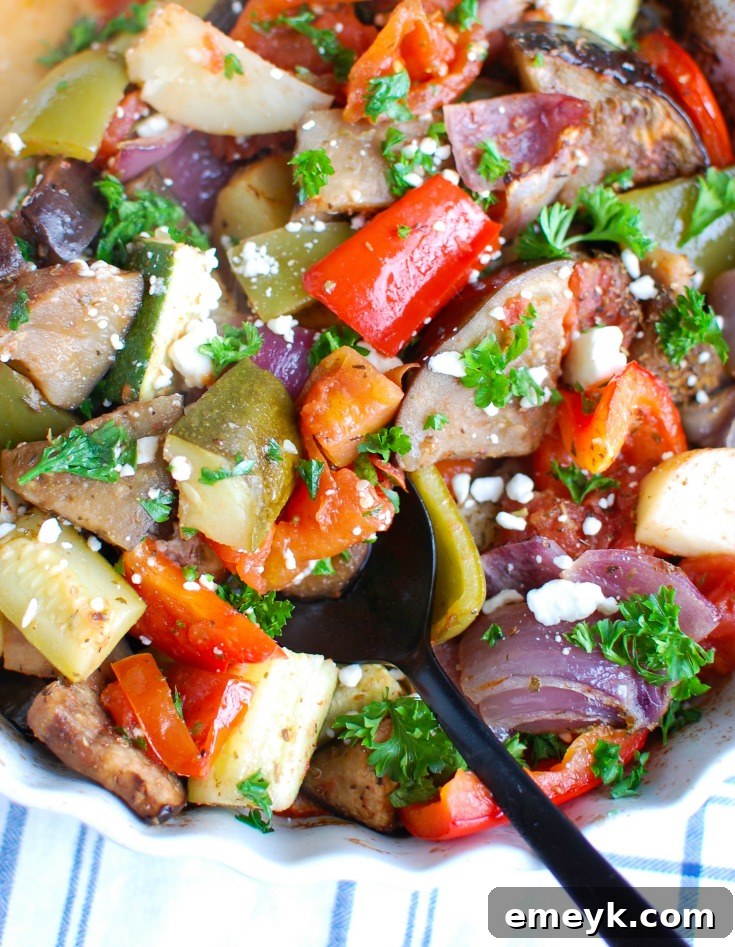
RECIPE: AUTHENTIC GREEK ROASTED VEGETABLES (BRIAMI)
This classic Briami recipe yields a generous amount, making it perfect for family dinners, entertaining guests, or for convenient meal prepping throughout the week. Its flavors deepen beautifully overnight, often tasting even better the next day, which makes it an excellent candidate for delicious leftovers. Enjoy the fresh, wholesome taste of Greece!
Tried this recipe? Share your thoughts and leave a star rating below! Subscribe to my newsletter or follow me on Facebook, Instagram, or Pinterest for the latest recipes and culinary inspiration.
Rate this recipe
Greek Roasted Vegetables

Print Recipe
Ingredients
- 2 medium zucchini, sliced into 1/4 inch slices
- 3 russet potatoes, peeled and cubed
- 3 cloves garlic, minced
- 1/2 red onion, cut into wedges (or a sweet onion)
- 3 medium tomatoes, cut into chunks
- 1 medium eggplant, stem removed, cut into cubes
- 1 bell pepper, seeds removed, cut into strips
- 1 can diced tomatoes
- 1 cup tomato sauce
- 1/2 cup olive oil
- 2 teaspoons dried mint
- 2 teaspoons oregano
- Feta cheese, for garnish
- Fresh parsley, for garnish
Instructions
-
Preheat the oven to 400 degrees F (200°C).
-
In a large mixing bowl, combine the zucchini, potatoes, garlic, onion, tomatoes, eggplant, bell pepper, diced tomatoes, tomato sauce, olive oil, mint, and oregano. Stir well to coat the vegetables evenly, ensuring everything is thoroughly mixed.
-
Spread the vegetable mixture evenly into one large baking dish or two medium baking dishes. Sprinkle generously with salt and freshly ground black pepper.
-
Cover the baking dishes tightly with foil and roast in the preheated oven for 25 minutes. This initial steaming process helps the vegetables tenderize.
-
Carefully remove the foil, give the vegetables a gentle stir, and continue baking for another 30 minutes, or until the potatoes are fork-tender and the vegetables are beautifully caramelized and slightly browned. If you prefer more browning, you can bake for an additional 5-10 minutes uncovered.
-
Remove from the oven and allow to cool slightly. Garnish generously with fresh parsley and crumbled feta cheese before serving.
-
Serve hot as a hearty side dish, or enjoy as a main course with a side of rice or pasta for a complete and wholesome Mediterranean meal.
Notes for the Perfect Briami
- You have complete freedom to mix up whatever vegetables you want in this dish. Feel free to incorporate other favorites like bell peppers (various colors), mushrooms, or even sweet potatoes.
- When it comes to cutting everything up, make sure you cut similar vegetables into similar sizes. For example, potatoes should be cut into smaller cubes because they take longer to cook. The zucchini, eggplant, and bell pepper can be cut into similar sizes. The tomatoes and onion I like to cut into larger chunks because they tend to cook faster.
- You can adjust the diced tomatoes and tomato sauce to your liking. I prefer this dish to be more tomato-based, but you can use less if you don’t like as much tomato in your dish, or more for a thicker sauce to generously cover the vegetables.
- Try tossing this dish with cooked pasta for a nice vegetarian meal idea. It creates a satisfying and flavorful pasta dish with minimal effort.
Nutrition Information
Carbohydrates: 27 g,
Protein: 4 g,
Fat: 14 g,
Saturated Fat: 2 g,
Polyunsaturated Fat: 2 g,
Monounsaturated Fat: 10 g,
Sodium: 164 mg,
Potassium: 944 mg,
Fiber: 5 g,
Sugar: 8 g,
Vitamin A: 1177 IU,
Vitamin C: 48 mg,
Calcium: 63 mg,
Iron: 2 mg
Nutrition information is automatically calculated, so should only be used as an approximation.
Tried this recipe? Mention @acedarspoon or tag #acedarspoon!